
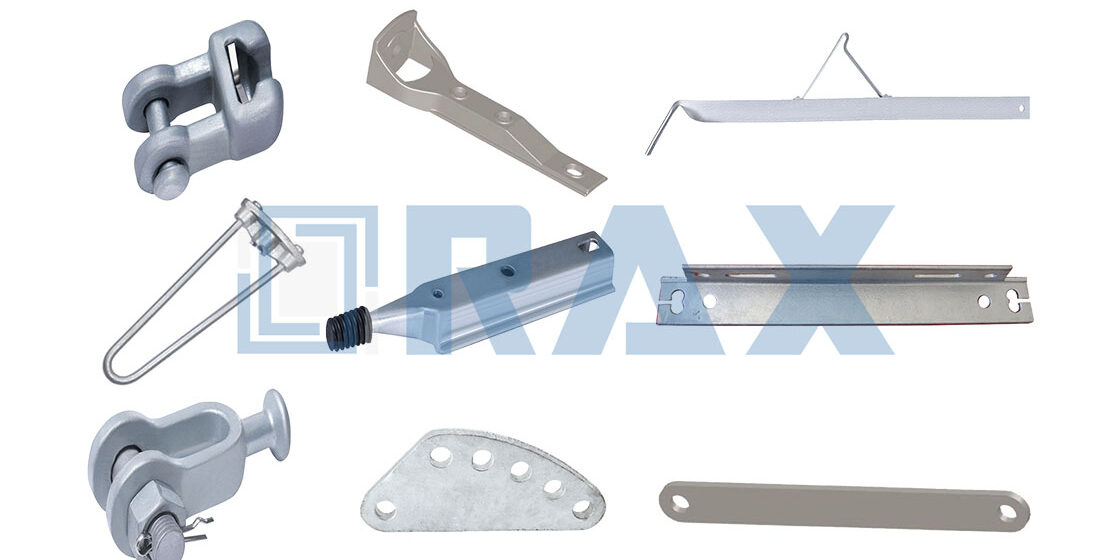
Transmission hardware supports tens of thousands of pounds of dynamic load yet typically accounts for less than 2% of a transmission line's total cost. The risk lies in the failure rate: poor hardware reliability drives over 20% of all line outages. When you specify forged line hardware for these critical nodes, you are essentially selecting a grain structure that must withstand decades of fatigue stress rather than simply purchasing a commodity fitting.
This analysis cuts past the initial price tag to compare the metallurgical integrity and defect rates of hot forging versus casting under dynamic load. We examine how production scale impacts tooling costs and why dimensional tolerances make one method superior for automated assembly lines. You will leave with a technical framework for matching the manufacturing process to your specific load class and environmental requirements.
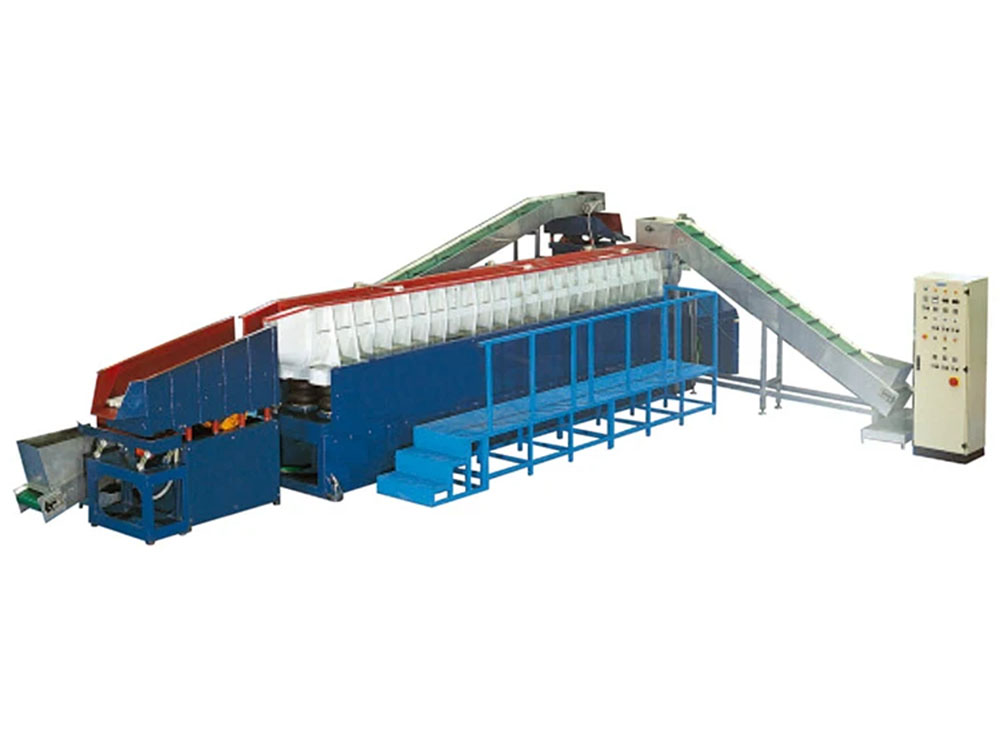
Defining Structural and Performance Needs
Structural line hardware must be engineered for dynamic real-world stress, not just static paper specs. Fitment, fatigue resistance, and environmental durability dictate whether a component survives a grid’s lifespan or becomes a liability.
Critical Breaking Load Thresholds for Safety Margins
Utility networks operate under fluctuating mechanical demands that far exceed nominal static ratings. Conductor weight, ice accumulation, wind sway, and thermal expansion create cyclical loading patterns that aggressively test every fitting in the span. When procurement teams select hardware based solely on peak tensile declarations, they often overlook cyclic fatigue behavior, which is where casting defects become catastrophic.
Forged steel components align their internal grain structure with the primary stress paths, delivering predictable deformation rather than sudden failure. This matters most for high-risk assemblies like dead-end grips, tension clamps, and guy clamps, where a single breach can cascade into widespread outages. In our engineering reviews, we treat safety margins as a function of grain continuity and defect elimination, not just raw force numbers.
When specifying hardware for seismic zones or heavy ice regions, buyers should demand independent load certificates that simulate real-world dynamic conditions. Components that pass static gauge tests but lack refined internal structures often show premature micro-fracturing after months of vibration. We prioritize weld-free hot-forged construction for these critical nodes because it removes heat-affected zones that traditionally weaken high-stress junctions.
Dimensional Accuracy Requirements for Automated Assembly Lines
Modern grid installation relies on repeatable, high-speed assembly protocols where even minor geometric drift translates into field delays, forced modifications, or compromised mechanical fit. Steel cross arms, braces, and precision fasteners like U-bolts and eye bolts must mate seamlessly with insulators, conductors, and supporting structures without excessive shimming or alignment adjustments.
Automated hot forging delivers the dimensional consistency required for these tight tolerances, maintaining uniformity across large production runs. When components deviate from design geometry, stress concentrates at mismatch points, accelerating wear and increasing the likelihood of premature loosening under vibration. Our production teams verify every batch against strict geometric checkpoints before hardware leaves the facility.
Procurement managers should evaluate suppliers based on their ability to hold repeatable tolerances across bulk orders, not just prototype samples. Custom mold development allows manufacturers to produce proprietary fittings that match exact project drawings, reducing on-site engineering friction. We offer full OEM/ODM support to transform client sketches into production-ready parts, ensuring that dimensional integrity remains consistent from the first unit to the final shipment.
Environmental Stress Factors for Extreme Operating Climates
Overhead line hardware faces relentless exposure to temperature swings, moisture, UV radiation, salt spray, and industrial pollutants. These environmental variables do not act in isolation; they compound over time, driving metallurgical degradation, coating breakdown, and mechanical fatigue. Components rated for mild climates frequently struggle when deployed in arctic, desert, or coastal utility networks.
High-performance forged alloys resist thermal shock and mechanical fatigue better than cast equivalents, making them the preferred choice for infrastructure in demanding regions. Buyers targeting markets with severe seasonal shifts should specify hardware that has been validated under equivalent environmental profiles, not just generic weather-resistant claims. Our project teams adapt material selections and finishing processes based on regional utility requirements, ensuring that hardware performs reliably in everything from freezing ice storms to tropical humidity.
Installation practices also play a major role in environmental survival. Proper torque application, correct spacing, and compatible mating materials prevent galvanic corrosion and stress redistribution issues. We advise contractors to review site-specific climate data when selecting hardware grades, as off-the-shelf solutions rarely account for localized atmospheric aggression.
Corrosion Protection Standards for Harsh Utility Environments
Corrosion management is a long-term financial commitment, not merely a cosmetic finish. Utility operators calculate total cost of ownership across decades of service, factoring in inspection frequency, replacement labor, downtime risk, and material degradation rates. Thinner or uneven coatings may look acceptable at delivery but fail prematurely under sustained exposure, forcing costly early interventions.
Hot-dip galvanizing remains the industry benchmark for durable steel protection, providing a metallurgical bond that resists chipping, peeling, and atmospheric attack. A smooth, bright finish not only extends service life but also simplifies visual inspections and reduces maintenance intervals. Our finishing protocol exceeds typical baseline requirements, delivering consistent coating integrity that aligns with rigorous international benchmarks.
When sourcing hardware for aggressive environments, buyers should request independent verification of coating thickness and adhesion performance. Third-party testing confirms that protective layers meet project specifications before mass deployment. We maintain transparent documentation for all coatings, giving utility partners confidence that their infrastructure will withstand years of exposure without compromising structural reliability.
| Structural Need | Technical Specification | Performance Advantage | Standard Compliance |
|---|---|---|---|
| Dynamic Load Resistance | 30% higher impact strength via refined grain flow | Eliminates subsurface porosity common in casting; prevents sudden brittle fracture under ice/wind load | IEC 60865 |
| Dimensional Precision | Strict ±1mm tolerance via weld-free automated hot forging | Prevents heat-affected zone fatigue; ensures seamless assembly for high-voltage infrastructure | SGS Verified |
| Environmental Durability | Hot-dip galvanizing exceeding 85 μm coating thickness | Delivers extreme corrosion resistance with a smooth finish; lowers total cost of ownership | ISO 1461 |
| Quality Consistency | 100% double-review inspection by a dedicated 10-person QC team | Guarantees zero-defect reliability in high-volume production; mitigates operational safety liability | IEC 120 |

Comparing Grain Flow and Strength
Hot forging aligns internal metal grains along the component's contour, creating a continuous fibrous structure that maximizes tensile strength. In contrast, casting results in a random grain structure with internal porosity, significantly reducing the effective load-bearing area and fatigue resistance.
The Mechanics of Grain Flow in Hot Forging
In the context of critical pole line hardware, the "grain flow" refers to the directional alignment of the metal's crystal structure during the deformation process. When steel billets are heated and compressed under high pressure—typical in hot forging—the metallic grains are physically stretched and elongated to follow the contour of the component. This process creates a continuous, unbroken fiber-like structure that mimics the natural grain of wood, resulting in a part where the strength is optimized along the primary stress lines.
This continuous grain flow is critical for maintaining structural integrity under dynamic loads. Because there are no internal interruptions or phase boundaries, the stress is distributed evenly throughout the material. Consequently, hot-forged hardware exhibits superior ductility and impact resistance, allowing the material to deform slightly and absorb energy before fracturing, which is essential for hardware subjected to galloping conductors or sudden ice loading.
- Directional Strength: The alignment of grains along the axis of the part provides higher tensile and fatigue strength compared to base metal or castings.
- Structural Continuity: The absence of internal voids ensures a 100% dense microstructure, eliminating weak points where cracks could initiate.
- Defect Refinement: The forging process welds together minor inclusions and breaks up large impurities, further purifying the structural matrix.
The Microstructure of Cast Line Hardware
Conversely, the casting process involves pouring molten metal into a mold where it cools and solidifies. This phase change creates an isotropic (random) microstructure characterized by dendritic grain growth. Unlike the streamlined flow of forging, cast grains form in a chaotic, tree-like pattern, often resulting in non-uniform mechanical properties. While casting allows for complex geometries, the physical properties of the metal are generally lower than those of the wrought alloy used in forging.
The most significant drawback of casting in high-stress applications is the prevalence of internal defects. As the metal cools and shrinks, it can trap gas bubbles or create microscopic shrinkage cavities. These voids act as stress concentrators—geometric irregularities that focus applied stress into a smaller area. Under the cyclic loading conditions of an overhead line, these microscopic imperfections can rapidly propagate into cracks, leading to sudden brittle failure without warning.
- Isotropic Randomness: Grain structures lack directional alignment, offering no specific advantage against primary load vectors.
- Porosity and Inclusions: Gas porosity and sand inclusions are common defects that drastically reduce the effective cross-sectional area carrying the load.
- Brittle Failure Mode: Castings are more prone to snapping rather than bending, posing a higher risk for utility infrastructure.
Impact on Tensile Strength and Fatigue Life
The disparity in grain structure directly dictates the performance longevity of pole line hardware. Forged components benefit from a refined grain structure that offers significantly higher fatigue strength. Fatigue failure, caused by repeated loading and unloading, is the primary enemy of transmission hardware; the unbroken grain flow of forged parts impedes the propagation of fatigue cracks.
When evaluating hardware for critical nodes—such as suspension clamps or dead-end grips—the microstructural advantage of forging translates directly into safety factors. Cast hardware may meet static load requirements in a laboratory setting, but its unpredictable internal structure makes it less reliable in field conditions involving vibration and thermal expansion. Therefore, for components where failure is not an option, the predictability and consistency of hot-forged grain flow are technically superior to the isotropic and often porous nature of cast alternatives.
How Components Fail Under Dynamic Load
Dynamic load failure in overhead line hardware follows two distinct pathways: controlled plastic yielding in forged components, or sudden brittle fracture initiated at internal casting voids. Static strength ratings alone cannot predict service life under vibration, wind galloping, or thermal cycling.
Overhead transmission hardware does not sit still. Wind-induced vibration, conductor galloping, ice shedding, and thermal expansion create continuous cyclic loading on clamps, cross arms, earth anchors, and industrial fasteners. When these dynamic loads exceed a component's endurance limit, failure propagates through either ductile deformation or catastrophic brittle fracture. The manufacturing process determines which pathway dominates. Hot-forged structural fittings generally yield plastically under overload, providing visible deformation before rupture. Cast components, particularly those containing internal porosity or shrinkage voids, tend to fail abruptly with minimal warning when subjected to repeated shear or tensile cycles.
The Physics of Cyclic Stress on Line Hardware
Structural hardware in utility networks experiences millions of load cycles annually. A single span of conductor can excite standing waves along its length, transferring micro-shocks directly into suspension clamps, dead-end grips, and cross arm brackets. These forces fluctuate in magnitude and direction, making static breaking load ratings insufficient for predicting service life. Fatigue damage accumulates at stress concentrators such as bolt holes, sharp corners, and surface defects until a micro-crack initiates and propagates through the material matrix.
- Cyclic Bending: Repeated flexural stress from conductor movement fatigues thin sections in guy clamps, secondary racks, and pole band connections.
- Torsional Shear: Asymmetrical loading on steel cross arms transfers rotational force into mounting bolts, braces, and alley arm joints.
- Impact Shock: Ice shedding or sudden conductor snap-back generates instantaneous peak loads far beyond steady-state operating ratings.
Ductile Yielding Versus Brittle Fracture Pathways
The critical distinction lies in how different microstructures respond to overstress. Hot-forged components develop a refined grain structure that follows the external geometry of the fitting. When dynamic loads push a forged clamp or anchor past its elastic limit, the material stretches and deforms rather than shattering. This plastic yielding acts as a mechanical fuse, redistributing stress and offering field personnel observable warning signs before total failure.
Cast hardware presents a fundamentally different risk profile. Solidification during the casting process frequently traps gas pockets and creates shrinkage cavities within the metal. Under static loading, these voids may remain dormant. Under dynamic loading, however, each vibration cycle applies pressure inside the void, acting as a pressurized crack starter. Once a fracture begins at a void, it propagates rapidly through the cast matrix because the material lacks the continuous grain flow required to arrest crack growth. The result is sudden structural separation with little to no preceding deformation.
Field Consequences of Unpredictable Failure Modes
Utility operators cannot afford surprise failures in active transmission corridors. A brittle-fractured tension clamp or cross arm brace can drop conductors across right-of-way boundaries, trigger cascading outages, and create public safety hazards. Conversely, a ductile-yielding component typically shows elongation, bending, or visible distortion, allowing maintenance teams to isolate and replace the affected hardware before a full system collapse.
This performance gap is why high-stakes environments—seismic zones, exposed mountain passes, and regions prone to ice storms—prioritize components that demonstrate measurable elongation and reduction of area under load. Testing per IEC 120 protocols, combined with rigorous gauge verification, separates fittings that survive field vibration from those that simply pass a one-time static pull test.
Environmental Accelerants That Exacerbate Dynamic Load Failure
Dynamic load failure rarely occurs in isolation. Corrosion, temperature extremes, and coating defects interact with cyclic stress to accelerate crack growth. A galvanized component with a coating thickness below industry thresholds can experience accelerated pitting under vibration. Each corrosion pit becomes a secondary stress concentrator, shortening the fatigue life of the underlying metal. Proper hot-dip galvanizing, compliant with ISO 1461 requirements and maintaining mean coating thickness above 85 microns, preserves the structural surface integrity needed for long-term dynamic performance.
Dimensional consistency also plays a direct role. Steel cross arms and braces manufactured to tight tolerances distribute load evenly across connection points. Deviations beyond acceptable limits introduce unintended bending moments, forcing fasteners and joints to absorb energy they were not designed to handle. Automated production controls that maintain strict dimensional accuracy prevent these hidden load imbalances from compounding over years of field operation.
Evaluation Criteria for Procurement Specifications
Buyers specifying hardware for dynamic-service applications should verify more than minimum breaking load values. Procurement documents must require evidence of fatigue resistance, ductility thresholds, and surface finish quality. Requesting mill certificates, independent SGS testing records, and detailed inspection reports for internal soundness helps filter out components that meet static ratings but lack the structural resilience required for long-cycle utility service.
Can a component pass static load testing and still fail under dynamic conditions?
Components that successfully satisfy static load protocols may still experience catastrophic failure in dynamic environments. Static tests measure peak failure force under a single, gradually applied load. Dynamic conditions involve repeated stress cycles, micro-movements, and shifting load angles. A cast fitting without obvious surface defects may hold its rated static load, but once vibration introduces cyclic shear, existing porosity or grain discontinuities can initiate fatigue cracks that static testing never reveals.
What visual indicators suggest a forged component is approaching its yield point?
Observable elongation, localized necking, bending at bolt holes, and visible distortion around grip jaws indicate that a forged fitting is absorbing energy through plastic deformation. These signs provide a practical window for replacement before the component reaches complete fracture. Cast components, by contrast, often separate cleanly with sharp fracture faces and minimal shape change.
Is cast hardware ever appropriate for overhead line applications?
Cast components remain suitable for low-stress, non-structural accessories where dynamic loading is minimal. For primary tension points, guy attachments, cross arm braces, and seismic-exposed installations, forged or wrought alternatives are technically preferred because their continuous grain flow and higher ductility provide superior fatigue resistance under unpredictable field conditions.
Quality Control and Defect Rates
Hot forging shifts the defect profile from catastrophic internal voids to detectable surface inconsistencies, allowing for higher overall production yields when strict dimensional monitoring is enforced.
Comparative Defect Mechanisms: Forging vs. Casting
Understanding the origin of defects is critical for procurement teams evaluating supply chain risk. In the manufacturing of pole line hardware, the fundamental difference between hot forging and casting lies in the predictability of the material's microstructure. Casting processes are inherently susceptible to porosity, shrinkage cavities, and cold shuts—defects that are often subsurface and invisible to standard visual inspection. These internal voids act as stress risers, significantly reducing the fatigue life of critical components like cross arms and guy clamps under dynamic load conditions.
Conversely, the hot-forging process refines the grain flow, virtually eliminating porosity. However, this introduces a different set of potential failure points, primarily forging laps, underfills, or surface cracks. Unlike subsurface porosity in castings, forging defects are typically surface or near-surface anomalies. This distinction is vital for quality assurance: while casting defects often require expensive ultrasonic testing (UT) or radiography to detect with high reliability, forging defects can frequently be identified through rigorous visual inspection, magnetic particle inspection (MPI), or precise dimensional gauging, thereby increasing the detectability rate before the hardware reaches the field.
Detection Protocols and Production Yield
High-volume production of utility hardware demands a multi-stage inspection protocol to maintain acceptable defect rates. For structural components such as steel cross arms, dimensional accuracy is a primary indicator of process stability. Leading manufacturers utilizing automated forging lines enforce strict geometric tolerances—often within 1mm—to ensure compatibility with automated assembly lines. Any deviation beyond this threshold immediately flags a potential die wear or temperature variance, triggering a halt in production before significant scrap is generated.
Quality control protocols typically adhere to international standards such as IEC 120 for gauge testing. By implementing a "double-review" process where 100% of products undergo an initial dimensional check followed by a final visual and surface inspection, manufacturers can drive defect rates below 0.5% for forged products. This is a distinct advantage over casting, where internal defect rates can fluctuate significantly based on pouring conditions and alloy composition, often resulting in higher reject rates or latent failures post-installation.
| Defect Type | Process | Detection Method | Impact on Structural Integrity |
|---|---|---|---|
| Porosity / Shrinkage | Casting | Radiography / Ultrasonic | Severe (Internal stress concentration, potential for sudden fracture) |
| Forging Laps / Folds | Forging | Visual / Magnetic Particle (MPI) | Moderate to Severe (Stress risers if not removed by machining/grinding) |
| Inclusions | Casting | Sectioning / Microscopic Analysis | High (Reduces ductility and impact strength) |
| Dimensional Variance | Both (Higher in Casting) | Gauge Testing (IEC 120) | Operational (Misalignment, assembly issues) |
Surface Integrity and Coating Uniformity
Beyond structural defects, corrosion protection is the second pillar of quality control in overhead line hardware. The industry benchmark for durability is hot-dip galvanizing compliant with ISO 1461. A critical quality metric often overlooked in general procurement is the mean coating thickness. High-specification manufacturing ensures a mean coating thickness exceeding 85 microns, providing a strong barrier against atmospheric corrosion in utility environments.
Inconsistent coating thickness is frequently a symptom of poor surface preparation or improper bath temperature, which correlates strongly with adhesion failure. For forged items, the smooth surface finish resulting from the die process typically allows for a more uniform zinc layer compared to the rougher texture of castings. therefore, rigorous quality control includes magnetic thickness gauge testing at multiple points on each component to verify that the coating meets the specified micron range, thereby ensuring the projected service life of the hardware is achieved without premature degradation.

How Scale Affects Production Costs
Executive Summary: High production volumes favor hot forging due to tooling amortization and lower scrap rates, while casting offers lower entry costs for complex, low-volume shapes despite higher long-term variability costs.
In the manufacturing of pole line hardware, the relationship between production scale and cost is defined by the tension between upfront capital expenditure (CapEx) and operational expenditure (OpEx). For project managers and procurement officers, understanding where the "break-even point" lies between hot forging and casting is critical for maximizing budget efficiency without compromising structural integrity.
The Amortization of High-Performance Tooling
Hot forging requires significant initial investment in precision dies and tooling. Unlike sand casting, which can utilize relatively inexpensive patterns, forging dies must be crafted from high-grade, hardened tool steel capable of withstanding extreme impact forces and tons of pressure. Consequently, the cost of these dies is a fixed barrier to entry.
However, this dynamic shifts dramatically as volume increases. Once the forging die is manufactured, the cost to produce each individual unit drops precipitously. In high-volume runs—such as standard utility fasteners or guy clamps—the cost of the tooling is spread across tens of thousands of units, resulting in a significantly lower per-unit price compared to batch-process methods. For example, producing forged oval eye nuts in standard sizes (e.g., ranging from 5/8-11 to 3/4-10) allows the manufacturer to amortize the tooling costs effectively, offering a lower price point that smaller-scale casting operations cannot match without sacrificing margin.
Variable Costs: Scrap Rates and Material Efficiency
While forging carries a higher upfront ticket price, it offers superior material efficiency and lower variable costs at scale. The forging process displaces metal rather than melting it, resulting in minimal waste. Conversely, casting is prone to internal defects such as porosity, inclusions, and voids, particularly when scaling up production speed.
At low volumes, a 5% to 10% scrap rate in casting might be absorbable. However, at utility-scale volumes, this percentage represents a substantial loss of raw material and lost production hours. Forged components, produced on automated and semi-automated machinery, maintain consistent dimensional accuracy with minimal defect rates. This stability ensures that the cost per "good" unit remains predictable and low, whereas casting costs can fluctuate wildly based on the yield of each batch.
Labor Intensity and Post-Processing
Scale also impacts the labor intensity required to bring a component to tolerance. Cast parts often emerge from the mold with rough surfaces and dimensional variations, necessitating extensive post-machining, grinding, and finishing to meet the strict tolerances required for overhead line hardware (e.g., ensuring a 1mm tolerance on cross arms).
High-volume forging leverages automated production lines that punch and form the metal to near-net shape. This reduction in manual labor hours per unit translates directly into cost savings. When ordering thousands of units, the cumulative labor cost of hand-finishing cast parts can exceed the initial savings on tooling, making forging the more economically sound choice for standardized, high-demand hardware.
| Cost Driver | Hot Forging (High Volume) | Casting (Low Volume/Complex) |
|---|---|---|
| Tooling Investment | High initial cost (Hardened Steel Dies) | Low initial cost (Patterns/Sand) |
| Per-Unit Cost (at Scale) | Low (Amortized Tooling + Low Scrap) | Higher (Labor + Scrap accumulation) |
| Material Waste | Minimal (Flash recycled) | Moderate (Gating/Risers + Defects) |
| Finish/Machining | Near-net shape; minimal finishing | Extensive machining often required for tolerance |
When evaluating quotes, request a separate line item for tooling versus unit price. If a project requires less than 500 units of a non-standard component, casting may present a lower total invoice. However, for any order exceeding 1,000 units of a critical load-bearing component (like cross arms or dead-end grips), the higher tooling cost of forging is typically recovered within the first 15-20% of production volume via lower scrap and reduced labor.
Which Method Should You Choose?
Choose forging for critical load-bearing hardware and high-volume runs; choose casting only for low-stress, non-structural accessories where cost sensitivity outweighs fatigue life requirements.
Matching Production Volumes to Optimal Manufacturing Processes
The economics shift dramatically depending on your order quantity. For low-volume, custom prototypes or small repair orders, casting offers faster turnaround because pattern development costs are lower and setup time is shorter. However, once you cross into medium-to-high volume territory, the per-unit economics favor forging. Our automated hot-forging lines run continuously, maintaining consistent dimensional accuracy across thousands of units without the gradual drift that casting molds experience over extended production runs.
In our experience supplying utility contractors across Southeast Asia, a common mistake is selecting casting based on initial sample pricing without accounting for the rework and rejection rates that appear at scale. When you're ordering tens of thousands of clamps or cross arms, dimensional variation compounds into field installation delays. Forging eliminates that variance, which is why we recommend it for any project exceeding 5,000 units or where replacement parts must remain interchangeable across multiple construction phases.
- Low Volume & Custom Orders: Casting makes sense for one-off replacements, prototype validation, or non-structural components with minimal mechanical stress.
- Medium to High Volume Structural Hardware: Hot forging delivers consistent tolerances, faster assembly fit, and lower rejection rates across large batches.
- Long-Term Supply Agreements: Forging aligns better with recurring procurement needs where part interchangeability over years of service is non-negotiable.
Assessing Grain Structure Integrity for Long-Term Fatigue Resistance
Do not assume visual surface quality indicates internal integrity. A cast fitting can look identical to a forged one externally while containing subsurface shrinkage cavities that compromise fatigue life. Request third-party load test certificates per IEC 120 and mill test reports confirming grain structure before approving cast components for critical line hardware.
Balancing Upfront Tooling Investments Against Per-Unit Pricing
- Tooling Economics: Forging demands higher initial die investment but delivers lower per-unit cost at scale due to reduced finishing work and fewer rejected parts.
- Custom Geometry Premium: Unique shapes incur custom mold development fees, but Rax Power handles OEM/ODM projects by converting client drawings into proprietary forged solutions with full technical support.
- Total Cost of Ownership: Include maintenance frequency, replacement downtime, and warranty claims. A slightly higher initial unit cost often pays back when the component survives the full design life without failure.
Prioritizing Ductility Requirements for High-Seismic Utility Zones
Seismic activity introduces dynamic lateral forces that conventional static load ratings do not fully capture. In earthquake-prone regions, hardware must absorb energy through controlled deformation rather than resisting until sudden fracture. Ductility determines whether a clamp bends under ground motion or shatters, potentially dropping conductors and triggering cascading failures.
We have supplied projects in seismic zones where local utilities mandated elongation testing beyond standard requirements. Forged components consistently outperform cast equivalents here because the refined grain structure allows atomic planes to slide under stress rather than cracking along random grain boundaries. If your utility is located in a high-seismic classification area, specify hardware that meets ductility thresholds in addition to breaking strength. Do not rely solely on minimum load ratings when evaluating supplier quotes for these installations.
When sourcing for seismic zones, request bend-test certificates and ask suppliers to confirm their hot-forging process controls grain flow direction. A reputable manufacturer should provide traceable batch documentation linking each shipment to its heat treatment and forming parameters.
| Feature | Specification | Advantage | Recommendation |
|---|---|---|---|
| Grain Structure | Refined grain flow vs. random cast grain structure | Superior fatigue resistance and load distribution | Select Forged for critical transmission hardware |
| Mechanical Strength | +30% impact strength vs. standard cast equivalents | Withstands extreme ice, wind, and thermal cycling | Choose Forged to prevent sudden brittle failure |
| Internal Integrity | Weld-free, porosity-free body vs. subsurface shrinkage cavities | Eliminates stress concentration points | Use Forged for safety-critical line hardware |
| Dimensional Tolerance | ±1mm automated precision vs. variable casting accuracy | Ensures perfect fit and faster field installation | Opt for Forged to reduce maintenance downtime |
| Corrosion Resistance | >85μm hot-dip galvanizing (ISO 1461) vs. uneven cast surface coating | Extended lifespan in harsh environmental conditions | Trust Forged for long-term infrastructure durability |
Conclusion
- Review breaking load thresholds with an engineering team that prioritizes ductility.
- Confirm corrosion protection standards match your environmental stress factors.
- Use our 21 years of export experience to validate your design specifications.
- Contact our engineers for a technical audit on your next project layout.
Frequently Asked Questions
What are common applications for forged hardware?
Forged hardware is widely used in critical suspension and tension points on overhead power lines. Applications include dead-end clamps, pole line brackets, and cross-arms where high mechanical strength is vital. These components ensure the stability and safety of the entire transmission infrastructure.
What materials are used in forged hardware?
High-strength carbon steel is the primary material used due to its excellent load-bearing capabilities and durability. Alloys may be added to enhance specific mechanical properties like tensile strength or corrosion resistance. The material choice is critical to withstand the mechanical stresses of overhead lines.
Why choose weld-free construction?
Weld-free construction eliminates the heat-affected zone, which can weaken the metal structure and cause fatigue. By using a single-piece forging, manufacturers ensure consistent mechanical strength throughout the component. This approach significantly reduces the likelihood of failure points common in welded assemblies.
Which standards apply to forged line hardware?
Forged line hardware typically adheres to international standards such as ASTM, IEC, and BS specific to power transmission. These standards dictate mechanical properties, dimensions, and load-bearing capacities to ensure safety. Compliance with these norms is mandatory for utility projects to guarantee reliability.
Can forged hardware be manufactured to custom specifications?
Yes, manufacturers can produce forged hardware based on custom drawings to meet unique engineering requirements. This process involves developing specific molds to achieve precise geometries and tolerances. Customization is essential for non-standard pole line configurations or specific utility upgrades.