
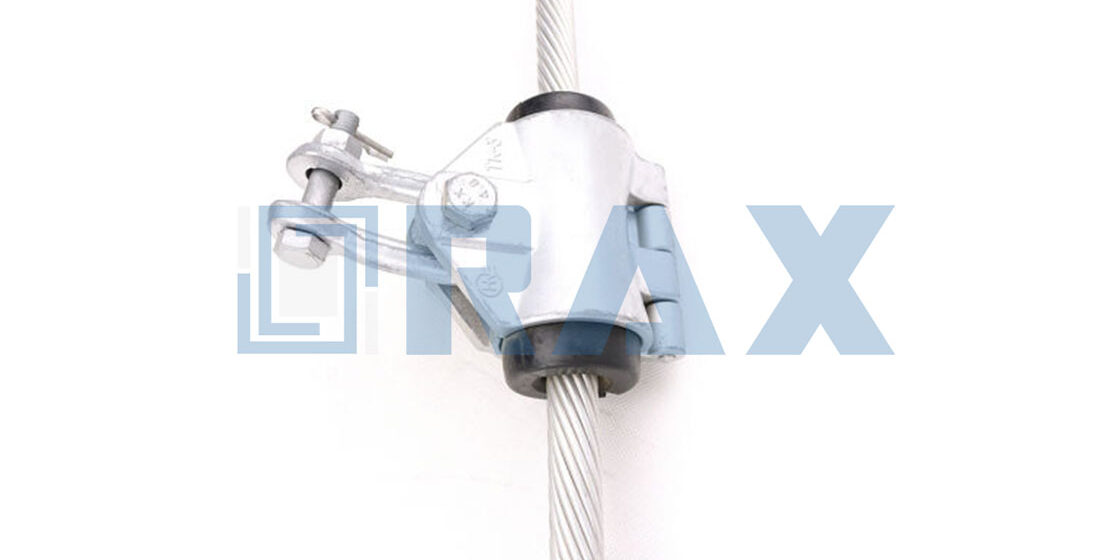
Most procurement teams assume a hot-dip finish automatically guarantees protection, yet improper galvanizing frequently causes Liquid Metal Assisted Cracking that turns pole line hardware into a structural liability under load. Rax Power mandates a coating thickness exceeding 85 microns to ISO 1461 standards, ensuring the zinc layer actually protects the substrate rather than weakening the steel structure.
This article breaks down why traditional casting fails under high torque compared to hot-forging and how a single 1mm deviation in cross arms forces expensive on-site rework during grid rollouts. You will get the exact audit points needed to separate legitimate manufacturers from those hiding compliance gaps in their mill test reports.
Pole Line Hardware Sourcing Risks
Specifying non-compliant utility hardware in bulk procurement is a cascading financial and structural liability. A single substandard component can trigger catastrophic grid failure, making adherence to IEC and ISO standards a non-negotiable baseline for utility-scale projects.
When utility contractors source pole line hardware based solely on the lowest per-unit price, they are buying a structural liability. Non-compliant hardware often hides microscopic internal flaws, residual stress, or inadequate surface protection—such as liquid metal assisted cracking (LMAC) or hydrogen blisters. These defects bypass standard visual checks but expand rapidly under cyclic wind and ice loads, ultimately causing brittle, catastrophic shear failures on the tower.
The financial fallout from these structural failures dwarfs any initial procurement savings. Consider a bulk tender for 100,000 fasteners: a seemingly minor 1% defect rate introduces 1,000 hidden points of failure into the grid. The direct costs of emergency grid shutdowns, mobilizing specialized crews for remote pole replacements, and the massive liability risks from downed power lines can instantly erase a project’s profit margin. In utility infrastructure, the cheapest component inevitably yields the highest total lifecycle cost.
The Necessity of IEC and ISO Standards in Bulk Procurement
To neutralize these bulk sourcing risks, procurement specifications must explicitly anchor to international engineering standards rather than generic manufacturer claims. The IEC 120 standard defines rigorous mechanical load testing, verifying that critical components can physically sustain their rated ultimate tensile strength without yielding. In parallel, the ISO 1461 standard governs hot-dip galvanizing, strictly dictating bath chemistry and ensuring a mean coating thickness exceeding 85 microns to prevent premature white rust and structural corrosion.
We frequently see buyers attempt to cut corners with off-spec hardware, only to face devastating field replacements down the line. That is why our manufacturing approach treats IEC and ISO compliance as the absolute baseline, not a premium upgrade. By engineering high-strength pole hardware specifically to withstand the extreme torque and environmental loads of global utility networks, we actively eliminate the brittle fracture risks that plague non-compliant imports, ensuring our B2B partners receive zero-defect consistency for their grid projects.
Mistake 1: Ignoring Galvanizing Standards
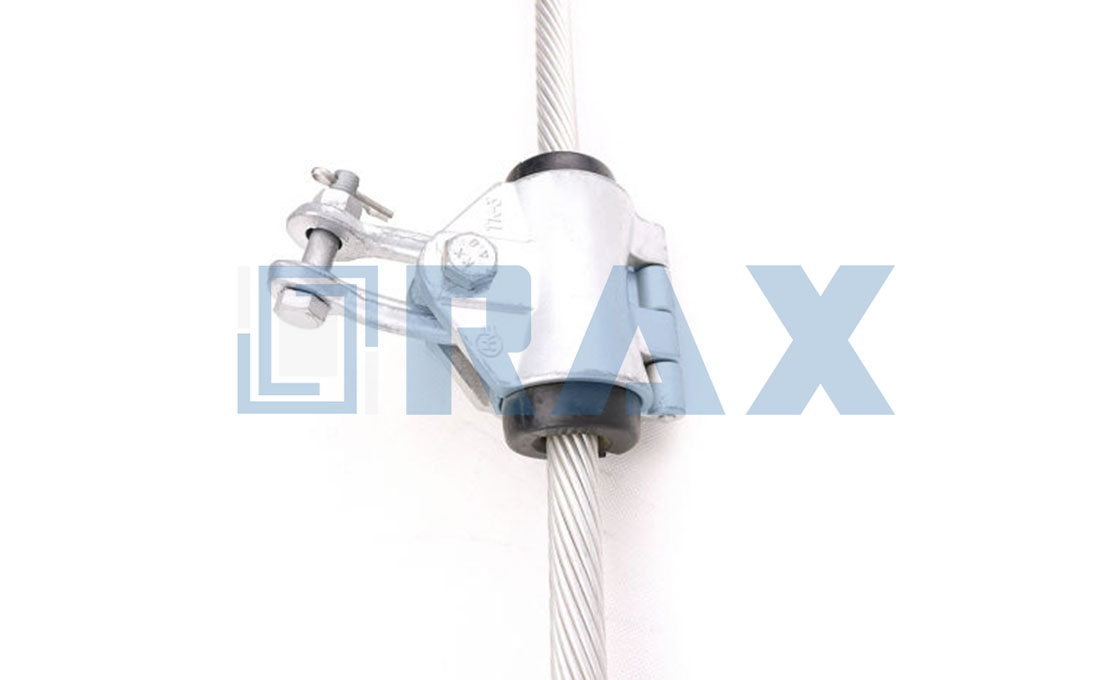
The confusion between ASTM A153 and ISO 1461 often leads to costly specification errors in bulk procurement. While ASTM A153 is commonly cited for hardware, it permits significant variance in coating thickness based on the material thickness of the individual component, often resulting in inadequate protection on smaller parts like nuts and bolts. In contrast, ISO 1461 provides a rigorous, unified standard for hot-dip galvanized coatings on finished fabrications, demanding consistent coverage regardless of part size. For utility projects exposed to the elements, relying on the looser tolerances of ASTM A153 introduces a high probability of uneven cathodic protection, accelerating rust at critical connection points.
The 85 Micron Threshold for Harsh Environments
Standard coating requirements often leave hardware vulnerable in industrial or coastal regions where airborne salinity and humidity accelerate corrosion. To prevent premature failure, specifications must demand a mean coating thickness exceeding 85 microns. This thickness creates a dense, sacrificial layer that significantly extends the service life of steel components by slowing the oxidation rate. A coating averaging 85 microns or more ensures that the zinc layer acts as a long-term anode, protecting the underlying steel structure even after minor surface abrasions occur during installation.
Mistake 2: Casting vs Hot-Forging Weakness
Traditional cast hardware is highly susceptible to internal porosity and microscopic shrinkage cavities. When subjected to extreme torque on transmission lines, these hidden metallurgical defects become catastrophic stress points that lead to sudden shear failure.
Why Traditional Castings Fail Under High Torque
Casting is often chosen for its low cost and ability to produce complex shapes, but the process inherently introduces structural risks. As molten metal cools in a mold, it can trap gases and form microscopic voids (porosity) throughout the component. In high-tension utility environments, hardware experiences immense multi-directional loads. The uneven, crystalline grain structure of cast steel lacks the necessary shear strength to absorb these dynamic forces, frequently resulting in fatigue cracking, deformation, or sudden structural collapse under peak torque.
Hot-Forging for Triple Eye Rods and Dead-End Grips
To eliminate the risk of brittle fracture and shear failure in critical junction points, we exclusively utilize hot-forging technology rather than casting for high-stress components like triple eye rods and dead-end grips. The hot-forging process compresses solid steel billets under extreme heat and pressure, aligning the metal’s internal grain structure with the physical shape of the part. This metallurgical refinement completely eliminates internal voids and significantly enhances the component’s impact toughness, ensuring superior metal strength that prevents shear under high torque.
Mistake 3: Incorrect Anchor Load Calculation
A misalignment of just 5 degrees between the guy load direction and the installed anchor axis can introduce dangerous lateral forces that reduce effective holding capacity by compromising soil shear strength.
The Physics of the 5-Degree Alignment Threshold
Earth anchors—whether helical, expanding, or cross-plate—are engineered to resist axial loads (pulling straight out along the shaft axis). When a guy wire tension is applied at an angle to this axis, the load is split into two vectors: a beneficial axial component and a destructive lateral component. The industry safety threshold is strictly set at 5 degrees because beyond this point, the lateral force increases exponentially, turning a tension problem into a bending moment problem that most anchors are not designed to sustain.
We have witnessed this failure mode frequently in projects involving high-tension conductors. During our in-house load testing—which strictly adheres to IEC 120 parameters—we have observed that anchors pulled at slight off-axis angles fail significantly faster than those tested axially. Even a high-strength helical anchor with a rated ultimate capacity of 20 kN can fail prematurely if the installation crew does not account for the guy wire’s angle of approach.
Soil Wedge Disturbance and Structural Integrity
Beyond the vector math, the primary risk is the disturbance of the ‘soil wedge’—the cone of earth that provides the anchor’s resistance. An axial pull compacts this soil against the anchor helix or plate. A lateral load, however, shears the soil. In utility projects requiring high-breaking loads, such as the specialized infrastructure we supply for the Russian market, this shear failure is catastrophic. It does not give warning signs like elongation; the pole simply fails when the soil suddenly gives way.
📋 Actionable Steps
- Step 1: Always conduct a pre-installation survey to verify the guy wire lead angle matches the anchor’s proposed entry angle.
- Step 2: Use a transit level or laser guide during anchor installation to ensure the shaft is driven directly in line with the guy load vector.
- Step 3: If obstructions force a misalignment greater than 5 degrees, you must calculate a higher safety factor (often 2.0x) or utilize a swivel adapter to re-align the load path to the anchor axis.
Mistake 4: Tolerance Deviations in Cross Arms
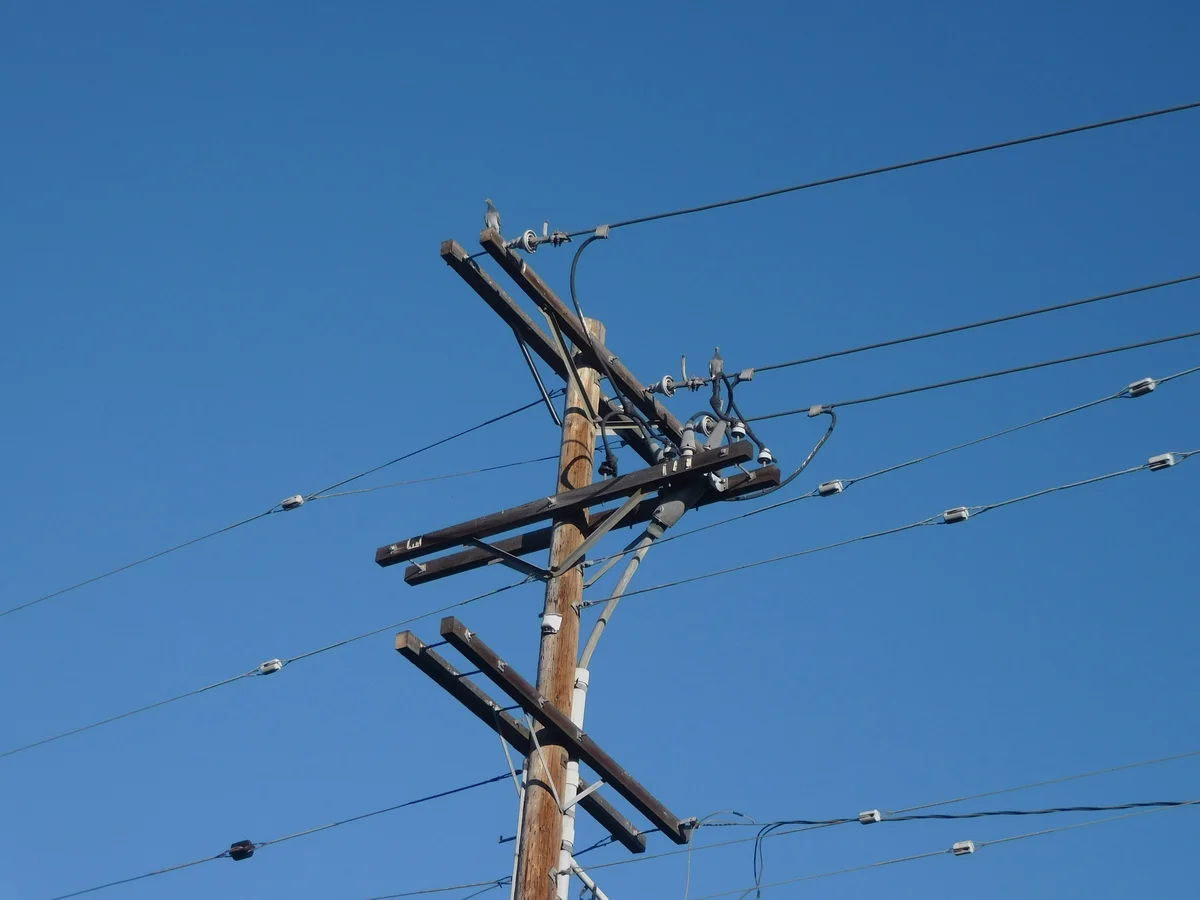
In high-volume utility construction, a 1mm deviation in steel cross arms is a critical failure point. It transforms a standard assembly into a field modification nightmare, stalling grid rollouts and inflating labor costs.
The Domino Effect of Misalignment
Alignment issues arise when dimensional tolerances are not strictly controlled. Even minor variances in hole spacing or bracket length prevent hardware from seating flush against the pole. This creates gaps that cause bolt misalignment, necessitating on-site drilling or shimming. Such disruptions break the project schedule and introduce safety risks associated with improvised structural adjustments.
Precision via Automation
Consistency across thousands of units requires eliminating manual variability. We rely on automated production lines to remove human error from the equation. Our facility uses advanced CNC and semi-automatic machinery to fabricate cross arms with a guaranteed 1mm tolerance. This consistency ensures that when our clients open a container, every unit fits the blueprint perfectly without deviation.
Mistake 5: Missing SGS and IEC Test Docs
In a grid failure audit, a generic material datasheet is not a legal defense. Without verified IEC 120 load testing and batch-specific SGS documentation, the financial liability for structural failure shifts entirely to the procurement entity.
The Legal Void of Unverified Load Testing
Relying on unverified manufacturer claims for critical infrastructure components is a direct liability exposure. When overhead line hardware fails under load, regulatory bodies and utility auditors demand traceable proof of compliance with IEC 120 standards. Without third-party verification, such as SGS certifications, or specific in-house test reports detailing proof loads and breaking loads, the procurement entity loses the ability to transfer risk. This absence of documentation can void warranty claims and lead to significant financial penalties for non-compliance during post-failure litigation.
Double-Review QC as a Compliance Mandate
Utility-grade procurement requires a zero-defect tolerance that single-pass inspection systems cannot guarantee. While initial production monitoring is standard, it often misses subtle inconsistencies that only appear during final assembly or packaging. A robust double-review process, where 100% of the shipment undergoes a secondary check, is essential to catch dimensional variances or surface defects before the hardware reaches the site. This redundancy is not merely a quality preference; it is a compliance requirement for major utility tenders where rejected batches can delay entire grid projects.
Trusted Hardware Procurement Strategies
True procurement security goes beyond price quotes; it requires verifying the supply chain’s operational integrity to ensure zero-defect delivery on critical infrastructure.
Actionable Verification Protocols
📋 Actionable Steps
- Step 1: Request unedited video footage of the production line running your specific order to verify automated machinery usage.
- Step 2: Demand QC logs showing the double-review process for the last three similar production batches.
- Step 3: Ask for specific galvanizing bath chemistry records to confirm ISO 1461 compliance rather than accepting generic certificates.
Verifying a manufacturer requires looking past the showroom floor and inspecting the quality control infrastructure. Many suppliers outsource finishing or inspection, creating a disconnect between dimensional accuracy and surface protection. We mitigate this risk by maintaining a dedicated 10-person QC team that monitors every stage of production, ensuring that the 1mm tolerance standard we promise is actually held in the batch you receive. When vetting a partner, insist on a live walkthrough of their testing area to confirm they have in-house load testing capabilities compliant with IEC 120, rather than relying on third-party labs that slow down the feedback loop.
Leveraging OEM/ODM for Project Specificity
Standard catalog components often fail to address the unique mechanical stresses of specific regional grids or installation environments. Strategic procurement involves utilizing OEM capabilities to tailor hardware geometry, material grade, or coating thickness to the project’s exact environmental reality. We frequently transform client drawings or samples into finished products via custom mold development, a necessity for projects requiring high-breaking load hardware in extreme climates like Russia. Do not accept ‘close enough’ substitutes; if the local tender specifies a specific bracket geometry or a unique bolt pattern, the manufacturer must demonstrate the ability to forge or cast that tooling from scratch.
Optimizing Container Loading and Logistics
Freight optimization is a engineering discipline that must occur before production packaging is finalized. High-density items like steel cross arms and earth anchors can sink a budget if packed loosely. We optimize container loading plans by designing custom packaging crates that interlock efficiently within standard 20ft or 40ft containers. This approach minimizes ‘air’ volume and protects the hot-dip galvanized surface from in-transit abrasion. For B2B buyers, requiring a preliminary loading plan from the manufacturer is a direct negotiation lever to reduce landed costs, especially when shipping to high-tariff regions like South America or Southeast Asia.
Conclusion
Look, I can’t stress this enough: cutting corners on pole line hardware specs always costs you more in the long run. Whether it’s liquid metal embrittlement from bad galvanizing or shear failure from cheap castings, the risk to your grid infrastructure is massive. You need a partner who understands that a 1mm deviation isn’t just a number—it’s a field failure. Stick to manufacturers who enforce ISO 1461 standards and hot-forging processes. Your reputation depends on sourcing components that survive the torque, the tension, and the elements. * Demand full IEC and SGS documentation before release. * Verify hot-forging capabilities for critical load-bearing items. * Insist on automated production to guarantee 1mm tolerances. * Double-check galvanizing exceeds 85 microns for corrosion protection. * Always calculate anchor alignment within 5 degrees of load.Frequently Asked Questions
What causes galvanic corrosion in dissimilar metals?
Galvanic corrosion happens when dissimilar metals are electrically connected in the presence of an electrolyte like moisture. To mitigate this, engineers should use isolating washers or select compatible metal pairs to prevent sacrificial degradation of the anode. Applying protective coatings to the cathodic metal can also slow down the electrochemical reaction rate significantly. Regular maintenance checks are essential to identify early signs of deterioration at connection points.
Can mismatched conductor clamps cause mechanical failure?
Using clamps that do not match the conductor’s diameter leads to uneven pressure distribution and eventual grip failure. This mismatch causes localized stress concentration, damaging the conductor strands and compromising the line’s mechanical integrity. Engineers must strictly verify compatibility between hardware dimensions and the specific conductor type being used. Precise tolerance ensures the clamp maintains a secure hold under varying load conditions.
What is the impact of residual stress in forging?
Residual stress from improper forging can lead to crack propagation under high mechanical loads or environmental stress. Unlike traditional casting, Raxpower utilizes advanced hot-forging to align the metal grain structure, thereby enhancing tensile strength. Controlled cooling processes further relieve internal stresses, ensuring superior dimensional stability and fatigue resistance. This method provides reliable performance that casting methods cannot consistently achieve in critical applications.
How is batch variability in coating thickness prevented?
Inconsistent coating thickness often results from fluctuating bath temperatures or poor drainage during the extraction process. At Raxpower, we adhere strictly to ISO 1461 standards, ensuring a mean coating thickness exceeding 85 microns. Our dedicated 10-person QC team monitors every stage to guarantee uniformity across all production batches. This rigorous double-review process prevents delamination and ensures long-term rust resistance.
How does hardware installation complexity impact OPEX?
Complex hardware designs often require specialized tools and skilled labor, significantly driving up operational expenditure during deployment. Simplified configurations that allow for standard tool usage can drastically reduce installation time and associated labor costs. Accurate manufacturing tolerances ensure components fit together seamlessly without the need for field modifications. Streamlined designs ultimately lower the total cost of ownership for large-scale utility projects.