
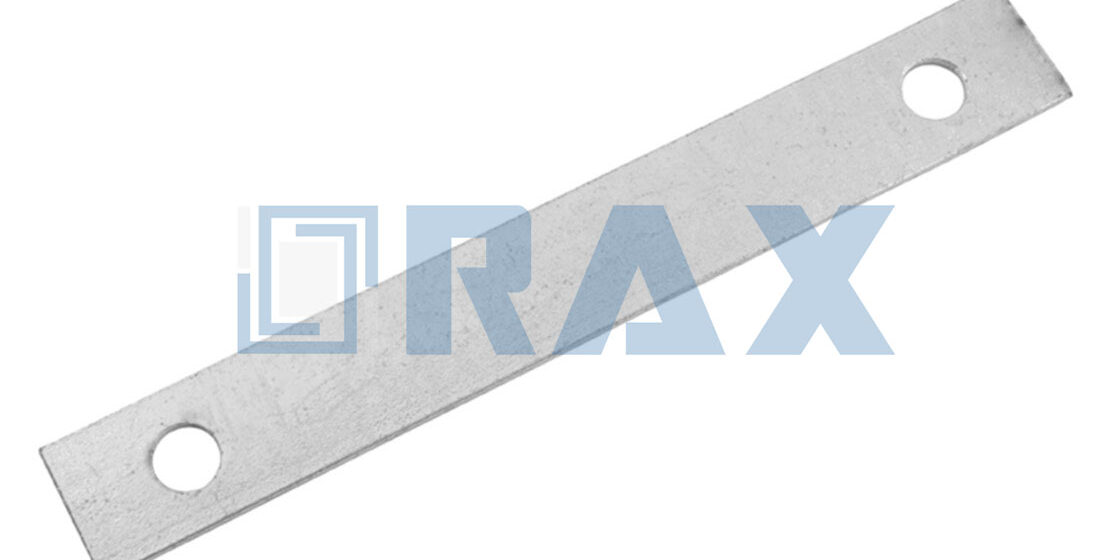
Most engineers treat crossarm braces as commodity hardware until the field crew calls about a mounting bolt that won't align. When you specify 1-1/4" x 1/4" flat steel, the 7/16" crossarm hole and 9/16" pole hole are not suggestions. They are the difference between a clean V-type install and a day lost to reaming and shimming. Getting crossarm braces sizing right depends on matching hole centers, material thickness, and galvanizing class to your actual pole and crossarm geometry before the kit ships.
You get the exact dimensional tolerances, hole spacing rules, and material grades that keep a brace code-compliant under full line load. We also list the ISO 1461 galvanizing requirements and IEC 120 testing benchmarks our production line applies to every heat, so you can verify the lot against utility standards before the truck leaves the yard.
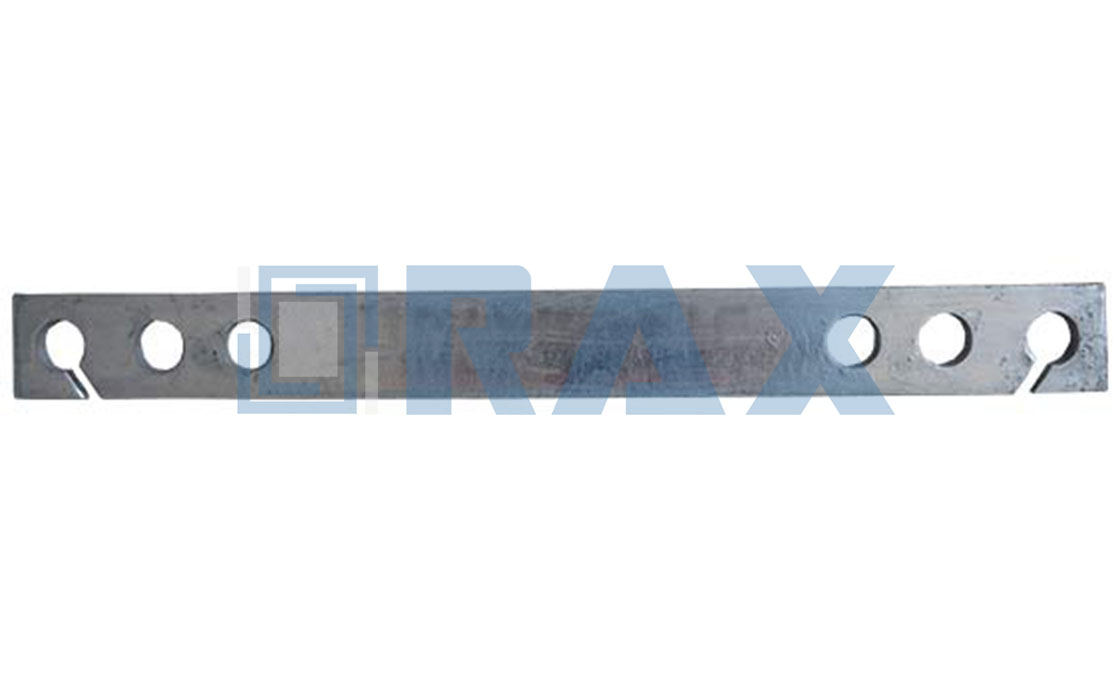
Key Specs and Standard Features
Precision dimensional control and superior material strength are the primary determinants of hardware lifespan and grid stability in utility infrastructure projects.
Dimensional Consistency and Field Assembly
For B2B buyers and utility contractors, the frustration of field modifications cannot be overstated. When components arrive at the job site, every unit must fit Smoothly without the need for grinding or re-drilling. Strict adherence to dimensional tolerances is therefore not merely a preference but a necessity for project efficiency. Automated production lines ensure this uniformity across bulk orders, guaranteeing that a crossarm brace manufactured on one day aligns perfectly with crossarms produced weeks later. This consistency is verified through rigorous gauge inspections, ensuring that mounting hole centers and spacing meet the critical standards required for secure pole line assembly.
Hot-Forging vs. Casting: A Structural Comparison
The manufacturing method fundamentally dictates the load-bearing capacity of pole line hardware. While casting involves pouring molten metal into molds—a process that can introduce porosity and air pockets—hot-forging involves shaping steel under extreme pressure. This process aligns the grain structure of the metal, significantly enhancing its tensile strength and fatigue resistance. For transmission hardware subjected to constant wind loads, ice accumulation, and wire tension, forged components offer superior structural integrity. Choosing hot-forged braces and hardware minimizes the risk of brittle failure and ensures the hardware can withstand high-breaking load requirements often specified in extreme environment tenders.
Corrosion Protection and Galvanizing Standards
Long-term durability in overhead line infrastructure is entirely dependent on corrosion resistance. Exposure to harsh weather, industrial pollutants, and coastal salts demands a Strong defense mechanism. Compliance with international galvanizing standards ensures that the zinc coating provides a sacrificial layer that protects the underlying steel substrate. Beyond mere thickness, the quality of the galvanizing is judged by the finish; a smooth, bright finish typically indicates a controlled dipping process free from slag or impurities. This level of protection reduces long-term maintenance costs and extends the service life of the hardware, providing a higher return on investment for utility operators.
Quality Assurance and Verification Protocols
In a supply chain where a single failure can compromise grid safety, statistical sampling is often insufficient. A Thorough quality assurance protocol typically involves a double-review process where every individual unit undergoes visual and dimensional inspection before packaging. This "zero-defect" mindset is supported by third-party process certification, validating that the manufacturing machinery and heat treatment processes consistently meet industry benchmarks. Additionally, in-house structural load testing simulates real-world stress conditions, providing documented evidence that the hardware will perform as expected when installed on the grid.
| Feature | Standard Specification | Testing & Verification | Engineering Benefit |
|---|---|---|---|
| Dimensional Tolerance | Strict 1mm tolerance (Steel Cross Arms) | Dimensional gauge inspection per IEC 120 | Ensures high-precision fit and field assembly compatibility |
| Corrosion Protection | Hot-dip galvanizing (ISO 1461 compliant) | Coating thickness measurement (mean >85 μm) | Delivers long-term durability with a smooth, bright finish |
| Manufacturing Method | Automated production & hot-forging | SGS third-party process certification | Provides superior strength and precision versus casting |
| Quality Assurance | Double-review process (100% inspected twice) | In-house structural load testing | Guarantees structural reliability and zero-defect output |

Conclusion
Hot-forged crossarm braces hold their shape better than cast alternatives in high-wind spans when you match the load chart correctly. Pick pieces held to 1mm thickness tolerance, coated per ISO 1461, and tested under IEC 120 rules. Thinner steel and weak plating start failing at the pole face after two full winters.
- Verify your assembly drawings against the brace grade before placing any order.
- Send span length, conductor weight, and local ice load to the Rax Power engineering desk for a free load calculation walkthrough.
- Request our hot forged versus casted hardware comparison, the ISO 1461 galvanizing thickness sheet, or your IEC 120 testing notes.
Frequently Asked Questions
Can I request product samples before placing a bulk order?
Please contact the sales team at Raxpower to arrange sample shipments to verify physical properties under actual application conditions.
What is the typical B2B delivery lead time?
At Raxpower, our standard manufacturing lead time is typically 15-20 days from deposit receipt. Heavy customization may add 5-7 working days.