
ASTM A473 is frequently confused with a dimensional specification in project bid packets, but it strictly governs the chemical and mechanical properties of stainless steel forgings. Using astm a473 clevises without verifying the specific grade designation—typically 316 stainless steel per Designation A—creates a compliance risk on coastal or heavy-industrial sites. The material chemistry dictates corrosion resistance, yet the safe working load depends on the AISC dimensions and a 5:1 safety factor based on net tensile area.
Manufacturing these components requires strict adherence to forging controls for martensitic grades and precise pin hole tolerances. This technical breakdown allows you to audit supplier certifications effectively and match the exact stainless grade to your environmental conditions.
What ASTM A473 Actually Defines
ASTM A473 is the material specification governing the chemical composition and mechanical properties of stainless steel forgings. It defines what the metal is made of, not the physical dimensions of the finished part.
Material Chemistry Requirements
ASTM A473 strictly outlines the allowable ranges for different chemical elements to ensure the stainless steel can withstand specific environmental stressors. For pole line hardware, which often faces harsh outdoor conditions, the control of elements like Chromium and Nickel is critical. Chromium levels determine corrosion resistance, while Nickel contributes to ductility and toughness in varying temperatures.
Chemical limits serve as non-negotiable baselines for every heat lot of stainless steel entering the forging process. Rigorous verification of the chemical composition ensures that the final clevis product possesses the intrinsic corrosion resistance required for utility projects. This scrutiny prevents premature failure due to chemical impurities that are often overlooked in lower-tier manufacturing.
Mechanical Property Standards
Beyond chemistry, ASTM A473 sets the bar for mechanical performance, specifically tensile strength, yield strength, elongation, and hardness. These metrics determine the load-bearing capability of the hardware. For a clevis, where the integrity of the connection is paramount, the steel must exhibit sufficient yield strength to deform elastically under load without snapping, and adequate elongation to absorb shock.
Hot-forging technology maximizes mechanical properties by aligning grain flow with the clevis contour. Unlike casting, which can result in a coarse grain structure, this alignment significantly enhances fatigue resistance and impact toughness. This ensures the final product meets or exceeds ASTM A473 mechanical requirements in high-stress applications.
Distinction From Dimensional Specs
A common source of confusion in the industry is conflating material standards with dimensional specifications. ASTM A473 provides the recipe for the steel itself, but it does not dictate the shape, size, or tolerance of the clevis. For example, a clevis can be made from ASTM A473 compliant 316 stainless steel but still be useless if the pin hole diameter or the jaw width does not match the required Grinnell or ANSI dimensional standards.
Engineers must specify both material grade and dimensional standard to prevent assembly failures. In our experience, successful sourcing treats material integrity (via mill test reports) and dimensional accuracy (via gauging) as separate but critical checkpoints.
| Attribute | ASTM A473 (Material) | Dimensional Standards (e.g., Grinnell) |
|---|---|---|
| Primary Focus | Chemistry & Mechanical Strength | Physical Size & Shape |
| Defines | Alloy composition (Cr, Ni, Mo %) | Pin hole diameter, jaw width |
| Verification Method | Mill Test Reports (MTR), Spectrometry | Calipers, Go/No-Go Gauges, CMM |
How Clevises Work in Rigging
Load Distribution Mechanics
In pole line hardware, a clevis functions as a critical load-transfer node, converting the linear tension of guy wires into compressive forces at the anchor points. The structural integrity relies on a “three-point loading” dynamic: tension is applied to the outer ears while the opposing force concentrates on the pivot pin. Because these components endure massive shear and tensile stress—especially in regions like Russia where extreme weather demands high breaking loads—the forging process is non-negotiable. Our engineering team utilizes hot-forging technology rather than casting to align the metal grain structure with the load path, ensuring superior strength and preventing material failure under heavy utility grids.
Pivot Pin Integration
The interface between the clevis eye and pivot pin dictates rigging longevity and requires strict tolerance control. While ASTM A473 governs the material chemistry for stainless steel forgings, it does not mandate dimensional fitment. To guarantee proper integration, our manufacturing process utilizes automated machining to maintain a strict tolerance level within 1mm, which prevents dangerous lateral play or binding during installation.
Rigging Configuration Types
Industrial rigging configurations rely on clevises as primary articulation points to enable movement without compromising stability. These components are integral to utility setups, linking turnbuckles, rods, and anchors into cohesive systems. We actively support complex OEM/ODM projects by transforming custom drawings or concepts into finished hardware via specialized mold development. By integrating this flexibility with advanced automation, we ensure that every rigging assembly delivers reliable, consistent performance.
Choosing the Right Stainless Steel Grade
Specifying generic “stainless steel” without defining the exact alloy grade is the leading cause of premature rigging failure in aggressive environments.
Selecting the correct alloy for pole line hardware is not merely a matter of corrosion resistance; it is a critical decision balancing tensile strength, magnetic properties, and environmental aggression. A common procurement error involves treating all stainless grades as interchangeable, specifically substituting lower-cost Ferritic or Martensitic grades for Austenitic standards in applications requiring high ductility or chloride resistance. Understanding the metallurgical differences between AISI 304, 316, 410, 430, and 17-7PH is essential for ensuring the structural integrity of overhead lines.
The Austenitic Standard: 304 vs. 316
For general utility applications, AISI 304 is the industry baseline due to its excellent balance of strength and corrosion resistance. However, in environments exposed to marine atmospheres or industrial de-icing salts, 304 becomes vulnerable to pitting and stress corrosion cracking. Grade 316 is chemically distinct because it contains Molybdenum (typically 2-3%), which significantly enhances resistance to chlorides and reducing acids. Selecting 304 in a high-chloride environment to reduce material costs often results in rapid degradation of the hardware’s tensile capabilities, necessitating costly early replacement.
Martensitic and Precipitation Hardening Options
When the application demands higher mechanical strength rather than maximum corrosion resistance, Martensitic grades like AISI 410 are utilized. Unlike Austenitic steels, 410 is magnetic and can be heat-treated to achieve higher hardness levels, making it suitable for high-wear components. However, this comes at the cost of lower weldability and reduced corrosion performance compared to 304.
For specialized scenarios requiring exceptional strength-to-weight ratios, 17-7PH (Precipitation Hardening) offers a superior solution. This grade provides high yield and tensile strengths, often exceeding those of standard martensitic steels, while maintaining better corrosion resistance. It is the preferred choice for critical components where high breaking loads are mandatory and dimensional stability under stress is a non-negotiable requirement.
Avoiding the Ferritic Substitution Trap
Never substitute AISI 304 with AISI 430 to reduce purchase price. While 430 offers magnetic properties and adequate corrosion resistance for mild indoor use, it has poor formability and significantly lower ductility. In pole line hardware subject to vibration or shock loads, 430 is prone to brittle fracture.
Buyers must strictly enforce material specifications to prevent supply chain substitutions. Grade 430 is often marketed as a cost-effective alternative but lacks the fracture toughness required for dynamic overhead line systems. Rigorous material verification is necessary to ensure that the delivered hardware matches the specified grade, particularly for safety-critical tension and suspension clamps.
Surface Treatment and Passivation
Unlike carbon steel components that rely on hot-dip galvanizing for protection, stainless steel hardware derives its durability from a passive oxide layer. Forging processes can contaminate this surface with free iron, leading to localized rust (tea-staining). To restore corrosion resistance, stainless components—specifically those manufactured under ASTM A473—must undergo pickling and passivation. This chemical treatment removes surface contaminants and enhances the natural oxide layer, ensuring the material performs to its full corrosion potential without the need for external coatings.
| Feature | Specification | Advantage |
|---|---|---|
| Material Grade | AISI 304, 316, 410, 430, 17-7PH | Tailored corrosion resistance and strength for diverse environments |
| Corrosion Resistance | Marine-grade (316) or Industrial (304/410) | Prevents rust at weld points and ensures long-term durability |
| Mechanical Strength | Hot-forged Martensitic or Austenitic Steel | Superior tensile strength compared to traditional casting methods |
| Surface Finish | Hot-dip Galvanized (>85 microns per ASTM A153/ISO 1461) | Compliant with ISO 1461/ASTM A153 for maximum weather protection |
| Dimensional Accuracy | Strict 1mm Tolerance via Automated Production | Ensures precise fit and reliable assembly in critical infrastructure |
Balancing Strength and Machinability
The Engineering Trade-Off: Yield vs. Machinability
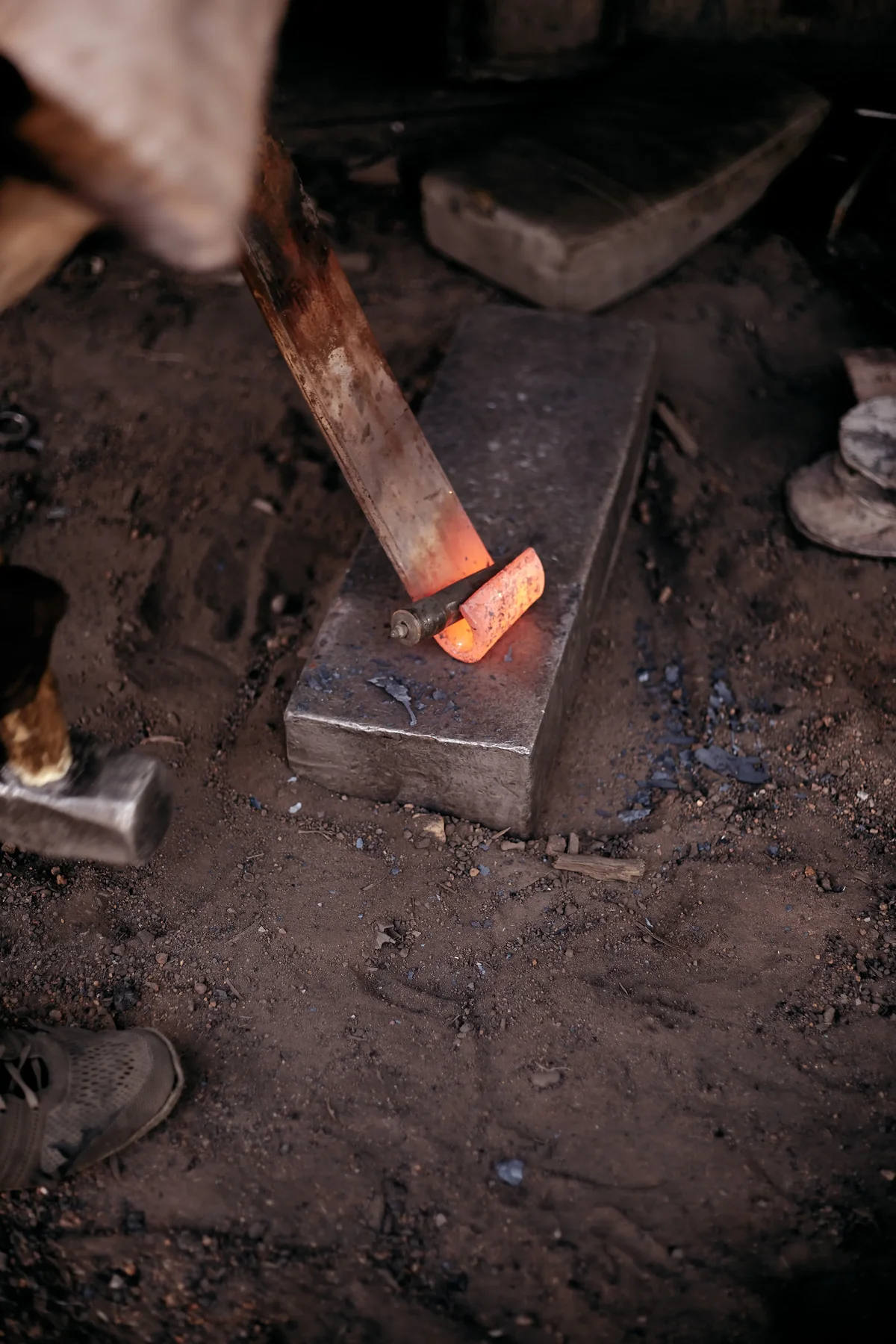
Utility hardware production involves an inherent engineering contradiction between tensile strength and machinability. As material hardness increases to meet high-breaking load requirements—essential for extreme environments or heavy-duty anchoring systems—the alloy becomes significantly more brittle and resistant to cutting, creating a difficult trade-off for intermediate buyers.
- Yield Strength (The Safety Floor): This metric determines the stress point at which a component permanently deforms rather than snapping. For structural anchors and clevises, exceeding this threshold during installation torque can render the hardware useless before it ever sees utility service.
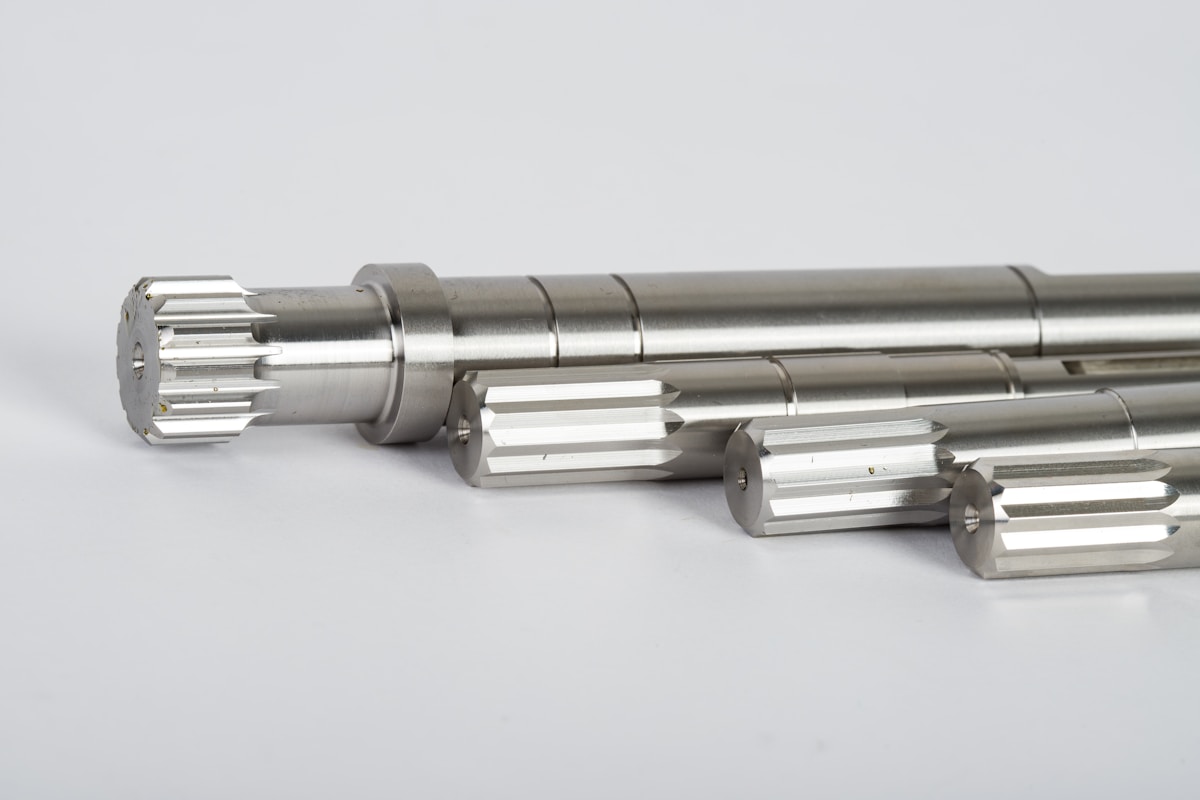
- Machinability (The Manufacturing Ceiling): High-strength martensitic stainless steels are notoriously difficult to machine. The harder the alloy, the faster tool wear accelerates, making precise pin-hole tolerances significantly harder to achieve cost-effectively.
For intermediate buyers, the challenge lies in identifying components that balance these extremes. If a manufacturer prioritizes pure yield strength above all else, they risk poor dimensional accuracy on pivots and pins. Conversely, highly machinable grades often sacrifice the raw breaking load required by Class C soil ratings.
Forging Controls for Martensitic Grades
Martensitic stainless steels (e.g., Grades 410, 420) possess high strength but remain critically sensitive to thermal shock during manufacturing; strict adherence to forging “thermal windows” and immediate annealing is the only reliable method to prevent micro-cracking that leads to field failure.
The Criticality of Thermal Windows
When forging ASTM A473 martensitic grades, the primary failure mode is not achieving mechanical strength, but inducing latent defects. Unlike austenitic grades, martensitic steels have a narrow “plastic range.” If the material temperature drops below the critical forging threshold—typically around 925°C (1700°F)—ductility plummets. Continuing to forge the steel in this state causes “cold shuts” or internal fissures that act as stress concentrators.
Procurement managers must verify that the supplier utilizes pyrometry or infrared thermal monitoring on the hammer or press. Forging operations should cease once the billet exits the optimal thermal window, and any under-heated material must be rejected and re-processed rather than forced into the die.
Post-Forging Annealing & Stress Relief
Forging leaves martensitic steel in a highly stressed, hard state with untempered martensite. If this material is allowed to cool to room temperature without intervention, it becomes too brittle for subsequent machining or safe service. Furthermore, highly stressed martensitic parts are susceptible to hydrogen embrittlement or liquid metal embrittlement during later hot-dip galvanizing processes.
Best-in-class manufacturing mandates a controlled annealing cycle immediately after forging. This involves reheating the part to 650°C–760°C (1200°F–1400°F) and holding it to allow the internal structure to transform into a softer, tougher machineable state (typically ferrite or pearlite depending on the grade). Skipping this step to save energy is a common red flag that drastically increases the risk of catastrophic cracking in the field.
Grain Structure Control and Decarburization
Excessive heat or prolonged soak times at high temperatures can lead to grain coarsening, which severely impacts impact toughness. A coarse grain structure in a martensitic clevis or anchor shank will result in a brittle fracture under sudden load rather than a ductile bend. Engineers must specify ASTM E112 grain size requirements (typically demanding a fine grain size of 5 or finer) in the technical purchase order.
Watch for decarburization on the surface. If the forging atmosphere is not controlled, carbon depletion at the surface creates a soft, weak layer that cannot support the high yield strength of the core material, leading to premature surface fatigue.

Ensuring Pin Hole Fitment
Strict dimensional control over pin holes and grip widths is essential for zero-fail assembly and structural integrity. Fitment is directly linked to rigging safety, as misalignment causes point-loading and premature fatigue failure in overhead line infrastructure.
In overhead line infrastructure and heavy-duty rigging, the fitment between a clevis pin and the component’s eyelet is not merely a mechanical preference—it is a non-negotiable engineering parameter. A “free fit” or misaligned bore is one of the leading causes of premature fatigue failure in utility hardware. When a pin does not seat perfectly flush against the full diameter of the gripping material, point-loading occurs. This concentrates immense shear stress onto a microscopic surface area rather than distributing it evenly across the entire interface.
The Consequences of Poor Bore Fitment
Even a variance as small as a few millimeters can compromise an entire installation. When you are dealing with high-tension guy lines, cross arms, or dead-end grips, a pin that wobbles or sits at an angle creates a massive leverage effect. Under continuous vibration—which is inherent in outdoor power transmission environments—this micro-movement rapidly wears down both the pin and the inner wall of the hole. The result is the dreaded “rounding out” of the pin holes, which leads to total hardware failure during extreme weather events.
Dimensional tolerances must be treated with absolute rigidity to prevent field reliability issues. While ASTM A473 and Grinnell dimensions provide baselines, precise machining is required to ensure units meet exact specifications without deviation.
Defining Allowable Variances: Diameter vs. Grip Width
Ensuring perfect pin hole fitment relies on two interdependent physical properties: the exact diameter of the pin hole and the standardized grip width of the clevis or shackle. These two variables must be balanced to accommodate specific rod sizes while maintaining necessary clearance.
- Hole Diameter Precision: The bore must be drilled or machined to match the specified pin diameter within a tight tolerance band. If the hole is too large, the pin will rattle; if it is too small, assembly becomes physically impossible without damaging the hardware. For critical applications, maintaining the net tensile stress area through the pin hole is paramount to ensuring the component retains its rated strength.
- Grip Width Consistency: The grip width defines the distance between the inner faces of the clevis ears. Standard grip widths correspond directly to industry benchmarks (such as Grinnell standard grip widths). A standardized grip width ensures that when the clevis engages with a rod turnbuckle or another piece of peripheral hardware, the mating components align perfectly with the pin axis.
When large grip sizes (greater than 1-1/2 inches) are used, the margin for error shrinks significantly. If there is a substantial difference between the material thickness and the grip size (exceeding 1/2 inch), the pin is susceptible to bending under load. Therefore, rigorous gauge testing per standards like IEC 120 is essential to verify that every manufactured unit falls strictly within these allowable variances before it ever reaches the job site.
Strategic Sourcing for Utilities and Contractors
For utility companies and general contractors procuring hardware in bulk, verifying pin hole fitment should be a primary audit step. You cannot rely solely on visual inspection. Request third-party dimensional reports or SGS certifications that explicitly map out the tolerance levels of the pin holes and grip widths.
Verifying Compliance Through Testing
The Role of Non-Destructive Testing in Stainless Steel Clevises
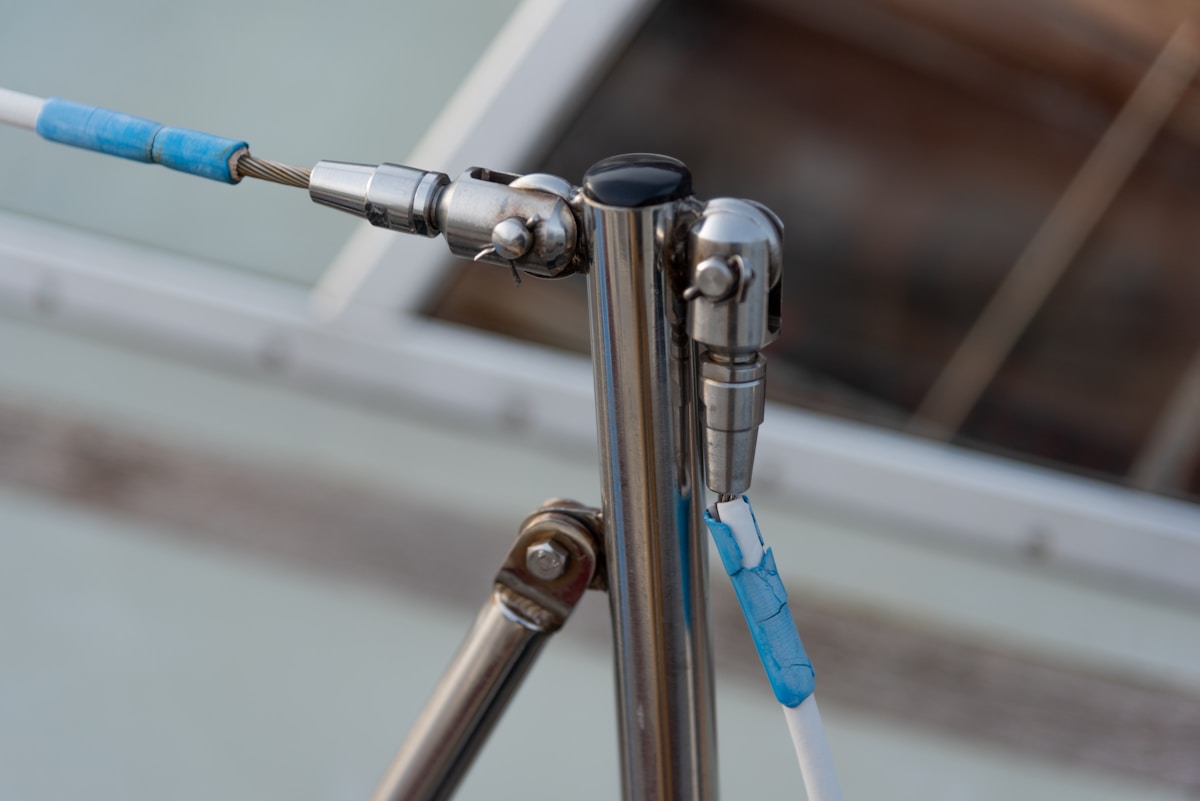
Compliance evaluation for ASTM A473 stainless steel clevises requires careful selection of non-destructive testing protocols. A common industry error is attempting to apply magnetic particle inspection (MPI) to these components. Because many clevises specified under ASTM A473 utilize austenitic grades like 304 or 316, they are inherently non-magnetic. Consequently, MPI offers no meaningful data on surface integrity and can lead to false confidence in the material’s condition.
- Visual Inspection: This remains the primary verification method. It requires checking for surface defects like laps, folds, or seams that may have developed during the forging process.
- Penetrant Testing (Dye Penetrant): For detecting surface-breaking flaws in non-porous materials, liquid penetrant testing is the reliable alternative to magnetic methods when inspecting austenitic stainless steel.
Interpreting Chemical Composition Analysis
While surface integrity is ensured through non-destructive testing, the internal microstructural stability depends heavily on precise material composition. This focus shifts from external defect detection to the fundamental chemical properties that govern long-term performance.
- Carbon Content Limits: Strict controls on carbon content are maintained to prevent sensitization—a process where chromium carbides precipitate at grain boundaries, significantly reducing the material’s local resistance to intergranular corrosion.
- Nickel and Chromium Ratios: Precise verification of these elements ensures the alloy retains its necessary mechanical properties and passive oxide layer formation required for long-term durability.
| Compliance Feature | Testing Methodology | Adherence Standard | Quality Protocol | Technical Significance |
|---|---|---|---|---|
| Dimensional Precision | Gauge Testing | IEC 120 | In-house verification | Ensures exact fit and assembly compatibility |
| Corrosion Protection | Coating Thickness Analysis | ISO 1461 / ASTM A153 | Mean coating >85 microns | Guarantees superior rust prevention |
| Mechanical Strength | Load Testing | Structural Safety Factors | Rigorous in-house validation | Confirms structural integrity under stress |
| Production Consistency | Double-Review Process | Internal QC Standards | 100% inspected twice | Eliminates defects before packaging |
| Global Validation | Third-Party Verification | SGS Requirements | Process/Product verification | Meets international utility market demands |
Matching Grades to Real-World Use
Grade Selection For Corrosion
Selecting the correct ASTM A473 stainless steel grade is the primary defense against premature infrastructure failure. While standard industrial environments often accommodate 410 or 430 series, utility-grade clevises require superior pitting resistance to survive salt spray and heavy moisture. In marine applications or coastal transmission lines, engineers must upgrade to Type 316. The addition of molybdenum in 316 creates a passive oxide barrier that standard carbon steels or lower-grade stainless alloys cannot replicate. Choosing a cheaper grade for a high-humidity zone will inevitably lead to surface corrosion at the weld points, compromising structural integrity.
Mixing material grades with dimensional standards creates significant risks for infrastructure reliability. Our engineering team ensures that the chemical composition meets the exact metallurgical demands of the project’s environment, prioritizing the inherent ductility and corrosion resistance of selected alloys to ensure components survive decades of cyclic loading in harsh atmospheres.
Tolerance Impact On Fit
A clevis is only as reliable as the mechanical fit of its connecting pin. Dimensional deviations—even those falling within broad “standard” tolerances—create micro-movements during load transfer. These micro-movements induce friction and fretting wear, which quickly widens the pin hole and destroys the clevis’s rated load capacity. By adhering to strict dimensional accuracy, often down to a 1mm tolerance threshold, we eliminate the need for field shimming or forcing components into place.
This precision directly correlates to installation efficiency and long-term safety. A perfectly machined pin hole ensures that the load is distributed evenly across the clevis body rather than concentrating stress on a single edge. Our automated production lines are calibrated specifically to maintain these tight tolerances, ensuring that every unit packs correctly and installs seamlessly on the pole line without the play that leads to loose connections.
Application Specific Matching
Matching the manufacturing process to the specific application dictates the hardware’s lifespan. Traditional casting methods may suffice for light-duty, static structures, but they introduce porosity and inconsistent grain structures. For power transmission, guy clamps, and heavy-load anchoring systems, hot-forging is non-negotiable. The hot-forging process aligns the metal grain to the contour of the part, significantly increasing its yield strength and impact resistance compared to cast alternatives.
Different global markets demand distinct performance profiles. In Russia, where extreme cold requires high-breaking loads, we utilize specific heat treatments to prevent brittleness. Conversely, for Southeast Asian tenders focusing on local manufacturing standards, we optimize for high-volume consistency. Our OEM capabilities allow us to adapt the material chemistry and forging parameters to match these exact real-world scenarios, transforming generic drawings into purpose-built, field-ready hardware.
Conclusion
ASTM A473 clevises demand precise material chemistry and mechanical property control. Martensitic grades require strict forging protocols to maintain structural integrity under load. Our engineering team verifies pin hole fitment and dimensional tolerances against Grinnell standards during production. This rigorous oversight ensures every component integrates seamlessly with turnbuckles and rods without compromising safety margins. We prioritize compliance testing to eliminate field failures before they reach your project.
- Confirm stainless steel grade matches your corrosion environment.
- Verify torque specs for guy anchor installations.
- Consult our technical staff for custom engineering guidance on complex rigging configurations.
Frequently Asked Questions
Which stainless steel grades are common in ASTM A473 clevises?
Common grades include austenitic types like 304 and 316, which offer excellent corrosion resistance and formability. Ferritic grades such as 410 and 416 provide higher strength and machinability, while martensitic options are used for high-stress applications. Selecting the right grade depends on the specific environmental and mechanical demands of the installation.
What is the difference between ASTM A473 and ASTM A743?
ASTM A473 is the standard specification for stainless steel bars and shapes (wrought), typically used when clevises are machined from solid stock, while ASTM A743 covers corrosion-resistant steel castings. A473 ensures the material properties associated with wrought products, whereas A743 governs the specific chemical and mechanical requirements for as-cast alloy components.
How does manufacturing from ASTM A473 bar stock compare to casting?
Manufacturing from ASTM A473 bar stock generally offers superior impact toughness and structural uniformity compared to casting. While casting allows for complex geometries and near-net-shape production, wrought materials provide better reliability under dynamic or high-stress loads. The choice depends on balancing cost-efficiency against the need for fatigue resistance.
Can ASTM A473 stainless steel clevises be welded?
Weldability varies significantly by grade; austenitic steels like 316 generally weld well with proper filler metals, while ferritic and martensitic grades may require preheating or post-weld heat treatment. Welding can affect corrosion resistance and mechanical strength if not performed correctly, so engineers must consult specific welding procedures to maintain integrity.