
An anchor clamp is the fitting that grips an overhead cable, ends the span, and transfers the cable’s full pulling force to the pole or wall behind it. Picture the last pole on a street, right before the cable drops to a house: the conductors stop there, tight and loaded, and something has to catch that tension. That something is this fitting, and it repeats at every line end, corner, and termination on the route.
This definition comes straight from daily shop-floor work. RaxPower has manufactured pole line and overhead line hardware since 2003, with 170+ employees working under an ISO 9001 quality system. The short guide below keeps the explanation plain for a first-time buyer and points to deeper resources where they are useful.
What an Anchor Clamp Actually Is
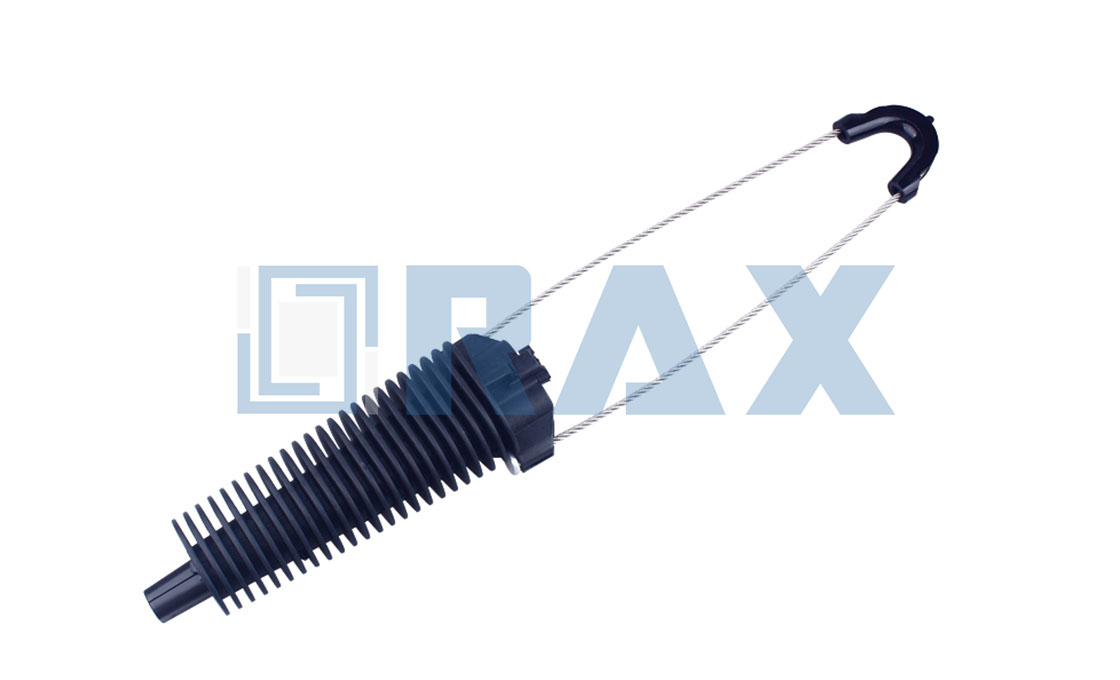
Formally, the device is a mechanical termination fitting: it grips an aerial cable and anchors it to a support structure, carrying the longitudinal tension of the span into that structure. In most markets the terms tension clamp and deadend clamp refer to the same family of hardware, and suppliers use the names almost interchangeably. In its simplest form it has three parts — a body, a gripping element, and a bail or eye that hangs the assembly on a bracket, hook, or insulator.
The part being gripped is usually the cable itself or its messenger wire, never the insulation alone. That distinction matters to buyers: the clamp is a load-bearing mechanical part, not a holder that merely stops the cable from sagging.
Tension Transfer: The Core Function
The core function is tension transfer. An overhead span is strung tight, so every point where the line stops or turns receives the full longitudinal pull of the wire on that side. The clamp accepts that pull through its grip and passes it, through the body and bail, into the pole bracket or wall fitting — leaving the cable seated and undamaged.
This is what separates it from a suspension clamp, which only carries the vertical weight of the cable on straight intermediate spans and lets the conductor move. When the wind loads a span, the suspension hardware swings with the wire while the anchoring hardware at the corner pole holds the line in place. The two work as a pair on almost every aerial route.
How the Grip Holds: Wedge vs Bolt
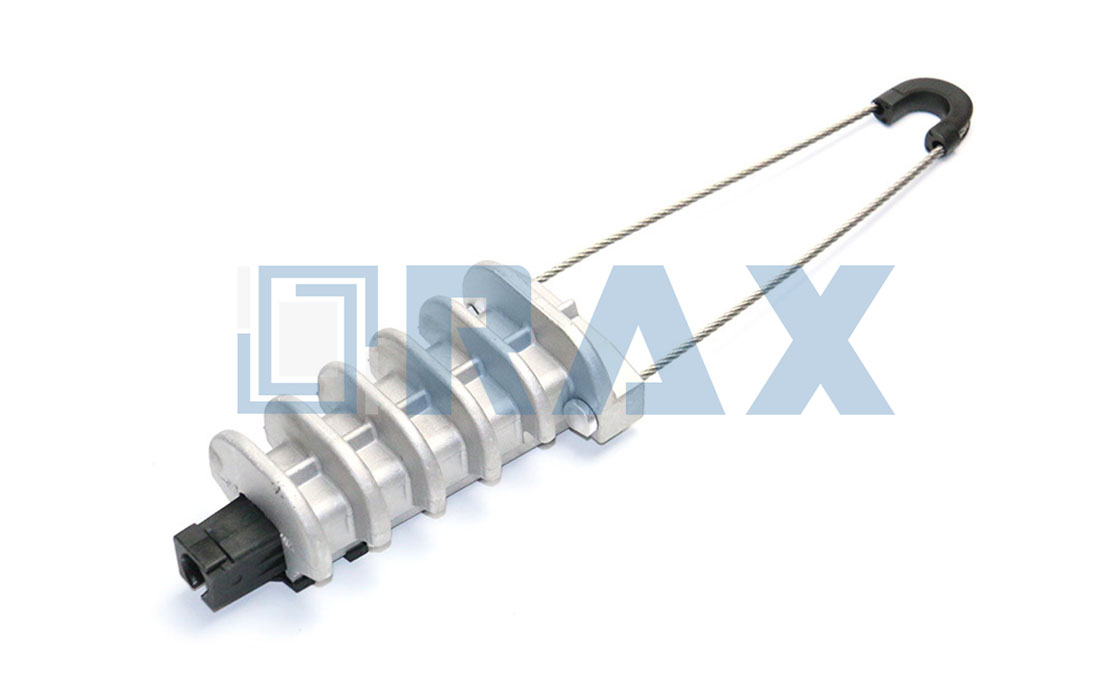
Most designs for bundled and fiber cables use a wedge. The cable passes through a tapered body alongside a sliding wedge, and the pull of the tension drags that wedge deeper into the taper. The harder the cable pulls, the harder the body squeezes — it grips the way you grip a dog leash harder when the dog bolts, with no torque wrench involved.
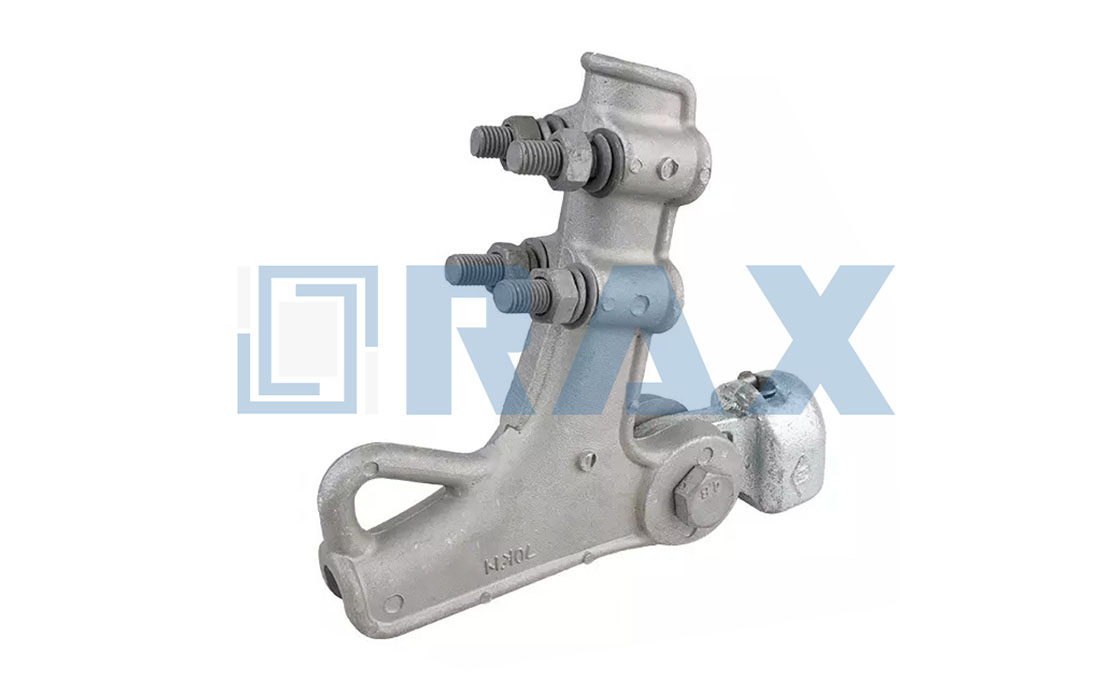
Bolted designs replace the wedge with bolts that press the cable into a grooved body. The crew sets the clamping force directly, which suits heavier conductors, bare or covered lines, and jobs where the fitting must be adjusted or reopened in the field. Major western catalogs, such as the deadend clamp range at MacLean Power Systems, are built almost entirely around this bolted principle.
| Design | How it tightens | Typical field |
|---|---|---|
| Wedge type | Self-tightening; tension pulls the wedge in | LV ABC, FTTH drops, ADSS spans |
| Bolted type | Bolts set the grip; torque-controlled | Bare and covered MV/HV conductors |
Where Anchor Clamps Are Used
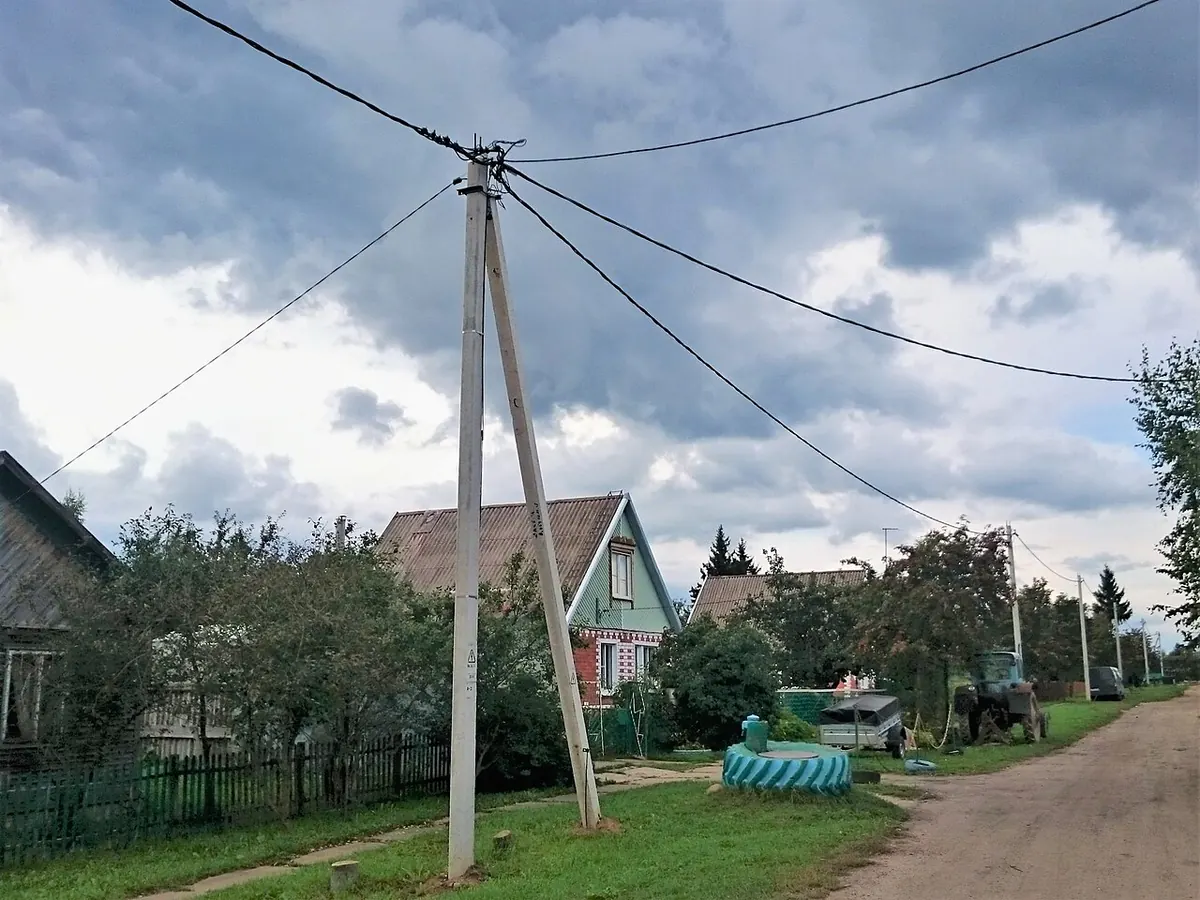
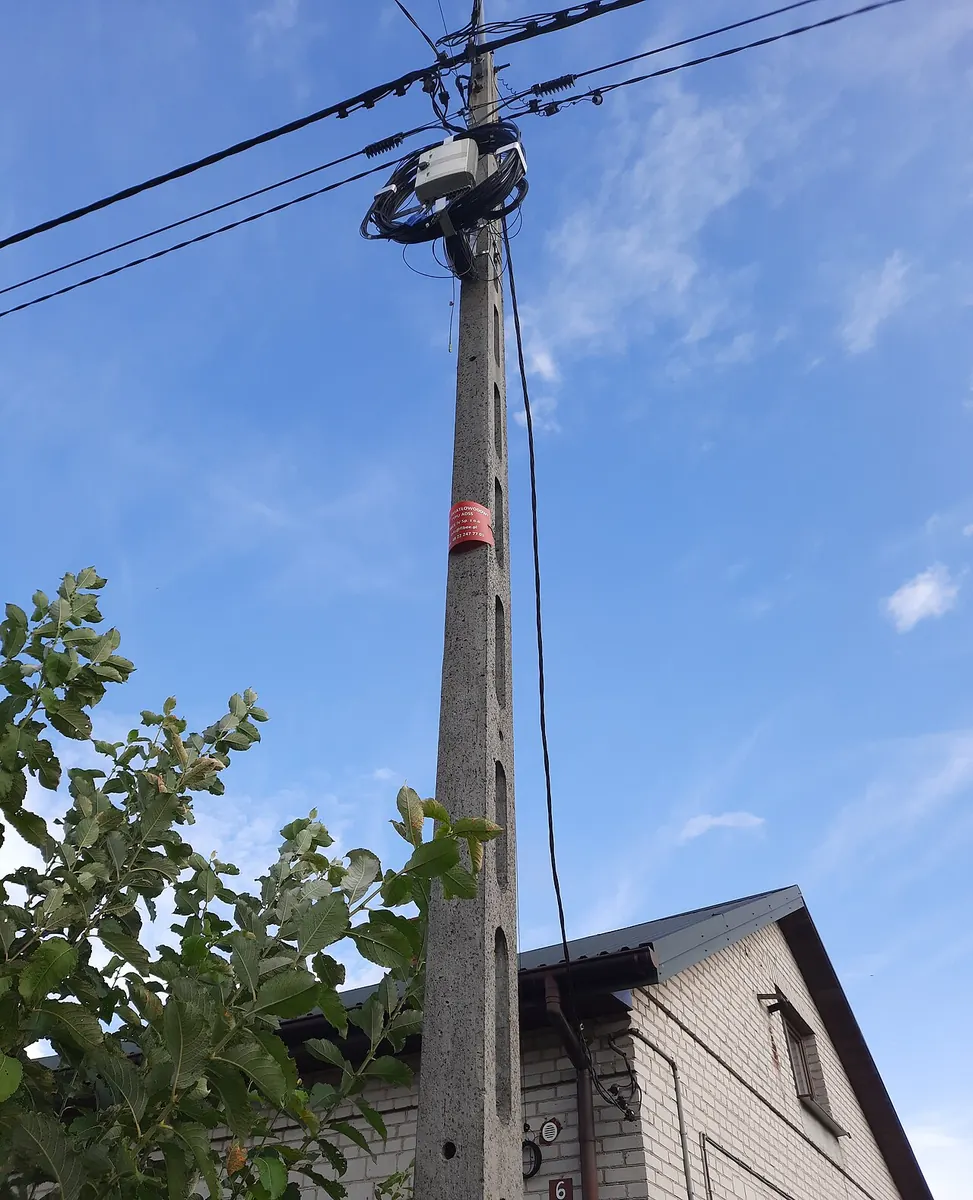
The biggest user is low-voltage distribution built with aerial bundled cable (ABC). Every dead-end pole, terminal, sharp angle, and service drop on those networks terminates through an anchoring fitting, usually a plastic-bodied wedge type hung from a bracket or pigtail bolt. The photo below shows a typical bundled line of the kind these fittings hold together.
Telecom is the second home of this hardware. FTTH pole-to-building drops, aerial fiber along streets, and ADSS spans on distribution poles all rely on small anchoring clamps that hold the cable without crushing the fiber inside. The installation walkthrough in our ADSS anchoring clamp guide shows the sequence on a real route.
A boundary case worth knowing: guy wires that steady the pole itself are anchored by a related grip family, not by cable clamps. Guy grips and thimble-and-rod assemblies carry that load into the ground anchor, so the job looks similar but the load path differs.
When You Would Specify This Fitting
Choose one whenever a span ends or changes direction sharply, and let suspension hardware carry the straight runs between those points. Before ordering, match three things to your cable: the diameter range stamped for the clamp, the working load of the span, and the environment it will live in. In our experience, first-time buyers lose more time to a wrong diameter range than to any other single mistake.
Bodies come in UV-stabilized engineering plastic or aluminum alloy, with a galvanized steel bail for the hot end of the load path. Once the basics are clear, the deeper work — model-by-model taxonomies and full load tables — is mapped in the companion guides on clamp types and clamp specifications. Current wedge and bolted models sit in the anchoring clamp product range.
Quick answer
- An anchor clamp terminates an overhead cable and transfers its full tension to the support.
- Wedge versions self-tighten; bolted versions set grip by torque.
- Main uses: LV ABC distribution, FTTH and ADSS telecom drops.
Frequently Asked Questions
Is an anchor clamp the same as a deadend clamp?
Mostly yes: both names describe the same tension hardware family. Some regions use the first name for lighter LV and telecom types and deadend for heavier bolted models.
How does an anchoring clamp differ from a suspension clamp?
It takes full span tension at ends and corners. A suspension clamp only carries vertical weight on straight mid-span poles and lets the conductor move.
What materials go into an anchoring clamp?
Usually a UV-stabilized engineering plastic or aluminum alloy body, a galvanized steel bail, and — on wedge types — an insulating insert that protects the cable.
Does one clamp fit every cable size?
No. Each model covers a stated cable diameter range; outside it you lose grip or crush the cable. Match the range to your measured cable diameter.
Where on the route are they installed?
At dead-end and terminal poles, angle and corner structures, service drops to buildings, and junction poles — everywhere a span stops or changes direction.