
A side-mounted crossarm is only as sound as the member holding it to the pole. On alley runs, tree-lined streets, and narrow rights-of-way, the arm sits bolted to the side of the pole instead of the top. That offset layout takes the arm off the pole’s strong axis. The alley arm brace exists to fix exactly that problem, yet it is not the only support hardware on the market.
RaxPower has manufactured pole line hardware in Hebei, China, since 2003, with 170+ engineers and production staff behind its galvanized braces, cross arms, and fasteners. The company ships to utilities, contractors, and distributors worldwide. This comparison reads the hardware the way a line design desk would: load path first, mounting second, and the job each support was built to do.
What an Alley Arm Brace Actually Does
An alley arm is a crossarm mounted to one side of the pole, offset from the pole face to clear walls, trees, or a property line. MacLean Power’s catalog states the governing problem plainly. Such arms “require rigid bracing to insure proper alignment of power distribution and transmission lines.” The brace is that rigid member. It ties the free end of the offset arm back to the pole below at a fixed angle. The name is trade slang with a literal origin: offset arms earned the “alley” label where poles sit hard against property lines, leaving no room for a full top-mounted arm.

Two limits define the part. First, the brace supports the arm; it does not support the conductors. Second, it is geometry-specific: a diagonal built for a side-mounted arm will not substitute for the flat braces under a top-mounted arm. Utility standards treat them as separate hardware categories, with distinct figures for the side-arm brace, the flat crossarm brace, and the vertical alley arm variant in SDG&E’s construction standard.
Picture the pole squeezed against a back fence, its arm reaching over the alley to keep phase conductors clear of the sidewalk. Until the brace is installed, that cantilevered arm behaves like a lever, and its bolts slowly work loose. The brace turns the lever into a triangle, which is the shape that actually holds.
How the 45-Degree Brace Carries a Side-Mounted Load
The standard installation geometry is consistent across manufacturers. The brace is mounted to the side of the arm with a machine bolt, then attached to the pole with two 1/2-inch lag screws, set at roughly 45 degrees. MacLean Power lists hot-dip galvanized steel as the material for exactly this arrangement. Most versions add a solidly welded lineman step along the angle, so the same part that stiffens the arm also gives the crew a place to stand.
That diagonal does two jobs at once. It carries the arm’s vertical load in tension toward the pole below. It also resists rotation, the way you would brace a shelf against a wall stud. Distributor listings put common lengths at 60, 84, and 120 inches, in 1-3/4 x 1-3/4 x 3/16 inch angle steel, with 9/16 or 11/16 inch mounting holes. Manufacturer data sheets add a 10-foot version in 2 x 2 x 1/4 inch steel for heavier builds.
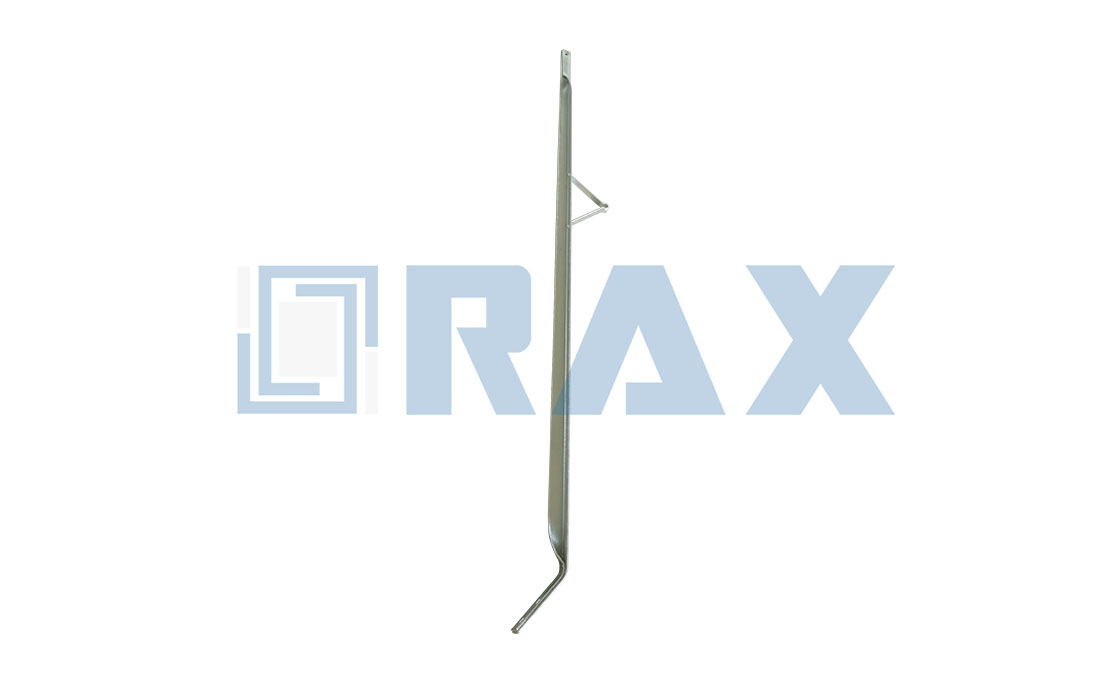
One mounting detail matters more than the rest. The lag screws carry the brace’s pull-out load into the pole, so pole condition and correct pilot holes decide the connection quality. A machine bolt through the arm, by contrast, is a shear connection and tolerates field torque far better. This is why a member bolted only to the arm face, without the pole anchor, is not a brace at all.
Alley Arm Brace vs Flat Crossarm Brace Pairs
Flat crossarm braces are the default on ordinary tangent poles. Distributor data describes them as “an inexpensive means of aligning and supporting crossarms,” sold in pairs about 30 inches long and 1/4 x 1-1/4 inches in section. Each brace bolts to the arm with a 3/8-inch machine bolt through a 7/16-inch hole, then lands on the pole with a 1/2-inch lag screw or through bolt.
The comparison comes down to arm position. Flat pairs steady an arm that sits on the pole’s gain, on top, where gravity and the pole face do most of the work. The alley brace spans a much longer diagonal, often 60 to 120 inches, because it must reach from a free-hanging side arm back to bare pole. Hardware count favors the flat set: two short bars and a few bolts, versus one long angle member, a machine bolt, two lag screws, and a welded step. Details differ, too: flat brace ends are rounded for safer handling, with hole centers set 1 inch from each end.
Choose the flat pair for a top-mounted tangent arm and nothing more exotic. Choose the alley version the moment the arm moves to the side of the pole. For matched dimensions across both families, the electrical cross arm range lists arms and brace hardware side by side.
Side-Arm Brace vs One-Piece Double-Span Braces
One-piece angle steel double-span braces are the step above flat bars. Catalog listings give 60- and 72-inch spans with 18 and 22 inch drops, bolted to the arm underside with 1/2-inch fasteners and to the pole with a 5/8-inch bolt. Kortick’s own catalog language draws the line: “V” cross arm braces are installed “where conditions require more than flat brace construction.”
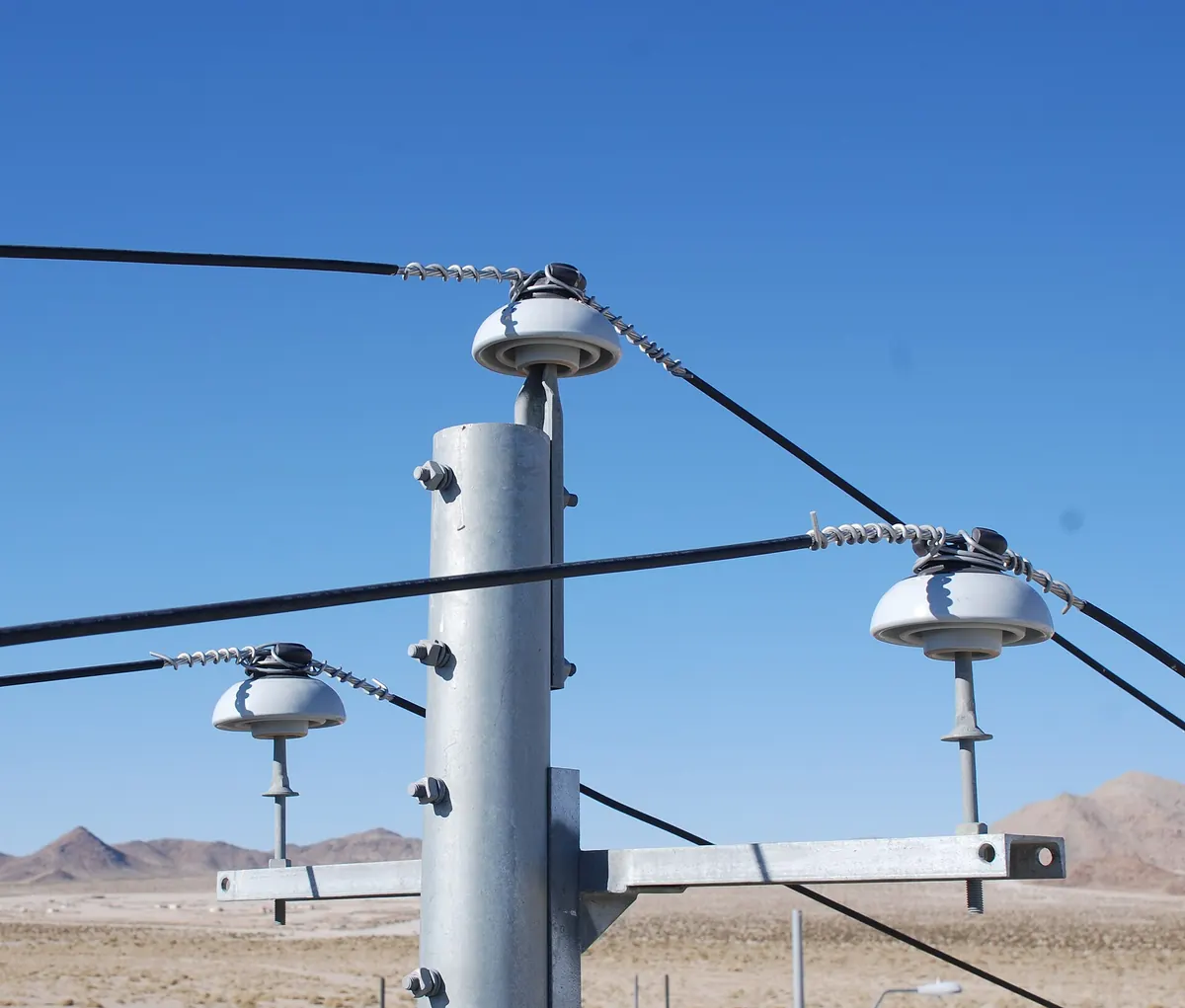
Structurally, the two braces solve different problems. A double-span brace is a stiff underarm truss for a heavy top arm carrying multiple conductors or tight spans. The side-arm member is a single long diagonal whose whole job is keeping an offset arm from rotating and dropping. The 5/8-inch pole bolt on a double-span brace signals its bigger shear load; the alley brace spreads its pull-out load across two lag screws instead.
There is also a hybrid worth knowing: the vertical alley arm variant, carried as a separate figure in utility standards like SDG&E’s. It braces the side arm vertically where clearance below demands it. It belongs to the alley arm family, not the flat brace family, which is why procurement teams should treat “brace” as a category, not a single part number.
Side-Arm Brace vs Double-Arming Construction
Double-arming takes a different philosophy: instead of bracing one arm, it doubles the arms. Two crossarms are clamped to opposite faces of the pole and unitized with paired double-arming bolts, 5/8-inch diameter per ANSI C135.1, with double arming plates sandwiched between the arms. The two arms behave like one deep beam, which is why the construction shows up at dead ends and corners. The bolts carry serious force. A single 5/8-inch DA bolt lists on the order of 12,400 pounds of tensile strength in Hubbell’s data, and the build always uses them in pairs.
Against the diagonal, the comparison is short. Double-arming assumes two arms around the pole centerline; it cannot support an arm hanging off one side. It also multiplies hardware: two arms, four or more long bolts, plates, and deeper framing. Where the pole must offset sideways, double-arming simply does not apply.
The two do share a shopping list in practice. A side arm on a structure that also carries angle loads usually gets its brace plus guying. The dead-end structure next to it gets the double-armed build. The electrical cross arm range covers both arm styles, along with matched brace hardware.

When a Guy Wire Beats Any Arm Support
Guys and braces are not competitors; they are different load paths. Crossarm braces, alley arm versions included, are rigid members that keep an arm square to the pole. A guy is a tension member that ties the pole itself to an anchor in the ground. One utility standard calls for two 7/16-inch downguys where conductors are dead-ended on crossarms, because no brace grade cancels conductor tension.
When the line turns or terminates, the unbalanced pull goes into the guy and its anchor, and the brace keeps the arm geometry true while that happens. Public utility guidance puts the division simply: guys supply strength and stability where a long straight run ends or the line changes direction. A side-mounted arm at a change of direction therefore usually wears both: brace for rigidity, guy for tension. Specifying one because you skipped the other is the classic framing error.
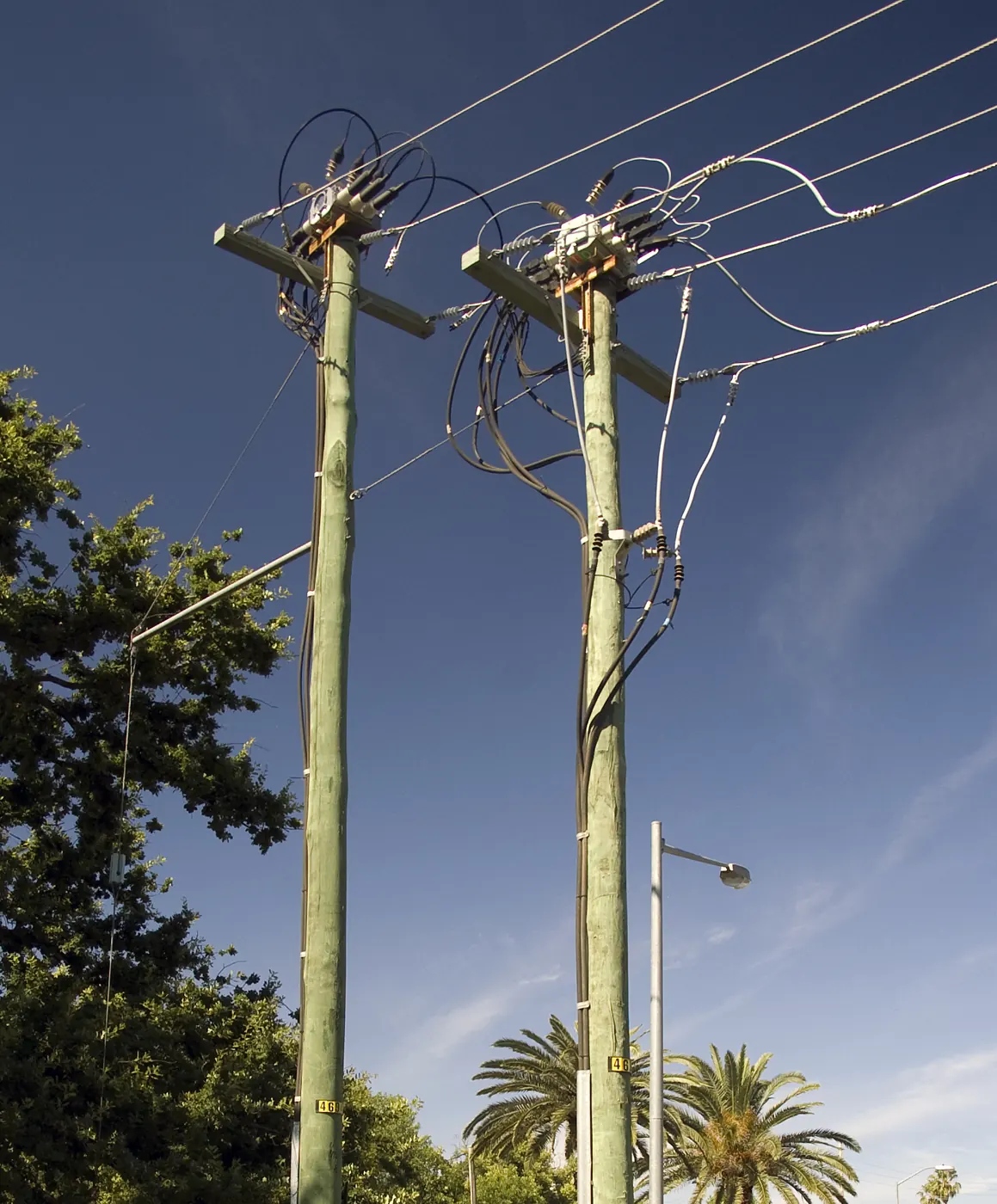
The guy option has costs that braces do not: an anchor location to secure, easement space at grade, and more installation labor. In alleys, exactly where side arms thrive, that ground space often does not exist. That constraint, more than any catalog number, is why the alley arm brace earns its place on narrow urban structures.
Side-by-Side: Arm Support Options Compared
The table below compresses the comparison into the dimensions buyers actually weigh: hardware in the kit, load path, mounting, and best-fit job.
| Support Option | Typical Hardware | Load Path | Mounting | Best-Fit Job |
|---|---|---|---|---|
| Alley arm brace | Angle-steel diagonal, machine bolt, two 1/2 in lag screws | Rigid diagonal ties arm back to pole below | Side-mounted arm, about 45 degrees | Alleys, tree lines, narrow rights-of-way |
| Flat crossarm brace pair | Two 30 in flat bars, 3/8 in arm bolts, 1/2 in lag screw | Aligns and steadies the arm on the gain | Top-mounted arm | Standard tangent construction |
| One-piece double-span brace | Angle-steel V, 1/2 in arm fasteners, 5/8 in pole bolt | Shares heavy arm loads across both faces | Underarm, top-mounted | Heavy crossarm builds |
| Double-arming construction | Two arms, paired 5/8 in ANSI C135.1 bolts, plates | Unitizes two arms into one deep beam | Arms on opposite pole faces | Dead ends and line corners |
| Guy wire with anchor | Downguy, anchor rod, guy attachments | Sends line tension to ground | Outside the arm entirely | Dead ends, angles, long spans |
| Braceless crossarm gain | Formed gain fitting, fits 6 to 12 in pole diameters | Stiffens the arm seat without braces | Top-mounted arm | Light builds where braces are unwanted |
Reading the table by the load-path column explains most field choices. Every rigid option except double-arming ties an arm to the same pole it sits on; guying is the only row that sends load to earth. Most of these families sit under one roof: the pole line hardware category groups braces, bands, and fasteners for mixed-bill sourcing.
Key facts at a glance:
- An alley arm brace is a diagonal angle-steel brace for crossarms mounted to the side of a utility pole.
- Standard mounting: one machine bolt through the arm side and two 1/2-inch lag screws into the pole, at about 45 degrees.
- Common lengths: 60, 84, and 120 inches in 1-3/4 x 1-3/4 x 3/16 inch angle steel.
- Alternatives: flat crossarm brace pairs, one-piece double-span braces, double-arming construction, guy wires, and braceless crossarm gains.
- Braces stiffen the arm-to-pole connection; guys carry unbalanced conductor tension. The two are not interchangeable.
- Standard finish: hot-dip galvanizing per ASTM A123 or ISO 1461.
Which Support Should You Choose When
- Space forces the arm to the side of the pole: specify an alley arm brace matched to the arm length, 60, 84, or 120 inches.
- Ordinary tangent pole with a top arm: a flat crossarm brace pair is the economical answer; move to one-piece double-span braces when spans or conductor count grow.
- Dead end or sharp corner: double-arming construction plus downguys; the brace choice then follows the arm layout, not the reverse.
- Tight clearance below a side arm: a vertical alley arm variant, the alley-family brace carried in utility standards.
- Pole offset needed but no anchor space at grade: the side-arm brace wins on feasibility, because it needs no easement.
In our experience, the expensive mistakes come from substituting hardware across rows, so match the support to the load path first, then to the arm length. Flat braces get asked to hold a side arm. Braces get asked to cancel tension that only a guy can carry. RaxPower keeps alley arm braces, cross arms, and matched fasteners in one galvanized range, so the matched-set approach becomes a single purchase order rather than a scavenger hunt. Current dimensions are listed on the alley arm product page before any RFQ goes out.
Frequently Asked Questions
Can flat crossarm braces hold a side-mounted arm?
No. Flat brace pairs align top-mounted arms seated on the pole gain. A side-mounted arm hangs free of the pole face, so it needs a 45-degree alley arm brace anchored to bare pole with lag screws.
What hardware mounts an alley arm brace?
One machine bolt through the side of the arm and two 1/2-inch lag screws into the pole, set at about 45 degrees. Most braces include a welded lineman step for climbing access.
Does a brace replace a guy wire?
No. Braces stiffen the arm-to-pole connection; guys carry unbalanced conductor tension at dead ends and angles. One utility standard, JEA’s, calls for downguys at dead-ended crossarms regardless of bracing.
What sizes do these braces come in?
Common lengths are 60, 84, and 120 inches in 1-3/4 x 1-3/4 x 3/16 inch angle steel. The 10-foot version typically steps up to 2 x 2 x 1/4 inch steel, with 9/16 or 11/16 inch holes.
What finish should arm support hardware have?
Hot-dip galvanizing per ASTM A123 or ISO 1461 is the standard for pole line steel. It protects the brace and its fasteners against decades of weather exposure on overhead structures.