
Two standard numbers keep showing up on the same pole line hardware drawings. One line item calls out IEEE C135.1, and the next line cites IEEE C135.80. Buyers who ship into North American utility networks cannot treat the two as interchangeable. They describe different scopes, different item lists, and they sit at different points in the standards lifecycle.
Our order desk sees this confusion first hand: RFQs arrive comparing IEEE C135.1 vs C135.80 on one fastener list, sometimes quoting both numbers for the same bolt size. This article separates the two documents the way a purchasing desk needs it — scope, item coverage, status, and what each means for quotes and acceptance paperwork.
Why Two Standard Numbers Reach Your RFQ
Both documents belong to the IEEE C135 series, the family that covers hardware for overhead line construction. The series has been revised piece by piece for decades, and each revision left a paper trail. Older drawings kept their original references, newer catalogs adopted the newer numbers, and both continue to circulate.
When the utility engineering office updates a drawing set, the old standard references often survive on legacy sheets. A distributor then inherits a quote request that mixes a document from 1999 with one from 2023. Nothing on the drawing says which number governs. That ambiguity is exactly what the comparison below resolves.
For a buyer sourcing from an overseas factory, the stakes are practical rather than academic. The standard number on the drawing is what the factory quotes against, what the inspection plan tests against, and what the receiving crew argues from if a shipment is disputed. A wrong or ambiguous reference does not stop production at the factory. It surfaces months later, at the pole, or in a paperwork review.
North American practice adds one more layer. Utilities and their contractors grew up on inch-based hardware, and their distribution drawings still assume it. A supplier used to metric markets has to shift dimension systems, thread conventions, and inspection habits to serve that base. The C135 standards describe that world precisely, which is why both numbers keep traveling on RFQs long after their publication dates.
What IEEE C135.1 Actually Covers
IEEE C135.1-1999 is titled IEEE Standard for Zinc-Coated Steel Bolts and Nuts for Overhead Line Construction. The IEEE SA catalog currently lists it with the status "Superseded Standard". It was approved by the IEEE SA Board in September 1999, published that December, and received ANSI approval in January 2000. Its sponsoring committee was the Transmission and Distribution committee of the IEEE Power and Energy Society.
The scope is deliberately narrow. The catalog describes it in one sentence:
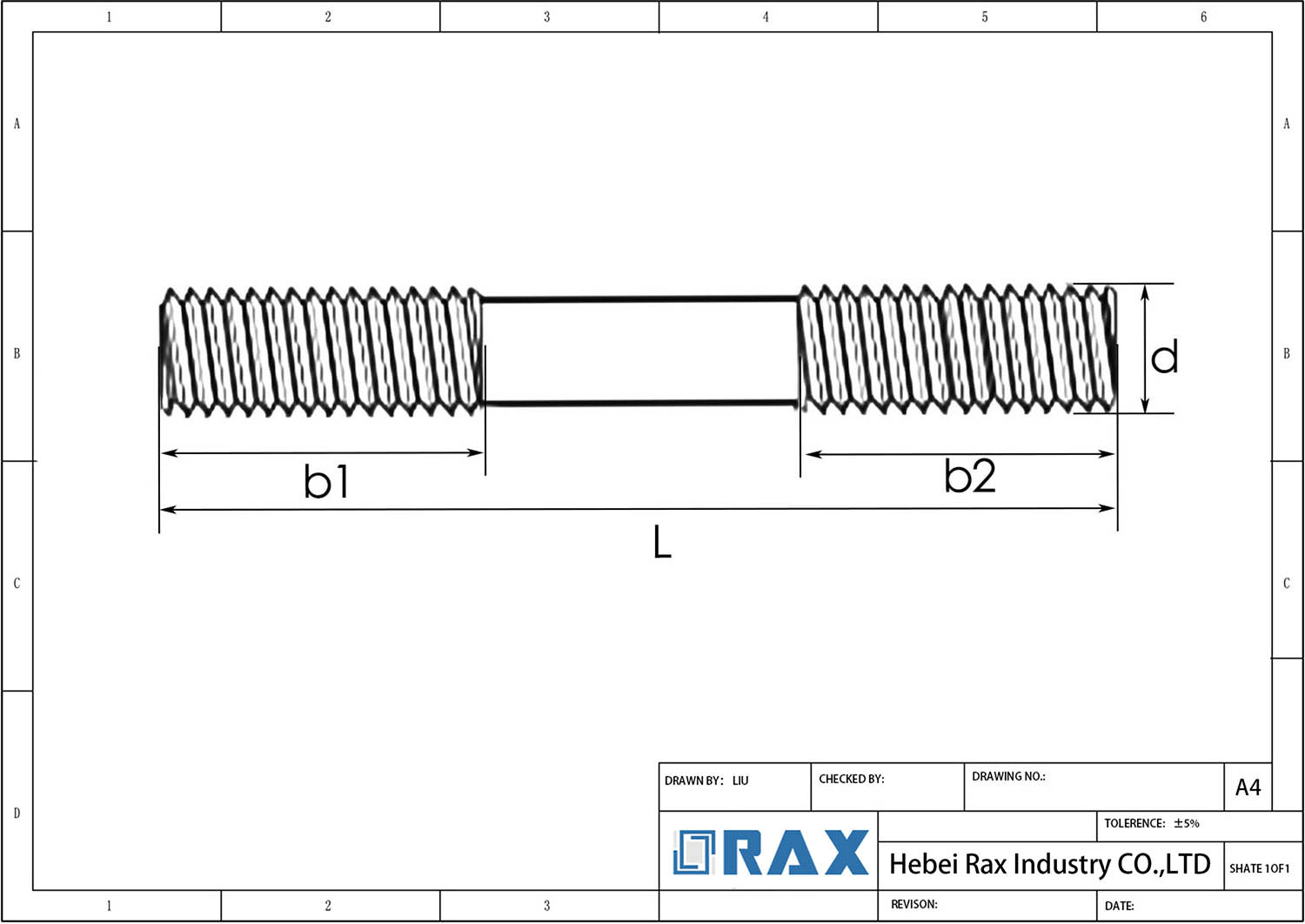
"The requirements for inch-based carriage bolts, machine bolts, double-arming bolts, and double-end bolts and nuts, commonly used in overhead line construction and where the applied load is primarily a tensile load, are covered."
Two details in that wording matter to buyers. First, the item list stops at four bolt families and their nuts. Second, the scope conditions the coverage on loads that are primarily tensile. A drawing that loads a bolt in bending or shear is already reading more into C135.1 than its scope states.
The scope wording also rewards close reading on two phrases. "Inch-based" means every dimension in the document follows imperial conventions, so a buyer ordering for a metric-market network is reading the wrong document. "Zinc-coated" tells you the fasteners in scope carry a zinc finish. The catalog page does not expose the coating clause itself. The coating requirement therefore comes from the standards the document references, or from the purchase order.
Status details round out the picture. The catalog records board approval in September 1999, publication in December 1999, and ANSI approval in January 2000, under the Transmission and Distribution committee. Nothing in that record is unusual for its era. What has changed is everything around it — the C135 series grew, and this document stayed still.
What IEEE C135.80 Adds to the Table
IEEE C135.80-2023 is the active fastener document in the series, listed as an Active Standard under the Overhead Lines Subcommittee. Its title, Fasteners for Overhead Line Construction, signals a wider mandate than bolts alone. The published scope reads:
"The requirements of inch-based: (1) zinc-coated ferrous carriage bolts, machine bolts, double-arming bolts, double-end bolts, washer-head bolts, eye bolts, eye nuts, and washer nuts; (2) zinc-coated ferrous lag screws of the fetter drive, gimlet point, and twist drive type; (3) washers; and (4) staples, commonly used in overhead line construction, are covered. Metric bolts, nuts, and lag screws are not covered by this standard."
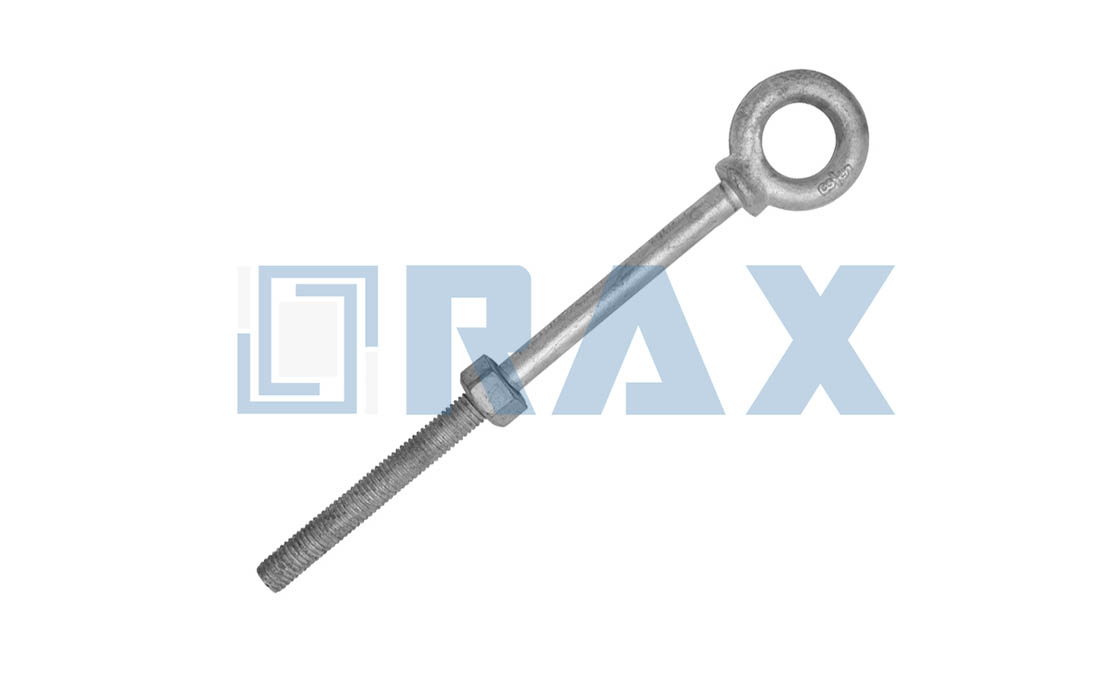
Compared with C135.1, the item list grows from four bolt families to eight, and then keeps growing. Lag screws enter the document with three named point styles. Washers and staples enter as covered items in their own right. Eye bolts and eye nuts — the hardware that hangs insulators and guys — appear in C135.80 and not in the C135.1 scope.
The last sentence of the scope is equally important. Metric bolts, nuts, and lag screws are explicitly excluded, so a European-profile fastener cannot be certified against this document at all. Every covered item is inch-based and zinc-coated ferrous material.
The named lag screw point styles — fetter drive, gimlet point, and twist drive — show how concrete the scope gets. A buyer does not have to guess whether a lag screw variant belongs in the document. Either its point style is one of the three named types, or the item sits outside the scope. Written limits like that shorten specification arguments before they start.
IEEE C135.1 and C135.80 Side-by-Side
Put the two catalog entries next to each other and the IEEE C135.1 vs C135.80 question stops being a rivalry. One is a narrow, superseded bolt document; the other is the current, broad fastener document that carries the overlapping items forward. The table keeps every cell inside what the IEEE SA pages state.
| Aspect | IEEE C135.1-1999 | IEEE C135.80-2023 |
|---|---|---|
| Catalog status | Superseded Standard | Active Standard |
| Title subject | Zinc-coated steel bolts and nuts | Fasteners for overhead line construction |
| Bolt families in scope | Carriage, machine, double-arming, double-end | Those four plus washer-head bolts, eye bolts, eye nuts, washer nuts |
| Other covered items | None named in scope | Lag screws (three point types), washers, staples |
| Load condition in scope | Primarily a tensile load | No load condition stated in the scope |
| Metric fasteners | Inch-based scope only | Explicitly excluded by name |

Read the table as a handoff rather than a contest. The bolt families C135.1 named are still covered — they simply live inside a wider list now. What C135.1 never named, C135.80 names explicitly.
The load-condition row deserves a second look during IEEE C135.1 vs C135.80 reviews. The older scope conditioned its coverage on parts carrying "primarily a tensile load". The newer scope states no such condition for its item list. A buyer who inherits a C135.1-referenced drawing should therefore ask whether the part really works in tension. A buyer specifying against C135.80 should look to the document body, not the scope paragraph, for how each item is applied.
The Supersession Question Buyers Keep Asking
The IEEE SA catalog labels C135.1-1999 a Superseded Standard, and it labels C135.80-2023 the Active Standard that supersedes C135.80-2012. That pairing tells a buyer most of what they need. New procurement documents should reference C135.80, while legacy drawings that cite C135.1 describe hardware whose requirements now sit inside the broader document.
Edition discipline matters just as much as the letter of the standard. The 2012 edition later carried a corrigendum, and its subject was narrow. The note states that dimension errors in Table 5 for hex nuts were corrected. A receiver inspecting hex nuts against the uncorrected 2012 table could reject good hardware, or accept bad hardware. The part itself never entered the argument.
So the answer to the supersession question has two halves. For new purchase orders, C135.80-2023 is the reference to write, because the catalog marks it Active. For legacy sheets, a C135.1 citation is not obsolete garbage. It points to requirements now housed in a broader document, and it should be modernized at the next drawing revision rather than mid-project. Both halves belong in the quote file, clearly labeled.
Quoting a fastener list that carries both standard numbers? Send the drawing over. Every quote names the standard and edition that governs each line item, so acceptance at the dock never argues about paperwork.

How the Rest of the C135 Series Evolves
The same consolidation pattern runs through the whole series. The catalog notes that IEEE C135.100-2024 supersedes four earlier documents — C135.61-1997, C135.62-2009, C135.63-1998, and C135.64-2012. A related draft, C135.90-2025 for pole line hardware, is already listed. The family keeps folding narrow documents into broader ones.
In our experience, the practical takeaway is not to memorize the family tree. It is to treat every standard reference on a drawing as having an edition. It works the way you would treat a price quote: never accept a hardware specification without checking whether its cited document is still the active one. It takes the IEEE SA catalog thirty seconds to confirm.
The direction of travel is consistent. Narrow, single-item documents are being folded into broader ones, and the catalog keeps the receipts. A buyer who understood the C135.1-to-C135.80 move will recognize the same pattern the moment a drawing arrives citing any of the documents that C135.100-2024 replaced.
Specifying Fasteners Without Ambiguity on Drawings
The fix for mixed references costs nothing at design time. Cite the standard and the edition on the drawing, and name the item exactly as the scope names it. A double-arming bolt under C135.80 is a covered item. The same part under a metric callout falls outside the document entirely. Keep coating requirements on a separate line, since the scopes say zinc-coated ferrous without settling the carbon-steel-versus-galvanized-finish trade-offs that our fastener material comparison covers in depth.
For acceptance, mirror the same discipline. Ask suppliers to state the edition their certification documents reference, and file that statement with the receiving inspection records. Picture the receiving inspector two years from now holding a hex nut and a dimension table. The edition line is what lets the inspection end in thirty seconds instead of a dispute.
Writing the IEEE C135.1 vs C135.80 distinction onto paper is mostly a habit. State the standard number, the edition year, and the item name exactly as the scope words it, with inch-based dimensions confirmed on the print. When a supplier quote comes back citing the standard by number alone, ask which edition the certification documents reference. The answer costs nothing today and decides whether acceptance testing lines up with the parts that arrive.
Frequently Asked Questions
Is IEEE C135.1 still a valid reference for new orders?
No. The IEEE SA catalog lists C135.1-1999 as a Superseded Standard. Its bolt families remain covered, but new purchase orders should reference the active C135.80 document instead, and legacy drawings should be updated at revision.
What does IEEE C135.80 cover that C135.1 did not?
Washer-head bolts, eye bolts, eye nuts, washer nuts, lag screws in three point styles, washers, and staples. C135.1's scope stopped at carriage, machine, double-arming, and double-end bolts with their nuts, under primarily tensile loads.
Does IEEE C135.80 cover metric pole line fasteners?
No. The scope states that metric bolts, nuts, and lag screws are not covered by the standard. Every item it covers is inch-based, which matters for projects mixing imperial and metric hardware on one bill of materials.
Which standard should a purchase order cite for the IEEE C135.1 vs C135.80 question?
Cite IEEE C135.80-2023 for new fastener procurement, and record the edition on the order. Keep C135.1 references only where a legacy drawing already carries them, and update those sheets when they next go through revision.
Which edition of IEEE C135.80 should an acceptance plan reference?
Reference C135.80-2023, the edition the IEEE SA catalog lists as Active. Note that the 2012 edition carried a 2020 corrigendum correcting hex nut dimensions in Table 5, so always state the year on the plan.