
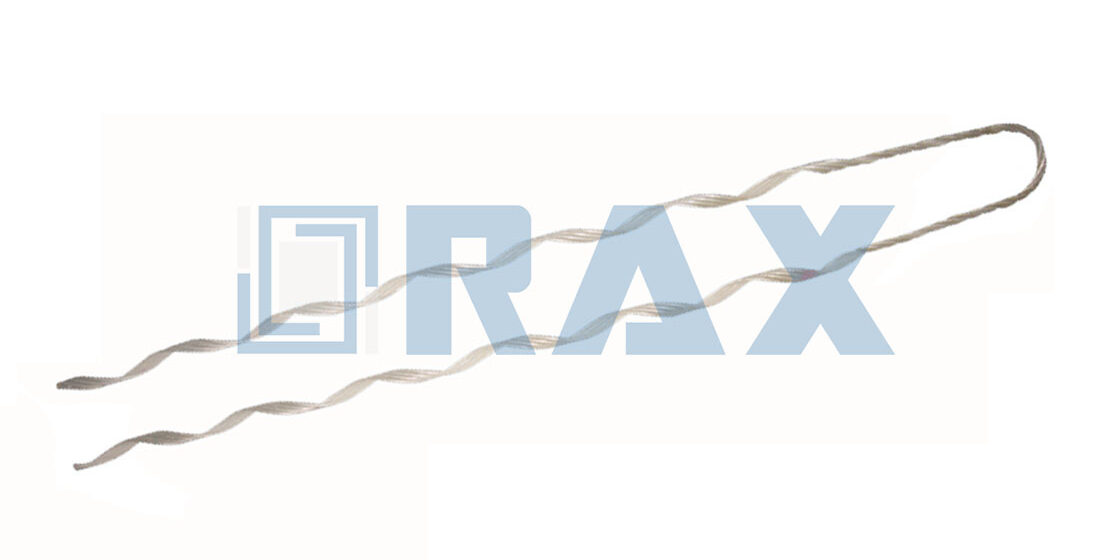
Choosing between cable guy grips, bolted dead-end clamps, wedge grips, and wire stops is a procurement decision, not a parts-bin pick. All four hold cable under tension, yet they grip by different principles, install at different speeds, and publish their strength against different baselines.
Most comparisons in this space stop at adjectives. The sections that follow put numbers next to each claim. A formed grip holds 100% of the strand's rated breaking strength. A bolted clamp holds 85% to 95% of conductor strength. The wedge and stop families sit in between with their own rules, and each axis ends with a verdict so the choice can be defended in a bid.
Four Devices That Terminate Overhead Cable
Preformed helical grips, bolted dead-end tension clamps, wedge grips, and wire stops all answer the same question. Each one keeps a cable fixed at a pole, tower, or bracket while tension pulls the other way. The wrap spreads load along a length. The clamp squeezes one zone. The wedge seats by friction, and the stop pins the strand with a taper.
The split exists because two different cables need terminating. Guy strand runs from pole to anchor and takes a full-strength fitting, while phase and insulated conductors run span to span and take clamps sized by diameter. The vocabulary matters, because catalogs overlap. RaxPower's formed wire product line spans dead-end grips, guy grips, preformed tension clamps, strand splices, and matching strand hardware, so one range already covers several of these families. This comparison defines each device first, then scores them axis by axis.
Holding Mechanism Compared From Wrap to Wedge
Cable guy grips are helical legs formed from wire that matches the strand material. The legs wrap around the strand in its own lay direction and close into a loop, so the grip tightens as tension rises. Because the wrap distributes load along the strand instead of pinching one point, PLP and RaxPower both rate the device at 100% of the strand's published rated breaking strength.
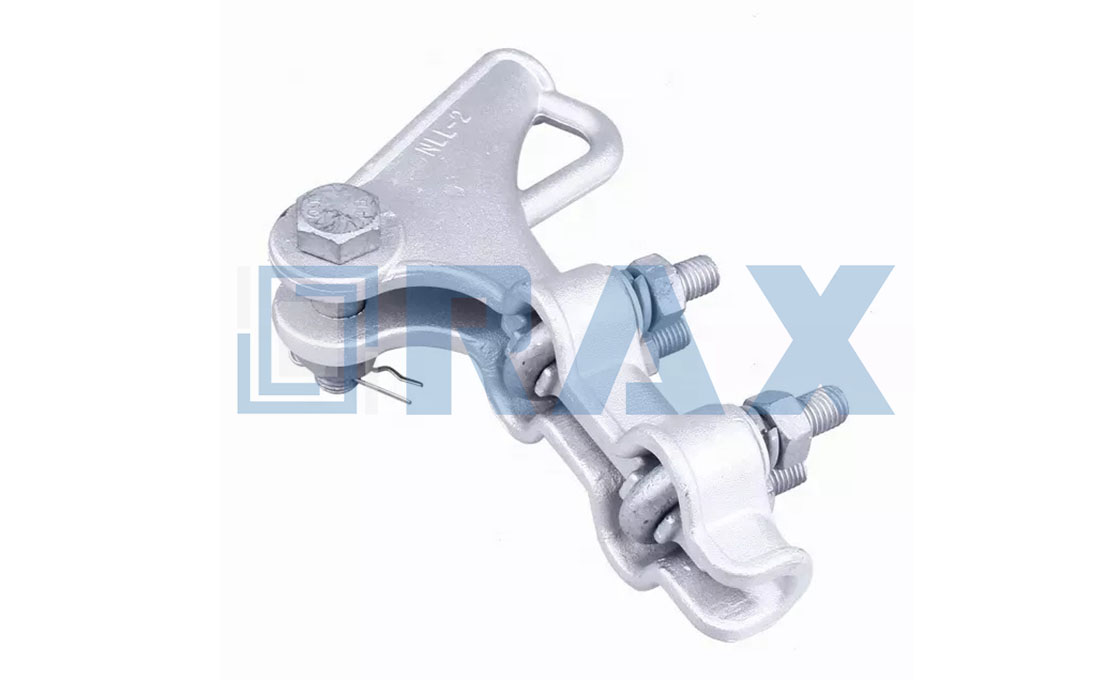
A bolted dead-end tension clamp works the opposite way. A keeper plate compresses the conductor against the clamp body as crews torque the bolts. That is why RaxPower's NLL and NLD bolt type clamps publish a grip strength of 85% to 95% of the conductor's rated ultimate strength. Wedge designs sit between the two principles: PLP's WEDGE-GRIP terminates EHS strand by sliding a housing over it and turning a cap. A wire stop applies the same self-tightening logic with a taper that seats over the middle strand of 1x7 EHS cable.
| Device | Holding principle | Published holding figure | Tools for install |
|---|---|---|---|
| Preformed helical guy grip | Helical legs wrap into a closed loop and tighten with tension | 100% of strand rated breaking strength | None, hand wrap |
| Bolted dead-end tension clamp | Keeper plate compresses conductor under torqued bolts | 85% to 95% of conductor rated ultimate strength | Standard wrenches |
| Wedge grip | Housing and wedge seat on the strand, cap locks the seat | Wedge seats deeper as tension rises | Hand, cap turn |
| Wire stop | Internal taper seats over the center strand of 1x7 EHS | Close to 100% of strand breaking strength | None, slides on |
The mechanism decides everything downstream. A wrap holds along a length, a clamp holds at a zone, a wedge holds by friction, and a stop holds by a taper that bites harder under load.
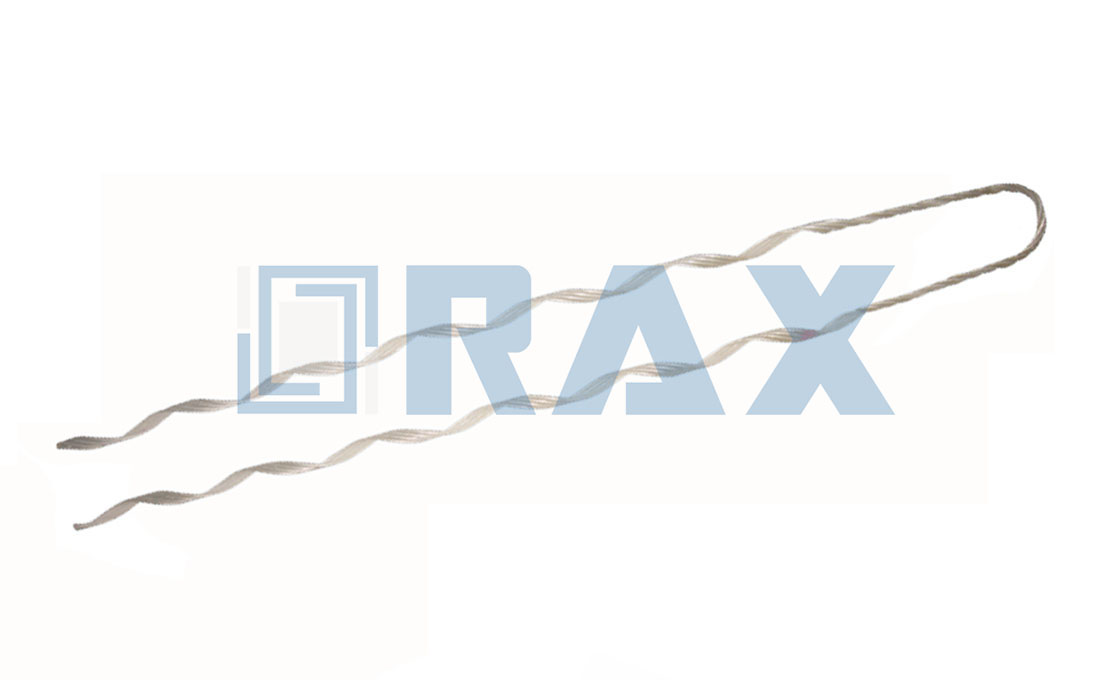
Verdict: formed grips and wire stops hold against full strand strength, while bolted clamps hold 85% to 95% of conductor strength. Compare devices against the cable they will actually terminate, never rating against rating.
Installation Speed and Crew Skill Demands
When the crew reaches the pole, the installation differences show up first. A formed grip wraps by hand: match the lay direction, align the legs with the color code marking, and close the wrap. RaxPower and PLP both specify hand installation with no tools for cable guy grips in distribution guying work.
A bolted clamp follows a slower script. Crews clean the conductor, verify the clamp size, and torque the bolts in sequence with a wrench. RaxPower notes that one person with standard wrenches can complete the job, but the torque steps still take more seat time than a wrap.
Wedge housings and wire stops are the fastest seats. PLP describes its wedge as slide over, then turn the cap, and a wire stop simply slides onto the strand with no wraps and no thimble. The skill floor is low for all three, but each device only fits the strand or cable size it was formed for.
Sizing discipline protects that speed. Formed grips and ADSS-class grips carry color codes that identify the diameter window, so the crew confirms the match before the first leg wraps. A grip stretched onto the wrong strand size loses its rated holding figure, and no amount of extra wrapping recovers it. Clamps follow the same logic through catalog size charts rather than color codes.
Verdict: wraps and wedges win on installation speed. Bolted clamps cost more crew time at the pole but return a connection that can be opened and re-torqued later.
Cable Jacket and Conductor Compatibility
Formed wire grips borrow the strand's own material logic. RaxPower forms them from galvanized steel wire for steel guy strand and from aluminum-clad or aluminum alloy wire for aluminum-based conductors. The galvanic pair therefore stays matched across decades of weather, and the coating line follows ISO 1461 with a mean thickness over 85 microns.
Jacketed fiber needs its own grip class. ADSS guy grips size to the jacket, roughly 5.0 to 22.8 mm, at working load classes from 1 to 9 kN. A friction coating protects the sheath during seating. Above the top class, manufacturers call for splice protection over the fiber core. Where the build anchors the cable to a bracket rather than a guy assembly, the ADSS anchoring clamp route applies instead.
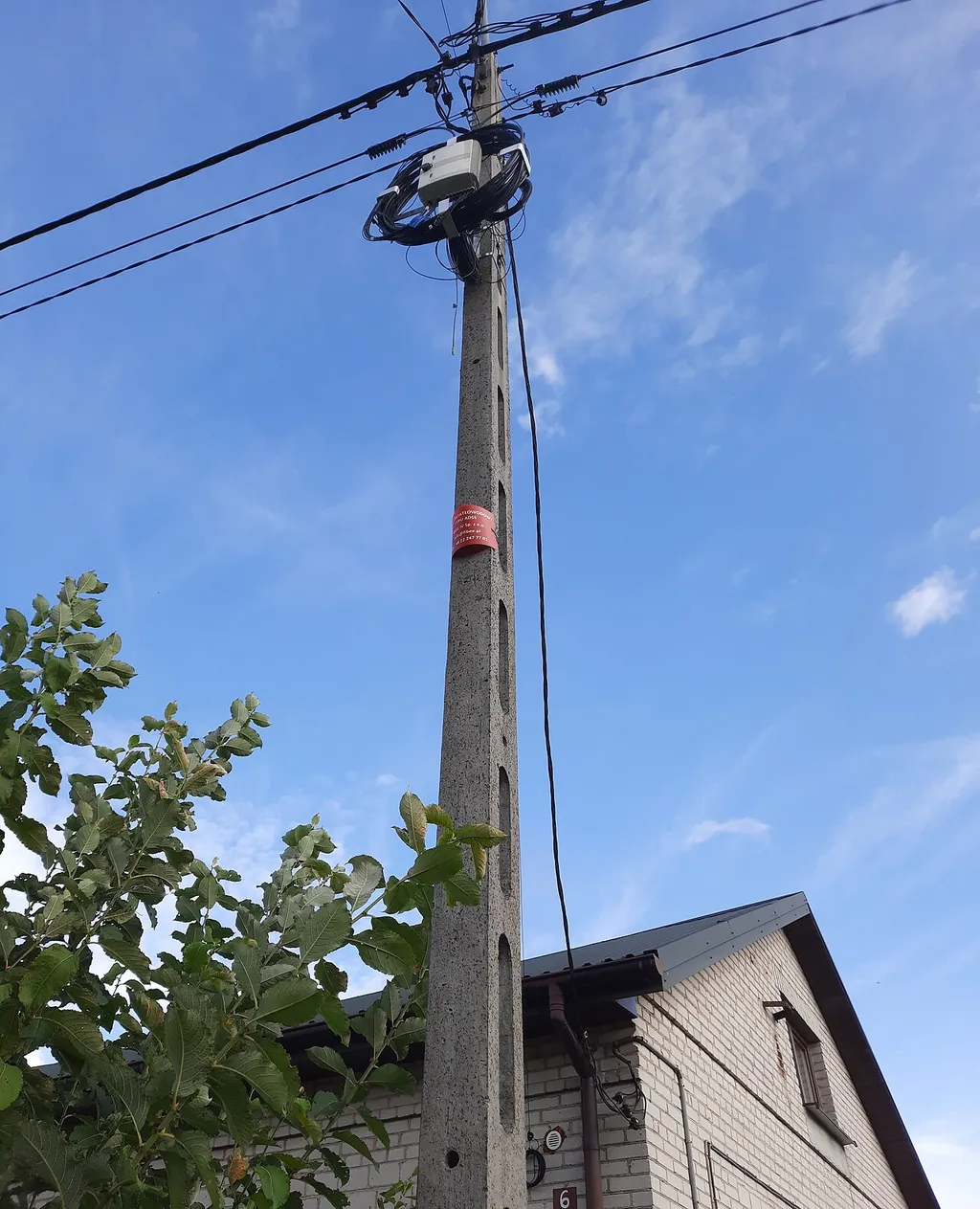
Bolted and wedge hardware speak conductor language. RaxPower's NLL-1 covers bare conductors from 5 to 15.5 mm on lines up to 35 kV. Its insulated wedge clamp closes on 19 to 33 mm ABC cable up to 20 kV, and the wedge action grips the jacket without cutting the insulation. Wire stops stay with bare 1x7 steel strand, because the taper needs a center wire to bite.
Verdict: match the device to the cable surface. Formed grips suit strand and jacketed ADSS in dedicated classes, bolted and insulated wedge clamps suit bare and insulated conductors, and wire stops stay on small steel strand.
Applications From Guy Strand to ADSS
Distribution guying is the formed grip's home ground. PLP positions its GUY-GRIP for single wood pole construction, and RaxPower rates its guy grips for extra high strength, high strength, and utility grade strand in standard left-hand lay. Long stays step up to big-grip dead ends, and TTF Power's formed wire guide recommends those for stays over 27 m.
The other families hold their own territory. Bolted dead-end clamps carry phase conductors at tension positions, insulated wedge clamps anchor low-voltage ABC runs, and wire stops serve small-strand auxiliary and messenger terminations. A guyed transmission pylon ties the argument together: the guy strand takes a formed grip, while the phase conductor takes a tension clamp.
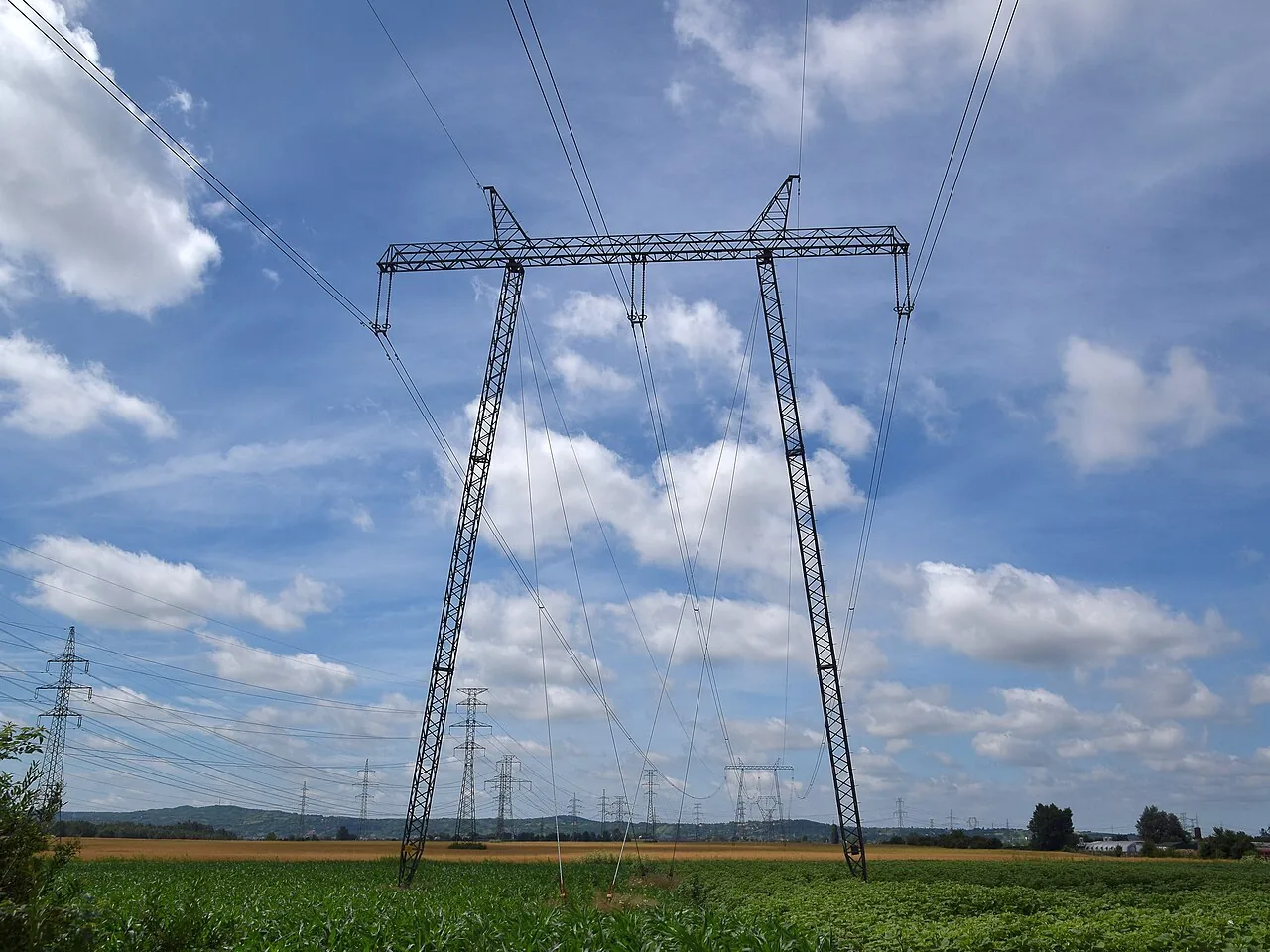
Telecom builds blend the set. An ADSS route uses jacket-class grips at the pole and may pair them with suspension or anchoring clamps along the same span. For crews who need the wrap sequence itself, the dead-end guy grip installation guide walks the steps in order. The guy system guide then shows how the grip connects to the hardware below it.
Verdict: pick by structure type. Wood pole guys take formed grips, conductor tension positions take bolted clamps, low-voltage insulated runs take wedge clamps, and light strand terminations take wire stops.
Reuse, Retensioning, and Asset Life
Reuse rules separate the families sharply. RaxPower and PLP write the same policy for formed grips: single use, but reinstallation twice within 90 days is allowed for retensioning. After that window, a removed grip should be replaced rather than rewrapped.
Bolted clamps work the other way. A clamp can be opened, repositioned, and re-torqued during maintenance, which suits lines that expect regular re-tensioning cycles. The trade is hardware: keeper plates, bolts, and washers add parts that inspection crews need to check. Wedge grips and wire stops have no published retensioning policy, so treat them as single-seat terminations unless their datasheet says otherwise.
Verdict: grips are one-shot fittings with a defined 90 day retensioning window. Clamps are reusable hardware with more parts to maintain.
Asset life favors whichever device respects its own limits. A cable guy grip that wraps the correct strand in matched material keeps its full holding figure for the life of the attachment. Hot-dip galvanizing per ISO 1461 carries the corrosion duty on the steel side. A clamp that stays within its rated grip range lasts just as long, provided inspection crews keep the bolts at torque. Damage enters when devices get swapped between duties, which is why the compatibility axis above comes first in a spec review.
Cost of Ownership Beyond Unit Price
Unit price is the wrong starting metric, because the devices differ in what they demand after purchase. The real comparison runs across tool time, hardware count, and replacement policy, and each family lands in a different spot on those three lines.
Crew time is the first cost. A hand wrap skips wrenches and torque checks, while a bolted clamp adds both, plus a re-torque habit at inspections. The second cost is mismatch: a grip sized off a clamp baseline, or a clamp asked to hold strand, invites rework. The third is replacement, because grips are consumables with a 90 day reinstall window while clamps are durable but hardware-heavy.
Inventory logic belongs in the same calculation for distributors and EPC buyers. Cable guy grips, preformed tension clamps, and strand hardware in one formed wire range share a sizing language of color codes and diameter windows, which simplifies mixed-bill sourcing. Bolted and wedge clamps arrive from a separate fitting family with their own size charts, so a crew stocking both families needs both reference systems on the truck.
Verdict: score total installed cost, covering tool time, hardware count, and replacement policy, not unit price alone.
Which One Should You Choose
The decision collapses to two questions: what cable runs through the device, and how often the connection opens again. The table answers by scenario, using the published figures from the axes above.
| Scenario | Best fit | Reason, with source figure |
|---|---|---|
| Guying wood distribution poles with steel strand | Preformed cable guy grips | 100% of strand rated breaking strength, hand wrap, no tools |
| Terminating bare ACSR or AAAC conductor | Bolted dead-end tension clamp | 85% to 95% grip of conductor strength, wrench install up to 35 kV |
| Anchoring insulated LV ABC up to 20 kV | Insulated wedge clamp | Wedge closes on 19 to 33 mm jacket without cutting insulation |
| Dead-ending jacketed ADSS fiber | ADSS-class formed grip | 5.0 to 22.8 mm jacket sizes, 1 to 9 kN load classes |
| Light EHS strand with minimal hardware | Wire stop | Taper termination near full strand strength, slides on |
Verdict: cable guy grips are the default for galvanized strand guying, and bolted clamps fit conductor tension points. Insulated wedge clamps anchor low-voltage ABC, ADSS-class grips hold jacketed fiber, and wire stops close small EHS strand ends. When two devices fit the same cable, prefer the one whose rating baseline matches the strand or conductor being terminated.
Frequently Asked Questions on Device Choice
What is a cable guy grip?
A helical formed wire dead end that wraps around a guy strand and anchors it. Formed from the same material as the strand, it is rated at 100% of the strand's published rated breaking strength.
Can a cable guy grip be reused?
Formed grips are intended for single use. RaxPower and PLP both allow reinstallation twice within 90 days for retensioning; after that, a new dead-end should be used if removal is required.
How strong is a guy grip versus a bolted dead-end clamp?
They are measured against different baselines. Formed cable guy grips hold 100% of the strand's rated breaking strength; bolt type tension clamps grip 85% to 95% of the conductor's rated ultimate strength.
Which device should anchor ADSS cable?
A dedicated ADSS-class formed grip. Catalogs size them to the jacket, roughly 5.0 to 22.8 mm at 1 to 9 kN working loads, with splice protection above the top class.
Do wedge grips work on steel guy strand?
Yes. Wedge assemblies terminate EHS and common grade strand by sliding over it and seating a cap; the wedge seats deeper as tension rises. Insulated wedge clamps target insulated ABC conductors instead.