
Some 8.6 million overhead line units sit behind the utility service records covered here, and the numbers tell a clearer story than any datasheet. Flashunders, brittle fractures, and pollution flashovers appear in known proportions. Buyers who read those records can match composite insulator design parameters to the environments where units fail or thrive.
Since 2003, RaxPower has manufactured pole line hardware and composite insulators for utilities, contractors, and distributors, and its 170+ specialists track field behavior closely. In this guide, our engineering desk distills published survey evidence into design and selection guidance. The aim is practical: know which failure modes dominate, which material choices matter, and which questions to ask before specifying.
Service Evidence Utilities Have Built Over Decades
When the first CIGRE questionnaire went out in 1990, it summarized service experience for about 140,000 composite line insulators above 100 kV. Housing degradation dominated the failure list in that first product generation. The second survey, published in 2000, covered roughly 700,000 installed units and 4,679,000 insulator-years of exposure. By the time it closed, the core rod had replaced the housing as the component drawing scrutiny.
A later CIGRE technical brochure, drawing on EPRI data, named brittle fracture and flashunder as the prevailing failure modes. It put reliability in the range of 10⁻⁴ to 10⁻⁵ failures per year, with mechanical causes dominant. Recent benchmarking across some 8.6 million line units found average maximum service of 24 years, with the oldest unit still in service at 40 years.
The 2000 survey also separated United States fleets, where insulators averaged 14 to 15 years of service. That gap against the global seven-year average shows how quickly real exposure accumulates once a technology matures. Survey volume matters too: insulator-years, not unit counts, are what give failure statistics their resolving power.
Adoption is effectively universal in that benchmark: 98 percent of responding utilities used composite line insulators. Reliability across all fleets averaged 10⁻⁵ failures per year, which is the number a realistic specification should assume.
Failure Modes Reported Most Often in Service
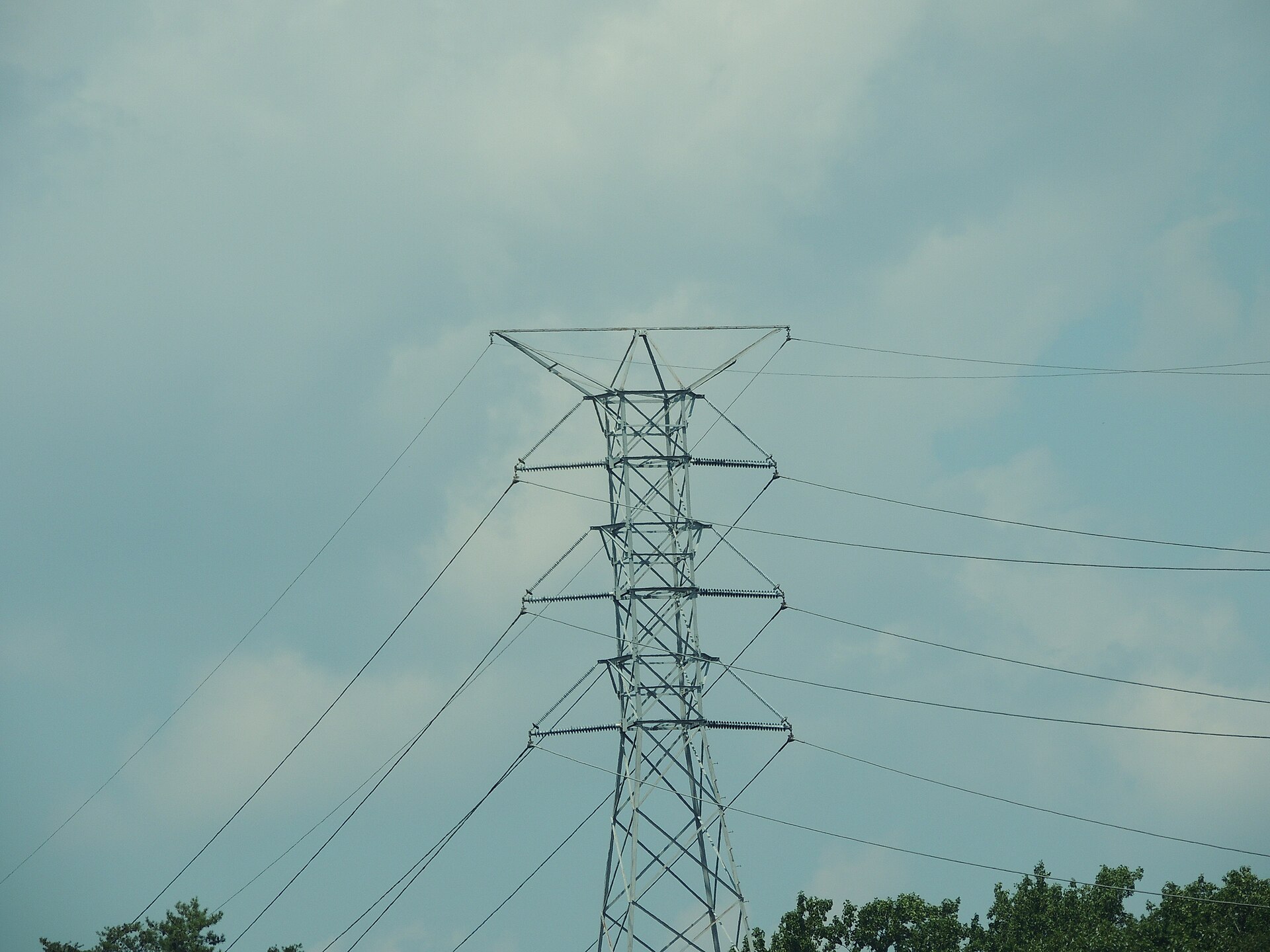
Utility returns cluster into five recurring types: flashunder, flashover, surface degradation, brittle fracture, and bird pecking damage. Each points to a different composite insulator design lever, which is why the pattern matters to buyers. Fleets reporting positive experience typically logged annual failure rates at or below 10⁻⁵, while mixed fleets sat near 10⁻⁴ and negative fleets near 10⁻³.
Judged experience was positive for 86 percent of utilities, mixed for 10 percent, and negative for 4 percent. One pattern deserves attention: utilities with positive records generally ran pre-qualification procedures, while unhappy fleets usually skipped them.
Reliability context helps read those numbers correctly. The brochure’s 10⁻⁴ to 10⁻⁵ range means roughly one failure per 10,000 to 100,000 unit-years, which is strong for any line component. The buyer’s task is not perfection; it is knowing which levers keep a fleet near the bottom of that band.
| Failure mode | What the record shows | Lever it exposes |
|---|---|---|
| Flashunder | Discharge inside the core/housing interface | Adhesion and sealing quality |
| Brittle fracture | Sudden rod failure under modest tension | ECR glass rod and seal integrity |
| Flashover | External arc over the housing surface | Creepage matched to site pollution |
| Surface degradation | Erosion or tracking on sheds | HTV silicone compound with ATH |
| Bird pecking | Physical damage to sheds | Housing toughness and inspection cadence |
Housing Formulation Decides Pollution Behavior
Housing choice is the most visible composite insulator design decision. Modern housings use high-temperature vulcanizing (HTV) silicone rubber, usually filled with alumina trihydrate (ATH). The filler is not passive: it feeds tracking and erosion resistance, and acid attack on it is a documented aging path. Formulators balance ATH content against mechanical strength and processing behavior.
Silicone also does something ceramics cannot: it transfers hydrophobicity to the pollution layer itself. Low-molecular-weight polymer chains migrate from the bulk to the surface, so deposited contamination beads water instead of wetting out. When corona, UV, or pollution suppresses that effect, hydrophobicity recovers after a rest period.
The first-generation lesson came from EPDM housings. One utility reported hydrophobicity loss and tracking on 20 to 25 year old EPDM units installed in the late 1980s and early 1990s. Silicone supplies of recent decades have not shown the same aging signature in those fleets.
How Brittle Fracture Starts in the Field
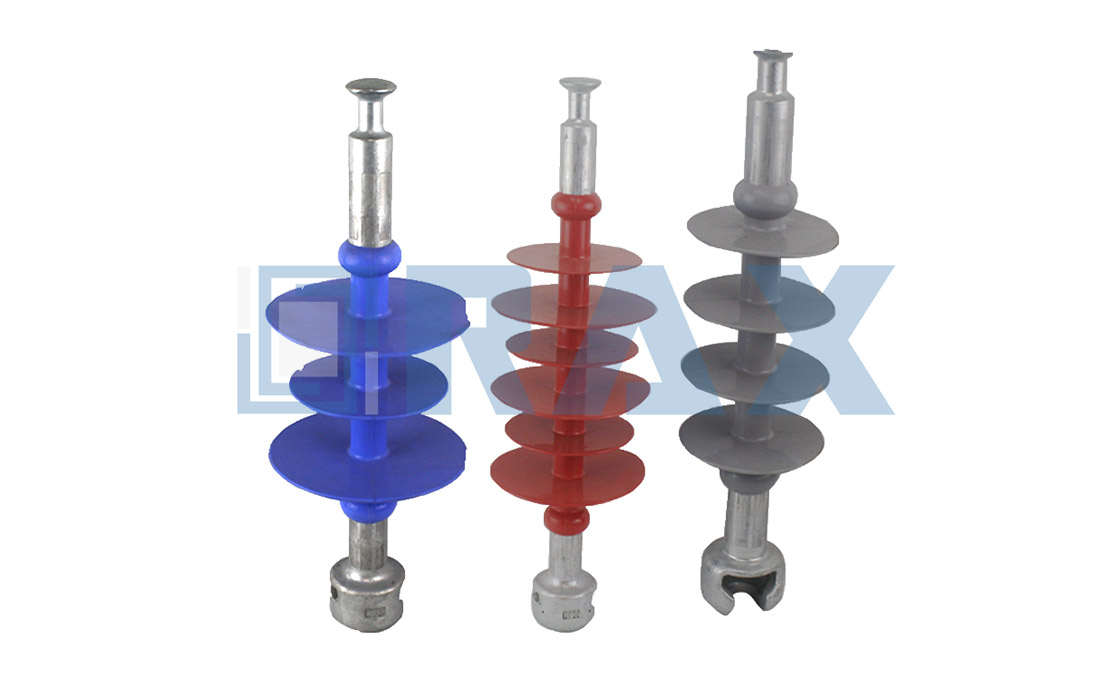
Brittle fracture is stress corrosion cracking of the fiberglass core. Field investigations traced the chemistry: humidity, atmospheric gases, and corona discharge combine to form nitric acid on the housing. The acid attacks glass fibers under tension, and the rod can fail suddenly at a fraction of its rating.
Location matters in the record. Corona activity concentrates near the housing-to-fitting interface, where the electric field peaks, and surface pollution raises conductivity enough to feed more discharge. A coastal utility cited in industry interviews replaced one brand after 13 years in service following two brittle fracture failures.
Composite insulator design answers exist and are testable. Boron-free ECR glass fibers resist acid attack far better than standard E-glass, whose boron oxide content dissolves readily in acid. IEC 62217 accordingly specifies a 1N nitric acid test for core rods. Grading rings that tame the end-fitting field, plus verified seals at both fittings, close the remaining doors.
The fibers tell much of that story. Failed rods examined in field case studies showed fibers of about 20 micrometers in diameter, boron-free and alumina-lime silicate in composition, matching the ECR type specified for acid resistance. Rod choice is therefore a documented, checkable line item.
End Fittings and Interfaces Under Cyclic Load
Flashunder, the top internal failure type in utility records, starts with adhesion. Moisture diffuses through the rubber housing and condenses at the core/housing interface; only rarely does it enter through improper sealing. Poor adhesion combined with a strong electric field then drives partial discharge where the water collects.
Buyers should know about a gap here: adhesion and sealing tests are still non-standardized in IEC documents. Both are under consideration in the current IEC 62217 and IEC 61109 revisions, alongside electric-field limits. Until those revisions land, ask suppliers directly for interface test evidence and crimp process controls.
Mechanical issues dominated the failure categories in that brochure, which puts the interface on par with the rod itself. In our experience, crimp validation separates reliable insulator suppliers from polished brochures. Fittings also pair with the linking hardware on the Insulator Fitting page, so review both when auditing an assembly.
What Contamination Flashovers Do and Do Not Mean
A flashover is an external event: the arc rides over the housing because the pollution layer went conductive. It usually indicts the composite insulator design choice for creepage, not the material itself. Field investigators still watch one subtlety, because a flashunder can be misread as a flashover after the fact.
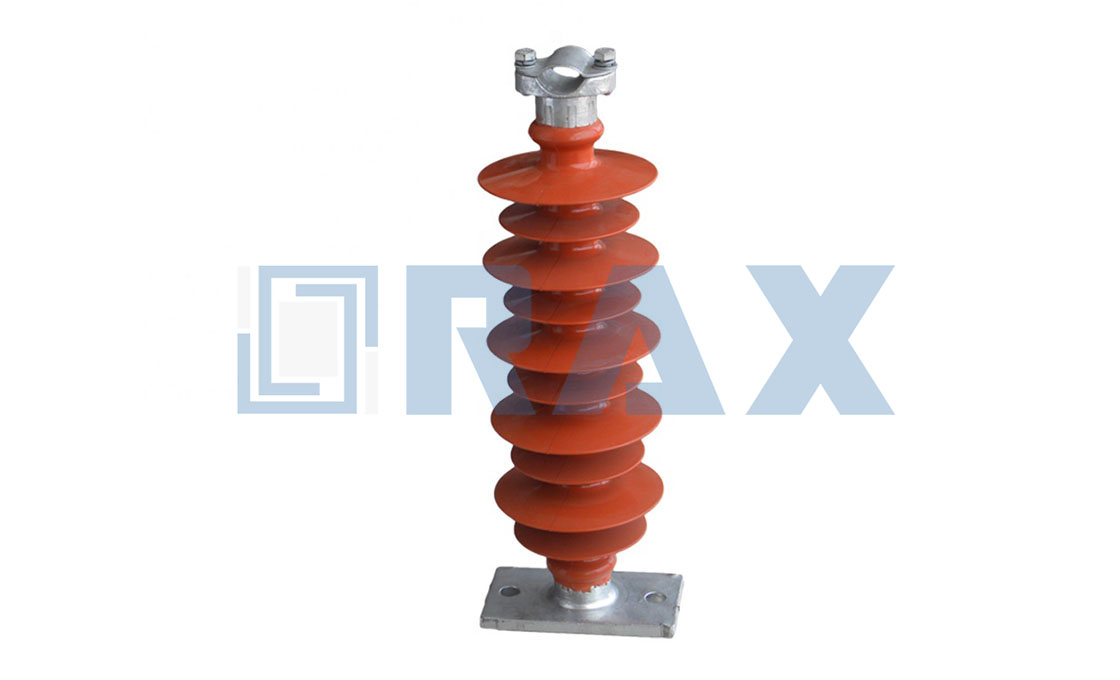
The hydrophobicity transfer mechanism is the working defense. Because low-molecular-weight chains coat the pollution layer, contaminated sheds still repel water. That is why polymer units can hold their own in filthy service with modest creepage. Long strings on lattice towers remain the visible proof of creepage budgets at transmission scale.
For buyers, the takeaway is to specify surface behavior, not just shed geometry. Hydrophobic transfer and recovery are measurable material properties, and housing suppliers can document both. A creepage number alone does not capture how a housing will behave once its surface ages.
Early reliability math also warns against overreacting to removal counts. The first survey treated every removed unit as a failure; one utility pulled 350 units after only 3 actually failed. Corrected estimates settled at 10⁻⁴ to 10⁻⁵ per year, in line with the later brochure.
Field Diagnostics That Verify In-Service Condition
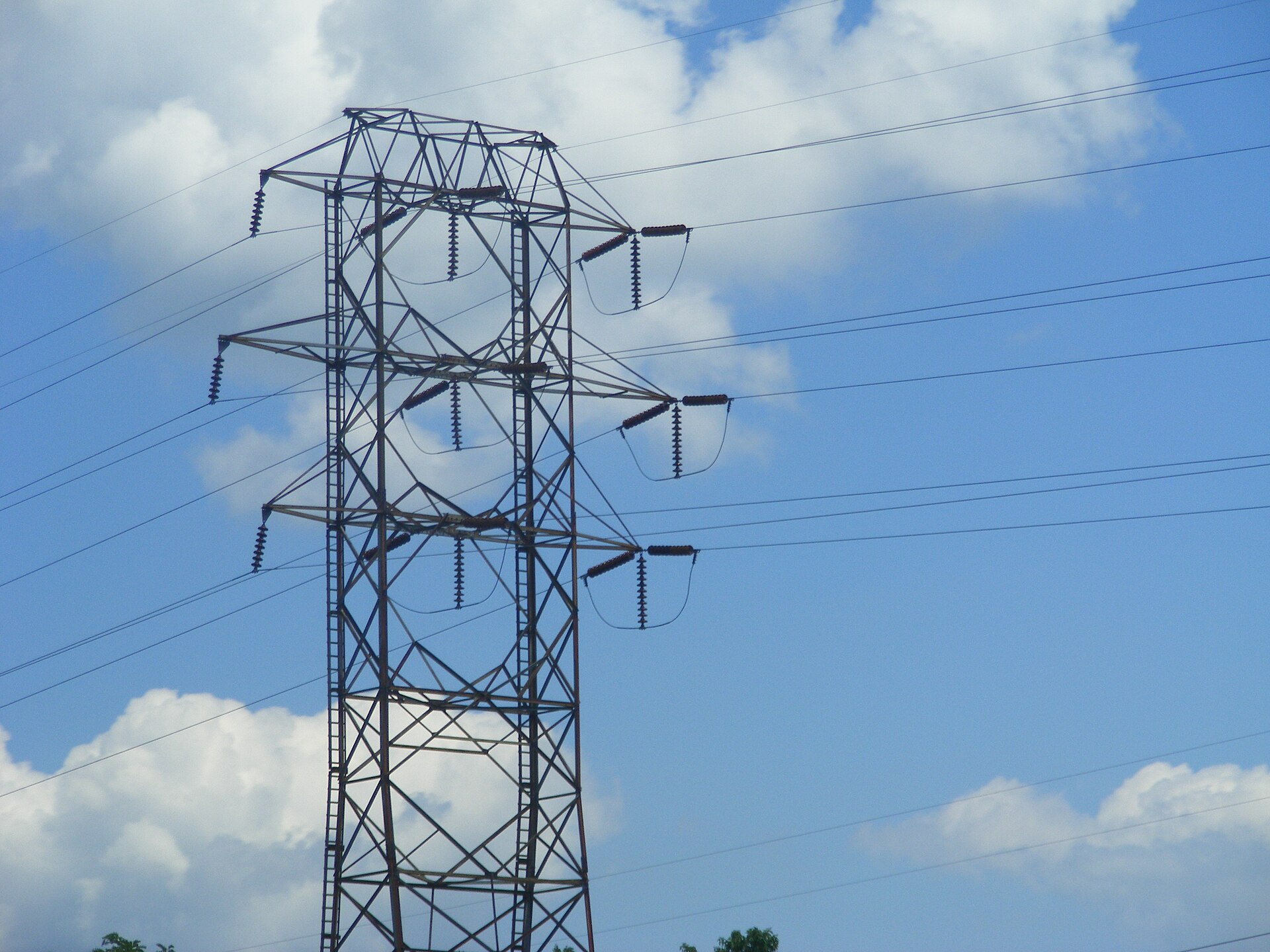
Utilities do not fly blind between failures. CIGRE Technical Brochure 545 catalogs the working toolkit: visual inspection, infrared thermography, electric-field measurement, and leakage-current monitoring. Each method catches a different stage of trouble.
Visual passes catch shed damage and bird pecking early. Thermography flags abnormal heating that can precede interface breakdown, while UV and field measurements expose corona near fittings. Leakage-current trend lines show pollution building long before it ever arcs.
Treat diagnostics the way you treat tire rotation: cheap, routine, and far cheaper than the failure it prevents. Fleets that pre-qualified units and then measured them in service reported the best records in the benchmark data.
Brochure 545 has a companion volume for units already removed from service, so the same evidence discipline continues into laboratory assessment. Together they let a utility move from online screening to a documented removal decision. That trail also gives buyers something to request: condition reports from fleets similar to their own.
Translating Field Evidence into Design Parameters
Service records turn specification from guesswork into engineering. Every dominant failure mode maps to a composite insulator design parameter a buyer can check on the datasheet or the test report. The table below compresses that mapping.
| Field lesson | What to specify or request |
|---|---|
| Brittle fractures cluster near the fittings | Boron-free ECR glass core rod; seal test evidence |
| Flashunder leads internal failures | Core/housing adhesion data; crimp process controls |
| Acid attack ages housings | HTV silicone with ATH filler; acid-resistance data |
| Corona concentrates at end fittings | Grading rings sized to voltage class |
| Flashovers track site pollution | Creepage matched to contamination; hydrophobic transfer |
Grading-ring practice deserves its own line because the field data is explicit. Utilities reported no grading devices below 110 kV. One ring or arcing horn went at the high-voltage fitting from 110 to 132 kV. Two rings, one at each end, became practice from 220 to 275 kV upward. For ring geometry and placement examples, see the corona ring product page.
Pre-qualification is the final parameter. Positive-experience fleets ran it; unhappy fleets generally did not.
Sourcing Insulators Built for Field Duty
Field evidence rewrites the supplier conversation. Instead of comparing price lists, ask each bidder for ECR core certification, interface adhesion data, HTV compound details, and crimp test records. Suppliers who serve utilities will answer with documents, not adjectives.
Standards give that conversation a frame. IEC 61109 defines the test methods and acceptance criteria for composite suspension and tension insulators above 1,000 V, and IEEE application guide 987 covers the operating side. Cite both in the request, then attach the field-evidence questions above.
Making Field Evidence Your Selection Compass
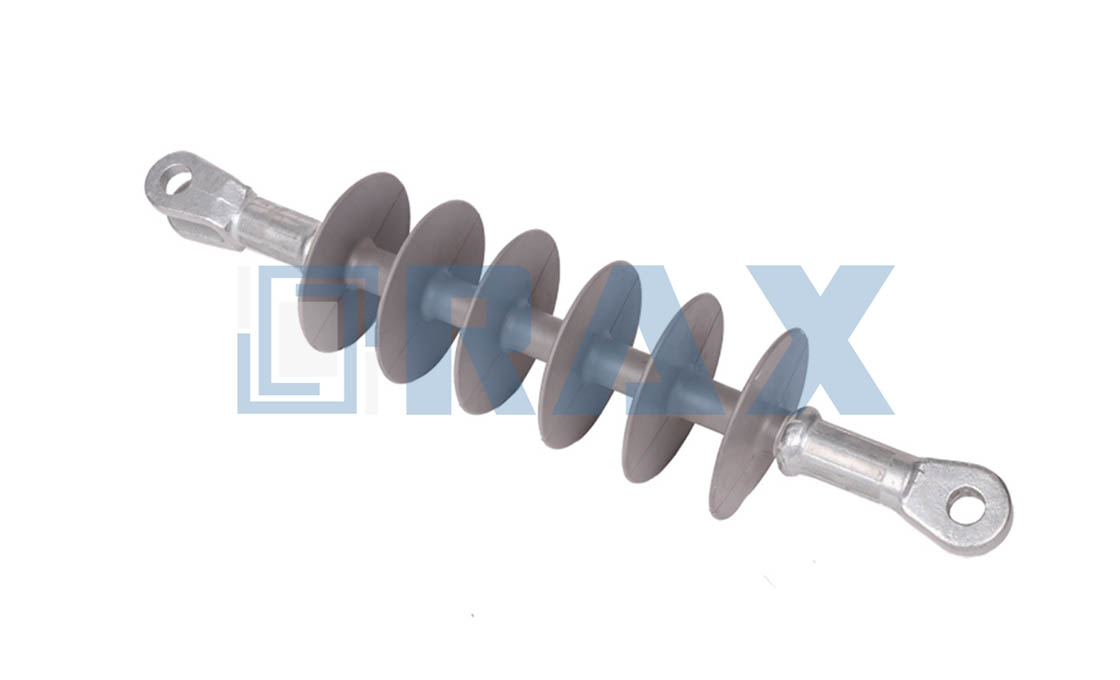
Three decades of records point one way: composite insulators fail on interfaces, seals, and mismatched creepage far more often than on the silicone itself. Treat composite insulator design as a field-evidence problem and the odds follow. RaxPower builds to that standard, pairing silicone rubber housings, fiberglass core rods, and aluminum alloy end fittings with test documentation for every project lot.
Match each parameter to the field lesson behind it, and demand the paperwork that proves it. A fleet run that way will very likely stay on the right side of 10⁻⁵ failures per year.
Frequently Asked Questions
Which failure mode dominates composite insulator statistics?
Utility records put flashunder and brittle fracture at the top of internal failure lists. Flashovers are reported often too, but they usually reflect creepage mismatches with site pollution rather than material defects, so investigators separate external events from internal ones.
Does hydrophobicity return after years of outdoor exposure?
Yes. Silicone rubber recovers water repellency once corona, UV, or pollution stress eases, and it transfers hydrophobicity to contamination through migrating polymer chains. First-generation EPDM housings lacked this resilience, which is why their aging showed lasting hydrophobicity loss.
Where does the moisture behind brittle fracture enter?
Mostly through the housing itself: moisture diffuses through the rubber and condenses at the core/housing interface, while improper sealing is a rarer path. Corona discharges near the end fittings then generate nitric acid that attacks glass fibers under tension.
What can leakage current monitoring reveal on live lines?
It shows pollution building up and dry-band discharge activity before a flashover becomes possible. Utilities usually combine it with visual inspection, infrared thermography, and electric-field measurement, the toolkit CIGRE Technical Brochure 545 documents for in-service assessment.
When do composite insulators need grading rings?
Surveyed utility practice uses none below 110 kV. One ring or arcing horn sits at the high-voltage fitting from 110 to 132 kV. From 220 to 275 kV upward, two rings are used, one at each end.