
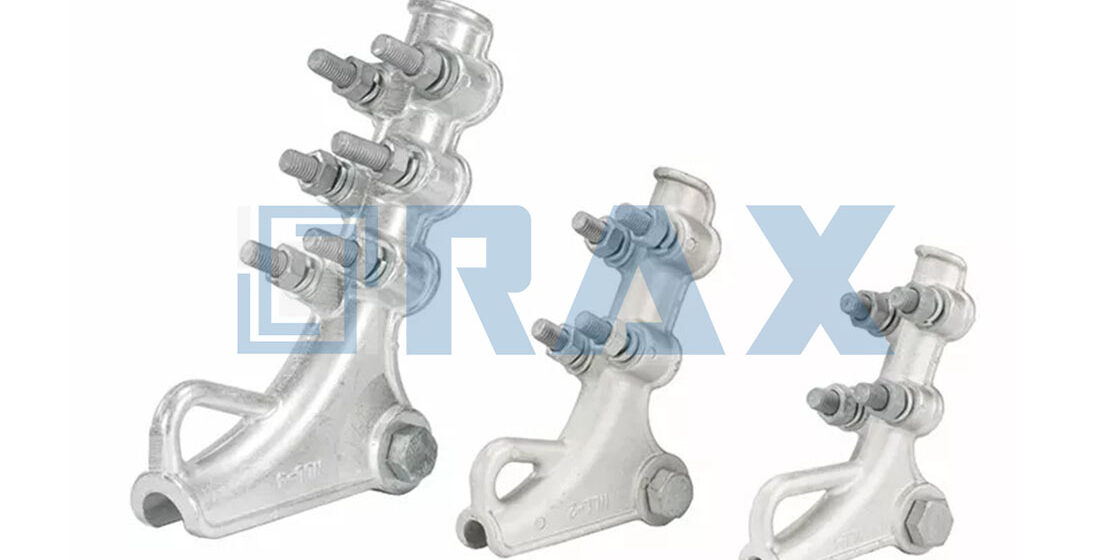
Thermal expansion will compromise an overhead line faster than wind load if the hardware isn’t rated correctly. Anchor clamps serve as the fixed points that manage this stress, but relying on a generic specification for anchor clamp types invites compliance risks when environmental conditions shift. You need specific materials to survive the field. High-grade UV resistant plastic and aluminum alloy housings are essential because standard polymers lose tensile strength and become brittle under prolonged solar radiation.
We will examine how wedge designs differ for ADSS versus aerial bundled cables and how these mechanical choices integrate with ZMS kV cable systems to maintain line tension. Selecting the right housing material and grip geometry now is the only way to prevent premature aging and avoid the logistical nightmare of emergency replacements.
What Is an Anchor Clamp?
An anchor clamp is a mechanical termination device designed to secure cable ends at fixed points on a utility pole, bearing tension loads from wind or ice while preventing slippage.
Anchor Clamp Definition and Purpose
In overhead power line infrastructure, an anchor clamp functions as a critical dead-end component that mechanically terminates cables and maintains line tension. Its primary purpose is to fix conductor ends—such as ADSS, fiber optic, or guy wires—to poles or cross-arms, ensuring the structural integrity of the entire system under stress conditions like heavy ice accumulation or high wind velocities. Unlike suspension hardware that allows movement, anchor clamps create a rigid termination point where all tension forces are transferred safely into the supporting structure without displacement.
Basic Components of Anchor Clamps
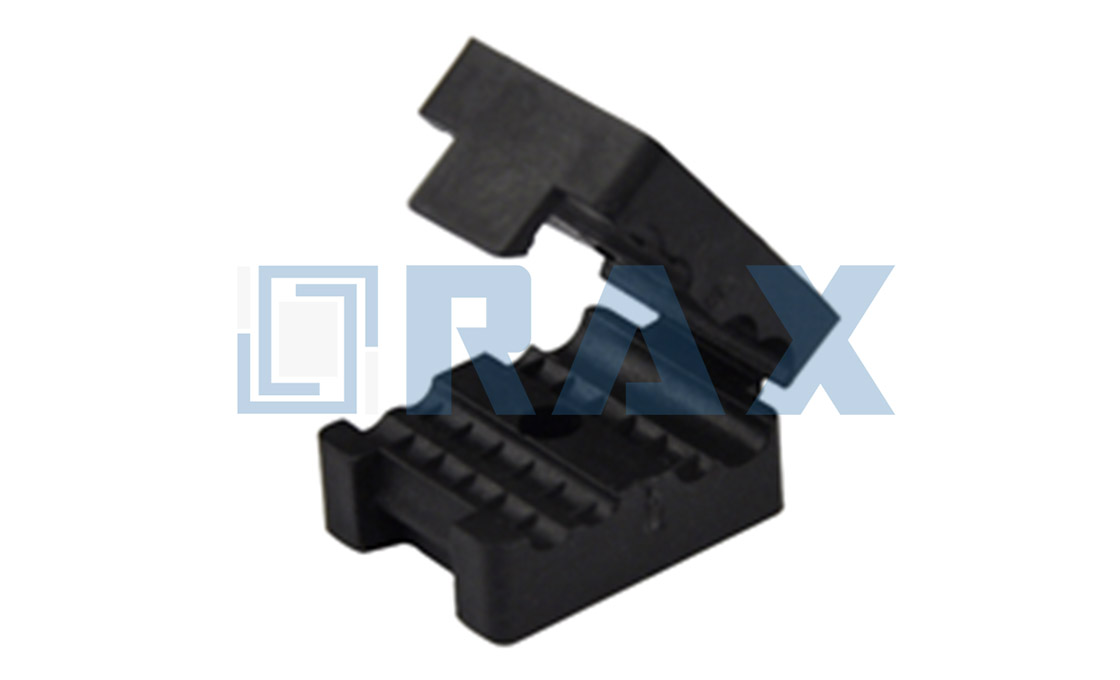
While designs vary based on application needs, most modern anchor clamps consist of three core elements: a body housing that provides structural support, a tapered wedge mechanism that engages with the cable strands, and fastening hardware such as bolts or pins for assembly. The body is typically forged from high-tensile steel rather than cast metal to eliminate internal voids that could compromise strength under extreme load. The wedge features precision-machined teeth or grooves designed to bite into the outer layer of the cable when tension increases, creating a self-reinforcing grip that tightens progressively as pull force rises rather than loosening.
How Anchor Clamps Secure Pole Lines
Our automated production ensures strict 1mm dimensional tolerance on these components, guaranteeing that every clamp performs consistently across diverse environmental conditions—from freezing Siberian winters to humid tropical monsoons—without premature wear or slippage risks. At Rax Power, we leverage hot-forging expertise for our wedge-type grips because this manufacturing process aligns the metal grain structure significantly better than casting, resulting in superior fatigue resistance during repeated tension cycles. The securing mechanism operates through a simple yet effective physical principle: when tension pulls on the cable attached to the clamp, the wedge is forced deeper into its tapered seat within the body housing. This action compresses the cable against the wedge’s gripping surface, generating friction proportional to the applied load. This predictable behavior allows engineers to calculate exact safety margins during EPC design phases with confidence, knowing the hardware will perform as modeled under maximum anticipated loads.
| Feature | Technical Description | Standard Specs | Operational Mechanism | Rax Advantage |
|---|---|---|---|---|
| Core Function | Mechanical cable termination designed to fix conductor ends and bear tension. | Rated for maximum load capacity against mechanical stress from wind, ice, and thermal contraction. | Secures cables at fixed points to prevent slippage and maintain line tension. | Hot-forged wedge grips leverage advanced expertise for maximum load capacity compared to casting. |
| Locking Mechanism | Self-tightening system that enhances grip as mechanical load increases. | Ensures automatic load-dependent clamping force with zero slippage under high tension. | Tapered wedge slides into body housing to compress and lock the cable. | Precision automated machinery guarantees strict 1mm dimensional tolerance on steel components. |
| Durability Finish | Protective coating essential for outdoor utility infrastructure longevity. | Compliant with ISO 1461; mean coating thickness exceeding 85 microns. | Hot-dip galvanizing provides a smooth, bright finish against environmental stress. | Offers superior defense against UV exposure and harsh environmental stress conditions. |
| Quality Assurance | Verification processes ensuring structural integrity and safety standards. | Rigorous load testing and gauge testing conducted per IEC 120 standards. | Double-review protocol monitoring every stage of production. | 100% product verification executed by a dedicated QC team with full SGS certification. |
| Application Range | Versatile anchoring solutions for power distribution and telecom networks. | Compatible with LV-ABC, ADSS, Guy Wires, and fiber optic cables. | Incorporates specialized preformed grips and high-tensile fasteners. | Backed by 21 years of global export experience supplying critical utility infrastructure. |
Types of Anchor Clamps and How They Work
Wedge-type and compression anchor clamps are the two dominant mechanical classes in pole line hardware, distinguished by their locking mechanisms and primary function in securing conductors or guy wires.
Anchor clamps function as critical termination points in overhead power transmission and distribution systems, transferring tensile loads from cables to supporting structures. The selection between clamp types depends primarily on whether the installation requires permanent fixation with minimal maintenance (wedge-type) or a design accommodating controlled tension adjustments (compression-type).
Wedge-Type Anchor Clamps (Self-Locking)
Wedge-type anchor clamps utilize a mechanical self-locking principle where increasing tension on the cable automatically tightens the grip. These devices consist of a housing containing two or more movable wedges and a steel ring or fitting. When a conductor is inserted and tension applied, the wedges are forced deeper into the tapered housing, creating a friction lock that prevents slippage. This mechanism makes them ideal for permanent installations such as dead-end anchors on utility poles or ADSS fiber optic cable terminations where release is not required during normal operation.
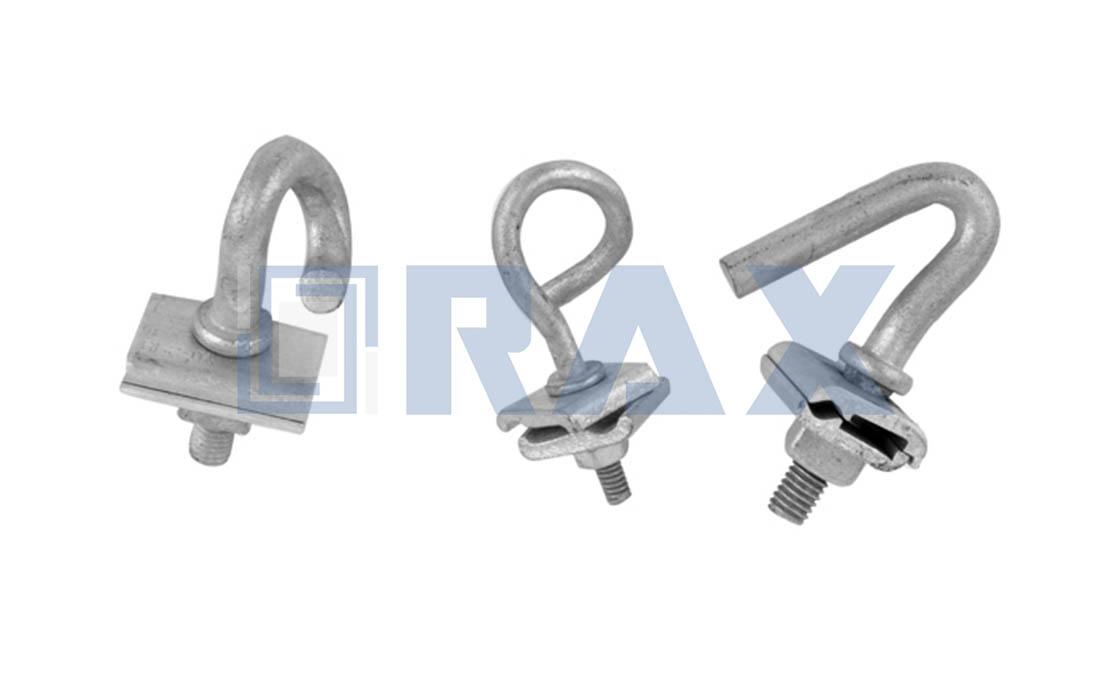
A standard example is the cone-shaped wedge assembly used in guy wire terminations, where movable wedges inside the clamp body automatically tighten the cable as external forces increase.
Compression-Type Anchor Clamps (Crimped)
Compression-type anchor clamps form a permanent bond by deforming the clamp barrel around the conductor using hydraulic or mechanical crimping tools. Unlike wedge designs, these do not rely on wedges moving within a housing; instead, the entire barrel is squeezed to create a metallurgical bond between the clamp and the cable strands. This method provides high strength and excellent conductivity, making it suitable for critical applications like ACSR (Aluminum Conductor Steel Reinforced) dead-ends or splice sleeves where maximum load transfer and minimal electrical resistance are required.
The process involves inserting the prepared conductor end into the clamp barrel, then applying uniform pressure via a die set to compress the metal onto the strands. Proper crimping requires strict adherence to specified die sizes and compression ratios to avoid damaging the conductor or creating stress concentrations that could lead to failure under cyclic loading.
Functional Comparison and Selection Criteria
- Installation Speed: Wedge-type clamps allow rapid field installation without tools beyond a basic hammer or puller, whereas compression-type requires dedicated crimping equipment and trained personnel.
- Maintenance Access: Wedge grips cannot be easily re-tensioned once set; if adjustment is needed, the entire assembly must be replaced. Compression joints offer no adjustment capability but provide superior long-term stability when correctly installed.
- Load Capacity: Both types can achieve breaking strengths exceeding 90% of the conductor’s rated tensile strength, though compression joints typically exhibit better fatigue performance under dynamic vibration loads due to absence of internal moving parts.
- Environmental Suitability: In coastal or corrosive environments, both types benefit from hot-dip galvanizing per ISO 1461 standards, with mean coating thicknesses exceeding 85 microns to ensure longevity against salt spray and moisture ingress.
How Anchor Clamps Differ in Design and Function
Selecting the correct anchor clamp is a critical engineering decision that directly impacts system stability and longevity. The primary distinction between types lies in their functional role within the overhead line architecture: tension clamps are designed to hold live cables under constant stress, allowing for future maintenance adjustments, whereas fixed dead-end configurations serve as permanent termination points that anchor the cable firmly against all directional forces.
This functional divergence in purpose directly informs the mechanical design choices that follow. Understanding whether a clamp is meant to secure or tension immediately dictates which gripping mechanism—wedge or fixed—becomes appropriate for the application.
Mechanism and Action: Wedge vs. Fixed Configurations
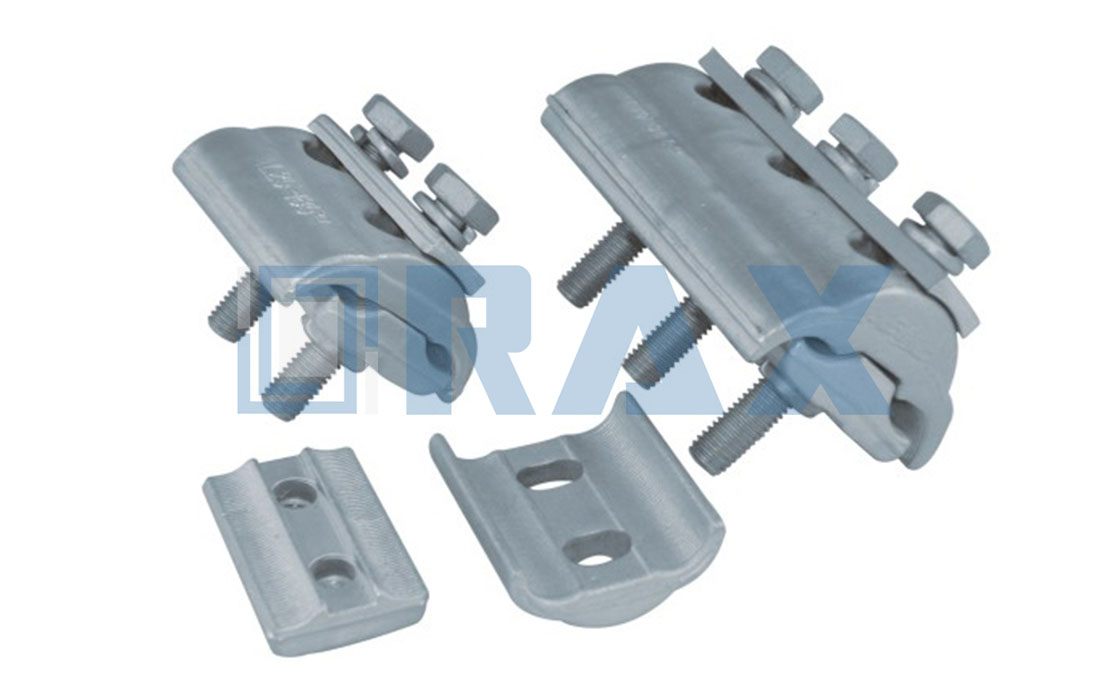
The most significant technical differentiator is the gripping mechanism itself. Tension clamps typically utilize a wedge-type design where the central body features a tapered barrel. As load increases on the cable, the internal wedges move further into this taper, creating a self-tightening action that reinforces the grip rather than loosening it. Conversely, fixed dead-end clamps rely on a rigid structure with no moving parts once installed; they transfer the full tensile load directly to the mounting hardware through a solid connection point without relying on friction-based tightening mechanisms.
Material and Construction Standards
High-performance anchor clamps generally utilize hot-forged steel alloy components rather than cast alternatives. Forging aligns the grain structure of the metal, significantly enhancing toughness and load-bearing capacity while minimizing internal voids that could lead to failure under extreme stress. To ensure durability in outdoor exposure, these steel components undergo hot-dip galvanizing processes compliant with ISO 1461 standards. This treatment provides a protective zinc coating with a mean thickness exceeding 85 microns, offering robust corrosion resistance suitable for diverse climatic conditions from coastal humidity to industrial pollution.
Functional Classification Applications
- Tension Anchor Clamps: Ideal for scenarios requiring repositioning capability or where the cable must absorb longitudinal movement, such as at mid-span locations or transition towers where flexibility is required to manage thermal expansion.
- Fixed Dead-End Clamps: Essential at terminal structures like poles or corners where the line must be securely terminated to withstand unidirectional pulling force permanently, preventing any potential slippage into the support structure.
Installation Considerations for Novices
When installing these devices, particularly in challenging environments like dusty or humid regions, selecting clamps with appropriate insulating properties is crucial to prevent electrical tracking. Ensure dimensional tolerances remain within strict limits (typically ±1mm) to guarantee proper fitment with standard pole accessories. For specialized applications involving fiber optic lines, verify compatibility with ADSS/OPGW cable diameters to avoid crushing damage during the gripping process, maintaining signal integrity alongside mechanical security.
| Feature | Specification | Advantage |
|---|---|---|
| Design Principle | Wedge-type gripping mechanism with tapered barrel | Self-tightening action increases grip strength as tension rises |
| Material Composition | Hot-forged steel alloy with ISO 1461 compliant hot-dip galvanizing | Superior load capacity compared to cast alternatives; mean coating thickness exceeds 85 microns |
| Dimensional Tolerance | Strict 1mm precision on steel components | ensures perfect EPC design integration and component interchangeability. |
| Testing Protocol | In-house IEC 120 load testing with double-review QC protocol | 100% verification by 10-person team before packaging; SGS certified |
| Functional Classification | Categorization into anchor tension clamps vs fixed dead-end configurations | Tension types allow repositioning; fixed types provide permanent termination points |

Where Anchor Clamps Are Used in Power Lines
Anchor clamps are critical mechanical components deployed primarily at termination points and directional shifts in overhead power networks to prevent conductor slippage, manage tension loads, and maintain structural alignment under extreme environmental stress.
Dead-End Terminations and Strain Poles
The primary function of anchor clamps is securing the end of a power line segment where the conductor terminates. In low-to-medium voltage networks, this occurs at “strain poles” or dead-end structures. Unlike suspension clamps which allow the cable to swing freely, an anchor clamp grips the strand tightly—often through a wedge-action mechanism—to transfer the full tensile load directly into the pole structure. This prevents the line from pulling loose during high-wind events or ice loading.
Directional Changes and Angle Assemblies
When a power line must turn around a corner or navigate a terrain feature like a river crossing or hillside, significant lateral forces are generated on the conductors. Anchor clamps are installed at these angle assemblies to hold the cable against the pull vector. They ensure that the turning point does not result in the wire slipping off the insulator string or damaging the supporting hardware due to unmanaged shear stress.
Aerial Bundled Cable (ABC) Applications
In modern distribution networks utilizing Aerial Bundled Cables (ABC), specific anchor clamps designed for insulated phases are used. These clamps accommodate multiple bundled conductors within a single unit, ensuring that the neutral phase and live phases remain securely anchored together at the end of a service drop, preventing twisting or separation of the insulation layers.
Solar Foundation and Grounding Integration
Beyond overhead transmission, anchor clamps serve as the interface between grounding systems and earth anchors. Helical screw anchors driven deep into the soil provide a stable base for solar panel mounts or lightning protection systems. Anchor clamps connect the copper grounding wire or steel strap to the top of these helical piles, creating a low-resistance path to earth that dissipates static charge and fault currents safely.
Conclusion
Selecting the right hardware isn’t just about fitting a cable onto a pole. You need to match the grip material to the jacket material, whether that’s UV-resistant plastic for ADSS or galvanized steel for dead-end strain. Wedge grips offer excellent load capacity, but only if the tension ratings align with your specific conductor weight. Get the specs wrong, and the line sags or the hardware fails mid-winter.
“Our engineers design high-voltage cable systems daily, ensuring clamps hold up against various insulation types without crushing the core. Before you place a bulk order, let us review your tension rating calculations against the IEC standards. We catch integration errors early so your installation stays solid for decades.”
Frequently Asked Questions
How to select anchor clamp types?
Selection depends on the conductor type, diameter, and the expected mechanical load conditions of the installation. Engineers must also consider environmental factors that may influence corrosion resistance requirements. Compatibility with the supporting structure and ease of installation are also critical decision factors. Consulting technical data sheets ensures the chosen clamp meets all safety and performance standards for the application.
What materials ensure clamp durability?
High-quality anchor clamps are typically manufactured from corrosion-resistant materials like hot-dip galvanized steel or aluminum alloys. These materials provide essential protection against environmental factors such as moisture, UV radiation, and temperature fluctuations. The galvanization process adds a sacrificial layer that significantly extends the service life of the hardware. Utilizing robust materials ensures the structural reliability of overhead networks over decades.
How are anchor clamps load tested?
Manufacturers perform rigorous load testing to verify that the clamp can hold the rated breaking load of the conductor without slipping. This involves subjecting the assembly to increasing tension forces until failure or the specified limit is reached. These tests ensure compliance with international standards like those set by the IEC for mechanical safety. Consistent testing validates the engineering design and performance consistency of the hardware.