
Every standard kit on a line truck has a history, and the armor rod has one of the strangest. It was not developed in a laboratory program or ordered by a standards committee. It began as one engineer's idea about how a simple helix of wire could take the beating that wind inflicts on a conductor at the clamp.
Our order desk still receives inquiries spelled both ways — armor rod and rod armour — sometimes in the same week, from the same country. That naming split is itself a fossil of the invention's history. This piece walks through the rod armour history that matters to buyers. It covers the fatigue problem on early lines, the preformed idea that solved it, and what changed once the helix took over.
When Bare Conductor Fought the Wind Alone
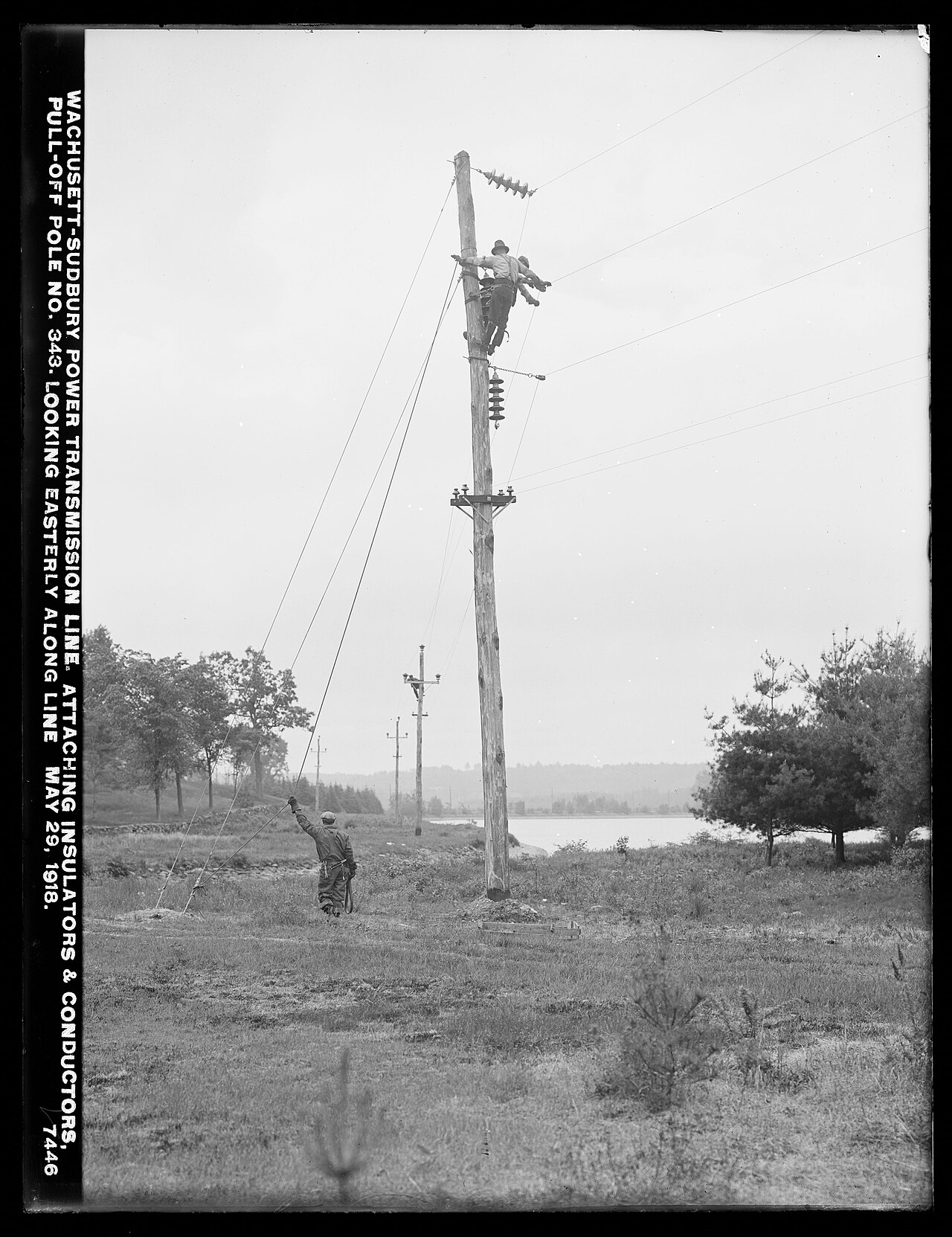
Picture a bare aluminum conductor strung between two wooden poles, moving in a light breeze you can barely feel on the ground. When the wind flows across the wire, vortices peel off the leeward side and make the conductor dance vertically at high frequency and low amplitude. The motion is small enough to be invisible from the ground, and it runs for hours.
That invisible motion is called aeolian vibration, and it is a fatigue machine. Research on transmission conductors notes that aeolian vibration is generated by moderate wind in the range of 0.5 to 7 m/s. It strikes most often when the wind blows perpendicular to the line. The same study observes that this vibration usually leads to fatigue failure of the conductor strands.
The failures never happen mid-span. Fatigue failure of a conductor is frequently observed at the vicinity of the suspension clamp exit, where the constrained strand works back and forth against a rigid edge. By the time a crew spots broken strands, the damage has been accumulating for months of unseen cycling at exactly one point on the line.
Early Line Protection Before Preformed Rods Existed
In the early decades of overhead construction, protection at the support point was a field improvisation. Crews padded the clamp mouth with whatever soft wrapping the line truck offered, and hardware designers leaned on rigid fastening that held the conductor hard against a fixed edge. None of those approaches changed the basic geometry: the point where the conductor left the clamp stayed the sharpest, stiffest place in the whole span.
The problem was not a lack of attention. It was a lack of a device that could add stiffness to the strand gradually instead of all at once. A clamp holds, a wrap cushions, but neither spreads the bending cycle over a length of conductor. The fatigue point simply moved to wherever the improvised protection ended.
Postwar Line Growth Outran Old Protection Habits
After the Second World War, line building accelerated across the United States faster than protection practice could evolve. As the manufacturer's own company history puts it, part of that postwar growth resulted in millions of miles of new power lines installed across the country. Every one of those miles came with support points that would cycle in the wind for decades.
Scale is what turned a nuisance into an industry. When lines were short and few, a broken strand was a local repair. When the network stretched across the country, the cost of repeated fatigue damage at clamps became a systems problem, and systems problems attract inventors. This is the moment where rod armour history properly begins.
The 1947 Idea: Preforming a Rod Into a Helix
The idea came from an electrical engineer named Thomas F. Peterson. The Encyclopedia of Cleveland History records that Preformed Line Products was organized in 1947 by inventor Thomas F. Peterson to produce his preformed spiral armor rod for reinforcing or splicing overhead high-tension cables. The company reported sales of $250,000 after its first year, which says how badly the market wanted an answer.
The invention itself is easier to describe than to imagine discovering. The manufacturer's history explains the concept directly: preform rods into a helix with an inside diameter smaller than the outside diameter of the conductor. The rods are formed to that tighter diameter in the factory. Wrapped on, they grip the strand along their entire length immediately, with no tools and no end clamps.
The stated purpose was exactly the failure mode the early lines were dying of. The company history describes the intent as a secure fit without end clamps to armor and protect the conductor from abrasion and fatigue. The PREFORMED Armor Rod was born, and with it the company that carried the concept into a whole product class.
Why a Smaller Inside Diameter Did the Work
The genius of the smaller inside diameter is the way you can compare it to a machine tool's collet. A collet does not bite at two points the way a bolt does; it closes uniformly around the whole circumference. A preformed rod set does the same to a conductor, gripping every strand along every turn instead of clamping one spot.
That uniform grip is also a gradual stiffness transition. Where a clamp ends abruptly and creates the fatigue point, a rod set tapers away over many pitches, spreading the bending cycle across a length of conductor. The cross-section of a stranded conductor explains the rest. The helix follows the same lay as the strands, so the rods bear on the outer layer evenly instead of bridging across it.
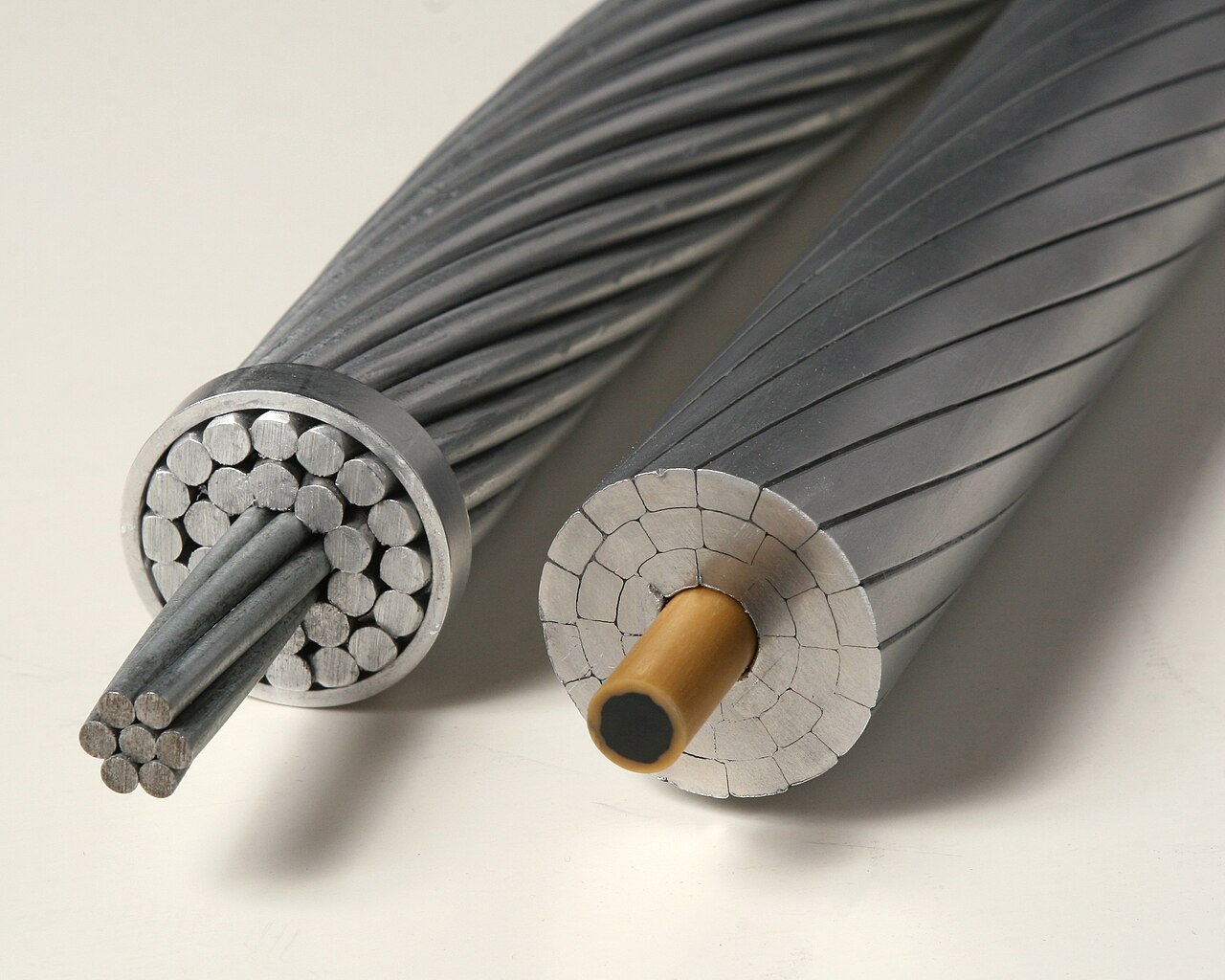
There was a second dividend beyond fatigue. The rods act as a sacrificial aluminum outer layer, so abrasion, arc damage, and weather land on replaceable rods rather than on the conductor. The manufacturer's product literature still states the same dual role. Armor rods protect cable against bending, compression, abrasion, and flash-over, and they repair damaged aluminum-based conductors.
From One Rod to a Preformed Product Family
The rod never stayed alone for long. According to the company history, new product development quickly followed, including guy-grip dead-ends and armor-grip suspensions, all built on the same preforming principle. The grip-without-clamps idea scaled from a few inches of armor at one support point to the entire grammar of formed-wire line hardware.
Growth followed the product. The Encyclopedia of Cleveland History records that by 1962 the company enjoyed sales of $9 million and employed 500 workers. It owned three Cleveland plants plus another in California, with affiliates overseas. A device that started as one answer to clamp-mouth fatigue had become a category, and competitors carried it to every continent.
In our experience this is the part of the story buyers underestimate. The preformed rod established that line protection could be a matched, single-use, hand-applied factory device rather than a field fabrication. Every modern armor rod set — factory matched, color coded, wrapped from the center outward — still follows the rules that invention set.

What Changed for Conductors After Adoption
The change is easiest to see as a before-and-after at one support point. The rigid-fastening era concentrated every bending cycle at the clamp mouth and offered nothing sacrificial; the preformed era distributes the same cycle and adds a replaceable outer layer. The table keeps that contrast in one view.
| Aspect | Rigid Fastening Era | Preformed Rod Era |
|---|---|---|
| Bending cycle | Concentrated at the clamp exit | Spread over the rod set length |
| Grip principle | End clamps and pressure faces | Helix with undersized inside diameter |
| Abrasion and flash-over | Landed directly on the conductor | Absorbed by a sacrificial rod layer |
| Damaged conductor | Re-strung or spliced | Often repaired by re-conductoring with rods |

Reliability planners read that table as a maintenance curve rather than a single event. Fewer fatigue failures at clamps mean fewer emergency climbs and fewer mid-life re-strings. The helix also created a repair option that never existed before: a damaged section reinforced in place. Any rod armour history timeline that skips the maintenance ledger misses why adoption was so quick.
Armor Rod or Rod Armour: A Naming Split
The invention left behind a vocabulary argument that never fully closed. American catalogs standardized on armor rod, while much of the rest of the trade writes rod armour. The brand name PREFORMED itself slipped into generic use as a product descriptor. Neither side is wrong; the split tracks where the product traveled first.
For a buyer the practical consequences are small but real. Searching only one spelling hides half the supplier base, and specification documents should name the conductor size and lay direction along with either spelling. When a purchase order says armor rod and the reply quotes armour rod, the helix being described is the same 1947 idea.
What the Invention Still Gets Right
We believe the design has lasted because it demands so little from the field. No torque values, no hydraulic press, no crew of three: a set of rods, a center mark, and two hands. Modern alternatives exist for extreme exposures, but the rod remains the default first layer of defense at support points, and it fits the worst-case repair role just as naturally.

That is the arc of the story. A fatigue problem nobody could see met a postwar network that made it expensive, and an engineer answered by forming the fix into the part itself. When a crew wraps a set today, they are applying the same idea the 1947 patents described. For the surrounding field procedure, the site's armor rod installation guide and the armor rod explained reference cover selection and application in detail.
Frequently Asked Questions
Who invented the armor rod, and when?
Electrical engineer Thomas F. Peterson invented the preformed spiral armor rod and organized Preformed Line Products in 1947 to manufacture it for reinforcing and splicing overhead cables.
What problem was the armor rod invented to solve?
Wind-induced vibration fatigue. Conductors were breaking strands at the suspension clamp exit, so the rod was designed to add grip without rigid end clamps and protect against abrasion and fatigue.
Why does the rod have a smaller inside diameter?
The undersized formed diameter makes the helix grip the conductor along its whole length at once. Wrapped on by hand, the set stays secure with no end clamps or tools.
Is armor rod the same as rod armour?
Yes. Armor rod is the American spelling and rod armour the British-leaning one; both describe the same preformed helical protection device from 1947.
Do modern armor rods still work on the same principle?
They do. Factory-matched, color-coded rod sets wrapped by hand from the center outward still rely on the preformed undersized helix, now paired with refined alloys and end finishes.
Rod armour history rewards a second look because the object has barely changed while the network around it transformed. A small helix of preformed wire, gripping without clamps and sacrificing itself for the strand beneath, quietly removed one of the oldest failure points on the line. RaxPower supplies armour rod sets built to that same preformed principle, factory matched and color coded for the conductor they protect.