
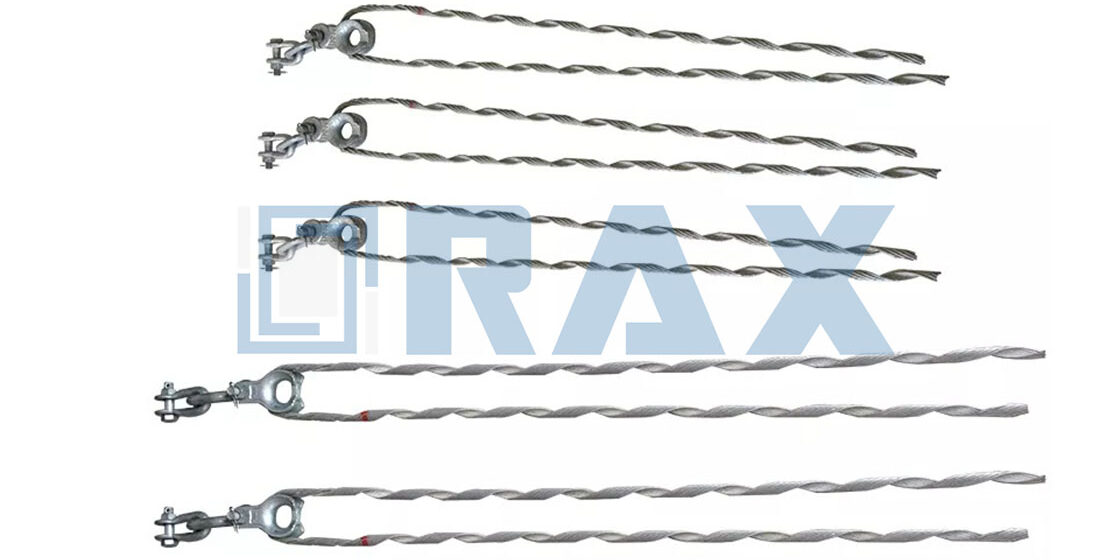
A dead end guy grip is a small part, and its failures start small too. A grip that has crept half an inch, a wrap that lifted after a storm, or rust bleeding at the rod tips reads from the ground before anyone climbs. Crews that learn to read those signs fix a guy in one visit. Crews that miss them write callback orders.
Treat this page as a symptom index. If the grip has moved toward the anchor, start with slippage. If the wraps lifted in wind, go to storm wraps; if the strand looks scored at the rod tips, jump to exit-point scoring. Each section follows the same path: what you see, why it happens, what to do at the pole, and what stops it from coming back. The systems guide covers how the grip family is built and rated; here the question is narrower: why is this one misbehaving.
Grip Slides Along the Strand Under Load
A healthy grip stays put for decades. A failing one creeps: the tips ride further down the strand, the color codes drift out of square, and the gap between the loop and the first wrap widens. Mark the tip line with paint at install. Movement across two inspections is a fault, not a settling.
Slippage traces back to fit. A grip holds by pressing its helical rods into the strand valleys, so the grip must sit inside the strand's diameter window. A grip listed for 1/4-inch EHS strand, for example, covers roughly 0.248 to 0.256 inches. A strand outside that window never seats, and the wrap slides as soon as tension cycles.
Lay direction is the second cause. Guy strand is specified with a left lay under ASTM A475, and most grips are formed to match it. A right-hand grip on a left-hand strand fights the helix instead of biting it. Dirt, oil, or paint on the strand does the same work more slowly.
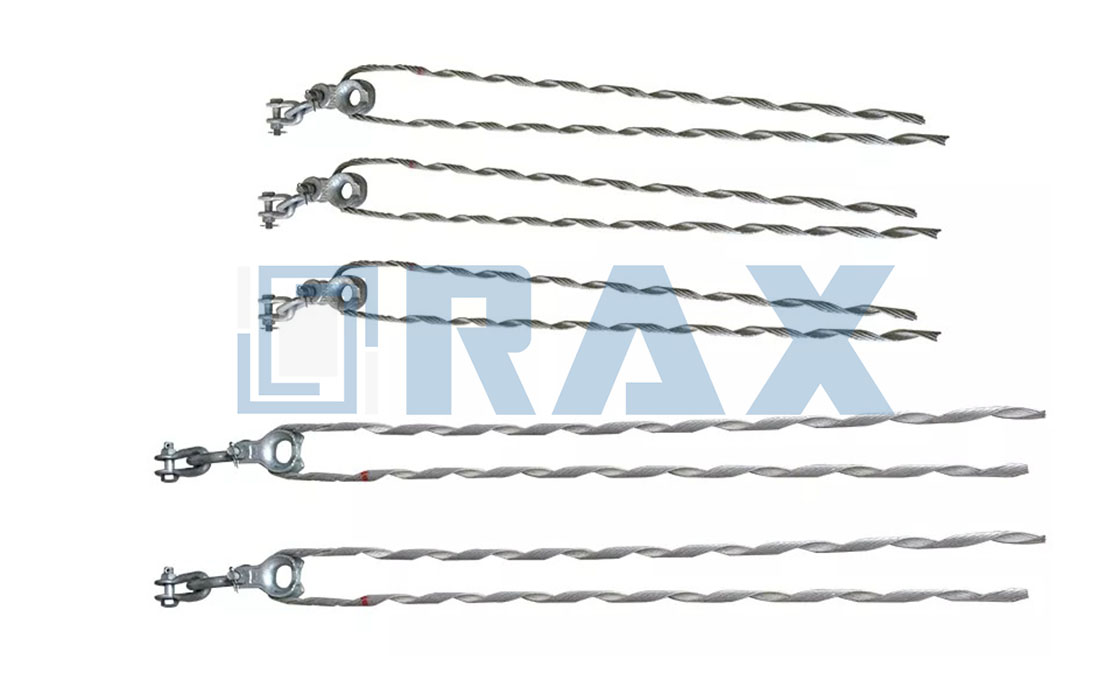
The fix is replacement, not re-tightening. Drop tension with the turnbuckle, unwrap the grip, and caliper the strand a few feet back from the end. Pick a dead end grip whose printed window contains that reading, match the lay, and install it clean. A grip that has crept under load never goes back on the strand.
Verdict: a grip that moved under load comes off once. Measure, replace, and log the window on the work order.
Wraps Look Loose After a Storm
Wind loads a guy in cycles, and the wrap answers in kind. After a storm, look for turns that have gapped apart, rods standing proud of the strand, or a wrap that rings when flicked with a finger. Any of these means the rods stopped sharing the load.
Two origins are common. A wrap that never seated fully at install lifts first, because the last turns carry the least preload. Crossed turns are the other origin: rods stacked on rods spread the load unevenly and work loose under vibration.
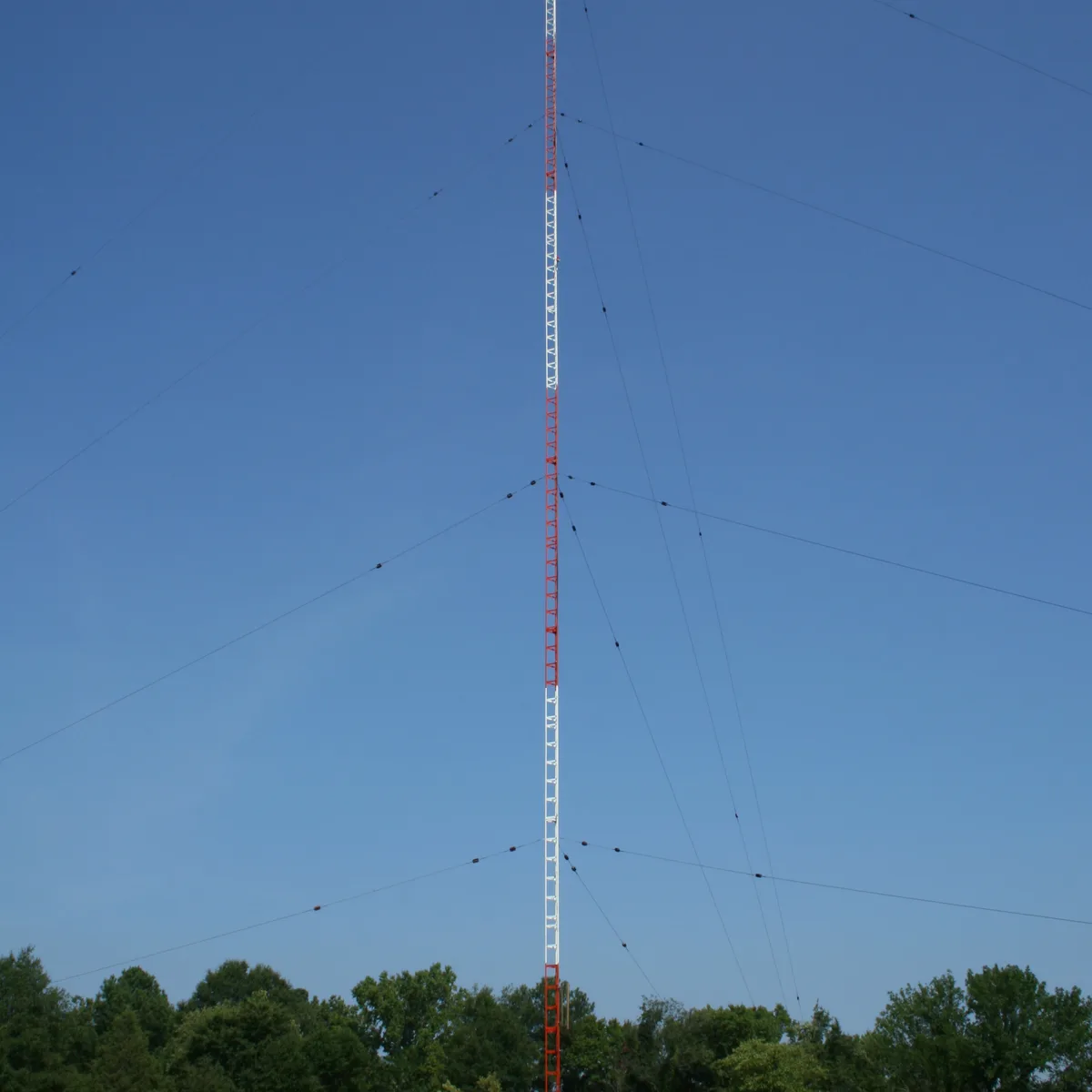
History decides the fix. Inside the reapplication window, the grip comes off and goes back on once, with every turn nested by hand along the lay. Outside that window, or on a second removal, it is a new grip. Never hammer raised turns down; the set is already lost.
Verdict: loose wraps after wind are an inspection trigger. Re-seat within the window, replace outside it.
Strand Damage at the Grip Exit
The exit point is where the rods leave the strand, and it shows trouble first. Bright scuffing, nicked wires, or a birdcage of splayed strands at that line all point to relative motion. On a healthy termination, the strand at the exit looks exactly like the strand below it.
Motion at the exit has three drivers. A grip that is slipping further up drags its rods across the surface. An applied length too short for the load concentrates more pull on each turn near the exit, where the rods leave the strand. A cabled loop that sits crooked in its thimble bends the strand at the exit on every tension cycle.
Damage at the exit is a strand decision, not just a grip decision. Inspect beyond the exit for broken wires or reduced section. Cut back past the damage and re-terminate on sound strand with a new grip of the correct applied length. The covered section is not re-wrapped.
Verdict: any strand damage at the exit means a new grip, and often new strand. Score the section, not just the hardware.
Corrosion Marks Near the Grip Ends
Rust bleeding from the rod tips, or white oxide powder on aluminum-family wire, marks the exit region first. The rods hold moisture against the strand, so the last inch of wrap weathers faster than the open span. That trapped moisture is why the ends age before the middle.
The main cause is a material mismatch. Galvanized steel wire grips belong on galvanized steel strand; aluminum-clad and aluminum alloy wire grips belong on aluminum-family strands. Put bare steel against aluminum-clad strand and the junction corrodes year round. Coating scraped off during installation opens the same door.
Match the family, then check the strand underneath. Surface bloom on the grip alone is a replace-with-matched-part finding. Pitting or section loss on the strand at the exit is a cut-back-and-re-terminate finding. RaxPower's formed wire range covers both families, matched to strand type, with hot-dip galvanizing to ISO 1461.
Verdict: corrosion at the exit is a material-match failure until proven otherwise. Replace matched, and re-inspect the strand section.
Grip Wear and Armor Rod Abrasion
Wear shows as polishing where rod crosses rod, or as scarring where a grip sits against armor rod. Both are relative-motion damage, and both thin the wire that has to carry the load. Run a gloved hand along the rods; flats and edges read faster than the eye.
Armor rods and guy grips do different jobs. Armor rods shield a strand or conductor from bending and abrasion at a support point. When the two are stacked on the same section, vibration works them against each other, and both lose material without either part failing on its own.
Keep the roles separate on the pole. Replace armor rods that show grooving, and replace any grip whose rods have polished flat. A flattened rod has lost cross-section, and a lost cross-section means a lost bite into the strand valley.
Verdict: wear is a vibration symptom, not an age symptom. Fix the motion, replace the thinned parts.
Grip Sits in the Wrong Spot
Some faults are visible the day the crew leaves. A dead end guy grip installed out of position shows it immediately. The crossover marks sit crooked to the strand, the grip starts too close to the thimble, or the loop rides the edge of its groove instead of the center. Every one of these is a positioning fault, not a hardware fault.
The causes are order-of-operations errors. The wrap started before the marks were squared. The hardware rotated during wrapping, so the legs wound in off the lay. The loop was drawn up before it seated, which twists the whole wrap as tension rises.
The reuse window covers this case. Within two reapplications and 90 days of first service, unwrap, square the marks, seat the loop, and wrap again by hand. Outside that window, the grip is replaced, because the rods have already taken a set around the wrong position.
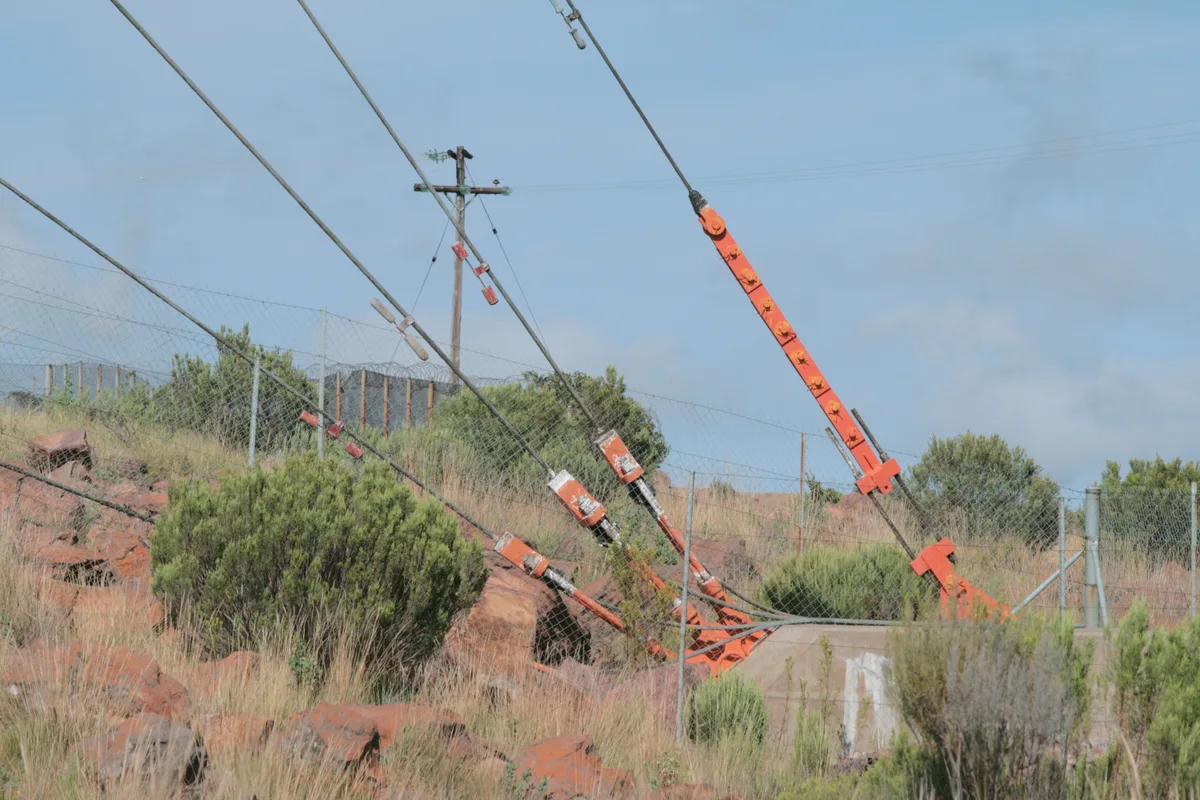
Verdict: wrong position inside the window is a re-wrap; outside it, a replacement. Square the marks before the first wrap next time.
Kinked Legs That Will Not Nest
A kinked leg announces itself. It stands proud of the wrap, refuses to follow the helix, or snaps back when pressed down. Crossovers pile up where the kink passes, and the neighboring turns never seat against the strand.
Kinks come from storage and handling. Grips tossed loose in a truck box, legs bent to fit a pouch, or a wrap forced against the lay all do it. A kinked rod carries a permanent memory change, and straightening it by hand does not restore the formed radius.
Retire the unit on the spot. That is a scrap red line at the installation stage, and it applies double under tension, where a kink concentrates load into a few wires. If the grip must come off anyway, unwrap as needed to free the sound leg, but the kinked unit never returns to service.
Verdict: a kinked leg is a scrap verdict with no appeal. Store grips straight, wrap with the lay, never force.
Lost Holding Force After Retensioning
The pattern repeats across systems: a crew re-tensions the guy, and weeks later the grip shows movement it never showed before. The hardware is not defective. Its holding force was partly spent by the removal.
Preformed rods take a set around the strand on first installation. Removal relaxes that set, and each reapplication holds a little less than the one before. The same logic leads clamp manufacturers to state that gripping elements are not recommended for reuse after disassembly.
The working rule for a guy grip is simple: single use, reinstalled at most twice, and only within 90 days of first service. Past either limit, tension adjustments belong at the turnbuckle, never at the grip. Log each reapplication date on the work order so the next crew knows the count.
Verdict: re-tension with the turnbuckle. Re-wrap only inside the two-times, 90-day window.
Replace or Retain: The Field Rule
Every dead end guy grip symptom above resolves to one decision at the pole. The table compresses the eight cases for the truck door.
| Symptom | Likely cause | Field call |
|---|---|---|
| Grip crept along the strand | Diameter window or lay mismatch | Replace; caliper and match |
| Wraps lifted after wind | Unseated wrap or crossed turns | Re-seat inside window; replace after |
| Scoring or birdcaging at the exit | Motion at exit; short applied length | New grip; cut back strand if damaged |
| Rust or oxide at the rod tips | Material mismatch or coating damage | Replace with matched material |
| Rods polished flat, armor grooved | Vibration between stacked parts | Replace thinned parts; fix the motion |
| Marks crooked, loop off-center | Positioning error at install | Re-wrap inside window; replace after |
| Kinked or standing leg | Storage or handling damage | Scrap immediately |
| Slippage after re-tensioning | Reuse beyond set limits | New grip; adjust at the turnbuckle |
The rule runs one line. Replace when the grip has moved under load, when a leg is kinked, or when the part is past its reuse window. Replace too when the strand shows damage or section loss at the exit. Retain only when the wrap seats fully, the marks sit square, the loop centers in its thimble, and the hardware shows no wear or corrosion.
A retained grip still gets a dated paint mark at the tip line, so the next crew reads the mark instead of a memory. If the tips have moved past the paint, the decision has already been made. Full product windows and applied lengths are printed on every dead end grip tag. The wrap sequence from mark to tip is covered step by step in the installation guide.
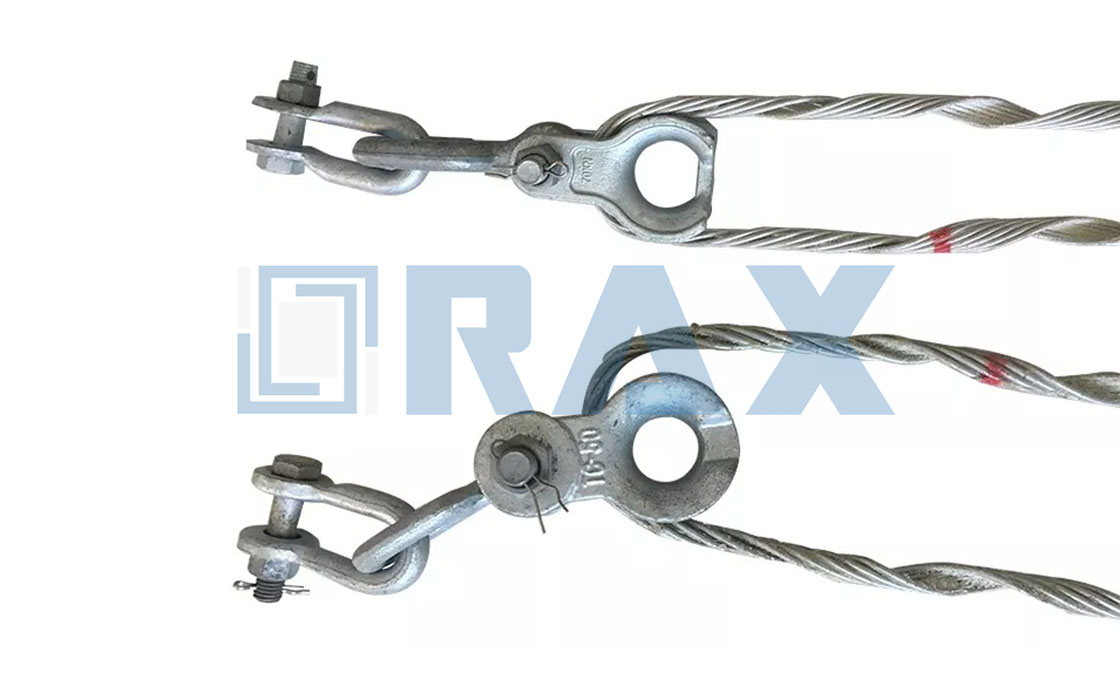
Dead End Guy Grip Troubleshooting FAQ
Why is my dead end guy grip sliding along the strand?
Usually a diameter window or lay direction mismatch. Caliper the strand, replace the grip with one whose printed window contains the reading, and install it clean. A grip that has crept under load is never rewrapped.
Can I reuse a dead end guy grip after retensioning?
Within limits. A guy grip is single-use hardware: it may be reapplied at most twice, and only within 90 days of first service. Past either limit, install a new grip and adjust tension at the turnbuckle.
What does strand damage at the grip exit mean?
Relative motion at the exit point, often from slippage, a short applied length, or a crooked loop. Inspect the strand for broken wires, cut back past any damage, and re-terminate with a new grip.
How do I match grip material to my guy strand?
Match families. Galvanized steel wire grips suit galvanized steel strand; aluminum-clad and aluminum alloy wire grips suit aluminum-family strands. Mixed materials corrode at the junction, so a rusting exit point is often a mismatch finding.
When must a guy grip be replaced instead of rewound?
Replace it when the grip has moved under load, when a leg is kinked, or when the strand shows damage at the exit. Replace it too when the part is past the two-reapplication, 90-day window. Retain only a fully seated, square, unworn grip.