
A single span of overhead conductor can weigh several hundred pounds, and it pulls on every pole in the line. At corners, dead-ends, and steep grade changes, that pull turns into a one-sided load that would topple the structure on its own. The anchor rod is the fitting that ends this fight: it takes concentrated guy tension and hands it to the earth through a buried anchor.
RaxPower has manufactured pole line hardware since 2003, and anchor rods sit inside that tension program alongside extensions, couplers, and pulling eyes. The notes below come from the engineering desk behind those parts: what the rod does, where it works, and which specs actually decide performance.
What Is an Anchor Rod in Pole Line Hardware?
An anchor rod is a long steel bar, usually carbon steel with a forged eye on one end and a threaded stub on the other. In utility work the name covers a family of parts. Guy anchor rods carry down-guy loads, foundation anchor rods tie structures to concrete, and extensions and couplers adjust reach. The eye end accepts guy strand, thimbles, or guy attachments, while the threaded end picks up the anchor nut or drive head. Nothing elaborate stands between a leaning pole and the ground, which is exactly why the part deserves engineering attention.
Most utility rods are hot-forged, not cut from bar stock. Forging aligns the steel grain through the eye, so the eye stays stronger than the rod body itself. US anchor hardware catalogs treat that as the design baseline, and it doubles as a fair acceptance check when you qualify a supplier. The same forging discipline carries into the wider pole line hardware range.
How an Anchor Rod Transfers Guy Load Into Soil
The anchor rod function starts with one rule: tension must travel from the wire into the soil without slipping, bending, or pulling out. Imagine the path as four links in a single chain.
- The guy wire terminates at the rod’s forged eye, usually through a thimble or a guy grip.
- The rod shank carries that tension down its axis at the installed angle.
- The threaded end couples to a helix, plate, or expanding anchor buried in stable soil.
- The anchor engages a cone of soil, and the earth’s shear strength provides the final resistance.
Alignment is not optional. The rod axis must line up with the guy load. Anchor manufacturers state plainly that a misaligned shaft invites premature rod failure, and some systems cap the departure angle at five degrees. When the rod, the anchor, and the guy share one line of action, every thread sees pure tension instead of a bending mix. Field crews verify the angle before tensioning, not after.
Think of the assembly the way you think of a truck hitch and its chain. The hitch ball may hold the load, but a bent tongue or a half-latched coupler still ruins the tow. In the same way, a strong anchor cannot rescue an undersized or crooked rod.
Anchor Rod Function in Guy Wire Assemblies
Guys are where most buyers meet the anchor rod first. A down-guy runs from the pole top at an angle to an anchor rod set in the ground, and the pair works as one tension member. Utilities place guys at angle poles, dead-ends, and long spans to catch the unbalanced pull that the conductors create.

Field practice shows how big these rods get. Distribution crews often install screw-style anchors on rods of ten feet or longer, and heavier structures spread the pull across several guy positions rather than one heroic rod. By the time the backfill is compacted, the rod is the only visible part of the whole system.
The rod also defines the connection geometry for the rest of the attachment chain. Thimbleye eyes accept a strand thimble, while double- and triple-eye faces let two or three guys share one anchor position. Guy hooks, strain insulators, and turnbuckles all hang off the geometry that the eye establishes, which is why eye style belongs in the earliest design talks.
Structure size drives the count. A distribution dead-end may carry a single guy, while taller transmission structures often run several down-guys per direction, each on its own engineered anchor. Where a sidewalk or driveway blocks the lead, an offset arm moves the anchor point to one side so the strand keeps a straight pull.
Anchor Rod Function in Tower and Structure Foundations
The same product name shows up below the guy line. Cast into a concrete foundation, an anchor rod becomes the tie that holds a pole stub, a tower leg, or a lighting mast down against uplift and shear. Here the rod works with the weight of the foundation instead of a soil cone.
Foundation grades follow ASTM F1554, which sorts anchor rods by minimum yield strength in three steps: 36, 55, and 105 ksi. Straight, L-shaped, J-shaped, and fully threaded bodies cover different embedment and anchorage details. Mill certificates and structural specifications will call these grades out by name. Most rods for this duty are cast in place before the concrete pour, though post-installed versions drill and epoxy into hardened pads. Straight and bent bodies suit different base plates, and the choice follows the foundation drawing, not habit.
A guyed transmission mast shows both functions in one structure. The mast legs sit on engineered foundations, while guy strands run down to long anchor rods spaced around the site. Each rod holds its share of the mast’s stability, so one corroded or slack anchor quietly redistributes load to its neighbors.
Pairing Anchor Rods With Helix and Plate Anchors
No rod works alone; the earth anchor decides the holding power. Helix screw anchors twist into the soil like an oversized wood screw and suit most ordinary soils. Cross-plate and log-type anchors reach deep stable layers through a trench or a pilot hole, and expanding anchors open their blades against the wall of a driven hole.
Soil decides everything, which is why installers watch torque. Screw-anchor practice treats installation torque as a field reading of soil strength, and that reading grades the ground the anchor is biting into. The same anchor can change its rating dramatically between wet sand and dense hardpan.
Match the anchor style to the ground survey first, then let rod length follow. A helix needs enough depth for its blades to bite stable soil, which is why extension inventory matters on mixed-soil routes. Plate anchors trade speed for reach, going deeper than a screw can.
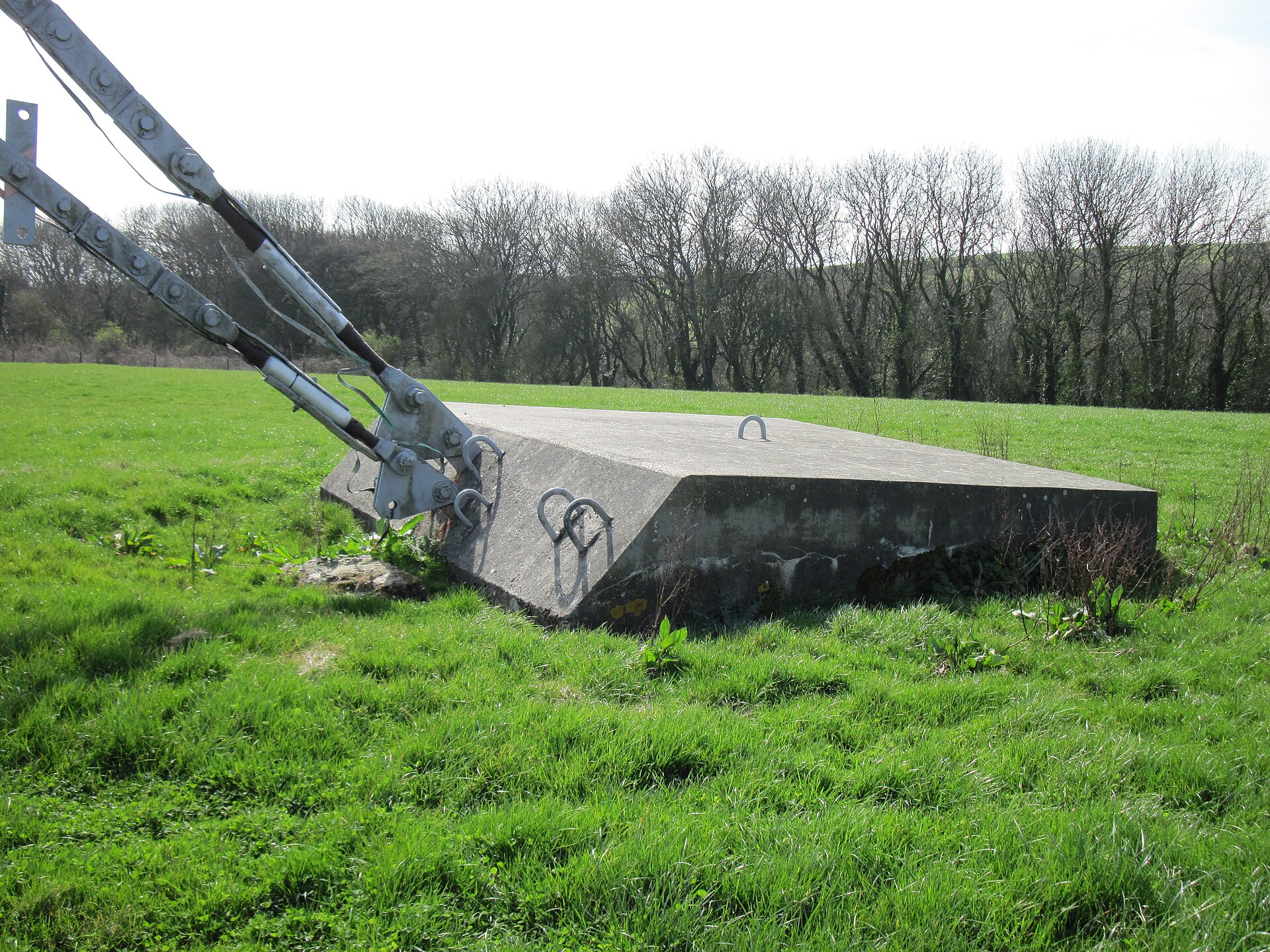
Extensions and couplers make the pairing adjustable. An anchor rod extension sets the eye at the right depth and lead angle, and a coupler joins a rod to a longer reach without re-embedding the anchor. Keep the threads clean and the joint fully seated, because the connection sees the full guy load every minute of the year.
Why Hot-Dip Galvanizing Preserves Anchor Rod Function
Buried steel cannot be repainted, inspected casually, or swapped out on a whim. Corrosion protection therefore has to last the life of the line, and the industry answer is a hot-dip galvanized coating applied after fabrication. For buyers, the practical anchor rod function question is not whether it rusts, but how long the zinc shield holds.
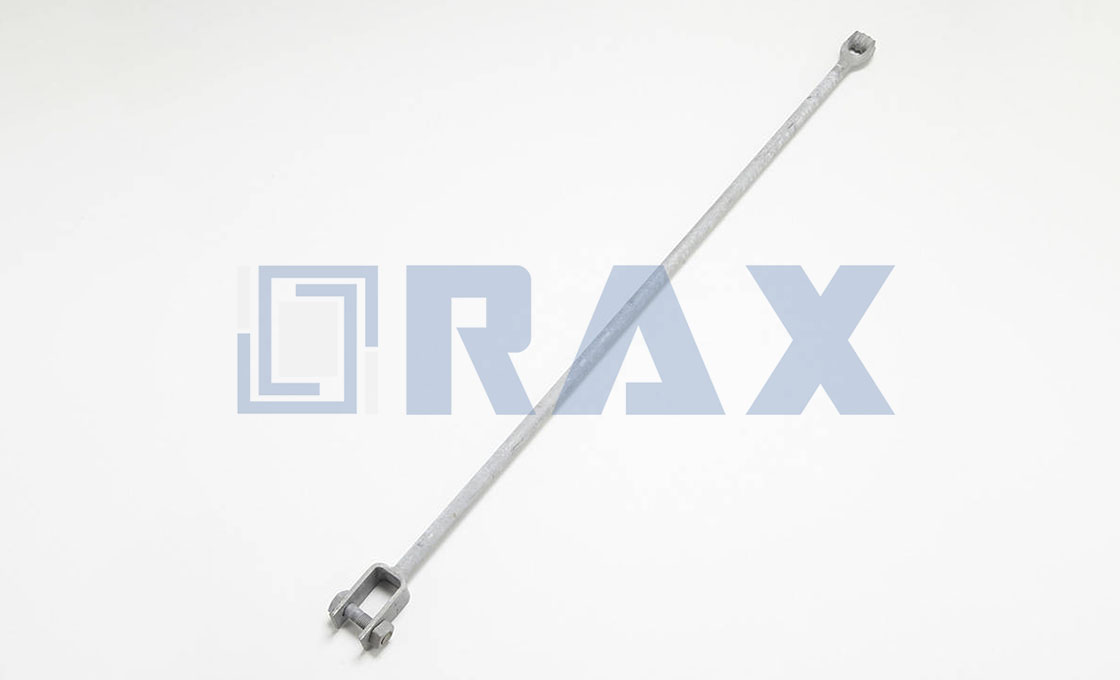
ASTM A123 is the specification that governs those coatings on fabricated steel, including bars and forgings. It sets minimum average zinc thickness by material category and steel thickness, and heavier sections receive heavier coatings. The logic is simple: coating life scales with zinc thickness, so a thicker grade buys decades, not months. Plants with in-house galvanizing can quote an average coating above 85 microns when the application demands it.
Acceptance tip: check the coating where loads concentrate. A sound hot-dip coating wraps the eye radius and the threads alike, with no bare steel showing.
How to Match Anchor Rod Specs to Line Loads
Specifying is a matching exercise. The rod’s published strength has to meet or beat the guy strand’s rating. The eye has to fit the strand and hardware, and the length has to reach the anchor depth. Four numbers usually settle the choice: diameter, published ultimate strength, thread length, and overall length.
Thread length matters too, because the anchor nut, any extension, and the locking hardware all have to fit the stub. Published ratings from major US anchor makers look like this.
| Rod diameter | Typical published strength | Common duty |
|---|---|---|
| 5/8 in | 16,000 lbs ultimate | Single-strand distribution guys |
| 3/4 in | 23,000 lbs minimum tensile | Double-strand guys, heavier spans |
| 1 in | 26,000 lbs (stamped 26M) | Triple-eye positions on major angles |
| 1-1/4 in | 36,000 lbs (stamped 36M) | Transmission-class guy points |
Treat the table as a screening aid, not a design stamp. Soil class, guy angle, and the anchor’s own rating can override a catalog number, so the final call belongs to the line engineer. In our experience, the expensive failures trace back to skipped soil data far more often than to the rod itself.
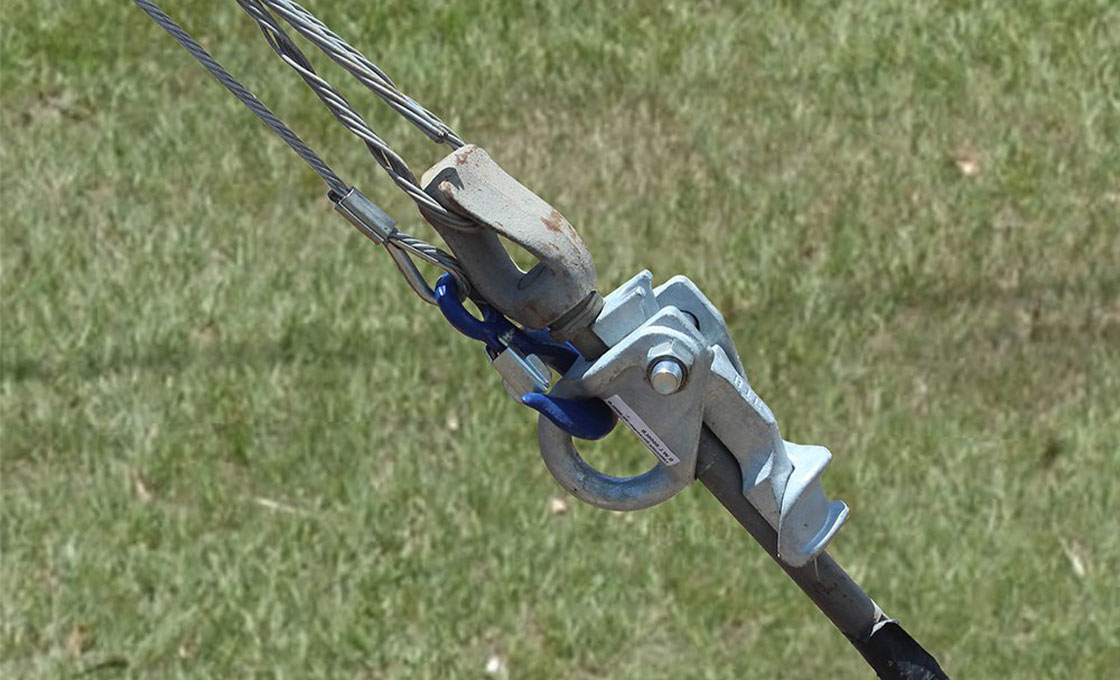
Typical Anchor Rod Configurations and Their Jobs
Configuration follows duty. A single thimbleye suits one down-guy on a distribution pole. Twin and triple eye faces stack two or three strand connections on the same anchor position, which cleans up crowded corner poles where multiple directions need holding.
Around the basic rod, four accessories do most of the work. Pulling eyes give a clean tension point for rigging and testing. A pulling eye also doubles as a rated point for proof-testing an anchor after setting, which turns a spare part into a commissioning tool. Extensions add reach when the eye must sit above grade or clear of riprap, and couplers join sections when a single bar is impractical to ship or drive.
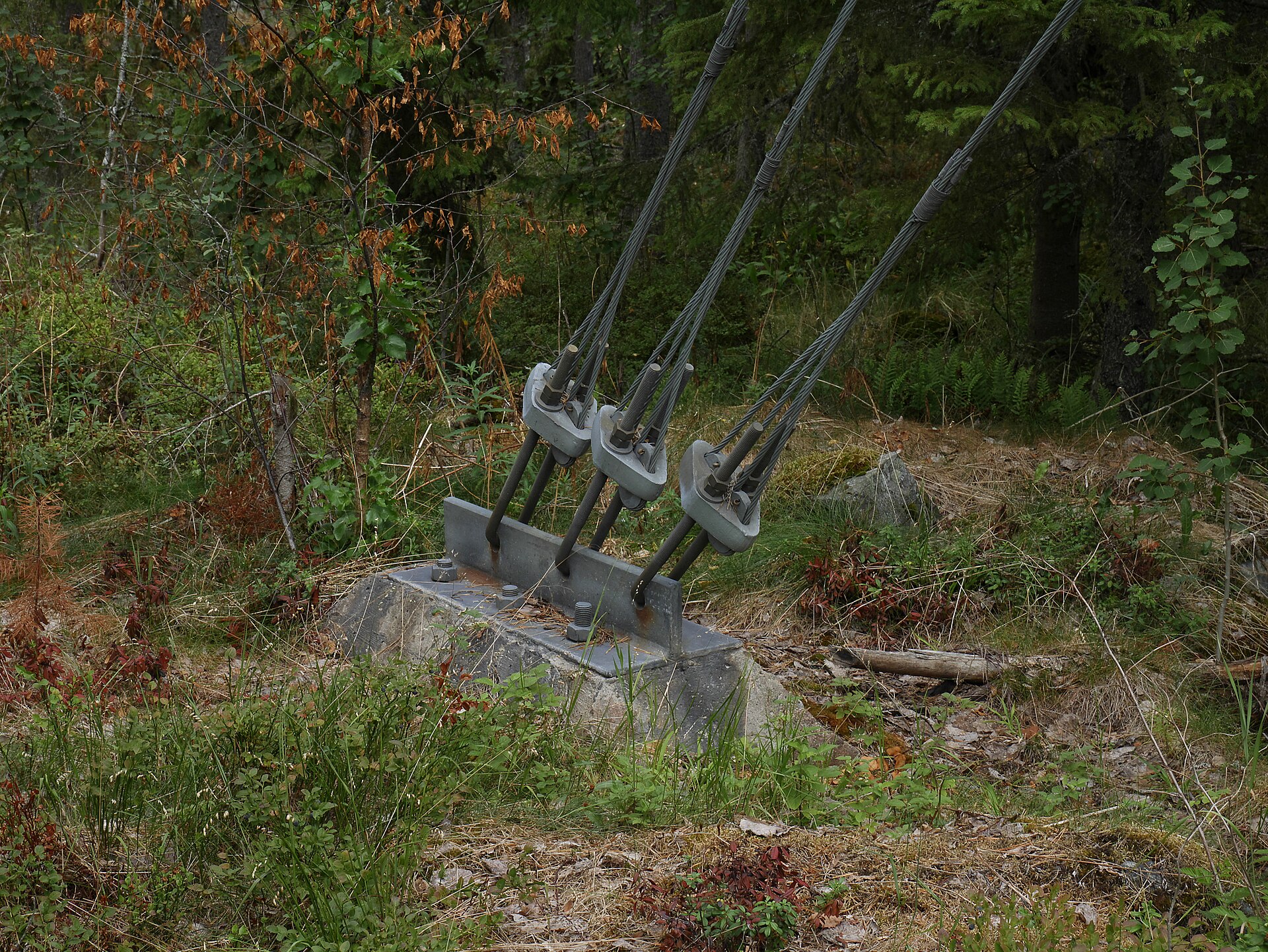
Bonding clamps are the quiet fourth piece. Where the guy system must share fault current, a bonding clamp bridges the rod to the ground conductor without drilling or welding. It is a small part, but skipping it turns a tension anchor into an insulation problem.
Key Takeaways on the Anchor Rod Function
- The anchor rod function is load transfer: guy tension in, soil resistance out.
- Forged eyes, correct alignment, and the right anchor make the load path continuous.
- Hot-dip galvanizing per ASTM A123 sets the service life of the buried part.
- Match published rod strength to strand rating before touching soil class.
Every guying decision ends at the same place: a forged eye, a galvanized bar, and the ground. RaxPower forges and machines anchor rods, extensions, couplers, and pulling eyes in Hebei, and its engineering desk can review a load path with you before you dig. Picture the next storm passing your line; the rod is why the poles are still standing afterward.
Anchor Rod Function: Frequently Asked Questions
What does an anchor rod actually do?
It is the tension link between a guy wire or structure and the ground. The forged eye takes the wire, the shank carries the load, and the threaded end couples to an earth anchor or foundation.
How deep should an anchor rod be set?
Depth follows the anchor, not a fixed rule. Utility screw anchors often run ten feet or longer so the helix sits in stable soil, and extensions set the eye at the correct lead angle.
Can one anchor rod hold two guy wires?
Yes. Twin-eye and triple-eye faces are forged for two or three strand connections at one anchor position, provided the combined load stays inside the rod’s and the anchor’s ratings.
Why galvanize an anchor rod instead of painting it?
Buried hardware cannot be repainted on any schedule. A hot-dip zinc coating to ASTM A123 wraps the whole bar, including eye and threads, and sets a service life measured in decades.
What size anchor rod does a distribution guy need?
Common published ratings run from 16,000 lbs for 5/8 inch single-strand rods to 23,000 lbs for 3/4 inch double-strand rods. Match the rod to the strand rating, then verify the soil and anchor.