
Picture the moment a drum of ADSS cable leaves the warehouse. The cable itself is remarkably capable, yet every load it will ever carry passes through a handful of components clamped around its jacket. ADSS cable fittings are the suspension sets, tension sets, rods, dampers, and closures that hold an all-dielectric self-supporting cable on utility structures without crushing its glass fibers. Buy the cable right and the fittings wrong, and the fibers pay for the mistake.
Since 2003, the RaxPower engineering desk has drawn, forged, and inspected ADSS fittings for live utility routes — a team of 170+ specialists today. This article walks through the five fitting families, the numbers that drive each choice, and the failure modes that stay hidden for years. These are the errors our desk corrects most often, so read it as field notes rather than a catalog pitch. Score yourself as you read.
What ADSS Fittings Do That the Cable Cannot
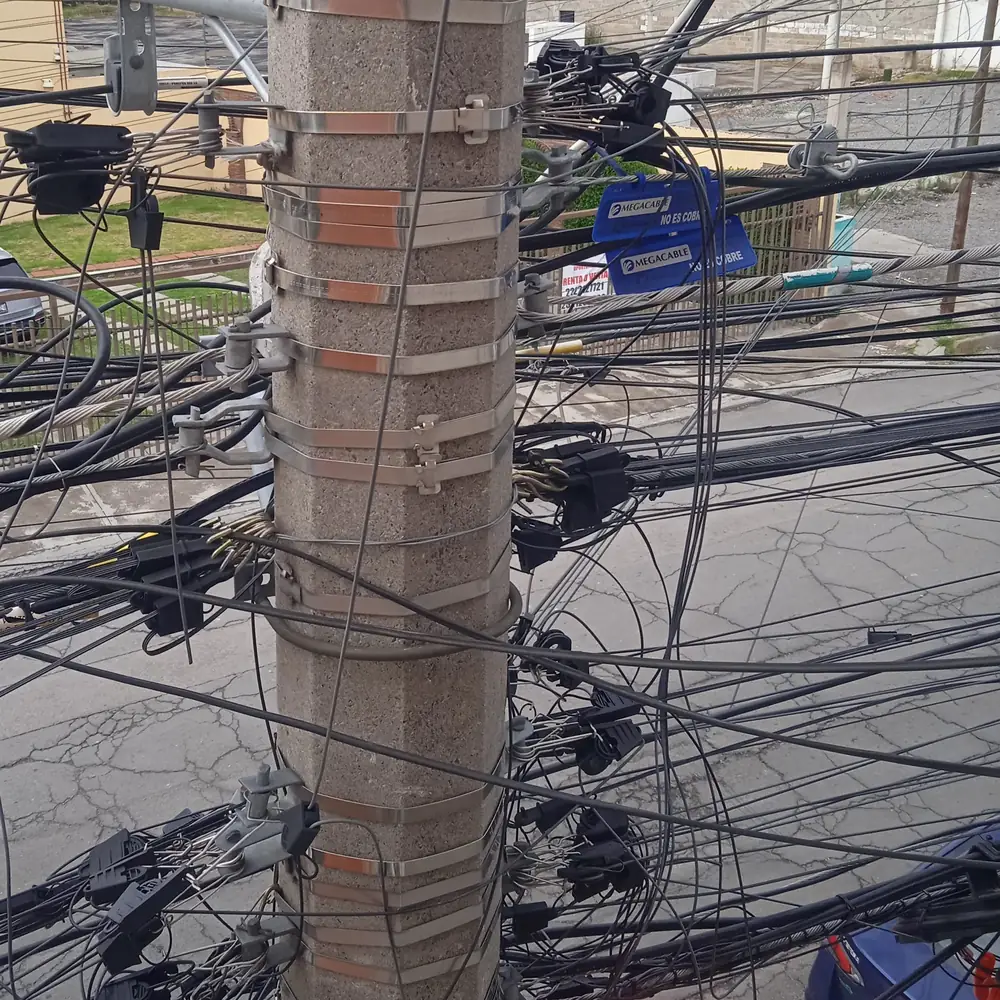
An ADSS cable is all-dielectric, which means it carries no metallic strength member and needs no bonding to the pole. That property lets it share structures with live conductors, but it also removes every metal surface the cable could otherwise lean on. Every mechanical interface — tangent support, corner, dead-end, splice — must come from an external fitting engineered not to concentrate stress on the jacket.
The Five Families of ADSS Cable Fittings
Most catalogs bury ADSS hardware in long part-number tables. In practice, almost everything sorts into five families, each answering one structural question. A complete span usually needs at least three of them working together, and the first two do the heavy lifting.
Suspension Sets for Straight-Line Spans
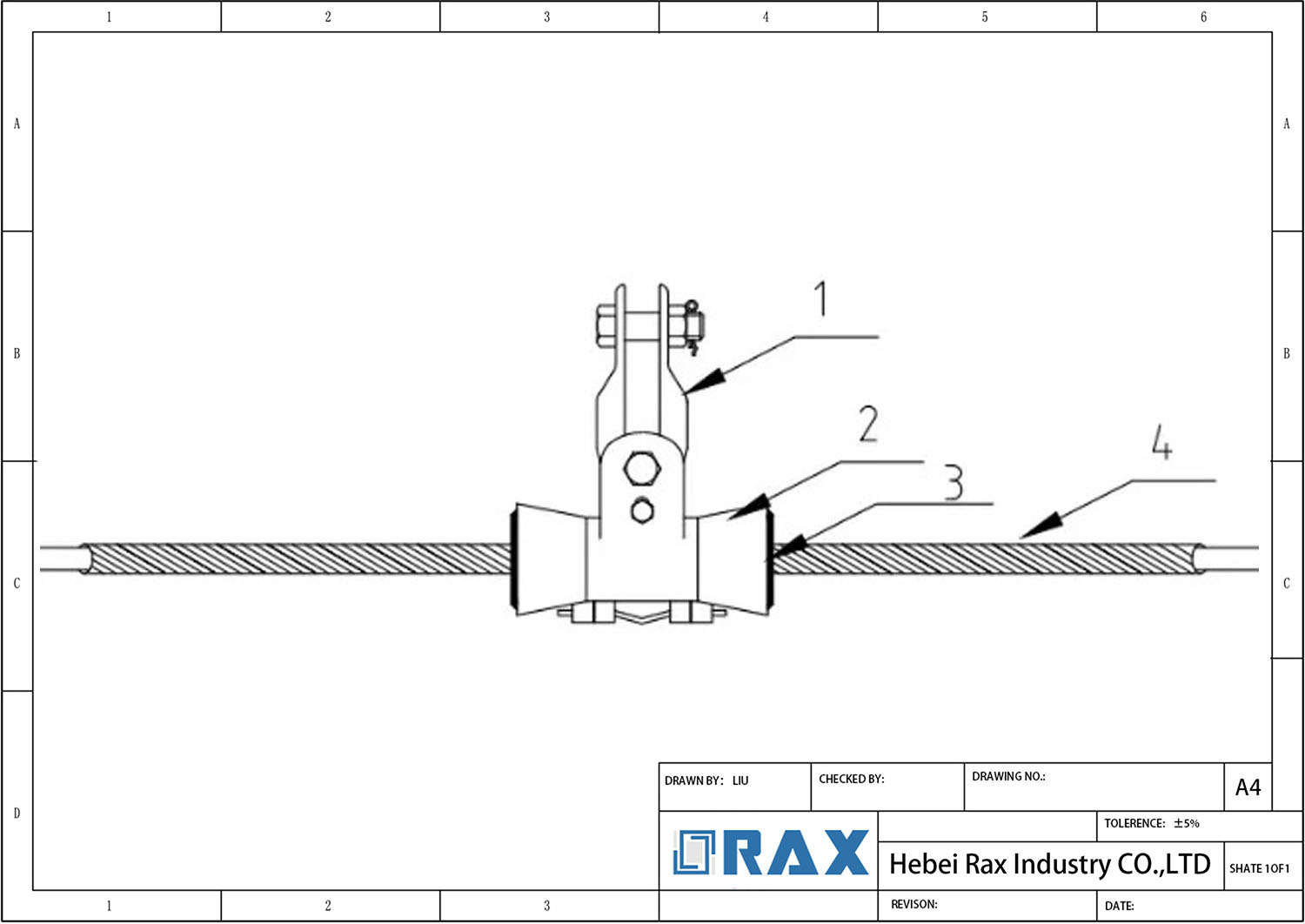
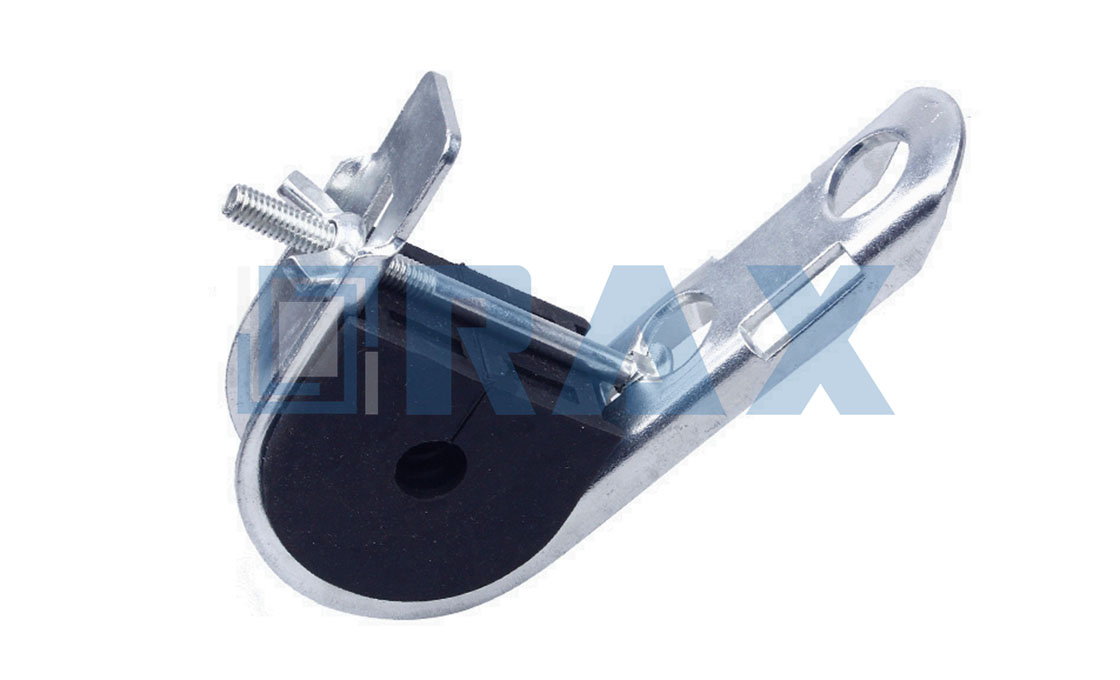
On tangent structures the cable simply passes by, and a suspension set for ADSS cradles it. The set pairs preformed helical rods with an aluminum alloy housing and link fittings. Wrapped around the cable, the rods spread the clamping force over a wide contact length instead of pinching one spot.
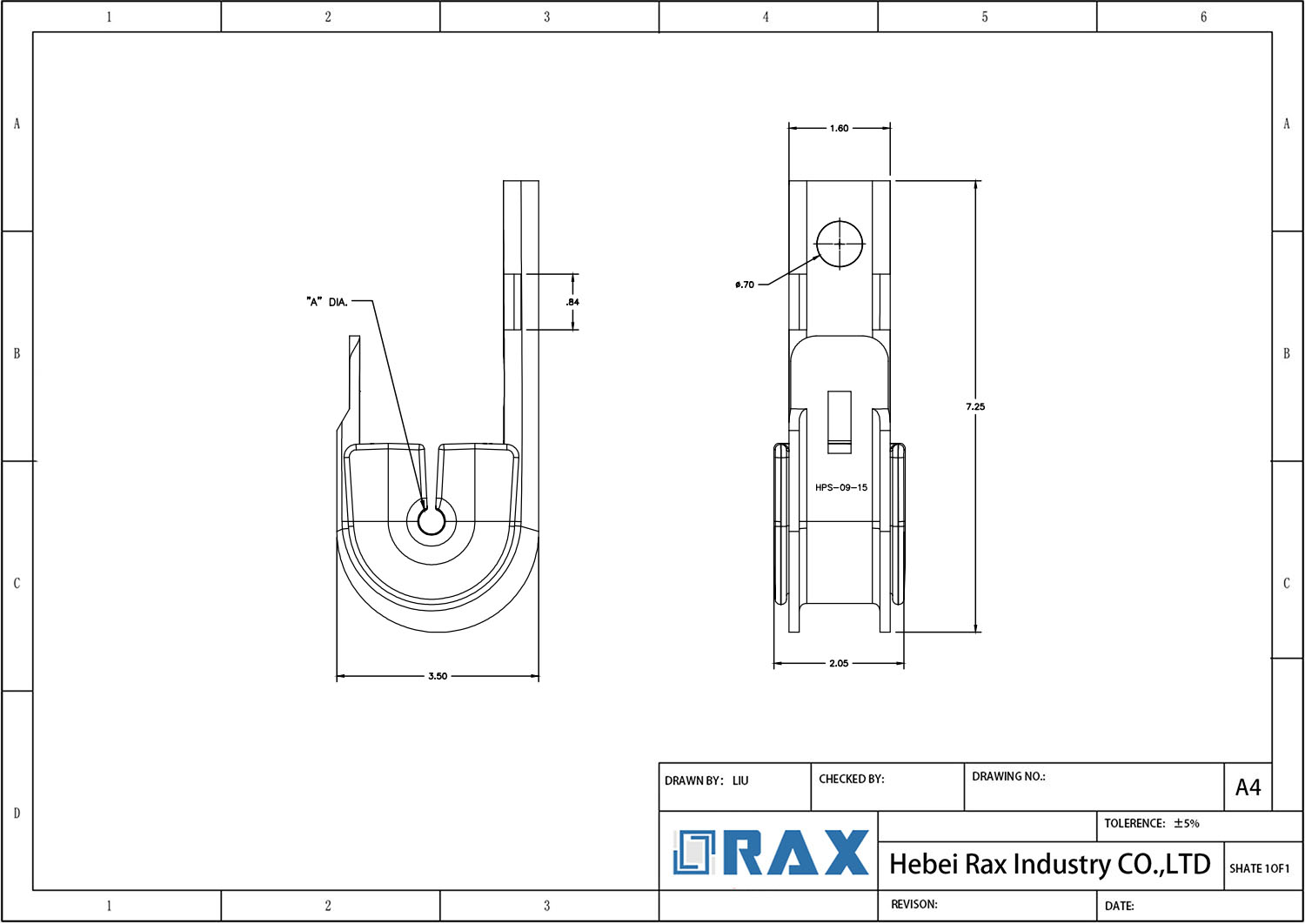
Suspension hardware carries vertical span weight plus wind and ice loads, so the housing style follows both the span and the line angle. A set sized for a 100 m distribution span and a set sized for a tower crossing share the same principle but not the same part number.
Tension Sets for Dead-Ends and Angles
Where the cable ends or turns, a tension set takes the full mechanical load. Preformed dead-end rods grip the jacket helix by helix, holding rated tension without a single stress point. Our anchoring clamp installation guide covers the same load-path principle for clamp-style terminations.
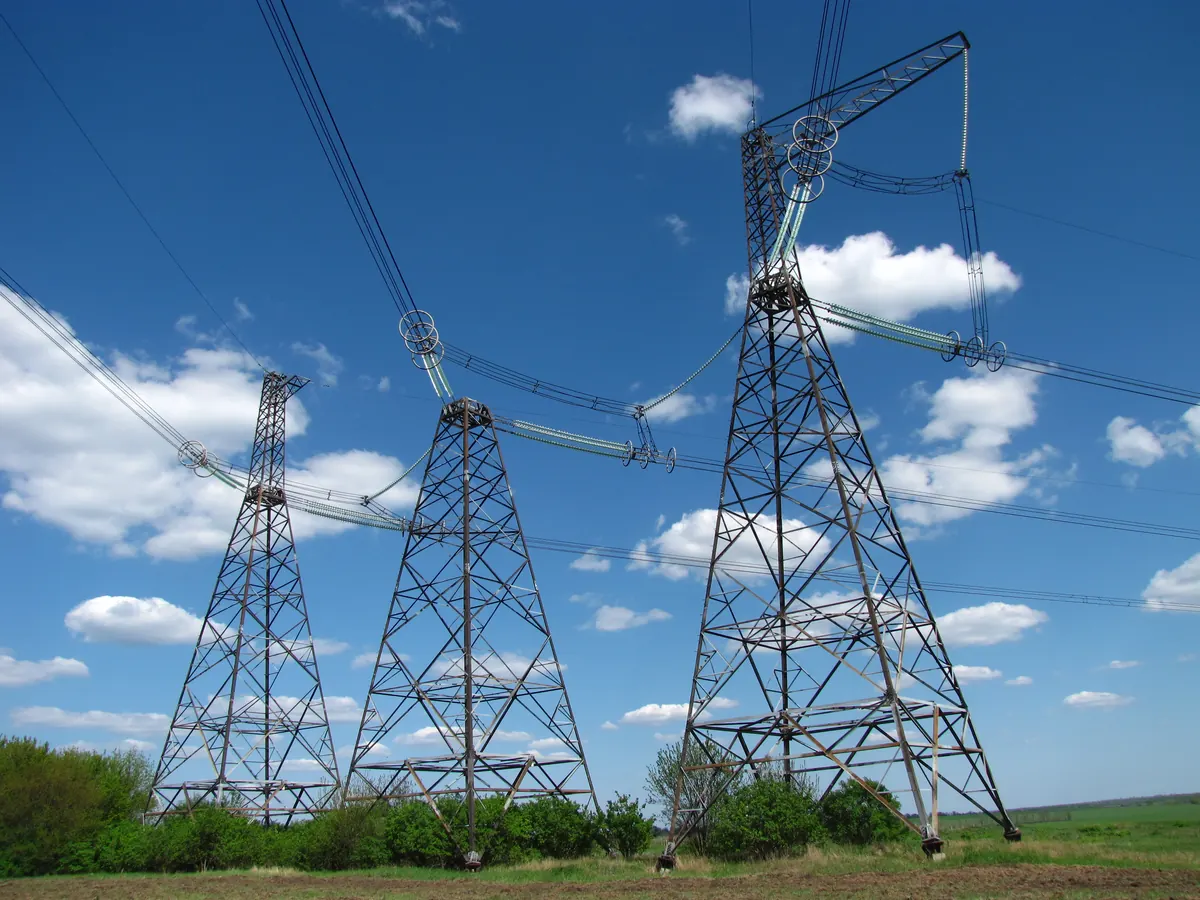
Structures like the anchor pylon below exist to absorb that tension: every conductor and cable dead-ending on it transfers load through fittings, never through the cable alone.
Armor Rods and Aluminum Supports
Armor rods and aluminum supports for ADSS add protection at points of repeated bending: tangent clamps, guard locations, and housing entries. The rods stiffen a short length of cable so fatigue strains stay below the level that cracks jackets over time.
Specifiers choose rod inner diameter from the measured cable outside diameter, never from the cable’s marketing name. Two cables sold under the same fiber count can differ enough in jacket thickness to need different rod sets.
Vibration Dampers for Long ADSS Spans
Wind across a span makes any tensioned cable sing, and that micro-motion fatigues fibers at the supports. Spiral vibration dampers dissipate the energy before it reaches the hardware. A vibration study, like the span-and-tension method AFL describes for ADSS dampers, decides whether a span needs them at all. Our damper and spacer family covers both distribution and transmission duty.
Placement has its own arithmetic. The first damper sits near the cable’s half-wavelength, measured from the end of the armor rods — not from the clamp. That distance follows the cable’s diameter, mass, and tension, and vendors typically install slightly inside the calculated loop. One worked engineering example puts it near 1.3 m for a 24-fiber ADSS at 8 kN.
Closures and Termination Hardware
Every route ends in splices and drops. Dome closures, cross-connect boxes, and drop terminals organize and seal the fiber side of the system, and their ingress rating decides whether a splice survives its first wet season. Match the closure to the environment — pole-top dome types for aerial trunk splices, smaller drop units at building entries. The dome closure family is the reference point for aerial ADSS splices.
The Numbers That Decide Every Fitting Choice
Fittings selection is arithmetic before it is preference. Four inputs — cable outside diameter, span length, line angle, and the electrical environment at the attachment — fix nearly every part number. The table below pairs each input with what it drives.
| Input you measure | What it decides | Working figures from practice |
|---|---|---|
| Cable outside diameter | Rod set inner diameter, housing bore | Measured OD in mm, never cable series name |
| Span length | Whether dampers are needed and how many | Under 200 m: often none; 200–400 m: 2; 400–700 m: 4 (two per end), first near the half-wavelength from the armor-rod end |
| Span duty class | Suspension vs tension housing, support rating | Pole spans of 50–200 m; tower crossings toward 700 m |
| Electrical environment | Jacket class the fittings will live against | PE jackets to roughly 35 kV phase-to-phase; AT jackets above |
Two of those numbers deserve respect. Dry-band arcing, an environmental effect rather than a manufacturing defect, is a leading cause of premature ADSS jacket failure on transmission routes. A standard PE jacket in a high-field zone can degrade within 6 to 24 months, and the fitting plan inherits the cable’s electrical reality. Hardware placed for a 25 kV distribution route has no business on a 220 kV tower face.
Specifying an ADSS route?
Send the span sheet — cable OD, span lengths, line angles, and structure voltage — and the matching fitting list comes back item by item.
Why Fitting Materials Are Not Interchangeable
ADSS hardware lives in aluminum alloy and aluminum-clad steel, and the split is deliberate. Aluminum alloy rods keep weight down and match the corrosion behavior of an aerial plant, while aluminum-clad steel inserts carry the higher tensions of long tower spans. Housings are cast or extruded aluminum alloy, with link fittings in hot-dip galvanized steel where they sit away from the cable.
The reasoning is electrochemical as much as mechanical. In our experience, mixed-metal contact at a live attachment accelerates corrosion right where stress peaks, so fittings that touch the cable jacket stay in one metal family. By the time white rust or a tracking scar appears on an installed span, the cheap substitute part has already cost more than the correct one.
Five Installation Mistakes That Surface Years Later
Count how many of these five you already knew — each one surfaces years after the crew leaves the site.
- Ordering rods by cable name. Two “24-fiber ADSS” cables can differ several millimeters in OD; only the measured diameter selects the rod set.
- Skipping the vibration study. A 500 m crossing strung tight with no dampers is a fatigue test the fibers will eventually fail.
- Using suspension sets at angles. A tangent housing asked to hold a 40° corner concentrates load on the jacket exactly where rods end.
- Mixing hardware families at one attachment. Steel clamps directly against an ADSS jacket, or mismatched metals, invite both crushing and galvanic attack.
- Forgetting the closure environment. A splice box rated for cabinet duty can pass water in its first pole-top storm season.
How Buyers Verify Fitting Quality in the Factory
Because fittings fail slowly, quality must be verified before shipment rather than after installation. An ISO 9001 system is the floor, not the ceiling. Concretely, buyers can request rod inner-diameter and pitch inspection records against the drawing. Material certificates for aluminum alloy and aluminum-clad steel lots, plus a sample lot measured against the ordered cable OD, complete the picture.
The same discipline applies to compatibility: ask the supplier to confirm the fitting list against your actual cable datasheet, span sheet, and voltage environment in one written reply. A factory that answers with part numbers and a drawing mark-up has done this before. The full ADSS and OPGW hardware catalog exists precisely so that list can be assembled from one source.
Frequently Asked Questions
What do ADSS cable fittings include?
A complete set covers suspension sets, tension or dead-end sets, armor and support rods, vibration dampers, and splice or drop closures. Link fittings connect the sets to the pole or tower hardware.
How many vibration dampers does an ADSS span need?
Spans under 200 m often need none; 200–400 m typically take 2; 400–700 m take about 4. The first damper sits near the half-wavelength from the armor-rod end, set by a vibration study.
What is the difference between suspension and tension sets?
Suspension sets carry vertical weight on straight-line spans and let the cable pass through. Tension sets anchor the full mechanical load at dead-ends and corners, using dead-end rods that grip the cable helix by helix.
When does an ADSS cable need an AT jacket?
Above roughly 35 kV phase-to-phase, standard PE jackets risk dry-band arcing damage and an anti-tracking (AT) jacket is required. Fittings and jacket class must be planned together for the same structure.
Can ADSS rod sets be reused on OPGW cable?
No. OPGW contains a metallic ground path with different diameter and tension behavior, so its rod sets differ in material and pitch. Always match rods to the measured cable, never across cable types.
Score Your ADSS Fittings Knowledge
Five families, four numbers, two materials rules. If you could name the families and the inputs before reading, your next ADSS order is a formality. If the armor-rod reference point or the 35 kV jacket boundary surprised you, that gap is where specification errors begin. A written compatibility check with the factory closes it at no cost.