
The Load Break Type Fuse Cutout provides circuit protection and control on overhead distribution lines, enabling safe load current interruption under normal conditions and fault isolation during abnormal events. It functions as a sectionalizing device for intentional equipment isolation, enhancing system reliability by minimizing outages.
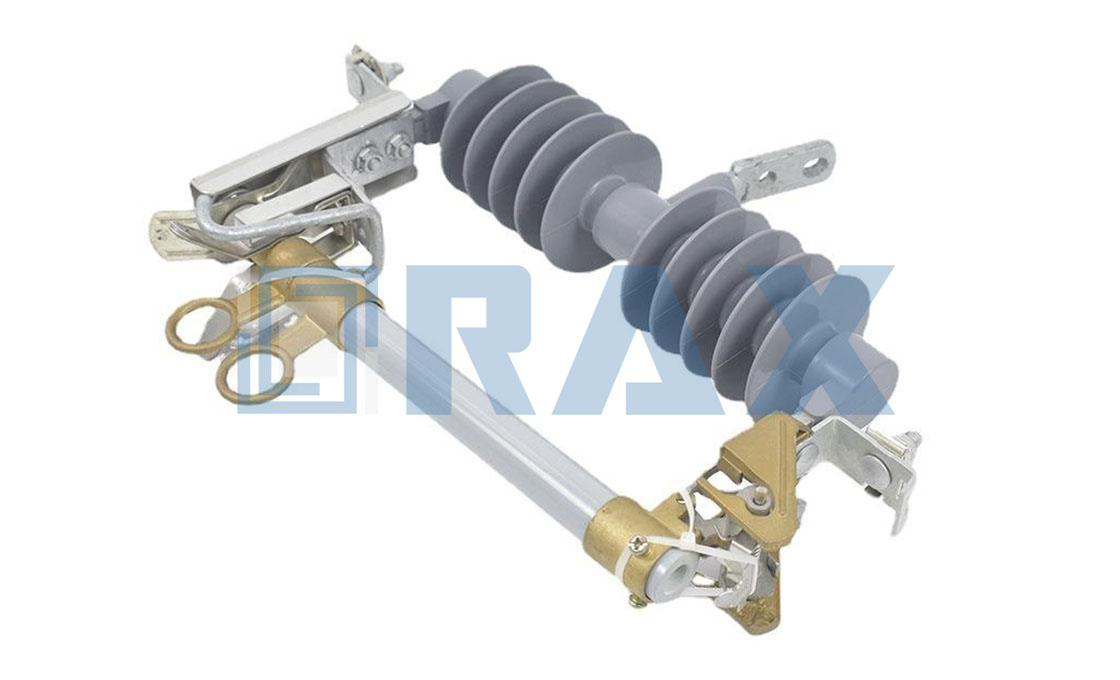
Constructed with high-strength polymer insulator materials resistant to ultraviolet degradation, moisture, and corrosion, the cutout may incorporate Enhanced Silicone Polymer (ESP) for consistent performance. The fuseholder features a trip lever for loadbreaking, an arc chute type interrupter, and a single vent solid cap design directing exhaust downward during interruption. Synthetic liner materials aid in arc quenching, while universal style fuse links provide coordinated protection.
During overcurrent or fault conditions, the fusible element melts to interrupt the circuit and isolate the faulted section. The loadbreak capability allows safe load current interruption using a disconnect stick, with the arc chute facilitating efficient arc extinction and particle expulsion away from operators. Rated voltages reach 15 kV or higher, with current ratings typically from 100A to 200A and Basic Impulse Level (BIL) of 110 kV, complying with ANSI/IEEE C37.41 and C37.42 standards.
Applications include protecting transformers, capacitor banks, and distribution lines from short circuits or overloads. Installation uses standard NEMA “B” crossarm brackets with secure pole or crossarm fastening. Maintenance requires periodic inspection for corrosion, mechanical integrity, and electrical tracking, with fuselink replacement as needed to ensure continued reliable operation.
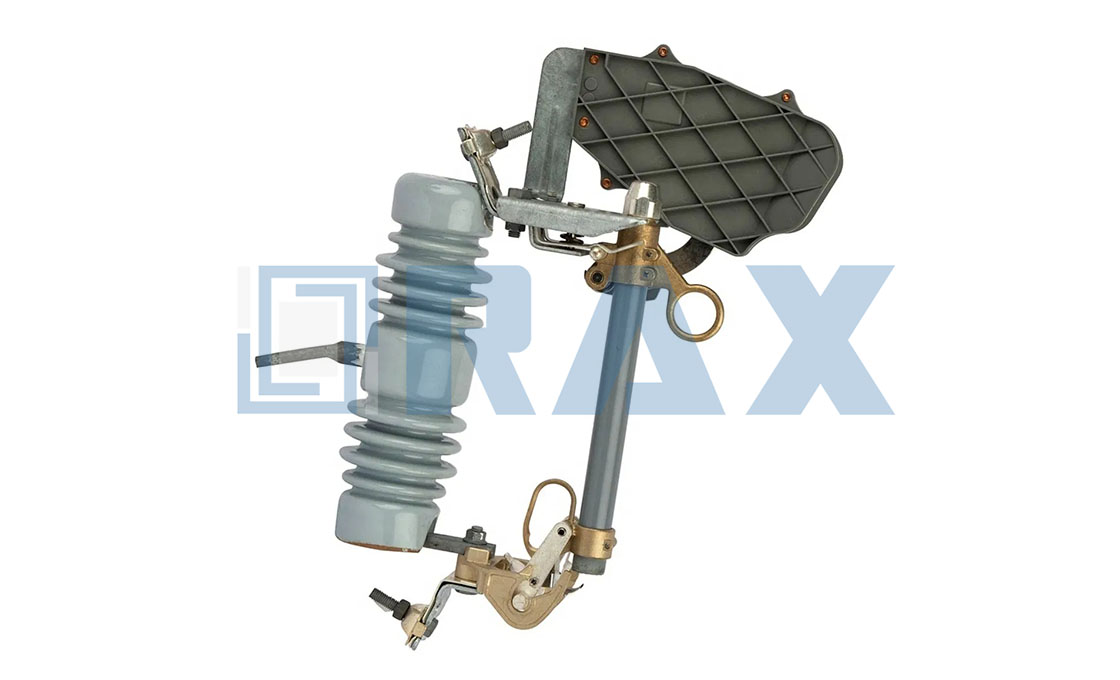
Expert Load Break Type Fuse Cutout Wholesaler – RaxPower with 21+ Years Experience
RaxPower manufactures and supplies fuse cutouts and fittings for overhead power distribution systems. Established in 2003 and based in Hebei Province, China, RaxPower has over 21 years of experience as a trusted brand emphasizing quality and compliance. The Load Break Type Fuse Cutout is designed to protect your distribution system with reliable over-current protection, disconnecting the circuit during overloads or short-circuits.
It features excellent fault-current breaking capacity and can be used in applications such as transformers and capacitor banks.
Our advanced manufacturing processes, including hot forging and strict quality control, ensure high strength, accurate sizing, and durability. The fuse cutout incorporates weather-resistant materials, hot-dip galvanized parts for corrosion resistance with a mean coating thickness over 85 microns, and a single vent design to prevent rainwater intrusion.
All products are tested according to international standards like IEC 60282-2 and IEEE C37.41. When ordering, please provide the following details:
- rated voltage
- rated current
- minimum creepage distance
- insulator material
- mounting bracket type
| Parameter | Value |
|---|---|
| General | |
| Type | Loadbreak Type Fuse Cutout |
| Insulator Material | Polymer |
| Bracket Type | NEMA “B” Heavy Duty |
| Electrical Ratings | |
| Voltage Rating | 15 kV |
| BIL | 110 kV |
| Current Rating | 100 A to 200 A |
| Interrupting Rating | 10 kAIC to 12 kAIC |
| Creep and Leakage Distance | 12.6 in (319 mm) |
| Fuselink Current Range | 1 A to 200 A |
| Reference Voltage Limit | Thru 14.4 kV |
| Temperature Rise | 39 °C at 300 A |
| Voltage – Radio Interference | Ambient @ 9.41 kV |
| Physical Dimensions | |
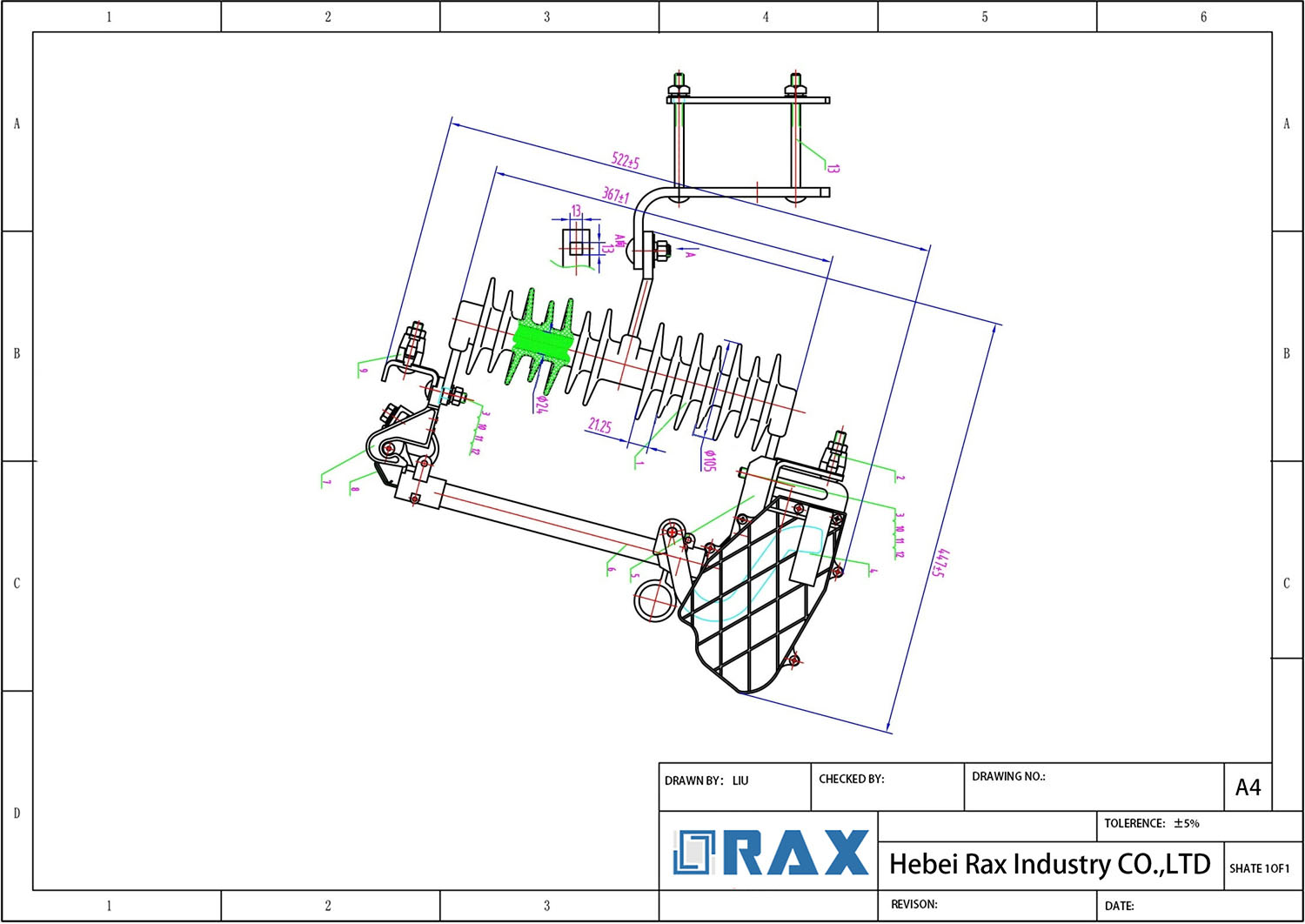
| Length | 22.25 in |
| Width | 20.5 in |
| Height | 6.75 in |
| Weight | 19.375 lb |
| Standards Compliance | |
| Standards | ANSI/IEEE C37.41, C37.42 |


Frequently Asked Questions (FAQS)
What is a Load Break Type Fuse Cutout and how does it work?
RaxPower Load Break Type Fuse Cutouts are protective devices designed for overhead distribution lines to provide circuit protection and control. They feature a load break knife blade and fusible element that allows safe interruption of load current under normal conditions. When a fault occurs, the fuse element melts, interrupting the circuit and isolating the faulted section, ensuring reliable performance during overcurrent conditions while minimizing system outages.
What are the typical applications of Load Break Type Fuse Cutouts?
These cutouts protect transformers, capacitor banks, and distribution lines from overcurrents caused by short circuits or overloads. They also function as sectionalizing devices and provide visible isolation points for maintenance operations.
What materials and design features ensure durability and performance?
RaxPower Load Break Type Fuse Cutouts feature single vent solid cap design, universal style fuse links, synthetic arc quenching fuse holder liner material, and enhanced silicone polymer insulating material. Constructed with high-strength polymers and hot-dip galvanized components, they withstand harsh environmental conditions including UV exposure, moisture, and extreme temperatures, ensuring long-term reliability and consistent fault interruption.
What industry standards do these fuse cutouts comply with?
RaxPower Load Break Type Fuse Cutouts fully comply with ANSI/IEEE C37.41 and C37.42 standards, as well as IEC 60282-2 and NEMA SG-2, ensuring reliable overcurrent protection, load-breaking capabilities, and safety in electrical distribution systems.
How do you install a Load Break Type Fuse Cutout?
Installation is straightforward using standard mounting hardware. Mount the cutout on a crossarm or pole with appropriate brackets, ensuring proper alignment and secure fastening. Attach electrical leads by loosening terminal nuts, applying oxidation inhibitor, and tightening to specified torque. The fuse holder can be easily replaced without specialized tools. Only qualified personnel should perform installation with appropriate protective equipment.
What maintenance is required for Load Break Type Fuse Cutouts?
Routine inspection includes checking the fuselink for corrosion, replacing deteriorated components, and ensuring mechanical integrity. Inspect contacts for pitting or burning, and replace fuseholders if liners are cracked or eroded. Store fuseholders in upright positions to prevent damage, and perform operational checks to maintain reliable performance.
Get A Quick Quotation Today
