
The socket() function creates an unbound socket in a communications domain, returning a file descriptor for subsequent network operations. It requires three arguments: the address family (such as AF_INET for IPv4 or AF_INET6 for IPv6), the socket type (like SOCK_STREAM for reliable byte streams or SOCK_DGRAM for connectionless datagrams), and the protocol that specifies the transport mechanism. Setting the protocol to zero typically selects the default protocol for the given address family and type, such as Transmission Control Protocol (TCP) for SOCK_STREAM.
Upon successful execution, socket() returns a non-negative integer representing the socket descriptor used in subsequent network operations. If an error occurs, a value of -1 or INVALID_SOCKET is returned, with error codes indicating issues such as unsupported address families (WSAEAFNOSUPPORT), insufficient resources, or incompatible protocols (WSAEPROTONOSUPPORT).
The function provides a standardized interface across different implementations, including Berkeley Socket Distribution (BSD) 4.3, UNIX 98 compatible interfaces, and Windows Sockets (Winsock). These parameters allow applications to tailor the socket to specific networking requirements, supporting various protocols including IPv4, IPv6, Bluetooth, and reliable multicast.
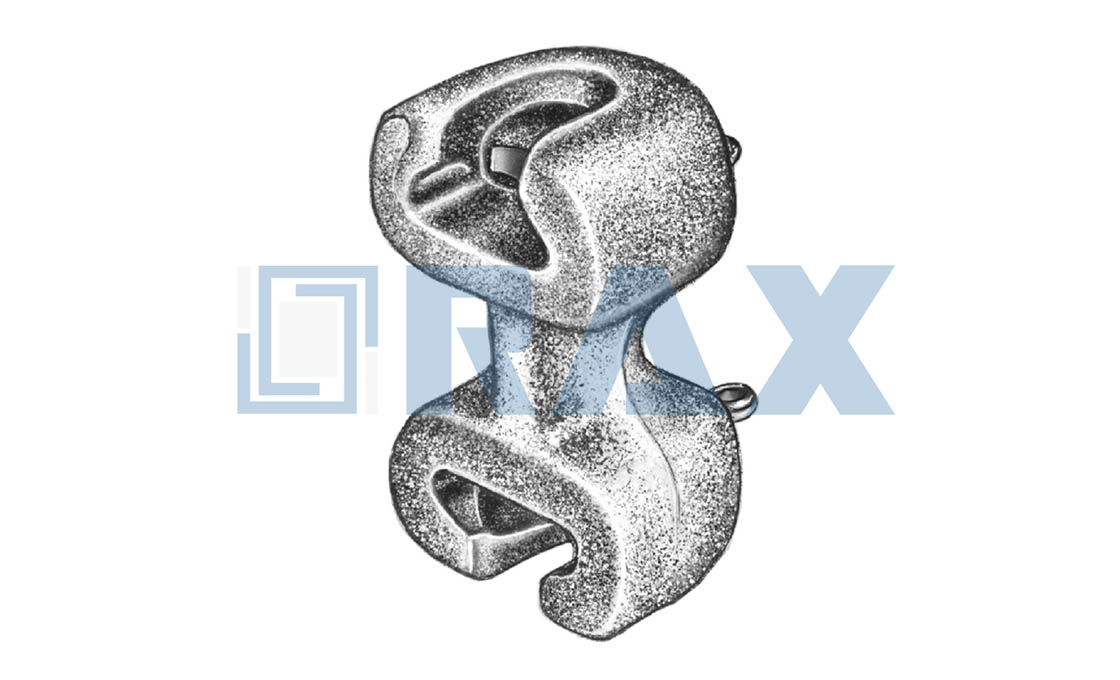
Premier Socket Socket Manufacturer
Founded in 2003, RaxPower is a leading manufacturer based in Hebei Province, China, specializing in custom impact sockets and wrenches for large bolts in demanding environments. Our uncompromising approach to manufacturing, customer service, quality, and delivery ensures that every Socket Socket product meets the highest industrial standards, backed by 21 years of expertise.
With 17,000 square meters of production workshops and over 170 skilled employees, including 30 technicians and 10 engineers, we leverage advanced processes like hot forging for superior strength and accurate sizing in our sockets. Our rigorous quality control features multi-stage testing, Load Tests, Gauges Tests per IEC standards, and SGS certification, guaranteeing durability and reliability.
We excel in providing rapid custom solutions, typically designing and shipping a tailored Socket Socket in about 14 days with no minimum order quantity. This flexibility supports our comprehensive OEM and ODM services, fostering global partnerships in sectors such as power transmission and heavy construction.
Reach out to RaxPower today.
| Technical Parameter | Details |
|---|---|
| Address Family (domain/af) | Type: int Description: Specifies the address family used in the communications domain, determining the format of addresses. Possible Values: AF_INET (IPv4), AF_INET6 (IPv6), and others as supported by the implementation. |
| Socket Type (type) | Type: int Description: Defines the socket’s communication style and semantics. Possible Values: SOCK_STREAM (reliable, connection-based byte streams), SOCK_DGRAM (connectionless, unreliable datagrams), and additional types as supported. |
| Protocol (protocol) | Type: int Description: Specifies the transport protocol mechanism. If set to zero, the default protocol for the address family and type is selected (e.g., TCP for SOCK_STREAM in Internet families). Possible Values: IPPROTO_TCP (TCP), IPPROTO_UDP (UDP), 0 (default protocol), and others as supported. |
| Return Value | Type: int or SOCKET Description: Returns a socket descriptor representing the endpoint for communications. A non-negative integer indicates success; -1 or INVALID_SOCKET indicates an error, with specific error codes set. |
| Common Error Codes | Description: Indicate specific errors encountered during socket operations. Values: WSAEAFNOSUPPORT (address family not supported), WSAEPROTONOSUPPORT (protocol not supported), and others as defined by the implementation. |






Frequently Asked Questions (FAQS)
How does RaxPower ensure product quality and compliance?
RaxPower employs strict quality control with raw material selection and multi-stage testing. All products undergo dual inspection before packing to ensure 100% quality. Load and gauge tests follow standards like IEC 120, and products are manufactured using leading hot-dip galvanizing technology per ISO 1461 for coating thickness. All items have passed SGS tests and evaluations by authoritative research institutes, ensuring reliability and safety.
Can RaxPower handle large infrastructure projects and OEM customization?
With 17,000 square meters of production space and 5,000 square meters of warehousing, RaxPower accommodates bulk orders efficiently. As a one-stop global supplier, the company provides comprehensive pole line hardware with OEM customization options. Advanced processes like hot forging and automatic machinery ensure accurate sizing, greater strength, cost-effective solutions, and on-time delivery for large-scale projects.
What are sockets and their role in client-server communication?
Sockets enable client-server interaction across machines. The server hosts on one machine while clients connect from others to exchange information before disconnecting. This connection-oriented model uses stream sockets with APIs including socket(), bind(), listen(), connect(), and accept() for reliable data exchange.
How do I create and configure a socket?
Use the socket() function to create an unbound socket, which returns a socket descriptor. Specify three parameters: address family (AF_INET for IPv4 or AF_INET6 for IPv6), socket type (SOCK_STREAM for TCP or SOCK_DGRAM for UDP), and protocol (IPPROTO_TCP, IPPROTO_UDP, or 0 for default). For example: socket(af, type, protocol).
What is the process for establishing a connection-oriented socket session?
The flow includes: 1) Create a socket with socket(). 2) Bind a unique name with bind(). 3) Listen for connections with listen(). 4) Client connects using connect(). 5) Server accepts with accept(). 6) Exchange data via send(), recv(), or similar APIs. 7) Close with close() to release resources. Use shutdown() before closing to properly terminate both ends.
How is data transferred between client and server sockets?
After connection establishment, transfer data using send(), recv(), read(), write(), or in .NET, SendAsync and ReceiveAsync for reliable, full-duplex communication in stream sockets. For connectionless datagrams, use sendto() and recvfrom(). Implement proper buffering and error handling for timeouts and transmission issues.
Get A Quick Quotation Today
