
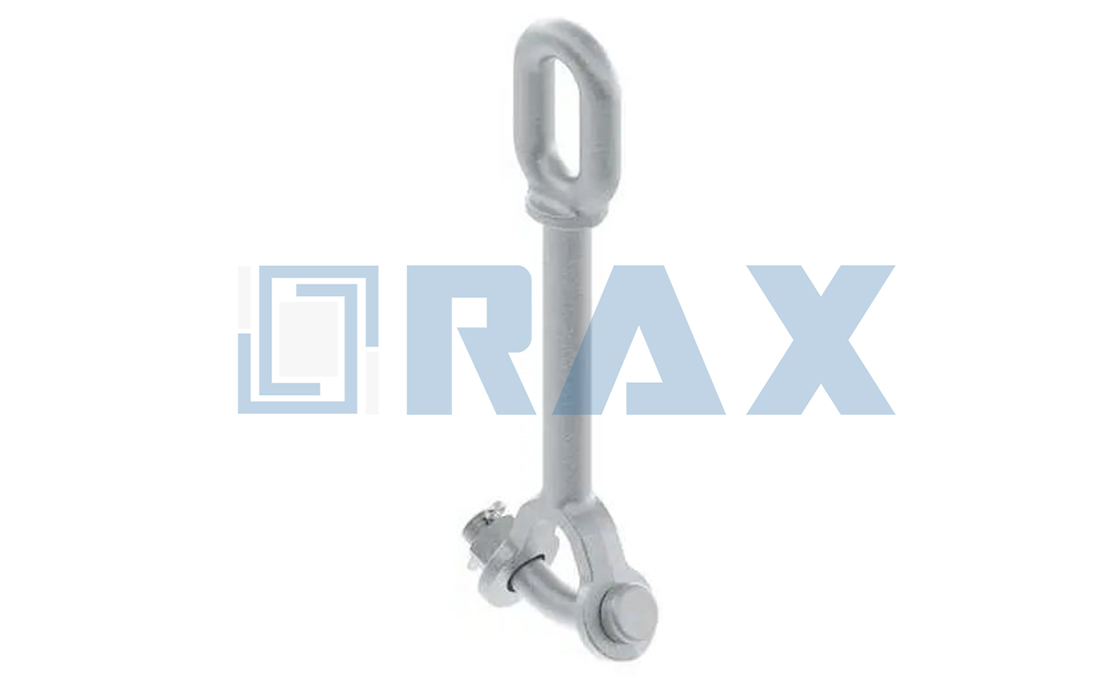
Socket clevises attach insulator strings and suspension hardware to support structures in overhead power distribution systems. The clevis body features a socket at one end and uses a threaded bolt or pin for secure connections to poles and towers, providing stable attachment points essential for electrical grid reliability.
Constructed from high-strength ductile iron or steel with hot dip galvanized coatings, socket clevises resist corrosion in outdoor environments. Rated loads typically range from 30,000 to 50,000 pounds, with breaking strengths of 70 kN, 120 kN, or 160 kN depending on transmission line requirements. Common models comply with ANSI class 52-3, 52-5, or IEC 16mm standards.
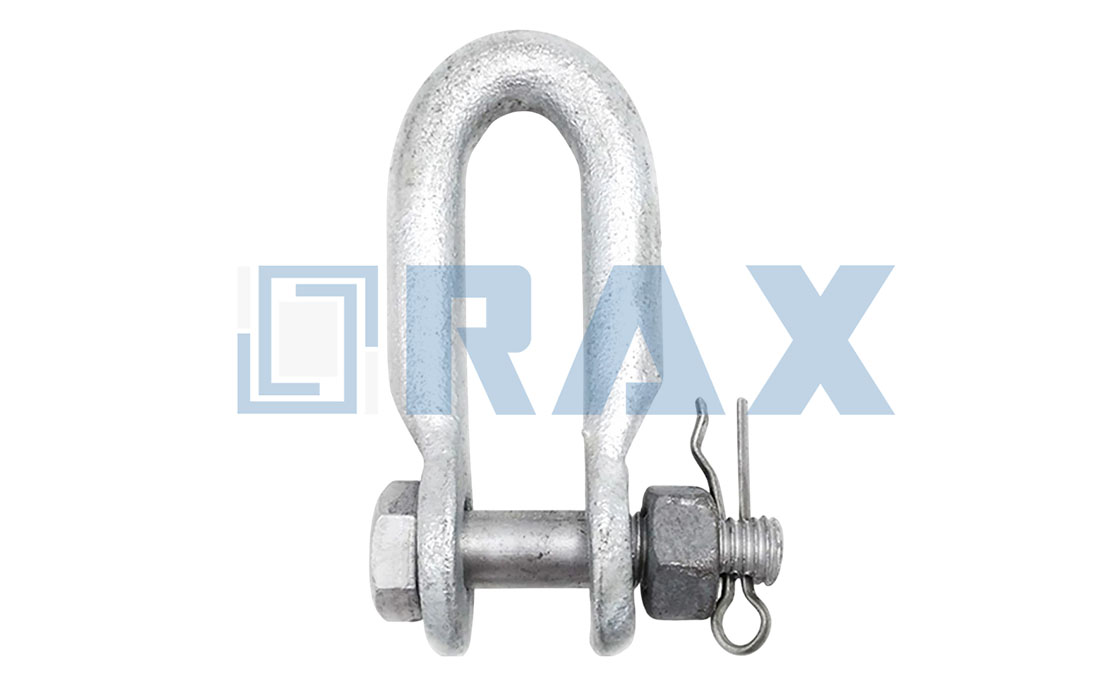
The assembly includes the clevis body, anchor shackles secured with clevis pins and bolts, and fasteners such as nuts and cotter pins. Manufacturing involves casting molten iron into molds, followed by annealing to improve strength and ductility, then hot dip galvanization at approximately 449 degrees Celsius to apply protective zinc coating.
Installation requires assembling insulator strings on the ground before elevation to support structures, using standard tools and proper alignment techniques. Socket clevises accommodate various insulator sizes and support structure types, including wooden, concrete, and steel poles, making them versatile components for power distribution and transmission applications.


Socket Clevis Manufacturer – Durable Power Line Solutions
We are RaxPower, established in 2003 and located in Hebei Province, China, with over 21 years of experience as a leading manufacturer of pole line hardware. Unlock the full potential of your power fittings with the mastery of Socket Clevis.
Product Overview The Socket Clevis is a versatile and reliable component used for attaching insulator strings to support structures like poles and towers in overhead power distribution systems, ensuring secure and stable connections.
Key features of the Socket Clevis include:
- Constructed from high-strength ductile iron, hot-dip galvanized for superior corrosion resistance and durability.
- Precision engineered with accurate dimensions for easy installation and long-term performance.
- Strength ratings up to 30,000 lb, compliant with ANSI standards such as 52-3 and 52-5.
Applications Ideal for various environmental conditions, it is widely used in power line construction and maintenance to provide vital connections that enhance stability and safety.
Why choose RaxPower?
- Our 21 years of expertise in independent production ensures that every Socket Clevis benefits from advanced hot forging technology, resulting in greater strength and precise sizing.
- Strict quality control includes multi-stage testing, raw material selection, and load tests following IEC standards, with products reviewed twice before packing to guarantee 100% reliability.
- Backed by ISO certifications and SGS tests, we deliver high-quality components that stand the test of time.
Please kindly send an inquiry to us for more information or orders.
| Parameter | Value |
|---|---|
| Material | Hot dip galvanized steel or ductile iron |
| Surface Treatment | Hot dip galvanization |
| Insulator Class | ANSI class 52-3, 52-5, or IEC 16mm |
| Rated Load | 30,000 to 50,000 lb |
| Breaking Strength | 70 kN, 120 kN, or 160 kN |
| Height | 2.375 in |
| Width | 3.281 in |
| Weight | 4.5 lb |
| Standards | ISO 9001 |





Frequently Asked Questions (FAQS)
What is a Socket Clevis and what is its primary function?
A Socket Clevis is a hardware component used in overhead power distribution systems to connect insulator strings or suspension hardware to support structures such as poles or towers. It links the tension clamp and socket type insulator, ensuring secure attachment and proper alignment in transmission lines, overhead lines, and power lines. It can also serve as an electric link for supplying energy to trains, trolley buses, and trams.
What materials are Socket Clevises made from and how are they protected?
Socket Clevises are made from high-strength materials such as ductile iron or steel and are hot-dip galvanized for durability. The galvanization process coats the component in molten zinc, providing excellent resistance to corrosion and rust, extending service life in outdoor environments.
What are the key features of Socket Clevises?
Key features include durable construction from high-strength materials, corrosion resistance through galvanization, secure attachment design, versatility for various support structures like wooden poles, concrete poles, and steel towers, easy installation with standard tools, adjustability for precise alignment, and compatibility with a wide range of insulator sizes and types.
What is the typical breaking load for Socket Clevises?
The breaking load varies by model and application, with common ratings including 70 kN, 120 kN, 160 kN, or in pounds, such as 30,000 lb, 50,000 lb, depending on the insulator class and design specifications.
How are Socket Clevises installed?
Socket Clevises are designed for easy installation using standard tools and equipment. It is recommended to assemble insulator strings on the ground before installation on poles or towers. The process involves securing the clevis to the support structure and attaching the insulator strings, ensuring proper alignment and tensioning of conductors.
What certifications and quality assurance processes does RaxPower have?
RaxPower adheres to strict quality control measures, including ISO 9001 certification, and performs multi-stage testing from raw material selection to finished products. Our processes include load testing, gauge tests per IEC 120 standards, and hot-dip galvanizing per ISO 1461, with a mean coating thickness exceeding 85 microns for articles over 6mm. Components have passed SGS tests, ensuring full compliance with ANSI, IEC, and other relevant standards for power and railway applications.
Do you offer customized solutions and competitive pricing for OEM or large-scale projects?
Yes, RaxPower accepts OEM orders and provides customized solutions, including tailored packing options. With over 21 years of manufacturing experience, we leverage robust capabilities and efficient supply chains to offer competitive project-based pricing, helping clients achieve significant cost savings without compromising on consistent, high-quality output.
What is your typical lead time and capacity for bulk orders?
With 17,000 square meters of production space and 5,000 square meters of warehouses, we can handle large volume orders efficiently. Typical lead times range from 7-15 days for standard items, and we prioritize on-time delivery for entire projects, supported by automatic machines and a skilled workforce to meet urgent timelines without sacrificing quality.
Get A Quick Quotation Today
