
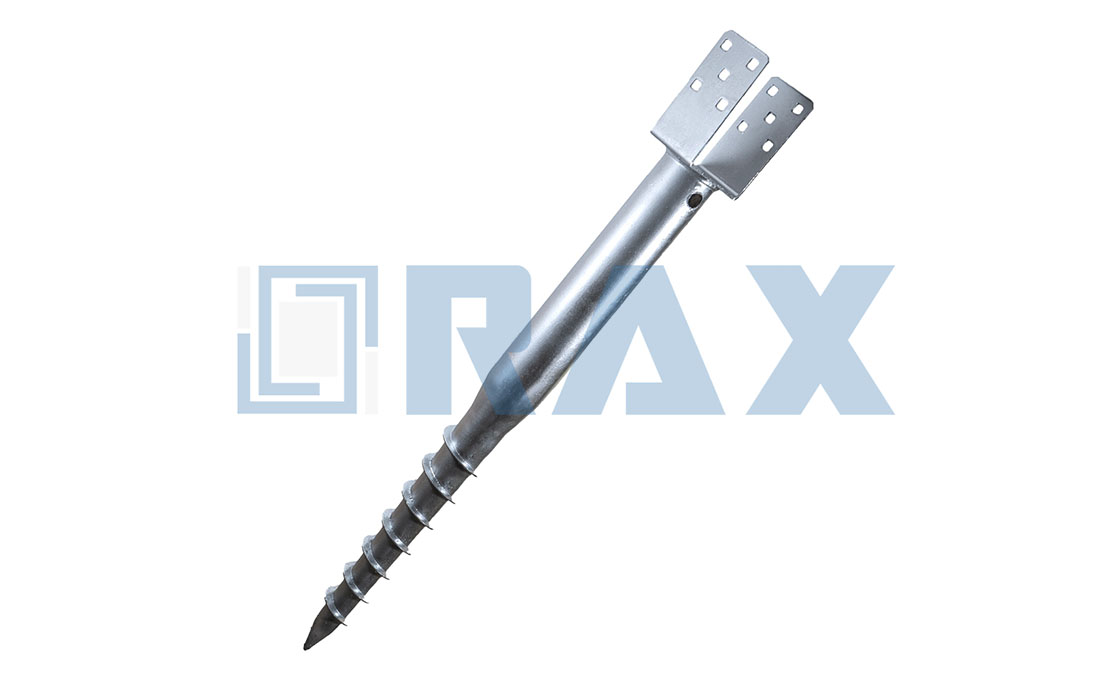
The Deck Foot Anchor is a ground anchoring system for freestanding structures such as decks, pergolas, sheds, and ramps. It provides strength comparable to poured concrete footings while eliminating digging and cement mixing. Installation uses a handheld 1/2-inch impact wrench with a 12mm six-point socket to drive the auger into soil, then tightens the nut to compress the load plate and adjusts the post saddle. Users can install and build on the same day, saving labor and costs versus traditional methods.
Each kit includes a post saddle (nominal 4×4 or 6×6), a deck plate (approximately 12.5 by 12.5 inches), and an auger in lengths of 24 or 36 inches. The hot-dip zinc galvanized steel construction weighs 9 to 10 pounds depending on the model. Independent compression load testing shows a 4×4 post saddle supports up to 15,000 pounds, though soil bearing capacity is the limiting factor. The anchor moves with soil during freeze-thaw cycles, providing consistent stability without heaving.
The system performs well in most soil types but rocks or roots may impede installation. Site preparation involves removing sod and adding crushed stone for drainage. Suitable applications include low-level decks with joists as close as 2 inches to grade or elevated decks up to 6 feet high. The Deck Foot Anchor is designed for compression loads only and does not provide substantial lateral resistance; consult local building codes before use.
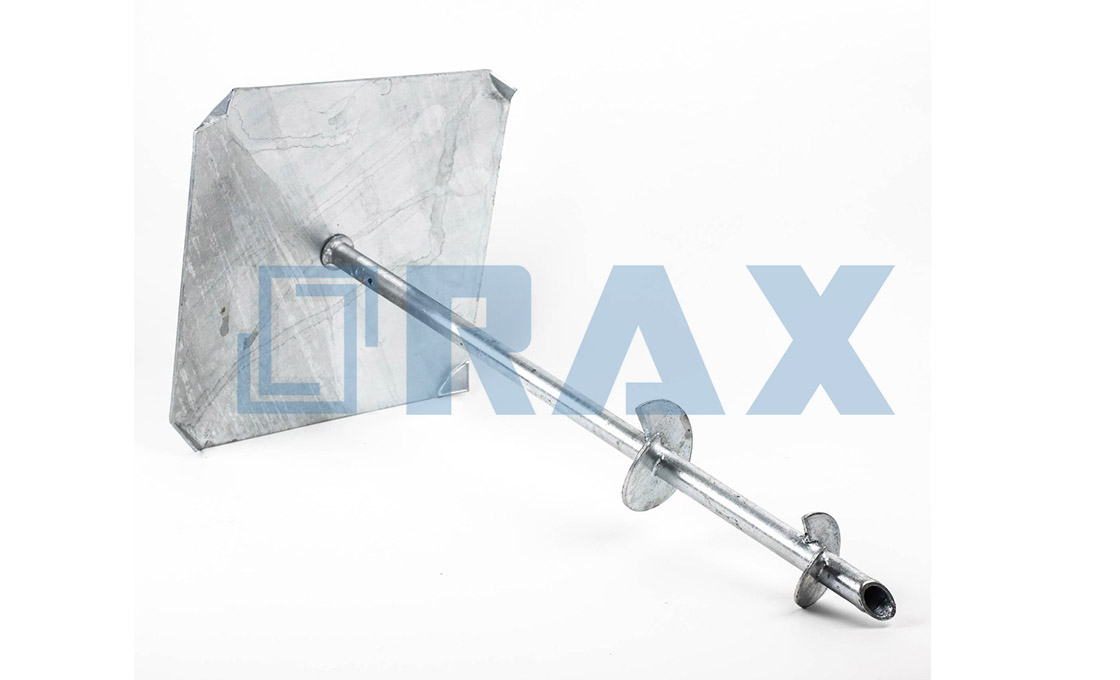
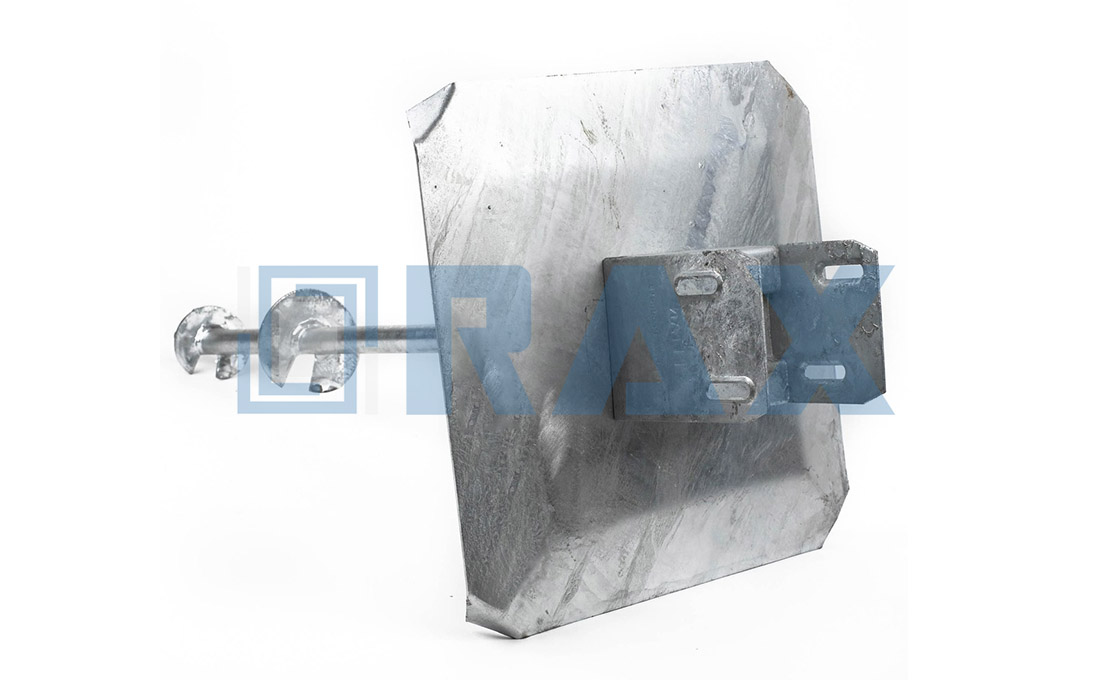
RaxPower Deck Foot Anchor – Expert Manufacturer
RaxPower, established in 2003 and located in Hebei Province, China, is a leading manufacturer with over 21 years of experience in pole line hardware. We have launched the Deck Foot Anchor, a helical solution for ledger-attached decks with an adjustable post saddle, designed for floating decks, pergolas, and gazebos.
HOW IT WORKS
The frost footing supports up to 19,000 lbs. and installs with a 1/2” drive impact wrench in most soils. No digging, concrete, or heavy machinery is required. Its Compression Load Fin allows for sideways post saddle adjustment, ensuring easy alignment under beams.
BENEFITS
Leveraging RaxPower’s hot forging technology and automatic machines, the anchor delivers greater strength, accurate sizing, and uniform quality. It’s available in 36” and 48” lengths with 24” extensions, making it lightweight, easy to handle, and affordable. Cleaner, easier, and faster than concrete, yet strong enough for professional-grade applications.
EVIDENCE AND COMPLIANCE
Backed by strict quality control and SGS testing, the Deck Foot Anchor complies with ICC, IBC, and IRC building codes. Customer testimonials praise its reliability: “Posts are sturdy and hold strong as cement, with effortless installation.”
CALL TO ACTION
Purchase from authorized RaxPower retailers or use our project planning tools like calculators and tutorials available online for seamless project execution.
| Parameter | Value |
|---|---|
| Material | Hot-dip zinc galvanized steel |
| Post Saddle Sizes | Nominal 4×4 (3.5″ x 3.5″), Nominal 6×6 (5.5″ x 5.5″) |
| Deck Plate Dimensions | Approximately 12.5″ x 12.5″ |
| Auger Length Options | 24″, 36″ |
| Weight | 9 – 10 lbs (depending on model) |
| Fasteners | (4) 1/4″ x 3″ hex head lag screws (sold separately) |
| Compression Load Capacity | Up to 15,000 lbs (for 4×4 post saddle) |
| Installation Tool | 1/2-inch impact wrench with 12mm six-point socket |
| Recommended Applications | Freestanding decks, pergolas, sheds, ramps; suitable for decks up to 6′ high with proper bracing |
| Adjustability | Laterally adjustable post saddle |
| Frost Behavior | Moves with soil during freeze-thaw cycles; frost-resistant for freestanding structures |
| Uplift Resistance | Enhanced with longer augers in high-wind zones |
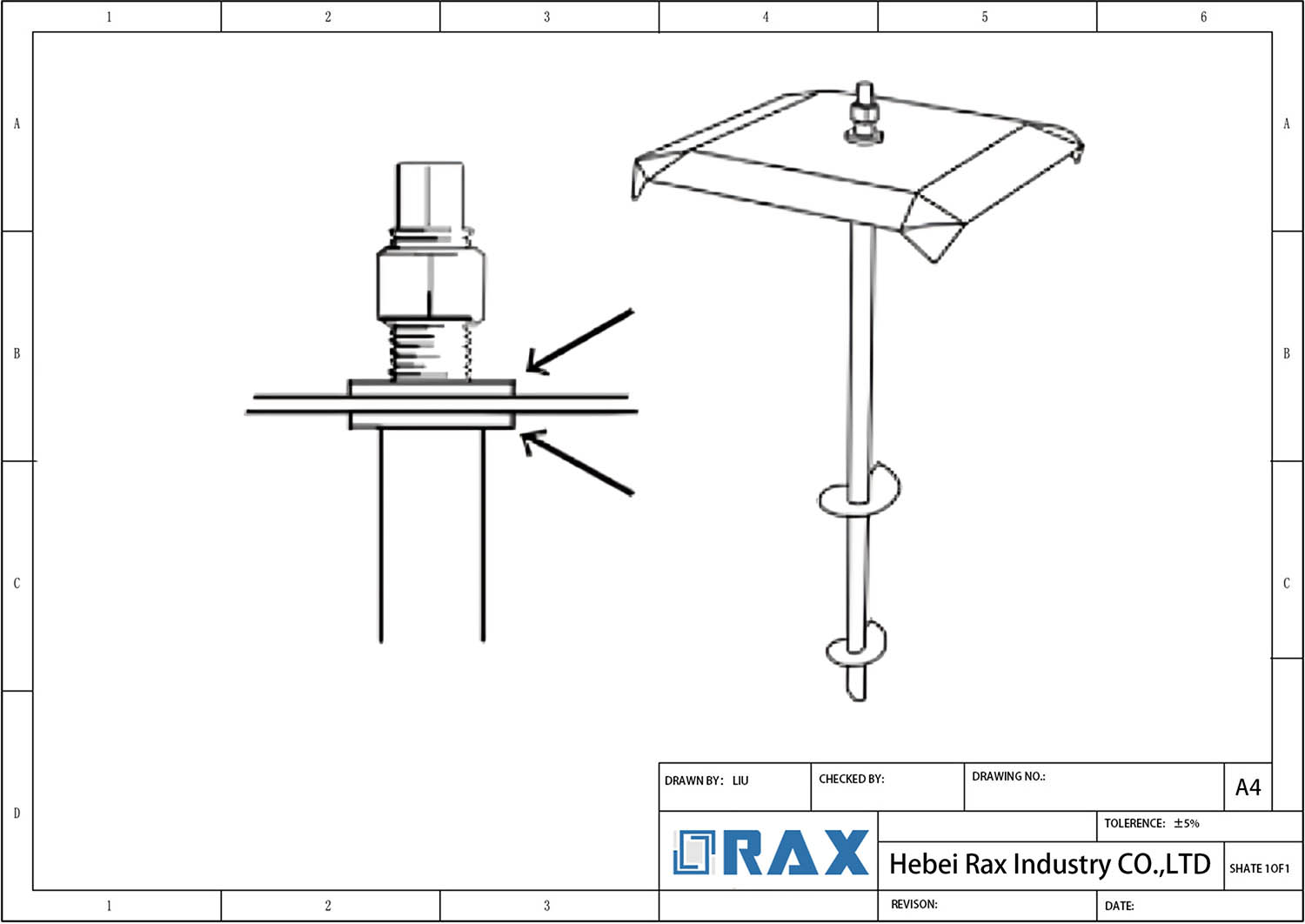

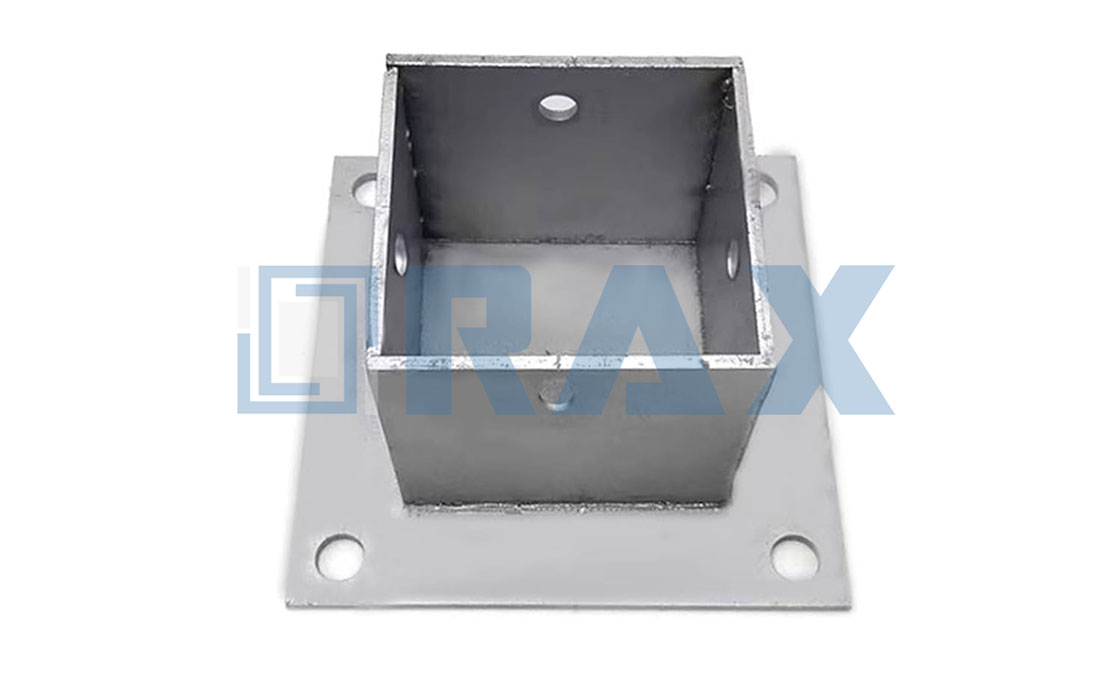


Frequently Asked Questions
What are the main benefits of using the Deck Foot Anchor over traditional footings?
RaxPower's Deck Foot Anchor provides strength and security similar to poured concrete without the labor, time, and cost. Benefits include no digging or mixing cement, the ability to install and build on the same day, and savings on money and labor. It avoids the complexity and liability of ledger connections and is ideal for freestanding decks, pergolas, sheds, and ramps.
What is the load capacity and how is it verified?
Independent compression load testing by Intertek confirms that each 4x4 post saddle can support up to 15,000 lbs. Engineering reports validate performance for various soil types and critical infrastructure applications. The actual capacity is limited by your soil's bearing capacity, so the anchor itself is not the weakest link in your structure.
Will the Deck Foot Anchor work in my soil type?
The anchor works in most soil types but may not be suitable if the soil is full of rocks, roots, or other obstructions. Test suitability by using a 24″ bit extender with a 1″ spade bit and a cordless drill to see how deep it drives. The anchor can be retracted and moved if needed. Multiple models with auger lengths of 24″ and 36″ are available for 4x4 or 6x6 posts to accommodate various conditions, enhanced wind uplift resistance, or slope applications.
How do I install the Deck Foot Anchor?
Install using a lightweight handheld ½
How many Deck Foot Anchors do I need for my deck?
A rule of thumb is to space footings 6 feet apart, which corresponds to a design load of 50 psf and tributary areas of 36 sqft per footing. For larger decks with three or more beams, consider adding an extra footing along the interior beam where loads are greatest. Check local codes for specific requirements.
How does the Deck Foot Anchor handle frost and soil movement?
The anchor remains anchored to the ground and moves with the soil as it expands or contracts during freeze or thaw cycles. It is designed for freestanding structures in freezing conditions and falls under specific building code exceptions, ensuring it does not heave up like traditional posts. The Terra-Shift friction release feature allows posts to slide up or down independently during uneven soil movement, protecting critical post-to-beam connections from separating and ensuring your deck remains sturdy through seasonal changes.
What materials and manufacturing standards ensure product reliability?
We use hot-dip galvanized steel and formed/welded sheet steel with strict quality control including load testing and gauge tests. Our processes focus on durability and consistency, providing long-lasting performance that reduces replacement costs and supports cost-effective solutions.
Get A Quick Quotation Today
