
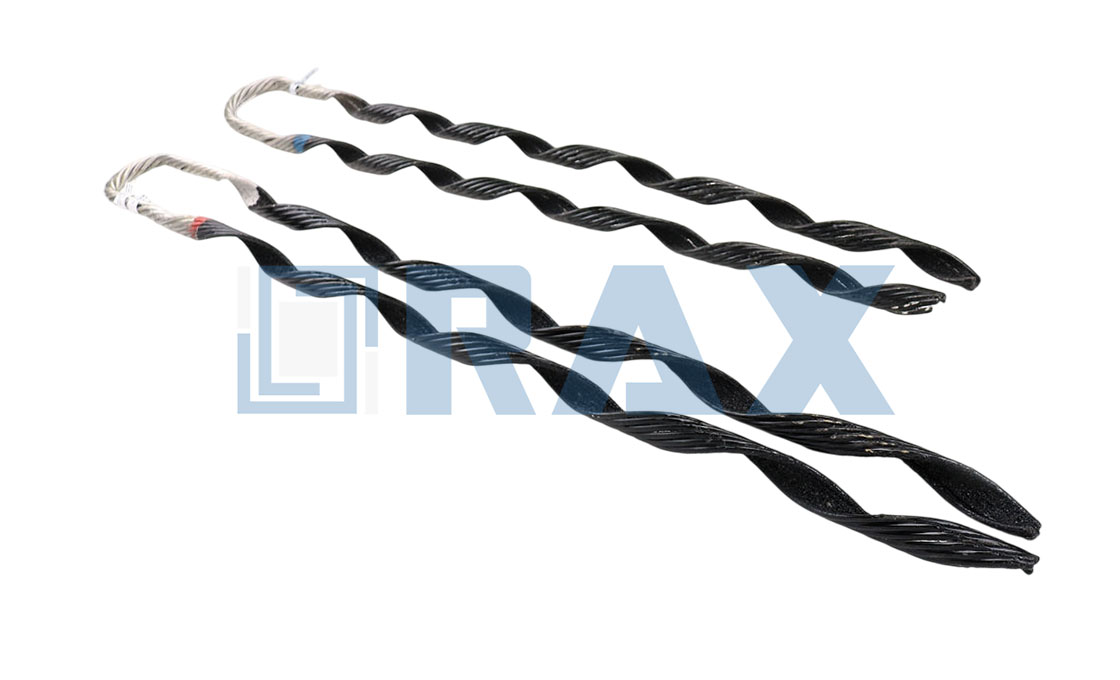
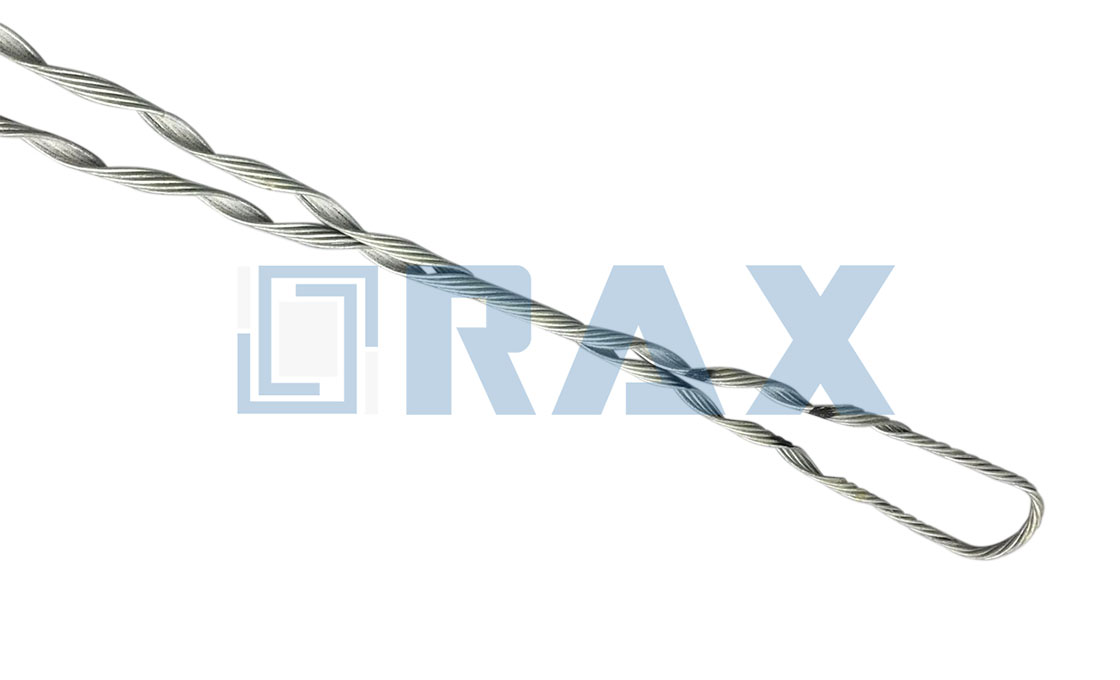
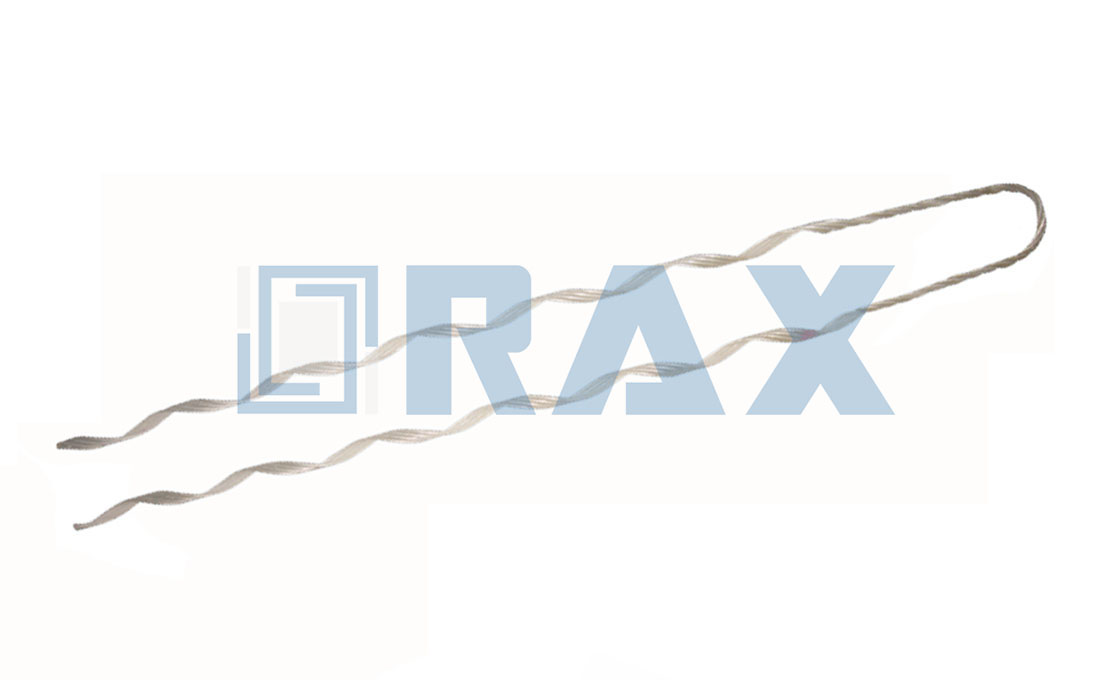
The Coaxial Dead-End is a formed wire product that secures RG-59/U, Dual RG-59/U, Dual RG-6/U, and RG-11/U coaxial cables by relieving gripping stresses from high winds and heavy ice loads. Its performance-proven twin leg construction cushions and distributes stress across the cable, maintaining stability in extreme outdoor environments common to telecommunications and high-frequency signal transmission systems. The helical shape provides low distribution of holding stresses and prevents premature fatigue breakage.
Recommended for foam insulated coaxial cables, the dead-end performs reliably in areas with extreme corrosive and demanding environmental factors. Compatible cable diameters include 0.242 inches for RG-59/U, 0.275 inches for RG-6/U, and 0.405 inches for RG-11/U, with dual configurations available. Catalog numbers include DE-3329 for RG-59/U and DE-2518 for RG-11/U, packaged in cartons weighing 9 to 43 pounds depending on model.
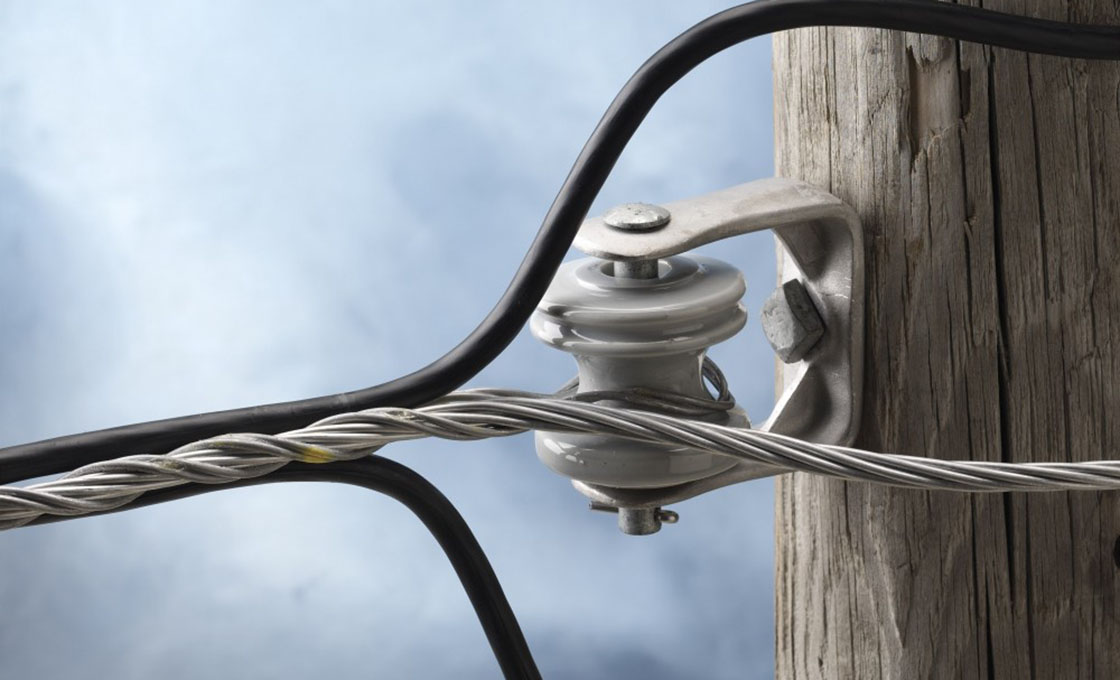
Installation attaches directly to the cable’s messenger or support structure, creating a secure connection while minimizing cable strain. The helical design allows false or double dead-ending without cutting the wire, enabling quick, efficient deployment in field applications where reliability is critical. This economical solution serves telecommunications infrastructure, cable TV systems, and remote antenna setups requiring consistent cable support in challenging conditions.

RaxPower Coaxial Dead-End Manufacturer
RaxPower, established in 2003 and based in Hebei Province, China, is a leading manufacturer with 21 years of experience, providing a wide assortment of Aerial Poleline OSP Hardware used in construction of Cable TV systems, Communications Towers, Ham Radio Antenna, TV Antennas, Wi-Fi and Wireless access point mounting hardware.
Our Coaxial Dead-End is designed to terminate OPGW while minimizing compression stresses on core elements, leveraging innovative features like retaining rods and wedge housing that distribute axial and compressive loading over a large area to prevent stress transfer.
This commitment to protective design is backed by our advanced manufacturing processes, including:
- Hot forging for enhanced strength and accurate sizing
- Automated machinery for uniformity
- Strict quality control with multi-stage testing, load tests, and hot-dip galvanization per ISO 1461 standards
These cause-and-effect linkages ensure the product’s reliability and integrity, supported by our extensive production facilities and skilled team dedicated to delivering high-performance solutions for telecommunications and power line applications.
| Catalog Number | Cable Type | Cable Diameter (inches) | Units Per Carton | Weight Per Carton (lbs) | Construction | Material |
|---|---|---|---|---|---|---|
| DE-3329 | RG-59/U | 0.242 | 200 | 9 | Twin Leg | Galvanized Steel |
| DE-2519 | DUAL RG-59/U | 0.242 x 0.504 | 200 | 20 | Twin Leg | Galvanized Steel |
| DE-2520 | DUAL RG-6/U | 0.275 x 0.546 | 200 | 43 | Twin Leg | Galvanized Steel |
| DE-2518 | RG-11/U | 0.405 | 200 | 22 | Twin Leg | Galvanized Steel |




Frequently Asked Questions
What is a Coaxial Dead-End and what is its primary function?
The Coaxial Dead-End is a formed wire device designed for securing coaxial cables by relieving gripping stresses caused by high winds and heavy ice loads, providing enhanced stability and support for critical infrastructure.
What are the key features and construction of the Coaxial Dead-End?
Key features include performance-proven twin leg construction that cushions and relieves gripping stresses, customizable sizes for specific installation requirements, compatibility with multiple cable types, and suitability for foam insulated coaxial cables in demanding outdoor environments.
Which coaxial cable types are compatible with the Coaxial Dead-End?
It is compatible with RG-59/U, Dual RG-59/U, Dual RG-6/U, and RG-11/U coaxial cables, and is particularly effective when used with foam insulated types, offering versatility for diverse applications and inventory needs.
In what environmental conditions is the Coaxial Dead-End most effective?
It is designed for outdoor applications in extreme environments, including areas with high winds, heavy ice loads, and corrosive conditions. This robust design ensures reliable operation for years, making it ideal for maintaining telecommunications and grid integrity in harsh settings.
What are the installation steps for the Coaxial Dead-End?
To install, attach the dead-end to the coaxial cable's messenger or support structure, ensuring a secure connection that minimizes strain on the cable.
Can the Coaxial Dead-End be customized for large-scale projects?
Yes, customizable sizes are available to meet specific installation needs for bulk orders in utility expansions, EPC contracts, or OEM applications. This flexibility ensures compatibility and optimal performance across diverse project scenarios.
Get A Quick Quotation Today
