
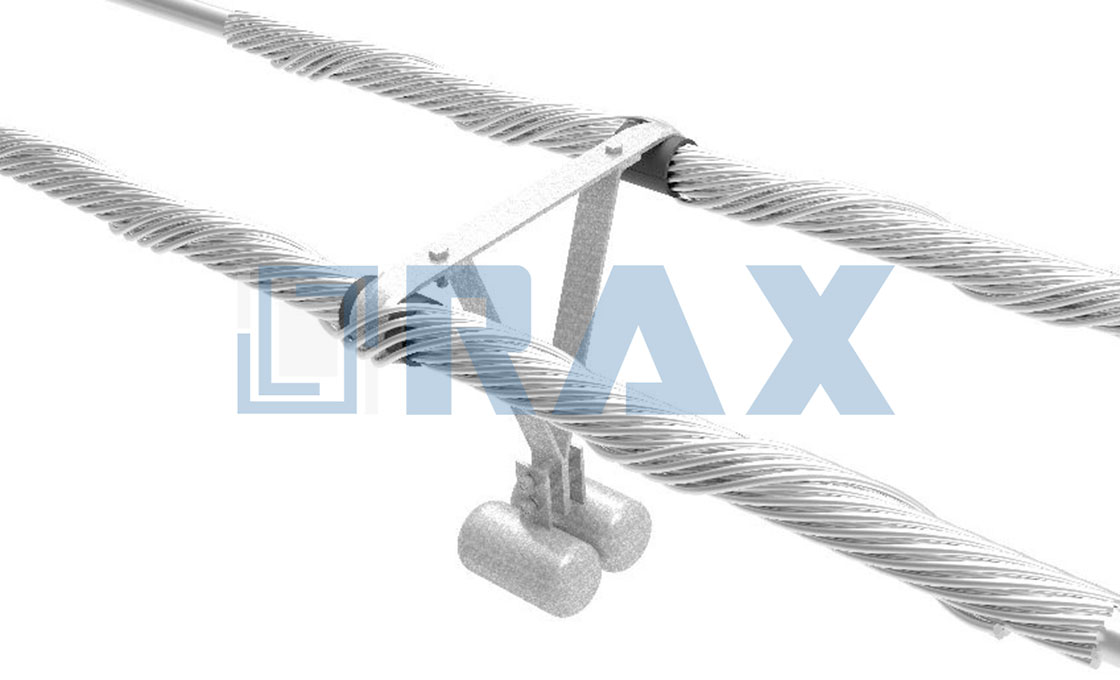
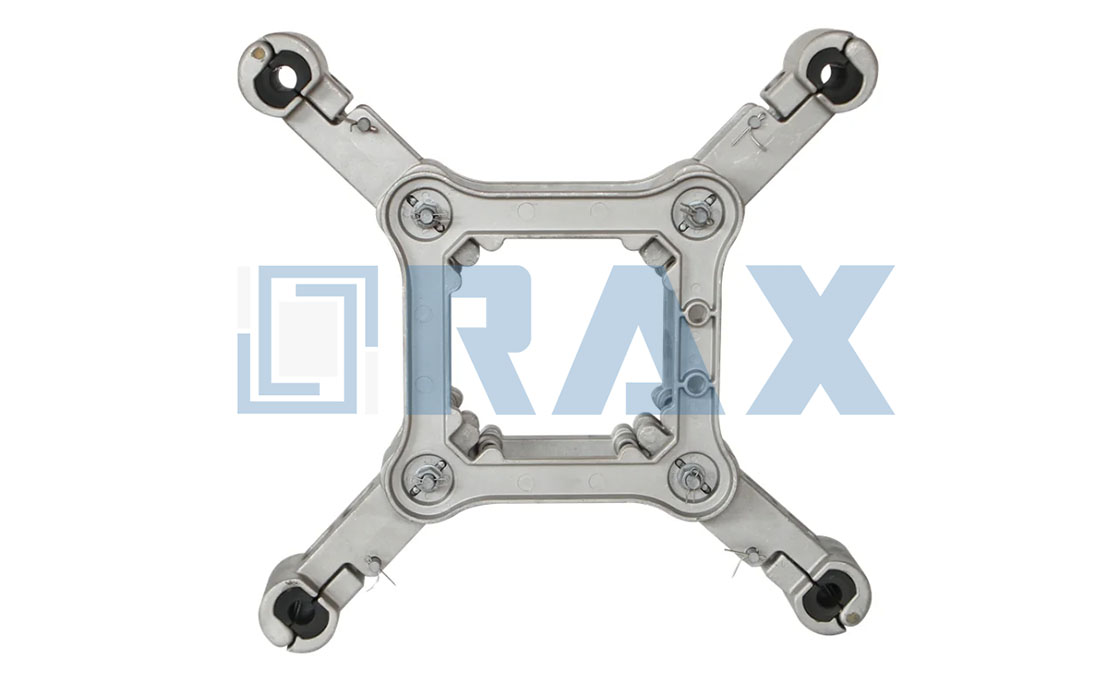
The Interphase Spacer is a motion control device that minimizes conductor movement during galloping events and ice shedding, protecting transmission equipment by reducing oscillation amplitudes and maintaining phase spacing to prevent flashovers. It mechanically connects conductors of different phases, forcing galloping motions to interact in ways that minimize risks while providing damping through flexible composite structures that absorb vibration energy. Available in segmental flexible, integrated flexible, and stiff designs, these spacers accommodate single, twin, and bundle conductor configurations.
The device typically features a fiberglass rod core, silicone rubber sheds for electrical insulation, and metal end fittings made from corrosion-resistant aluminum or galvanized steel. It withstands both compressive and tension loads, with rated tensile loads reaching up to 210 kN for higher voltage models, while offering bending load tolerance and fatigue resistance. The Ultraviolet (UV)-resistant, lightweight construction ensures durability against environmental factors.
Interphase Spacers serve rated voltages from 66 kV to 500 kV, with phase distances up to 5900 mm and minimum nominal creepage distances from 2260 mm to 26000 mm. They withstand line voltages 73% higher than phase-to-ground insulation requirements. Customization options include field-adjustable lengths, modifiable clamping systems, and tailored electrical characteristics to meet specific project requirements and conductor ranges.
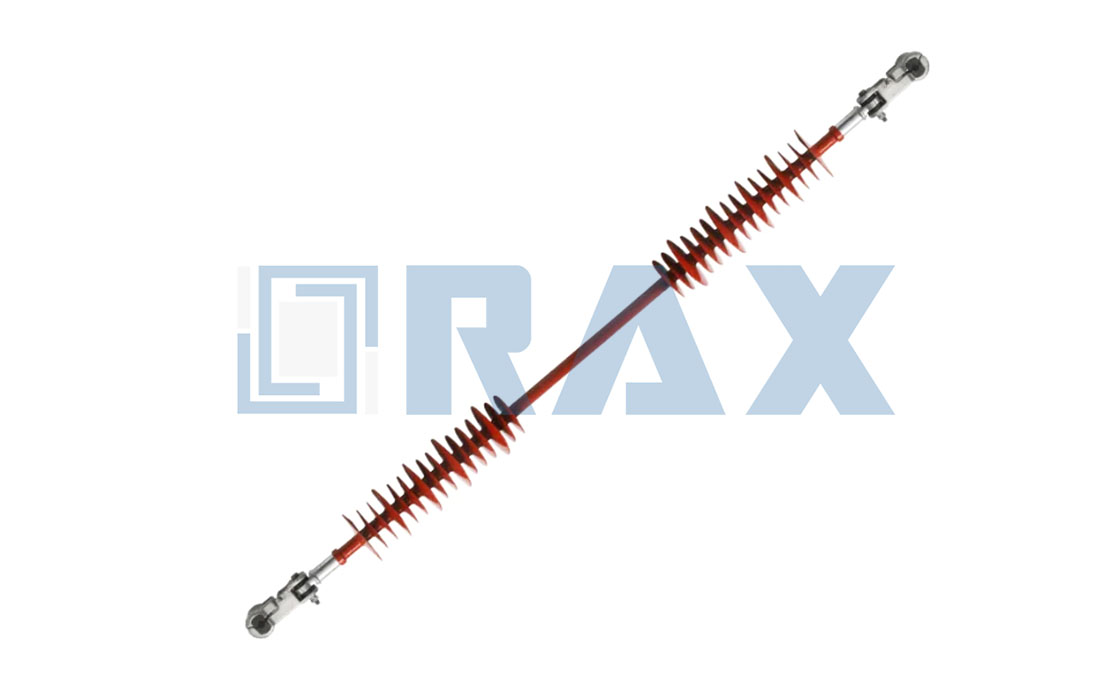
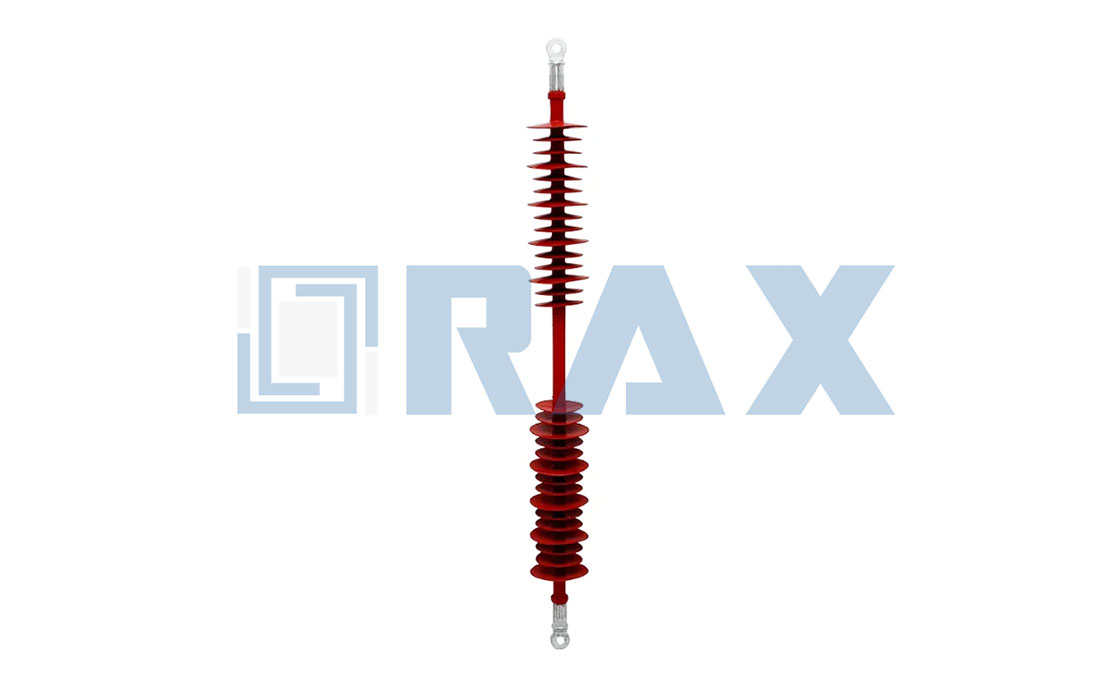
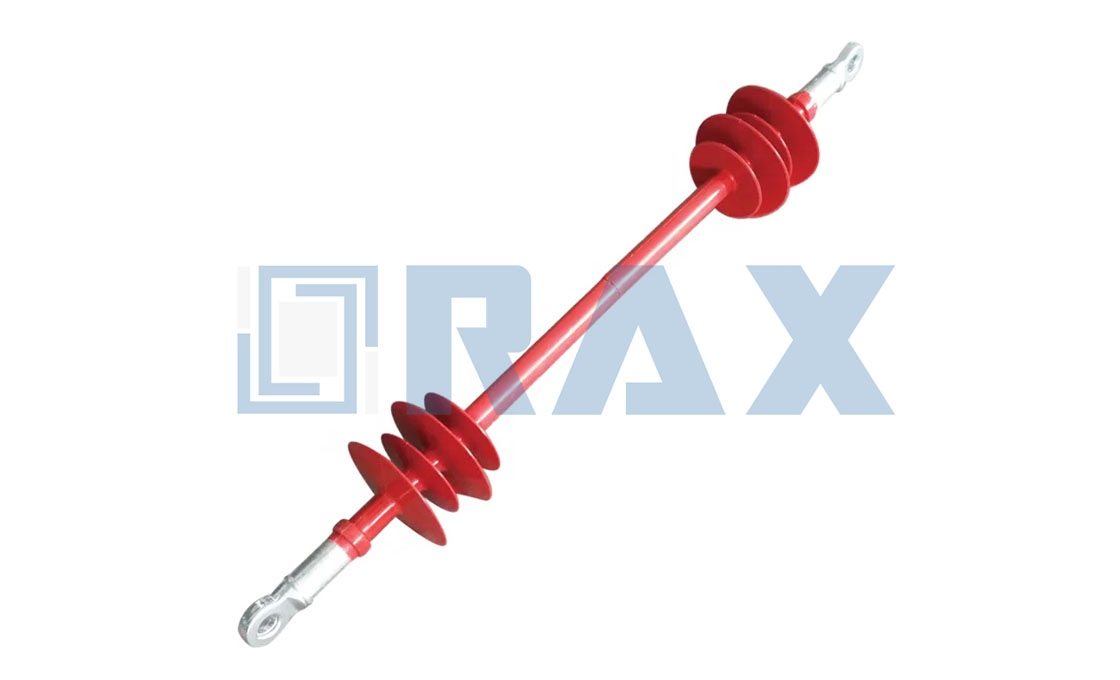
Interphase Spacer Manufacturer – Reliable Composite Insulator Solutions
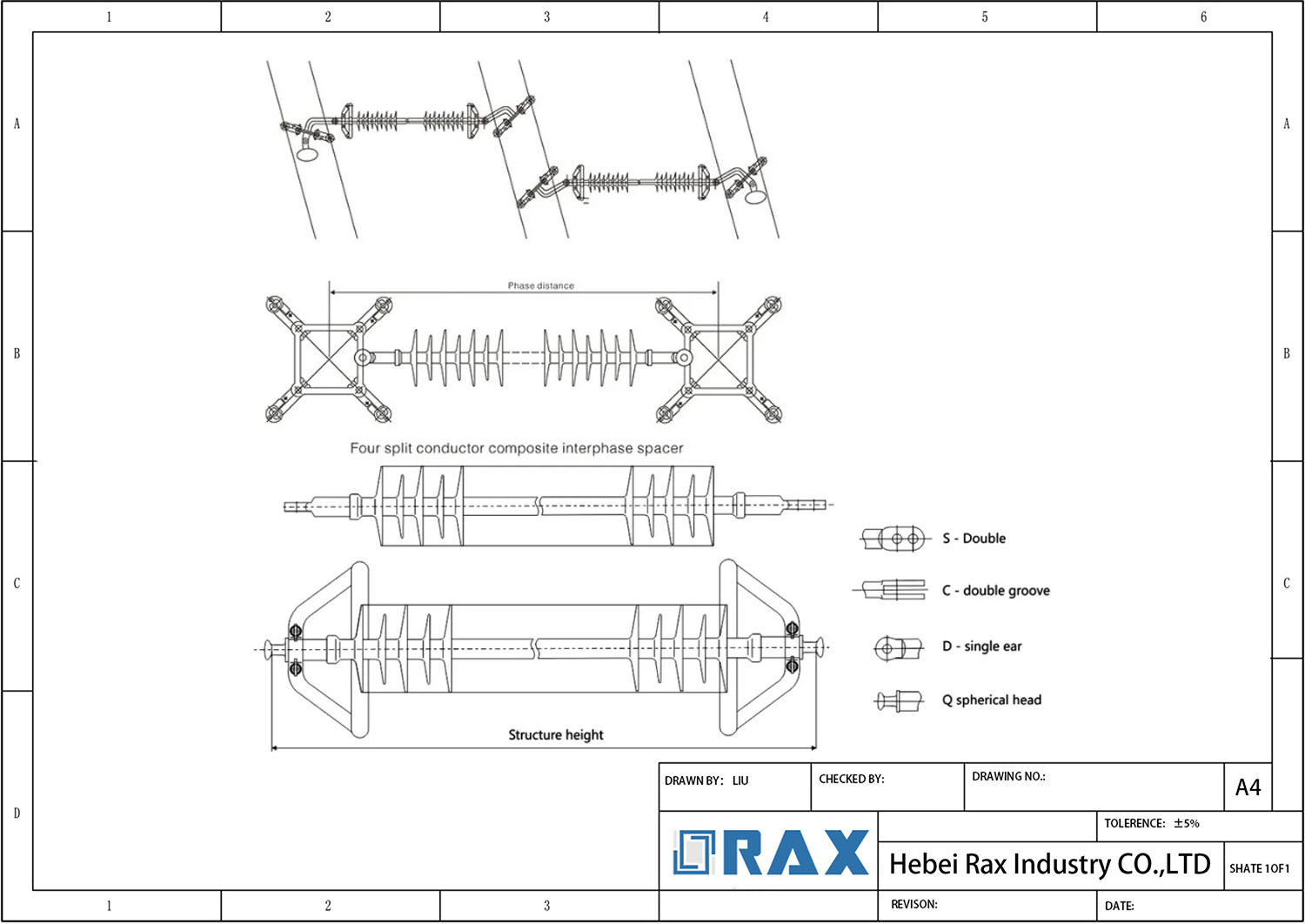
RaxPower began its journey in 2003 and has been engaged in composite insulator design and manufacturing for over 20 years. We adhere to the principle that quality is the life of the company and reputation is its soul, dedicating ourselves to innovation and reliability. Our patented Interphase Spacer is specifically developed for the wire galloping phenomenon, featuring a quadruple split phase damping rotary structure that maintains proper phase distances and effectively suppresses conductor oscillations.
The Interphase Spacer includes several key components and features:
- Insulation Body: Made of high-quality composite materials, ensuring excellent electrical insulation and mechanical strength to withstand stress in harsh environments.
- Connector Fittings: Precisely designed with durable, corrosion-resistant metals for secure and reliable connections under varying weather conditions.
- Anti-vibration Damping: Absorbs and dissipates energy, reducing vibration amplitude by 50–90% to prevent phase-to-phase short circuits and enhance system stability.
This cause-and-effect design ensures long-term performance, with applications spanning 66kV to 1000kV, offering superior galloping control and safety. Contact us or your local dealer for more information on certifications, features, reviews, pricing, stock availability, and delivery terms, with reply guaranteed within 8 business hours.
| Rated System Voltage (kV) | Type | Interphase Distance (mm) | Creepage Distance (mm) | Rated Tensile Load (kN) | Bending Load (kN) | Compression Load (kN) | Lightning Impulse Withstand Voltage (kV) | Power Frequency Withstand Voltage (kV) Dry | Power Frequency Withstand Voltage (kV) Wet |
|---|---|---|---|---|---|---|---|---|---|
| 66 | FXJB/66/70 | 2550 | 2260 | 70 | 0.4 | 7 | 450 | 256 | 230 |
| 110 | FXJB/110/70 | 2890 | 2600 | 70 | 0.4 | 7.5 | 650 | 410 | 325 |
| 220 | FXJB/220/100 | 3150 | 2820 | 100 | 0.4 | 7.5 | 1175 | 630 | 570 |
| 330 | FXJB/330/100 | 4650 | 4280 | 160 | 0.4 | 10.5 | 1675 | 820 | 740 |
| 500 | FXJB/500/100 | 5900 | 5080 | 210 | 0.4 | 12.5 | 2550 | 1375 | 1100 |




Frequently Asked Questions (FAQS)
What is an interphase spacer and how does it work?
An interphase spacer is a motion control device that mechanically connects conductors of different phases to minimize galloping amplitude and maintain critical phase spacing. It forces conductors to move in a coordinated manner that prevents flashovers, while flexible composite insulators provide damping to reduce dynamic loads and maintain phase-to-phase clearances at predetermined limits during galloping or ice shedding events.
What environmental conditions require interphase spacers?
They are essential in areas experiencing severe weather conditions like ice buildup, strong winds, and sandstorms, particularly to prevent phase-to-phase contact during ice shedding events and conductor galloping, which can cause flashovers and mechanical damage.
What are the main types of interphase spacers?
Three main types exist: Stiff Type (traditional, heavy design), Integrated Flexible Type (commonly used, more stable), and Segmental Flexible Type (featuring segmental structures), each offering different benefits for specific transmission line applications.
Where are interphase spacers typically installed?
They are installed in middle spans of transmission lines, avoiding symmetrical distribution to prevent standing waves, with specific placement depending on span length and voltage requirements, such as Scheme A for voltages up to 400kV with spans under 500m and Scheme B for 400kV with spans over 500m.
What are the key design features and stress capabilities?
Key features include composite materials for superior vibration absorption, field-adjustable spacer length, dual compression and tension load resistance, UV-resistant lightweight construction, and modifiable clamping systems. They handle tension, bending, and fatigue from oscillation, while withstanding compressive loads from galloping and ice shedding. Electrically, they endure 73% higher power frequency stresses than phase-to-ground insulation, covering power frequency voltage distribution, switching impulse flashover voltage, and lightning impulse flashover voltage.
Can interphase spacers be customized for specific project requirements?
Yes, our interphase spacers can be fully customized to meet unique project needs, including adaptable configurations for various conductor types (single, twin, and bundle), specific voltage requirements (from 66kV to 500kV and beyond), phase distances, and environmental conditions, ensuring optimal performance for each application.
How do you ensure long-term reliability and quality compliance?
Our interphase spacers undergo rigorous testing including over 1,000 hours of monitoring under severe conditions, with a proven track record since the early 2000s. We adhere to international standards such as IEC, ANSI, and CSA, with comprehensive quality assurance involving raw material selection, multi-stage testing, load testing, galvanization checks per ISO 1461, and verification through authoritative research institutes. At RaxPower, all products undergo SGS tests to ensure they meet stringent mechanical and electrical requirements.
How do you handle bulk orders and ensure on-time delivery?
With over 21 years of experience and 17,000 square meters of production facilities, we efficiently manage large-volume orders through automated manufacturing processes, a skilled workforce, and robust supply chain management. At RaxPower, we work closely with customers to understand project timelines and leverage strategic partnerships to ensure reliable, on-time delivery for complex, high-quantity requirements.
Get A Quick Quotation Today
