
Power engineers used to distrust composite insulators. Now they dominate high-pollution and coastal grids. The shift happened because composite materials solve the maintenance nightmare of porcelain. A single 13.8/33kV suspension unit withstands 70kN of mechanical stress and offers 580mm of creepage distance. That density packs serious reliability into a lightweight package.
Composite insulators have replaced traditional ceramic units in high-pollution and coastal grids by solving the maintenance challenges associated with porcelain degradation. A single 13.8/33kV suspension unit withstands 70kN of mechanical stress and offers 580mm of creepage distance, packing serious reliability into a lightweight package. This article dissects the real-world uses of composite insulators in power systems, covering high-voltage transmission lines, substation integration, and renewable energy infrastructure. You will see how hydrophobicity transfer mechanisms prevent flashovers where ceramics fail. The goal is to give you the technical clarity needed to specify the right hardware for your utility clients.
Understanding the distinct advantages of composite hardware over traditional materials is essential for optimizing long-term grid operational costs. Where ceramic and glass units demand periodic cleaning, greasing, and premature replacement, composite insulators slash those recurring labor and material expenses—a difference that compounds across thousands of units in a utility network. This operational edge flows directly from the underlying engineering, where a precision-built core and weather-resistant housing replace the vulnerabilities inherent in traditional porcelain and glass designs.
Defining Composite Insulator Architecture
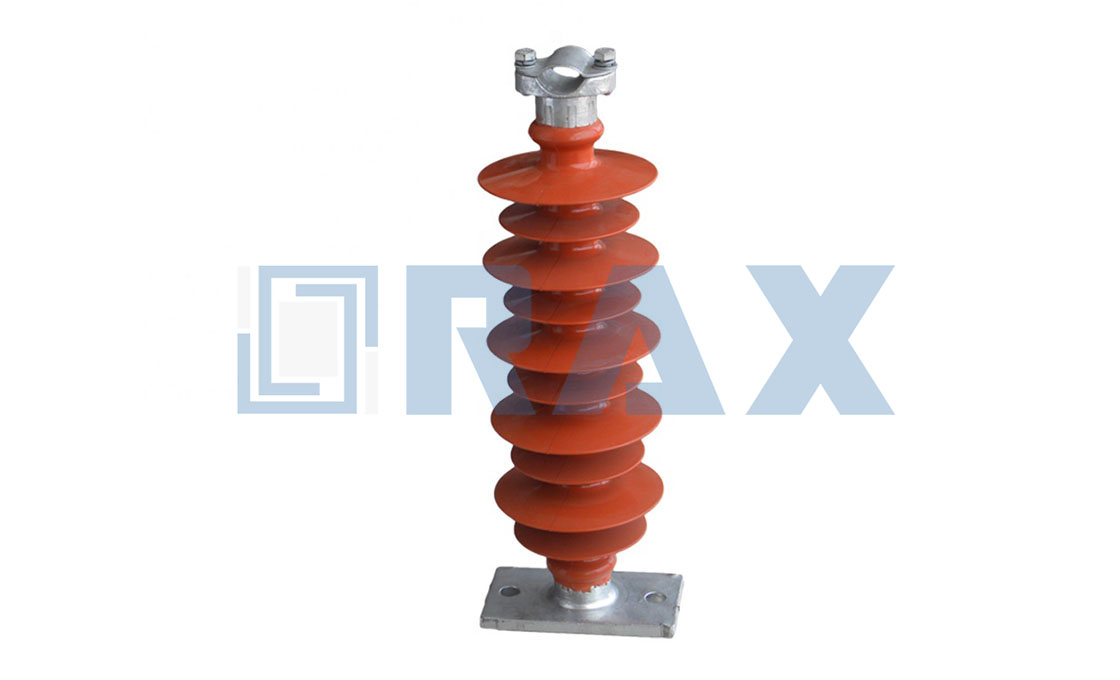
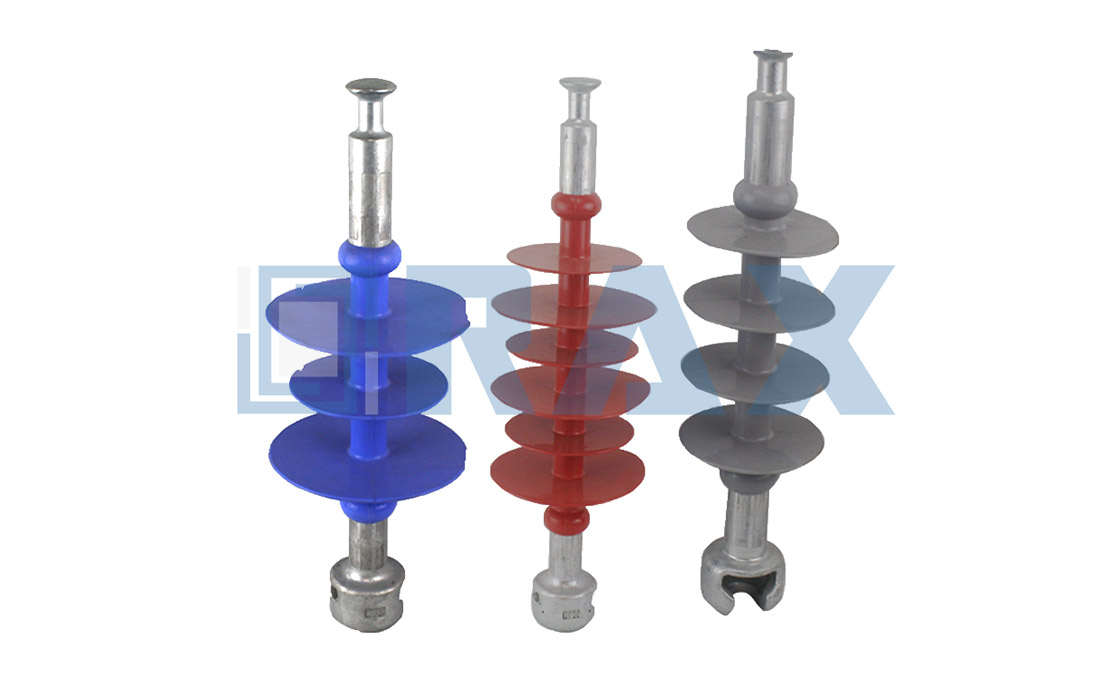
Composite insulators utilize a fiberglass-reinforced epoxy core for mechanical stability and a silicone rubber housing to manage electrical stress and environmental resistance.
Core Components: Fiberglass Core and Polymer Housing
The connection between these parts is critical. The housing is securely crimped to metal end fittings. These fittings attach to the power line. The interface must prevent water ingress. Water ingress can cause internal tracking. Internal tracking leads to structural failure. We ensure this bond is tight and durable.
The quality of these components determines the lifespan of the insulator. Low-quality rods absorb moisture. Poor housings crack under UV exposure. Rax Power uses premium raw materials. Our epoxy rods are cured to prevent core swelling. Our silicone rubber is hydrophobic.
Material Science: Hydrophobicity Transfer Mechanisms
Hydrophobicity is the ability of a surface to repel water. Silicone rubber is naturally hydrophobic. This property reduces surface conductivity. It prevents the formation of continuous water films. This is crucial in polluted environments.
When a composite insulator gets wet, water forms discrete beads. These beads roll off easily. This self-cleaning effect removes dirt particles. It maintains high leakage resistance. Without this mechanism, pollution would cause short circuits.
The hydrophobicity is not static. It can be transferred. If the housing is contaminated, the hydrophobicity can migrate to the dirt layer. This extends the effective range of the repellent property. Our testing confirms this transfer capability remains stable over time. We monitor this closely during production.
How Composite Insulators Work in Power Systems
Comparative Performance vs Traditional Materials
Weight Reduction Benefits for Structural Load Management
The shift toward composite insulators is driven heavily by their mechanical profile. Traditional porcelain or glass units are dense and brittle, placing substantial dead loads on transmission towers. This forces engineers to specify heavier steel structures and deeper foundation footprints to maintain stability.
Composite alternatives, utilizing fiberglass reinforced plastic (FRP) cores, weigh approximately 20% to 30% less than their ceramic equivalents. This drastic weight reduction allows for lighter structural supports and significantly lowers transportation costs, which is critical for remote or difficult-to-access terrain.
Superior Pollution Flashover Resistance and Self-Cleaning
In coastal or industrial zones, pollution flashovers are a primary cause of grid outages. Porcelain surfaces are hydrophilic, meaning they readily absorb moisture and hold onto conductive salts or dust. Once wetted, these contaminants create a path for leakage current, leading to flashovers.
Composite insulators utilize silicone rubber sheds that are inherently hydrophobic. The material actively repels water, causing it to bead up and roll off rather than form a continuous film. This property prevents the formation of conductive paths even when the surface is covered in dirt or salt spray.
Furthermore, silicone rubber exhibits excellent “hydrophobicity transfer.” Even if the outermost layer is physically damaged or contaminated, the underlying polymer material migrates to the surface, restoring the water-repelling characteristics over time. We have observed in extreme field conditions that this self-cleaning mechanism dramatically reduces the frequency of mandatory washing cycles compared to porcelain.
Dielectric Strength and Leakage Distance Efficiency
Achieving high dielectric strength in a compact form factor is essential for modern grid upgrades. Porcelain insulators rely on increasing physical volume and adding shed layers to achieve the necessary leakage distance for high-voltage applications. This often results in bulky, space-consuming hardware.
Composite insulators offer superior dielectric performance per unit of length. The epoxy resin and fiberglass core provide exceptional electrical insulation properties, while the silicone housing allows for optimized shed profiles that maximize creepage distance without adding unnecessary weight. This efficiency enables the design of lightweight insulators that meet the rigorous standards for 110kV, 220kV, and 500kV transmission lines.

Application 1: High-Voltage Transmission Lines
Suspension and Tension String Configurations
High Voltage (HV) and Extra High Voltage (EHV) transmission lines—ranging from 110kV up to 500kV and beyond—depend on two primary insulator string topologies to maintain structural and electrical integrity. The physical demands placed on these strings shift dramatically depending on tower placement and conductor sag.
Mechanical load differentials dictate the selection of tension versus suspension hardware, requiring rigorous verification against peak physical stress limits. Tension assemblies must withstand significantly higher breaking loads than their suspension counterparts. To guarantee this reliability, Rax Power enforces stringent quality protocols—including IEC 120 load testing on every production batch and a deliberate specification of hot-forged components for superior mechanical strength compared to casting. A dedicated 10-person QC team oversees a comprehensive double-review process, ensuring that ball-and-socket clevises and forged dead-end grips consistently meet these exacting standards without compromise.

Application 2: Distribution Network Infrastructure
Space Constraints and Compact Design Benefits
Application 3: Substation and Switchgear Integration
Surge Arrester Housing and Isolation Components
Compact Substation Design Optimization
Application 4: Renewable Energy Infrastructure
Wind Turbine Tower and Nacelle Insulation Needs
Solar Farm Stringing and Mounting Systems
Resilience Against Harsh Outdoor Environmental Factors
Environmental and Mechanical Performance
Evaluating Structural Integrity and Failure Risks
Long-Term Maintenance and Lifespan Considerations
Inspection Protocols for Hidden Mechanical Defects
Conclusion
Strategic Procurement Advice
Frequently Asked Questions
How do composite insulators work?
These insulators function using a central fiberglass reinforced polymer (FRP) rod that provides the primary mechanical load-bearing capability. Surrounding this core are silicone rubber sheds that create the necessary creepage distance to prevent electrical tracking and leakage current. The combination of high tensile strength from the rod and excellent dielectric properties from the polymer housing ensures reliable performance under both mechanical stress and high voltage conditions.
What are composite insulator benefits?
Composite insulators offer significant advantages over traditional porcelain or glass units, primarily due to their lightweight nature and high mechanical strength-to-weight ratio. Their hydrophobic silicone rubber sheds effectively repel water and contaminants, reducing the risk of flashovers in polluted or coastal environments. Additionally, they require minimal maintenance and provide enhanced resistance to vandalism and theft compared to brittle ceramic alternatives.
Where are composite insulators used?
They are widely deployed in transmission and distribution networks, particularly in areas with heavy pollution, salt spray, or industrial contamination. Utility companies favor them for long-span crossings, river valleys, and urban substations where weight reduction and ease of installation are critical. They are also increasingly used in renewable energy projects, such as wind farms and solar arrays, due to their durability and low maintenance requirements.
What is composite insulator lifespan?
A well-manufactured composite insulator typically has a design life of 30 to 40 years, depending on environmental conditions and material quality. The silicone rubber housing is resistant to UV degradation and weathering, maintaining its hydrophobicity over time. However, the FRP core can be susceptible to stress corrosion cracking if exposed to moisture and tension simultaneously, making proper sealing and manufacturing quality vital for longevity.
How to install composite insulators?
Installation requires standard pole line hardware tools but benefits from the insulator’s light weight, allowing for easier handling by smaller crews. Care must be taken to avoid dropping or impacting the unit, as mechanical damage to the FRP core can compromise structural integrity. Proper torque application on end fittings is essential to prevent loosening, and Raxpower recommends following manufacturer guidelines for spacing and tensioning during overhead line construction.