
Porcelain insulators have a predictable failure mode: they shatter. Composite insulators fail differently, and that distinction dictates the entire composite insulator life cycle cost calculation for grid operators. We see a lot of specifiers looking at the lower upfront sticker price and missing the maintenance differential until a core rod fracture forces a line outage in hard-to-reach terrain. The real economic advantage isn’t in the purchase order; it is in the elimination of climbing crews for cleaning and the avoidance of catastrophic replacement events.
Rax Power validates this reliability through rigorous in-house testing, including IEC 120 standards load and gauge tests, ensuring the fiberglass core rod maintains structural integrity under extreme stress. Our ten-person quality control team implements a double-review process where 100% of products undergo inspection prior to packaging, giving you verifiable assurance that the material choices will hold up over decades of service.
This article cuts through the marketing noise to analyze the actual performance differences between DMC and porcelain insulator economics, with a specific focus on composite insulator failure modes core rod degradation. You will learn how to evaluate hydrophobicity retention and mechanical load ratings to make sourcing decisions that protect your margins and your clients’ infrastructure.
What Are Composite Insulators?
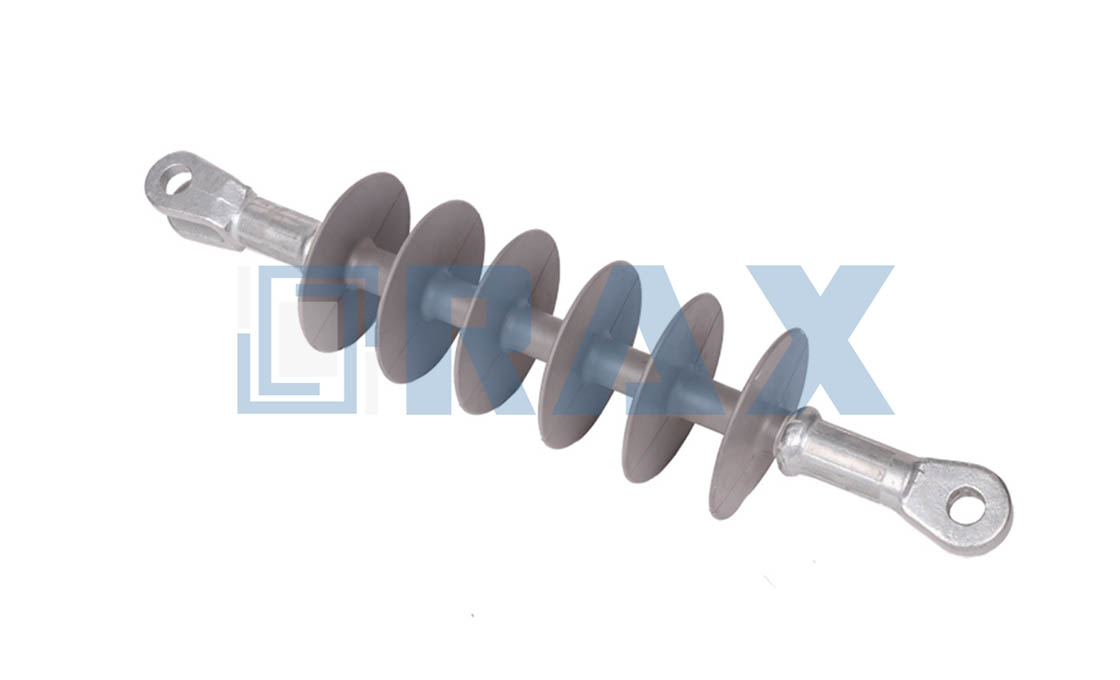
Composite insulators combine a fiberglass core with a polymer housing to replace fragile ceramics, offering superior strength and zero maintenance for modern grids.
Basic Definition: Polymer Housing and Fiberglass Core
Think of a composite insulator as a modern, high-tech version of the heavy ceramic discs you see on older power lines. Instead of solid glass or porcelain, it uses a layered construction designed for extreme performance. The outer layer is a waterproof polymer housing, typically made of silicone rubber. This acts like a raincoat, shedding water and resisting dirt to prevent electrical leaks.
Inside that protective shell sits the fiberglass core rod. This is the muscle of the unit. While the polymer handles the weather, the fiberglass handles the physical stress. It provides the tensile strength needed to hold thousands of pounds of heavy copper or aluminum wire without snapping. Together, these two materials create a unit that is significantly lighter and tougher than traditional alternatives.
Primary Function: Electrical Isolation and Mechanical Support
In a power grid, these units perform two critical jobs simultaneously. First, they provide electrical isolation. They stop high-voltage electricity from flowing through the metal tower and into the ground. Second, they provide mechanical support. They physically suspend the conductors and keep them spaced apart safely.
- Electrical Isolation: The polymer sheds water and repels contaminants, preventing “flashovers” where electricity jumps across the surface during rain or pollution.
- Mechanical Support: The fiberglass core bears the heavy tension of the lines, ensuring the grid remains stable even under strong winds or ice loads.
Key Difference from Traditional Ceramic or Glass Types
The main difference lies in material science and durability. Traditional ceramic or glass insulators are heavy, brittle, and prone to breaking upon impact. If a crane hits a ceramic insulator, it shatters. Composite insulators are flexible and impact-resistant. They absorb shock rather than breaking.
Furthermore, composites require zero maintenance. Ceramics accumulate dirt and need regular washing to maintain performance. Composites are self-cleaning due to their hydrophobic surface. At Rax Power, we leverage 21 years of export experience to ensure our composites meet the highest global standards for both electrical and mechanical resilience.
Why Choose Composite Over Traditional Materials?
Weight Reduction Benefits for Easier Handling
Traditionally, line crews relied on heavy lifting equipment—like winches or cranes—to hoist dense porcelain or glass strings up transmission towers. Switching to a composite design changes the physical labor dynamic completely. Think of the difference between lifting a bag of wet sand and a similarly sized piece of high-density foam.
Because the structural load is significantly reduced, the mechanical strain on crossarms and towers drops accordingly. In our experience supplying hardware for remote mountainous builds, the dramatic weight drop means crews can manually hand-up the insulator strings without waiting for specialized heavy machinery. This directly translates to faster project completion times and lower equipment rental costs.
- Lower Freight Costs: Trucks can carry significantly more units per load compared to dense ceramics.
- Simplified Rigging: Lighter strings require less robust tensioning setups during stringing operations.
- Hardware Compatibility: Lighter loads allow for the use of lighter, optimized pole line hardware.
Superior Hydrophobicity for Wet Conditions
Hydrophobicity is simply the ability of a surface to repel water. Imagine a freshly waxed car: rain hits the surface and immediately beads up into small droplets, rolling off the hood. That is exactly how the silicone rubber housing of a composite insulator behaves during a rainstorm.
Older glass or porcelain insulators, however, tend to form a continuous wet film over their surfaces when exposed to moisture. When industrial pollution or coastal salt mixes with this continuous water film, it creates a conductive path that can lead to power flashovers. The polymer housing prevents this film from forming, breaking the water into harmless, isolated droplets.
Furthermore, we utilize a specific high-temperature vulcanized (HTV) silicone mixture that possesses an inherent “migration” capability. This means low-molecular-weight oils slowly seep to the surface over years of service, continuously renewing the water-repellent shield even as the insulator is pelted by wind-blown dust or industrial smog.
Impact Resistance and Non-Breakable Safety Profile
One of the most obvious drawbacks of traditional porcelain or glass is their fragility. A dropped tool, a misplaced forklift, or even intentional vandalism (like a thrown rock) can shatter a traditional insulator skirt instantly. Think of the difference between dropping a ceramic dinner plate and dropping a rubber ball onto a concrete floor.
Composite insulators solve this through their material architecture. The internal structural rod is made of tightly bound glass fibers encased in an insulating resin, while the exterior weather shed is a flexible elastomer. This combination inherently absorbs mechanical shocks rather than fracturing. During transit over rough, unpaved roads to remote job sites, this elasticity ensures the units arrive intact.
To guarantee this mechanical integrity in the field, we secure the internal fiberglass core using a hot-forged metal end fitting process. This hot-forging technique ensures the crimped joint handles high-tension pulls without slipping or inducing microscopic stress fractures in the core, keeping the assembly entirely non-breakable and reliable under sudden dynamic line loads.
| Feature | Specification | Advantage |
|---|---|---|
| Material Composition | HTV Silicone Rubber Housing + Glass-Fiber Reinforced Epoxy (FRP) Core | Inherent hydrophobicity and migration capability reduce pollution flashover risk compared to porcelain/glass |
| Structural Weight | Approximately 80% lighter than equivalent ceramic insulators | Significantly reduces mechanical load on transmission towers and simplifies handling/installation logistics |
| Maintenance Profile | Self-cleaning surface properties eliminate need for periodic washing | Drastically lowers operational expenditure in remote or hard-to-reach terrain environments |
| Mechanical Integrity | High-tensile FRP core with hot-forged metal end fittings | Resists brittle fracture and offers superior impact resistance compared to rigid ceramic alternatives |
| Service Lifecycle | Designed for 30+ years of continuous operation with low failure rates | Delivers lower total cost of ownership (TCO) despite higher initial capital investment |
High-Voltage Transmission Lines
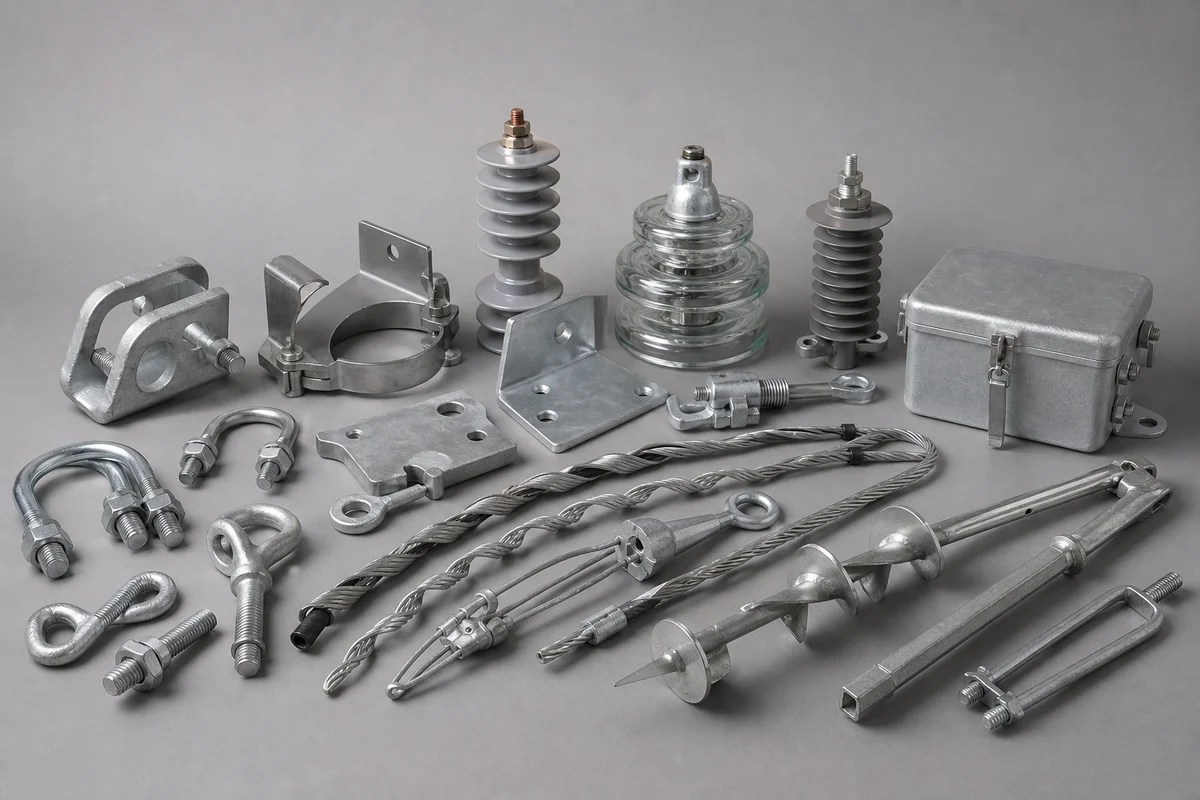
High-voltage transmission lines require specialized suspension and tension hardware to manage mechanical loads and optimize tower structural integrity.
Suspension and Tension Applications on Towers
Overhead transmission towers must support two distinct mechanical forces: the continuous weight of the conductor (suspension) and the massive pulling force at dead-ends or sharp angles (tension). Composite insulators are engineered to handle these specific stress vectors reliably.
For suspension applications, the insulator hangs vertically, bearing the static weight of the line. In tension applications—such as at the end of a line or at a severe angle—the insulator is pulled horizontally or diagonally. Both roles demand a fiberglass core rod with exceptional tensile strength to prevent brittle fracture under extreme mechanical loads.
Optimizing Tower Loading and Span Design
A common misconception is that lighter insulators directly reduce “line sag” (the droop of the wire itself). In reality, sag is primarily dictated by the conductor’s weight, temperature, and tension. However, the weight of the insulator string and its fittings absolutely contributes to the total vertical load placed on the transmission tower.
By utilizing lightweight composite designs, the overall dead-load on the tower structure is significantly reduced. This allows engineers to design lighter, less expensive steel towers or utilize existing towers for higher-capacity conductors. Furthermore, reduced structural loading enables the safe extension of span lengths between towers, which is critical for minimizing the total number of towers required across a project.
Performance in Long-Span Crossings
Long-span crossings—such as crossing wide rivers, valleys, or busy highways—subject transmission hardware to some of the highest mechanical stresses in the industry. In these scenarios, the insulator must maintain structural integrity against high wind loads, ice accumulation, and the sheer tension of extended conductor runs.
The high strength-to-weight ratio of composite insulators makes them ideal for these applications. Because they are immune to corrosion and require zero routine maintenance, they are exceptionally well-suited for hard-to-reach terrain where sending maintenance crews for inspections or cleaning is prohibitively expensive and logistically difficult.
- Structural Efficiency: Reduced tower loading allows for optimized steel usage in long-span infrastructure.
- Maintenance Elimination: Zero-maintenance polymer housings prevent the operational costs associated with cleaning traditional insulators in remote, rugged environments.
- High-Tensile Reliability: Advanced fiberglass core rods resist brittle fractures, ensuring long-term safety under the extreme tension of extended spans.
Substation Equipment Insulation
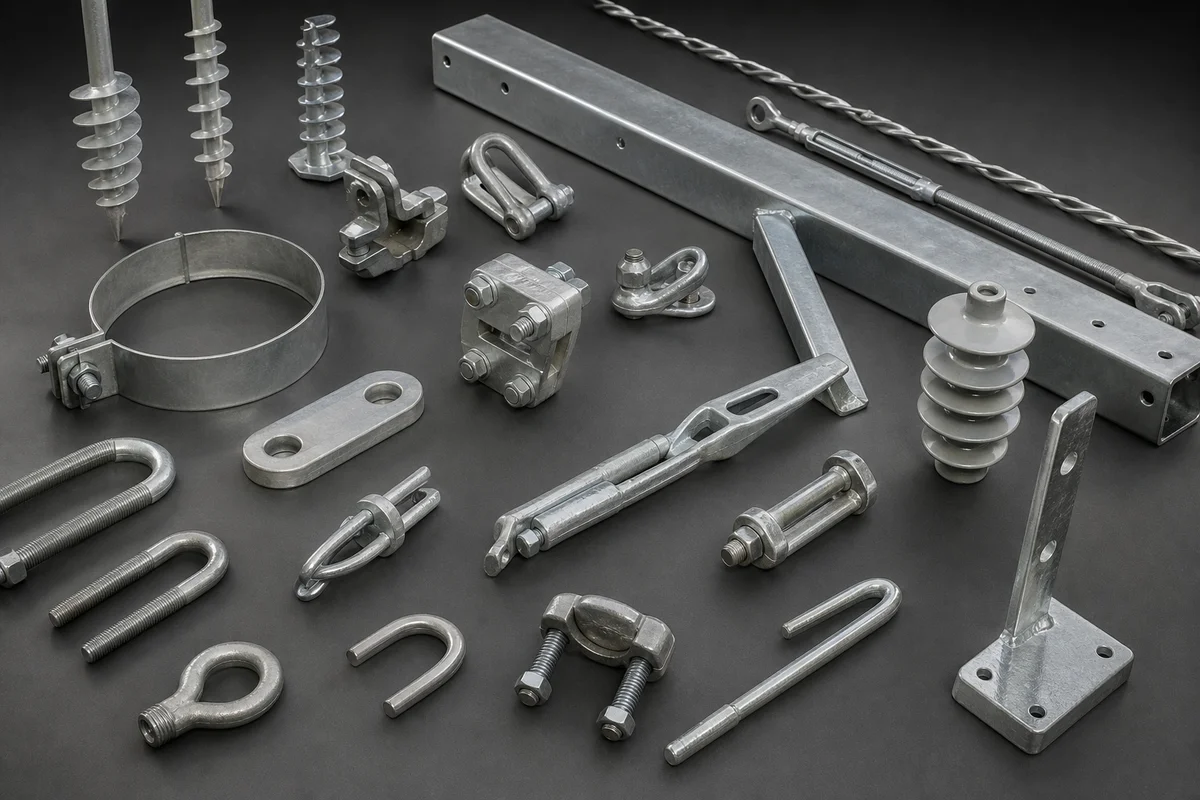
Compact substation architectures increasingly rely on high-strength polymer posts to maximize spatial efficiency and operational safety. Composite insulators replace heavy porcelain with high-strength polymer posts, enabling safer, compact substation designs.
Transformer and Circuit Breaker Bushings
Using composite insulators as bushings for transformers and circuit breakers significantly reduces the mechanical stress on delicate electrical equipment. Unlike traditional porcelain, which is rigid and brittle, composite posts feature a flexible fiberglass core. This flexibility acts as a shock absorber, protecting sensitive windings and contacts from the vibrations caused by fault currents or heavy switching operations.
By actively leveraging the natural hydrophobic migration of their silicone housings, composite bushings drastically reduce high-voltage maintenance demands. In coastal or industrial areas, where porcelain surfaces often accumulate conductive salts and dust, the diffusion of low-molecular-weight silicone oils to the exterior creates a self-renewing water-repellent barrier. This dynamic property maintains insulating integrity even under heavy pollution, effectively preventing flashovers and eliminating the recurring operational costs associated with manual cleaning schedules.
Isolator Posts for Busbar Support
When deployed as isolator posts for busbar support, composite insulators offer superior dielectric strength relative to their weight. This allows engineers to design busbar systems that can handle higher electrical loads without increasing the physical size of the supporting structures. The material’s inherent resistance to UV radiation and extreme temperature fluctuations ensures long-term stability, preventing the embrittlement often seen in older polymer formulations.
Safety is another critical advantage in this application. Porcelain insulators can shatter upon impact, creating hazardous debris fields within a substation. Composite posts do not shatter; they may degrade over decades of exposure, but they maintain their structural integrity much longer than ceramic alternatives. This non-shattering characteristic is particularly valuable in densely packed urban facilities where personnel safety is paramount.
Compact Footprint Advantages in Urban Substations
The most tangible benefit of composite insulators in urban substations is the dramatic reduction in required footprint. Because these posts are significantly lighter than porcelain, the supporting steel structures can be smaller and require less concrete foundation work. This allows utility operators to fit more equipment into constrained city lots or expand existing facilities without acquiring additional land.
For example, a typical 110kV bay using composite insulators can be up to 30% narrower than one using porcelain. In a city where land prices are exorbitant, this spatial efficiency translates directly into substantial capital savings. Additionally, the lighter weight reduces the load on the substation floor, allowing for retrofitting into older buildings that were not originally designed to support heavy electrical infrastructure.
We have observed that clients prioritizing rapid deployment often choose composite solutions because the reduced weight simplifies handling. Fewer heavy-lifting machines are needed for installation, which speeds up the construction timeline and lowers labor costs. This makes composite insulators an ideal choice for projects with tight deadlines and limited site access.
Railway and Transit Electrification
Railway catenary insulators face a brutal combination of 25 kV AC electrical stress and continuous mechanical vibration from passing trains. Material selection here is a fatigue-critical decision, not just a cost decision.
Catenary System Insulators for Overhead Wires
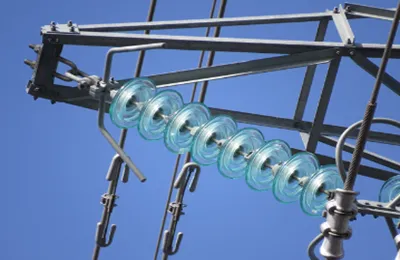
Modern electrified railways typically run at 25 kV AC, fed through overhead catenary wires suspended by insulators attached to mast structures or tunnel ceilings. The insulator here is not just isolating voltage — it is also carrying the mechanical weight of the contact wire, the messenger wire, and any ice or wind loading on top of that. That dual burden is what makes railway applications fundamentally different from standard distribution lines.
Think of it this way: a transmission line insulator mostly hangs quietly under static tension. A railway catenary insulator is more like a shock absorber in a car suspension — it gets hit thousands of times per day and still has to hold everything together electrically. The dielectric strength and creepage distance must be sufficient to prevent flashovers under moisture, pollution, or fog conditions common along rail corridors.
Historically, porcelain dominated this space. But the shift toward composite and epoxy-based insulators has accelerated because rail operators are tired of dealing with cracked sheds and shattered housings after minor impacts or thermal cycling. Polymer housings simply do not shatter the way ceramics do.
Resistance to Vibration and Dynamic Loads
This is where most generic insulator specs fail in railway service. A train passing at 200 km/h generates aerodynamic oscillation, mechanical resonance through the mast structure, and dynamic tension spikes in the contact wire. That is continuous cyclic loading — not a one-time event. Poor mechanical design leads to micro-cracking at the metal-end-fitting interface, loosening of hardware, and eventually catastrophic failure.
The core engineering challenge is fatigue life. In our field experience reviewing failure modes across transit projects, the weakest link is almost always the crimped interface between the fiberglass core rod and the end fitting. If that crimp geometry is off, or if the adhesive bond degrades under thermal cycling, the insulator may hold for months before suddenly snapping under a tension spike.
This is why bending strength, torsional resistance, and fatigue cycle ratings matter far more in rail than in static overhead line work. A composite insulator that performs flawlessly on a transmission tower can still fail prematurely on a catenary bracket if it was never validated for dynamic railway loading profiles.
Ensuring Reliable Power Delivery for Trains
Reliable electrification comes down to uptime. When a catenary insulator fails, the consequence is not just a broken component — it is a stranded train, a delayed corridor, and often a safety incident if the wire drops onto rolling stock or trackside equipment. The cost of one outage event typically dwarfs any savings from choosing a cheaper insulator at procurement.
This is why long-term reliability with minimal maintenance is the real procurement metric. Rail infrastructure in tunnels, mountain passes, or remote stretches is expensive and sometimes dangerous to access. Insulators that can operate for decades without scheduled cleaning or inspection offer enormous lifecycle value — even if the initial unit price is higher than a porcelain equivalent.
From a system design perspective, the goal is simple: select an insulator whose fatigue margin and pollution performance comfortably exceed the worst expected operating condition, not the average one. That buffer is what keeps trains moving during storms, dust events, or seasonal humidity spikes when lesser hardware would flash over.
Polluted and Coastal Environments
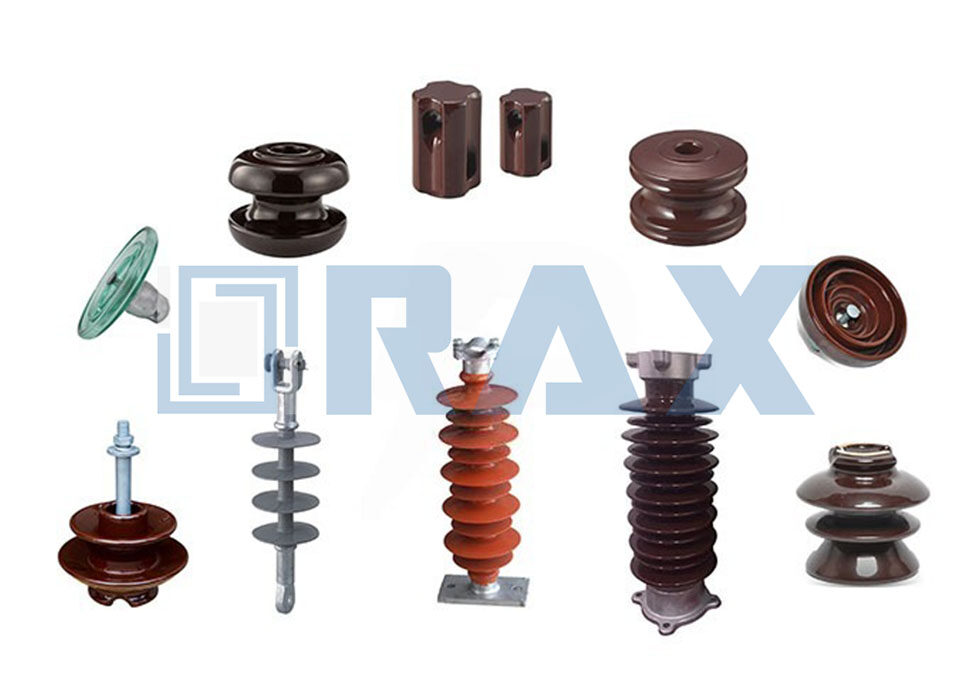
Composite insulators utilize natural hydrophobicity to repel salt and industrial dust, eliminating frequent cleaning and preventing dangerous flashovers in harsh environments.
Hydrophobic Surface Repelling Salt and Industrial Dust
In coastal or industrial settings, this natural repellency prevents the accumulation of salt crystals and heavy industrial dust. We observe that this mechanism significantly reduces the leakage current that typically leads to premature insulation failure in traditional materials.
Eliminating Frequent Cleaning Cycles Required by Ceramics
- Operational Cost Reduction: Eliminates the need for specialized washing trucks and manual labor crews in hazardous locations.
- Grid Availability: Removes the requirement for line outages dedicated to cleaning schedules, ensuring consistent power delivery.
- Longevity in Harsh Zones: Maintains high dielectric strength indefinitely without degradation from chemical cleaning agents.
Preventing Flashovers in High-Humidity Zones
Our engineering teams confirm that this resistance to wet flashovers makes composite insulators the superior choice for power lines running through dense fog banks or near saltwater bodies. The result is a more resilient grid that minimizes unexpected trips and outages during severe weather events.
Selecting the Right Composite Solution
Selecting the right composite insulator requires matching specific voltage and mechanical classes to your grid’s physical demands.
Matching Voltage Levels and Mechanical Loads
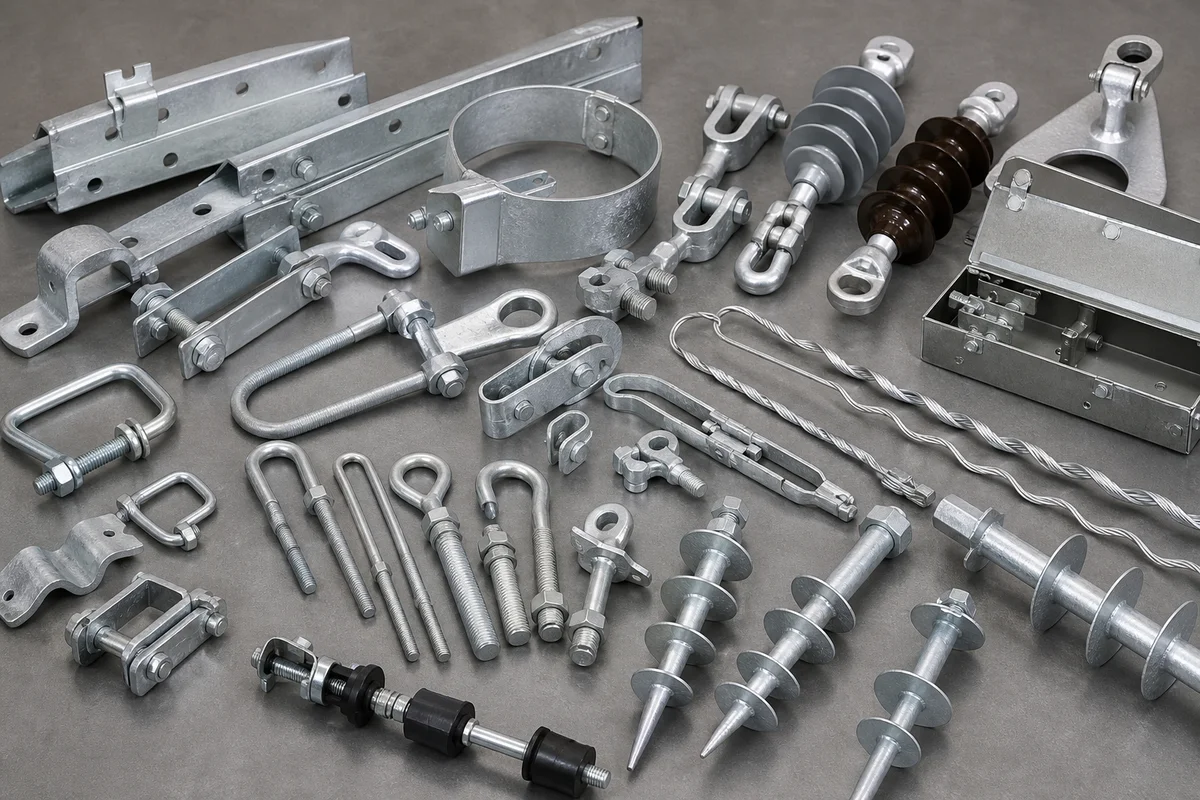
When specifying hardware for overhead lines, you must align the insulator’s rated voltage and breaking load with the exact requirements of your transmission corridor. Utilities often face a trade-off between maximizing electrical clearance and managing the structural weight on existing poles or towers.
For high-voltage applications, such as 220kV or 500kV lines, the creepage distance must be sufficient to prevent flashovers during heavy pollution events. Simultaneously, the mechanical load capacity—ranging from 70kN to 500kN—determines whether the unit can withstand extreme wind loads or ice accumulation without snapping.
Our engineering team prioritizes hot-forging techniques for the metal end fittings. This method ensures superior tensile strength compared to traditional casting, which is vital when operating near the maximum mechanical limits of a specific voltage class.
Considering Environmental Severity Ratings
Environmental conditions dictate the material formulation required for long-term reliability. In coastal regions, salt spray accelerates corrosion, while industrial zones introduce acidic pollutants that degrade standard polymer housings.
- Hydrophobicity: Essential for repelling water and preventing tracking in wet, polluted conditions.
- UV Resistance: Critical for preventing surface erosion and cracking under intense sunlight exposure.
- Thermal Stability: Ensures the housing maintains its shape and electrical properties during extreme temperature fluctuations.
We tailor our silicone rubber compounds to meet IEC 120 compliance standards for hydrothermal aging. This protects the internal fiberglass core rod from brittleness, a common failure mode in harsh climates where temperature swings are severe.
Verifying Manufacturer Quality Standards
Relying solely on a supplier’s marketing claims is risky. You must verify their internal quality control protocols and testing capabilities to ensure consistency across large bulk orders.
A credible manufacturer will maintain an in-house laboratory capable of performing rigorous load and gauge tests. Look for facilities that implement a double-review process, where 100% of products are inspected before packaging. This eliminates the risk of defective units entering your supply chain.
Additionally, third-party certifications like SGS provide an independent layer of verification. Our dedicated quality control teams monitor every production stage, ensuring that the final delivered hardware meets the exact specifications outlined in your project tender.
| Feature | Specification | Advantage |
|---|---|---|
| Mechanical Strength | Tensile Load Capacity (e.g., 70kN to 500kN) | High strength-to-weight ratio reduces structural load on poles while maintaining critical mechanical integrity |
| Environmental Resistance | IEC 120 Compliant Hydrothermal Aging Protection | Prevents core rod brittleness and internal degradation, ensuring long-term reliability under extreme temperature and humidity |
| Application Voltage | Standardized Classes (e.g., 110kV, 220kV, 500kV) | Scalable design allows for precise matching to specific grid transmission requirements and regional standards |
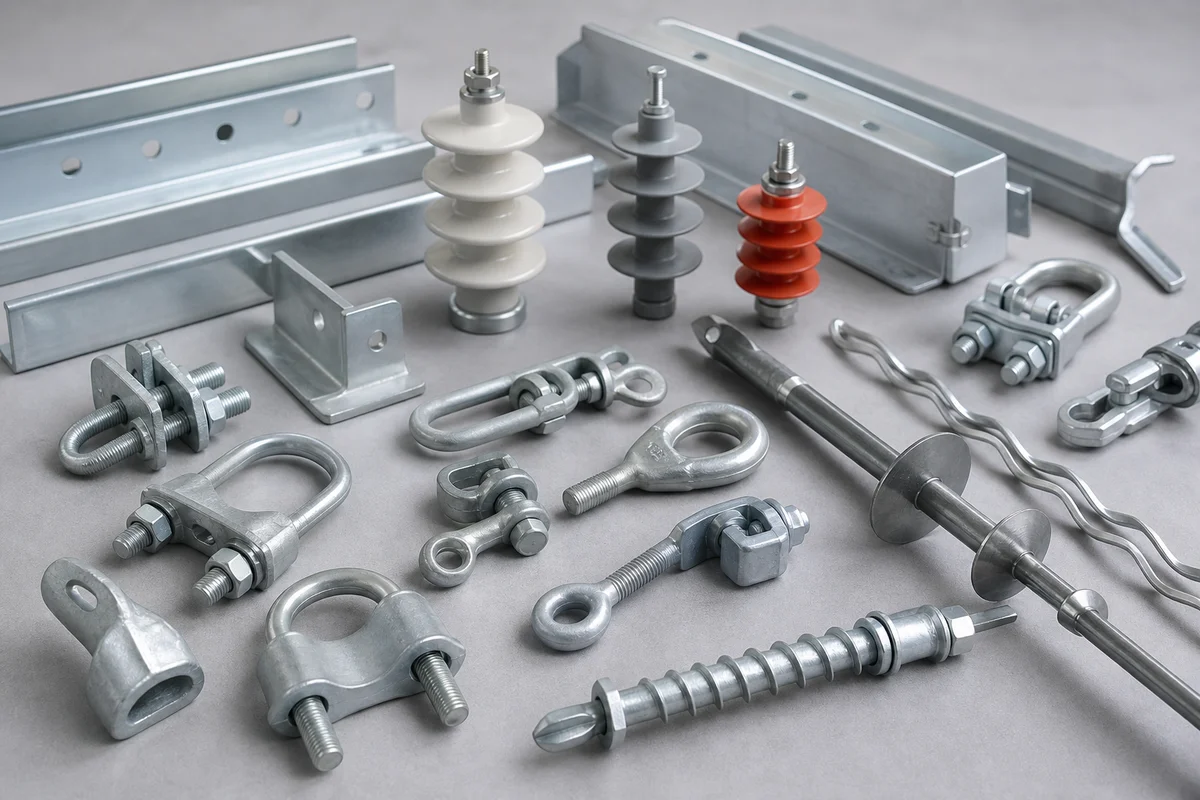
Future Trends in Polymer Insulation
Future polymer insulation relies on embedded sensing, advanced silicone chemistry, and eco-friendly manufacturing to enhance grid reliability and reduce lifecycle costs.
Integration of Smart Sensors for Condition Monitoring
The modernization of power grids is shifting away from reactive maintenance toward predictive strategies. For overhead line infrastructure, the integration of smart sensors into composite insulators represents a significant leap forward in asset management.
Traditionally, assessing the health of an insulator required manual inspections or specialized high-voltage testing equipment, which is often impractical for remote or difficult-to-access terrain. By embedding miniature sensors directly into the insulator housing or mounting them on the metal fittings, utilities can now monitor real-time data such as leakage current, temperature fluctuations, and mechanical stress.
These sensors act as the nervous system of the grid component. They transmit data wirelessly to central monitoring systems, allowing engineers to detect early signs of degradation—such as moisture ingress or contamination buildup—before a catastrophic failure occurs. This technology is particularly valuable for high-voltage transmission lines where downtime is extremely costly.
- Leakage Current Monitoring: Detects surface contamination levels and hydrophobicity loss, signaling when cleaning or replacement is needed.
- Mechanical Load Sensing: Monitors the tension on the fiberglass core rod to identify potential overload events caused by ice accumulation or wind storms.
- Environmental Data: Tracks ambient temperature and humidity, helping to correlate insulator performance with specific weather conditions.
While sensor integration adds complexity to the manufacturing process, the long-term operational savings are substantial. Utilities can extend the inspection intervals significantly, reducing labor costs and improving overall grid resilience. As the industry moves toward IoT-enabled smart grids, composite insulators with integrated sensing capabilities are becoming a standard requirement for new infrastructure projects.
Advancements in Silicone Rubber Formulations
The performance of composite insulators is heavily dependent on the quality of the silicone rubber housing. Recent advancements in material science have led to the development of high-durability silicone formulations that offer superior resistance to environmental stressors.
One of the most critical properties of silicone rubber is its hydrophobicity—the ability to repel water. This characteristic prevents the formation of continuous conductive paths on the insulator surface, thereby reducing the risk of flashovers in wet or polluted conditions. New formulations maintain this hydrophobicity for longer periods, even after prolonged exposure to UV radiation and extreme temperatures.
Another area of innovation is the enhancement of the insulator’s mechanical strength. Manufacturers are experimenting with reinforced silicone compounds that provide better resistance to tearing and tracking. These improvements are particularly important for insulators used in harsh environments, such as coastal areas with high salt content or industrial zones with heavy air pollution.
- Enhanced Hydrophobicity Recovery: Advanced fillers allow the silicone to quickly restore its water-repelling properties after being damaged by arcing.
- UV Resistance: Improved additives protect the polymer matrix from degradation, preventing cracking and brittleness over time.
- Thermal Stability: New formulations can withstand higher operating temperatures without losing their mechanical integrity.
These material advancements contribute to the overall longevity of the insulator, reducing the frequency of replacements and lowering the total cost of ownership for utility providers. As research continues, we can expect to see even more sophisticated silicone compounds tailored to specific environmental challenges.
Sustainability Improvements in Manufacturing
Sustainability is becoming a key consideration in the manufacturing of power line hardware and insulators. The industry is increasingly focusing on reducing the carbon footprint associated with production processes and material sourcing.
One significant improvement is the adoption of energy-efficient manufacturing techniques. Automation and semi-automated machinery help to minimize waste and optimize resource usage. For example, precise molding processes reduce the amount of excess silicone rubber that needs to be recycled or disposed of.
Additionally, there is a growing emphasis on using environmentally friendly materials. Some manufacturers are exploring the use of bio-based polymers or recyclable components in their insulator designs. While the core fiberglass rod remains essential for mechanical strength, efforts are being made to develop more sustainable alternatives for the housing and fittings.
- Eco-Friendly Materials: Exploration of bio-based polymers and recyclable components to reduce environmental impact.
- Energy Efficiency: Implementation of energy-saving technologies in production lines to lower greenhouse gas emissions.
- Waste Reduction: Optimized manufacturing processes to minimize material waste and improve recycling rates.
These sustainability initiatives not only benefit the environment but also enhance the brand reputation of manufacturers. As utilities and governments worldwide commit to greener energy solutions, the demand for sustainably produced power line components is expected to rise. Companies that prioritize eco-friendly practices are likely to gain a competitive advantage in the global market.
Conclusion
The Bottom Line on Total Cost
Stop fixating on unit price. Porcelain looks cheaper initially, but composite insulators slash your lifecycle costs by eliminating cleaning cycles and reducing replacement frequency. Their hydrophobicity prevents flashovers in polluted areas, while their lightweight nature cuts installation labor and allows for smaller, cheaper support structures. When you factor in the near-zero maintenance and extended service life, composites offer superior economic value for wholesalers targeting modern grid upgrades.
- Lower lifecycle cost vs. porcelain
- Reduced installation labor due to weight
- Near-zero maintenance requirements
- Better performance in harsh environments
Frequently Asked Questions
What are composite insulators?
Composite insulators, also known as polymer insulators, utilize a fiberglass reinforced plastic rod as the mechanical core and silicone rubber sheds for electrical insulation. This construction replaces traditional glass or porcelain discs with a lightweight, flexible alternative. They are widely adopted in modern power transmission due to their high strength-to-weight ratio and resistance to environmental degradation.
Why choose composite over porcelain?
Composite insulators offer significantly lower weight, simplifying handling and installation processes for utility crews. They possess superior hydrophobicity, which prevents water film formation and reduces leakage current during wet conditions. Additionally, they are shatter-proof, eliminating the risk of explosive failures associated with tempered glass or porcelain under mechanical stress.
How do they handle pollution?
Silicone rubber sheds exhibit strong hydrophobic properties, causing water to bead up rather than form continuous conductive films. This characteristic maintains high surface resistance even in heavily polluted industrial or coastal environments. Consequently, composite insulators require less frequent washing compared to ceramic alternatives, lowering maintenance costs for grid operators.
Where are they commonly applied?
These insulators are extensively used in overhead transmission and distribution lines across various voltage levels. They are particularly effective in coastal areas with high salt content due to their excellent anti-pollution flashover performance. Urban infrastructure projects also favor them for their aesthetic appeal and reduced visual impact on landscapes.
What is the lifespan?
Typically designed for a service life of 30 to 40 years, composite insulators match the longevity of traditional ceramic units. Their durability depends heavily on the quality of the housing material and the integrity of the end fittings. Proper selection based on environmental conditions ensures consistent performance throughout their operational lifecycle without significant degradation.