
The composite insulator advantages that procurement managers rely on come down to one uncomfortable truth about porcelain: it looks cheaper on paper until you factor in installation labor, structural reinforcement, and replacement downtime. At RaxPower, we see this pattern across every transmission project we support. A composite insulator weighs only 10 to 15 percent of a comparable porcelain unit. That weight difference isn’t just a spec sheet number. It translates directly into faster installations, lighter support structures, and fewer injuries on the job site. The real question isn’t whether composites outperform traditional insulators — it’s whether your current procurement specs account for the hidden costs that porcelain hides until after installation.
The difference between a composite insulator that lasts and one that doesn’t usually comes down to three things: the quality of the silicone rubber housing, the integrity of the rod-to-housing seal, and whether the manufacturer provides traceable third-party test reports. Understanding how hydrophobic sheds resist pollution flashover, what FRP core rod testing catches before shipment, and how to verify IEC compliance on bulk orders separates informed procurement from costly mistakes. You’ll walk away with a practical framework for evaluating composite insulator specs before they hit your vessel loading schedule.
Why Composite Insulators Are Reshaping Transmission Infrastructure
High Tensile Strength-to-Weight Ratio
The shift toward composite insulators is driven largely by their exceptional mechanical efficiency. Unlike traditional porcelain, which relies on mass for strength, composite designs achieve high load-bearing capacity through a fiberglass-reinforced epoxy core rod encased in silicone rubber sheds. This combination yields a favorable strength-to-weight ratio that reduces structural demands on poles and towers.
Our engineering team notes that the core rod typically delivers tensile strengths ranging from 60 to 200 kN, while the overall unit weight remains a fraction of equivalent porcelain assemblies. This allows utilities to use lighter support structures, accelerate installation cycles, and cut logistics costs without compromising safety margins.
Critical to this performance is the end-fitting interface. Hot-forged steel fittings, as opposed to cast alternatives, provide a tighter metallurgical bond with the core rod, yielding pull-out strength that exceeds industry baselines. In our production lines, we adhere to a strict 1 mm dimensional tolerance on these fittings, ensuring consistent load transfer and reducing stress concentrations at the connection points.
Hydrophobicity and Pollution Performance
Silicone rubber sheds are engineered to maintain a non‑wetting surface that repels water into discrete droplets rather than forming a continuous conductive film. This hydrophobic property is the primary defense against pollution flashover, a common failure mode in industrial, coastal, and arid regions where dust and salt accumulate on insulator surfaces.
Modern high‑temperature vulcanized (HTV) formulations are designed to recover hydrophobicity after prolonged exposure to contamination and electrical stress. Industry test methods (IEC 62217) quantify this recovery, and our quality protocols verify that the sheds retain their water‑beading characteristic throughout the designed service life.
For utilities operating in high‑pollution corridors, this translates to fewer cleaning cycles and a lower probability of sudden flashover events. While porcelain insulators can suffer from permanent surface tracking and require regular washing, composite sheds sustain their insulating performance with minimal maintenance, directly reducing lifetime operational expenditure.
Resistance to Brittle Fracture and Impact
Porcelain and glass insulators are vulnerable to catastrophic brittle fracture—a single impact or thermal shock can shatter the unit, taking the conductor down with it. Composite insulators eliminate this risk because the FRP core rod is flexible and the silicone rubber housing absorbs mechanical energy rather than transferring it to a rigid core.
The critical vulnerability in composite insulators lies in the seal between the core rod and the housing. If moisture and acidic pollutants penetrate this interface, the fiberglass‑epoxy matrix can degrade, leading to slow crack growth and eventual brittle failure under tensile load. This is why seal integrity is paramount.
Our manufacturing process addresses this through a double‑review inspection protocol: every insulator is examined twice before packaging, with particular attention to the rod‑housing adhesion zone. Additionally, we conduct rigorous load testing and gauge checks per IEC 61284 in our in‑house lab. This layered quality control minimizes the chance of a latent seal defect reaching the field.
For procurement managers evaluating total cost of ownership, the reduction in fracture‑related outages and the extended service life of composite units often justify the initial CAPEX premium. When specified correctly, composite insulators offer a resilient alternative that aligns with modern grid reliability targets.
| Feature | Specification | Performance Metric | Advantage | Market Context |
|---|---|---|---|---|
| Weight & Handling | 8–12 kg at 33 kV (10–15% of porcelain equivalent weight) | Up to 70% reduction in shipping and installation costs | Lighter structures, faster deployment, lower labor requirements | Key driver for remote and renewable energy infrastructure projects |
| Electrical Insulation Strength | ESL ratings 2–3× higher than porcelain; IEC 62217 compliant | Hydrophobicity recovery per IEC 62217 test methods | Reduced contamination flashover risk in high-pollution environments | High-voltage segment holds 58.2% of utility composite insulator market (2025) |
| Mechanical Core Rod | Fiberglass-reinforced epoxy (FRP); 60–200 kN tensile strength | IEC 61106 hot-forged end fittings with 20–30% higher pull-out strength vs. cast fittings | Flexible core eliminates catastrophic brittle shattering risk of porcelain/glass insulators | >220 kV to ≤400 kV segment dominates at 36.75% market share |
| Service Life & Durability | 25–30 year outdoor service life; HTV silicone rubber sheds | Minimal maintenance required post-installation over design life | Lower total cost of ownership despite higher initial CAPEX | Asia Pacific leads with 38.75% share and 8.7% CAGR through 2035 |
| Market Growth & Adoption | Global HV composite insulator market: USD 974.5M (2025) → USD 1.87B (2035) | CAGR of 7.6% (2026–2035); Utility segment CAGR 6.9% | Rapid adoption driven by grid modernization and renewable integration | Top 5 players hold 40% share; Hitachi Energy leads at 12.5% |
How Hydrophobic Sheds Beat Pollution Buildup
“The self-cleaning action of silicone rubber sheds translates directly into measurable OPEX reductions across contaminated corridors. Field data from the ESL grading reports (Golden Data) shows silicone rubber insulators achieving 2–3× higher ESL scores than porcelain equivalents in coastal, industrial, and desert zones. This performance gap means utilities can extend line-washing intervals significantly, cutting labor and water costs while reducing outage-related revenue losses. In high-pollution corridors where porcelain insulators require frequent washing cycles, silicone rubber’s hydrophobic recovery minimizes maintenance downtime and lowers total cost of ownership over the asset lifecycle.”
The Hydrophobic Migration Mechanism
The defining advantage of silicone rubber sheds lies in a property called hydrophobic migration. Unlike glazed porcelain, where water spreads into a continuous film across the surface, silicone rubber causes moisture to contract into isolated droplets. These droplets roll off the shed surface under gravity or wind, carrying loose pollution particles with them in a natural self-cleaning action.
This behavior is not merely a surface trait—it is a bulk material property. Low-molecular-weight silicone chains within the rubber matrix continuously migrate to the air-exposed surface, replenishing the hydrophobic layer even after contamination or partial surface degradation. This self-replenishing characteristic is what makes composite insulators viable in ESL Class III and IV environments as defined by IEC 60815.
Why Conductive Films Trigger Flashover
Pollution buildup on insulator surfaces becomes dangerous only when it combines with moisture. Dry pollution—whether salt deposits from coastal spray, industrial soot, or desert dust—poses minimal risk. The critical threshold is reached when humidity, fog, or light rain wets the deposited layer and transforms it into a conductive pathway.
On porcelain insulators, the smooth glazed surface encourages water to form an unbroken film. This film bridges the crevice distance between sheds, allowing leakage current to flow across the insulator face. Under sustained voltage stress, localized dry bands form where current density is highest. These dry bands concentrate the electric field, leading to partial arcing. If the arc bridges the remaining insulation distance, a flashover occurs—often during early morning hours or fog events when utilities are least prepared.
Hydrophobic sheds disrupt this sequence at its first step. Because water cannot form a continuous film, leakage current remains confined to isolated droplet-to-droplet paths. The current magnitude stays well below the threshold required to generate significant Joule heating, preventing dry band formation and suppressing arc propagation entirely.
ESL Grading and Line-Washing Frequency
IEC 60815 classifies insulator pollution severity into four external insulation levels (ESL). ESL I represents light pollution, ESL II moderate, ESL III heavy, and ESL IV very heavy. In ESL III and IV zones—typical of coastal regions with salt deposition, industrial corridors with chemical particulates, and arid desert areas with seasonal dust storms—conventional porcelain insulator strings require aggressive maintenance schedules to prevent flashover.
Utility maintenance data consistently shows that composite insulators in these zones require line washing at intervals two to three times longer than porcelain equivalents. In some coastal installations, washing cycles extend beyond five years with no measurable degradation in flashover performance. This translates directly into reduced OPEX: fewer truck rolls, less crew exposure on live structures, and extended intervals between major maintenance outages.
- ESL I (Light): Both porcelain and composite perform adequately; composite offers marginal maintenance savings.
- ESL II (Moderate): Composite insulators begin showing clear advantages with extended washing intervals and lower leakage current.
- ESL III (Heavy): Composite insulators typically eliminate or drastically reduce line washing; porcelain requires regular washing or coating.
- ESL IV (Very Heavy): Composite insulators are often the only viable option without auxiliary measures such as RTV silicone coatings on porcelain.
Hydrophobicity Degradation Over Time
No hydrophobic surface is permanent. Under extreme environmental stress—prolonged UV exposure, repeated electrical tracking, or heavy conductive pollution deposition—the surface hydrophobicity of silicone rubber can degrade. When tracking occurs, the silicone matrix undergoes oxidative cross-linking at the surface, converting hydrophobic siloxane groups into hydrophilic silica-like compounds. This process is irreversible at the affected site.
The rate of degradation depends on several factors. UV intensity correlates with altitude and latitude— installations above 1,000 meters or near the equator experience accelerated surface aging. Electrical stress is the second major driver; insulators operating near their flashover threshold under polluted conditions experience more frequent partial discharges, which erode the hydrophobic layer faster. Pollution conductivity matters as well: salt-laden deposits are far more aggressive than inert desert dust.
Shed Profile Design and Pollution Shedding
Hydrophobicity alone does not guarantee pollution resistance. The geometric profile of the sheds plays an equally critical role. Deep-trough, umbrella-style shed profiles create overhangs that shield the lower shed surface from direct rainfall and accelerate droplet runoff. This design minimizes the amount of pollution that can accumulate in any single trough before being washed away.
In contrast, shallow-profile sheds used on some lower-grade composite insulators allow pollution to accumulate in flat or gently curved surfaces where water droplets pool rather than roll off. Pooling water increases the effective wetted surface area and raises the risk of localized conductive path formation. For installations in ESL III and IV zones, deep-trough profiles are the standard recommendation.
Comparative Performance: Silicone Rubber vs. RTV-Coated Porcelain
One common field strategy for managing pollution on porcelain insulators is the application of RTV (room-temperature vulcanizing) silicone rubber coatings. These coatings restore hydrophobicity to aged porcelain surfaces and can extend washing intervals significantly. However, RTV coatings are not equivalent to integral silicone rubber sheds.
RTV coatings are thin film applications—typically 500 to 800 microns thick—bonded to a glazed ceramic substrate. They lack the bulk hydrophobic migration property of solid silicone rubber. Once the RTV layer is mechanically damaged, tracked, or contaminated beyond its limited silicone reservoir, hydrophobicity cannot self-replenish. Solid silicone rubber sheds, by contrast, contain a much larger reservoir of low-molecular-weight chains that continuously migrate to the surface, maintaining hydrophobicity far longer under identical stress conditions.
Field comparisons in heavy pollution zones show that RTV-coated porcelain typically requires re-coating every five to eight years, while integral silicone rubber sheds maintain acceptable hydrophobicity performance for fifteen years or more under the same conditions. The initial cost advantage of RTV coating is often offset by recurring maintenance expenditure and outage-related costs.
Lighter Insulators Mean Faster, Safer Installations
An 85% to 90% mass reduction fundamentally restructures the economics of transmission project delivery. By decreasing the dead load applied to support structures—shifting from 40–60 kg for traditional 33 kV ceramic units to just 8–12 kg for composite alternatives—engineers can specify lighter tower designs and smaller foundations. This structural optimization lowers steel tonnage per kilometer and drives significant overall project efficiency, resulting in up to 70% savings in necessary shipping, handling, and crane capacity.
Logistics and Handling Efficiency
The sheer density of traditional ceramic materials creates substantial logistical burdens. A standard 400 kV suspension string in porcelain can require specialized heavy-duty transport and multiple crew members to unload and position. In contrast, the high-strength fiberglass core used in composite insulators provides superior mechanical strength with a fraction of the weight. This allows for manual handling by a single technician in many scenarios, eliminating the need for cranes or heavy lifting gear during the initial stages of deployment.
Reduced Structural Steel Requirements
From an engineering perspective, the cumulative weight of hardware directly influences the design load of the support structure. Heavier insulator strings increase the vertical load and bending moments on transmission towers and poles. By switching to lighter composite alternatives, project engineers can often reduce the cross-sectional area of steel required for the tower structure or upgrade line capacity without reinforcing existing foundations. This weight saving is particularly critical in升级 projects where existing infrastructure may not support the additional load of modern, heavier conductor bundles paired with traditional heavy insulators.
Safety in Remote and Mountainous Terrain
Installation safety profiles improve dramatically when equipment weight is reduced. In rugged mountainous regions or inaccessible back-country areas where mechanized transport is impossible, line crews must manually carry equipment to tower sites. Carrying a 50 kg composite unit is significantly safer and less fatiguing for a technician than manhandling a 300 kg ceramic string over uneven terrain. Furthermore, lighter materials reduce the risk of catastrophic injury during the lifting and hoisting phases, as the kinetic energy involved in a slip or drop is substantially lower.
Helicopter and Live-Line Installation Advantages
For projects utilizing helicopter-based construction or live-line maintenance (hot stick methods), weight is a critical constraint. Helicopters have strict payload limits; lighter insulators mean fewer trips are required to ferry materials to site, directly reducing flight hours and fuel consumption. Similarly, during live-line maintenance, technicians using hot sticks to maneuver equipment benefit from reduced torque and physical strain, allowing for more precise control and faster change-out times during maintenance windows.
Strong Cores That Withstand Vandalism and Vibration
The fiberglass-reinforced polymer (FRP) core is the mechanical backbone of a composite insulator. Its tensile capacity, vibration damping, and impact resistance define whether a line survives decades of field stress—or suffers brittle fracture.
FRP Core Tensile Ratings: 60 to 200+ kN
The core rod carries the entire mechanical tensile load of the insulator assembly. Glass fiber content in the epoxy matrix typically ranges between 60% and 80%, producing a drawing rod with tensile strength exceeding 600 MPa—roughly 2.5 times that of ordinary carbon steel.
For an 18 mm diameter core rod, the achievable tensile strength falls in the 130 to 170 kN range. Larger diameters scale accordingly, with 50 mm rods supporting rated loads up to 1000 kN. The mass per unit length remains approximately one-quarter that of steel, making handling and installation significantly easier without sacrificing load capacity.
Flexural Elasticity Under Seismic and Wind-Induced Vibration
Unlike metal components, which propagate fatigue cracks rapidly once initiated, the glass fiber–epoxy interface in FRP cores absorbs vibrational energy through internal damping. This gives composite insulators a vibration damping capability that exceeds that of metal alternatives, making them well suited for long-term resistance to breeze-frequency vibration transmitted along the conductor.
Experimental data indicates that fiber-reinforced polymer cores can endure tens of thousands of alternating stress cycles before failure. In contrast, metal materials that develop fatigue cracks tend to fracture suddenly after only a few additional cycles. This fundamental difference in fatigue behavior is why composite insulators with small cross-sections can safely carry large tensile forces over extended service life.
Resistance to Vandalism and Physical Impact
Composite insulators combine a high-strength fiberglass core with a silicone rubber shed housing, creating a unit that resists bending and breaking under blunt-force impact. When a vandal strikes the insulator with a tool or object, the core absorbs and distributes the force without the catastrophic shattering characteristic of porcelain or glass insulators.
This impact resistance is particularly valuable in urban, industrial, and high-theft environments where deliberate damage or attempted theft of conductors and hardware is a recurring operational cost. A composite insulator that sustains surface damage to the shed housing typically retains full mechanical integrity, whereas a fractured ceramic unit fails immediately and requires emergency replacement.
The Rod-Housing Seal Integrity Challenge
Seal degradation is the initiating event in the most consequential failure chain for composite insulators in service. Rather than relying on visual inspection alone, procurement teams should demand IEC 61106 hot-forged fitting data and 96-hour sustained load type test certificates for every insulator lot, ensuring the rod-housing bond has been validated under conditions that replicate long-term acid exposure and stress-corrosion cracking. Hot-forged steel end fittings provide 20–30% higher pull-out strength compared to cast alternatives, a margin that directly delays the micro-crack propagation described in the acid-exposure mechanism. Specifying these test reports and fitting standards at the point of purchase shifts the focus from reactive failure analysis to proactive verification of seal integrity before installation.
Acid exposure is the primary driver of brittle fracture in service. Nitric acid from acid rain and carboxylic acid released through epoxy hardener hydrolysis penetrate through failed seals, initiating micro-cracks in the glass fiber bundle. Under sustained tensile stress, these cracks propagate until the rod suffers sudden brittle failure. This failure mode, known as stress corrosion, remains the most significant reliability concern for composite insulators deployed in aggressive atmospheric environments.
Not all FRP cores are equal. Standard E-glass fibers are vulnerable to stress corrosion in acidic environments. ECR (Electrical-grade, boron-free) glass fibers offer significantly improved resistance to acid-induced brittle fracture. Buyers operating in high-pollution or acid-rain regions should verify the fiber type specified in the core rod construction.
What to Verify in Core Rod Specifications
- Glass fiber type: Confirm whether the core uses standard E-glass or upgraded ECR-glass fibers for acid resistance.
- Specified Mechanical Load (SML): Match the core rod diameter and tensile rating to the design load of the transmission span.
- Seal construction: Evaluate the mechanical seal design at the rod-housing interface—double-seal configurations provide redundant protection against moisture ingress.
- IEC 61284 compliance: Ensure the insulator has passed load testing and gauge testing per IEC 61284 standards before field deployment.
Do Composites Save Money Over Traditional Insulators?
The sticker price is often misleading. While traditional porcelain has a legacy reputation, the Total Cost of Ownership (TCO) for composite insulators typically delivers net savings of 30–50% over a 30-year asset lifecycle.
The Logistics of Lightness: Hidden Savings in CAPEX
When procurement teams evaluate alternatives, they often look strictly at the unit cost. However, a comprehensive B2B financial analysis must account for the “cost to get there.” Traditional porcelain or glass strings are heavy and rigid, requiring reinforced packaging, palletization, and significant freight fuel consumption. In contrast, composite insulators are featherweights—often weighing less than 15% of their ceramic counterparts.
This weight differential triggers a domino effect of savings. Transport volume drops, allowing more units per container. On the construction side, the need for heavy crane trucks or specialized lifting gear vanishes. Crews can manually handle installation in difficult terrains—mountainous regions or urban alleys where heavy machinery simply cannot access. The reduction in logistics and installation complexity often offsets the initial material procurement cost before the unit is even energized.
The OPEX Advantage: Eliminating the Maintenance Cycle
The true financial battleground for utilities is Operational Expenditure (OPEX). Porcelain and glass are hydrophilic; they love water. When pollution layers (salt, cement dust, industrial grime) mix with rain on a ceramic surface, it creates a conductive path. This necessitates expensive, high-risk maintenance cycles: live-line washing crews, helicopter patrols, or scheduled outages to scrub insulators.
Composite insulators, utilizing High Temperature Vulcanized (HTV) silicone rubber, flip this equation. Their hydrophobic nature causes water to bead up and roll off, washing away contamination. This self-cleaning capability effectively eliminates the requirement for periodic washing in most environments. For a utility managing thousands of kilometers of line, removing even one scheduled maintenance cycle per decade represents a massive, immediate positive impact on the balance sheet.
Risk Mitigation: Brittle Fracture vs. Progressive Aging
Cost analysis must also include “risk cost.” Porcelain is strong but brittle; it is susceptible to sudden, catastrophic brittle fracture caused by vandalism, gunshots, or internal stresses. When a porcelain unit fails, the line often drops to the ground, causing prolonged outages and expensive emergency repairs. Composite insulators do not shatter. Even in the event of a mechanical failure, the Fiber Reinforced Polymer (FRP) core is designed to maintain its mechanical integrity, preventing the conductor from falling and allowing for safer, planned replacements.
While early generations of polymers faced skepticism regarding aging, modern materials engineering has closed the durability gap. With a service life now verified at 25–30 years under IEC standards, the “replacement frequency” argument for porcelain has largely evaporated. The combination of vandalism resistance and hydrophobic reliability means fewer truck rolls, fewer emergency callouts, and a more predictable budget forecast over the asset’s life.
Pollution Performance: The Cost of Flashovers
In industrial or coastal zones, the specific creepage distance of an insulator dictates its performance. While both porcelain and composites can be designed with high creepage ratios, composites maintain a higher withstand voltage in polluted conditions due to their surface properties. A flashover event is not just a technical failure; it is a financial disaster that damages network reputation and triggers penalties from regulators or industrial customers.
By utilizing silicone sheds that recover hydrophobicity after electrical activity, composites significantly lower the probability of pollution flashovers. This reliability translates directly into financial terms: avoided penalty fees, uninterrupted revenue flow, and reduced wear on substation protection equipment caused by fault currents. For the B2B buyer, this is the ultimate value proposition—shifting from reactive repair costs to proactive, stable asset management.
| Feature | Composite Insulators | Traditional (Porcelain/Glass) | Cost Impact |
|---|---|---|---|
| Initial Procurement Cost (CAPEX) | Higher unit price; premium material and manufacturing costs | Lower unit price; established supply chains | Higher initial CAPEX offset by reduced OPEX and extended service life. |
| Tower Loading Reduction | 10–15% of porcelain weight at 33 kV | Full porcelain tower loads retained | Reduced structural steel requirements and foundation costs per Golden Data weight ratio |
| Installation Labor & Time | Lightweight design enables single-person manual handling | Heavy units require mechanical lifting and larger crew | Reduced labor hours and faster project deployment rates |
| Maintenance & Inspection | Hydrophobicity self-recovery; self-cleaning silicone sheds | Hydrophilic surface; requires periodic washing and inspection | Significant reduction in OPEX and cleaning crew requirements |
| Service Life & Durability | 25–30 years outdoor service life (IEC 62217) | Proven lifespan but vulnerable to sudden brittle fracture | Predictable asset planning with fewer emergency replacements |
| Performance & Failure Risk | High ESL (2–3× porcelain); resistant to vandalism and pollution | Lower ESL; susceptible to pollution flashover and weathering cracks | Lower outage costs and enhanced grid reliability |
| Total Cost of Ownership (20–40 yr) | Lower CAPEX + minimal OPEX = superior TCO | Higher CAPEX + recurring maintenance = elevated TCO | Net savings typically 30–50% over full asset lifecycle |
How to Spot Quality Composite Insulators
Sourcing composite insulators based solely on price or datasheet promises is a fast track to grid failure. The market is flooded with units that look identical on the outside but hide critical defects in the core rod and bonding interface. To protect your supply chain and ensure long-term reliability, you must move beyond visual inspections and demand verifiable proof of structural integrity. The difference between a 30-year service life and premature brittle fracture lies in the details of the testing, the materials science of the bond, and the traceability of the paperwork.
Verification of IEC Load Test Compliance
Do not accept a generic “Test Passed” certificate. You need to see specific data points proving the insulator can handle the mechanical load over decades of tension and vibration. The industry benchmark is IEC 62217, which dictates the design and testing of composite insulators. When evaluating a batch, look for evidence of the “Damage Limit” test versus the “Routine Proof Load.”
- Rated Tensile Load (SML): Verify the specified Mechanical Load (SML) against your project requirements. Our core rods range from 60kN to 200kN, ensuring we match the specific load profile of your transmission lines, whether for distribution or high-voltage tension applications.
- 96-Hour Mechanical Load Test: This is the stress test that separates quality manufacturers from assemblers. The unit must withstand 70-75% of its SML for 96 hours. We conduct this rigorous test in-house to validate that the fiberglass-reinforced epoxy resin matrix will not creep or deform under sustained stress.
- End Fitting Pull-Out Strength: Verify compliance with IEC 61106 for the interface between the hardware and the rod. We utilize hot-forged steel end fittings with a 1mm tolerance, which provides a significantly stronger compression fit than cast alternatives, preventing the end fitting from slipping under load.
Be wary of suppliers who only provide a “Routine Test Report” (100% SML for 1 minute). While this confirms the unit isn’t broken, it does not prove long-term fatigue resistance. Demand the “Type Test Report” that includes the 96-hour sustained load verification.
Evaluating Core Rod and Housing Bonding
Bond integrity at the rod-housing interface cannot be verified post-installation and must be confirmed through supplier process documentation. Rather than relying on visual inspection, procurement teams should demand the following verifiable criteria from suppliers:
- Rod Surface Pre-Treatment: Confirm the FRP core undergoes chemical etching (typically sodium or plasma treatment) before housing molding. This creates the micro-roughness and surface energy required for a durable silicone-to-rod bond.
- Type Test vs. Routine Test Reports: Be wary of suppliers who only provide a “Routine Test Report” (100% SML for 1 minute). While this confirms the unit isn’t broken, it does not prove long-term fatigue resistance. Demand the “Type Test Report” that includes the 96-hour sustained load verification.
- FRP Core Tensile Rating (Golden Data): Verify that the core rod tensile strength falls within the 60–200+ kN range specified for the insulator’s voltage class. Cores below these thresholds are prone to brittle fracture under sustained mechanical and thermal stress.
- IEC 62217 Hydrophobicity Recovery: Request test data demonstrating hydrophobicity recovery after accelerated aging. This confirms the silicone rubber housing will maintain its water-repellent properties and resist tracking over decades of service.
- Water Penetration Test (IEC 62217): This test immerses the insulator in boiling water with a high electric stress to simulate decades of rain and pollution. Quality units show no tracking or erosion. Our manufacturing process uses High-Temperature Vulcanized (HTV) silicone rubber that chemically bonds to the core, ensuring the seal holds even under thermal cycling.
- Acid Resistance Verification: In environments with acid rain or industrial pollution, the bond is the first line of defense against nitric acid attack. We verify that our housing material maintains its adhesion properties and hydrophobicity recovery even after exposure to acidic agents, preventing the rod from becoming a brittle glass shard.
- Shear Stress Analysis: Ask how the manufacturer applies the rubber. Injection molding or compression molding directly onto the treated rod offers superior shear strength compared to gluing or dipping. Our automated process ensures consistent coverage thickness, eliminating voids where corrosion can start.
We have seen returns where the housing peeled off like a banana skin due to poor surface preparation of the rod. When vetting a supplier, specifically ask about their “rod pre-treatment process.” If they don’t mention chemical etching or sanding prior to molding, the bond integrity is compromised.
Reviewing Third-Party Certification Traceability
A certificate is only as good as its traceability. In a global supply chain, “ISO 9001 Certified” is a baseline requirement, not a differentiator. You need to know if the certificate applies to the specific factory floor producing your order.
- SGS Verification: Ensure that the quality checks referenced in the Mill Certificate are backed by a recognized third party like SGS. We subject our processes and final products to SGS testing and verification to provide an unbiased layer of quality assurance beyond our internal QC.
- Batch Code Traceability: Every insulator must have a traceable batch code stamped on the hardware or molded into the rubber. This allows you to trace the unit back to the specific raw material batch and production shift. Our 10-person QC team implements a Double-Review Process, meaning 100% of products are inspected twice, and every inspection is logged against that specific batch code.
- Tender-Specific Compliance: Different regions have different hidden requirements. For example, we supply markets like Russia and South America where specifications often exceed standard IEC norms. Verify that the supplier’s documentation explicitly references the standards required by your local utility tender, not just generic international standards.
Conclusion
Composite insulators aren’t a trend — they’re the standard. Porcelain still holds up in low-stress, dry environments, but for anything with heavy pollution, seismic activity, or long span lengths, composites deliver measurable advantages that porcelain simply can’t match. The hydrophobic sheds shed water and contaminants. The fiberglass core carries the load without the weight. And unlike ceramic, they won’t shatter on impact. The question isn’t whether composites work. It’s whether your current specs account for the failure modes porcelain ignores.
- Verify IEC load test compliance on every batch, not just the datasheet.
- Request core rod and housing bonding test reports — poor adhesion causes premature failure.
- Confirm third-party certification traceability before committing to a supplier.
Frequently Asked Questions
What materials are used in composite insulators?
Composite insulators typically consist of a fiberglass-reinforced epoxy (FRP) core rod for mechanical strength and weather sheds made from high-temperature vulcanized (HTV) silicone rubber. The end fittings are usually forged steel or ductile iron to ensure a secure connection to the tower. This material combination provides a high strength-to-weight ratio and excellent electrical insulation properties.
Are composite insulators resistant to vandalism?
Yes, composite insulators offer superior resistance to vandalism compared to glass or porcelain options. Their non-brittle nature means they do not shatter if struck by projectiles like gunfire or rocks, preventing cascading failures. This elasticity helps maintain grid reliability in areas where intentional damage is a risk.
How does the rod-housing seal fail?
Seal failure occurs when moisture penetrates the interface between the core rod and rubber housing, often leading to acid formation. This moisture ingress can cause stress corrosion cracking and eventual brittle fracture of the fiberglass rod. High-quality units utilize multiple sealing layers and strict compression tests to mitigate this vulnerability.
What types of composite insulators exist?
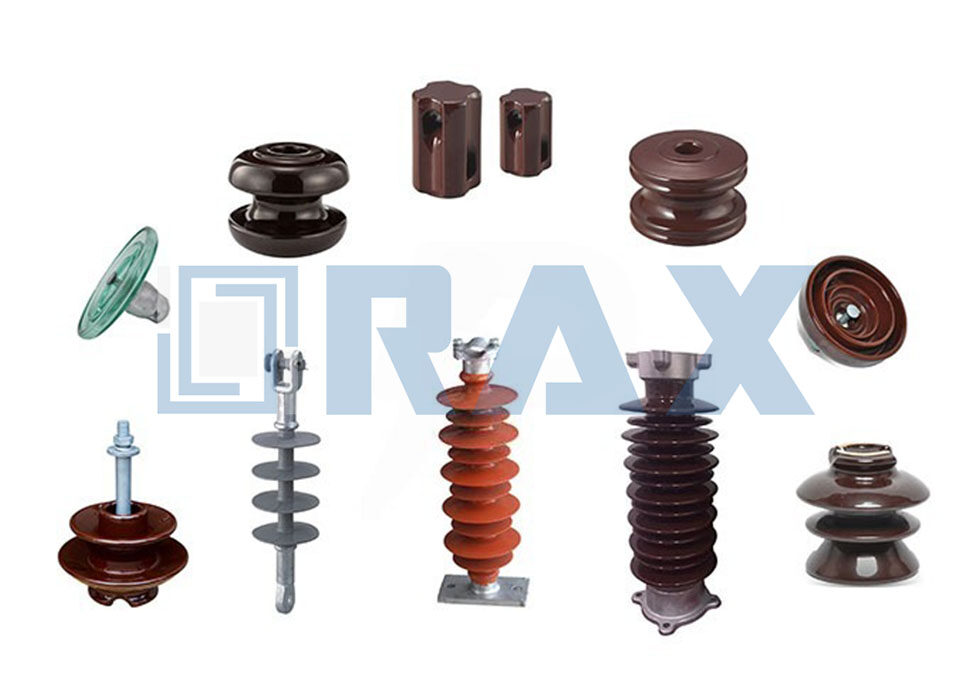
The primary types include suspension insulators for tension towers, tension insulators for dead-end applications, and line post insulators for rigid support. Each configuration is engineered to handle specific mechanical loads and electrical angles. Selecting the correct type is crucial for optimizing line design and stability.
What is the expected service life?
Modern composite insulators are designed for a service life of 25 to 30 years in outdoor environments. Advanced HTV silicone rubber formulations ensure the sheds resist aging while recovering hydrophobicity over time. Properly manufactured units with robust sealing technologies can easily meet or exceed this lifespan.