
The ceramic vs glass insulators debate often boils down to upfront cost versus long-term reliability, a tension every EPC procurement manager knows all too well. While both materials serve the same critical function—insulating high-voltage transmission lines—their behavior under stress and over time reveals stark differences that can make or break a project’s lifecycle performance.
Field data shows that after 15 to 20 years of service, some ceramic insulators exhibit degraded electromechanical strength below original factory specifications, whereas glass maintains its dielectric properties with minimal aging—electrical strength generally remains unchanged throughout its operational life. This isn’t just theoretical; it’s the kind of detail that surfaces during audits when a grid fails under load or customs flags non-compliant aging components.
This article cuts through the noise to compare ceramic and glass across mechanical resilience, electrical performance, inspection ease, and pollution handling—factors that directly impact total cost of ownership, delivery timelines, and IEC compliance. You’ll walk away knowing not just what each material does, but which one aligns with your project’s risk tolerance and longevity goals.
What Makes Ceramic and Glass Insulators Different?
The fundamental divergence between ceramic and glass insulators lies in their fracture behavior, visual inspection requirements, and specific voltage application profiles.
Visual Inspection Capabilities and Failure Modes
The most significant operational distinction involves how failures manifest during live line maintenance. Glass insulators utilize tempered silicon dioxide which creates a state of internal compressive stress. When subjected to excessive mechanical load or thermal shock that exceeds this limit, they undergo catastrophic self-shattering into small fragments. This characteristic provides immediate visual confirmation of failure without requiring specialized equipment, allowing for rapid replacement protocols.
Ceramic (porcelain) insulators consist of a clay-based matrix fired at extreme temperatures. While these possess proven century-long stability and high resistance to weathering, their opacity presents a critical constraint. Internal defects such as hairline cracks or core rod corrosion remain hidden from standard visual checks. Detecting these issues typically requires ultrasonic testing or X-ray inspections, adding complexity and cost to routine maintenance cycles compared to the transparent nature of glass units.
Electrical Properties and Physical Characteristics
Material density and dielectric properties also dictate physical handling and installation logistics. Glass possesses a higher dielectric constant ranging between 7 and 8, whereas porcelain sits lower around 6 to 6.5. Consequently, for equivalent electrical insulation levels and mechanical strength, glass components can be manufactured with thinner profiles. This results in lighter strings that reduce structural load on supporting poles and towers, potentially lowering foundation costs in high-voltage transmission projects.
Conversely, ceramic materials offer inherent chemical resistance to surface contamination and pollution flashover due to their glazed surface finish. In industrial zones where conductive dust or salt spray is prevalent, the non-hygroscopic nature of porcelain often maintains consistent performance longer than untreated glass surfaces before cleaning cycles are required.
Application Contexts and Cost Efficiency
Utility engineers select based on regional climate patterns and budgetary constraints. Glass insulators are frequently deployed in rural or remote areas where immediate visibility of breakage minimizes outage duration risks and reduces the need for frequent scheduled testing campaigns. Their transparency makes them ideal for lines spanning difficult terrain where access for detailed inspection is limited.
Porcelain remains the preferred choice for heavy-industry corridors or coastal regions exposed to corrosive atmospheres. The robustness of the ceramic body against scratching and erosion extends service life in abrasive environments. Additionally, while raw material costs may vary by region, the reduced need for secondary diagnostic tools often offsets the higher initial unit price over the asset lifecycle.
| Feature | Specification | Advantage |
|---|---|---|
| Material Composition | Ceramic (Porcelain) vs. Tempered Glass | Glass offers higher tensile strength (1-2x porcelain); ceramic provides proven century-long stability |
| Visual Inspection Capability | Transparent (Glass) vs. Opaque (Ceramic) | Glass allows instant visual detection of cracks; ceramic requires specialized equipment for internal defect detection |
| Mechanical Strength | High Compressive Strength (Both Materials) | Both materials exhibit excellent compressive load bearing capacity for structural integrity |
| Environmental Resistance | Glazed Surface Finish (Both Materials) | Glazing on both types prevents moisture ingress and provides excellent pollution flashover performance |
| Failure Mode Characteristics | Self-shattering (Glass) vs. Cracking (Ceramic) | Glass shatters visibly when compromised, enabling immediate replacement; ceramic may develop hairline cracks without total failure |
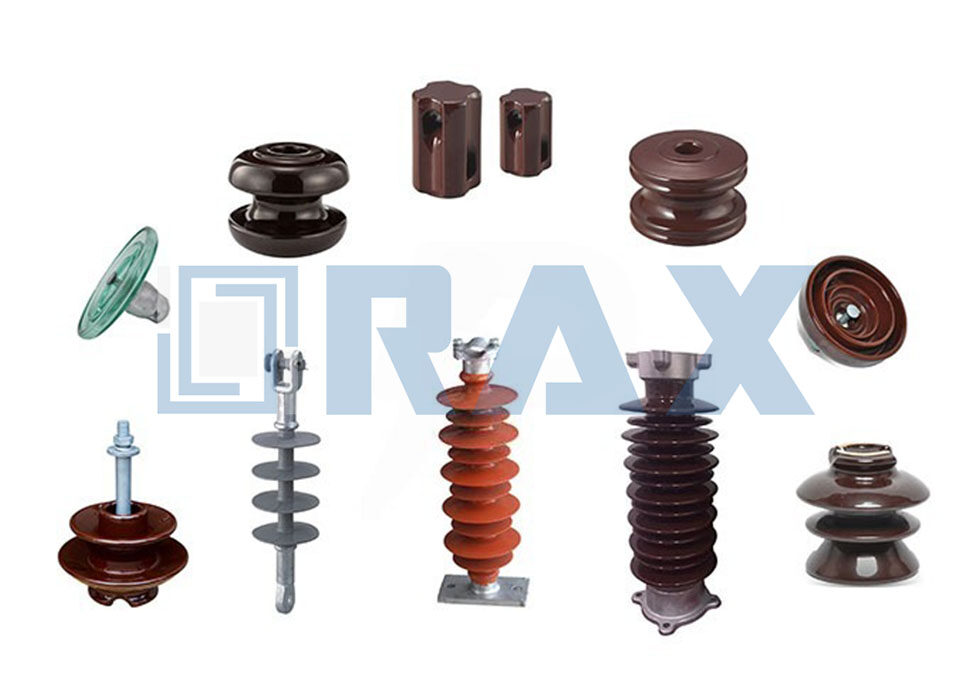
Conclusion
Selecting the right material for your project is crucial to ensuring long-term reliability and avoiding costly downtime. Our production lines specialize in high-strength porcelain station posts and transmission bells built to meet these demanding requirements.
Choosing the correct material safeguards your project against expensive downtime later. Our production lines focus specifically on high-strength porcelain station posts and transmission bells built to handle severe environmental loads. Share your specific voltage requirements and dimensions with our engineering team. We will conduct a thorough technical review to ensure your specification aligns with your infrastructure goals.
Frequently Asked Questions
Which has higher tensile strength: glass or ceramic?
Tempered glass typically exhibits 1-2 times higher tensile strength than porcelain ceramic. This mechanical advantage makes glass suitable for high-tension spans where load-bearing capacity is critical.
Do glass insulators perform well under lightning strikes?
Yes, glass insulators offer excellent dielectric strength and flashover performance during lightning events. Their uniform material properties ensure consistent electrical insulation even under transient overvoltages.
How to detect broken glass insulators?
Glass insulators are self-destructive; when cracked, they shatter completely, making visual detection immediate. This transparency simplifies routine inspections compared to opaque ceramic types that may hide internal flaws.
Which insulator handles coastal pollution better?
Ceramic insulators with hydrophobic coatings often outperform standard glass in salt fog and industrial pollution zones. However, specially glazed glass variants can also achieve strong pollution resistance through surface treatment.
Is there a cost difference between glass and ceramic?
Glass often has lower initial CAPEX due to simpler manufacturing, while ceramic may offer longer lifecycle value in harsh environments. Total cost depends on installation, inspection frequency, and replacement intervals over decades.
Can composite insulators replace glass entirely?
Composites offer advantages like lightweight and high tensile strength but lack the self-indicating failure mode of glass. In critical transmission lines, glass remains preferred for predictable maintenance cycles and long-term stability.