
Picture the morning patrol on a 115 kV line outside town. Older spans still carry strings of brown porcelain discs, while newer towers carry slim grey rods with a few deep fins. That slim rod is a polymer insulator, and it has quietly become the default on many new overhead lines.
RaxPower has manufactured pole line hardware since 2003, and the questions reaching our engineering desk have shifted from whether to switch toward how to read the datasheet. This guide gives engineers who are new to the product a working mental model. It covers the terminology, the three-part anatomy, the main types, the governing standards, and a first-pass selection sequence.
What Counts as a Polymer Insulator
Ask a supplier for a composite insulator and you will be shown the same grey rod. The two names describe one product family: a load-bearing core of glass fibres in a resin matrix, a silicone rubber housing with weather sheds, and metal end fittings. IEC 61109:2025, the reference standard for suspension and tension forms, defines exactly that construction for AC systems above 1,000 V.
The word polymer points at the housing material, not at a separate design. Standards bodies treat the names as one product, so the name on the datasheet and the name in the test report describe the same unit. Buying decisions get simpler once the labels stop competing.
That simplicity hides one dependency: the three parts only work as a system. A good housing cannot rescue an undersized core, and a strong core is wasted if the housing bonds poorly. Every purchase order is really a vote on how well those parts were engineered together.
Three Parts, Three Separate Jobs
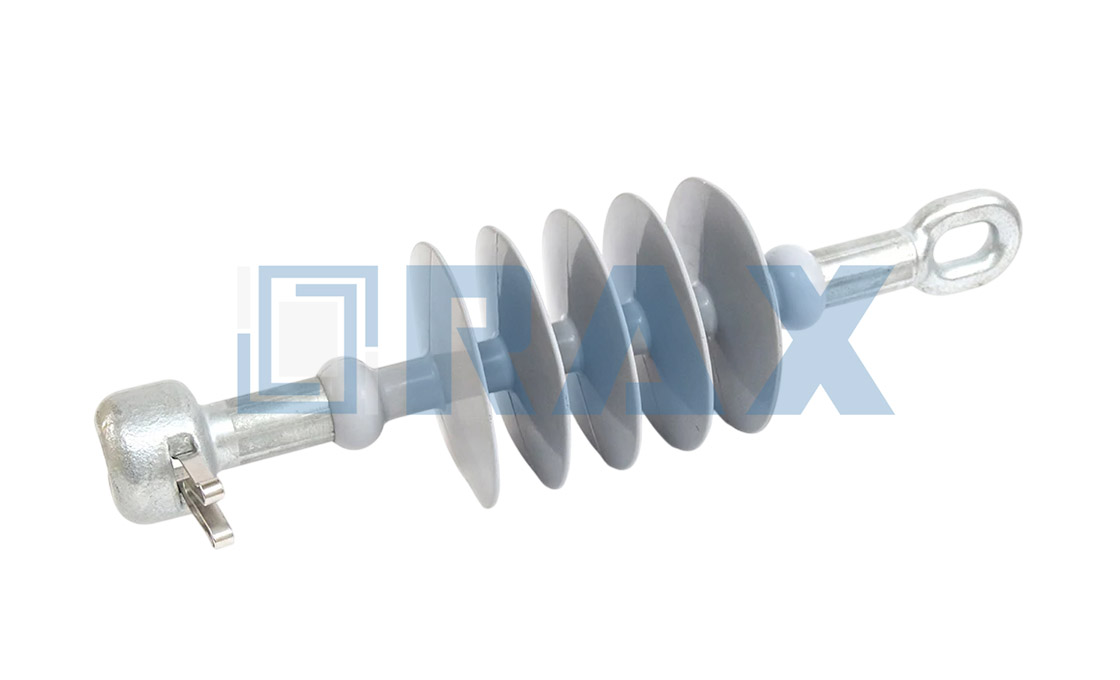
The construction splits duties the way you would divide a crew: one part faces the weather, one part carries the load, and the fittings tie the two together. The silicone rubber housing, shaped into sheds, sheds rain and keeps pollution away from the core. The fiberglass core carries every newton of mechanical load. The aluminum alloy end fittings transfer that load between the tower, the conductor hardware, and the rod.
Each boundary between parts is a designed interface rather than an afterthought. The housing must bond to the core without voids, and the fittings must grip the rod without crushing it. Those interfaces are what the IEC test groups stress, which is why they deserve attention at ordering time.
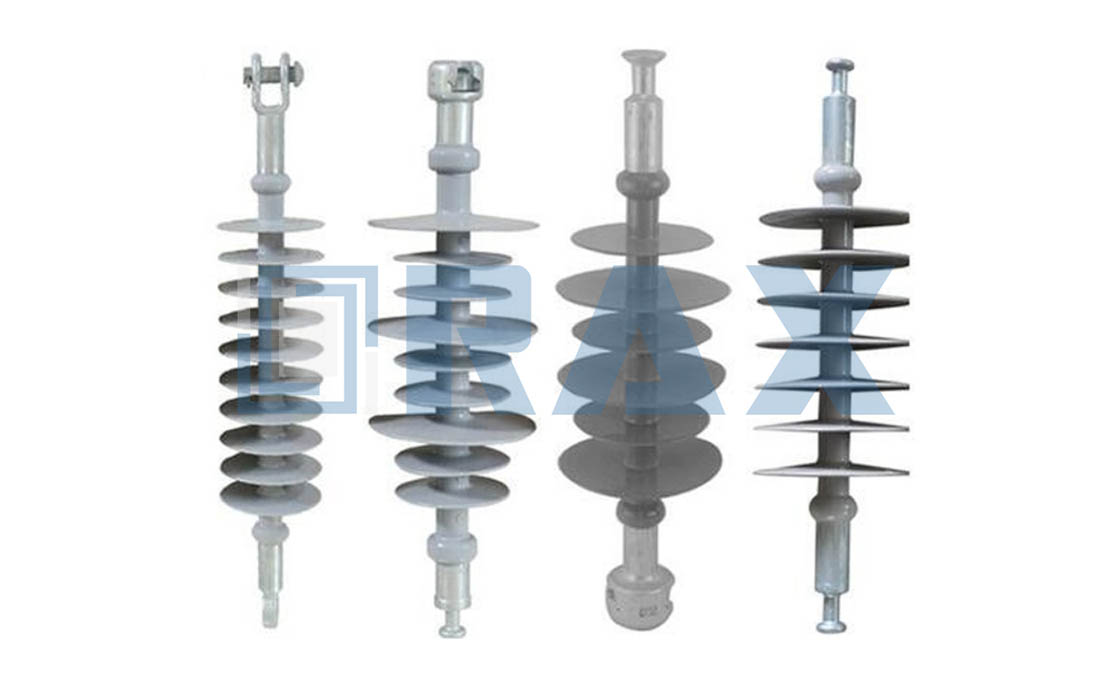
Shed profiles earn a second look because they set the leakage path. Alternating large and small diameters stretch the creepage distance without lengthening the unit, and deeper sheds buy margin in dirty air. The family shown below illustrates how much the profiles and fittings differ across a single product range.
Silicone Rubber Housing: The Weather-Facing Skin
When coastal fog settles on a line at dawn, the surface tells the story. Water beads and rolls off silicone rubber instead of spreading into a continuous film. Without that wet film, leakage current has little path to follow along the housing.
Silicone rubber also offers hydrophobicity transfer, where the water-repellent effect migrates into the pollution layer itself and keeps beading alive between rains. Alternating shed diameters stretch the creepage path without lengthening the unit. In our experience, one supplier question sorts faster than any brochure. Ask how the housing is formed over the core, because reputable makers publish whole-injection moulding or integral vulcanization for their composite insulator lines.
Housing compounds also face the test bench before any tower does. Laboratory regimes check resistance to tracking and erosion, the two degradation modes that surface currents can drive on an outdoor surface. A housing that clears those checks is what turns the hydrophobic advantage into a durable one.
The Fiberglass Core: A Load-Bearing Spine
The core is a bundle of glass fibres, commonly E-glass or ECR grades, impregnated with resin and cured into a single rod. One established manufacturer’s published composite insulator data quotes an ECR fibreglass-reinforced epoxy rod with tensile strength above 1,200 MPa. Numbers like that explain how a slim rod holds a dead-end string at full line tension.
Fittings are crimped onto the rod under controlled pressure, which compresses metal onto glass without drilling the core. The crimp zone is the most engineered few centimetres of the whole unit. IEC 61109 separates its tests into design, type and routine groups, and these load paths sit at the centre of them.
Core diameter scales with the duty. Higher ratings use thicker rods and correspondingly larger fittings, which is why datasheets list coupling sizes beside the load columns. Reading those two columns together prevents most mismatch orders before they happen.
Main Polymer Insulator Types You Will Meet
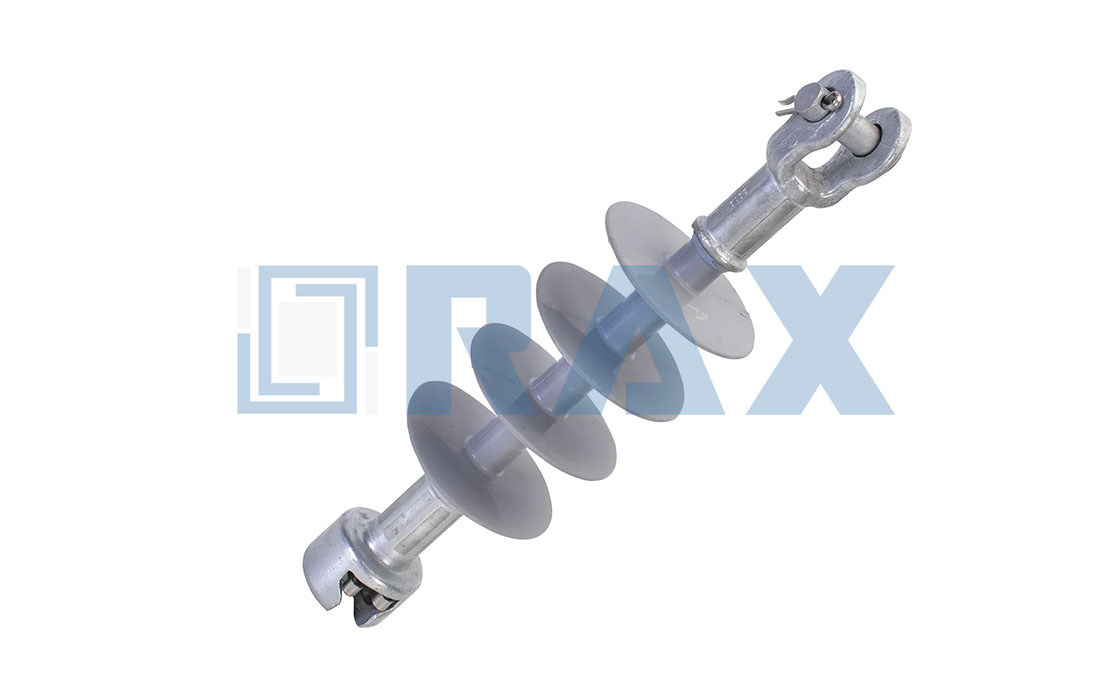
Suspension and tension insulators are the forms most line engineers meet first. A porcelain string reaches higher voltages by stacking discs, while a polymer unit does the same job with one solid core, which is why replacement lengths differ. IEC 61109:2025 governs both forms.
Line post insulators hold the conductor away from the structure under bending loads. IEC 61952-1:2019 specifies definitions, end fittings and designations for them, including coupling dimensions that keep brands interchangeable. Hollow composite insulators wrap the same idea into a tube for bushings, instrument transformers and switchgear, a form covered by IEC 61462:2023 for pressurized and unpressurized service. Composite pin types round out the distribution range near 33 kV and below, where pin construction has always been at home.
Every form answers a different mechanical question. A string hangs, a post bends, a hollow tube wraps equipment, and a pin cantilevers a conductor at low voltage. Naming the load case first and the form second keeps the catalogue pages turning in the right order.
The Standards Map for Polymer Insulators
Four IEC documents cover most purchase orders, and they divide cleanly by product form. The table below is the map worth keeping beside a datasheet. North American projects add the ANSI/NEMA C29 series, where C29.11-2020 supplies test methods for composite insulators and C29.12 covers the suspension product itself.
| Product form | IEC standard | Scope highlights |
|---|---|---|
| Suspension and tension strings | IEC 61109:2025 | Definitions, test methods, acceptance criteria; AC above 1,000 V |
| Line post | IEC 61952-1:2019 | Definitions, end fittings, designations, coupling dimensions |
| Hollow core apparatus | IEC 61462:2023 | Pressurized and unpressurized; AC above 1,000 V, DC above 1,500 V |
| General baseline | IEC 62217:2025 | Polymeric insulators, solid and hollow core, indoor and outdoor |
For pollution, the IEC/TS 60815 series splits selection guidance by insulator family, with Part 3 dedicated to composite insulators on AC systems. Its site severity classes run from very light to very heavy, and the creepage you order follows from that class.
Where Engineers Deploy Polymer Insulators Today
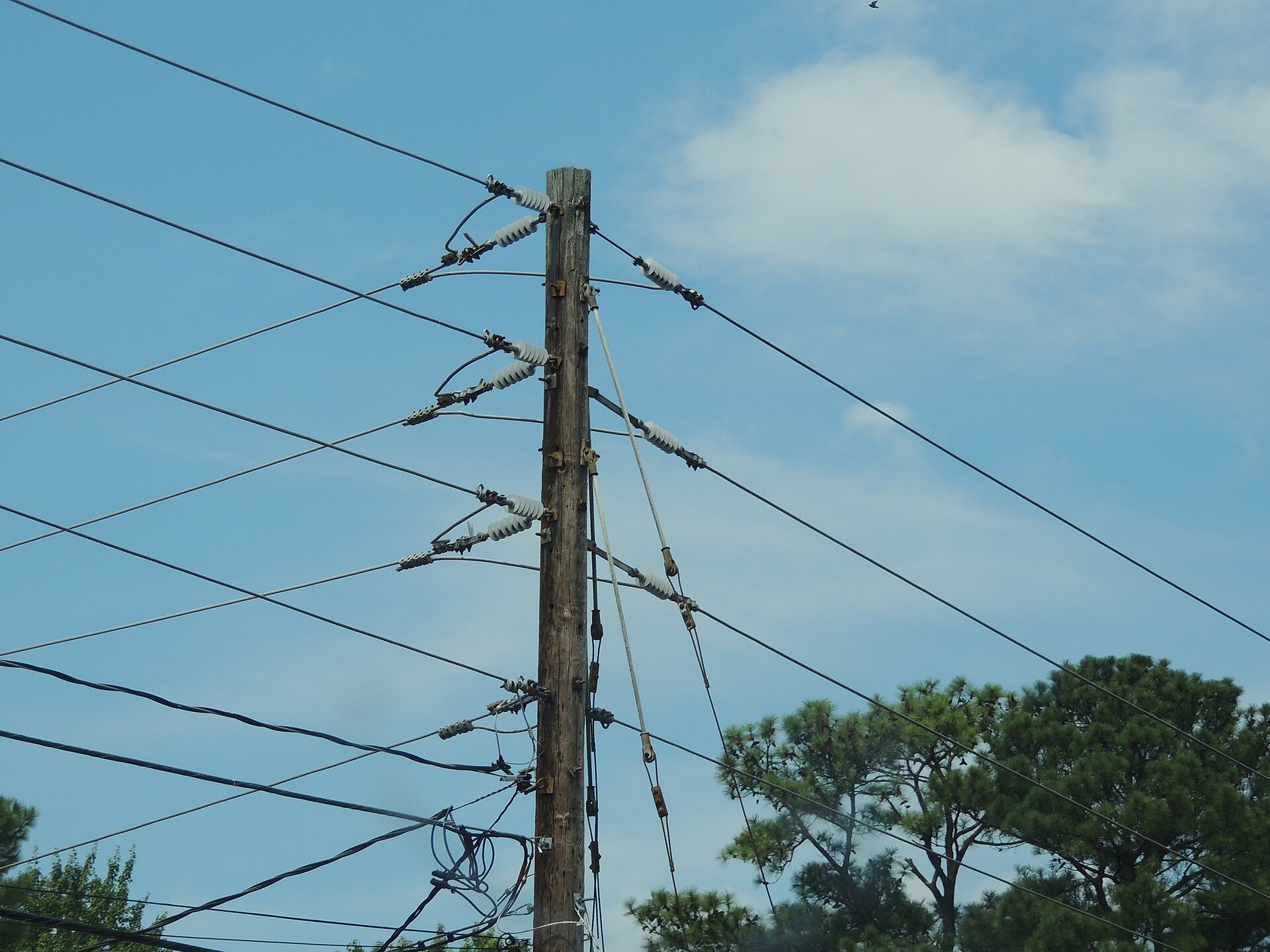
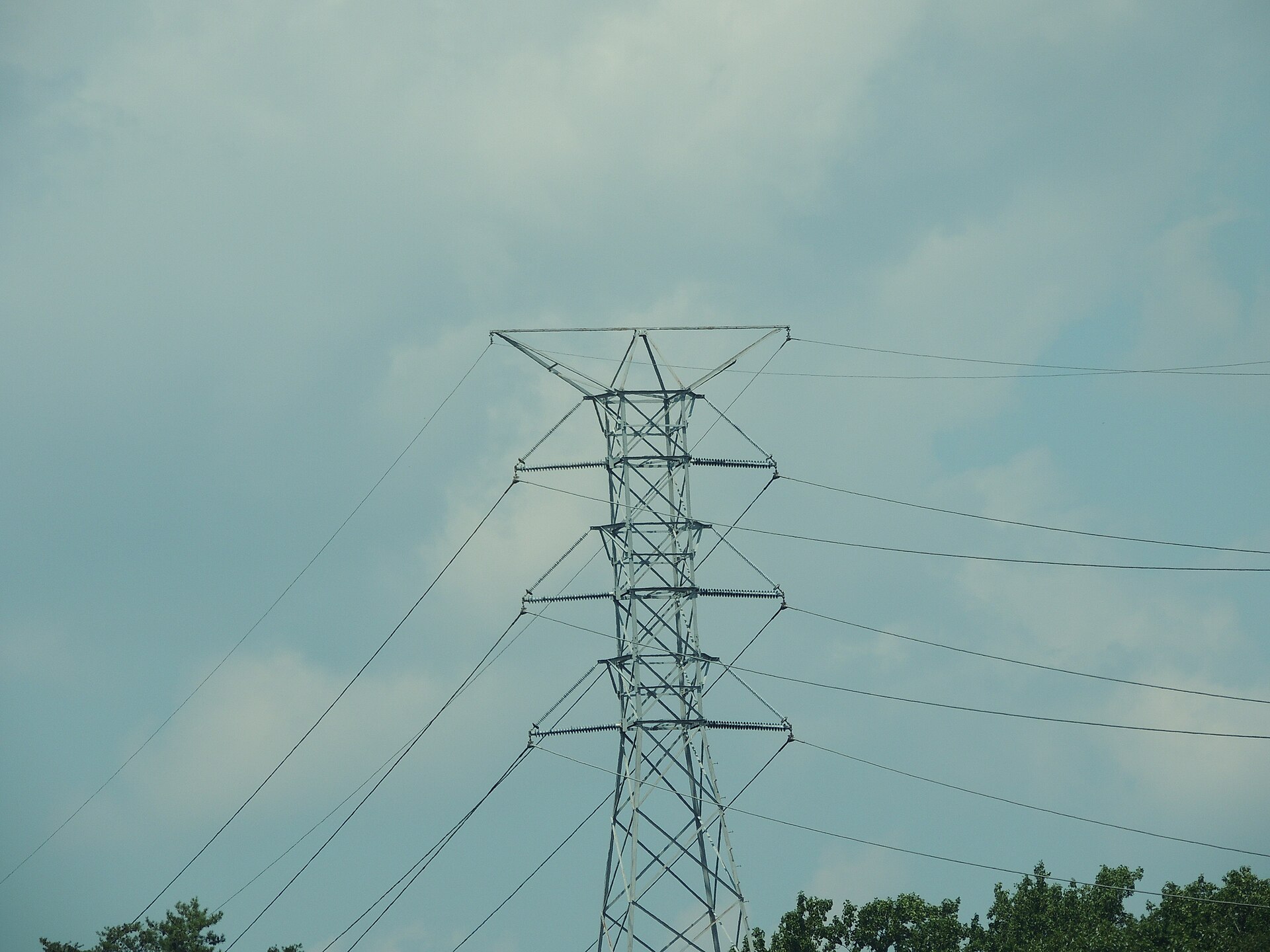
Transmission rebuilds were the early adopters. The photograph below shows a 115 kV line re-insulated end to end with polymer line posts, and utility line crews keep repeating that pattern as structures come up for renewal.
Distribution lines apply the same technology in smaller posts and pins, where lighter parts speed up pole work. Manufacturers also cite better resistance to impact and vandalism, which matters on vulnerable routes through towns and fields. Pollution-heavy corridors along coastlines, industrial zones and deserts put the hydrophobic housing where it earns its keep. Inside substations, hollow composite forms become housings for instrument transformers, bushings and arresters, which is the service IEC 61462 was written for.
Selecting a Polymer Insulator: The First Pass
Run the checks below in order and the shortlist builds itself. Each step narrows the field before the next one starts.
- Fix the electrical basics first: system voltage, insulation coordination and the lightning impulse level for the line.
- Classify the pollution environment, then let that class drive the creepage requirement, using the composite-specific method in IEC/TS 60815-3.
- Match the mechanical rating to the worst permanent load rather than the peak; published failing loads for transmission units start near 70 kN and pass 500 kN.
- Check the coupling hardware: ball and socket sizes for strings, and the standardized coupling dimensions for line posts under IEC 61952-1.
- Compare like lengths, because a polymer unit reaches a voltage class in a shorter body than a disc string, so clearances and fittings may need a second look.
Two habits make the sequence stick. Write the pollution class down before opening any catalogue, because creepage chosen by habit tends to follow the last project instead of this one. Then ask for the test summary early, so the acceptance criteria are agreed before the order rather than after delivery.
A row from one published data sheet shows how the numbers pair up in practice. The listed units pair 300 mm of creepage with 70 kN at 11 kV, and 580 mm at 33 kV. Farther up, 66 kV pairs 1,000 mm with 120 kN, and 110 kV carries 1,800 mm of creepage. The full table sits on the published composite insulator page, and heavier variants reach line ratings up to 1,000 kV with failing loads past 500 kN.
Handling Habits That Protect the Housing
Porcelain shrugs off a hammer blow; a polymer housing remembers every cut. Keep units in their packaging until assembly, and never drag them over rock, tower steel or ladder rungs. Lift by the end fittings, since the core rather than the skin is built for load.
Walk the housing once under good light before installation. A shallow surface mark is cosmetic, while a cut that reaches the core fibre is grounds for rejection under the acceptance criteria in the IEC documents. Photograph anything doubtful and settle it with the manufacturer before the string leaves the ground.
Storage asks for the same discipline: closed crates, no hardware stacked on top, and sheds kept away from sharp edges. Most units arrive ready to hang, and most field damage happens in the last ten metres before the string. Treating those metres with respect costs nothing on the schedule.
Putting the Polymer Guide to Work
The whole subject fits in one hand. There is a silicone rubber skin for weather, a fiberglass spine for load, aluminum alloy fittings for the connection, and one IEC document per product form. RaxPower has manufactured pole line hardware since 2003, long enough to watch these insulators grow from novelty to default on new construction. Keep the standards map and the selection sequence close, and the next datasheet reads like plain language.
Frequently Asked Questions About Polymer Insulators
Is a polymer insulator the same as a composite insulator?
Yes. Both names describe one construction: a fiberglass core, a silicone rubber housing and metal end fittings. IEC 61109 covers it under the composite name, while many suppliers write polymer because the housing is the material you see.
Which part of a polymer insulator carries the line load?
The fiberglass core carries the full mechanical load. The silicone rubber housing handles weather and electrical stress but no tension. End fittings transfer the core load into the tower or conductor hardware through a crimped connection.
Why does rain bead on a polymer housing instead of filming?
Silicone rubber is hydrophobic, so water forms droplets that roll away instead of a continuous film. The effect can even migrate into a pollution layer, keeping leakage currents low between rains. Ceramics wet uniformly, so they lean on longer creepage for the same result.
Do polymer units drop into towers built for porcelain strings?
Often yes, but not one-for-one by length. A polymer unit reaches the same voltage class in a shorter body than a disc string, so verify coupling size, clearances and fitting geometry before ordering the replacement.
Are polymer insulators used on HVDC lines?
Yes, they are. IEC 62217 and IEC 61462 both scope polymeric insulators for DC systems above 1,500 V, and DC projects use composite strings and hollow housings. Because DC stress behaves differently on pollution, dimensioning deserves specialist review.