
Ask a line crew what holds ADSS cable on the pole, and most answers start and end with clamps. The accurate answer is a system of six fitting families that divide the mechanical work between them. The cable rests at mid-span supports, gets anchored at every dead end, rubs against hardware, and hums in the wind. Picture the route as a chain of jobs, because each job has a fitting family designed for it.
Since 2003, RaxPower has manufactured pole line and overhead line hardware for utilities, contractors and distributors. Its 170+ specialists work to an ISO 9001 quality system, and hot forging gives the fittings their rated strength. The catalog also covers OEM and custom-engineered pieces built to customer drawings. The type-by-type breakdown below maps the main types of ADSS cable fittings family by family. Each section covers construction, materials, how the fitting grips the cable, and the variables that set its size.
Six Fitting Families That Carry an ADSS Span
Anyone comparing the types of ADSS cable fittings should start with the mechanical job each family does. Every fitting on a structure belongs to one of six families, and each answers one mechanical question. The table below is the map for the rest of this article.
| Fitting family | Mechanical job | Where it sits |
|---|---|---|
| Suspension assembly | Supports vertical weight, no longitudinal grip | Tangent (straight) structures |
| Tension / dead-end set | Anchors full span tension | Terminations, corners, angle structures |
| Armor rods | Spreads clamp pressure, shields the sheath | Under clamps and dampers |
| Vibration dampers | Dissipate wind-induced vibration energy | Near suspension and dead-end points |
| Attachment and link hardware | Connects clamp assembly to structure | Between fitting and pole or tower |
| Closures and down-lead clamps | Protect splices, guide drop runs | Along the route and on the pole |
The split matters because the two clamp families carry different loads. A suspension assembly holds the cable’s weight; a tension set wrestles the full longitudinal pull of the span. Mixing up those two loads the wrong hardware against the wrong force, so the difference is worth pinning down before any kit is quoted.
Kits for ADSS differ from OPGW kits in cable surface and electrical exposure, even though the family logic is shared. The same six-family view applies to any ADSS OPGW fitting package, with minor material swaps.
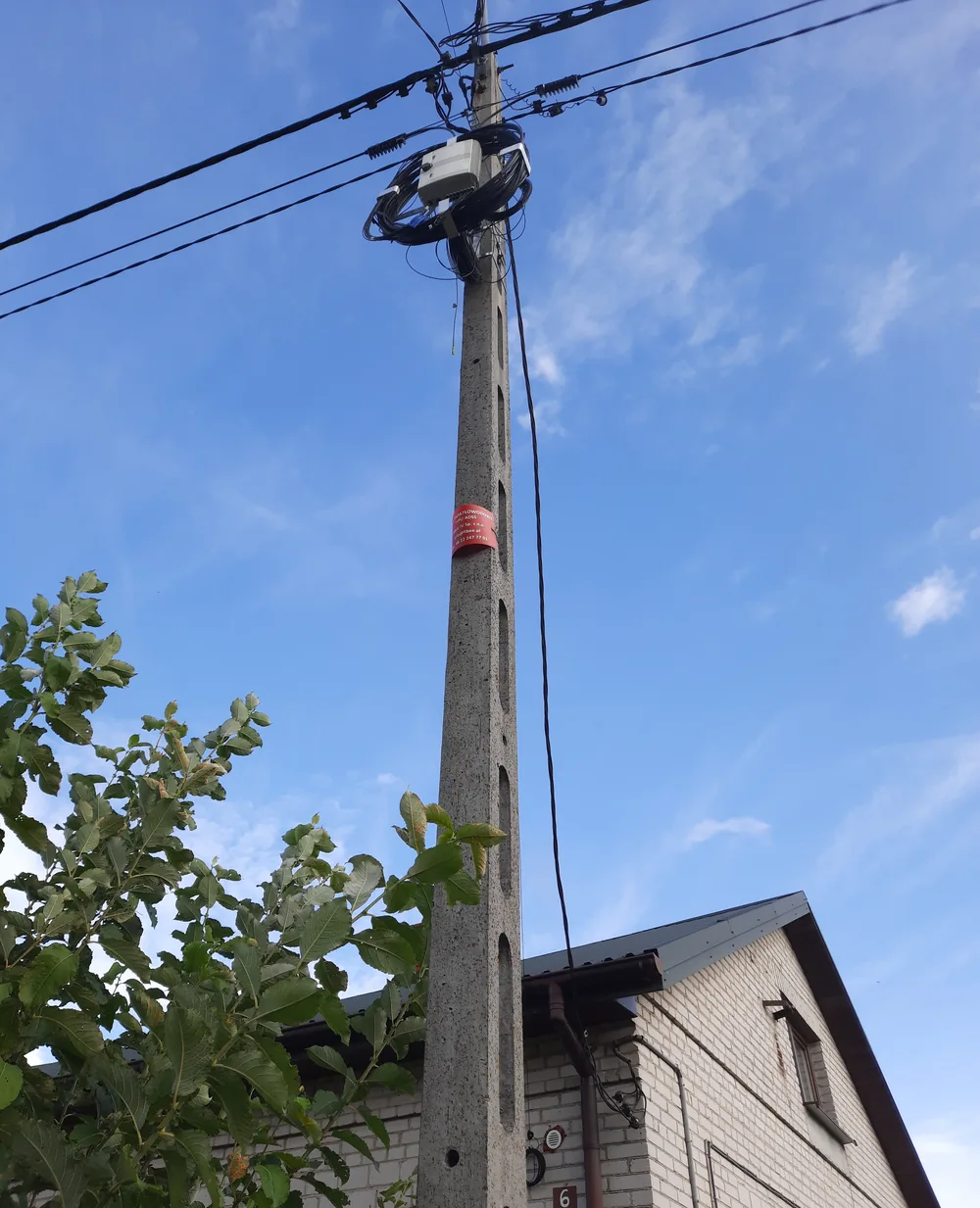
Suspension Assemblies: Preformed Rods That Cradle the Cable
What the set contains
A preformed suspension set has four parts: an inner rod layer, an outer rod layer, elastomer inserts, and a housing that hangs from the linkage. The rods wrap helically around the cable, so grip pressure spreads over a long contact area instead of one bolt point. Published ratings put the holding force at only 10-20% of the cable’s rated tensile strength, which is intentional. The set is not supposed to clamp hard; it cradles.
Manufacturers rate preformed suspension sets for line angles up to about 30 degrees. The smooth, rod-wrapped profile also keeps the electric field around the cable even, which lowers corona discharge on high-voltage routes.
The J-hook and tangent-style alternatives
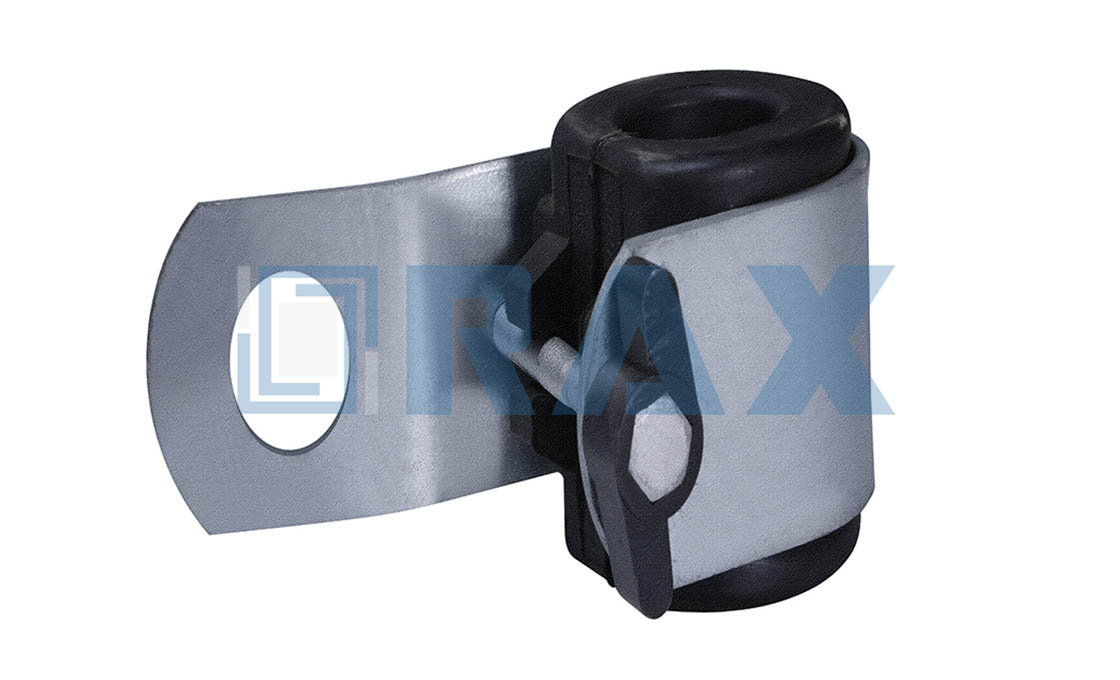
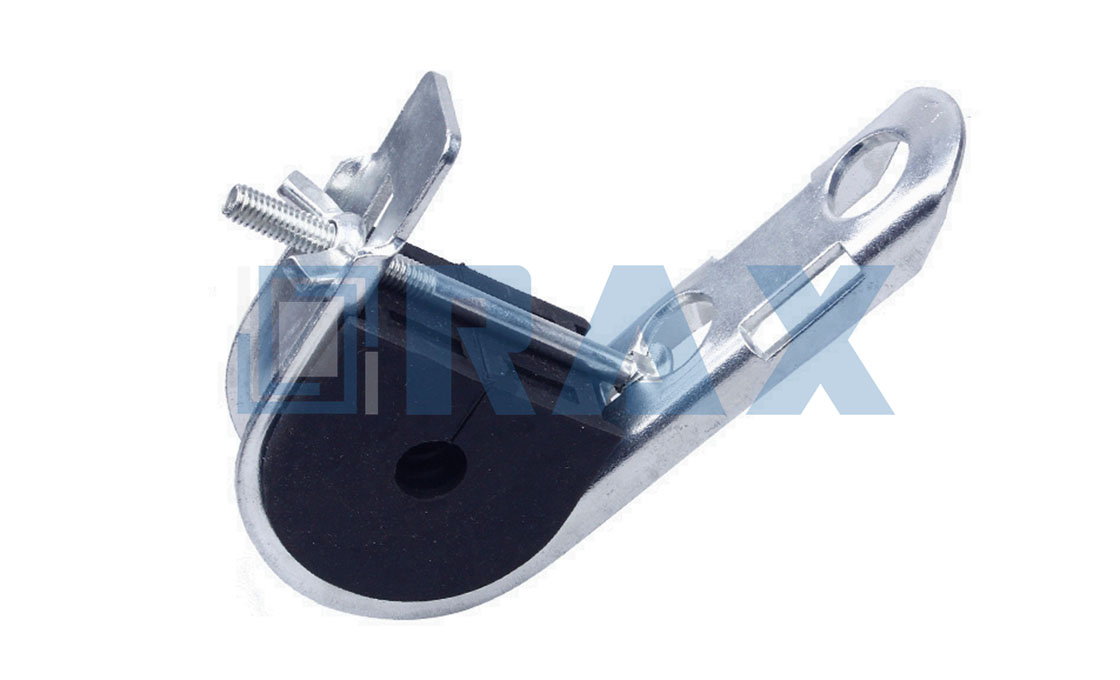
Where spans are short and loads are light, a formed J-hook body in aluminum alloy with a UV-resistant elastomer insert does the same job with fewer parts. The cable rests in the insert, the insert allows slight sliding under temperature and wind movement, and the vertical load passes into the pole. Non-metallic contact surfaces keep the dielectric sheath isolated from the structure.
For short urban runs under 100 m, a simple tangent clamp — shell, rubber insert, bolt hardware — is the lightest straight-line support of the family. One production example of this hardware class is the ADSS suspension clamp, which shows how housing, insert and linkage arrive as a matched assembly.
Tension and Dead-End Sets Built for Full Span Load
At a dead end, the fitting must hold the entire longitudinal tension of the span, not just the weight of the cable. Where a suspension set cradles, a tension set bites, the way you would wrap a rope around a post before tying it off. When the line turns hard at a river crossing, the same set also carries the resultant pull of that turn.
A preformed tension set stacks two helical rod layers over the cable and finishes in a pulling ring or loop. Inner rods match the cable diameter; outer rods add grip length and stiffness. Manufacturer data credits these sets with holding at least 95% of the cable’s rated tensile strength, without local stress concentrations. That is why they anchor terminations, tensioning structures and corner poles.
Short-span and single-layer variants
Single-layer tension clamps compress the concept into one wrapped layer plus a pulling ring and U-shaped ring, rated for spans of roughly 50-200 m. Their preformed wires come in aluminum-clad steel or aluminum alloy, matched to the cable jacket and the span exposure.
Armor Rods: The Sacrificial Layer Under Every Clamp
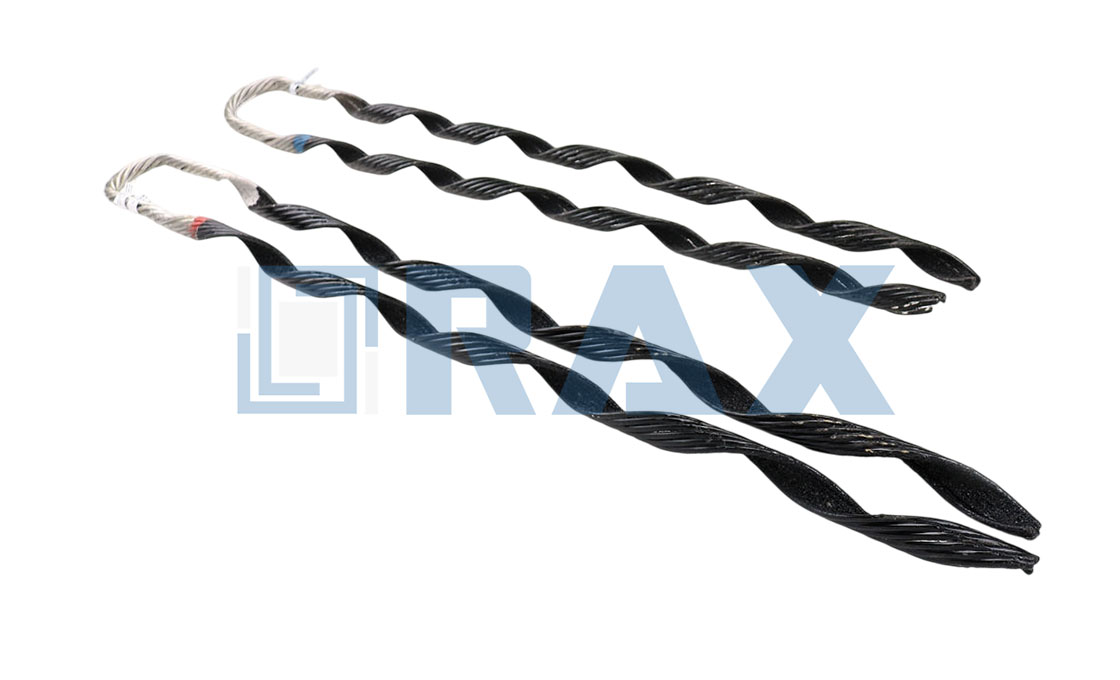
Armor rods are helical rods of aluminum alloy or aluminum-clad steel wrapped directly over the cable at support points. They are the first thing to touch the sheath, and the first thing to wear out, which is exactly their job.
Three functions justify the extra line item:
- They spread clamp pressure over a longer contact area, so the sheath sees compression instead of point loads.
- They add bending stiffness at the support, where flex fatigue concentrates.
- They set the measuring datum for vibration dampers, which are placed from the end of the rod rather than from the clamp bolt.
In our experience, skipping armor rods to save one part number is the fastest route to a sheath-damage claim two winters later. Armor rods belong to the broader formed wire family that also covers guy grips and dead-end grips for conductor and earth-wire work.
Vibration Dampers: Spiral and Stockbridge Designs Compared
Smooth laminar wind at roughly 1-7 m/s makes an ADSS cable shed vortices and oscillate in the 3-150 Hz band. Left unchecked, this aeolian vibration is a leading cause of cable fatigue failure. Dampers exist to take that energy out of the cable before it concentrates at hardware edges.
Spiral dampers
A spiral vibration damper is a helix of weather-resistant, non-corrosive plastic whose small gripping section holds the cable without crushing it. It damps broadly across frequencies but shallowly, and it forgives placement error. Placement rules still apply: about one hand-width (roughly 5 in) from the ends of armor rods or other hardware, and up to three units nested in tandem. Model ranges cover cable diameters from about 6.35 mm to 31.75 mm, color-coded per range, as documented on AFL’s spiral vibration damper for ADSS cable page.
Stockbridge dampers
A Stockbridge damper hangs two masses on a short flexible messenger cable clamped at its middle. It damps deeply but only near its tuned frequency, so the unit must sit close to a vibration antinode rather than a node. TTI Fiber’s ADSS vibration damper spacing analysis is the clearest engineering write-up of that positioning problem.
Working damper counts by span: below roughly 200 m, usually none, because cable self-damping is enough; 200-400 m, two dampers, one per end; 400-700 m, four; beyond about 700 m, six or more plus a dedicated vibration study.
Both styles sit inside the wider damper and spacer program that also covers spacers and dampers for bundled conductor lines.
Pole Attachment and Link Hardware Between Clamp and Structure
None of the clamp families mounts itself. A pole band or bracket adapts the structure, and a short stack of link fittings — ball clevis, socket clevis, flat-eye plates — connects that bracket to the clamp assembly. Wood, concrete and steel poles each take different bands, which is why kit lists start by asking for the structure type.
Link fittings are typically hot-dip galvanized steel, specified for strength, while the clamp bodies above them stay aluminum alloy for low weight and smooth surfaces. Getting that stack right is a fitting-selection task in its own right, not an afterthought.
Splice Closures and Down-Lead Control Along the Route
Wherever two cable ends meet, a splice closure keeps the fusion points dry, organized and re-enterable. Dome closures sit vertically on the pole or in pedestals; in-line (horizontal) closures continue the cable run. The dome closure category covers the vertical style used on most distribution pole routes.
Down-lead clamps are the forgotten half of this family. They guide the cable from overhead down the pole face to the closure or cabinet, holding it without crushing. Because ADSS carries no metallic parts, the down-leg needs no grounding kit — a small labor saving that compounds across hundreds of poles.
Matching Each Fitting to Span, Pole and Voltage
Span length and line geometry pick the clamp family first:
- Under about 100 m on straight runs: tangent clamps and light suspension hardware.
- Roughly 50-200 m with anchors and corners: single-layer tension clamps.
- Longer spans with line angles up to about 30 degrees: full preformed suspension sets.
- Crossings near or above 800 m, or angles of 30-60 degrees: double preformed suspension sets with hanging plate and triangular joint plate.
- Every dead end, at any length: preformed tension sets rated at 95% or more of cable RTS.
Structure type picks the attachment: bands for wood and concrete, bracket kits for steel. Voltage decides the electrical extras. ADSS is fully dielectric, so no grounding hardware rides the cable, but the sheath still lives in an electric field. On lines of 220 kV and above, anti-corona rings trim the field at fitting ends, and cable qualification follows IEEE 1222, the ADSS testing standard for overhead utility lines.
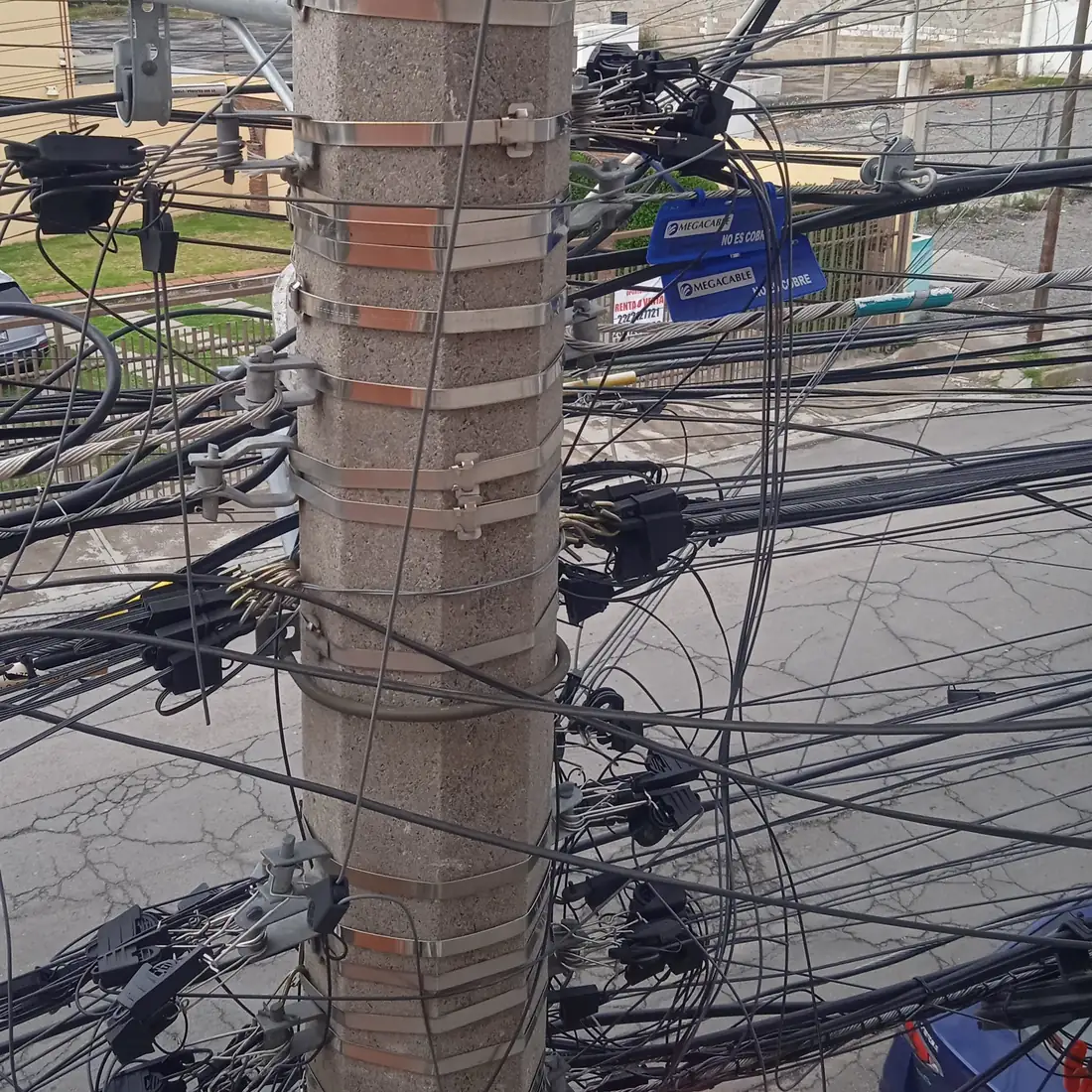
What Goes Into a Complete ADSS Fitting Kit
Procurement teams rarely buy one family at a time; they buy per structure. A kit quoted that way can be checked against the route drawing line by line:
- Tangent structure kit: suspension set or J-hook clamp, armor rods, attachment band, link hardware, and dampers if the span table calls for them.
- Dead-end kit: tension set, armor rods, pole band or anchor bracket, link hardware, and down-lead clamps to the closure.
- Route extras: dome or in-line closures, down-lead clamps, and anti-corona rings where the voltage class demands them.
Check each quoted component against its cable diameter range, its span rating, and the structure it will actually mount on. Those three checks catch most specification mistakes before they leave the desk.
Putting the Six Families Together
Read as a set, the six families describe one load path: tension sets anchor, suspension sets support, armor rods cushion, dampers calm, link hardware connects, and closures finish the route. Treat any single fitting quoted in isolation with suspicion. Whichever of the types of ADSS cable fittings a quote contains, its rating only means something next to the cable diameter, span and structure it serves. RaxPower has manufactured these families as matched overhead-line hardware since 2003, offering them as catalog or custom-engineered pieces under its ISO 9001 quality system.
Frequently Asked Questions
What does an ADSS suspension assembly actually do?
It supports the vertical weight of the cable at intermediate poles without gripping it longitudinally. Preformed rods and elastomer inserts spread the load, hold roughly 10-20% of cable RTS, and suit line angles up to about 30 degrees.
How is a tension (dead-end) fitting different from a suspension fitting?
A tension set anchors the full longitudinal pull of the span at terminations and corners, gripping at 95% or more of cable RTS. A suspension set only carries vertical weight and lets the cable pass through.
Do all ADSS spans need vibration dampers?
No. Spans under roughly 200 m usually rely on the cable’s own damping. Longer runs commonly take two dampers at 200-400 m, four at 400-700 m, and six or more beyond 700 m, plus a vibration study.
Why are armor rods installed under clamps?
They spread clamp pressure, add bending stiffness at the support, and shield the sheath from abrasion. They also provide the datum point from which damper placement is measured.
What hardware attaches ADSS fittings to the pole?
A pole band or bracket adapts the structure, then link fittings such as ball clevises and socket clevises connect it to the clamp assembly. Wood, concrete and steel structures each take different bands.
What is included in a complete ADSS hardware kit?
Typically a suspension or tension set per structure, armor rods, pole bands and link hardware, dampers where the span calls for them, down-lead clamps, and splice closures.