
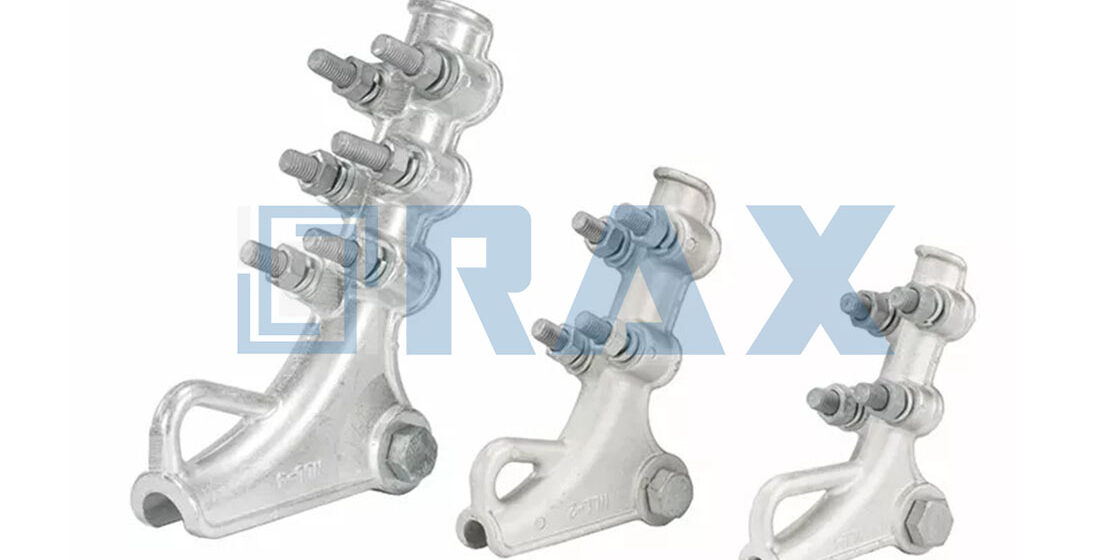
La dilatation thermique compromettra une ligne aérienne plus rapidement que la charge de vent si l'équipement n'est pas correctement dimensionné. Les serre-câbles d'ancrage servent de points fixes qui gèrent cette contrainte, mais s'en remettre à une spécification générique pour les types de serre-câbles d'ancrage expose à des risques de non-conformité lorsque les conditions environnementales changent. Vous avez besoin de matériaux spécifiques pour résister en conditions réelles. Des boîtiers en plastique haute qualité résistant aux UV et en alliage d'aluminium sont essentiels car les polymères standards perdent leur résistance à la traction et deviennent cassants sous une exposition solaire prolongée.
Nous examinerons comment les conceptions à coins diffèrent entre câbles ADSS et câbles aériens groupés, et comment ces choix mécaniques s'intègrent aux systèmes de câbles ZMS kV pour maintenir la tension de ligne. Choisir le bon matériau de boîtier et la bonne géométrie de préhension dès maintenant est le seul moyen de prévenir le vieillissement prématuré et d'éviter le cauchemar logistique des remplacements d'urgence.
Qu'est-ce qu'un collier d'ancrage ?
Un serre-câble d'ancrage est un dispositif de terminaison mécanique conçu pour fixer les extrémités de câble à des points fixes sur un poteau, supportant les charges de tension dues au vent ou à la glace tout en empêchant le glissement.
Définition et rôle du serre-câble d'ancrage
Dans les infrastructures de lignes aériennes, un serre-câble d'ancrage fonctionne comme un composant critique de terminaison morte qui termine mécaniquement les câbles et maintient la tension de ligne. Son objectif principal est de fixer les extrémités des conducteurs — tels que ADSS, fibre optique ou haubans — aux poteaux ou aux traverses, assurant l'intégrité structurelle de l'ensemble du système dans des conditions de stress comme une forte accumulation de glace ou des vitesses de vent élevées. Contrairement au matériel de suspension qui permet le mouvement, les serre-câbles d'ancrage créent un point de terminaison rigide où toutes les forces de tension sont transférées en toute sécurité dans la structure porteuse sans déplacement.
Composants de base des serre-câbles d'ancrage
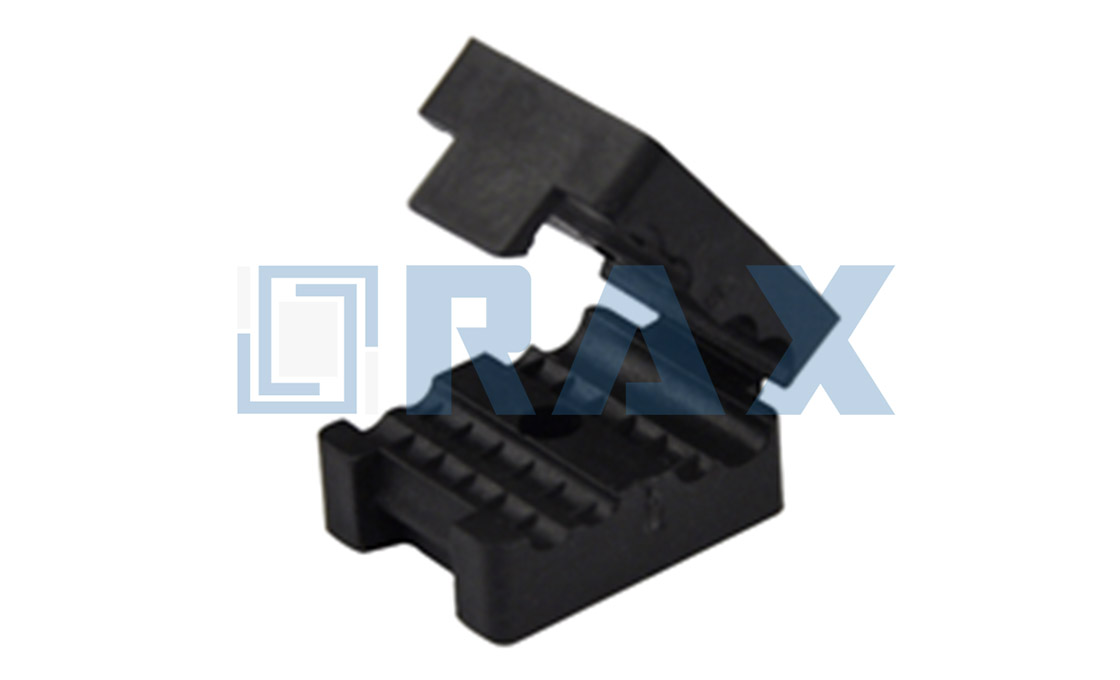
Bien que les conceptions varient selon les besoins d'application, la plupart des serre-câbles d'ancrage modernes se composent de trois éléments principaux : un boîtier qui assure le support structurel, un mécanisme de coin tronconique qui s'engage avec les brins du câble, et du matériel de fixation tel que des boulons ou des goujons pour l'assemblage. Le corps est généralement forgé en acier haute résistance plutôt qu'en métal moulé afin d'éliminer les vides internes qui pourraient compromettre la résistance sous charge extrême. Le coin présente des dents ou rainures usinées avec précision conçues pour s'incruster dans la couche extérieure du câble lorsque la tension augmente, créant une prise auto-renforçante qui se serre progressivement lorsque la force de traction s'accroît au lieu de se desserrer.
Comment les serre-câbles d'ancrage fixent les lignes de poteau
Notre production automatisée garantit une tolérance dimensionnelle stricte de 1 mm sur ces composants, assurant que chaque serre-câble performe de manière constante dans diverses conditions environnementales — des hivers sibériens glacials aux moussons tropicales humides — sans usure prématurée ni risque de glissement. Chez Rax Power, nous tirons parti de notre expertise en forge à chaud pour nos grips de type coin car ce procédé de fabrication oriente mieux la structure des grains métalliques que le moulage, offrant une résistance supérieure à la fatigue lors de cycles répétés de tension. Le mécanisme de fixation fonctionne selon un principe physique simple mais efficace : lorsque la tension tire sur le câble fixé au serre-câble, le coin est forcé plus profondément dans son siège tronconique à l'intérieur du boîtier. Cette action compresse le câble contre la surface de préhension du coin, générant une friction proportionnelle à la charge appliquée. Ce comportement prévisible permet aux ingénieurs de calculer des marges de sécurité exactes lors des phases de conception EPC en toute confiance, sachant que l'équipement performera comme modélisé sous les charges maximales anticipées.
| Caractéristique | Description technique | Spécifications standards | Mécanisme opérationnel | Avantage Rax |
|---|---|---|---|---|
| Fonction principale | Terminaison mécanique du câble conçue pour fixer les extrémités du conducteur et supporter la tension. | Classé pour la capacité de charge maximale contre la contrainte mécanique due au vent, à la glace et à la contraction thermique. | Fixe les câbles à des points fixes pour empêcher le glissement et maintenir la tension de ligne. | Les grips à coin forgés à chaud tirent parti d'une expertise avancée pour une capacité de charge maximale par rapport au moulage. |
| Mécanisme de verrouillage | Système auto-resserrant qui renforce la prise lorsque la charge mécanique augmente. | Assure une force de serrage automatique dépendante de la charge avec zéro glissement sous haute tension. | Le coin tronconique coulisse dans le boîtier pour comprimer et verrouiller le câble. | Une machinerie automatisée de précision garantit une tolérance dimensionnelle stricte de 1 mm sur les composants en acier. |
| Finition protectrice | Revêtement protecteur essentiel pour la longévité des infrastructures utilitaires extérieures. | Compliant with ISO 1461; mean coating thickness exceeding 85 microns. | Hot-dip galvanizing provides a smooth, bright finish against environmental stress. | Offers superior defense against UV exposure and harsh environmental stress conditions. |
| Assurance qualité | Verification processes ensuring structural integrity and safety standards. | Rigorous load testing and gauge testing conducted per CEI 120 standards. | Double-review protocol monitoring every stage of production. | 100% product verification executed by a dedicated QC team with full SGS certification. |
| Application Range | Versatile anchoring solutions for power distribution and telecom networks. | Compatible with LV-ABC, ADSS, Guy Wires, and fiber optic cables. | Incorporates specialized preformed grips and high-tensile fasteners. | Backed by 21 years of global export experience supplying critical utility infrastructure. |
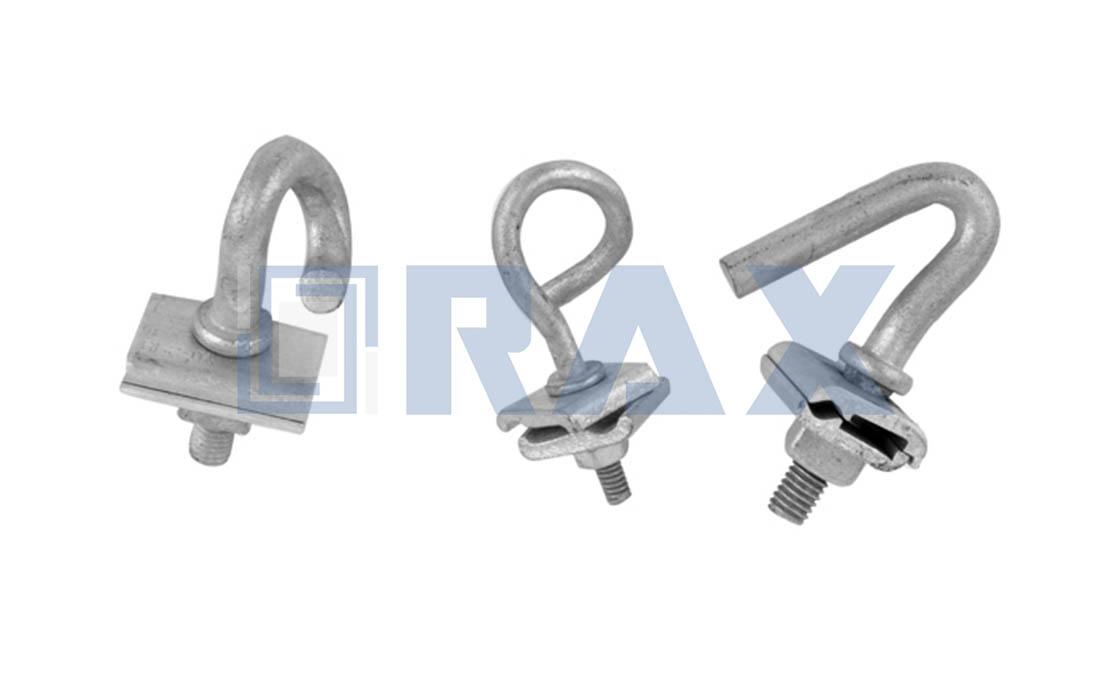
Types de serre-câbles d'ancrage et leur fonctionnement
Wedge-type and compression anchor clamps are the two dominant mechanical classes in pole line hardware, distinguished by their locking mechanisms and primary function in securing conductors or guy wires.
Anchor clamps function as critical termination points in overhead power transmission and distribution systems, transferring tensile loads from cables to supporting structures. The selection between clamp types depends primarily on whether the installation requires permanent fixation with minimal maintenance (wedge-type) or a design accommodating controlled tension adjustments (compression-type).
Serre-câbles d'ancrage à coin (auto-serrants)
Wedge-type anchor clamps utilize a mechanical self-locking principle where increasing tension on the cable automatically tightens the grip. These devices consist of a housing containing two or more movable wedges and a steel ring or fitting. When a conductor is inserted and tension applied, the wedges are forced deeper into the tapered housing, creating a friction lock that prevents slippage. This mechanism makes them ideal for permanent installations such as dead-end anchors on utility poles or ADSS fiber optic cable terminations where release is not required during normal operation.
A standard example is the cone-shaped wedge assembly used in guy wire terminations, where movable wedges inside the clamp body automatically tighten the cable as external forces increase.
Serre-câbles d'ancrage à compression (serrés)
Compression-type anchor clamps form a permanent bond by deforming the clamp barrel around the conductor using hydraulic or mechanical crimping tools. Unlike wedge designs, these do not rely on wedges moving within a housing; instead, the entire barrel is squeezed to create a metallurgical bond between the clamp and the cable strands. This method provides high strength and excellent conductivity, making it suitable for critical applications like ACSR (Aluminum Conductor Steel Reinforced) dead-ends or splice sleeves where maximum load transfer and minimal electrical resistance are required.
The process involves inserting the prepared conductor end into the clamp barrel, then applying uniform pressure via a die set to compress the metal onto the strands. Proper crimping requires strict adherence to specified die sizes and compression ratios to avoid damaging the conductor or creating stress concentrations that could lead to failure under cyclic loading.
Comparaison fonctionnelle et critères de sélection
- Installation Speed: Wedge-type clamps allow rapid field installation without tools beyond a basic hammer or puller, whereas compression-type requires dedicated crimping equipment and trained personnel.
- Maintenance Access: Wedge grips cannot be easily re-tensioned once set; if adjustment is needed, the entire assembly must be replaced. Compression joints offer no adjustment capability but provide superior long-term stability when correctly installed.
- Load Capacity: Both types can achieve breaking strengths exceeding 90% of the conductor’s rated tensile strength, though compression joints typically exhibit better fatigue performance under dynamic vibration loads due to absence of internal moving parts.
- Environmental Suitability: In coastal or corrosive environments, both types benefit from hot-dip galvanizing per ISO 1461 standards, with mean coating thicknesses exceeding 85 microns to ensure longevity against salt spray and moisture ingress.
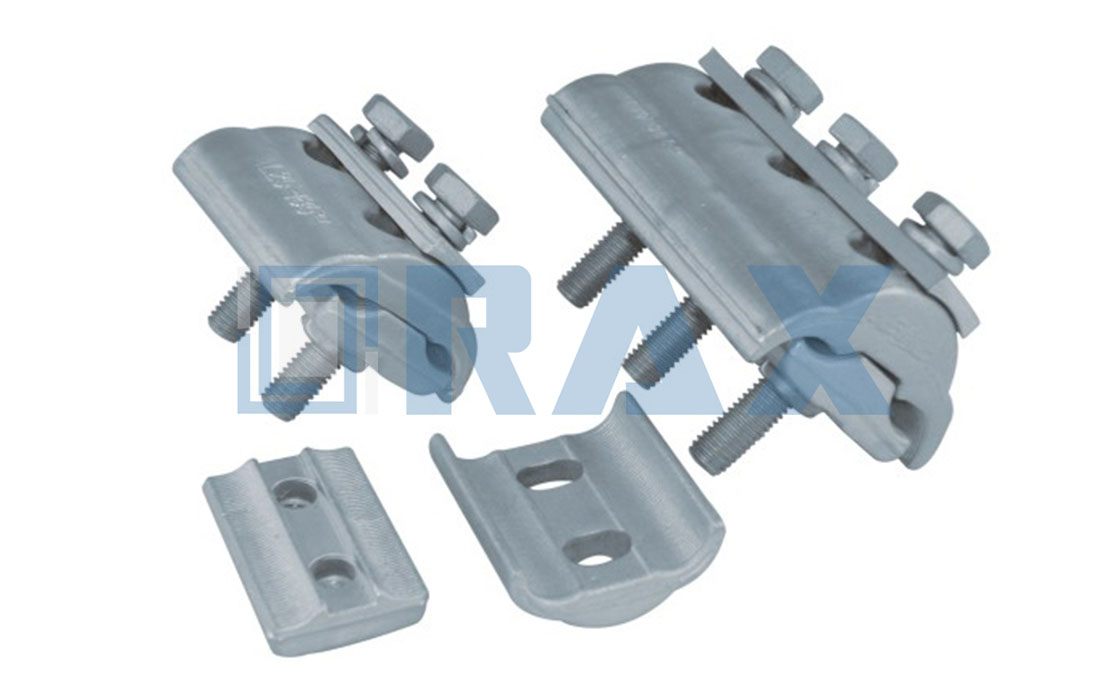
En quoi les serre-câbles d'ancrage diffèrent-ils par leur conception et leur fonction ?
Selecting the correct anchor clamp is a critical engineering decision that directly impacts system stability and longevity. The primary distinction between types lies in their functional role within the overhead line architecture: tension clamps are designed to hold live cables under constant stress, allowing for future maintenance adjustments, whereas fixed dead-end configurations serve as permanent termination points that anchor the cable firmly against all directional forces.
This functional divergence in purpose directly informs the mechanical design choices that follow. Understanding whether a clamp is meant to secure or tension immediately dictates which gripping mechanism—wedge or fixed—becomes appropriate for the application.
Mécanisme et action : configurations à coin vs fixes
The most significant technical differentiator is the gripping mechanism itself. Tension clamps typically utilize a wedge-type design where the central body features a tapered barrel. As load increases on the cable, the internal wedges move further into this taper, creating a self-tightening action that reinforces the grip rather than loosening it. Conversely, fixed dead-end clamps rely on a rigid structure with no moving parts once installed; they transfer the full tensile load directly to the mounting hardware through a solid connection point without relying on friction-based tightening mechanisms.
Normes matérielles et de construction
High-performance anchor clamps generally utilize hot-forged steel alloy components rather than cast alternatives. Forging aligns the grain structure of the metal, significantly enhancing toughness and load-bearing capacity while minimizing internal voids that could lead to failure under extreme stress. To ensure durability in outdoor exposure, these steel components undergo hot-dip galvanizing processes compliant with ISO 1461 standards. This treatment provides a protective zinc coating with a mean thickness exceeding 85 microns, offering robust corrosion resistance suitable for diverse climatic conditions from coastal humidity to industrial pollution.
Applications de la classification fonctionnelle
- Tension Anchor Clamps: Ideal for scenarios requiring repositioning capability or where the cable must absorb longitudinal movement, such as at mid-span locations or transition towers where flexibility is required to manage thermal expansion.
- Fixed Dead-End Clamps: Essential at terminal structures like poles or corners where the line must be securely terminated to withstand unidirectional pulling force permanently, preventing any potential slippage into the support structure.
Considérations d'installation pour les débutants
When installing these devices, particularly in challenging environments like dusty or humid regions, selecting clamps with appropriate insulating properties is crucial to prevent electrical tracking. Ensure dimensional tolerances remain within strict limits (typically ±1mm) to guarantee proper fitment with standard pole accessories. For specialized applications involving fiber optic lines, verify compatibility with ADSS/OPGW cable diameters to avoid crushing damage during the gripping process, maintaining signal integrity alongside mechanical security.
| Caractéristique | Spécifications | Avantage |
|---|---|---|
| Design Principle | Wedge-type gripping mechanism with tapered barrel | Self-tightening action increases grip strength as tension rises |
| Composition du matériau | Hot-forged steel alloy with ISO 1461 compliant hot-dip galvanizing | Superior load capacity compared to cast alternatives; mean coating thickness exceeds 85 microns |
| Dimensional Tolerance | Strict 1mm precision on steel components | ensures perfect EPC design integration and component interchangeability. |
| Testing Protocol | In-house IEC 120 load testing with double-review QC protocol | 100% verification by 10-person team before packaging; SGS certified |
| Functional Classification | Categorization into anchor tension clamps vs fixed dead-end configurations | Tension types allow repositioning; fixed types provide permanent termination points |

Où sont utilisés les serre-câbles d'ancrage dans les lignes électriques
Anchor clamps are critical mechanical components deployed primarily at termination points and directional shifts in overhead power networks to prevent conductor slippage, manage tension loads, and maintain structural alignment under extreme environmental stress.
Terminaisons mortes et poteaux de raidissement
The primary function of anchor clamps is securing the end of a power line segment where the conductor terminates. In low-to-medium voltage networks, this occurs at “strain poles” or dead-end structures. Unlike suspension clamps which allow the cable to swing freely, an anchor clamp grips the strand tightly—often through a wedge-action mechanism—to transfer the full tensile load directly into the pole structure. This prevents the line from pulling loose during high-wind events or ice loading.
Changements de direction et ensembles d'angle
When a power line must turn around a corner or navigate a terrain feature like a river crossing or hillside, significant lateral forces are generated on the conductors. Anchor clamps are installed at these angle assemblies to hold the cable against the pull vector. They ensure that the turning point does not result in the wire slipping off the insulator string or damaging the supporting hardware due to unmanaged shear stress.
Applications pour câbles aériens groupés (ABC)
In modern distribution networks utilizing Aerial Bundled Cables (ABC), specific anchor clamps designed for insulated phases are used. These clamps accommodate multiple bundled conductors within a single unit, ensuring that the neutral phase and live phases remain securely anchored together at the end of a service drop, preventing twisting or separation of the insulation layers.
Intégration des fondations solaires et de la mise à la terre
Beyond overhead transmission, anchor clamps serve as the interface between grounding systems and earth anchors. Helical screw anchors driven deep into the soil provide a stable base for solar panel mounts or lightning protection systems. Anchor clamps connect the copper grounding wire or steel strap to the top of these helical piles, creating a low-resistance path to earth that dissipates static charge and fault currents safely.
Conclusion
Selecting the right hardware isn’t just about fitting a cable onto a pole. You need to match the grip material to the jacket material, whether that’s UV-resistant plastic for ADSS or galvanized steel for dead-end strain. Wedge grips offer excellent load capacity, but only if the tension ratings align with your specific conductor weight. Get the specs wrong, and the line sags or the hardware fails mid-winter.
“Our engineers design high-voltage cable systems daily, ensuring clamps hold up against various insulation types without crushing the core. Before you place a bulk order, let us review your tension rating calculations against the IEC standards. We catch integration errors early so your installation stays solid for decades.”
Questions fréquemment posées
Comment sélectionner les types de serre-câbles d'ancrage ?
Le choix dépend du type de conducteur, du diamètre et des conditions de charge mécanique attendues pour l'installation. Les ingénieurs doivent également prendre en compte les facteurs environnementaux susceptibles d'influencer les exigences de résistance à la corrosion. La compatibilité avec la structure de support et la facilité d'installation sont également des critères déterminants. La consultation des fiches techniques garantit que le serre-câble choisi répond à toutes les normes de sécurité et de performance applicables à l'utilisation envisagée.
Quels matériaux garantissent la durabilité des serre-câbles ?
Les colliers d'ancrage de haute qualité sont généralement fabriqués à partir de matériaux résistants à la corrosion, tels que l'acier galvanisé à chaud ou des alliages d'aluminium. Ces matériaux offrent une protection essentielle contre les facteurs environnementaux tels que l'humidité, les rayons UV et les variations de température. Le processus de galvanisation ajoute une couche sacrificielle qui prolonge considérablement la durée de vie du matériel. L'utilisation de matériaux robustes garantit la fiabilité structurelle des réseaux aériens sur plusieurs décennies.
Comment les serre-câbles d'ancrage sont-ils testés en charge ?
Manufacturers perform rigorous load testing to verify that the clamp can hold the rated breaking load of the conductor without slipping. This involves subjecting the assembly to increasing tension forces until failure or the specified limit is reached. These tests ensure compliance with international standards like those set by the IEC for mechanical safety. Consistent testing validates the engineering design and performance consistency of the hardware.