
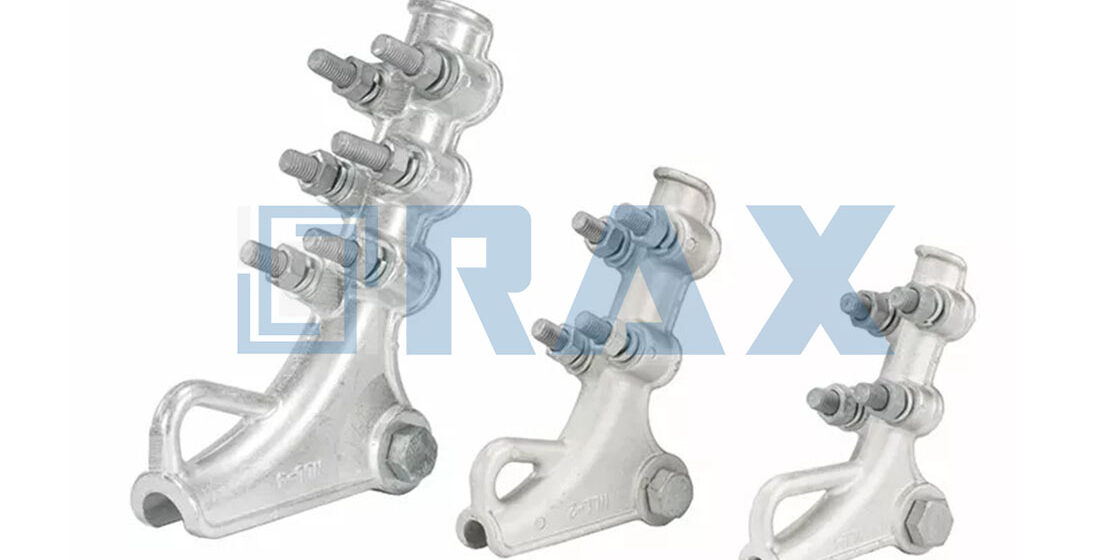
La expansión térmica comprometerá una línea aérea más rápido que la carga de viento si el equipo no está correctamente clasificado. Las abrazaderas de anclaje sirven como puntos fijos que gestionan este esfuerzo, pero confiar en una especificación genérica para los tipos de abrazadera de anclaje invita a riesgos de cumplimiento cuando las condiciones ambientales cambian. Se necesitan materiales específicos para sobrevivir en el campo. Las carcasas de plástico resistente a los rayos UV de alta calidad y de aleación de aluminio son esenciales porque los polímeros estándar pierden resistencia a la tracción y se vuelven quebradizos bajo radiación solar prolongada.
Examinaremos cómo difieren los diseños de cuña para cables ADSS frente a cables aéreos agrupados (ABC) y cómo estas elecciones mecánicas se integran con los sistemas de cable ZMS kV para mantener la tensión de línea. Seleccionar ahora el material de la carcasa y la geometría del agarre correcto es la única forma de prevenir el envejecimiento prematuro y evitar la pesadilla logística de reemplazos de emergencia.
¿Qué es una abrazadera de anclaje?
Una abrazadera de anclaje es un dispositivo de terminación mecánica diseñado para asegurar los extremos del cable en puntos fijos de un poste de servicio, soportando cargas de tensión por viento o hielo mientras previene el deslizamiento.
Definición y propósito de la abrazadera de anclaje
En la infraestructura de líneas aéreas de transmisión, una abrazadera de anclaje funciona como un componente crítico de final de línea que termina mecánicamente los cables y mantiene la tensión de línea. Su propósito principal es fijar los extremos del conductor —como ADSS, fibra óptica o cables de tracción— a postes o travesaños, asegurando la integridad estructural de todo el sistema bajo condiciones de esfuerzo como acumulación pesada de hielo o altas velocidades de viento. A diferencia del equipo de suspensión que permite movimiento, las abrazaderas de anclaje crean un punto de terminación rígido donde todas las fuerzas de tensión se transfieren de manera segura a la estructura de soporte sin desplazamiento.
Componentes básicos de las abrazaderas de anclaje
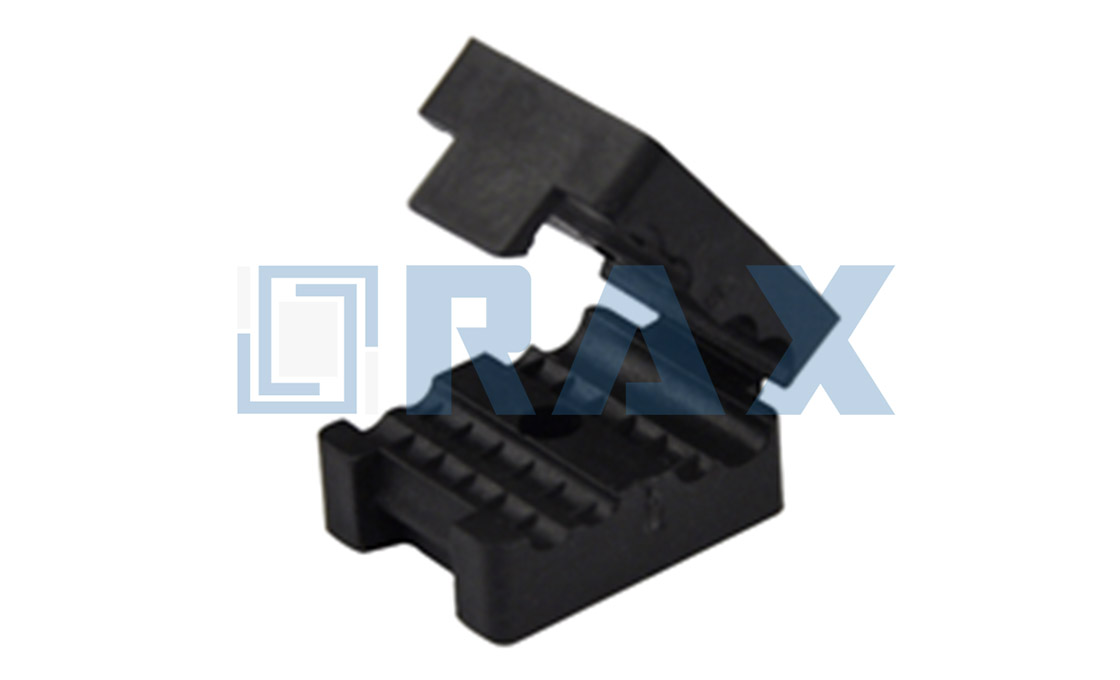
Aunque los diseños varían según las necesidades de la aplicación, la mayoría de las abrazaderas de anclaje modernas constan de tres elementos fundamentales: una carcasa que proporciona soporte estructural, una cuña cónica que se engancha con los hilos del cable y hardware de sujeción como pernos o pasadores para el ensamblaje. El cuerpo está típicamente forjado de acero de alta resistencia en lugar de metal fundido para eliminar vacíos internos que podrían comprometer la resistencia bajo carga extrema. La cuña cuenta con dientes o ranuras mecanizadas con precisión diseñadas para penetrar la capa exterior del cable cuando aumenta la tensión, creando un agarre autorrreforzable que se aprieta progresivamente a medida que la fuerza de tracción aumenta en lugar de aflojarse.
Cómo aseguran las abrazaderas de anclaje las líneas de poste
Nuestra producción automatizada garantiza una tolerancia dimensional estricta de 1 mm en estos componentes, asegurando que cada abrazadera rinda de manera consistente en diversas condiciones ambientales —desde inviernos gélidos en Siberia hasta monzones tropicales húmedos— sin riesgos de desgaste prematuro o deslizamiento. En Rax Power, aprovechamos la experiencia en forjado en caliente para nuestras abrazaderas tipo cuña porque este proceso de fabricación alinea la estructura del grano del metal significativamente mejor que la fundición, lo que resulta en una resistencia superior a la fatiga durante ciclos repetidos de tensión. El mecanismo de sujeción opera a través de un principio físico simple pero efectivo: cuando la tensión tira del cable sujeto a la abrazadera, la cuña se fuerza más profundamente en su asiento cónico dentro de la carcasa. Esta acción comprime el cable contra la superficie de agarre de la cuña, generando fricción proporcional a la carga aplicada. Este comportamiento predecible permite a los ingenieros calcular con confianza los márgenes de seguridad exactos durante las fases de diseño EPC, sabiendo que el equipo funcionará según lo modelado bajo cargas máximas anticipadas.
| Característica | Descripción técnica | Especificaciones estándar | Mecanismo operativo | Ventaja Rax |
|---|---|---|---|---|
| Función principal | Terminación mecánica del cable diseñada para fijar extremos del conductor y soportar tensión. | Clasificada para capacidad de carga máxima contra esfuerzo mecánico por viento, hielo y contracción térmica. | Sujeciona cables en puntos fijos para prevenir deslizamiento y mantener la tensión de línea. | Las abrazaderas de cuña forjadas en caliente aprovechan experiencia avanzada para una máxima capacidad de carga, superando a las de fundición. |
| Mecanismo de bloqueo | Sistema autotractivante que mejora el agarre cuando aumenta la carga mecánica. | Asegura fuerza de sujeción automática dependiente de la carga con cero deslizamiento bajo alta tensión. | La cuña cónica se desliza en la carcasa para comprimir y bloquear el cable. | Maquinaria automatizada de precisión garantiza tolerancia dimensional estricta de 1 mm en componentes de acero. |
| Durability Finish | Protective coating essential for outdoor utility infrastructure longevity. | Compliant with ISO 1461; mean coating thickness exceeding 85 microns. | Hot-dip galvanizing provides a smooth, bright finish against environmental stress. | Offers superior defense against UV exposure and harsh environmental stress conditions. |
| Garantía de calidad | Verification processes ensuring structural integrity and safety standards. | Rigorous load testing and gauge testing conducted per IEC 120 standards. | Double-review protocol monitoring every stage of production. | 100% product verification executed by a dedicated QC team with full SGS certification. |
| Application Range | Versatile anchoring solutions for power distribution and telecom networks. | Compatible with LV-ABC, ADSS, Guy Wires, and fiber optic cables. | Incorporates specialized preformed grips and high-tensile fasteners. | Backed by 21 years of global export experience supplying critical utility infrastructure. |
Tipos de abrazaderas de anclaje y cómo funcionan
Wedge-type and compression anchor clamps are the two dominant mechanical classes in pole line hardware, distinguished by their locking mechanisms and primary function in securing conductors or guy wires.
Anchor clamps function as critical termination points in overhead power transmission and distribution systems, transferring tensile loads from cables to supporting structures. The selection between clamp types depends primarily on whether the installation requires permanent fixation with minimal maintenance (wedge-type) or a design accommodating controlled tension adjustments (compression-type).
Abrazaderas de anclaje tipo cuña (autobloqueantes)
Wedge-type anchor clamps utilize a mechanical self-locking principle where increasing tension on the cable automatically tightens the grip. These devices consist of a housing containing two or more movable wedges and a steel ring or fitting. When a conductor is inserted and tension applied, the wedges are forced deeper into the tapered housing, creating a friction lock that prevents slippage. This mechanism makes them ideal for permanent installations such as dead-end anchors on utility poles or ADSS fiber optic cable terminations where release is not required during normal operation.
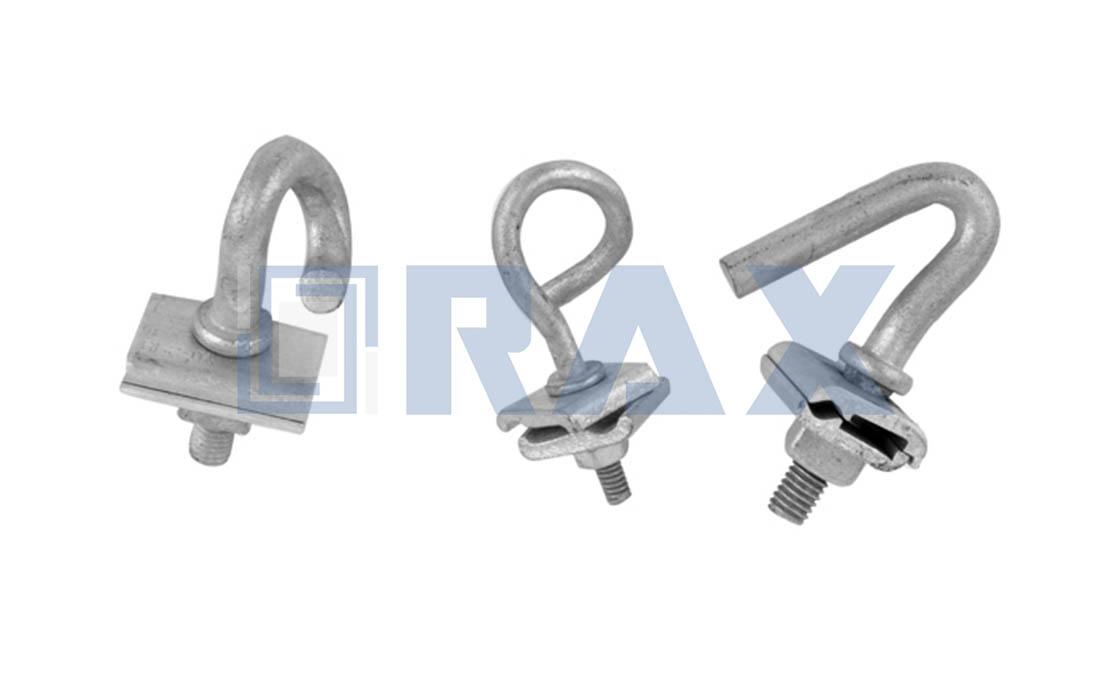
A standard example is the cone-shaped wedge assembly used in guy wire terminations, where movable wedges inside the clamp body automatically tighten the cable as external forces increase.
Abrazaderas de anclaje tipo compresión (crimpadas)
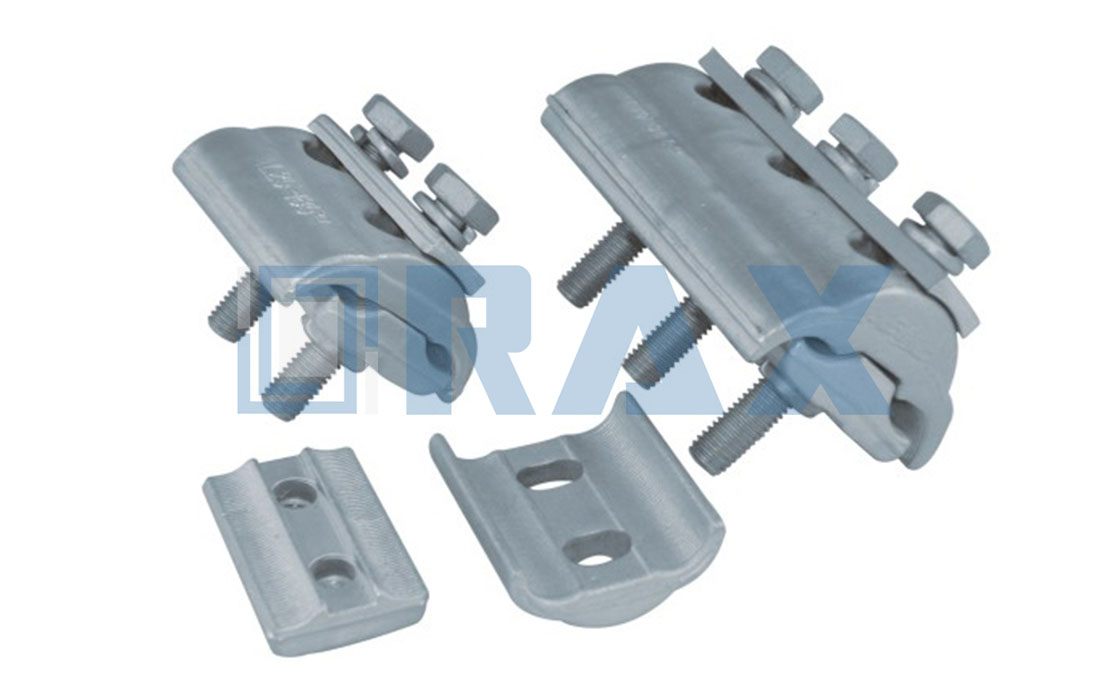
Compression-type anchor clamps form a permanent bond by deforming the clamp barrel around the conductor using hydraulic or mechanical crimping tools. Unlike wedge designs, these do not rely on wedges moving within a housing; instead, the entire barrel is squeezed to create a metallurgical bond between the clamp and the cable strands. This method provides high strength and excellent conductivity, making it suitable for critical applications like ACSR (Aluminum Conductor Steel Reinforced) dead-ends or splice sleeves where maximum load transfer and minimal electrical resistance are required.
The process involves inserting the prepared conductor end into the clamp barrel, then applying uniform pressure via a die set to compress the metal onto the strands. Proper crimping requires strict adherence to specified die sizes and compression ratios to avoid damaging the conductor or creating stress concentrations that could lead to failure under cyclic loading.
Comparación funcional y criterios de selección
- Installation Speed: Wedge-type clamps allow rapid field installation without tools beyond a basic hammer or puller, whereas compression-type requires dedicated crimping equipment and trained personnel.
- Maintenance Access: Wedge grips cannot be easily re-tensioned once set; if adjustment is needed, the entire assembly must be replaced. Compression joints offer no adjustment capability but provide superior long-term stability when correctly installed.
- Load Capacity: Both types can achieve breaking strengths exceeding 90% of the conductor’s rated tensile strength, though compression joints typically exhibit better fatigue performance under dynamic vibration loads due to absence of internal moving parts.
- Environmental Suitability: In coastal or corrosive environments, both types benefit from hot-dip galvanizing per ISO 1461 standards, with mean coating thicknesses exceeding 85 microns to ensure longevity against salt spray and moisture ingress.
Cómo difieren las abrazaderas de anclaje en diseño y función
Selecting the correct anchor clamp is a critical engineering decision that directly impacts system stability and longevity. The primary distinction between types lies in their functional role within the overhead line architecture: tension clamps are designed to hold live cables under constant stress, allowing for future maintenance adjustments, whereas fixed dead-end configurations serve as permanent termination points that anchor the cable firmly against all directional forces.
This functional divergence in purpose directly informs the mechanical design choices that follow. Understanding whether a clamp is meant to secure or tension immediately dictates which gripping mechanism—wedge or fixed—becomes appropriate for the application.
Mecanismo y acción: configuraciones de cuña vs. fijas
The most significant technical differentiator is the gripping mechanism itself. Tension clamps typically utilize a wedge-type design where the central body features a tapered barrel. As load increases on the cable, the internal wedges move further into this taper, creating a self-tightening action that reinforces the grip rather than loosening it. Conversely, fixed dead-end clamps rely on a rigid structure with no moving parts once installed; they transfer the full tensile load directly to the mounting hardware through a solid connection point without relying on friction-based tightening mechanisms.
Normas de materiales y construcción
High-performance anchor clamps generally utilize hot-forged steel alloy components rather than cast alternatives. Forging aligns the grain structure of the metal, significantly enhancing toughness and load-bearing capacity while minimizing internal voids that could lead to failure under extreme stress. To ensure durability in outdoor exposure, these steel components undergo hot-dip galvanizing processes compliant with ISO 1461 standards. This treatment provides a protective zinc coating with a mean thickness exceeding 85 microns, offering robust corrosion resistance suitable for diverse climatic conditions from coastal humidity to industrial pollution.
Aplicaciones de clasificación funcional
- Tension Anchor Clamps: Ideal for scenarios requiring repositioning capability or where the cable must absorb longitudinal movement, such as at mid-span locations or transition towers where flexibility is required to manage thermal expansion.
- Fixed Dead-End Clamps: Essential at terminal structures like poles or corners where the line must be securely terminated to withstand unidirectional pulling force permanently, preventing any potential slippage into the support structure.
Consideraciones de instalación para principiantes
When installing these devices, particularly in challenging environments like dusty or humid regions, selecting clamps with appropriate insulating properties is crucial to prevent electrical tracking. Ensure dimensional tolerances remain within strict limits (typically ±1mm) to guarantee proper fitment with standard pole accessories. For specialized applications involving fiber optic lines, verify compatibility with ADSS/OPGW cable diameters to avoid crushing damage during the gripping process, maintaining signal integrity alongside mechanical security.
| Característica | Especificación | Ventaja |
|---|---|---|
| Design Principle | Wedge-type gripping mechanism with tapered barrel | Self-tightening action increases grip strength as tension rises |
| Composición del material | Hot-forged steel alloy with ISO 1461 compliant hot-dip galvanizing | Superior load capacity compared to cast alternatives; mean coating thickness exceeds 85 microns |
| Dimensional Tolerance | Strict 1mm precision on steel components | ensures perfect EPC design integration and component interchangeability. |
| Testing Protocol | In-house IEC 120 load testing with double-review QC protocol | 100% verification by 10-person team before packaging; SGS certified |
| Functional Classification | Categorization into anchor tension clamps vs fixed dead-end configurations | Tension types allow repositioning; fixed types provide permanent termination points |

Dónde se usan las abrazaderas de anclaje en líneas eléctricas
Anchor clamps are critical mechanical components deployed primarily at termination points and directional shifts in overhead power networks to prevent conductor slippage, manage tension loads, and maintain structural alignment under extreme environmental stress.
Terminaciones de final de línea y postes de tensión
The primary function of anchor clamps is securing the end of a power line segment where the conductor terminates. In low-to-medium voltage networks, this occurs at “strain poles” or dead-end structures. Unlike suspension clamps which allow the cable to swing freely, an anchor clamp grips the strand tightly—often through a wedge-action mechanism—to transfer the full tensile load directly into the pole structure. This prevents the line from pulling loose during high-wind events or ice loading.
Cambios de dirección y conjuntos angulares
When a power line must turn around a corner or navigate a terrain feature like a river crossing or hillside, significant lateral forces are generated on the conductors. Anchor clamps are installed at these angle assemblies to hold the cable against the pull vector. They ensure that the turning point does not result in the wire slipping off the insulator string or damaging the supporting hardware due to unmanaged shear stress.
Aplicaciones de cable aéreo agrupado (ABC)
In modern distribution networks utilizing Aerial Bundled Cables (ABC), specific anchor clamps designed for insulated phases are used. These clamps accommodate multiple bundled conductors within a single unit, ensuring that the neutral phase and live phases remain securely anchored together at the end of a service drop, preventing twisting or separation of the insulation layers.
Integración de fundación solar y puesta a tierra
Beyond overhead transmission, anchor clamps serve as the interface between grounding systems and earth anchors. Helical screw anchors driven deep into the soil provide a stable base for solar panel mounts or lightning protection systems. Anchor clamps connect the copper grounding wire or steel strap to the top of these helical piles, creating a low-resistance path to earth that dissipates static charge and fault currents safely.
Conclusión
Selecting the right hardware isn’t just about fitting a cable onto a pole. You need to match the grip material to the jacket material, whether that’s UV-resistant plastic for ADSS or galvanized steel for dead-end strain. Wedge grips offer excellent load capacity, but only if the tension ratings align with your specific conductor weight. Get the specs wrong, and the line sags or the hardware fails mid-winter.
“Our engineers design high-voltage cable systems daily, ensuring clamps hold up against various insulation types without crushing the core. Before you place a bulk order, let us review your tension rating calculations against the IEC standards. We catch integration errors early so your installation stays solid for decades.”
Preguntas frecuentes
¿Cómo seleccionar tipos de abrazaderas de anclaje?
La selección depende del tipo de conductor, el diámetro y las condiciones de carga mecánica previstas de la instalación. Los ingenieros también deben considerar factores ambientales que puedan influir en los requisitos de resistencia a la corrosión. La compatibilidad con la estructura de soporte y la facilidad de instalación también son factores decisivos. Consultar las hojas de datos técnicos garantiza que la abrazadera elegida cumpla con todas las normas de seguridad y rendimiento para la aplicación.
¿Qué materiales garantizan la durabilidad de la abrazadera?
Los abrazaderas de anclaje de alta calidad se fabrican típicamente a partir de materiales resistentes a la corrosión como el acero galvanizado en caliente o las aleaciones de aluminio. Estos materiales proporcionan protección esencial contra factores ambientales como la humedad, la radiación UV y las fluctuaciones de temperatura. El proceso de galvanización agrega una capa de sacrificio que extiende significativamente la vida útil del hardware. El uso de materiales robustos garantiza la confiabilidad estructural de las redes aéreas durante décadas.
¿Cómo se someten a prueba de carga las abrazaderas de anclaje?
Manufacturers perform rigorous load testing to verify that the clamp can hold the rated breaking load of the conductor without slipping. This involves subjecting the assembly to increasing tension forces until failure or the specified limit is reached. These tests ensure compliance with international standards like those set by the IEC for mechanical safety. Consistent testing validates the engineering design and performance consistency of the hardware.