
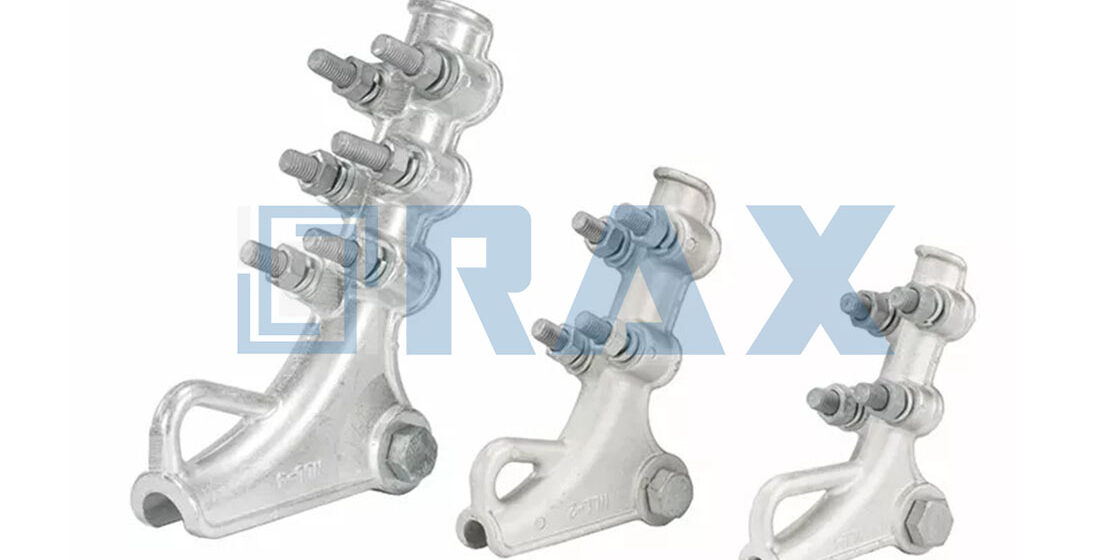
Thermische Ausdehnung wird eine Freileitung schneller schädigen als Windlast, wenn die Beschlagteile nicht richtig ausgelegt sind. Verankerungsklemmen dienen als feste Punkte, die diese Belastung steuern, aber das Vertrauen auf eine generische Spezifikation für Verankerungsklemmentypen birgt Konformitätsrisiken, wenn sich die Umweltbedingungen ändern. Sie benötigen spezifische Materialien, um vor Ort zu überleben. Hochwertige, UV-beständige Kunststoffe und Aluminiumlegierungsgehäuse sind unerlässlich, da Standardpolymere unter langfristiger Sonneneinstrahlung ihre Zugfestigkeit verlieren und spröde werden.
Wir untersuchen, wie sich Keildesigns für ADSS im Vergleich zu luftgeführten gebündelten Kabeln unterscheiden und wie diese mechanischen Entscheidungen mit ZMS-kV-Kabelsystemen integriert werden, um die Leitungsspannung aufrechtzuerhalten. Die Wahl des richtigen Gehäusematerials und der Griffgeometrie ist der einzige Weg, um vorzeitiges Altern zu verhindern und den logistischen Albtraum von Notfall-Ersatzteilen zu vermeiden.
Was ist eine Verankerungsklemme?
Eine Verankerungsklemme ist eine mechanische Abschlussvorrichtung, die dazu dient, Kabelenden an festen Punkten an einem Versorgungsmast zu sichern, Zuglasten durch Wind oder Eis zu tragen und ein Durchrutschen zu verhindern.
Definition und Zweck der Verankerungsklemme
In der Infrastruktur von Freileitungen fungiert eine Verankerungsklemme als kritisches Totpunkt-Bauteil, das Kabel mechanisch abschließt und die Leitungsspannung aufrechterhält. Ihr Hauptzweck besteht darin, Leiterenden – wie ADSS, Glasfaser oder Abstützdrahte – an Masten oder Querrahmen zu fixieren, um die strukturelle Integrität des gesamten Systems unter Stressbedingungen wie starkem Eisansatz oder hohen Windgeschwindigkeiten zu gewährleisten. Im Gegensatz zu Aufhängungsbefestigungen, die Bewegung ermöglichen, schaffen Verankerungsklemmen einen starren Abschlusspunkt, an dem alle Zugkräfte sicher in die tragende Struktur übertragen werden, ohne Verschiebung.
Wesentliche Bauteile von Verankerungsklemmen
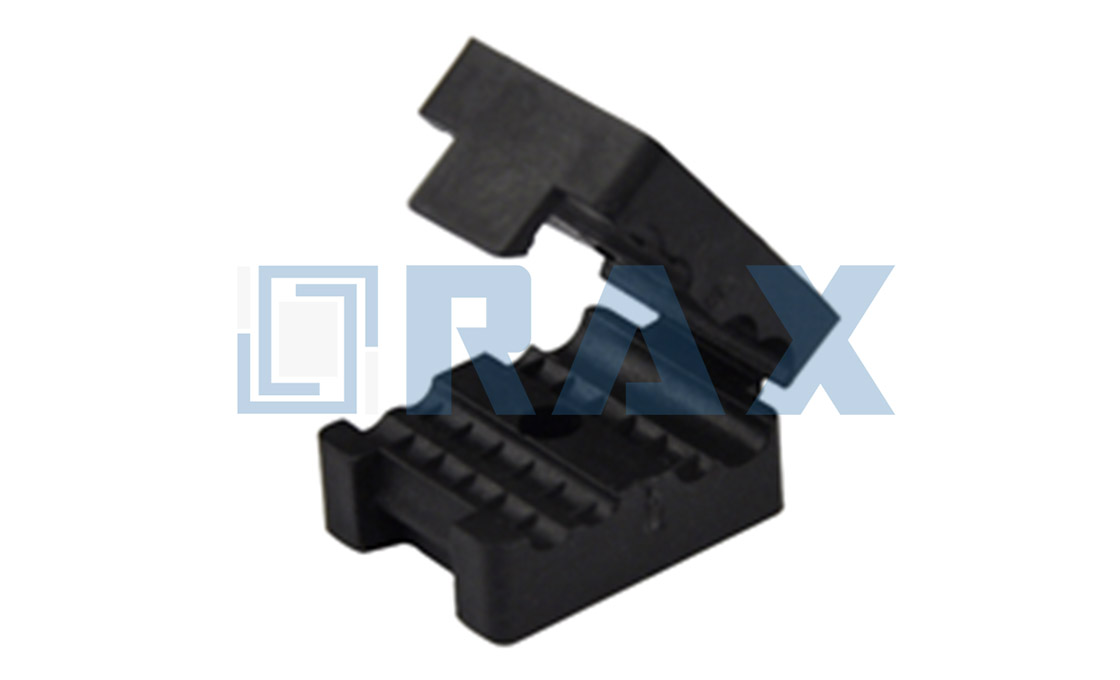
Obwohl die Designs je nach Anwendungsanforderungen variieren, bestehen die meisten modernen Verankerungsklemmen aus drei Kernelementen: einem Gehäuse, das strukturelle Unterstützung bietet, einem Keilkeilmechanismus der mit den Kabelsträngen eingreift, und Befestigungselemente wie Bolzen oder Stifte für die Montage. Das Gehäuse ist typischerweise aus hochfestem Stahl geschmiedet, anstatt aus Gussmetall, um innere Hohlräume zu eliminieren, die die Festigkeit unter extremer Belastung beeinträchtigen könnten. Der Keil verfügt über präzisionsbearbeitete Zähne oder Rillen, die darauf ausgelegt sind, beim Anstieg der Spannung in die äußere Schicht des Kabels einzugreifen und eine selbstverstärkender Halt zu erzeugen, die sich mit steigender Zugkraft fortschreitend festzieht, anstatt sich zu lösen.
Wie Verankerungsklemmen Freileitungen verankern
Unsere automatisierte Produktion gewährleistet eine strenge Maßtoleranz von 1 mm bei diesen Komponenten, was garantiert, dass jede Klemme unter verschiedenen Umweltbedingungen – von eisigen sibirischen Wintern bis zu feuchten tropischen Monsunen – konsistent funktioniert, ohne vorzeitigen Verschleiß oder Risiken des Durchrutschens. Bei Rax Power nutzen wir Know-how im Heißschmieden für unsere Keilverankerungsklemmen, weil dieser Fertigungsprozess die Metallkornstruktur im Vergleich zum Gießen erheblich besser ausrichtet, was zu einer überlegenen Ermüdungsbeständigkeit bei wiederholten Spannungszyklen führt. Der Sicherungsmechanismus funktioniert nach einem einfachen, aber wirksamen physikalischen Prinzip: Wenn die Spannung auf das an der Klemme befestigte Kabel zieht, wird der Keil tiefer in seine kegelige Sitzfläche im Gehäuse gedrückt. Diese Aktion komprimiert das Kabel gegen die Greiffläche des Keils und erzeugt eine Reibung, die proportional zur aufgebrachten Last ist. Dieses vorhersehbare Verhalten ermöglicht es Ingenieuren, mit Vertrauen genaue Sicherheitsreserven während der EPC-Planungsphasen zu berechnen, da bekannt ist, dass die Hardware unter maximaler erwarteter Belastung wie modelliert funktioniert.
| Merkmal | Technische Beschreibung | Standardspezifikationen | Betriebsmechanismus | Rax-Vorteil |
|---|---|---|---|---|
| Hauptfunktion | Mechanischer Kabelabschluss, der dazu dient, Leiterenden zu fixieren und Zugbelastungen zu tragen. | Ausgelegt für maximale Tragfähigkeit gegenüber mechanischer Belastung durch Wind, Eis und thermische Kontraktion. | Sichert Kabel an festen Punkten, um Durchrutschen zu verhindern und die Leitungsspannung aufrechtzuerhalten. | Heißgeschmiedete Keilverankerungen nutzen fortgeschrittenes Know-how für maximale Tragfähigkeit im Vergleich zum Gießen. |
| Verriegelungsmechanismus | Selbstanspannendes System, das den Grip verstärkt, wenn die mechanische Belastung zunimmt. | Stellt eine automatische lastabhängige Klammerkraft mit null Durchrutschen unter hoher Spannung sicher. | Der kegelige Keil gleitet in das Gehäuse, um das Kabel zu komprimieren und zu verriegeln. | Präzise automatisierte Maschinen gewährleisten eine strenge Maßtoleranz von 1 mm bei Stahlkomponenten. |
| Haltbare Beschichtung | Protective coating essential for outdoor utility infrastructure longevity. | Compliant with ISO 1461; mean coating thickness exceeding 85 microns. | Hot-dip galvanizing provides a smooth, bright finish against environmental stress. | Offers superior defense against UV exposure and harsh environmental stress conditions. |
| Qualitätssicherung | Verification processes ensuring structural integrity and safety standards. | Rigorous load testing and gauge testing conducted per IEC 120 standards. | Double-review protocol monitoring every stage of production. | 100% product verification executed by a dedicated QC team with full SGS certification. |
| Application Range | Versatile anchoring solutions for power distribution and telecom networks. | Compatible with LV-ABC, ADSS, Guy Wires, and fiber optic cables. | Incorporates specialized preformed grips and high-tensile fasteners. | Backed by 21 years of global export experience supplying critical utility infrastructure. |
Arten von Verankerungsklemmen und ihre Funktionsweise
Wedge-type and compression anchor clamps are the two dominant mechanical classes in pole line hardware, distinguished by their locking mechanisms and primary function in securing conductors or guy wires.
Anchor clamps function as critical termination points in overhead power transmission and distribution systems, transferring tensile loads from cables to supporting structures. The selection between clamp types depends primarily on whether the installation requires permanent fixation with minimal maintenance (wedge-type) or a design accommodating controlled tension adjustments (compression-type).
Keilverankerungsklemmen (selbstverriegelnd)
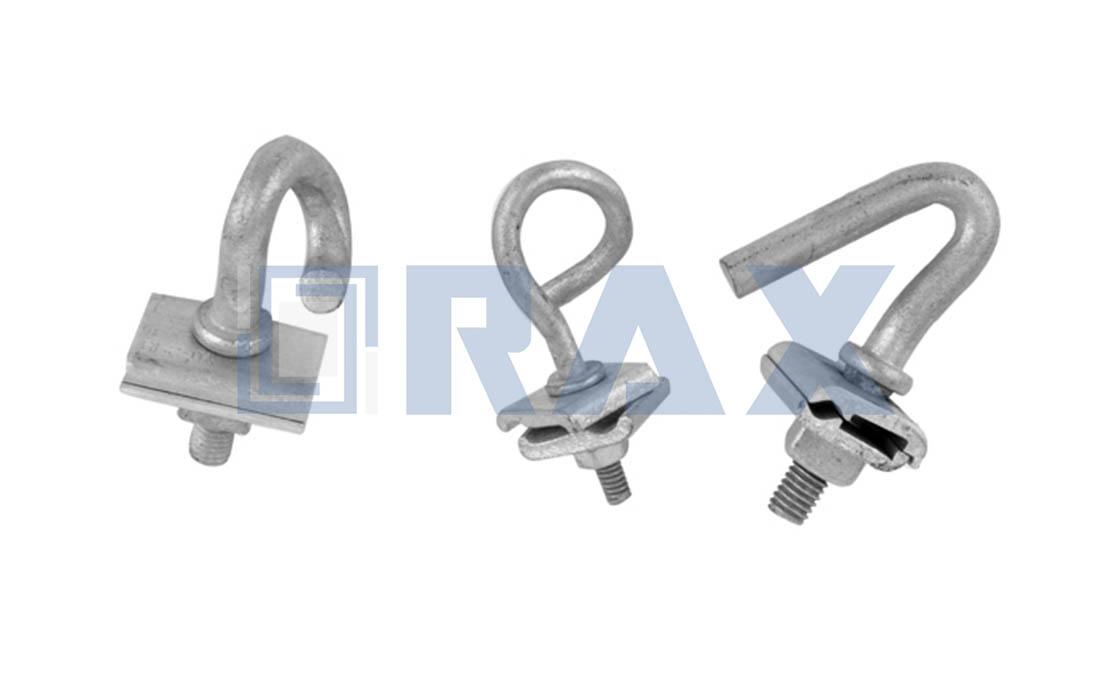
Wedge-type anchor clamps utilize a mechanical self-locking principle where increasing tension on the cable automatically tightens the grip. These devices consist of a housing containing two or more movable wedges and a steel ring or fitting. When a conductor is inserted and tension applied, the wedges are forced deeper into the tapered housing, creating a friction lock that prevents slippage. This mechanism makes them ideal for permanent installations such as dead-end anchors on utility poles or ADSS fiber optic cable terminations where release is not required during normal operation.
A standard example is the cone-shaped wedge assembly used in guy wire terminations, where movable wedges inside the clamp body automatically tighten the cable as external forces increase.
Druckverankerungsklemmen (gecrimpt)
Compression-type anchor clamps form a permanent bond by deforming the clamp barrel around the conductor using hydraulic or mechanical crimping tools. Unlike wedge designs, these do not rely on wedges moving within a housing; instead, the entire barrel is squeezed to create a metallurgical bond between the clamp and the cable strands. This method provides high strength and excellent conductivity, making it suitable for critical applications like ACSR (Aluminum Conductor Steel Reinforced) dead-ends or splice sleeves where maximum load transfer and minimal electrical resistance are required.
The process involves inserting the prepared conductor end into the clamp barrel, then applying uniform pressure via a die set to compress the metal onto the strands. Proper crimping requires strict adherence to specified die sizes and compression ratios to avoid damaging the conductor or creating stress concentrations that could lead to failure under cyclic loading.
Funktionale Vergleich und Auswahlkriterien
- Installation Speed: Wedge-type clamps allow rapid field installation without tools beyond a basic hammer or puller, whereas compression-type requires dedicated crimping equipment and trained personnel.
- Maintenance Access: Wedge grips cannot be easily re-tensioned once set; if adjustment is needed, the entire assembly must be replaced. Compression joints offer no adjustment capability but provide superior long-term stability when correctly installed.
- Load Capacity: Both types can achieve breaking strengths exceeding 90% of the conductor’s rated tensile strength, though compression joints typically exhibit better fatigue performance under dynamic vibration loads due to absence of internal moving parts.
- Environmental Suitability: In coastal or corrosive environments, both types benefit from hot-dip galvanizing per ISO 1461 standards, with mean coating thicknesses exceeding 85 microns to ensure longevity against salt spray and moisture ingress.
Wie sich Verankerungsklemmen in Design und Funktion unterscheiden
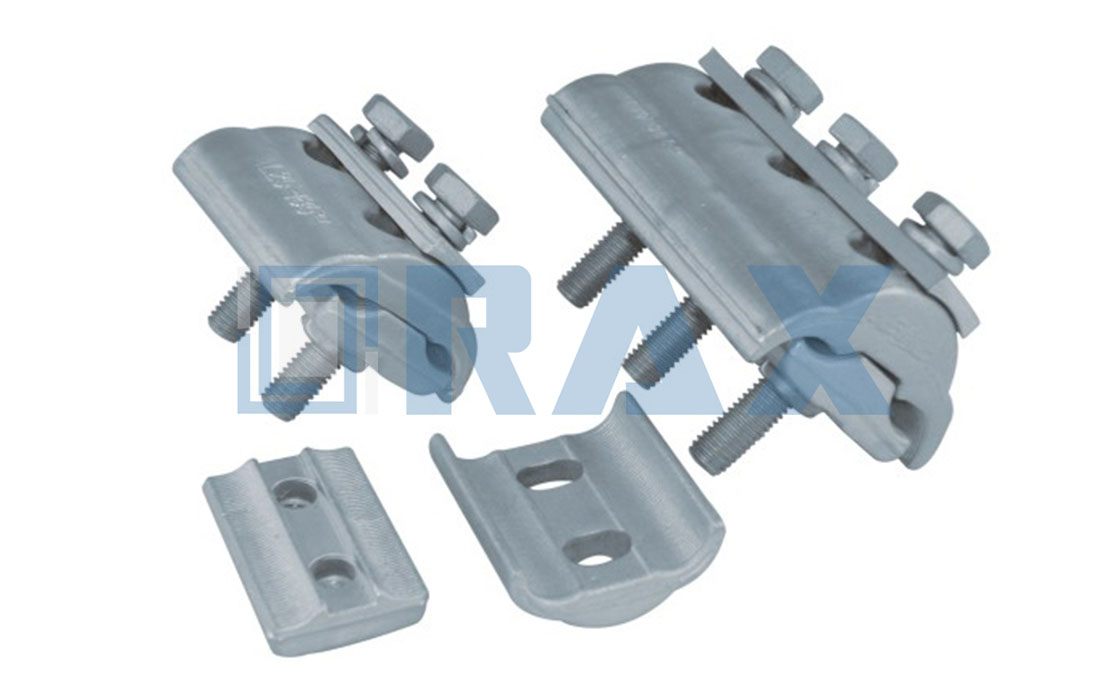
Selecting the correct anchor clamp is a critical engineering decision that directly impacts system stability and longevity. The primary distinction between types lies in their functional role within the overhead line architecture: tension clamps are designed to hold live cables under constant stress, allowing for future maintenance adjustments, whereas fixed dead-end configurations serve as permanent termination points that anchor the cable firmly against all directional forces.
This functional divergence in purpose directly informs the mechanical design choices that follow. Understanding whether a clamp is meant to secure or tension immediately dictates which gripping mechanism—wedge or fixed—becomes appropriate for the application.
Mechanismus und Wirkung: Keil vs. feste Konfigurationen
The most significant technical differentiator is the gripping mechanism itself. Tension clamps typically utilize a wedge-type design where the central body features a tapered barrel. As load increases on the cable, the internal wedges move further into this taper, creating a self-tightening action that reinforces the grip rather than loosening it. Conversely, fixed dead-end clamps rely on a rigid structure with no moving parts once installed; they transfer the full tensile load directly to the mounting hardware through a solid connection point without relying on friction-based tightening mechanisms.
Material- und Konstruktionsstandards
High-performance anchor clamps generally utilize hot-forged steel alloy components rather than cast alternatives. Forging aligns the grain structure of the metal, significantly enhancing toughness and load-bearing capacity while minimizing internal voids that could lead to failure under extreme stress. To ensure durability in outdoor exposure, these steel components undergo hot-dip galvanizing processes compliant with ISO 1461 standards. This treatment provides a protective zinc coating with a mean thickness exceeding 85 microns, offering robust corrosion resistance suitable for diverse climatic conditions from coastal humidity to industrial pollution.
Anwendungen der funktionalen Klassifizierung
- Tension Anchor Clamps: Ideal for scenarios requiring repositioning capability or where the cable must absorb longitudinal movement, such as at mid-span locations or transition towers where flexibility is required to manage thermal expansion.
- Fixed Dead-End Clamps: Essential at terminal structures like poles or corners where the line must be securely terminated to withstand unidirectional pulling force permanently, preventing any potential slippage into the support structure.
Installationüberlegungen für Anfänger
When installing these devices, particularly in challenging environments like dusty or humid regions, selecting clamps with appropriate insulating properties is crucial to prevent electrical tracking. Ensure dimensional tolerances remain within strict limits (typically ±1mm) to guarantee proper fitment with standard pole accessories. For specialized applications involving fiber optic lines, verify compatibility with ADSS/OPGW cable diameters to avoid crushing damage during the gripping process, maintaining signal integrity alongside mechanical security.
| Merkmal | Spezifikation | Vorteil |
|---|---|---|
| Design Principle | Wedge-type gripping mechanism with tapered barrel | Self-tightening action increases grip strength as tension rises |
| Materialzusammensetzung | Hot-forged steel alloy with ISO 1461 compliant hot-dip galvanizing | Superior load capacity compared to cast alternatives; mean coating thickness exceeds 85 microns |
| Dimensional Tolerance | Strict 1mm precision on steel components | ensures perfect EPC design integration and component interchangeability. |
| Testing Protocol | In-house IEC 120 load testing with double-review QC protocol | 100% verification by 10-person team before packaging; SGS certified |
| Functional Classification | Categorization into anchor tension clamps vs fixed dead-end configurations | Tension types allow repositioning; fixed types provide permanent termination points |

Wo werden Verankerungsklemmen in Stromleitungen verwendet?
Anchor clamps are critical mechanical components deployed primarily at termination points and directional shifts in overhead power networks to prevent conductor slippage, manage tension loads, and maintain structural alignment under extreme environmental stress.
Totpunktanschlüsse und Spannmasten
The primary function of anchor clamps is securing the end of a power line segment where the conductor terminates. In low-to-medium voltage networks, this occurs at “strain poles” or dead-end structures. Unlike suspension clamps which allow the cable to swing freely, an anchor clamp grips the strand tightly—often through a wedge-action mechanism—to transfer the full tensile load directly into the pole structure. This prevents the line from pulling loose during high-wind events or ice loading.
Richtungsänderungen und Winkelanordnungen
When a power line must turn around a corner or navigate a terrain feature like a river crossing or hillside, significant lateral forces are generated on the conductors. Anchor clamps are installed at these angle assemblies to hold the cable against the pull vector. They ensure that the turning point does not result in the wire slipping off the insulator string or damaging the supporting hardware due to unmanaged shear stress.
Anwendungen für luftgeführte gebündelte Kabel (ABC)
In modern distribution networks utilizing Aerial Bundled Cables (ABC), specific anchor clamps designed for insulated phases are used. These clamps accommodate multiple bundled conductors within a single unit, ensuring that the neutral phase and live phases remain securely anchored together at the end of a service drop, preventing twisting or separation of the insulation layers.
Integration von Solarfundamenten und Erdung
Beyond overhead transmission, anchor clamps serve as the interface between grounding systems and earth anchors. Helical screw anchors driven deep into the soil provide a stable base for solar panel mounts or lightning protection systems. Anchor clamps connect the copper grounding wire or steel strap to the top of these helical piles, creating a low-resistance path to earth that dissipates static charge and fault currents safely.
Fazit
Selecting the right hardware isn’t just about fitting a cable onto a pole. You need to match the grip material to the jacket material, whether that’s UV-resistant plastic for ADSS or galvanized steel for dead-end strain. Wedge grips offer excellent load capacity, but only if the tension ratings align with your specific conductor weight. Get the specs wrong, and the line sags or the hardware fails mid-winter.
“Our engineers design high-voltage cable systems daily, ensuring clamps hold up against various insulation types without crushing the core. Before you place a bulk order, let us review your tension rating calculations against the IEC standards. We catch integration errors early so your installation stays solid for decades.”
Häufig gestellte Fragen
Wie wählt man Verankerungsklemmentypen aus?
Die Auswahl hängt vom Leitungstyp, dem Durchmesser und den erwarteten mechanischen Belastungsbedingungen der Installation ab. Ingenieure müssen auch Umwelteinflüsse berücksichtigen, die die Anforderungen an die Korrosionsbeständigkeit beeinflussen können. Die Kompatibilität mit der Tragstruktur und die einfache Montage sind ebenfalls entscheidende Faktoren. Das Studium der technischen Datenblätter stellt sicher, dass die gewählte Klemme alle Sicherheits- und Leistungsanforderungen für die Anwendung erfüllt.
Welche Materialien gewährleisten die Haltbarkeit der Klemmen?
Hochwertige Ankerschellen werden typischerweise aus korrosionsbeständigen Materialien wie feuerverzinktem Stahl oder Aluminiumlegierungen hergestellt. Diese Materialien bieten einen wesentlichen Schutz vor Umwelteinflüssen wie Feuchtigkeit, UV-Strahlung und Temperaturschwankungen. Der Verzinkungsprozess fügt eine opferanodische Schicht hinzu, die die Lebensdauer der Hardware erheblich verlängert. Der Einsatz robuster Materialien gewährleistet die strukturelle Zuverlässigkeit von Freileitungsnetzen über Jahrzehnte.
Wie werden Verankerungsklemmen geprüft?
Manufacturers perform rigorous load testing to verify that the clamp can hold the rated breaking load of the conductor without slipping. This involves subjecting the assembly to increasing tension forces until failure or the specified limit is reached. These tests ensure compliance with international standards like those set by the IEC for mechanical safety. Consistent testing validates the engineering design and performance consistency of the hardware.