
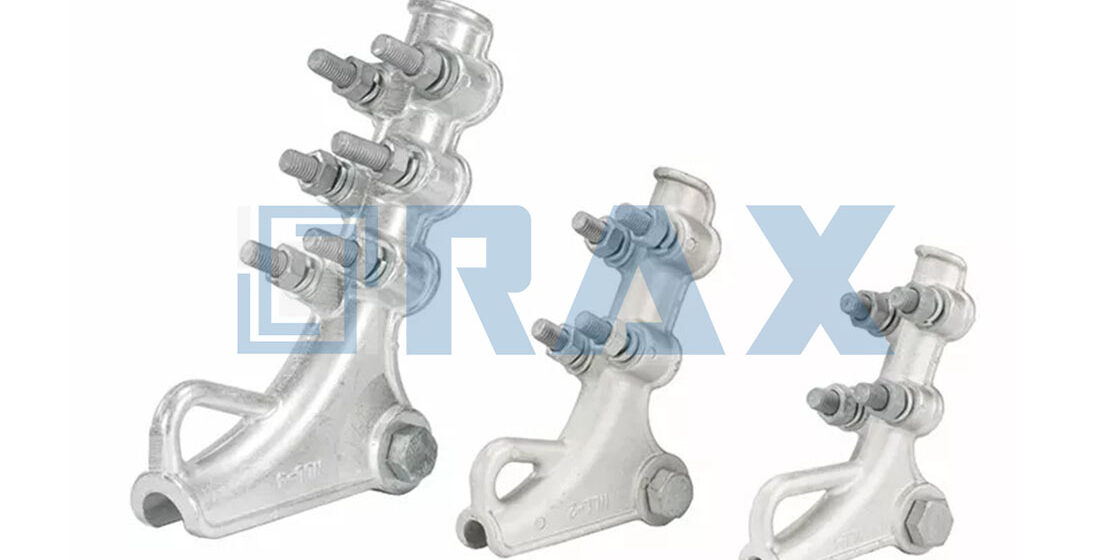
سيؤدي التمدد الحراري إلى الإضرار بالخط الهوائي أسرع من حمل الرياح إذا لم تكن المعدات مُصنَّفة بشكل صحيح. تعمل مشابك التثبيت كنقاط ثابتة تدير هذا الإجهاد، ولكن الاعتماد على مواصفات عامة لأنواع مشابك التثبيت يُدخل مخاطر عدم الامتثال عندما تتغير الظروف البيئية. تحتاج إلى مواد محددة لتتحمل العمل الميداني. أغلفة من البلاستيك المقاوم للأشعة فوق البنفسجية عالي الجودة وسبائك الألومنيوم أمران ضروريان لأن البوليمرات القياسية تفقد قوة الشد وتصبح هشة تحت الإشعاع الشمسي المطوّل.
سنستعرض كيف تختلف تصاميم الإسفين بين كبلات ADSS والكبلات الحزمة الهوائية وكيف تندمج هذه الخيارات الميكانيكية مع أنظمة كبلات ZMS kV للحفاظ على شد الخط. إن اختيار مادة الغلاف المناسبة وهندسة القبضة الآن هو السبيل الوحيد لمنع التدهور المبكر وتفادي الكابوس اللوجستي للاستبدالات الطارئة.
ما هو مشبك التثبيت؟
مشبك التثبيت هو جهاز نهاية ميكانيكي صُمم لتثبيت أطراف الكبل عند نقاط ثابتة على عمود الخدمات، وتحمل أحمال الشد الناجمة عن الرياح أو الجليد مع منع الانزلاق.
تعريف غرض مشبك التثبيت
في بنية خطوط الطاقة الهوائية، يعمل مشبك التثبيت كمكون حرج للنهائية الميكانيكية يُنهي الكبلات ميكانيكياً ويحافظ على شد الخط. هدفه الأساسي هو تثبيت أطراف الموصلات — مثل كبلات ADSS والألياف البصرية وأسلاك الرعي — على الأعمدة أو العوارض، لضمان السلامة الهيكلية للنظام بأكمله تحت ظروف الإجهاد مثل تراكم الجليد الثقيل أو سرعات الرياح العالية. وعلى عكس معدات التعليق التي تسمح بالحركة، تخلق مشابك التثبيت نقطة نهاية صلبة حيث تُنقل جميع قوى الشد بأمان إلى الهيكل الداعم دون إزاحة.
المكونات الأساسية لمشابك التثبيت
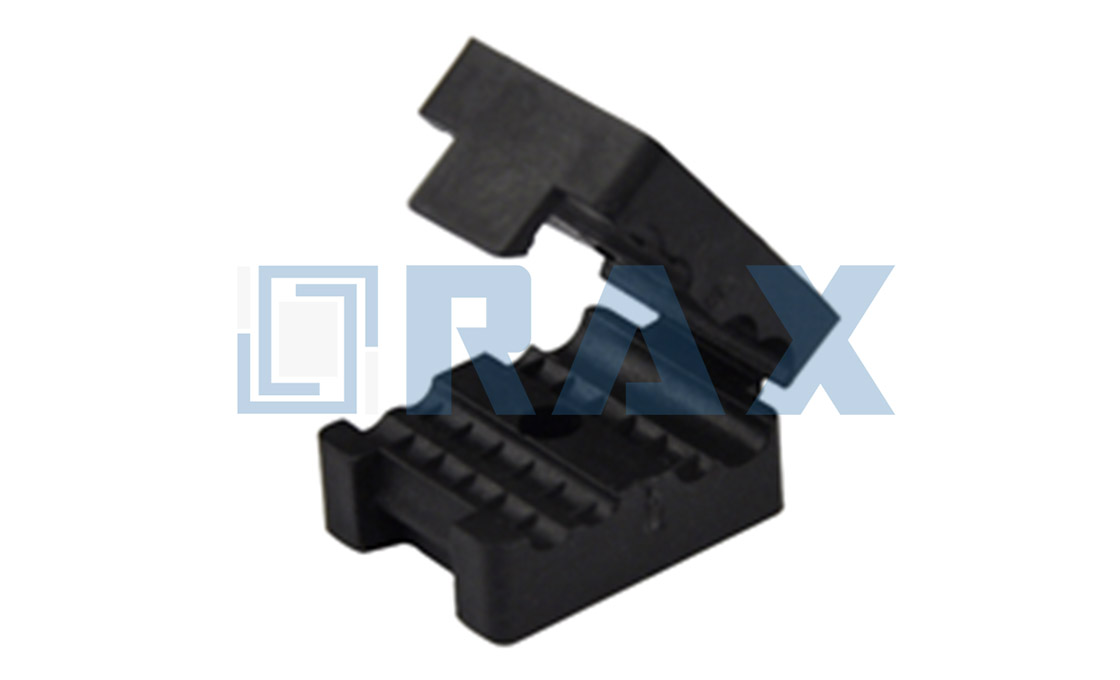
بينما تختلف التصاميم وفقاً لاحتياجات التطبيق، فإن معظم مشابك التثبيت الحديثة تتكون من ثلاث عناصر أساسية: غلاف جسم يوفر الدعم الهيكلي، و آلية إسفين مخروطية تتشابك مع خيوط الكبل، وقوابض تركيب مثل المسامير أو الدبابيس للتجميع. يُصنع الجسم عادةً من فولاذ عالي المقاومة للشد بدلاً من المعادن المسبقة لتفادي الفراغات الداخلية التي قد تُضعف القوة تحت الحمل الشديد. يتميز الإسفين بأسنان أو أخاديد مُصنعة بدقّة مصممة لتهرس الطبقة الخارجية للكبل عند زيادة الشد، مما يخلق قبضة معززة ذاتياً تشدد تدريجياً مع ارتفاع قوة السحب بدلاً من التراخي.
كيفية تثبيت مشابك التثبيت لخطوط الأعمدة
يضمن إنتاجنا الآلي تسامحاً قياسياً صارماً يبلغ 1 مم على هذه المكونات، مما يضمن أداء كل مشبك بشكل متسق عبر الظروف البيئية المتنوعة — من شتاء سيبريا المتجمد إلى موسميات المناطق الاستوائية الرطبة — دون مخاطر تآكل مبكر أو انزلاق. في Rax Power، نعتمد خبرة التشكيل الساخن لقبضات النوع الإسفيني لأن عملية التصنيع هذه تحاذي بنية حبيبات المعدن بشكل أفضل بكثير من الصب، مما ينتج مقاومة فوق ordinary لل fatigue أثناء دورات الشد المتكررة. يعمل آلية التثبيت من خلال مبدأ فيزيائي بسيط وفعّال: عندما يسحب الشد على الكبل المثبت في المشبك، يُجبر الإسفين على الانزلاق أعمق في مقعده المخروطي داخل غلاف الجسم. هذا الإجراء يضغط الكبل ضد سطح قبضة الإسفين، مولداً احتكاكاً يتناسب طردياً مع الحمل المطبق. يسمح هذا السلوك المتوقع للمهندسين بحساب هوامش الأمان بدقة خلال مراحل تصميم EPC بثقة، على العلم أن المعدات ستؤدي كما هو نموذجي تحت أقصى الأحمال المتوقعة.
| ميزة | وصف فني | المواصفات القياسية | آلية التشغيل | ميزة Rax |
|---|---|---|---|---|
| الوظيفة الأساسية | إنهاء كبل ميكانيكي مصمم لتثبيت أطراف الموصلات وتحمل الشد. | مُصنّف لتحمل أقصى سعة حمل ضد الإجهاد الميكانيكي الناتج عن الرياح والجليد وانكماش الحرارة. | تثبت الكبلات عند نقاط ثابتة لمنع الانزلاق والحفاظ على شد الخط. | قبضات الإسفين المُشكّلة بالحرارة تستغل خبرة متقدمة لأقصى سعة حمل مقارنة بالصب. |
| آلية القفل | نظام ذاتي الشد يعزز القبضة مع زيادة الحمل الميكانيكي. | يضمن قوة تجميع تلقائية تعتمد على الحمل مع صفر انزلاق تحت شد عالٍ. | ينزلق الإسفين المخروطي داخل غلاف الجسم لضغط وقفل الكبل. | تضمن الآلات الدقيقة الآلية تسامحاً قياسياً صارماً يبلغ 1 مم على المكونات الفولاذية. |
| finishes متانة | Protective coating essential for outdoor utility infrastructure longevity. | Compliant with أيزو 1461; mean coating thickness exceeding 85 microns. | Hot-dip galvanizing provides a smooth, bright finish against environmental stress. | Offers superior defense against UV exposure and harsh environmental stress conditions. |
| ضمان الجودة | Verification processes ensuring structural integrity and safety standards. | Rigorous load testing and gauge testing conducted per IEC 120 standards. | Double-review protocol monitoring every stage of production. | 100% product verification executed by a dedicated QC team with full SGS certification. |
| Application Range | Versatile anchoring solutions for power distribution and telecom networks. | Compatible with LV-ABC, ADSS, Guy Wires, and fiber optic cables. | Incorporates specialized preformed grips and high-tensile fasteners. | Backed by 21 years of global export experience supplying critical utility infrastructure. |
أنواع مشابك التثبيت وكيفية عملها
Wedge-type and compression anchor clamps are the two dominant mechanical classes in pole line hardware, distinguished by their locking mechanisms and primary function in securing conductors or guy wires.
Anchor clamps function as critical termination points in overhead power transmission and distribution systems, transferring tensile loads from cables to supporting structures. The selection between clamp types depends primarily on whether the installation requires permanent fixation with minimal maintenance (wedge-type) or a design accommodating controlled tension adjustments (compression-type).
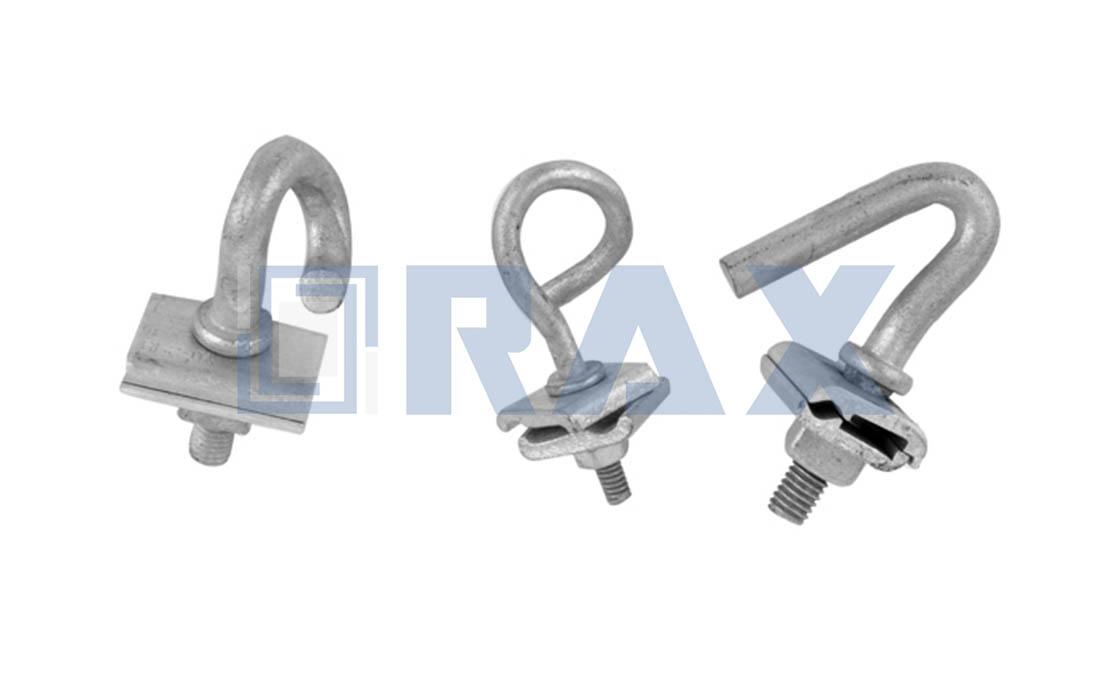
مشابك التثبيت النوعية بالإسفين (تُقفل ذاتياً)
Wedge-type anchor clamps utilize a mechanical self-locking principle where increasing tension on the cable automatically tightens the grip. These devices consist of a housing containing two or more movable wedges and a steel ring or fitting. When a conductor is inserted and tension applied, the wedges are forced deeper into the tapered housing, creating a friction lock that prevents slippage. This mechanism makes them ideal for permanent installations such as dead-end anchors on utility poles or ADSS fiber optic cable terminations where release is not required during normal operation.
A standard example is the cone-shaped wedge assembly used in guy wire terminations, where movable wedges inside the clamp body automatically tighten the cable as external forces increase.
مشابك التثبيت الضغطية (المضغوطة)
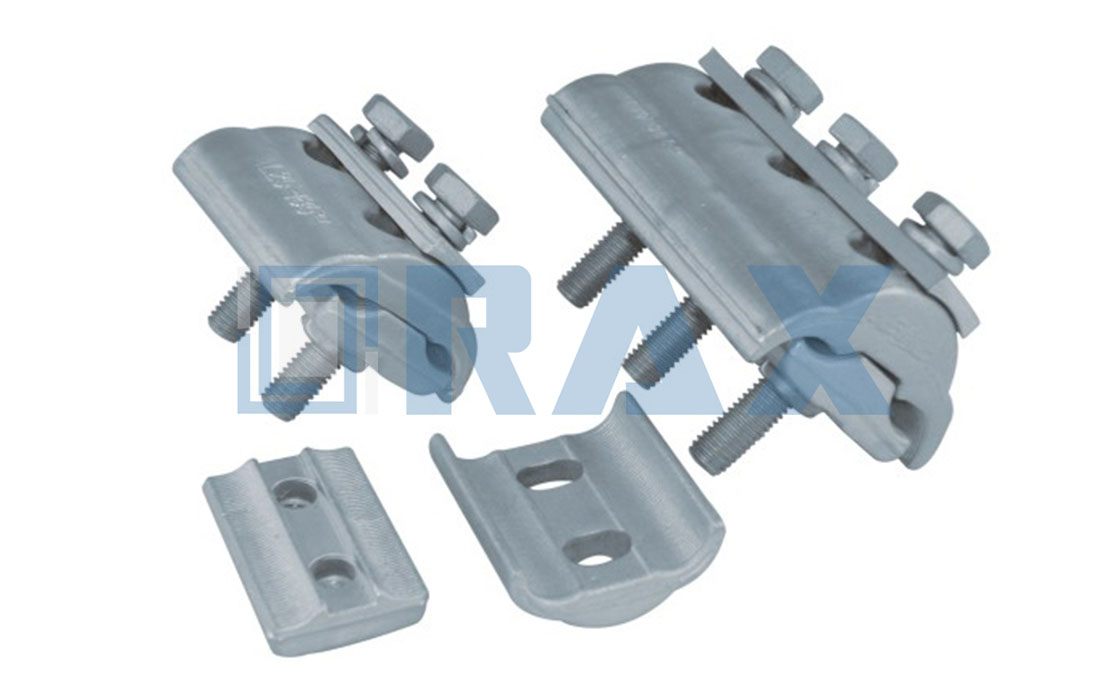
Compression-type anchor clamps form a permanent bond by deforming the clamp barrel around the conductor using hydraulic or mechanical crimping tools. Unlike wedge designs, these do not rely on wedges moving within a housing; instead, the entire barrel is squeezed to create a metallurgical bond between the clamp and the cable strands. This method provides high strength and excellent conductivity, making it suitable for critical applications like ACSR (Aluminum Conductor Steel Reinforced) dead-ends or splice sleeves where maximum load transfer and minimal electrical resistance are required.
The process involves inserting the prepared conductor end into the clamp barrel, then applying uniform pressure via a die set to compress the metal onto the strands. Proper crimping requires strict adherence to specified die sizes and compression ratios to avoid damaging the conductor or creating stress concentrations that could lead to failure under cyclic loading.
المقارنة الوظيفية ومعايير الاختيار
- Installation Speed: Wedge-type clamps allow rapid field installation without tools beyond a basic hammer or puller, whereas compression-type requires dedicated crimping equipment and trained personnel.
- Maintenance Access: Wedge grips cannot be easily re-tensioned once set; if adjustment is needed, the entire assembly must be replaced. Compression joints offer no adjustment capability but provide superior long-term stability when correctly installed.
- Load Capacity: Both types can achieve breaking strengths exceeding 90% of the conductor’s rated tensile strength, though compression joints typically exhibit better fatigue performance under dynamic vibration loads due to absence of internal moving parts.
- Environmental Suitability: In coastal or corrosive environments, both types benefit from hot-dip galvanizing per ISO 1461 standards, with mean coating thicknesses exceeding 85 microns to ensure longevity against salt spray and moisture ingress.
كيف تختلف مشابك التثبيت في التصميم والوظيفة
Selecting the correct anchor clamp is a critical engineering decision that directly impacts system stability and longevity. The primary distinction between types lies in their functional role within the overhead line architecture: tension clamps are designed to hold live cables under constant stress, allowing for future maintenance adjustments, whereas fixed dead-end configurations serve as permanent termination points that anchor the cable firmly against all directional forces.
This functional divergence in purpose directly informs the mechanical design choices that follow. Understanding whether a clamp is meant to secure or tension immediately dictates which gripping mechanism—wedge or fixed—becomes appropriate for the application.
آلية العمل: تكوينات الإسفين مقابل الثابتة
The most significant technical differentiator is the gripping mechanism itself. Tension clamps typically utilize a wedge-type design where the central body features a tapered barrel. As load increases on the cable, the internal wedges move further into this taper, creating a self-tightening action that reinforces the grip rather than loosening it. Conversely, fixed dead-end clamps rely on a rigid structure with no moving parts once installed; they transfer the full tensile load directly to the mounting hardware through a solid connection point without relying on friction-based tightening mechanisms.
معايير المواد والبناء
High-performance anchor clamps generally utilize hot-forged steel alloy components rather than cast alternatives. Forging aligns the grain structure of the metal, significantly enhancing toughness and load-bearing capacity while minimizing internal voids that could lead to failure under extreme stress. To ensure durability in outdoor exposure, these steel components undergo hot-dip galvanizing processes compliant with ISO 1461 standards. This treatment provides a protective zinc coating with a mean thickness exceeding 85 microns, offering robust corrosion resistance suitable for diverse climatic conditions from coastal humidity to industrial pollution.
تطبيقات التصنيف الوظيفي
- Tension Anchor Clamps: Ideal for scenarios requiring repositioning capability or where the cable must absorb longitudinal movement, such as at mid-span locations or transition towers where flexibility is required to manage thermal expansion.
- Fixed Dead-End Clamps: Essential at terminal structures like poles or corners where the line must be securely terminated to withstand unidirectional pulling force permanently, preventing any potential slippage into the support structure.
اعتبارات التركيب للمبتدئين
When installing these devices, particularly in challenging environments like dusty or humid regions, selecting clamps with appropriate insulating properties is crucial to prevent electrical tracking. Ensure dimensional tolerances remain within strict limits (typically ±1mm) to guarantee proper fitment with standard pole accessories. For specialized applications involving fiber optic lines, verify compatibility with ADSS/OPGW cable diameters to avoid crushing damage during the gripping process, maintaining signal integrity alongside mechanical security.
| ميزة | المواصفات | الميزة |
|---|---|---|
| Design Principle | Wedge-type gripping mechanism with tapered barrel | Self-tightening action increases grip strength as tension rises |
| تكوين المادة | Hot-forged steel alloy with ISO 1461 compliant hot-dip galvanizing | Superior load capacity compared to cast alternatives; mean coating thickness exceeds 85 microns |
| Dimensional Tolerance | Strict 1mm precision on steel components | ensures perfect EPC design integration and component interchangeability. |
| Testing Protocol | In-house IEC 120 load testing with double-review QC protocol | 100% verification by 10-person team before packaging; SGS certified |
| Functional Classification | Categorization into anchor tension clamps vs fixed dead-end configurations | Tension types allow repositioning; fixed types provide permanent termination points |

حيث تُستخدم مشابك التثبيت في خطوط الطاقة
Anchor clamps are critical mechanical components deployed primarily at termination points and directional shifts in overhead power networks to prevent conductor slippage, manage tension loads, and maintain structural alignment under extreme environmental stress.
نهايات التثبيت الصامدة وأعمدة الشد
The primary function of anchor clamps is securing the end of a power line segment where the conductor terminates. In low-to-medium voltage networks, this occurs at “strain poles” or dead-end structures. Unlike suspension clamps which allow the cable to swing freely, an anchor clamp grips the strand tightly—often through a wedge-action mechanism—to transfer the full tensile load directly into the pole structure. This prevents the line from pulling loose during high-wind events or ice loading.
التغييرات الاتجاهية وتجمعات الزوايا
When a power line must turn around a corner or navigate a terrain feature like a river crossing or hillside, significant lateral forces are generated on the conductors. Anchor clamps are installed at these angle assemblies to hold the cable against the pull vector. They ensure that the turning point does not result in the wire slipping off the insulator string or damaging the supporting hardware due to unmanaged shear stress.
تطبيقات الكبل الحزمي الهوائي (ABC)
In modern distribution networks utilizing Aerial Bundled Cables (ABC), specific anchor clamps designed for insulated phases are used. These clamps accommodate multiple bundled conductors within a single unit, ensuring that the neutral phase and live phases remain securely anchored together at the end of a service drop, preventing twisting or separation of the insulation layers.
التكامل مع أساسات الطاقة الشمسية والتأريض
Beyond overhead transmission, anchor clamps serve as the interface between grounding systems and earth anchors. Helical screw anchors driven deep into the soil provide a stable base for solar panel mounts or lightning protection systems. Anchor clamps connect the copper grounding wire or steel strap to the top of these helical piles, creating a low-resistance path to earth that dissipates static charge and fault currents safely.
الخلاصة
Selecting the right hardware isn’t just about fitting a cable onto a pole. You need to match the grip material to the jacket material, whether that’s UV-resistant plastic for ADSS or galvanized steel for dead-end strain. Wedge grips offer excellent load capacity, but only if the tension ratings align with your specific conductor weight. Get the specs wrong, and the line sags or the hardware fails mid-winter.
“Our engineers design high-voltage cable systems daily, ensuring clamps hold up against various insulation types without crushing the core. Before you place a bulk order, let us review your tension rating calculations against the IEC standards. We catch integration errors early so your installation stays solid for decades.”
عازل مثبت على العمود يمسك بالمواسير الرأسية على مسافة ثابتة من سطح العمود، مما يحمي الكابلات ويحافظ على الفصل عن الموصلات والمعدات الأخرى.
كيف تختار أنواع مشابك التثبيت؟
يعتمد الاختيار على نوع الموصل وقطره وظروف الحمل الميكانيكية المتوقعة للتركيب. يجب أن يأخذ المهندسون أيضاُ في الاعتبار العوامل البيئية التي قد تؤثر على متطلبات مقاومة التآكل. إن التوافق مع الهيكل الداعم وسهولة التركيب يُعدان أيضاُ عوامل حاسمة في اتخاذ القرار. يضمن الرجوع إلى أوراق البيانات الفنية أن المشبك المختار يلبي جميع معايير السلامة والأداء الخاصة بالتطبيق.
ما المواد التي تضمن متانة المشبك؟
تُصنع مشابك المرساة عالية الجودة عادةً من مواد مقاومة للتآكل مثل الصلب المجلفن بالغمس الحراري أو سبائك الألومنيوم. توفر هذه المواد حماية أساسية ضد العوامل البيئية مثل الرطوبة والإشعاع فوق البنفسجي وتقلبات درجات الحرارة. تضيف عملية الجلفنة طبقة تضحية تزيد بشكل كبير من العمر الخدمي للمعدات. يضمن استخدام المواد المتينة الموثوقية الهيكلية للشبكات المعلقة على مدى عقود.
كيف تُختبر مشابك التثبيت حملياً؟
تقوم الشركات المصنّعة بإجراء اختبارات حمل دقيقة للتأكد من أن المشبك يستطيع تحمّل حمل الكسر المصنّف للناقل دون انزلاق. يتضمن ذلك تعريض التجميع لقوى شد متزايدة حتى يحدث الفشل أو الوصول إلى الحد المحدد. تضمن هذه الاختبارات الامتثال للمعايير الدولية مثل تلك التي تضعها اللجنة الكهروتقنية الدولية (IEC) للسلامة الميكانيكية. يوفّر الاختبار المنتظم التحقق من صحة التصميم الهندسي واتساق أداء المعدات.