
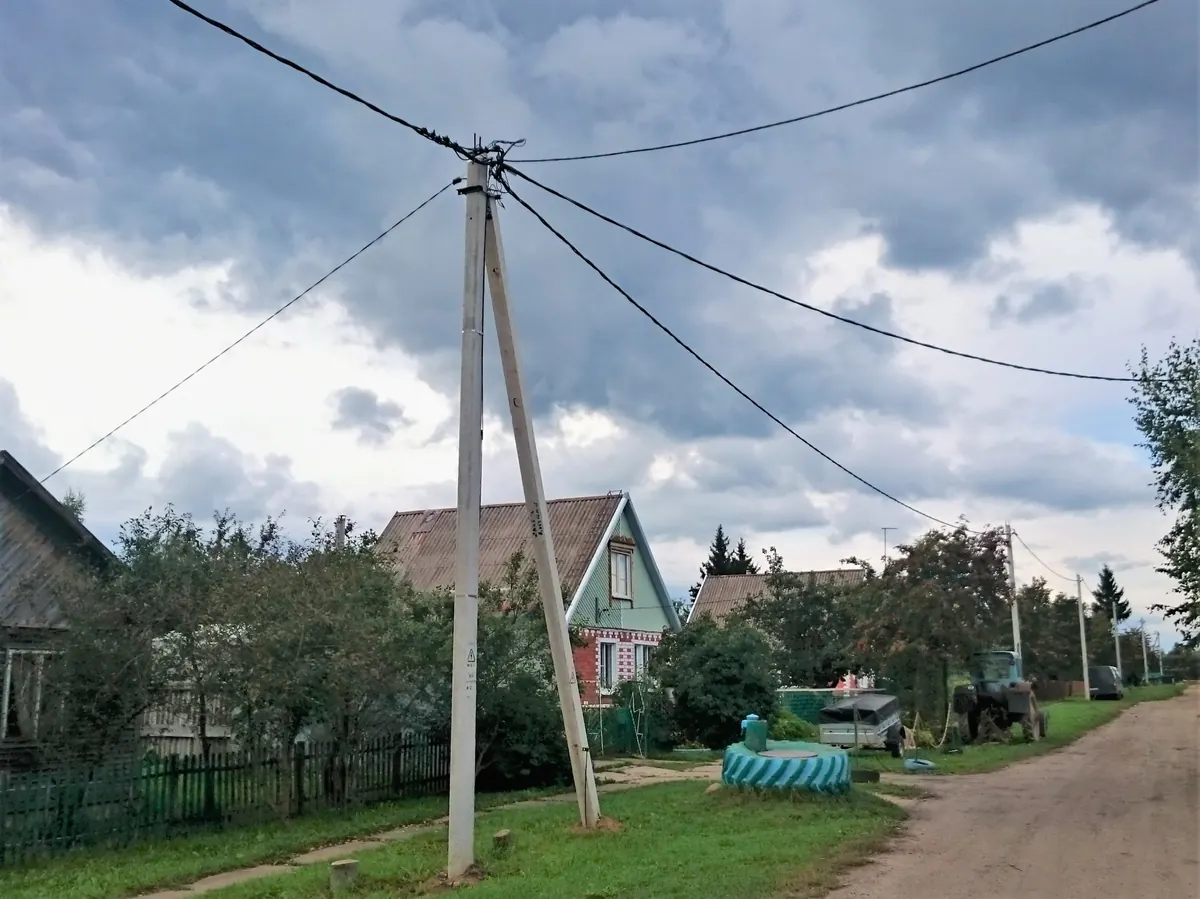
Imagine uma linha de baixa tensão cruzando uma rua movimentada em Marselha, Bogotá ou Riad: três ou quatro núcleos isolados torcidos em espiral ao redor de um mensageiro central, oscilando entre postes de concreto. Cada ponto de fixação nessa linha depende de um prendedor ABC, e cada um desses prendedores ABC foi dimensionado por um engenheiro meses antes da primeira tempestade testá-lo. Escolher esses prendedores bem é sobre o que este guia trata.
Desde 2003, a RaxPower fabrica ferragens para linhas de poste em uma fundição a quente em Hebei, China, apoiada hoje por uma equipe de produção com mais de 170 pessoas que atende concessionárias, empreiteiros de linhas e distribuidores. O método de seleção abaixo reflete o que aquele setor de engenharia verifica antes de recomendar prendedores ABC para um projeto: cabo, estrutura, carga, material e norma, nessa ordem.
Comece pelo Cabo, Não pelo Prendedor
ABC significa cabo aéreo agrupado: um sistema aéreo de baixa tensão no qual os núcleos fase de alumínio isolado se torcem ao redor de um mensageiro de liga de alumínio que suporta toda a carga mecânica. A maioria das redes opera projetos de 0,6/1 kV em arranjos de dois ou quatro núcleos, e muitos adicionam um condutor dedicado de iluminação pública isolado. As fases são identificadas pelas contagens de nervuras moldadas no isolamento.
Esse mensageiro muda tudo na seleção de prendedores. Porque o peso e a tensão do cabo viajam por um único núcleo, a ferragem de âncora agarra o mensageiro em vez dos fios. A ferragem de suspensão ampara o feixe inteiro, e a ferragem de serviço conecta os núcleos isolados individualmente. Na nossa experiência, projetos que consultam primeiro a ficha técnica do cabo acabam com uma lista de prendedores que praticamente se escreve sozinha.
Dois números importam mais: o diâmetro externo do feixe e a seção transversal do mensageiro. Um feixe 4×25 mm² tipicamente mede 24-27 mm de diâmetro, enquanto um feixe 4×95 mm² varia de 32-38 mm. Os projetos de cabo também variam por região, seguindo NF C 33-209 na França, BS 7870-5 no Reino Unido ou AS/NZS 3560.1 na Australásia. Nas Américas, o mesmo produto é comercializado como queda de serviço dúplex, triplex ou quadruplex. Para um contexto mais amplo de projeto de cabos aéreos pré-montados, este Visão geral da TD World sobre princípios de projeto de linhas aéreas vale dez minutos.
Por que esse rigor importa na escala do projeto? Um alimentador de dez quilômetros pode ultrapassar bem mais de cem estruturas, e um tamanho de cavidade errado se multiplica em cada ponto de suspensão ao longo da rota. Projetos que verificam diâmetros cedo alteram números de peça no papel. Projetos que verificam tarde alteram nos postes, com um caminhão basculante e um relatório de falha já em mãos.
Combine a Família de Prendedores à Estrutura
Uma linha é uma corrente de estruturas, e cada estrutura executa um trabalho mecânico. Postes tangentes carregam peso, postes de ângulo redirecionam a rota, postes terminais absorvem tensão total, fachadas conduzem a linha ao longo de paredes, e posições de serviço conectam cargas ou lâmpadas. Combine a família de prendedores a essa função antes de abrir qualquer catálogo.
| Família de prendedores | Estrutura típica | Carga suportada | Entrada principal de dimensionamento |
|---|---|---|---|
| Prendedor de tensão com cunha (âncora) | Postes terminais, de esquina e de ângulo | Tensão total da linha através do mensageiro | Seção transversal do mensageiro mais daN nominal |
| Prendedor de suspensão | Postes tangentes, trechos retos | Peso vertical do vão sustentado | Diâmetro externo do feixe mais vão vezes massa por metro |
| Suporte ou gancho | Topos de poste, paredes, fachadas | Cargas de fixação e desvio | Material do poste, fixação parafusada ou por abraçadeira, classe daN |
| Prendedor de serviço e iluminação | Quedas de serviço, derivações de iluminação pública | Tensão do cabo de serviço, cargas de derivação | Número de núcleos e diâmetro do cabo de serviço |
A tabela segue a ordem em que as cargas crescem. Posições de âncora recebem as maiores forças, posições de suspensão têm a maior quantidade de unidades, e suportes e prendedores de serviço definem quão organizada a linha encontra edificações e luminárias. Equipes de compras costumam agrupar essas famílias, e o gama de encaixes de tensão e suspensão groups them in one place for exactly that reason.
Counting positions from the pole schedule turns this table into quantities. A typical route needs anchor clamps at every terminal and angle, suspension clamps at every intermediate support, brackets wherever clamps meet poles or walls, and service clamps at each tap. That count becomes the bill of materials, and it tells the supplier which load classes and cavity sizes to prepare.
Prendedores de Âncora e Tensão: Agarram o Mensageiro
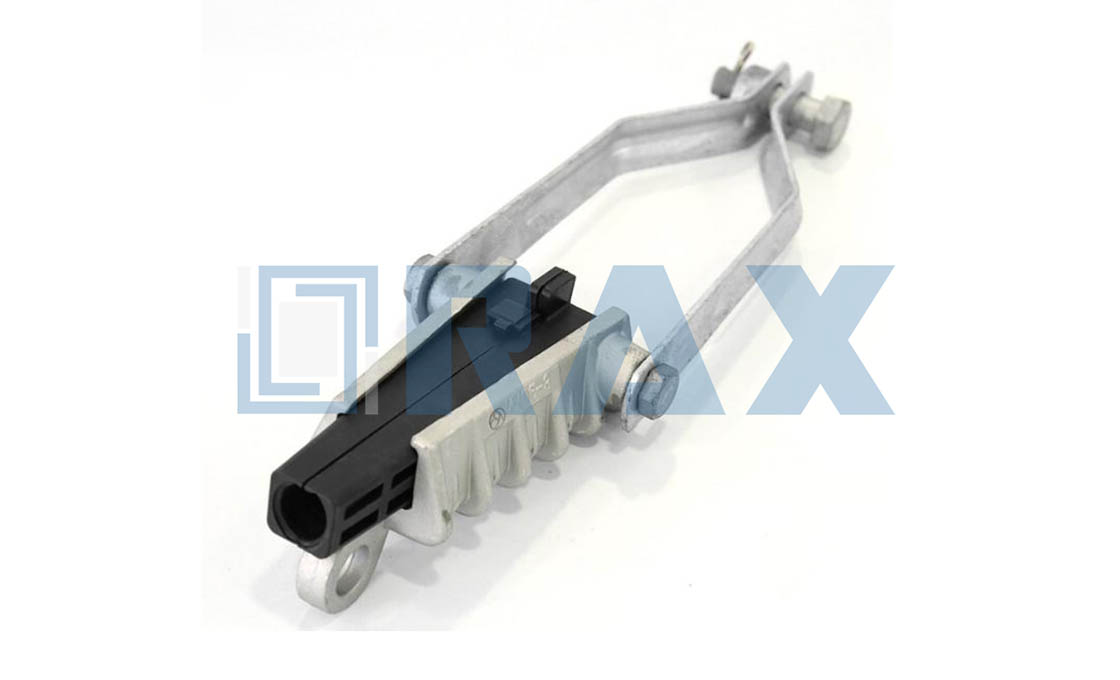
Wedge-type anchor clamps hold the messenger between a shaped body and a wedge that tightens as tension rises: the harder the cable pulls, the deeper the wedge bites. Many designs include springs that hold the clamp open while the conductor seats, which is why a two-person crew can tension and terminate a span in minutes.
Ratings are written in daN, and they scale with the messenger rather than the bundle. One European manufacturer rates its PA1500 clamp at 1500 daN (about 15 kN) for 50-54.6-70 mm2 messengers. The PA2000 carries 2000 daN in the same range, and the PA2200 reaches 2200 daN for 95-120 mm2 cores. Select the messenger class first, then confirm the rated load clears your calculated tension with margin for wind and ice.
Fit the wedge cavity the way you fit a work boot: a loose fit slips under load, and a forced fit damages the insulation. If your project needs to compare specific deadend designs model by model, the companion piece on ABC deadend clamp comparison covers that ground. Current wedge-type products are listed on the anchoring clamp page.
Prendedores de Suspensão para Trechos Retos e Ângulos
Suspension clamps carry weight, not tension. The load on each support comes from the span itself. Multiply the supported span length by the cable’s mass per meter from the data sheet, then add allowances for wind, ice, and safety factors. Longer spans and heavier bundles therefore push you up the suspension range even when the conductor size stays the same.
The cavity must match the measured bundle OD, not the nominal cross-section. Because the phases stay insulated all the way to the support, ABC clamps grip the outside of the bundle instead of the conductor metal. Two 4×95 mm2 cables from different factories can differ by several millimeters, and a cavity sized for one can float loosely on the other. A hanging bundle that moves inside its clamp will fret the insulation at the contact points within a few seasons.
Angles decide the variant. Line deviations beyond roughly 30 degrees call for bracketed or angle-capable designs, and some models are rated up to 90 degrees. Insert quality matters too: buying guides rank EPDM ahead of silicone and PVC because the insert absorbs vibration and stops abrasion where the bundle rests.
Suportes, Ganchos e Opções de Montagem em Fachada
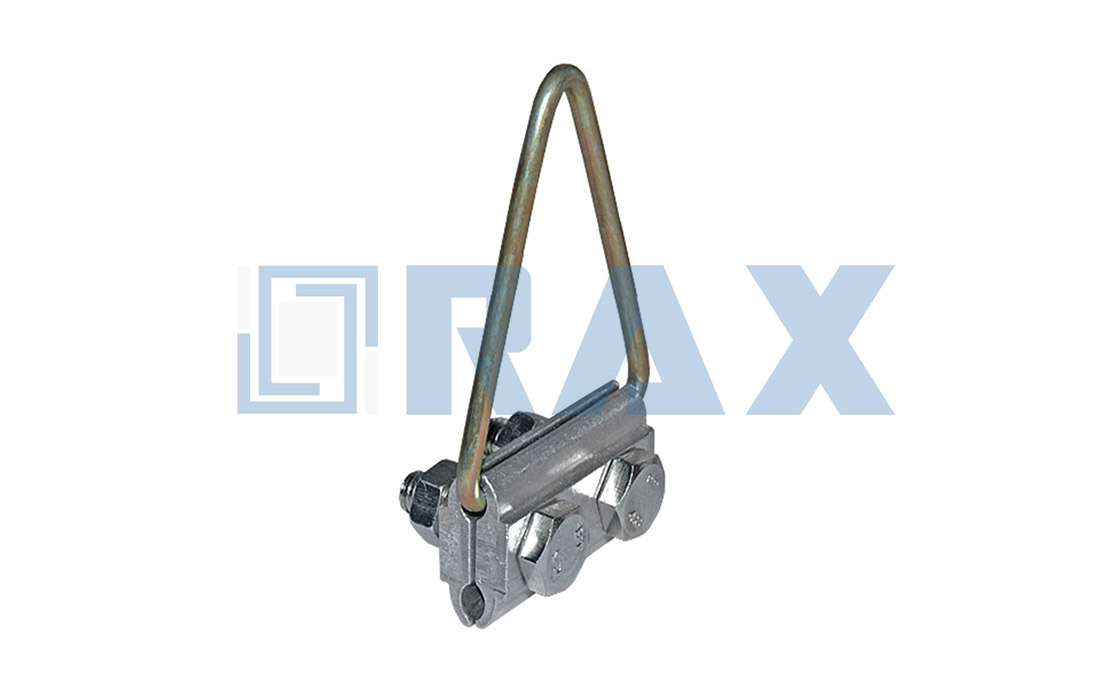
Clamps bolt to something, and that something is usually a bracket. Pole-mounted support brackets in classes such as CA1500 and CA2000 carry 1500 and 2000 daN respectively and fix to timber, concrete, or steel poles with bolts or steel strapping. The bracket class must match the anchor clamp it carries, otherwise the weakest link moves from the clamp to its mounting.
The fixing method is a field decision as much as an engineering one. Bolts suit new poles where holes can be drilled before the crew arrives, while strapping wins on energized reconstructions because it needs no drilling. Facade runs use wall brackets to route the bundle along buildings at a tidy standoff. Check the substrate before specifying: brick and concrete accept expansion anchors, while lightweight panels may need spreader plates behind the fixing.
Facade mounting earns its keep in dense cities. Urban networks in Europe and the Middle East lean on wall brackets because poles are scarce on narrow streets. A well-routed facade run can replace three structures with thirty fixings.
Prendedores para Iluminação Pública e Conexões de Serviço
Street lighting is where ABC part lists quietly multiply. Many bundles carry a dedicated insulated lighting conductor, and every lamp needs a tap that grips insulated cores without stripping them. Bolted service clamps exist for exactly this duty: designs such as the PA-215 anchor or suspend two-conductor service lines, while heavier bolted clamps secure larger service drops.
Size these clamps by core count and service cable diameter, and prefer insulated bodies where taps sit close to energized hardware. A clean lighting schedule, with one clamp type per tap class, keeps night crews moving instead of hunting hardware at the pole.
Materiais Construídos para UV, Chuva e Ciclos de Carga
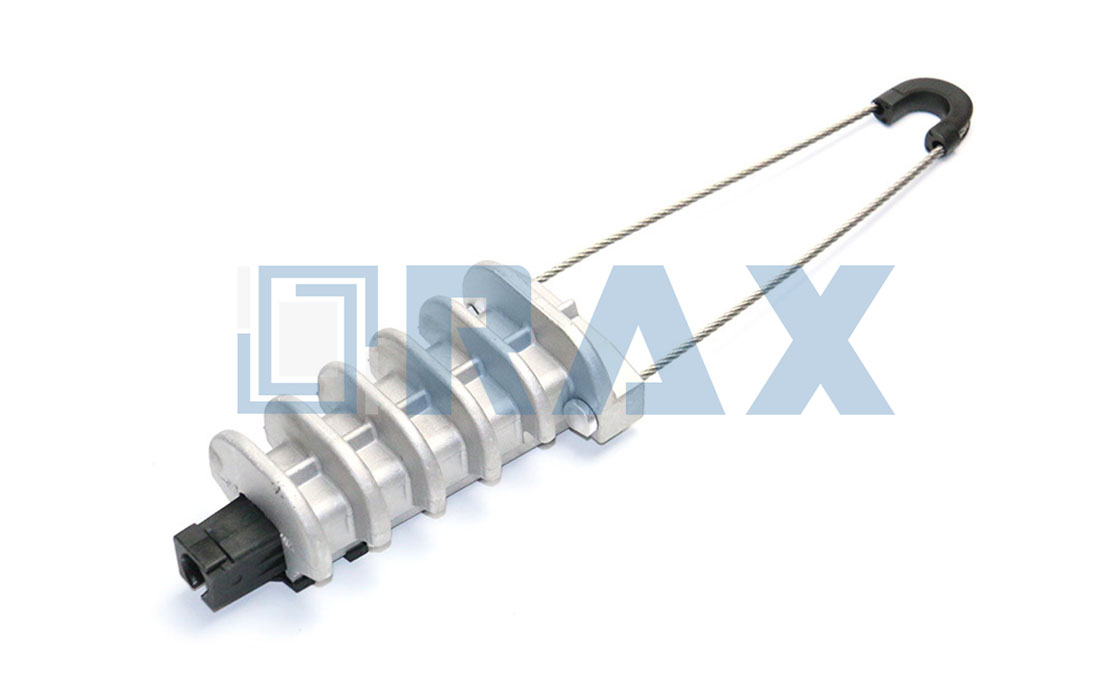
ABC clamps live in a three-material system, and each material does one job. Bodies in the major European ranges are weather-resistant aluminum alloy, chosen for weight and corrosion behavior. Wedges, bolts, and moving links are fiberglass-reinforced or UV-stabilized plastics, and suspension designs add hot-dip galvanized steel for load-bearing pins and hooks. Aluminum carries load without staining the conductor, plastics insulate and damp vibration, and galvanized steel takes bolt forces.
Networks are engineered around 40-50 year component life cycles, so material substitutions are false economies. A cheaper polymer that embrittles after a few summers of UV exposure turns a maintenance-free fitting into a repeat fault call. When a supplier quotes an unfamiliar material, ask for the weathering data behind it.
Normas e Relatórios de Teste que Vale a Pedir
Two references dominate ABC clamp procurement across Europe and much of its export belt. The EN 50483 series covers fittings for tensioning, supporting, and connecting aerial bundled cables rated 0.6/1 (1.2) kV. Separate parts cover general requirements, tension and suspension clamps, connectors, and electrical ageing. NF C 33-041, the French standard for anchoring devices on bundle-assembled-core lines, is frequently cited alongside it.
Together these standards define the test program a qualified clamp survives: tensile and slip tests, endurance or fatigue cycling, and dielectric tests performed with the fitting immersed in water. When comparing suppliers, ask for type-test reports against the exact standard your utility cites, and match the report’s cable size to your own.
O que a Seleção Incorreta Custa no Campo
By the time a mis-sized wedge announces itself, the installation crew is long gone. The documented failure modes stay consistent across manufacturers. A cavity too large lets the cable slip under tension, while a cavity too small gouges the jacket. A side-loaded clamp wears unevenly until the bundle sags or drops, and until the slip is caught, the pole keeps transferring load into hardware that was never rated for it.
None of these failures look dramatic on commissioning day. Mis-selected ABC clamps fail quietly, surfacing years later as sag drift, chafed insulation, and repeat fault calls. That slow burn is why the checklist below is the cheapest insurance in the whole project file.
Lista de Verificação de Seleção Para um Projeto Real
Run this sequence once per project and repeat it whenever the cable design or pole schedule changes. Each step feeds the next, and the output is a purchase-ready bill of materials rather than a folder of catalog pages.
- Record the cable design: core count, phase and messenger cross-sections, and the measured bundle outside diameter.
- Map every structure on the route: tangent poles, angles with their deviation degrees, terminals, facade brackets, and service or lighting taps.
- Compute the loads: supported span times cable mass per meter for suspension points, and the tension class for each anchor position.
- Assign a clamp family to each structure using the decision table above.
- Size cavities to the measured messenger or bundle diameter, never to a nominal cross-section alone.
- Confirm materials for the environment: aluminum alloy bodies, reinforced plastic wedges, and galvanized steel fixings.
- Request EN 50483 or NF C 33-041 type-test reports for the exact part numbers quoted.
- Log part number, structure ID, and fixing method for every position so future crews can audit the line.
Palavra Final: Escolha uma Vez, Inspecione Raramente
Choosing ABC clamps is not about memorizing catalogs; it is about reading the line first. Cable, structure, load, material, standard — in that order — and the clamp list resolves itself. RaxPower manufactures these components with ISO 9001-certified quality systems and hot-forged discipline, because a clamp that holds quietly for decades is the cheapest hardware on the pole.
Perguntas Frequentes
Como dimensionar prendedores ABC para meu cabo?
Measure the bundle’s outside diameter and the messenger’s cross-section, then match them to the clamp’s cavity range and rated load in daN. Anchor clamps follow the messenger; suspension clamps follow the bundle diameter.
Um único tipo de prendedor pode atender uma linha ABC inteira?
No. Terminal and angle positions need wedge-type anchor clamps for tension, tangent poles need suspension clamps for weight, and facades need brackets. Most projects order at least three families.
Quais normas se aplicam a prendedores ABC?
The EN 50483 series covers low-voltage ABC fittings rated 0.6/1 (1.2) kV, and NF C 33-041 defines tests for anchoring devices. Ask suppliers for type-test reports against either standard.
O que acontece se o tamanho do cunho estiver errado?
A cavity that is too large lets the messenger slip under tension, and one that is too small damages the insulation. Side loading wears the clamp unevenly. All three are documented field failure modes.
Sistemas ABC precisam de prendedores especiais para iluminação pública?
Yes. Lighting taps use bolted service clamps sized by core count and service cable diameter, gripping insulated conductors without stripping them. Many bundles carry a dedicated lighting conductor.