
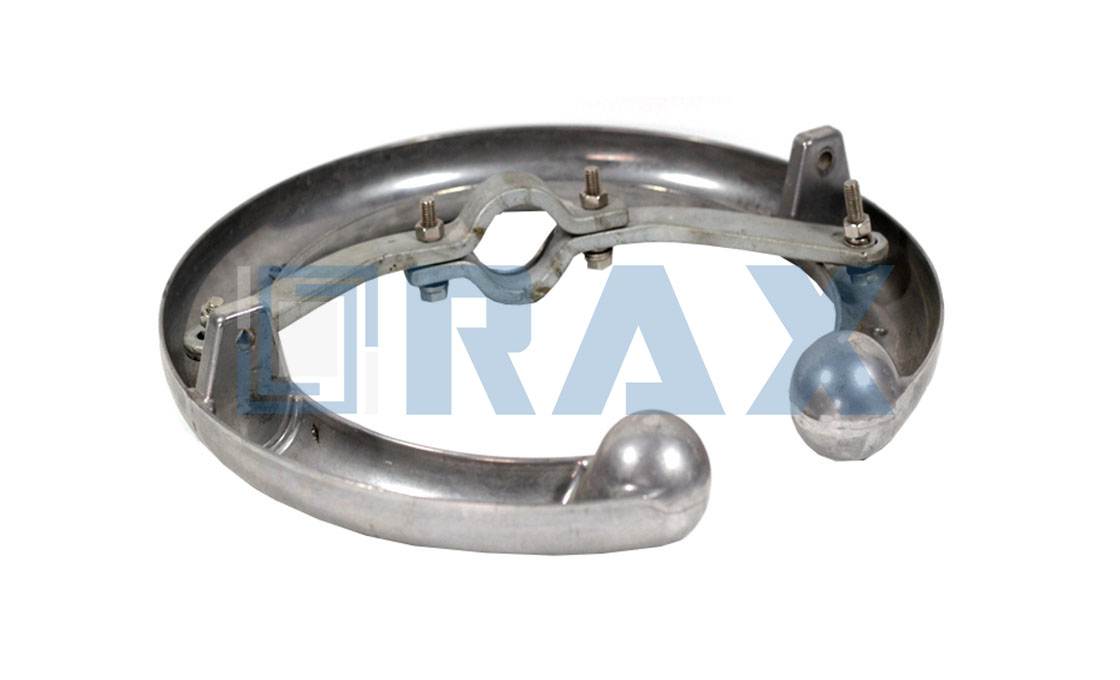
In catalog photographs the two devices are nearly indistinguishable: an aluminum toroid, bolted to live hardware, quietly reshaping an electric field. The paperwork is where they separate. One name records a fight against discharge, the other against uneven voltage — and the corona rings vs grading rings question starts on paper, not on the tower.
RaxPower’s order desk receives inquiries for these rings under both names — sometimes both in a single RFQ. This page separates them the way the engineering literature does: by function, by placement, and by the standards each name actually touches. The geometry, you will see, was never the argument.
Two Names for Two Different Jobs
A corona ring, taken by its name, exists to hold the local field at hardware below the corona onset gradient. Stress concentrates where metal turns sharply: clamp jaws, cotter pins, the end fitting of a string. The ring’s smooth radius moves the strongest gradient onto a surface that can carry it.
A grading ring, taken by its name, answers a different complaint. Along a long chaîne d'isolateurs the voltage does not divide evenly; the line-end units carry far more than their share. The ring adds capacitance and shielding at the live end, flattening the profile so no single unit sits close to flashover.
The overlap is not sloppiness; it is physics. A ring that flattens a string’s profile also removes the sharpest gradient at its live end. A ring that kills discharge at a clamp evens the field around it. The two written jobs share one mechanism, which is why one weldment can honestly carry both names.
Treat each name like a tool tag: it records the job its designer had in mind, not a different piece of metal. Under that rule, a name is evidence about intent, and evidence can be cross-examined. With that in hand, the rest of this page reads the paperwork the way a quote reader should.
What the Standards Vocabularies Actually Say
Start with the vocabularies that should settle a naming argument, because their silence is the first documented fact. IEC 60050-471, the Electropedia area covering insulators, defines the arcing distance, the end fitting, the insulator set, and the string. Neither corona ring nor grading ring appears anywhere in that index, and the same silence holds in archived editions from 2010 and 2015.
Definitions and usage of terms used in the measurement and analysis of corona and field effects of overhead power lines are presented in this standard.
That single line is the scope of IEEE Std 539, the IEEE vocabulary for corona work. It defines measurement terms, and even rain, snow, fog, and drizzle, and it leaves device naming to other documents. The current edition is 539-2020, successor to the 2005 text quoted above.
The device names surface in catalogs and technical literature instead. The IEC 61466 series standardizes composite string units above 1,000 V, and IEC 60437:2023 defines the radio interference test on high-voltage insulators. Catalog vocabulary fills the space those documents leave open, which is where the two ring names actually live.
The overhead-line section of the vocabulary does define the neighbors of these devices: the insulator set, the insulator string, the string insulator unit, and the end fitting. A specification that reuses those defined terms inherits fixed meanings for free. That is cheaper than inventing a definition for a ring and hoping the supplier reads it the same way.
That silence matters in a dispute, too. A contract line noting that the words are undefined is not being clever; it is reading the vocabulary accurately. Utilities, factories, and test laboratories have no authoritative definition of either device name to fall back on, so each specification carries its own definitions. Good buyers write theirs once and reuse them.
Where Each Name Came From
The names are old enough to appear in museum captions. A 1937 Cockcroft-Walton voltage multiplier in London’s Science Museum already carries corona caps and rings. Grading rings show up labeled on a University of Pennsylvania beam tube from 1940, and on a 1.4 MV X-ray generator at the US Bureau of Standards in 1947.
Encyclopedic usage since then has leaned on a tidy division: corona ring around conductors, grading ring around insulators, with anti-corona ring recorded as the more precise name for the first. The division survives because it is easy to draw, not because catalogs obey it. Field practice never signed that contract.
When CIGRE working group B2.03 published Technical Brochure 284 in 2005, it titled the work Use of Corona Rings to Control the Electrical Field along Transmission Line Composite Insulators. Corona rings, in that title, are doing the field-flattening job that many catalogs call grading. The tension is not just history; it runs through current literature. The same INMR work that dimensions grading rings on composite insulators cites Brochure 284, whose own title calls the devices corona rings.
North American catalogs behave the same way. MacLean Power Systems lists its braced-post transmission insulators as options with corona ring, while E-field papers by Gutman and Sidenvall dimension grading rings on composite insulators. Same hardware, two literatures, two names.
Side-by-Side Ledger of the Two Names
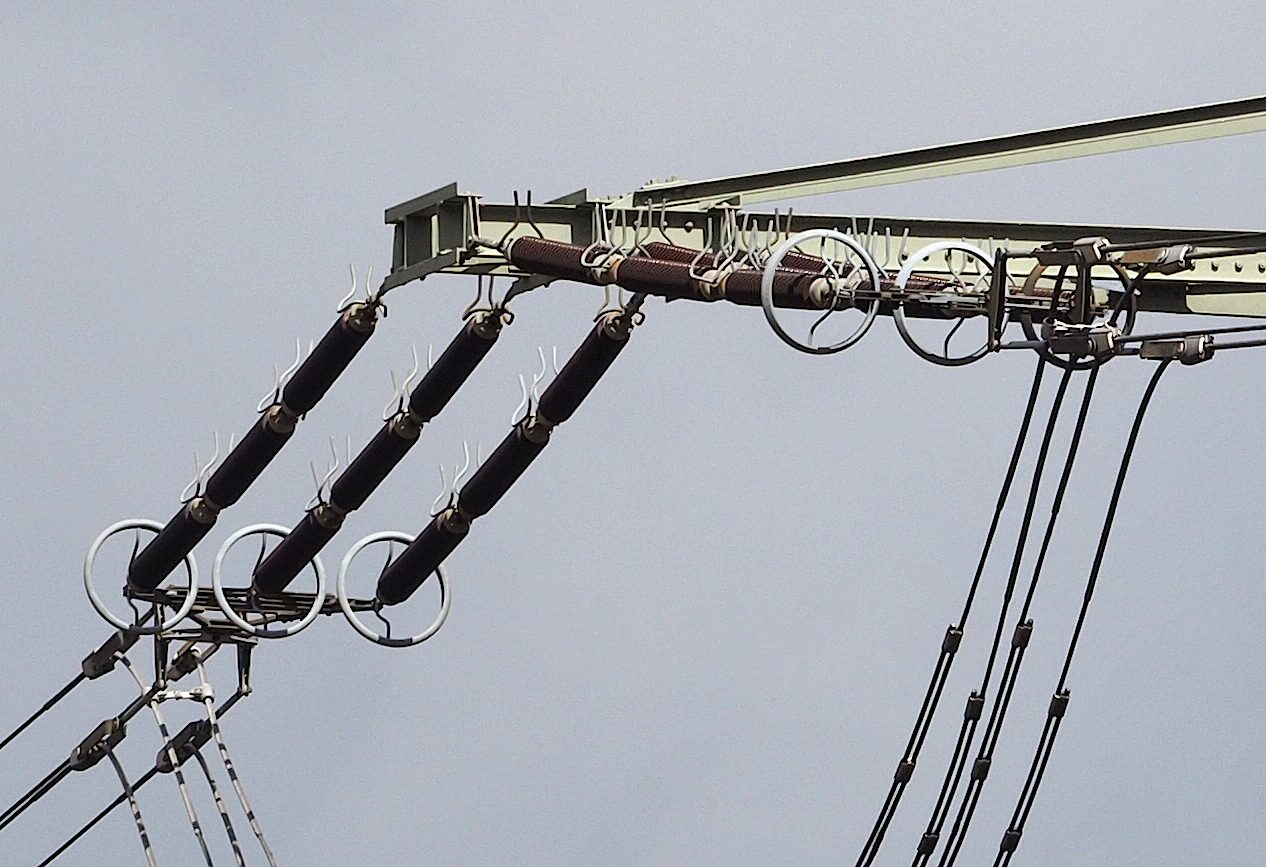
Set out as a ledger, corona rings vs grading rings stops being an argument about shapes and becomes a record of vocabulary. Each line below marks where the two names agree, where they split, and where the paperwork itself is silent. The silence, more than once, is the finding.
| Ledger line | Corona ring | Grading ring |
|---|---|---|
| Job the name records | Hold the surface field below corona onset at hardware | Flatten voltage distribution along an insulator string |
| Entry in IEC 60050-471 | None | None |
| Traditional placement | Line-end hardware and conductor terminals | Around the live end of insulator strings |
| Documented aliases | Anti-corona ring; corona cap for rounded shapes | Shared with corona ring in catalog usage |
| Where the name shows up | CIGRE TB 284 title; North American insulator catalogs | CIGRE and IEEE E-field papers; INMR dimensioning work |
| Early appearances on record | Corona caps and rings, 1937 accelerator | Grading rings, 1940 beam tube and 1947 X-ray set |
| Failure the name predicts | Visible discharge, RIV above limits | Uneven string profile, erosion at the live end |
| Acceptance vocabulary | RIV test per IEC 60437:2023 | E-field limits checked by calculation, then RIV |
Read the ledger bottom-up and a purchasing rule falls out: wherever the two columns differ, the difference is a job description, not a description of metal. That is why the strongest specifications quote duties and tests rather than nicknames. The next two sections show what that looks like on real documents.

Voltage Class Is When the Naming Starts to Matter
The job split has a voltage signature, and the record is explicit. As far back as 1992, CIGRE recommended that composite insulators from 220 kV upward carry a suitable ring on the high-voltage end. The stated reason was the potential impact on radio interference. Slim composite housings sharpen the live end enough that corona needs addressing even below that level.
When the duties multiply, the vocabulary multiplies with them. E-field programs summarized by INMR from CIGRE, EPRI, and STRI settled on working limits near 1.8 kV/mm on ring and end-fitting surfaces. Housing surfaces carry 0.42 kV/mm averaged, and the triple point just 0.35 kV/mm. CIGRE’s own 2005 brochure verified simulations against corona extinction measurements on 245 kV insulators, with differences under 10 percent. The recorded comparison put the simulations on the safe side of the measurements, which is the direction a buyer wants when demanding the calculation with a quote.
Composite insulators pulled the problem down the voltage scale. Their slim shanks mean smaller metal end fittings, and INMR notes the corona issue has to be addressed even at lower voltage levels. The IEEE task force on electric fields and composite insulators drew the same map in 2008, cataloguing manufacturer protection designs by voltage rating.
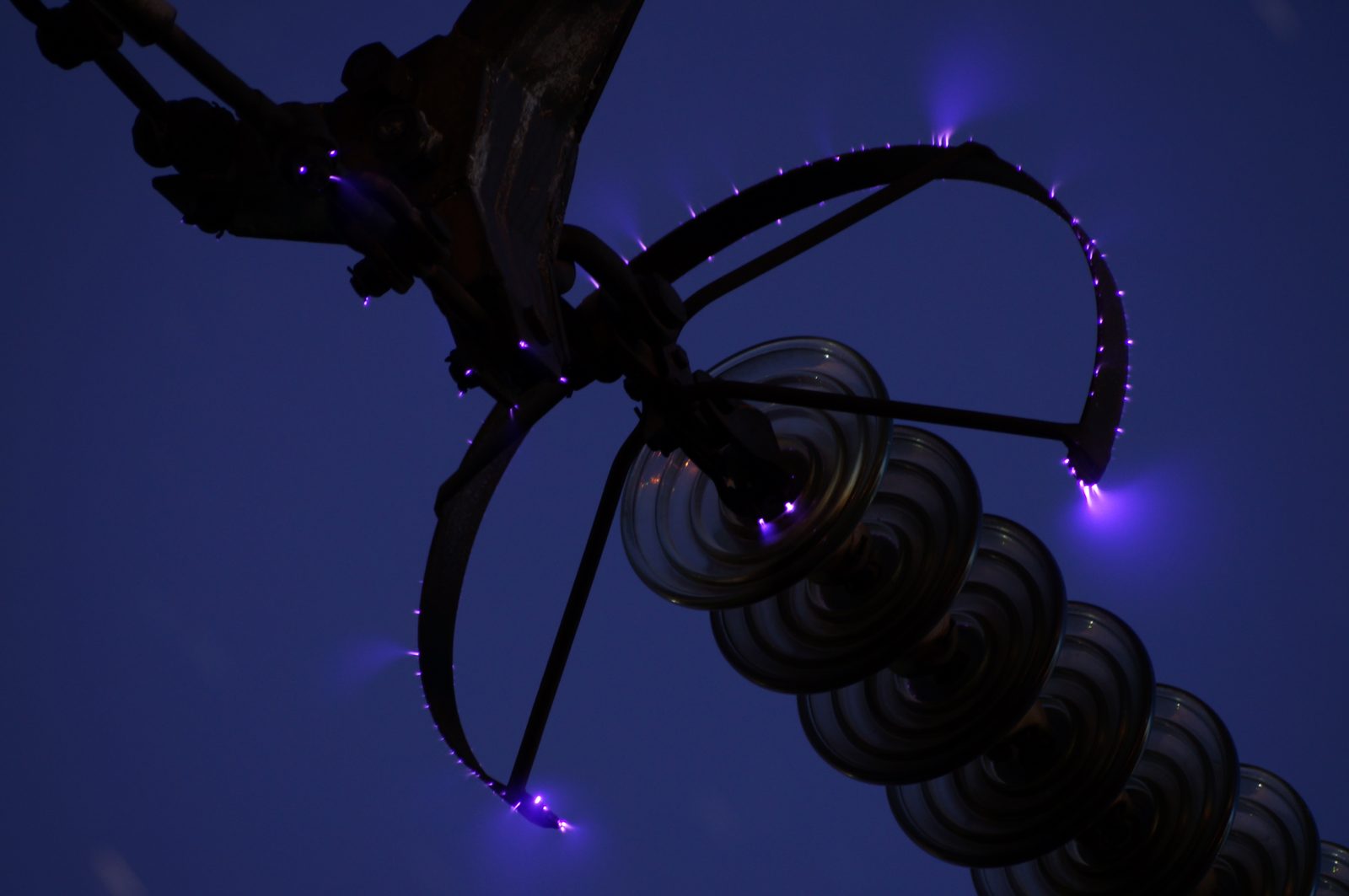
In our view, that 1992 recommendation is also the moment the corona rings vs grading rings split became commercial. Below 220 kV one ring quietly does both jobs, so nobody argues about its tag. Above it, the duties separate into engineered, sometimes multiple, rings, and the name on the purchase order starts to predict what arrives on site. How many rings a string needs, and where the second one goes, is a calculation rather than a naming debate.
Specifying Rings by Function, Not by Nickname
A specification that survives contact with a supplier ignores the nickname and states three things. Those three things are the job, the host hardware, and the acceptance test.
- State the job: suppress discharge at a line end, flatten the profile of a long string, or both.
- State the hardware: the insulator, clamp, or terminal the ring must fit, since tube diameter and yoke geometry follow the fitting.
- State the test: radio interference acceptance per IEC 60437, the same guard CIGRE’s 1992 advice was protecting.
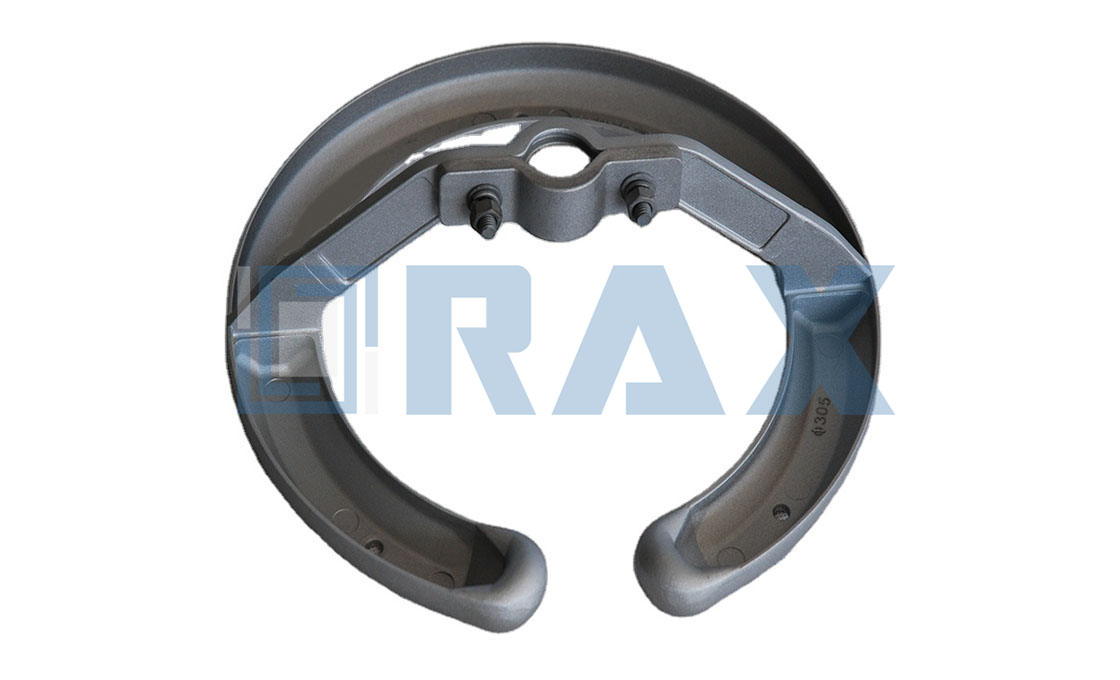
Numbers belong on the drawing too, not only in the catalog. The cast ring in the photograph below carries a diameter marking for exactly that reason: a drawing that names dimensions and duty leaves nothing for the nickname to decide. Buyers who write it that way get comparable quotes under either name.
Suppliers can help if the questions are concrete. Ask which job their quote assumes, which fitting geometry the tube diameter matches, and which document proves the RIV margin. Answers to those three questions expose a mislabeled ring faster than any dictionary.
Keep the file with the order as well. A one-page sheet stating duty, fitting, aluminum alloy, finish, and test gives receiving inspection something to check against, and gives the next buyer a starting point. Rings are small line items; the paperwork around them should not shrink to match.
The same drift continues indoors, where station equipment carries naming habits of its own. Station apparatus asks different questions of a ring, as the station equipment guide shows, and the vocabulary splits again by apparatus rather than by line.
Conclusion: Ask What the Ring Must Do
Corona rings vs grading rings is, in the end, a question about paperwork rather than metal. The vocabularies that should define the two names decline to; the catalogs that use them decline to agree; the towers carry one toroid that usually does both jobs. A buyer who states the function, the hardware, and the acceptance test will get the right ring under either name.
RaxPower has quoted rings under both names since 2003, and writing duty, fitting, and test into the order remains the best shortcut this trade offers. The name on the drawing will follow.
Questions fréquemment posées
Que disent les normes sur les anneaux anti-corona par rapport aux anneaux de gradation ?
La CEI 60050-471, vocabulaire international sur les isolateurs, ne définit aucun de ces noms. La norme IEEE 539 couvre les termes de mesure de l'effet corona et les définitions météorologiques, mais pas les noms d'appareils. Les noms des anneaux se trouvent plutôt dans les normes de produit et les catalogues des constructeurs.
Pourquoi certains catalogues utilisent-ils les deux noms pour une même bague ?
Un tore effectue souvent les deux tâches, c'est pourquoi les fournisseurs le dénomment selon la fonction citée : suppression des décharges à l'extrémité d'une ligne ou contrôle du profil le long d'une chaîne. L'habitude régionale compte également, ce qui explique pourquoi les catalogues nord-américains Equipent les isolateurs de couronnes anti-parasitage.
Which name should a drawing or RFQ use?
State the function, the host hardware, and the acceptance test. Say whether the ring must suppress discharge or flatten voltage distribution, name the insulator or clamp it mounts on, and set RIV acceptance per IEC 60437. Clear answers earn the order either way.
Is an anti-corona ring a different product?
No. Anti-corona ring is an older, more precise name for the same toroid, and corona cap describes the rounded-cap variant. All of them keep the local field below the corona onset gradient at the hardware they surround.
At what voltage does the naming choice start to matter?
CIGRE recommended in 1992 that composite insulators from 220 kV upward carry a suitable ring on the high-voltage end, mainly to control radio interference. Below that level one ring often does both jobs, so catalogs and papers use the names loosely.