
Imagine el poste de la esquina en un alimentador rural justo después del amanecer. El tramo tira hacia un lado, el viento que se acerca empujará en la otra dirección, y nada entre ellos puede soportar compresión. Todo recae sobre el único cabezal forjado que une el cable con la tierra.
RaxPower ha fabricado esta categoría de herrajes desde un taller de forja en Hebei desde que la planta forjó su primera pieza. Las más de 170 personas detrás de la línea de prensado leen certificados de galvanizado como las cuadrillas leen tablas de flecha. Esta guía recorre todo el proceso: leer el cabezal, aparear la varilla con su anclaje, establecer la distancia del tirante y tensar el ensamblaje terminado.
Lectura del cabezal de triple ojo antes de comenzar la obra
Una varilla de anclaje de triple ojo es una varilla de acero forjado cuyo extremo superior lleva tres ojos para cable. Su extremo inferior está roscado para recibir una tuerca cuadrada pesada que asegura la varilla a un anclaje terrestre. Los ojos no son decorativos. Cada uno es un ojo forjado del tamaño correcto para recibir el cable, una mordaza o un herraje de cabezal. Los catálogos describen esta familia de forma sencilla: las varillas se fabrican con uno, dos o tres ojos para cable.
Siga la trayectoria de la carga antes de mover la primera pala de tierra. La tensión de la línea entra por el cable, gira en la mordaza asentada en el ojo, baja por la barra, atraviesa la tuerca cuadrada hacia el anclaje y finalmente se distribuye en el suelo. Cada eslabón de esa cadena debe dimensionarse para la fuerza total, de la misma forma en que ustedes confían en un perno de bastidor de maquinaria solo cuando su grado coincide con el trabajo.
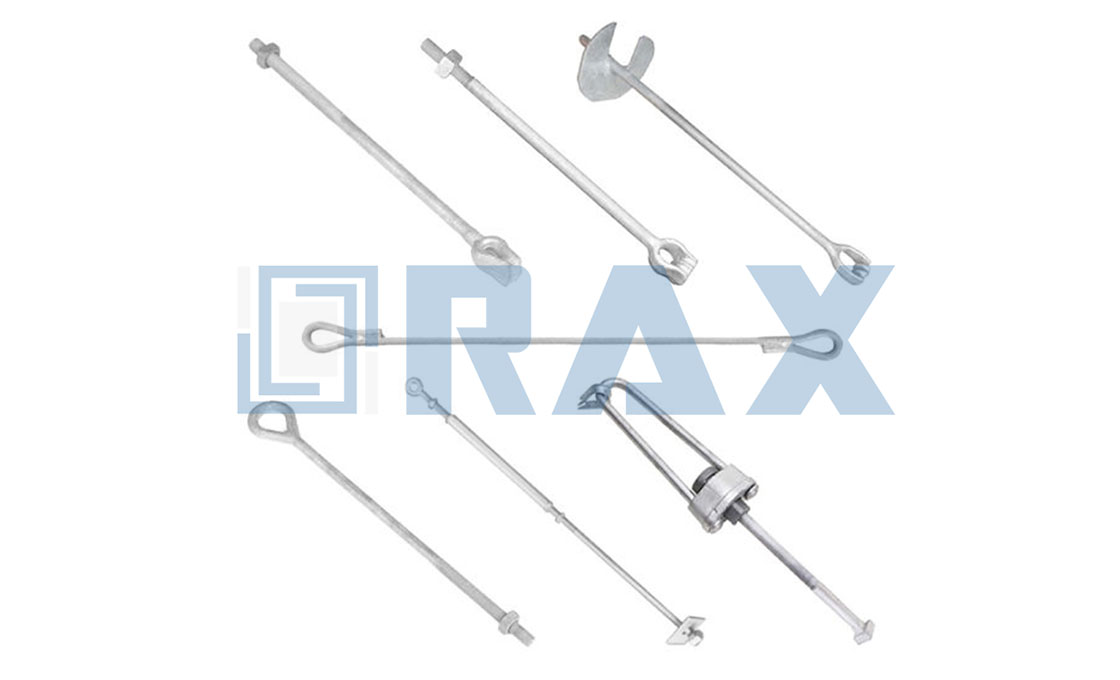
¿Por qué tres ojos en lugar de uno? Los ojos adicionales brindan a la cuadrilla puntos de sujeción separados en la misma cabeza. El herraje de fijación del cable tiene su propio asiento forjado, los herrajes de ajuste tienen otro, y nada comparte un ojo congestionado. Esa separación distribuye los puntos de desgaste y deja espacio para los herrajes que el diseño del tirante realmente requiere.
La expectativa del material se mantiene clara incluso cuando los planos varían: barra de acero al carbono, forjada en caliente en la cabeza, luego protegida por galvanizado en caliente aplicado según la norma ASTM A123. El acabado galvanizado mantiene el ensamblaje durante años en contacto con el suelo, por lo que el recubrimiento desprendido por manejo brusco es un motivo de rechazo, no una nota de retoque. La cobertura completa de varillas, anclajes y herrajes para esa especificación de recubrimiento se encuentra en los anclaje de varilla y herrajes páginas.
Aparear la varilla con un anclaje de expansión o de placa cruzada
Dos familias de anclajes dominan los tirantes de servicios públicos, y ambas se venden como sistemas con la varilla como elemento central. Un anclaje de expansión se fija en un agujero perforado con barreno a medida que la varilla recibe carga. Un anclaje de placa cruzada funciona de otra manera: se asienta plano en un agujero perforado y empuja contra el suelo no alterado en el fondo de la excavación. Los fabricantes listan el patrón de triple ojo específicamente para estos productos, por lo que se debe considerar la varilla de anclaje de triple ojo y su anclaje como una sola decisión de compra en lugar de dos.
Las tablas publicadas muestran cómo escalan rápidamente las clasificaciones con el diámetro. Un catálogo cubre el rango de esta manera:
| Diámetro de la varilla | Longitud | Resistencia última |
|---|---|---|
| 3/4 pulg | 7 pies | 23 000 lbf (102.310 N) |
| 3/4 pulg | 8 a 9 pies | 23 000 lbf (102.310 N) |
| 1 pulg | 8 a 10 pies | 36 000 lbf (160.316 N) |
| 1-1/4 pulg | 10 pies | 58 000 lbf (258.000 N) |
Lea la tabla como un piso, no como un objetivo. La clasificación de la varilla, la clasificación del anclaje y la carga calculada del tirante deben alinearse con el eslabón más débil en o por encima de la tensión de diseño. Las cuadrillas que aparean el grado de la varilla con la clase de estructura sobre el papel evitan la versión costosa del error, que es reforzar una esquina después de una falla de línea.
Los anclajes tienen sus propias clasificaciones publicadas, y esas clasificaciones asumen la clase de suelo del plano. La varilla puede estar impecable y la disposición ser perfecta, pero un anclaje instalado una clase de suelo por debajo de lo asumido cede bajo carga de trabajo. Aparee ambos sobre el papel primero y luego confirme en el terreno.

La mitad del anclaje del sistema es su propio ejercicio de selección, que cubre el área de la placa, el tipo de hélice y el comportamiento del suelo. Merece la misma atención en las anclaje de tierra páginas antes de finalizar el diámetro de la varilla.
Establecer la distancia del tirante y el ángulo del tirante
La geometría determina cuánta tensión de línea llega realmente al anclaje. Las guías de campo convergen en un ángulo de tirante de trabajo cercano a 45 grados. Esa geometría ubica el anclaje aproximadamente tan lejos del poste como la altura de conexión del tirante sobre el suelo, una disposición que el oficio conoce como relación 1:1.
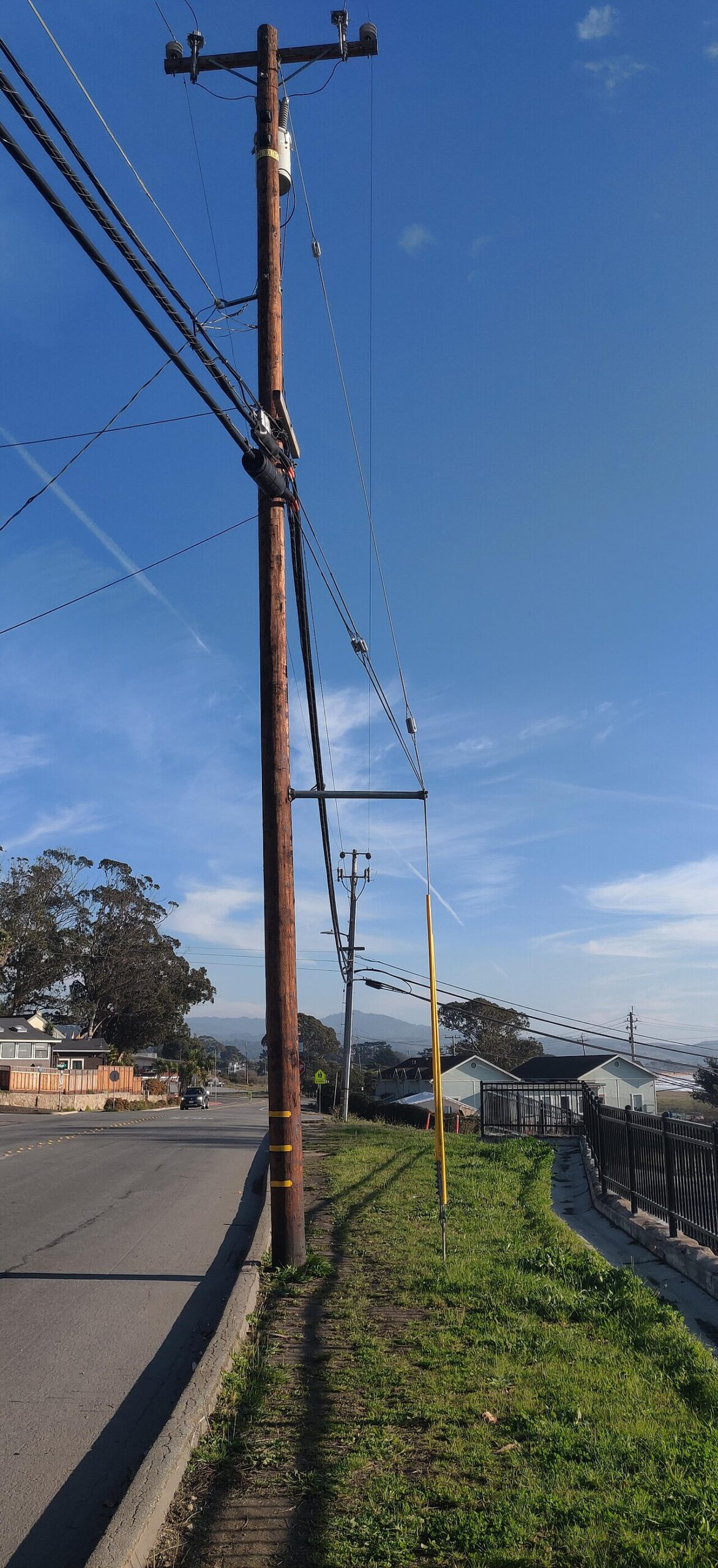
Las líneas más inclinadas extienden el ensamblaje más allá y lo cargan más, por lo que la resistencia exigida a la varilla y al anclaje aumenta a medida que el ángulo se reduce. Marque la distancia con una cinta métrica antes de cualquier excavación, confirme la altura de fijación en el poste y solo entonces arranque la excavación. Una varilla de anclaje de triple ojo instalada con una distancia medida se alinea de forma natural con el cable. Una instalada a ojo tiende a quedar fuera del eje y se resiste al herraje durante todo el armado.
Los lotes urbanos ajustados cambian la geometría. Cuando la línea de propiedad bloquea una distancia completa, las cuadrillas instalan un tirante de acera detrás de un tubo de guarda, o recuperan distancia fijándose más alto en la estructura. La varilla de anclaje no le importa dónde ocurre el compromiso. Solo siente el ángulo resultante, por lo que la verificación de clasificación debe seguir la geometría revisada y no la hoja de planos.
Preparación de la cuadrilla para mantener el programa de excavación
Good anchor days start before the truck leaves the yard. Walk the structure, confirm the attachment height, and locate every buried service in the dig zone before the first cut. The tool roll is short. It holds a tape for the lead, plus a level and a plumb line for the pole face. It holds the auger or digging bar matched to the anchor style, and a wrench that actually fits the heavy square nut.
Soil tells the crew which anchor style will behave once it is buried. Wet clay holds a plate well but clogs an auger, while loose sand asks for more depth and a wider bearing face. Write the ground conditions into the job record along with the rod size, anchor type and lead actually installed, because the next crew inherits those assumptions.
Asentar el anclaje y la varilla a profundidad
Orient the plate or the expanding shell square to the line of pull, because soil carries load best on its strongest face. A cross plate rides at the bottom of a slanted boring with its face against undisturbed ground. The rod trench above it stays as short and straight as the lead allows, and backfill goes back in compacted layers rather than one loose dump.
Every crew on this work has a story about a hurried backfill. The anchor tests fine on installation day, then the void settles through the first wet season. The assembly ends up standing loose in the very hole it was meant to fill.
When the crew runs screw-type anchors instead, the angle gets locked in before the second helix enters the soil. Manufacturers warn that a running anchor cannot be backed out and re-used in the same hole. Depth matters more than speed on every variant. The triple eye anchor rod is seated when three things line up. The eye end stands at design height, the square nut is run down tight, and the rod no longer shifts under hand pressure.
Armar el lado del tirante sin acumulación de herrajes
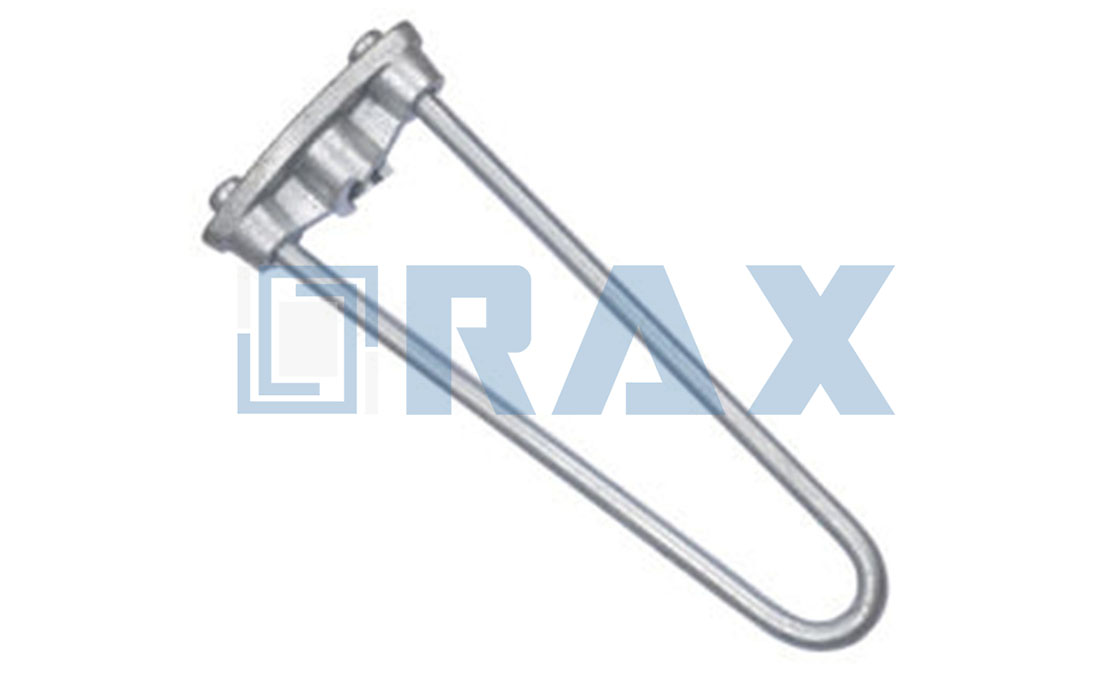
The guy side of the head is where sound assemblies drift into bad ones. A thimble belongs inside every eye that takes strand, because the thimble keeps the bend radius honest and stops the strand from sawing on bare steel. The strand itself dead-ends with a grip or wraps sized for its grade. Manufacturers state the discipline plainly: never attach the guy wire directly to a pulling eye. Where the design calls for one, a strain insulator breaks the run without touching the load path.
Adjustment hardware comes next in the makeup order. A turnbuckle gives the crew a threaded way to take up slack without re-rigging the whole line. The thimbles, hooks and clamps that complete the connection all live on the accesorio de sujeción pages. Keep one function per attachment point. The three eyes exist so that strand, adjustment and accessories never have to share a seat.
Resist the instinct to double up fittings in one eye when a layout turns awkward. Two pieces of hardware grinding inside the same forged loop wear each other and the rod, and that wear stays invisible until the line is loaded hard. If the head runs out of eyes, the layout needs another anchor position, not a busier eye. The habit costs nothing on installation day and returns the favor every time the line comes back through for maintenance.
Tensado y verificaciones posteriores a la instalación que mantienen la línea
Tension the strand in stages rather than in one hard pull. Bring the line up, let the structure and the soil answer back, and watch the pole return to plumb as the guy takes load. The sequence matters because soil compresses under the anchor, so the first hard pull reads higher than the assembly will actually hold a week later.
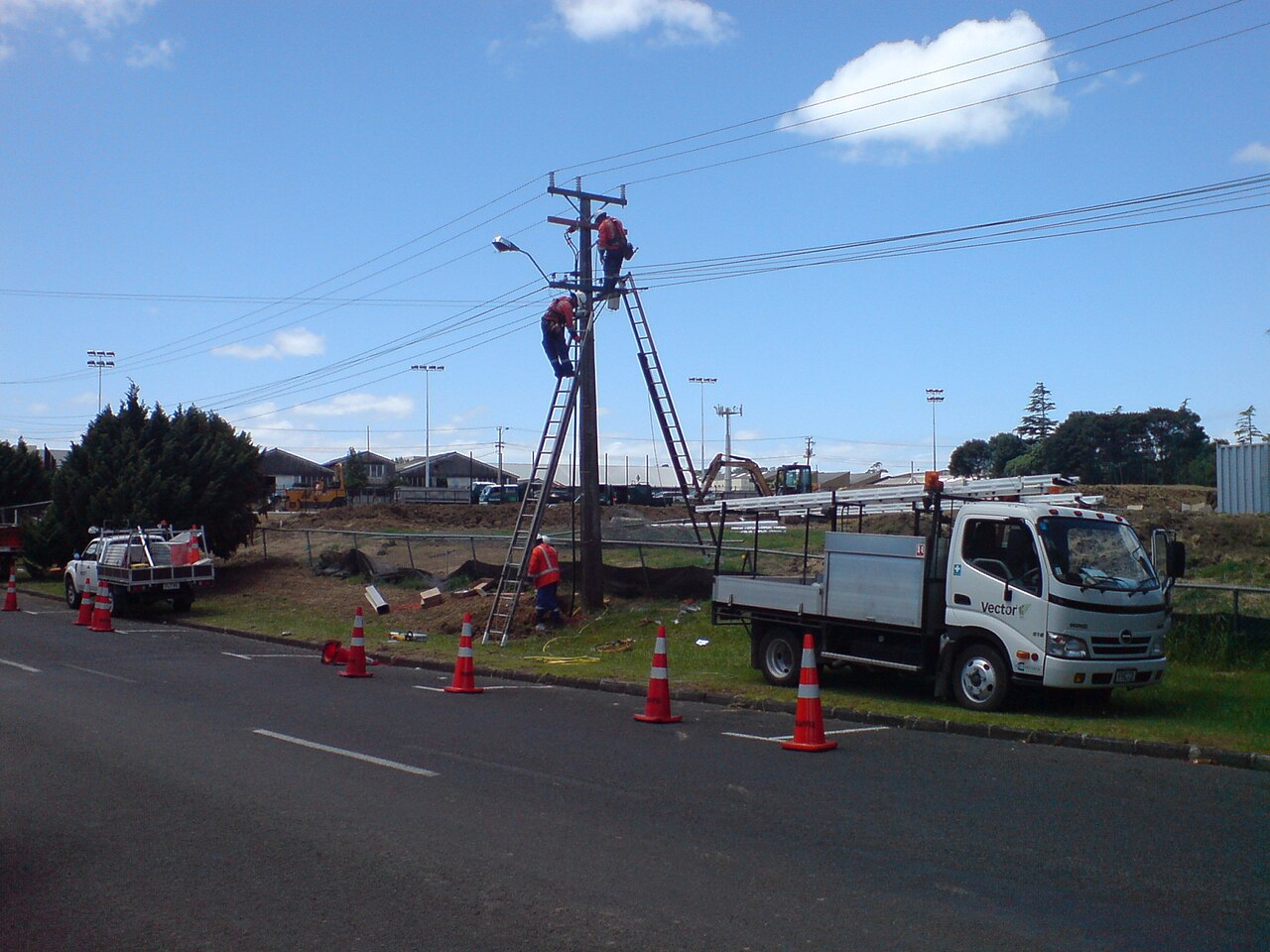
In our experience the walks that catch problems are the ones scheduled after the first few weeks in service, when creep has already spoken. Re-check the strand tension, look for fresh movement at the soil line, and confirm the square nut has not relaxed. Small corrections at that stage cost minutes. The same corrections after a season cost a crew day.
Keep the walk short and repeat it: pole plumb, strand tension, soil movement at the anchor, then the tightness of the square nut. Anything odd gets written against the structure number rather than left in memory.
Design engineers put the underlying rule bluntly: a strand can only pull, never push, so every ounce of stability the assembly promises has to be physically present below grade. That is the standard a triple eye anchor rod installation answers to. It is also why the checks at the end of the job matter as much as the dig at the start.
Una palabra final para las cuadrillas y los compradores
A triple eye anchor rod earns its keep quietly. Installed on a measured lead with the anchor matched to the soil, it disappears into the landscape and holds a corner pole square through years of weather. Installed carelessly, it becomes the reason a structure leans. RaxPower supplies anchor rods, earth anchors and the matching guy attachments as one hardware family, so the ratings specified on paper stay consistent all the way into the ground.
Preguntas frecuentes sobre la instalación de anclajes de tirante
¿A qué distancia del poste debe colocarse el anclaje?
Match the lead to the attachment height for a guy working near 45 degrees. Most field guides treat that 1:1 lead as the default, and a shallower line raises the load the anchor must carry, so the rating has to rise with it.
¿Puede una varilla de anclaje de triple ojo soportar dos tirantes?
The head carries three forged strand eyes, so a crew has separate attachment points for strand and adjusting hardware instead of stacking fittings in one eye. Any multi-guy layout still needs engineering against the rated holding strength before the first pull.
¿Se coloca la tuerca cuadrada antes del relleno?
Yes. Catalog specs put the thread at about three and a half inches, with a heavy square nut. Run the nut down before the assembly is buried, and the rod stays locked to the anchor at full depth.
¿Qué tamaño de varilla corresponde a un tirante de distribución estándar?
Catalog ladders for the triple eye anchor rod family run from 3/4-inch rods rated near 23,000 pounds up to 1-1/4-inch rods near 58,000 pounds. Size the rod and anchor so the rating covers the calculated guy load with the utility’s margin policy applied.
¿Cuándo es mejor un anclaje de placa cruzada que uno de expansión?
Cross plate anchors suit open ground where a boring can be dug at an angle and the plate seated against undisturbed soil. Expanding anchors drop into an augered hole and set as the rod loads, which suits tighter urban work.