
Представьте последнюю опору перед тем, как линия покидает населённый пункт. Одна маленькая арматура на её боку принимает на себя тяговое усилие всего кабеля позади неё. Эта арматура — якорный зажим, и покупатели, относящиеся к нему как к товару низшего сорта, обычно встречаются с ним снова во время штормового сезона.
Компания RaxPower производит анкерную арматуру для линий с 2003 года, и анкерные зажимы занимают центральное место в семействе натяжных изделий этого каталога. Данное руководство собирает то, что должен знать линейный проектировщик, подрядчик или дистрибьютор перед тем, как указать его в спецификации: как работает клиновая фиксация, какие типы существуют и какие строки в паспорте изделия действительно определяют характеристики.
Что делает якорный зажим на линии
Якорный зажим — это натяжная арматура, которая terminates воздушного кабеля и передаёт его полное продольное усилие опоре, кронштейну или башне. Подвесные зажимы работают иначе: они только поддерживают вес кабеля и позволяют ему скользить при изменении нагрузки. Именно поэтому линии проходят через подвесные опоры в середине пролёта, но всегда оканчиваются на анкерных точках. На низковольтных кабельных сетях вида ABC та же деталь часто продаётся как клиновой натяжной зажим или ABC-анкерный зажим, рассчитанный на сеть 1 кВ. Какую бы маркировку вы ни увидели, задача идентична: удерживать кабель против полного линейного натяжения, не повреждая его изоляцию.
Чтобы лучше разобраться в геометрии захвата, см. сопроводительный материал о том, как эти зажимы захватывают, прежде чем переходить к полному обзору ниже.
Посмотрите, где находится арматура и какова её роль — и всё становится очевидно. Каждый пролёт имеет два конца, по одному на каждой опоре, где кабель останавливается. В этих точках одна маленькая отливка передаёт килоньюттоны продольного усилия в верхнюю часть опоры или кронштейн. Ошибётесь с fitting — и кабель начнёт проскальзывать, провисание изменится, а фазовый зазор уменьшится вместе с ним.
Для покупателей простота арматуры — это ловушка. Любая механообработка может скопировать контур клинового корпуса. Гораздо меньше производителей могут выдержать допуск на конусность и полимерную рецептуру, благодаря которым захват выживает десятилетие циклов нагрузки. Разница видна в отчётах типовых испытаний, а не на фотографиях продукции.
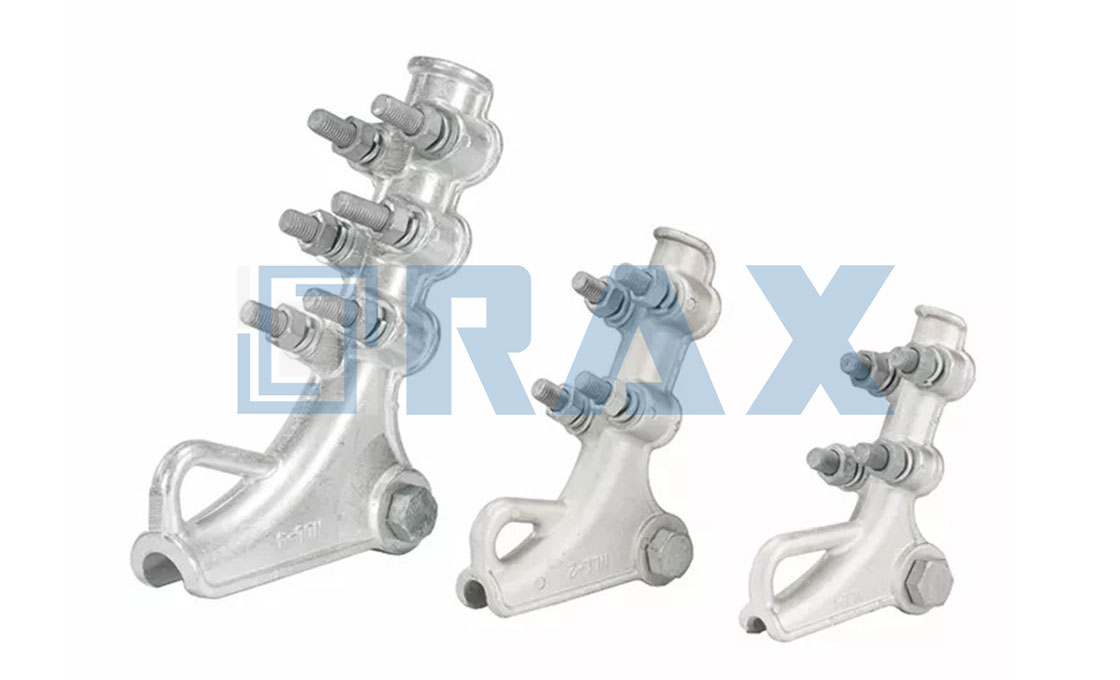
Как клиновой якорный зажим захватывает кабель
Внутри клинового зажима два ребристых полимерных клина расположены в конусном алюминиевом корпусе. Кабель входит между ними, и линейное натяжение затягивает пару клинов глубже в конус. Тянешь сильнее — захват становится крепче, именно поэтому монтажникам не нужен динамометрический ключ для этого семейства. Подобно грузовику, припаркованному на холме, кабель никогда не перестаёт тянуть, поэтому зажим никогда не перестаёт отвечать.
Поверхности клиньев несут мелкие рёбра, которые врезаются в изоляцию кабеля, не касаясь проводников. Стальной байд выходит из корпуса и передаёт нагрузку на кронштейн опоры. Поскольку клинья плавают, один корпус охватывает узкое окно диаметров, а не один размер.
Отсутствие инструментов важно больше, чем может показаться. Бригады terminated пучки на высоте, в любую погоду, часто в перчатках. Клиновой корпус не требует оплётки петель, не требует моментного затягивания болтов и не требует измерений на опоре. Независимые спецификации типа PA-1500 описывают клинья как самоподстраивающиеся и не требующие инструментов, именно поэтому это семейство так быстро распространилось по низковольтным кабельным сетям вида ABC.
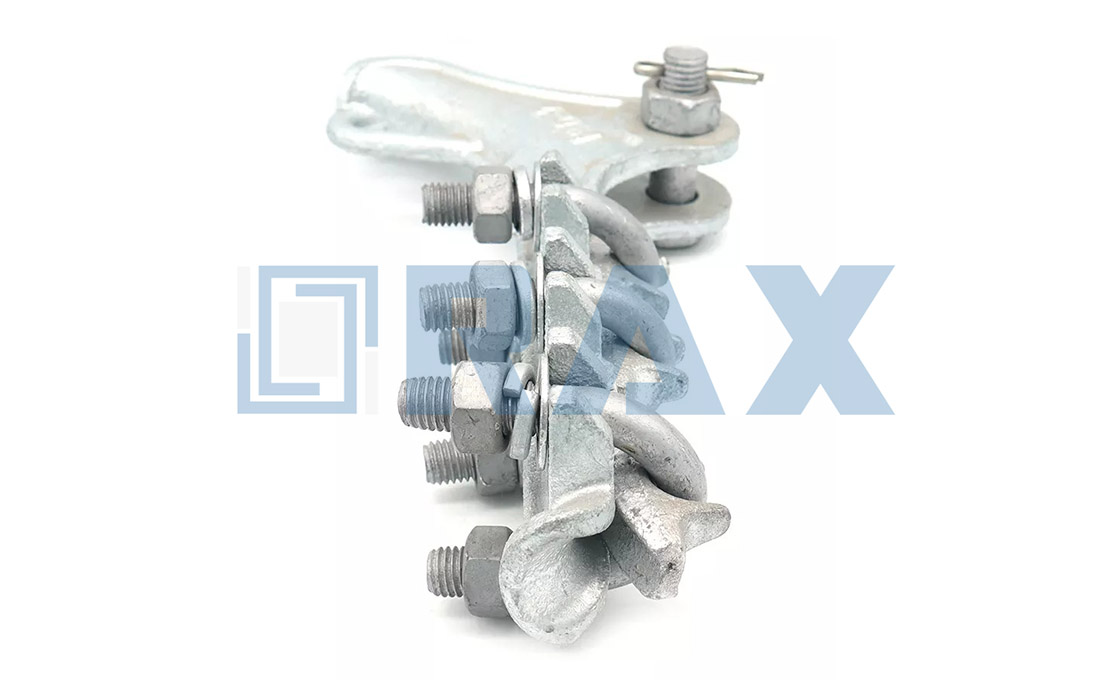
Варианты болтовых и формованных якорных зажимов
Клиновые зажимы доминируют в terminations низковольтных сетей ABC, но они не единственная анкерная арматура. Болтовые зажимы напряжения стиля NLL обхватывают алюминиевый корпус вокруг голых проводников ACSR или всеалюминиевых проводников, а оцинкованные стальные U-образные болты обеспечивают давление. Формованные стержневые захваты оплетаются спиралью и распределяют нагрузку, что подходит для волоконных кабелей и тросовых распорок.
У болтовой арматуры своя логика. Жёлоб, закрытый U-болтами, захватывает за счёт давления, поэтому монтажник напрямую управляет глубиной захвата. Это делает его выбором по умолчанию на сетях с голым проводником, где соединения и перепрыжки оборудования требуют воспроизводимого, перетягиваемого соединения.
| Семейство | Метод захвата | Лучшее применение | На что обратить внимание |
|---|---|---|---|
| Клиновой (стиль PA) | Самоподтягивающиеся полимерные клинья | Низковольтные ABC анкерные обрывы и сервисные пролёты | Окно диаметров должно соответствовать пучку |
| Болтовой зажим напряжения (стиль NLL) | Оцинкованные U-болты замыкают алюминиевый корпус | Голый ACSR на опорах и оборудовании | Крутящий момент по паспорту, отметьте гайку |
| Формованный стержневой захват | Спиральные стержни распределяют нагрузку | Волоконные и тросовые анкерные обрывы | Длина стержня должна соответствовать размеру кабеля |
| Анкерный зажим для оптического волокна с защитной прокладкой | Elastomer pads inside a wedge housing | Short ADSS spans | Pad condition at every patrol |
A cushioned fiber dead-end deserves special mention. Elastomer inserts reduce compression and bending stress on the cable, protecting the fibers inside a jacket that must never be crushed.
Four-core bundles bring one sizing detail. Some four-core service clamps take the whole bundle in a single body, while heavier feeders put each core on its own anchoring point. Match the bracket to that arrangement before ordering hardware.
Где эти зажимы проявляют свои лучшие качества
Walk any overhead distribution route and the anchoring points announce themselves. Dead-end poles at the end of a line take the full span pull on every phase. Angle poles take a resultant force whenever the route bends, so each direction change needs its own anchor clamp. Service entrances use smaller wedge units where the bundle drops toward a building.
Fiber routes add their own cases. Short ADSS spans between poles take cushioned wedge dead-ends, and catalog listings typically cover 8 to 12 mm cable over distances up to about 100 meters. Medium voltage bare conductor lines keep bolted strain clamps on terminations and equipment jumps.
Voltage class changes the hardware, not the principle. A 1 kV service bundle anchors in polymer-bodied wedges, medium voltage bare lines lean on metal strain clamps, and fiber routes need the cushioned middle ground. Vocabulary shifts between countries, so check the cable construction first and the catalog language second.
Материалы и защита от коррозии — разбираем подробно
Aluminum alloy shells dominate the wedge family because they are light, dimensionally stable, and galvanically compatible with the aluminum conductors they hold. Polymer wedges and covers use UV-stabilized, fiberglass-reinforced compounds that keep their grip after years in the sun. Steel parts tell a different story: bolts, bails, and brackets rely on hot-dip galvanizing to ISO 1461 for corrosion protection.
Forging matters as much as coating. Hot-forged blanks keep the metal’s grain flow intact, which is why forged hardware resists cracking under cyclic line tension better than machined bar stock. When you compare quotes, ask what the load path is made of and how the zinc was applied.
None of these materials excuse a bad finish. Zinc coverage on steel parts should be continuous, because a single pinhole becomes the corrosion path for the whole fitting. Ask whether coating mass is tested against ISO 1461 and whether the certificates travel with the batch.
Характеристики и нагрузки, которые покупатель должен проверить
Three datasheet lines decide most purchases. First, confirm the cable diameter window, because a wedge built for a 12 to 14 mm bundle will not hold an 8 mm drop wire. Second, read the minimum breaking load, not just the model number. Third, check the insulation class if the line runs covered cable.
Model names mislead more than any other trap. One manufacturer’s PA-1500, for example, is listed for 50 to 70 mm² single-core 1 kV cable with a 15 kN minimum breaking load. Other catalogs stretch similar model numbers across different sizes and loads from 6 to 20 kN. The number on the housing is not a specification until the datasheet confirms it.
Insulation class deserves its own minute. Covered cable needs clamps whose polymer parts keep the covering intact at the grip point, while bare conductor lines can spend their budget on the metal. Mixing these up shows up later as tracking marks on the jacket.
Breaking load is not working load, either. Designs keep a safety factor between the cable’s everyday tension and the clamp’s rated maximum, and each utility defines that margin in its own standards. Quote the expected span tension when you ask for a recommendation; that number makes the datasheet meaningful.
Typical listing: wedge clamp for 50–70 mm², 1 kV, MBL 15 kN, aluminum alloy shell, UV-stabilized polymer wedges, self-adjusting, no tool required.
| Стандартный | Scope |
|---|---|
| NF C 33-041 | Tension fittings for LV ABC accessories |
| NF C 33-042 | Service connection anchoring clamps |
| EN 50483 series | Harmonized European test methods for LV ABC accessories |
European buyers will also see NF C 33-041 and its harmonized EN 50483 equivalents on quotation sheets. Ask suppliers which clauses their type tests cover, and expect a test report with each shipment batch. A supplier that cannot produce the report is selling a model number, not verified performance.
Закупка зажимов для вашей сети
A short supply chain helps here. When the same factory that forges the blank also runs the plating line and assembles the finished clamp, deviations get caught before shipment instead of after installation. In our experience, buyers who audit these process steps once cut their incoming inspection work for years.
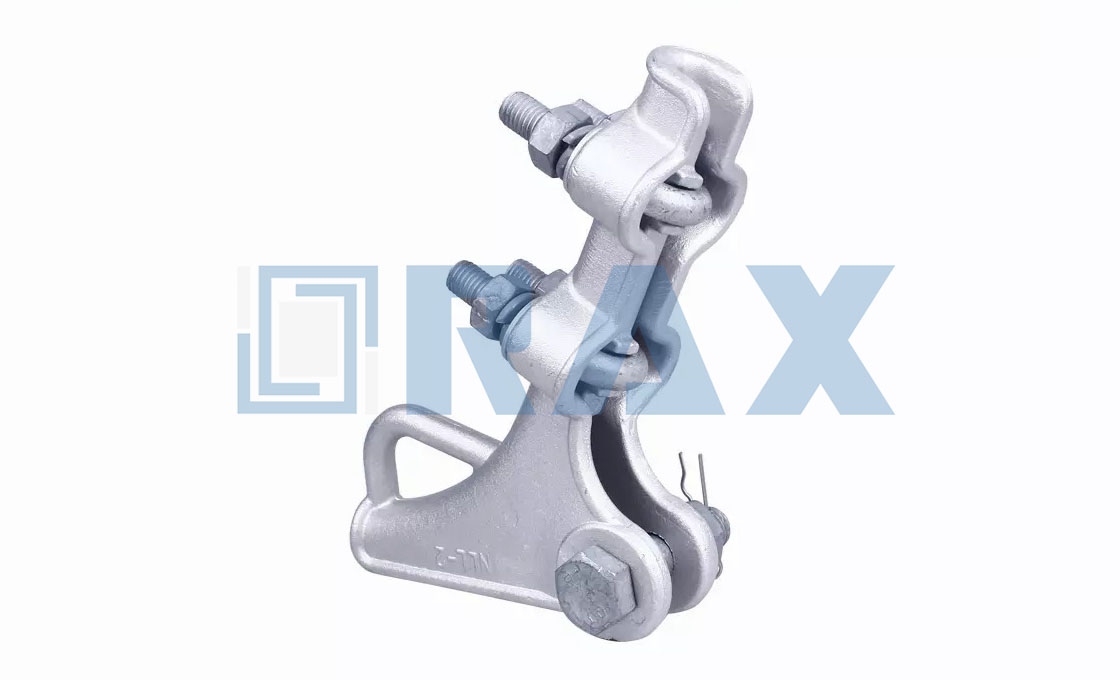
Volume programs and OEM drawings run through the same channel, from tension and suspension fittings to matched brackets for each pole type.
Контрольные операции при монтаже, предотвращающие отказы якорных зажимов
This is not an installation manual, but four checks belong in every crew’s routine. Verify the cable diameter against the clamp window before the bucket leaves the yard. Torque bolted strain clamps to the datasheet value and mark the nut with paint so any movement shows at the next patrol. Treat any clamp that shows slip marks as retired hardware. The wedge has already given up its bite.
Sequence matters on the pull, too. The winch stays attached until every dead-end is made off, because a released bundle stores enough energy to move on its own. On the crew side, rigging discipline does more for anchor reliability than any catalog choice.
- Match the clamp window to the measured cable diameter, insulation included.
- Respect the datasheet torque on every bolted clamp.
- Keep the bail free to articulate; a side-loaded bail works loose.
- Replace, never re-tighten, hardware that shows slip or corrosion trails.
Признаки, указывающие на необходимость инспекции и замены
Patrols should look hard at anchors after the first big temperature swing of the year and after every serious storm. Cracked polymer housings, white powdery oxidation at aluminum contact points, and fresh slip marks on the cable all deserve a work order. Galvanized steel parts showing rust streaks have lost zinc in spots and need tracking.
Storm damage rarely announces itself politely. By the time a span is sagging, the clamp that let go has usually been telling patrols something for two seasons. Photo records of each anchor point make those early warnings visible before they become outages.
Cold climates add one more check. Freeze-thaw cycles move brackets and poles slightly all winter, and hardware that was tight in autumn can read loose by spring patrol. Recording torque readings per structure turns that drift into data instead of guesswork.
Часто задаваемые вопросы линейных строителей
Что делает якорный зажим на воздушной линии?
It is the fitting that ends a run: the cable stops there and the span’s full longitudinal load transfers into the structure. Anchors therefore appear at dead-ends, angle poles, and terminations rather than mid-span.
Где должна заканчиваться подвесная арматура и начинаться анкерная?
Пусть нагрузка определяет выбор. Опоры между пролётами несут только вес, поэтому для них подходят подвесные зажимы; там же, где изменяется направление трассы или она заканчивается, вступает в действие продольное натяжение, и здесь берёт на себя основную нагрузку натяжная арматура.
Какой размер якорного зажима подходит для моего кабеля?
Measure the cable’s overall diameter with insulation and take the clamp whose window brackets that number. When a bundle sits between two windows, choose the larger body only if its MBL still clears the span’s expected tension.
Используют ли кабели ADSS ту же самую арматуру?
No. A fiber jacket cannot tolerate the point pressure a power clamp applies. ADSS routes specify dead-ends with elastomer cushioning, because bruised jackets bend the glass inside and degrade transmission.
Какие стандарты регулируют эти натяжные fittings?
In Europe, NF C 33-041 covers tension fittings for LV ABC and NF C 33-042 covers service anchoring, with the EN 50483 series providing harmonized test methods. Ask for the type test report by clause.
Quick answer: an anchor clamp is the tension fitting that terminates overhead cable and carries full line tension at dead-ends, corners, and terminations. Wedge types self-tighten on LV ABC, bolted strain clamps hold bare conductors, and cushioned dead-ends protect ADSS fiber. Verify the cable diameter window and the datasheet MBL before ordering.
Ключевые выводы для линейных строителей
Anchor clamp selection is not exotic engineering; it is the discipline of matching a window to a cable and a load to a datasheet. Buyers who verify diameter, minimum breaking load, and standards coverage before ordering rarely meet these fittings again outside routine patrols. RaxPower has forged and galvanized pole line hardware since 2003, and we put the same rule on our own drawings: no claim without a test behind it.
- Match the clamp window to the measured cable diameter.
- Read the MBL on the datasheet, never the housing.
- Anchor every dead-end, angle pole, and termination.
- Keep cushioned hardware on fiber, metal jaws on power.
- Demand type test reports with the shipment.