
Imagina el último poste antes de que la línea abandone el pueblo. Un pequeño accesorio en su lateral soporta la carga de tracción de cada metro de cable que queda detrás. Ese accesorio es la abrazadera de anclaje, y los compradores que la tratan como un producto genérico terminan encontrándosela de nuevo durante la temporada de tormentas.
RaxPower fabrica hardware para líneas aéreas desde 2003, y los accesorios de anclaje se encuentran en el centro de la familia de tensión de ese catálogo. Esta guía reúne lo que un diseñador de línea, contratista o distribuidor debe saber antes de especificarla: cómo sujeta la cuña, qué tipos existen y qué líneas de la ficha técnica determinan realmente el rendimiento.
Qué hace una abrazadera de anclaje en la línea
Una abrazadera de anclaje es el accesorio de tensión que termina un cable aéreo y transfiere su tracción longitudinal completa al poste, soporte o torre. Los soportes de suspensión funcionan de modo distinto: solo sostienen el peso del cable y le permiten deslizarse ante cambios de carga. Por eso las líneas atraviesan soportes de suspensión en el centro del tramo, pero siempre terminan en puntos de anclaje. En redes ABC de baja tensión, la misma pieza suele venderse como abrazadera de tensión con cuña o pinza de extremo muerto ABC, clasificada para servicio de 1 kV. Sea cual sea la etiqueta, la función es idéntica: sujetar el cable frente a toda la tensión de línea sin aplastarlo.
Para ver con más detalle la geometría de agarre, consulta el artículo complementario sobre cómo estas abrazaderas sujetan antes de profundizar en el panorama completo a continuación.
Observa dónde se ubica el accesorio y su función resulta evidente. Cada tramo termina dos veces, una vez en cada estructura que detiene el cable. En esos puntos, una pequeña pieza fundida transfiere kilonewtons de tracción longitudinal hacia la parte superior del poste o el soporte. Elegir mal el accesorio hace que el cable se desplace, que la flecha cambie y que la holgura entre fases se reduzca con ella.
Para los compradores, la sencillez del accesorio es la trampa. Cualquier taller mecánico puede copiar el contorno de una carcasa de cuña. Muy pocos pueden mantener la tolerancia de la conicidad y la formulación del polímero que hacen que una sujeción sobreviva una década de ciclos de carga. La diferencia se evidencia en los informes de prueba de tipo, no en las fotos de producto.
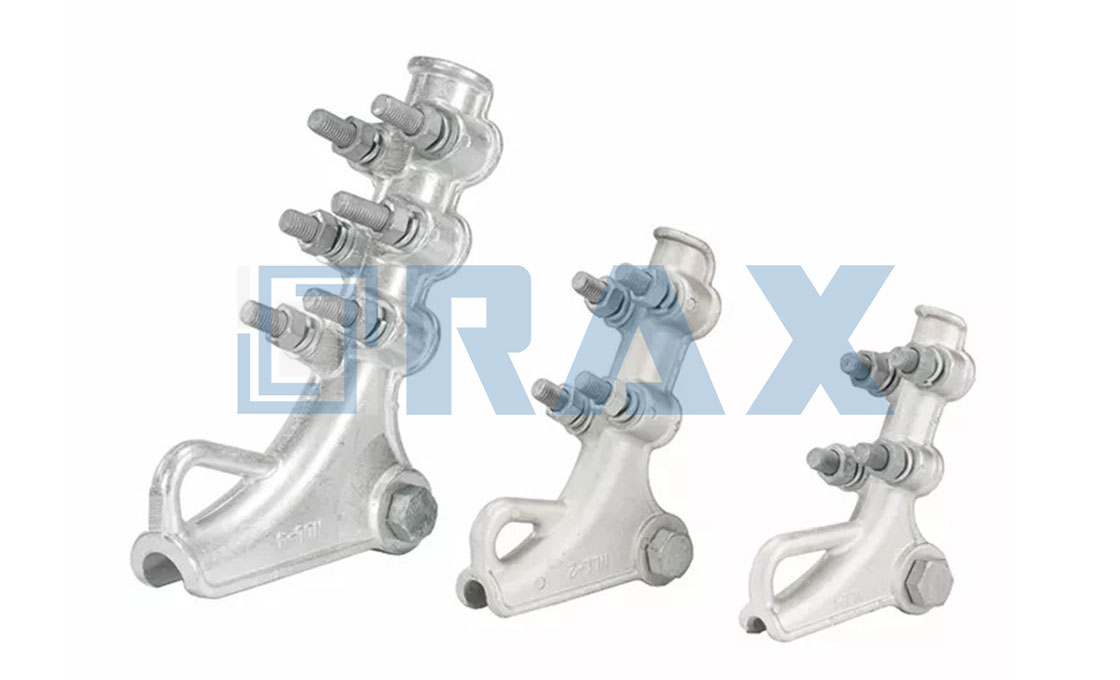
Cómo sujeta cable una abrazadera de anclaje de cuña
Dentro de una abrazadera de cuña, dos cuñas de polímero acanaladas se alojan en una carcasa cónica de aluminio. El cable entra entre ellas y la tensión de línea empuja el par de cuñas más hondo en el cono. Tira con más fuerza y el agarre se aprieta, razón por la cual los instaladores no necesitan llave dinamométrica para esta familia. Como un camión estacionado en una ladera, el cable nunca deja de tirar, por lo que la abrazadera nunca deja de responder.
Las superficies de las cuñas llevan finas nervaduras que se asientan en el aislamiento del cable sin tocar los conductores. Un grillete de acero sale de la carcasa y transfiere la carga al soporte del poste. Debido a que las cuñas flotan, una carcasa cubre una ventana de diámetros reducida en lugar de un único tamaño.
Que no requiera herramientas importa más de lo que parece. Las cuadras terminan haces a gran altura, bajo clima adverso, a menudo con guantes puestos. Una carcasa de cuña no requiere trenzado de anillos, ajuste de tornillos ni medición en el poste. Las certificaciones independientes del tipo PA-1500 describen las cuñas como autoajustables y sin herramientas, motivo por el cual esta familia se expandió con tanta rapidez por las redes ABC de BT.
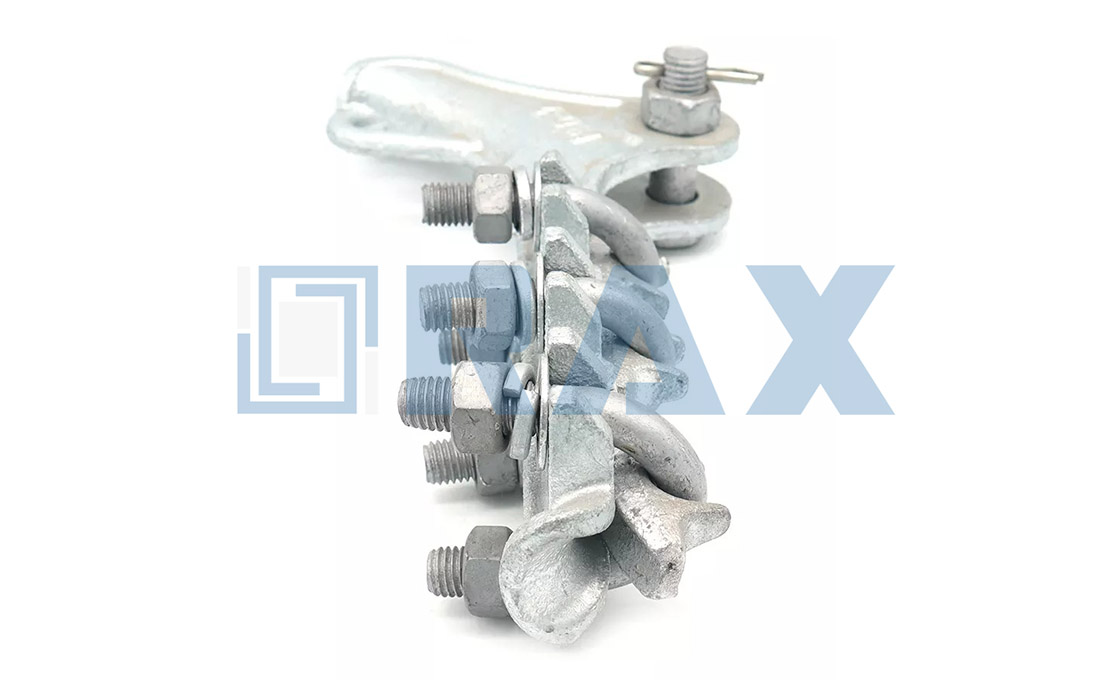
Opciones de abrazaderas de anclaje atornilladas y preformadas
Las abrazaderas de cuña dominan las terminaciones ABC de BT, pero no son el único hardware de anclaje. Las tensoiras atornilladas estilo NLL cierran un cuerpo de aleación de aluminio alrededor de conductores ACSR desnudos o todo aluminio, con pernos en U galvanizados que suministran la presión. Las agarraderas de varilla preformadas se enrollan de forma helicoidal y distribuyen la carga, lo que resulta idóneo para cables de fibra y extremos muertos de tirantes.
El hardware atornillado tiene su propia lógica. Un canal cerrado por pernos en U sujeta por presión, por lo que el instalador controla la mordida de forma directa. Eso lo convierte en la opción predeterminada en redes de conductor desnudo, donde uniones y derivaciones a equipos necesitan una conexión repetible y recalibrable.
| Familia | Método de sujeción | Mejor ajuste | Vigilar |
|---|---|---|---|
| Cuña (estilo PA) | Cuñas de polímero autoajustables | Extremos muertos y tramos de servicio ABC de BT | La ventana de diámetro debe coincidir con el haz |
| Tensoira atornillada (estilo NLL) | Pernos en U galvanizados cierran un cuerpo de aluminio | ACSR desnudo en postes y equipo | Par según ficha técnica, marcar la tuerca |
| Agarradera de varilla preformada | Varillas helicoidales distribuyen la carga | Extremos muertos de fibra y tirantes | La longitud de la varilla debe coincidir con el tamaño del cable |
| Cushioned fiber dead-end | Elastomer pads inside a wedge housing | Short ADSS spans | Pad condition at every patrol |
A cushioned fiber dead-end deserves special mention. Elastomer inserts reduce compression and bending stress on the cable, protecting the fibers inside a jacket that must never be crushed.
Four-core bundles bring one sizing detail. Some four-core service clamps take the whole bundle in a single body, while heavier feeders put each core on its own anchoring point. Match the bracket to that arrangement before ordering hardware.
Dónde estas abrazaderas demuestran su valor
Walk any overhead distribution route and the anchoring points announce themselves. Dead-end poles at the end of a line take the full span pull on every phase. Angle poles take a resultant force whenever the route bends, so each direction change needs its own anchor clamp. Service entrances use smaller wedge units where the bundle drops toward a building.
Fiber routes add their own cases. Short ADSS spans between poles take cushioned wedge dead-ends, and catalog listings typically cover 8 to 12 mm cable over distances up to about 100 meters. Medium voltage bare conductor lines keep bolted strain clamps on terminations and equipment jumps.
Voltage class changes the hardware, not the principle. A 1 kV service bundle anchors in polymer-bodied wedges, medium voltage bare lines lean on metal strain clamps, and fiber routes need the cushioned middle ground. Vocabulary shifts between countries, so check the cable construction first and the catalog language second.
Materiales y protección contra corrosión explicados
Aluminum alloy shells dominate the wedge family because they are light, dimensionally stable, and galvanically compatible with the aluminum conductors they hold. Polymer wedges and covers use UV-stabilized, fiberglass-reinforced compounds that keep their grip after years in the sun. Steel parts tell a different story: bolts, bails, and brackets rely on hot-dip galvanizing to ISO 1461 for corrosion protection.
Forging matters as much as coating. Hot-forged blanks keep the metal’s grain flow intact, which is why forged hardware resists cracking under cyclic line tension better than machined bar stock. When you compare quotes, ask what the load path is made of and how the zinc was applied.
None of these materials excuse a bad finish. Zinc coverage on steel parts should be continuous, because a single pinhole becomes the corrosion path for the whole fitting. Ask whether coating mass is tested against ISO 1461 and whether the certificates travel with the batch.
Especificaciones y cargas que los compradores deben verificar
Three datasheet lines decide most purchases. First, confirm the cable diameter window, because a wedge built for a 12 to 14 mm bundle will not hold an 8 mm drop wire. Second, read the minimum breaking load, not just the model number. Third, check the insulation class if the line runs covered cable.
Model names mislead more than any other trap. One manufacturer’s PA-1500, for example, is listed for 50 to 70 mm² single-core 1 kV cable with a 15 kN minimum breaking load. Other catalogs stretch similar model numbers across different sizes and loads from 6 to 20 kN. The number on the housing is not a specification until the datasheet confirms it.
Insulation class deserves its own minute. Covered cable needs clamps whose polymer parts keep the covering intact at the grip point, while bare conductor lines can spend their budget on the metal. Mixing these up shows up later as tracking marks on the jacket.
Breaking load is not working load, either. Designs keep a safety factor between the cable’s everyday tension and the clamp’s rated maximum, and each utility defines that margin in its own standards. Quote the expected span tension when you ask for a recommendation; that number makes the datasheet meaningful.
Typical listing: wedge clamp for 50–70 mm², 1 kV, MBL 15 kN, aluminum alloy shell, UV-stabilized polymer wedges, self-adjusting, no tool required.
| Norma | Scope |
|---|---|
| NF C 33-041 | Tension fittings for LV ABC accessories |
| NF C 33-042 | Service connection anchoring clamps |
| EN 50483 series | Harmonized European test methods for LV ABC accessories |
European buyers will also see NF C 33-041 and its harmonized EN 50483 equivalents on quotation sheets. Ask suppliers which clauses their type tests cover, and expect a test report with each shipment batch. A supplier that cannot produce the report is selling a model number, not verified performance.
Obtención de abrazaderas para tu red
A short supply chain helps here. When the same factory that forges the blank also runs the plating line and assembles the finished clamp, deviations get caught before shipment instead of after installation. In our experience, buyers who audit these process steps once cut their incoming inspection work for years.
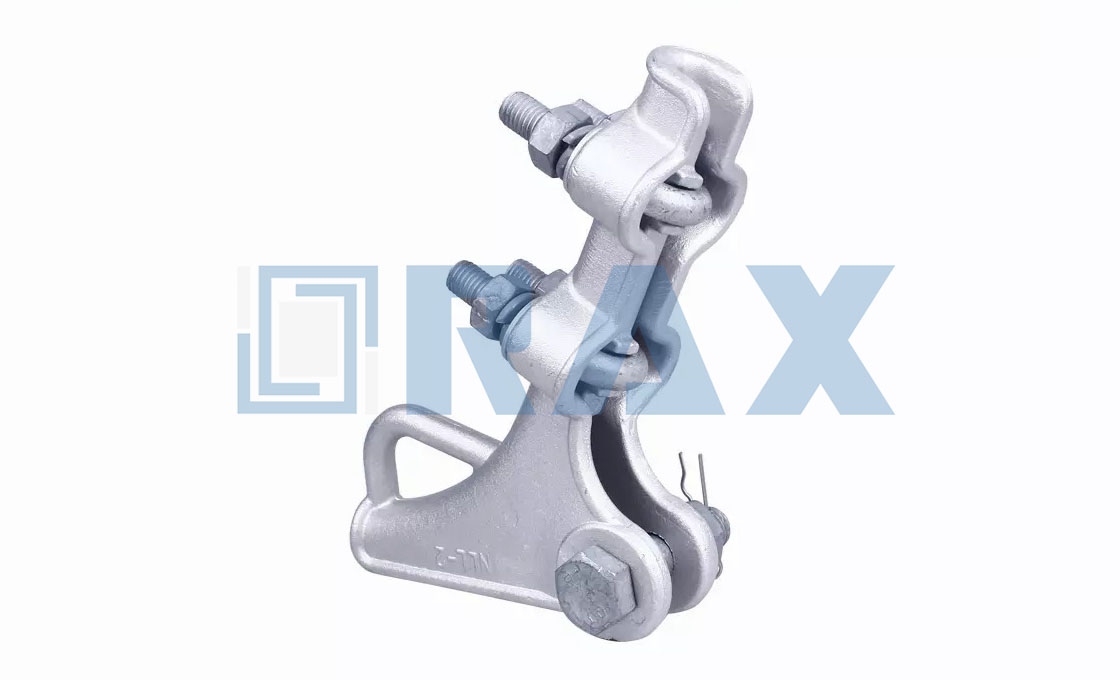
Volume programs and OEM drawings run through the same channel, from tension and suspension fittings to matched brackets for each pole type.
Verificaciones de instalación que previenen fallos de anclaje
This is not an installation manual, but four checks belong in every crew’s routine. Verify the cable diameter against the clamp window before the bucket leaves the yard. Torque bolted strain clamps to the datasheet value and mark the nut with paint so any movement shows at the next patrol. Treat any clamp that shows slip marks as retired hardware. The wedge has already given up its bite.
Sequence matters on the pull, too. The winch stays attached until every dead-end is made off, because a released bundle stores enough energy to move on its own. On the crew side, rigging discipline does more for anchor reliability than any catalog choice.
- Match the clamp window to the measured cable diameter, insulation included.
- Respect the datasheet torque on every bolted clamp.
- Keep the bail free to articulate; a side-loaded bail works loose.
- Replace, never re-tighten, hardware that shows slip or corrosion trails.
Signos de advertencia para inspección y reemplazo
Patrols should look hard at anchors after the first big temperature swing of the year and after every serious storm. Cracked polymer housings, white powdery oxidation at aluminum contact points, and fresh slip marks on the cable all deserve a work order. Galvanized steel parts showing rust streaks have lost zinc in spots and need tracking.
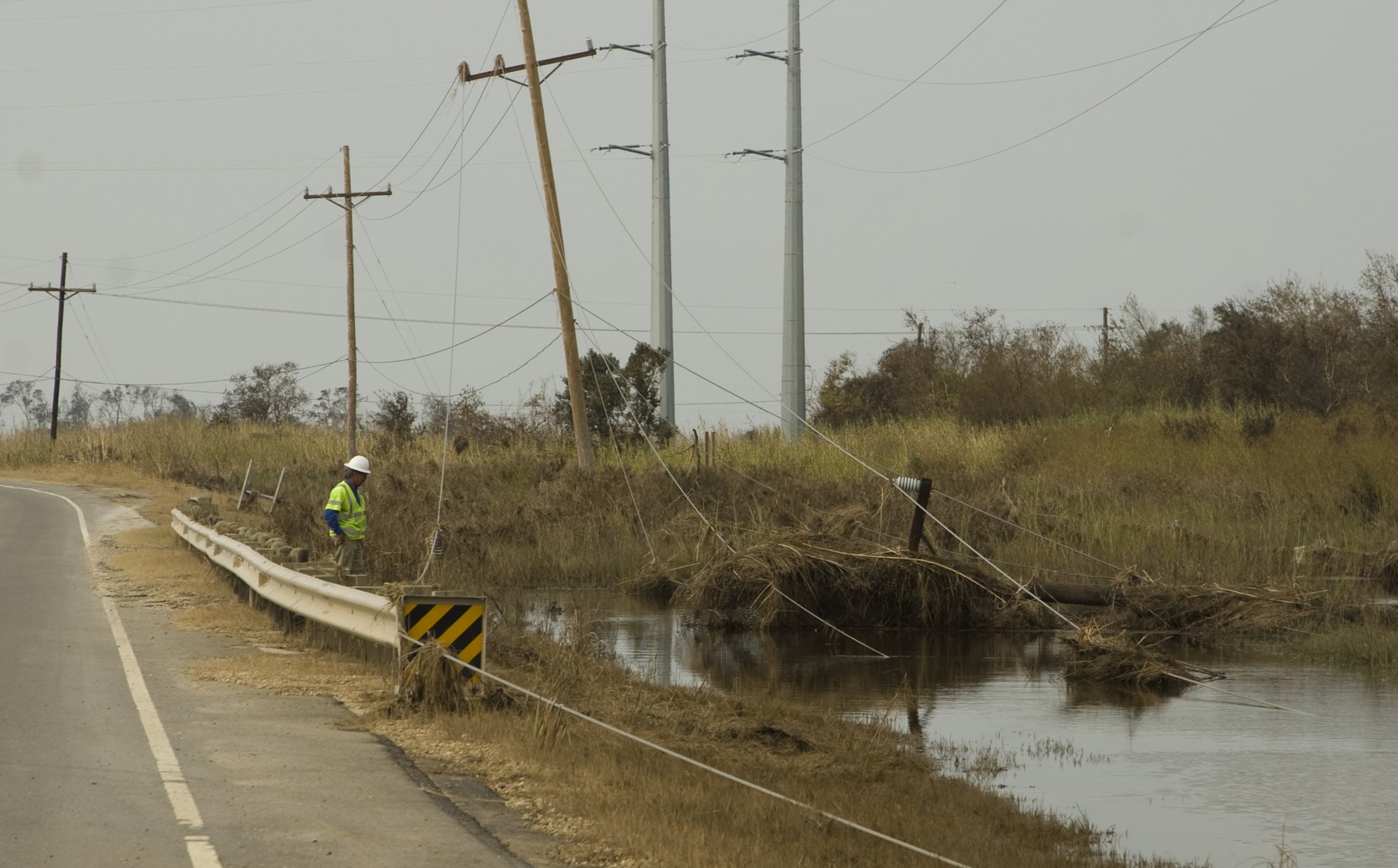
Storm damage rarely announces itself politely. By the time a span is sagging, the clamp that let go has usually been telling patrols something for two seasons. Photo records of each anchor point make those early warnings visible before they become outages.
Cold climates add one more check. Freeze-thaw cycles move brackets and poles slightly all winter, and hardware that was tight in autumn can read loose by spring patrol. Recording torque readings per structure turns that drift into data instead of guesswork.
Preguntas comunes de constructores de líneas
¿Qué hace una abrazadera de anclaje en una línea aérea?
It is the fitting that ends a run: the cable stops there and the span’s full longitudinal load transfers into the structure. Anchors therefore appear at dead-ends, angle poles, and terminations rather than mid-span.
¿Dónde debe terminar el hardware de suspensión y empezar el de tensión?
Deje que la carga decida. Los postes de media luz solo soportan peso, por lo que las pinzas de suspensión son adecuadas para ellos; donde cambian las direcciones o termina el tramo, domina la tracción longitudinal y los herrajes de tensión asumen el rol principal.
¿Qué tamaño de abrazadera de anclaje se adapta a mi cable?
Measure the cable’s overall diameter with insulation and take the clamp whose window brackets that number. When a bundle sits between two windows, choose the larger body only if its MBL still clears the span’s expected tension.
¿Los cables de fibra ADSS usan el mismo hardware?
No. A fiber jacket cannot tolerate the point pressure a power clamp applies. ADSS routes specify dead-ends with elastomer cushioning, because bruised jackets bend the glass inside and degrade transmission.
¿Qué normas cubren estos accesorios de tensión?
In Europe, NF C 33-041 covers tension fittings for LV ABC and NF C 33-042 covers service anchoring, with the EN 50483 series providing harmonized test methods. Ask for the type test report by clause.
Quick answer: an anchor clamp is the tension fitting that terminates overhead cable and carries full line tension at dead-ends, corners, and terminations. Wedge types self-tighten on LV ABC, bolted strain clamps hold bare conductors, and cushioned dead-ends protect ADSS fiber. Verify the cable diameter window and the datasheet MBL before ordering.
Conclusiones clave para constructores de líneas
Anchor clamp selection is not exotic engineering; it is the discipline of matching a window to a cable and a load to a datasheet. Buyers who verify diameter, minimum breaking load, and standards coverage before ordering rarely meet these fittings again outside routine patrols. RaxPower has forged and galvanized pole line hardware since 2003, and we put the same rule on our own drawings: no claim without a test behind it.
- Match the clamp window to the measured cable diameter.
- Read the MBL on the datasheet, never the housing.
- Anchor every dead-end, angle pole, and termination.
- Keep cushioned hardware on fiber, metal jaws on power.
- Demand type test reports with the shipment.