
Imagine o último poste antes da linha sair do município. Uma pequena peça ao seu lado suporta a força de tração de cada metro de cabo atrás dele. Essa peça é o grampo de ancoragem, e compradores que o tratam como mercadoria comum tendem a se deparar com ele novamente durante a estação de tempestades.
A RaxPower fabrica fixações para linhas aéreas desde 2003, e os acessórios de ancoragem estão no centro da família de tensão desse catálogo. Este guia reúne o que um projetista de linha, contratante ou distribuidor deve saber antes de especificar um: como a cunha fixa, quais tipos existem e quais linhas da ficha técnica realmente determinam o desempenho.
O que um grampo de ancoragem faz na linha
Um grampo de ancoragem é o acessório de tensão que termina um cabo aéreo e transfere sua tração longitudinal completa para o poste, suporte ou torre. Grampos de suspensão funcionam de forma diferente: eles apenas suportam o peso do cabo e permitem que ele deslize sob variações de carga. É por isso que as linhas passam por suportes de suspensão no meio do vão, mas sempre terminam em pontos de ancoragem. Em redes BT ABC, a mesma peça é frequentemente vendida como grampo de tensão de cunha ou grampo de ponta morta ABC, classificado para serviço de 1 kV. Não importa o rótulo: a função é idêntica — segurar o cabo contra a tensão total da linha sem esmagá-lo.
Para uma olhada mais detalhada na geometria de fixação, veja o explicativo complementar sobre como esses grampos seguram antes de mergulhar na imagem completa abaixo.
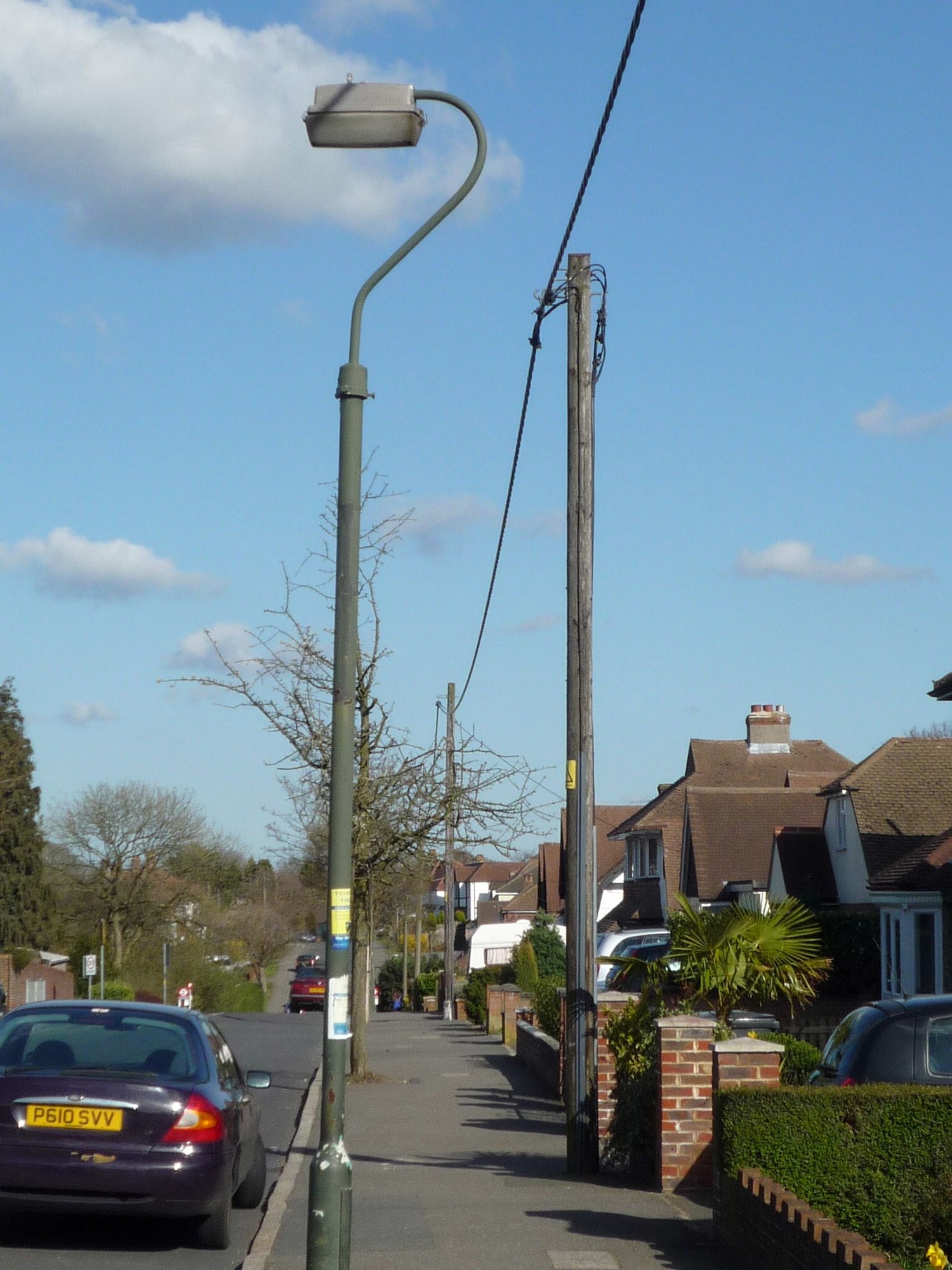
Observe onde o acessório fica posicionado e seu papel se torna óbvio. Cada vão termina duas vezes, uma vez em cada estrutura que detém o cabo. Nesses pontos, um pequeno fundido transfere quilonewtons de tração longitudinal para o topo do poste ou suporte. Escolher o acessório errado faz o cabo escorregar, o vão alterar-se e a folga de fase reduzir junto.
Para compradores, a simplicidade do acessório é a armadilha. Qualquer oficina mecânica pode copiar o contorno de uma carcaça de cunha. Muitos menos conseguem manter a tolerância do cone e a composição do polímero que permitem que a fixação resista uma década de ciclos de carga. A diferença aparece em relatórios de ensaio de tipo, não em fotos de produto.
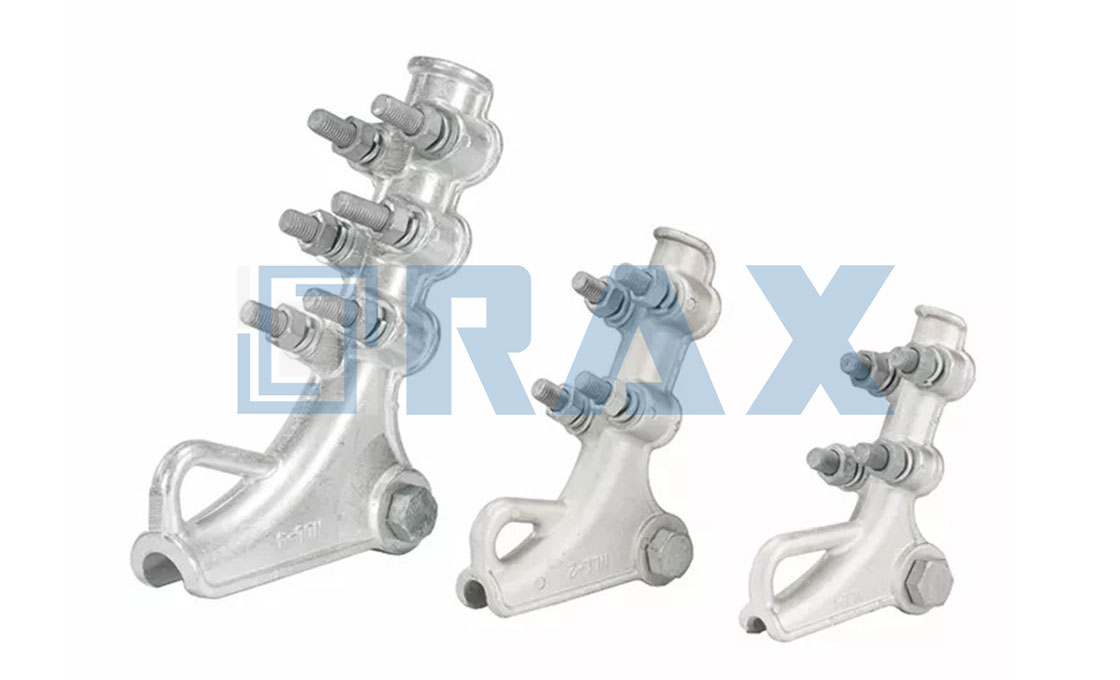
Como um grampo de ancoragem de cunha segura o cabo
Dentro de um grampo de cunha, duas cunhas de polímero com ranhuras encaixam em uma carcaça de alumínio cônica. O cabo entra entre elas, e a tensão da linha puxa o par de cunhas mais fundo no cone. Puxe mais forte e a fixação aperta mais, por isso os instaladores não precisam de chave de torque para esta família. Como um caminhão estacionado numa ladeira, o cabo nunca para de puxar, então o grampo nunca para de responder.
As superfícies das cunhas possuem ranhuras finas que se acomodam no isolamento do cabo sem tocar nos condutores. Uma argola de aço sai da carcaça e transfere a carga para o suporte no poste. Como as cunhas flutuam, uma única carcaça abrange uma faixa estreita de diâmetros, em vez de um único tamanho.
A instalação sem ferramentas importa mais do que parece. Equipes terminam feixes em altura, sob intempéries, muitas vezes com luvas. Um grampo de cunha não exige tecer laços, nem torque de parafuso, nem medição no poste. Listagens independentes do tipo PA-1500 descrevem as cunhas como autoajustáveis e sem necessidade de ferramentas, o que explica por que esta família se espalhou tão rapidamente pelas redes BT ABC.
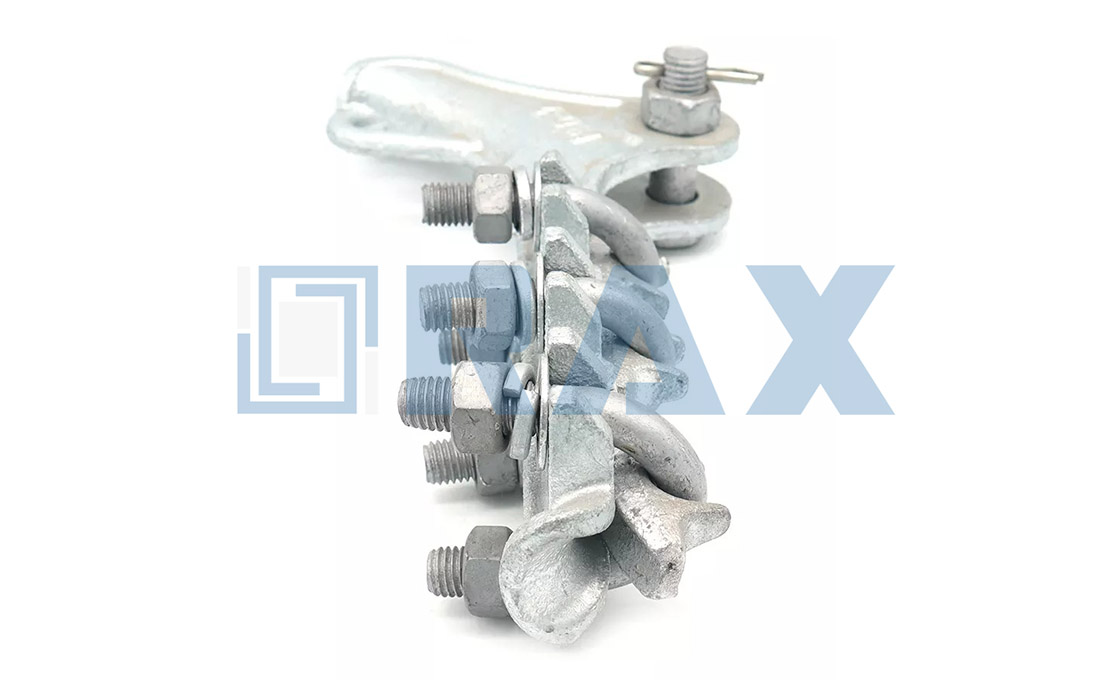
Opções de grampos de ancoragem parafusados e pré-formados
Grampos de cunha dominam as terminações BT ABC, mas não são o único acessório de ancoragem. Grampos de tensão parafusados no estilo NLL fecham um corpo de liga de alumínio ao redor de condutores nu ACSR ou todo alumínio, com parafusos em U galvanizados fornecendo a pressão. Aparelhos de haste pré-formada envolvem helicoidalmente e distribuem a carga, o que se adapta a cabos de fibra e ancoragens de cabo de vergalhão.
Os acessórios parafusados têm sua própria lógica. Um sulco fechado por parafusos em U aperta por pressão, então o instalador controla diretamente a fixação. Isso o torna a opção padrão em redes de condutor nu, onde emendas e ligações de equipamentos precisam de uma conexão repetível e que possa receber novo torque.
| Família | Método de fixação | Melhor aplicação | Atenção a |
|---|---|---|---|
| Cunha (estilo PA) | Cunhas de polímero autoapertantes | Pontas mortas BT ABC e ramos de serviço | A faixa de diâmetro deve corresponder ao feixe |
| Parafusado de tensão (estilo NLL) | Parafusos em U galvanizados fecham um corpo de alumínio | ACSR nu em postes e equipamentos | Torque conforme ficha técnica, marque a porca |
| Aparelho de haste pré-formada | Hastes helicoidais distribuem a carga | Pontas mortas de fibra e vergalhão | O comprimento da haste deve corresponder ao tamanho do cabo |
| Ponta morta acolchoada para fibra | Elastomer pads inside a wedge housing | Short ADSS spans | Pad condition at every patrol |
A cushioned fiber dead-end deserves special mention. Elastomer inserts reduce compression and bending stress on the cable, protecting the fibers inside a jacket that must never be crushed.
Four-core bundles bring one sizing detail. Some four-core service clamps take the whole bundle in a single body, while heavier feeders put each core on its own anchoring point. Match the bracket to that arrangement before ordering hardware.
Onde esses grampos cumprem seu papel
Walk any overhead distribution route and the anchoring points announce themselves. Dead-end poles at the end of a line take the full span pull on every phase. Angle poles take a resultant force whenever the route bends, so each direction change needs its own anchor clamp. Service entrances use smaller wedge units where the bundle drops toward a building.
Fiber routes add their own cases. Short ADSS spans between poles take cushioned wedge dead-ends, and catalog listings typically cover 8 to 12 mm cable over distances up to about 100 meters. Medium voltage bare conductor lines keep bolted strain clamps on terminations and equipment jumps.
Voltage class changes the hardware, not the principle. A 1 kV service bundle anchors in polymer-bodied wedges, medium voltage bare lines lean on metal strain clamps, and fiber routes need the cushioned middle ground. Vocabulary shifts between countries, so check the cable construction first and the catalog language second.
Materiais e proteção contra corrosão explicados
Aluminum alloy shells dominate the wedge family because they are light, dimensionally stable, and galvanically compatible with the aluminum conductors they hold. Polymer wedges and covers use UV-stabilized, fiberglass-reinforced compounds that keep their grip after years in the sun. Steel parts tell a different story: bolts, bails, and brackets rely on hot-dip galvanizing to ISO 1461 for corrosion protection.
Forging matters as much as coating. Hot-forged blanks keep the metal’s grain flow intact, which is why forged hardware resists cracking under cyclic line tension better than machined bar stock. When you compare quotes, ask what the load path is made of and how the zinc was applied.
None of these materials excuse a bad finish. Zinc coverage on steel parts should be continuous, because a single pinhole becomes the corrosion path for the whole fitting. Ask whether coating mass is tested against ISO 1461 and whether the certificates travel with the batch.
Especificações e cargas que os compradores devem verificar
Three datasheet lines decide most purchases. First, confirm the cable diameter window, because a wedge built for a 12 to 14 mm bundle will not hold an 8 mm drop wire. Second, read the minimum breaking load, not just the model number. Third, check the insulation class if the line runs covered cable.
Model names mislead more than any other trap. One manufacturer’s PA-1500, for example, is listed for 50 to 70 mm² single-core 1 kV cable with a 15 kN minimum breaking load. Other catalogs stretch similar model numbers across different sizes and loads from 6 to 20 kN. The number on the housing is not a specification until the datasheet confirms it.
Insulation class deserves its own minute. Covered cable needs clamps whose polymer parts keep the covering intact at the grip point, while bare conductor lines can spend their budget on the metal. Mixing these up shows up later as tracking marks on the jacket.
Breaking load is not working load, either. Designs keep a safety factor between the cable’s everyday tension and the clamp’s rated maximum, and each utility defines that margin in its own standards. Quote the expected span tension when you ask for a recommendation; that number makes the datasheet meaningful.
Typical listing: wedge clamp for 50–70 mm², 1 kV, MBL 15 kN, aluminum alloy shell, UV-stabilized polymer wedges, self-adjusting, no tool required.
| Padrão | Scope |
|---|---|
| NF C 33-041 | Tension fittings for LV ABC accessories |
| NF C 33-042 | Service connection anchoring clamps |
| EN 50483 series | Harmonized European test methods for LV ABC accessories |
European buyers will also see NF C 33-041 and its harmonized EN 50483 equivalents on quotation sheets. Ask suppliers which clauses their type tests cover, and expect a test report with each shipment batch. A supplier that cannot produce the report is selling a model number, not verified performance.
Fonte grampos para sua rede
A short supply chain helps here. When the same factory that forges the blank also runs the plating line and assembles the finished clamp, deviations get caught before shipment instead of after installation. In our experience, buyers who audit these process steps once cut their incoming inspection work for years.
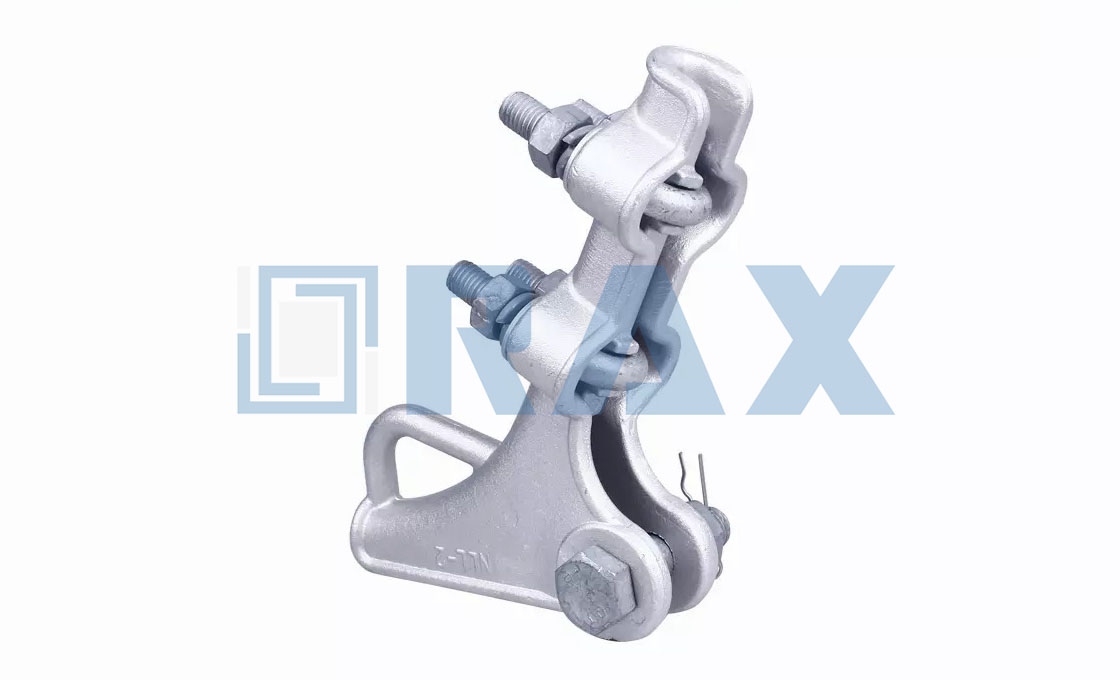
Volume programs and OEM drawings run through the same channel, from tension and suspension fittings to matched brackets for each pole type.
Verificações de instalação que previnem falhas de ancoragem
This is not an installation manual, but four checks belong in every crew’s routine. Verify the cable diameter against the clamp window before the bucket leaves the yard. Torque bolted strain clamps to the datasheet value and mark the nut with paint so any movement shows at the next patrol. Treat any clamp that shows slip marks as retired hardware. The wedge has already given up its bite.
Sequence matters on the pull, too. The winch stays attached until every dead-end is made off, because a released bundle stores enough energy to move on its own. On the crew side, rigging discipline does more for anchor reliability than any catalog choice.
- Match the clamp window to the measured cable diameter, insulation included.
- Respect the datasheet torque on every bolted clamp.
- Keep the bail free to articulate; a side-loaded bail works loose.
- Replace, never re-tighten, hardware that shows slip or corrosion trails.
Sinais de alerta para inspeção e substituição
Patrols should look hard at anchors after the first big temperature swing of the year and after every serious storm. Cracked polymer housings, white powdery oxidation at aluminum contact points, and fresh slip marks on the cable all deserve a work order. Galvanized steel parts showing rust streaks have lost zinc in spots and need tracking.
Storm damage rarely announces itself politely. By the time a span is sagging, the clamp that let go has usually been telling patrols something for two seasons. Photo records of each anchor point make those early warnings visible before they become outages.
Cold climates add one more check. Freeze-thaw cycles move brackets and poles slightly all winter, and hardware that was tight in autumn can read loose by spring patrol. Recording torque readings per structure turns that drift into data instead of guesswork.
Perguntas comuns de construtores de linhas
O que um grampo de ancoragem faz em uma linha aérea?
It is the fitting that ends a run: the cable stops there and the span’s full longitudinal load transfers into the structure. Anchors therefore appear at dead-ends, angle poles, and terminations rather than mid-span.
Onde deve terminar a fixação de suspensão e começar a fixação de tensão?
Deixe a carga decidir. Os postes de meio de vão apenas sustentam peso, portanto, grampos de suspensão são adequados para eles; onde quer que a direção mude ou o trecho termine, a tração longitudinal predomina e os dispositivos de tensão fazem-se necessários.
Qual tamanho de grampo de ancoragem cabe no meu cabo?
Measure the cable’s overall diameter with insulation and take the clamp whose window brackets that number. When a bundle sits between two windows, choose the larger body only if its MBL still clears the span’s expected tension.
Cabos ADSS de fibra usam os mesmos acessórios?
No. A fiber jacket cannot tolerate the point pressure a power clamp applies. ADSS routes specify dead-ends with elastomer cushioning, because bruised jackets bend the glass inside and degrade transmission.
Quais normas cobrem esses acessórios de tensão?
In Europe, NF C 33-041 covers tension fittings for LV ABC and NF C 33-042 covers service anchoring, with the EN 50483 series providing harmonized test methods. Ask for the type test report by clause.
Quick answer: an anchor clamp is the tension fitting that terminates overhead cable and carries full line tension at dead-ends, corners, and terminations. Wedge types self-tighten on LV ABC, bolted strain clamps hold bare conductors, and cushioned dead-ends protect ADSS fiber. Verify the cable diameter window and the datasheet MBL before ordering.
Principais conclusões para construtores de linhas
Anchor clamp selection is not exotic engineering; it is the discipline of matching a window to a cable and a load to a datasheet. Buyers who verify diameter, minimum breaking load, and standards coverage before ordering rarely meet these fittings again outside routine patrols. RaxPower has forged and galvanized pole line hardware since 2003, and we put the same rule on our own drawings: no claim without a test behind it.
- Match the clamp window to the measured cable diameter.
- Read the MBL on the datasheet, never the housing.
- Anchor every dead-end, angle pole, and termination.
- Keep cushioned hardware on fiber, metal jaws on power.
- Demand type test reports with the shipment.