
A post insulator holds its conductor in a fixed position, so the buying question is never just voltage. The same 36 kV order can call for a tie top line post, a clamp top, or a pedestal-mounted station post, and each choice sits on a different material body. This guide maps the post insulator types by form and by material, then connects each type to the voltage class and site conditions it actually fits.
Inquiries reaching the RaxPower order desk often ask for post pricing with only a kV figure attached, yet mounting style and site pollution decide the type long before price does. The sections below separate what each post insulator type is built from, how it mounts, and where it fails, so the next specification arrives complete.
What Makes a Post Insulator a Post
A post insulator is a rigid, self-supporting column that bolts directly between a structure and an energized part. Unlike a suspension string, it cannot swing to absorb loads, so the body itself must carry bending, compression, and torsion for decades. The post insulator page in this site's own catalog frames the duty the same way: the units insulate the conductor from the structure while withstanding bending, compression, and torsion forces. The family then splits by application, into line post types for overhead lines and station post types for substations.
That rigidity is the defining trade. Suspension insulators buy forgiveness by hanging; posts buy compactness by resisting loads in the material itself. A composite insulator guide on this site makes the same division by mechanical duty. Suspension units handle vertical weight, tension units resist conductor pull, and post units provide rigid structural support. Every post insulator type in the sections ahead is a variation on that single structural idea, differing in material, end fittings, and mounting pattern.
Two consequences follow for buyers. First, the cantilever rating is the load number that matters most, because the post works as a bracket. Second, form names are functional, not decorative: a station post is built for flanged, bus-support work, while a line post is built for a crossarm or pole. Choosing between them is a mechanical decision before it is an electrical one.
Three Materials, One Rigid Post Form
Post insulator types share a skeleton but differ in skin and spine. Porcelain posts are stacks of wet-process clay sheds fired at high temperature and cemented to metal fittings. Composite posts replace the ceramic spine with a fiberglass core and shrink the housing to a silicone rubber sleeve. Glass posts are the oldest cousin of the three. They assemble cemented discs of toughened glass into a rigid column, a design that still exists in service but has largely stopped being specified.
| Material | How the post is built | Signature behavior | Where it wins |
|---|---|---|---|
| Porcelana | Fired clay sheds cemented to metal caps or flanges | Stiff and heavy; brittle, so damage can hide in the glaze | Every voltage class, deflection-critical apparatus |
| Compuesto | Fiberglass core in resin, silicone housing, attached end fittings | Light and resilient; hydrophobic housing sheds pollution | Weight-limited structures, seismic and dirty sites |
| Vidrio | Cemented stacks of toughened glass discs | Shattered discs announce damage visibly | Legacy stations; disc strings on new lines |
The deep material-level comparison of ceramic, glass, and composite units lives in a separate comparison guide. The rest of this page stays inside the post form with a narrower question. What does each material look like once it must work as a rigid column?
Porcelain Posts: The Standard the Grid Grew Up With
Porcelain owns the longest service record of any post insulator type, and the standards still treat it as the reference technology. Wet-process porcelain station post insulators cover voltages up to 765 (800) kV, with maximum cantilever strength classes in the range of 20 to 30 kN. Single units can reach 3000 mm in length. Above 245 kV, the units become assemblies: two or more individual posts joined by metal flanges into one taller column.
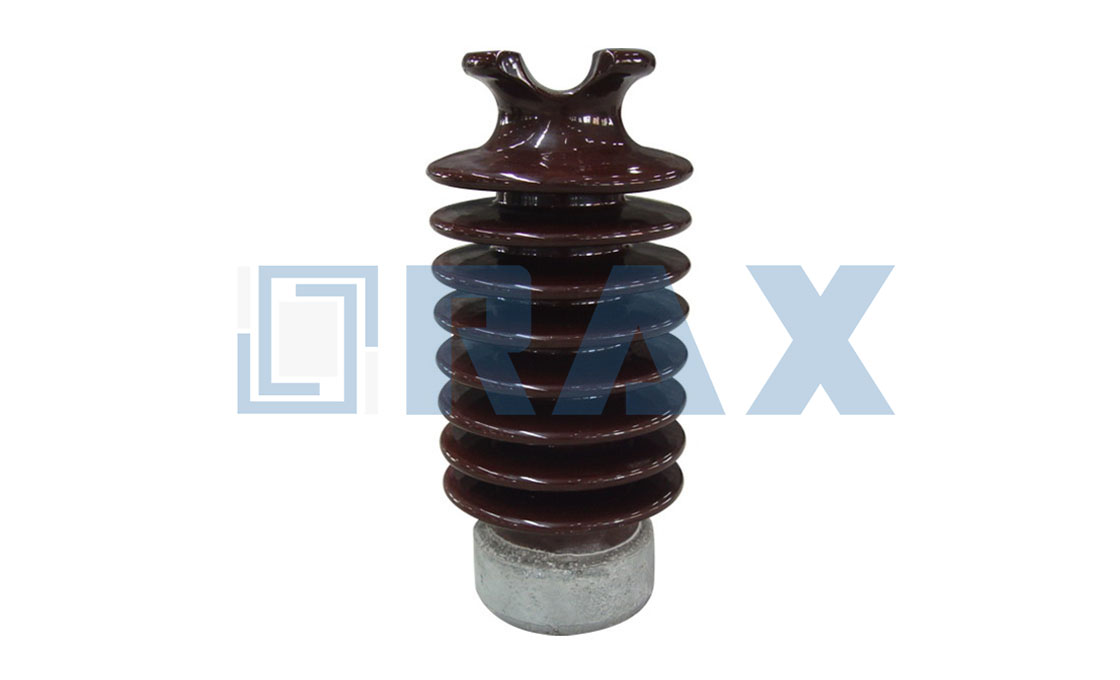
Selection follows two parallel catalogs. IEC types are ordered from the characteristic tables of IEC 60273 and tested to IEC 60168. North American practice orders ANSI C29.9 apparatus post types by TR code, a two-number shorthand that bundles cantilever strength with torsion. The C29.9 document itself covers materials, dimensions, characteristics, marking, sampling, inspecting, and testing of wet-process porcelain apparatus post type insulators. Wet-process porcelain line posts get their own document, ANSI C29.7, titled for high-voltage line-post type insulators.
The material's habits are well understood. Sheds are turned to profile, then sintered at 1200-1300°C and cemented to their caps or flanges, which is why profiles can be tuned flexibly for creepage. The cylindrical blanks themselves arrive either from extrusion or from hydrostatic compression, and the firing and cementing stages are what make the production cycle comparatively long.
The ceramic spine is also the stiffest. Design stress sits at 60 to 100 MPa, roughly an order of magnitude below composite material, which is why porcelain still serves where deflection must stay small. The costs are weight and brittleness, and the mass of a solid porcelain core limits its use in seismic applications.
Modern kilns and turning lines have narrowed those costs without erasing them. Contemporary high-strength porcelain posts arrive with optimized shapes, lower weight, and shed profiles tuned for the pollution class they will face. Where a legacy porcelain station sits on a severely contaminated site, plants can even upgrade the existing design path with RTV silicone coatings. Coated posts buy porcelain-like stiffness with a silicone surface, at a documented cost premium. They also demand a transport and erection discipline of their own, since a damaged coating layer is a defect no patrol can see from the ground.
Station Posts and the Pedestal Mounting Pattern
Station post insulators are the substation members of the family. A typical unit carries a cap on top and a flange at the base. It bolts down onto a plinth, pedestal, or steel beam the way you brace a heavy cabinet to the floor. The top fitting then receives a bus clamp or an apparatus terminal. Typical duties include bus bar supports, disconnector switches, HVDC converters, and coil supports, which is why the type also travels under the name apparatus post.
Voltage reaches upward by stacking. A single porcelain unit tops out near 3000 mm, so higher buses are built from multi-unit assemblies. Dimension-driven buyers can see how height and cantilever interact in this site's 132 kV post insulator dimension guide. The mounting pattern repeats at every kV: flange down, cap up, hardware torqued to the standard's tables.
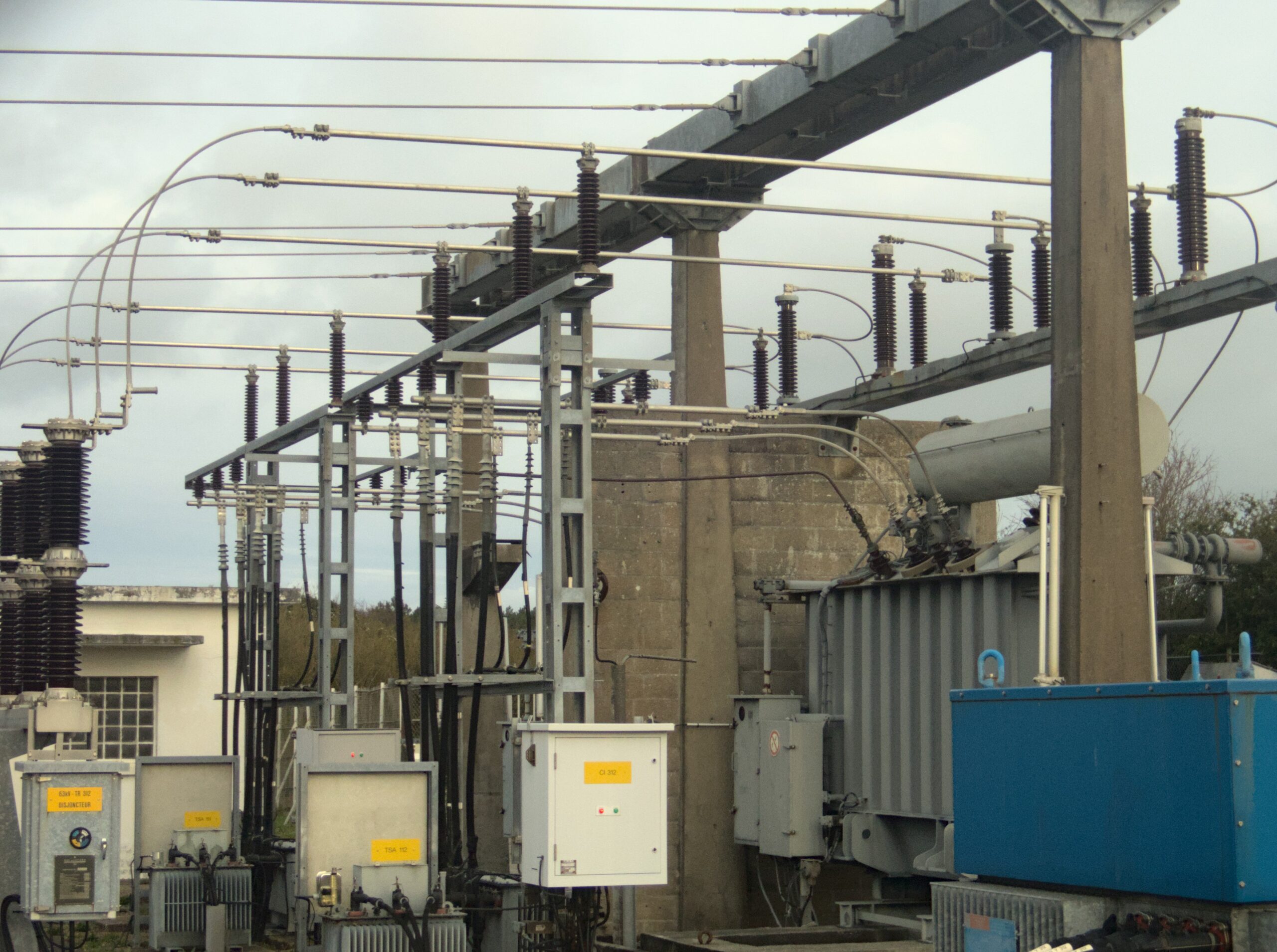
Composite station posts now share this territory. The solid-core version pairs a fiberglass core, typically 45 to 100 mm in diameter, with an elastomeric housing. It serves up to roughly 245 (420) kV, with tests defined by IEC 62231. On the North American side, ANSI C29.19, titled Composite Insulators - Station Post Type, covers the matching types.
Above that range, hollow-core composite posts take over. Their fiberglass tubes already reach 500 to 1000 mm in diameter, with connection lengths beyond 10 m on 800 kV HVDC and 1100 kV UHV work. Bending moments above 1000 kNm are feasible. The hollow volume must be filled with an inert medium such as foam or insulating gas.
Hybrid posts add a silicone skin over a porcelain core where disconnectors need near-zero deflection. Bus layout questions, like spacing and clearances between these columns, belong to the substation bus post placement guide.
Seismic behavior is the quiet argument that moves stations from porcelain to composite. Qualifying a multi-unit porcelain stack for a seismic site means finite element modeling of the whole assembly and, on most projects, shaker table tests to prove it. Composite columns are non-brittle, carry high self-damping, and combine high strength with low weight, so that qualification effort shrinks. The same logic explains why optical instrument transformers and fiber-optic bushings of the station post type now sit on composite columns almost by default.
Line Posts: Tie Tops, Clamp Tops and Brace Posts
Move from the substation fence to the pole line and the post insulator type changes its head. A line post stands on a crossarm or pole and holds the conductor at a fixed offset. Its top fitting must either receive a tie or grip the conductor directly. North American catalogs standardize the porcelain versions under ANSI C29.7, and the variants are named for their heads: tie top, vertical clamp top, horizontal clamp top, and horizontal gain base.
The catalog on this site lists all of these plus a fifth form, the brace post, offered for distribution through extra-high voltage applications. The head you choose decides the crew's work method at the pole. A tie top is faster to ship and stock but asks the linemen to tie the conductor in the field. A clamp top arrives with the gripping hardware already built on. Gain base variants solve the special case of mounting flat against a pole face.
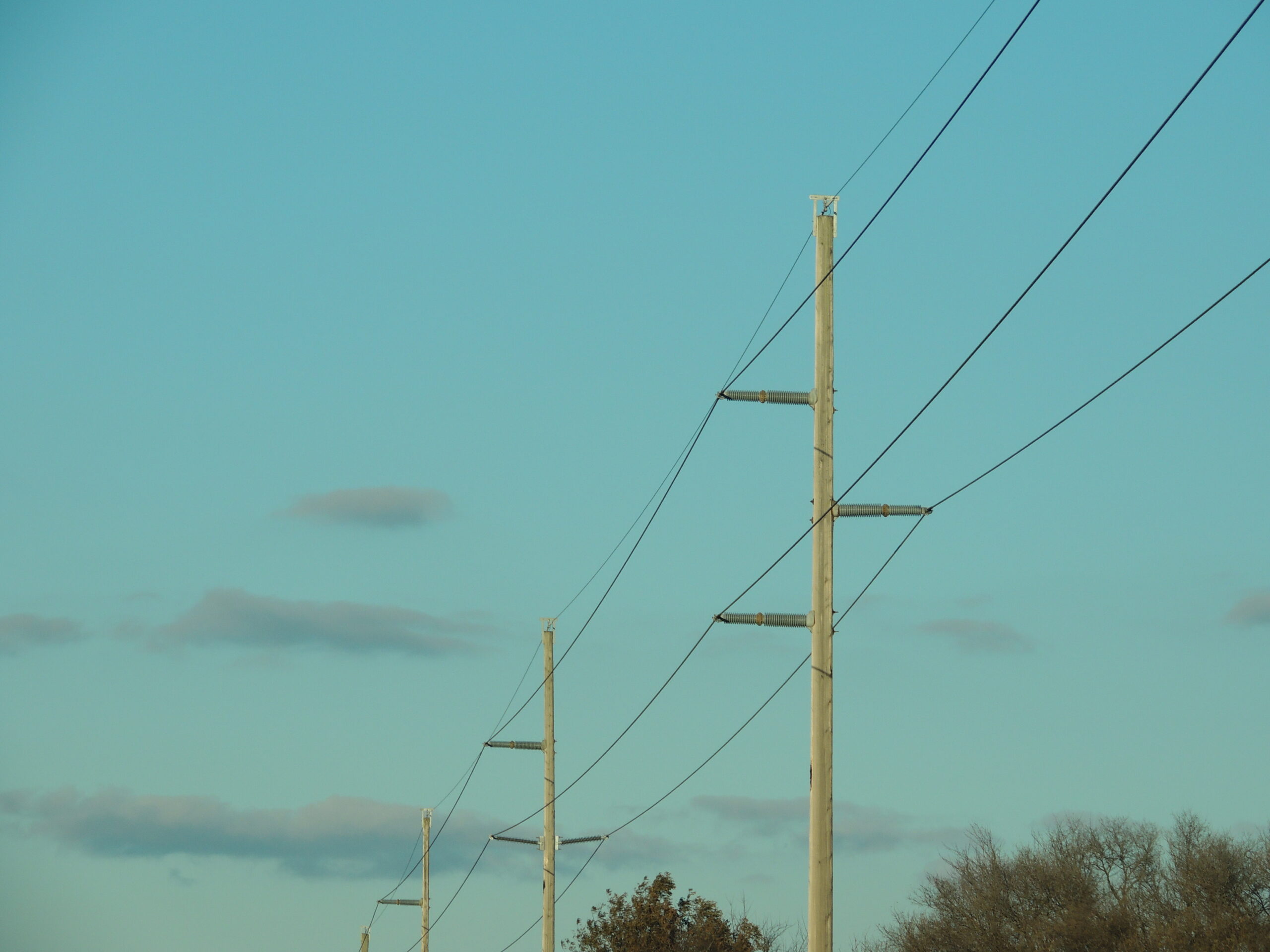
On the pole, the post bolts through its base fitting, and the stud hardware beneath it is a specifying detail of its own. The site's línea de publicaciones destacadas assembly, for example, bundles the stud, hex nut, and spring washers as one kit. Voltage reach for line posts runs from distribution classes up through sub-transmission. Beyond the single-unit range, utilities generally move to other structures rather than stack a line post, which keeps this type's geometry compact by design.
Where Pin Post Insulators Fit Today
Catalogs in several markets keep a third compact form, the pin post insulator, alongside the station and line post. The name describes a hybrid: a rigid post-type body sized for distribution duty, mounted on the same kind of stud pin that carries a classic pin insulator. Pin insulators themselves top out around 33 kV. That leaves the compact post to cover the upper distribution classes, where a plain pin body runs out of electrical and mechanical margin.
Order desk experience matches that pattern. Inquiries that name a pin post almost always describe a small rigid column for a crossarm stud on an upper distribution feeder. Buyers order it where they want post-style stiffness without redesigning the crossarm around a bolted base bracket. If the structure moves to higher voltage, the specification crosses into the line post family, and if it needs bus-support stiffness, into the station post family. The pin post is best read as the distribution end of the same rigid-support idea rather than a separate technology.
Composite Posts and the Silicone Rubber Housing
Composite post insulator types replace the ceramic spine entirely. Under IEC 61952, a composite line post consists of a load-bearing cylindrical core of fibers, usually glass, in a resin-based matrix. The core is wrapped in an elastomer housing such as silicone or ethylene-propylene, with end fittings permanently attached. Nothing in the load path is brittle, which is what makes the type light, resilient, and forgiving of handling.
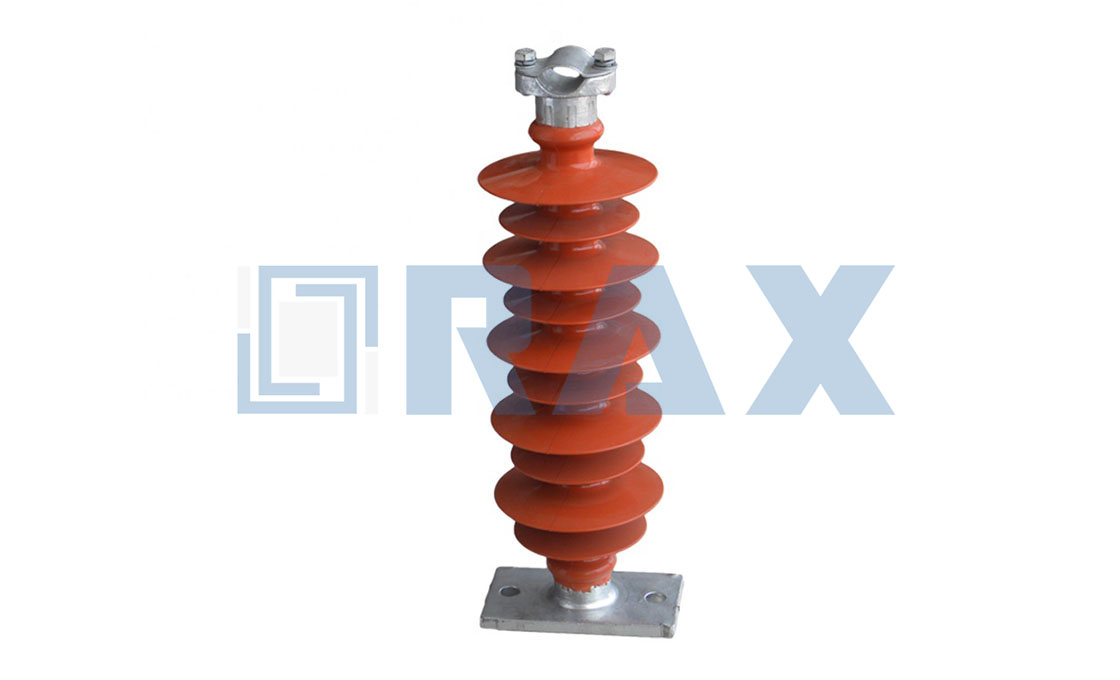
The housing does more than protect mechanically. Silicone rubber transfers its hydrophobicity into the pollution layer that settles on it, so a dirty composite surface still suppresses the conductive films that flash porcelain. That property, plus the low weight, is why composite posts are the default answer on wood pole rebuilds, seismic sites, and heavily contaminated corridors. The company's own composite post program, shown below, pairs red HTV silicone sheds with an aluminum clamp top and mounting base in the same way.
Two engineering cautions keep the type honest. The fiberglass core fails invisibly, so the supply chain matters as much as the specification, a theme explored in the site's Guía de auditoría de fábrica de aisladores compuestos. In station sizes, solid composite cores also give more deflection under cantilever load than porcelain. That is why apparatus posts above the composite range, and disconnector posts especially, still argue for ceramic or hybrid spines.
Manufacturing method is the last differentiator buyers rarely see. Injection molding suits large volumes of a single housing design. HTV extrusion opens a wider shed spectrum, including conical columns and profile changes along one post for HVDC, heavy rain, or anti-bird duty. Tracking and erosion resistance of the housing material matters as much as the process, and HTV grades hold the stronger record under AC and especially DC stress. A buyer who asks which process a post used is really asking how flexible the factory will be at the next order revision.
The Narrow Surviving Role of Glass Posts
Glass deserves its place in the title, and it gets an honest one. Glass station posts were real products: IEC 60273 specifies them, built as columns of individual toughened glass discs assembled with cement. But the same source records that application of such multi-unit post insulators is rare at most modern substations, with surviving installations dating mostly from the 1950s and 1960s. New substations specify porcelain or composite columns; new lines put glass to work in a different geometry.
That geometry is the cap-and-pin disc string, where toughened glass remains a volume material and the site supplies its own aislador de suspensión de vidrio line. The failure mode that suits strings, however, is the reason glass stepped back from post duty. A compromised toughened shell shatters into small fragments while the stub keeps roughly 80 percent of its rated mechanical strength. The conductor stays supported, and patrols can spot the broken disc from the tower base.
In a hanging string that loud, visible failure is a feature. In a rigid post carrying a live bus, shattered discs under every column would mean constant replacement work. Stiffer ceramic columns won that specification battle decades ago.
For buyers, the practical reading is simple. If a tender says glass post, first confirm whether it means a legacy station column to be maintained or replaced, or a glass disc string intended as the string equivalent. The two live in different catalogs, and pricing them as one thing is a common quoting error.
Matching Post Insulator Types to Voltage and Site
The working selection table fits on one page. Voltage reach comes from the standards quoted above; the site columns come from how each material behaves in service. Use it to narrow the post insulator types before any catalog conversation, then let the cantilever and creepage tables finish the job.
| Post type | Tarea típica | Voltage reach | Mounting and fittings |
|---|---|---|---|
| Porcelain station post | Bus supports, disconnectors, apparatus | To 765 (800) kV; stacks above 245 kV | Cap and flange, pedestal bolts |
| Composite station post | Seismic or polluted substations | Solid core typically to 245 (420) kV | Flanged; hollow and hybrid above |
| Porcelain line post | Distribution and sub-transmission poles | Classes per ANSI C29.7 | Tie top, clamp tops, gain base, brace |
| Composite line post | Lightweight rebuilds, dirty corridors | AC lines above 1000 V per IEC 61952 | Tie or clamp top on crossarm or bracket |
| Pin post | Compact distribution crossarms | Upper distribution classes | Threads onto a line post stud |
| Glass post | Legacy station columns only | Surviving 1950s-1960s plant | Cemented disc stacks, flange mounted |
Whatever the shortlist, every post insulator type leaves the factory behind the same three test levels. Routine tests cover electrical and mechanical checks with visual examination. Sample tests cover dimensions, temperature cycles, and mechanical failing loads, while type tests prove dry lightning impulse and wet power frequency withstand. Asking a supplier which level a certificate represents is a one-line question, and it sorts serious quotations from catalog copies quickly.

Cantilever, Torsion and the Catalog Class Numbers
Every post insulator type is sold on the same three mechanical numbers. Cantilever comes first because the post works as a bracket. The post line in this site's data sheet quotes bending strengths above 40 kN, with basic insulation levels from 60 kV to over 2550 kV across the range.
Torsion comes second, and it is built into the ANSI naming. A station post TR code pairs a cantilever rating with a torsion rating in one number. Deflection, the quiet third number, is why stiff ceramic spines still hold the disconnector market.
Compare the families on those numbers and the trade-offs line up. Porcelain station posts remain state of the art at almost every voltage class, including 800 kV. They peak at cantilever classes of roughly 20 to 30 kN with deflection held to a minimum. The physical ceiling is the solid core diameter, which tops out near 300 mm, and that ceiling is what cantilever runs into.
Composite station posts answer with a fifth to a tenth of the weight and far better seismic behavior, conceding some stiffness. Physical size closes the argument at the top. Porcelain columns stack past 245 kV in predictable modules, while dimension-critical projects check exact heights and core diameters against the tables rather than the brochure.
Creepage and shed profile belong on the same checklist. The data sheet behind this site's post line extends to 55 mm of creepage per kV, with shed diameters to 520 mm. Those figures only matter once the pollution class of the site is known. A buyer who arrives with cantilever, torsion, and creepage targets can order from either material catalog in one pass.
Field Behavior Across the Three Materials
Pollution separates the post insulator types more sharply than voltage does. Uncoated porcelain presents a wettable glazed surface, so contamination layers conduct, dry bands form, and flashover risk grows until washing resets the clock. Severe-pollution installations answer with RTV silicone coatings, which improve electrical performance at a documented cost premium and demand careful handling so the factory coating survives transport and erection. Silicone-housed composites start with that hydrophobicity built in and transfer it to the pollution layer continuously, which is why dirty stations keep moving toward composite and hybrid columns.
Mechanical aging tells a different story per material. Porcelain chips and cracks visibly but can also fail electrically without external signs, so assessors walk the rows with instruments as well as binoculars. Composite cores can degrade invisibly, which puts supplier quality control and interface design at the center of the risk file. Glass, in its remaining post role, needs neither instrument nor guesswork, since a shattered disc is its own inspection report. Environment-driven selection between these behaviors is treated in depth in the site's applications by environment guide.
Maintenance economics follow the same pattern. Washing programs, coating lifecycles, and seismic bracing budgets all attach to the material choice made years earlier at the specification stage. By the time a polluted 132 kV bus has been through its third washing season, the post insulator type chosen at the outset has already set most of that budget. That attachment is the strongest argument for choosing it deliberately rather than by catalog habit.
Choosing Among the Post Insulator Types
Start from the mounting, not the material. A bus or apparatus job means the station post family; a crossarm or pole job means the line post family; a compact distribution stud points to the pin post. Fix the head style next, tie top for field tying or clamp top for a delivered grip, and only then weigh porcelain against composite against the legacy glass question. In our experience, specifications that follow that order settle in one revision, while those that start from a material preference usually come back twice.
Then let the site overrule the default. Heavy contamination, seismic zones, and weight-limited wood structures argue for silicone-housed composite posts. Deflection-critical apparatus, stacked extra-high buses, and lowest first cost keep porcelain in the bill of materials. Glass enters only as a maintenance decision on surviving station columns or as disc strings on the line. RaxPower manufactures porcelain and composite posts across that full span and ships both IEC and ANSI C29.9 practice, so a single inquiry can carry the whole comparison to a decision.
Preguntas frecuentes
¿Cuáles son los principales tipos de aisladores de poste?
El catálogo divide los tipos de aisladores de poste primero por material: postes de porcelana, postes compuestos y el raro poste de vidrio. Según la forma de montaje, la clasificación práctica incluye el poste de estación, el poste de línea y el poste de pasador compacto usado en barras transversales de distribución.
¿Qué normas abarcan los aisladores de poste de porcelana?
IEC 60273 enumera las características de los postes y IEC 60168 cubre las pruebas, mientras que ANSI C29.9 define los tipos de postes aisladores por código TR. Los postes de línea de porcelana procesada en húmedo quedan bajo ANSI C29.7, por lo que los catálogos citan ambos sistemas lado a lado.
¿Por qué son escasos los aisladores de poste de vidrio?
Glass station posts exist, but each unit stacks cemented glass discs, and such installations are rare at modern substations, surviving mostly from the 1950s and 1960s. Toughened glass instead dominates suspension strings, where a shattered disc is easy to spot.
Are composite posts better than porcelain?
Below 245 kV, composite station posts bring lower weight, pollution resistance, and seismic resilience. Porcelain keeps the widest reach, since stacked porcelain columns carry substations up to 765 kV, and rigid ceramic cores limit deflection where disconnectors demand it.
What does tie top mean on a line post?
A tie top carries the conductor in a top groove secured by a tying wire. Clamp top designs grip the conductor instead, and horizontal clamp or gain base variants suit bracket and pole face mounting.