
Stellen Sie sich den letzten Mast vor, bevor die Leitung die Ortschaft verlässt. Ein kleines Bauteil an seiner Seite trägt die Zugkraft jedes einzelnen Meter Kabel hinter sich. Dieses Bauteil ist die Ankerschelle, und Käufer, die sie als Standardprodukt abhaken, begegnen ihr üblicherweise während der Sturmsaison erneut.
RaxPower stellt Pole-Line-Befestigungsteile seit 2003 her, und Ankerbeschläge stehen im Zentrum der Zugfamilien-Kategorie dieses Katalogs. Dieser Leitfaden fasst zusammen, was ein Leitungsplaner, Auftragnehmer oder Vertriebspartner wissen sollte, bevor er einen Typ spezifiziert: wie der Keil greift, welche Ausführungen es gibt und welche Kennwerte in den Datenblättern die Leistung tatsächlich bestimmen.
Was eine Ankerschelle auf der Leitung tut
Eine Ankerschelle ist das Spannungsbefestigungsteil, das ein Freileitungskabel terminiert und seine gesamte Längskraft auf den Mast, die Halterung oder den Turm überträgt. Aufhängeschellen funktionieren anders: Sie tragen allein das Kabelgewicht und erlauben ein Gleiten bei Laständerungen. Deshalb verlaufen Leitungen in der Spanne durch Aufhängepunkte, enden aber stets an Verankerungsstellen. In Niederspannungs-ABC-Netzen wird dasselbe Bauteil oft als Keil-Spann schelle oder ABC-Außenanschluss-Schelle verkauft, ausgelegt für 1-kV-Betriebsmittel. Egal welche Bezeichnung verwendet wird – die Funktion ist identisch: das Kabel gegen die volle Leitungs zugfestigkeit sichern, ohne es zu quetschen.
Für einen detaillierteren Blick auf die Greifgeometrie lesen Sie den begleitenden Beitrag zu der Art und Weise, wie diese Schellen greifen, bevor Sie in das vollständige Bild unten einsteigen.
Betrachtet man, wo das Bauteil sitzt, wird seine Funktion sofort offensichtlich. Jede Spanne endet zweimal, einmal an jeder Struktur, die das Kabel aufhält. An diesen Stellen überträgt ein kleiner Gussteilkörper Kilonewton an Längszug in die Mastspitze oder Halterung. Wird der Beschlag falsch gewählt, wandert das Kabel, die Durchseilung ändert sich und der Phasenabstand verringert sich entsprechend.
Für Käufer ist die scheinbare Einfachheit des Bauteils die Falle. Jede Maschinenwerkstatt kann den Umriss eines Keilgehäuses nachbauen. Weitaus weniger können die Passung der Keilform und die Polymer-Zusammensetzung einhalten, die notwendig sind, damit ein Griff ein Jahrzehnt lang Lastwechsel übersteht. Der Unterschied zeigt sich in Typenprüfberichten, nicht in Produktfotos.
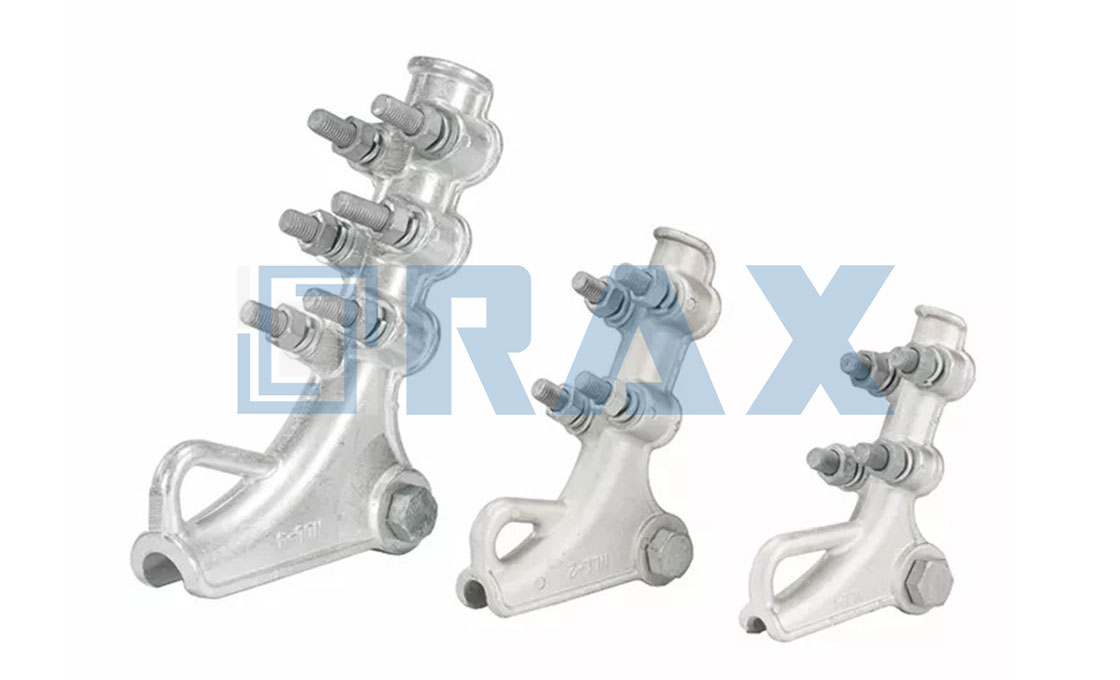
Wie eine Keil-Ankerschelle das Kabel greift
Innerhalb einer Keilschelle sitzen zwei geriffelte Polymer-Keile in einem kegeligen Aluminiumgehäuse. Das Kabel wird zwischen sie eingeführt, und der Leitungs zug zieht das Keilpaar tiefer in die Keilform. Je stärker der Zug, desto fester greift die Schelle – deshalb benötigen Montateure für diese Baufamilie keinen Drehmomentschlüssel. Wie ein parkender LKW am Hang zieht das Kabel unablässig, und die Schelle erwidert diesen Zug fortlaufend.
Die Keilflächen tragen feine Rippen, die in die Isolierung des Kabels eingreifen, ohne die Leiter zu berühren. Ein Stahljoch verlässt das Gehäuse und leitet die Kraft an die Halterung am Mast weiter. Da die Keile frei schwimmen, deckt ein Gehäuse einen engen Durchmesserbereich ab, statt nur eine einzelne Größe.
Werkzeugfreiheit ist wichtiger, als es klingt. Montagemannschaften terminieren Bündel in Höhe, bei Witterung, oftmals mit Handschuhen. Eine Keil schelle benötigt kein Umschlingen, kein Anziehen von Schrauben und keine Messung am Mast. Unabhängige Prüfberichte zum Typ PA-1500 beschreiben die Keile als selbstjustierend und werkzeugfrei – genau das ist der Grund, warum sich diese Baufamilie so schnell in Niederspannungs-ABC-Netzen verbreitet hat.
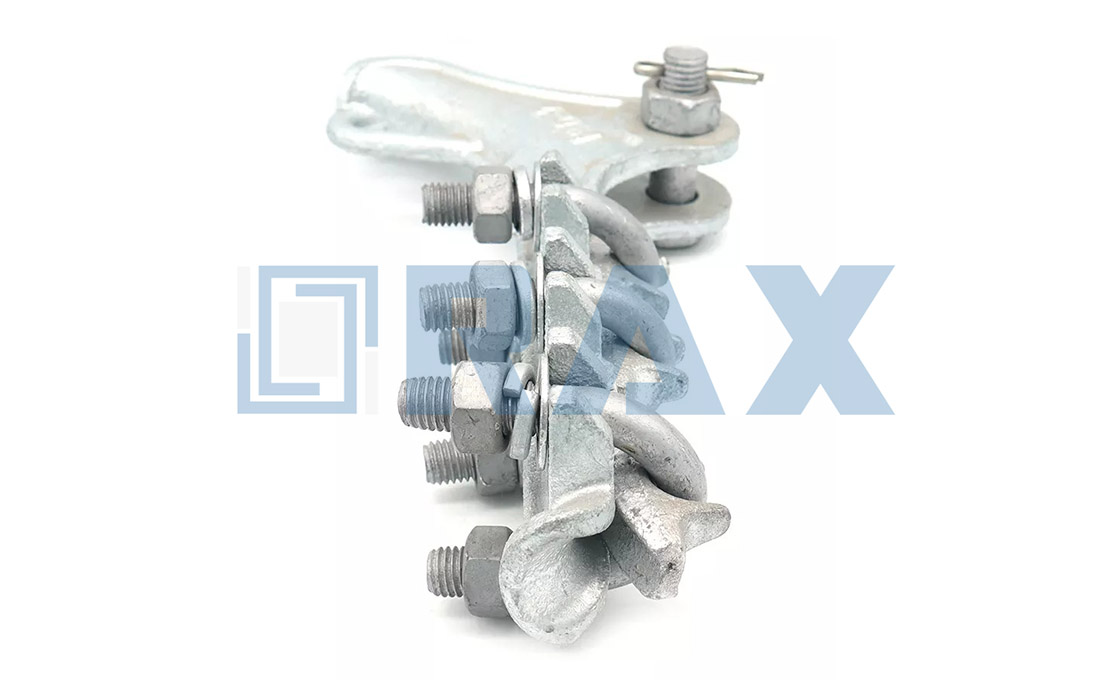
Geschraubte und vormontierte Ankerschellen-Optionen
Keilschellen dominieren NLV-ABC-Terminierungen, sind aber nicht die einzige Ankerbefestigung. Geschraubte Zug schellen im NLL-Stil umschließen einen Aluminiumlegierungs körper um blanken ACSR- oder Allaluminiumleiter, wobei verzinkte Stahl-U-Bolzen den Druck erzeugen. Vormontierte Stangenумwicklungswicklungen wickeln sich helikal und verteilen die Last – geeignet für Faser kabel und Zugankerbefestigungen an Winden.
Geschraubte Befestigungsteile folgen einer eigenen Logik. Eine durch U-Bolzen verschlossene Mulde greift durch Druck, sodass der Monteur die Haltekraft direkt steuert. Daher sind sie die Standardlösung in blanken Leiter Netzen, wo Spleiße und Ausrüstungs Anschlüsse eine wiederholbare, nachziehbare Verbindung erfordern.
| Baufamilie | Greifverfahren | Beste Eignung | Zu beachten |
|---|---|---|---|
| Keil (PA-Stil) | Selbstnachziehende Polymer-Keile | NLV-ABC-Außenanschlüsse und Versorgungsspannen | Der Durchmesserspielraum muss zum Bündel passen |
| Geschraubte Zug schelle (NLL-Stil) | Verzinkte U-Bolzen schließen einen Aluminiumkörper | Blanke ACSR-Leiter an Masten und Ausrüstung | Drehmoment gemäß Datenblatt, Mutter markieren |
| Vormontierte Stangenумwicklung | Helikal verlegte Stangen verteilen die Last | Faser- und Winden-Zugankerbefestigungen | Stangenlänge muss zur Kabelgröße passen |
| Cushioned fiber dead-end | Elastomer pads inside a wedge housing | Short ADSS spans | Pad condition at every patrol |
A cushioned fiber dead-end deserves special mention. Elastomer inserts reduce compression and bending stress on the cable, protecting the fibers inside a jacket that must never be crushed.
Four-core bundles bring one sizing detail. Some four-core service clamps take the whole bundle in a single body, while heavier feeders put each core on its own anchoring point. Match the bracket to that arrangement before ordering hardware.
Wo sich diese Schellen ihren Einsatz verdienen
Walk any overhead distribution route and the anchoring points announce themselves. Dead-end poles at the end of a line take the full span pull on every phase. Angle poles take a resultant force whenever the route bends, so each direction change needs its own anchor clamp. Service entrances use smaller wedge units where the bundle drops toward a building.
Fiber routes add their own cases. Short ADSS spans between poles take cushioned wedge dead-ends, and catalog listings typically cover 8 to 12 mm cable over distances up to about 100 meters. Medium voltage bare conductor lines keep bolted strain clamps on terminations and equipment jumps.
Voltage class changes the hardware, not the principle. A 1 kV service bundle anchors in polymer-bodied wedges, medium voltage bare lines lean on metal strain clamps, and fiber routes need the cushioned middle ground. Vocabulary shifts between countries, so check the cable construction first and the catalog language second.
Werkstoffe und Korrosionsschutz erklärt
Aluminum alloy shells dominate the wedge family because they are light, dimensionally stable, and galvanically compatible with the aluminum conductors they hold. Polymer wedges and covers use UV-stabilized, fiberglass-reinforced compounds that keep their grip after years in the sun. Steel parts tell a different story: bolts, bails, and brackets rely on hot-dip galvanizing to ISO 1461 for corrosion protection.
Forging matters as much as coating. Hot-forged blanks keep the metal’s grain flow intact, which is why forged hardware resists cracking under cyclic line tension better than machined bar stock. When you compare quotes, ask what the load path is made of and how the zinc was applied.
None of these materials excuse a bad finish. Zinc coverage on steel parts should be continuous, because a single pinhole becomes the corrosion path for the whole fitting. Ask whether coating mass is tested against ISO 1461 and whether the certificates travel with the batch.
Spezifikationen und Belastungen, die Käufer überprüfen sollten
Three datasheet lines decide most purchases. First, confirm the cable diameter window, because a wedge built for a 12 to 14 mm bundle will not hold an 8 mm drop wire. Second, read the minimum breaking load, not just the model number. Third, check the insulation class if the line runs covered cable.
Model names mislead more than any other trap. One manufacturer’s PA-1500, for example, is listed for 50 to 70 mm² single-core 1 kV cable with a 15 kN minimum breaking load. Other catalogs stretch similar model numbers across different sizes and loads from 6 to 20 kN. The number on the housing is not a specification until the datasheet confirms it.
Insulation class deserves its own minute. Covered cable needs clamps whose polymer parts keep the covering intact at the grip point, while bare conductor lines can spend their budget on the metal. Mixing these up shows up later as tracking marks on the jacket.
Breaking load is not working load, either. Designs keep a safety factor between the cable’s everyday tension and the clamp’s rated maximum, and each utility defines that margin in its own standards. Quote the expected span tension when you ask for a recommendation; that number makes the datasheet meaningful.
Typical listing: wedge clamp for 50–70 mm², 1 kV, MBL 15 kN, aluminum alloy shell, UV-stabilized polymer wedges, self-adjusting, no tool required.
| Norm | Scope |
|---|---|
| NF C 33-041 | Tension fittings for LV ABC accessories |
| NF C 33-042 | Service connection anchoring clamps |
| EN 50483 series | Harmonized European test methods for LV ABC accessories |
European buyers will also see NF C 33-041 and its harmonized EN 50483 equivalents on quotation sheets. Ask suppliers which clauses their type tests cover, and expect a test report with each shipment batch. A supplier that cannot produce the report is selling a model number, not verified performance.
Beschaffung von Schellen für Ihr Netz
A short supply chain helps here. When the same factory that forges the blank also runs the plating line and assembles the finished clamp, deviations get caught before shipment instead of after installation. In our experience, buyers who audit these process steps once cut their incoming inspection work for years.
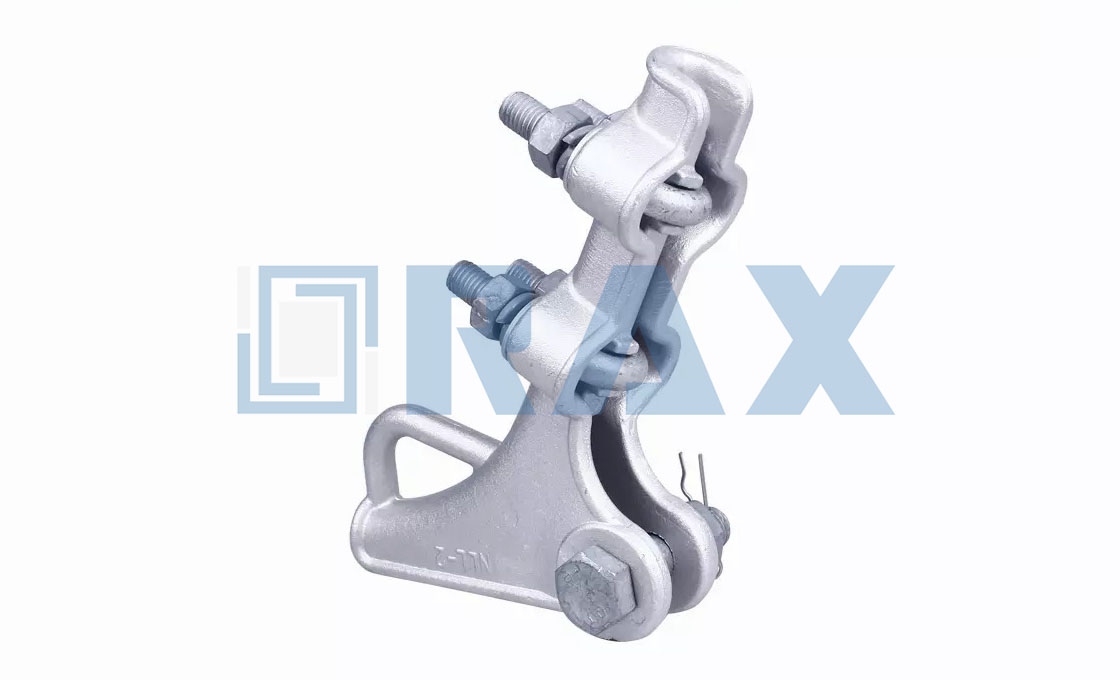
Volume programs and OEM drawings run through the same channel, from tension and suspension fittings to matched brackets for each pole type.
Montageprüfungen, die Ankerfehler verhindern
This is not an installation manual, but four checks belong in every crew’s routine. Verify the cable diameter against the clamp window before the bucket leaves the yard. Torque bolted strain clamps to the datasheet value and mark the nut with paint so any movement shows at the next patrol. Treat any clamp that shows slip marks as retired hardware. The wedge has already given up its bite.
Sequence matters on the pull, too. The winch stays attached until every dead-end is made off, because a released bundle stores enough energy to move on its own. On the crew side, rigging discipline does more for anchor reliability than any catalog choice.
- Match the clamp window to the measured cable diameter, insulation included.
- Respect the datasheet torque on every bolted clamp.
- Keep the bail free to articulate; a side-loaded bail works loose.
- Replace, never re-tighten, hardware that shows slip or corrosion trails.
Anzeichen für Inspektion und Austausch
Patrols should look hard at anchors after the first big temperature swing of the year and after every serious storm. Cracked polymer housings, white powdery oxidation at aluminum contact points, and fresh slip marks on the cable all deserve a work order. Galvanized steel parts showing rust streaks have lost zinc in spots and need tracking.
Storm damage rarely announces itself politely. By the time a span is sagging, the clamp that let go has usually been telling patrols something for two seasons. Photo records of each anchor point make those early warnings visible before they become outages.
Cold climates add one more check. Freeze-thaw cycles move brackets and poles slightly all winter, and hardware that was tight in autumn can read loose by spring patrol. Recording torque readings per structure turns that drift into data instead of guesswork.
Häufige Fragen von Leitungsbauleuten
Was macht eine Ankerschelle auf einer Freileitung?
It is the fitting that ends a run: the cable stops there and the span’s full longitudinal load transfers into the structure. Anchors therefore appear at dead-ends, angle poles, and terminations rather than mid-span.
Wo müssen Aufhängungsbefestigungsteile enden und Spannungsbefestigungsteile beginnen?
Let the load decide. Mid-span poles only hold weight, so suspension clamps suit them; wherever direction changes or the run ends, longitudinal pull takes over and tension hardware takes the point.
Welche Keil-Ankerschelle passt zu meinem Kabel?
Measure the cable’s overall diameter with insulation and take the clamp whose window brackets that number. When a bundle sits between two windows, choose the larger body only if its MBL still clears the span’s expected tension.
Verwenden ADSS-Faseroptikkabel die gleichen Befestigungsteile?
No. A fiber jacket cannot tolerate the point pressure a power clamp applies. ADSS routes specify dead-ends with elastomer cushioning, because bruised jackets bend the glass inside and degrade transmission.
Welche Normen decken diese Spannungsbefestigungsteile ab?
In Europe, NF C 33-041 covers tension fittings for LV ABC and NF C 33-042 covers service anchoring, with the EN 50483 series providing harmonized test methods. Ask for the type test report by clause.
Quick answer: an anchor clamp is the tension fitting that terminates overhead cable and carries full line tension at dead-ends, corners, and terminations. Wedge types self-tighten on LV ABC, bolted strain clamps hold bare conductors, and cushioned dead-ends protect ADSS fiber. Verify the cable diameter window and the datasheet MBL before ordering.
Wichtige Erkenntnisse für Leitungsbauleute
Anchor clamp selection is not exotic engineering; it is the discipline of matching a window to a cable and a load to a datasheet. Buyers who verify diameter, minimum breaking load, and standards coverage before ordering rarely meet these fittings again outside routine patrols. RaxPower has forged and galvanized pole line hardware since 2003, and we put the same rule on our own drawings: no claim without a test behind it.
- Match the clamp window to the measured cable diameter.
- Read the MBL on the datasheet, never the housing.
- Anchor every dead-end, angle pole, and termination.
- Keep cushioned hardware on fiber, metal jaws on power.
- Demand type test reports with the shipment.