
تخيّل خط جهد منخفض يعبر شارعاً مزدحماً في مرسيليا أو بوغوتا أو الرياض: ثلاثة أو أربعة نوى معزولة ملفوفة بشكل لولبي حول رسول مركزي، تتأرجح بين أعمدة الخرسانة. يعتمد كل نقطة تثبيت على ذلك الخط على مشبك ABC، وكل واحد من تلك المشابك ABC تم تحجيمه بواسطة مهندس قبل أشهر من أن تختبره العاصفة الأولى. اختيار تلك المشابك جيداً هو ما يدور حوله هذا الدليل.
منذ عام 2003، تصنع RaxPower معدات خط القطب في مصنع تسخين في خبي، الصين، مدعومة اليوم بفريق إنتاج يتجاوز 170 شخصاَ يخدم المرافق وشركات مقاولي الخطوط والتوزيع. يعكس إطار الاختيار أدناه ما يتحقق به مكتب الهندسة قبل توصية مشابك ABC لمشروع: الكابل، والهيكل، والحمولة، والمادة، والمعيار، بهذا الترتيب.
ابدأ من الكابل، وليس من المشبك
ABC تعني الكابل المجدول الهوائي: نظام فوق أرضي منخفض الجهد حيث تلتف نوى المرحلة الألومنيوم المعزولة حول رسول سبيكة الألومنيوم الذي يحمل الحمولة الميكانيكية الكاملة. معظم الشبكات تعمل بتصاميم 0.6/1 كيلو فولت بترتيبات نواتين أو أربع نوى، وكثيراً ما تضيف موصل إضاءة شوارع معزول مخصص. تُحدَّد المراحل بعدد الأخاديد المنقوشة في العزل.
ذلك الرسول يغير كل شيء حول اختيار المشابك. لأن وزن الكابل وتشده يسيران عبر نواة واحدة، فإن عتاد التثبيت يمسك الرسول بدلاَ من المراحل. عتاد التعليق يدعم الحزمة بالكامل، وعتاد الخدمة يلتقط النوى المعزولة الفردية. في خبرتنا، المشاريع التي تسحب جدول بيانات الكابل أولاً تنتهي بقائمة مشابك تكتب نفسها تقريباً.
رقمان مهمان ביותר: القطر الخارجي للحزمة والمقطع العرضي للرسول. حزمة 4×25 مم² عادة ما تقيس 24-27 مم عرضاً، بينما حزمة 4×95 مم² تصل إلى 32-38 مم. تتنوع تصاميم الكابل أيضاً حسب المنطقة، تتبع NF C 33-209 في فرنسا، BS 7870-5 في المملكة المتحدة، أو AS/NZS 3560.1 في أستراليا. في الأمريكتين، يُشحن نفس المنتج كهبوط خدمة مزدوج أو ثلاثي أو رباعي. للحصول على سياق تصميم أوسع للكابلات الجوية المجمَّعة مسبقاً، هذا نظرة عامة من TD World لمبادئ تصميم الكابلات فوق الأرض يستحق عشر دقائق.
لماذا يهم هذا الانضباط على نطاق المشروع؟ يمكن لـ feeder بعشرة كيلومترات أن يمر عبر أكثر من مئة هيكل، وحجم تجويف خاطئ واحد يتضاعف عبر كل نقطة تعليق على المسار. المشاريع التي تتحقق من الأقطار مبكراً تغير أرقام القطع على الورق. المشاريع التي تتحقق متأخرة تغيرها على الأعمدة، بشاحنة سلة وتقارير عطل بالفعل في متناول اليد.
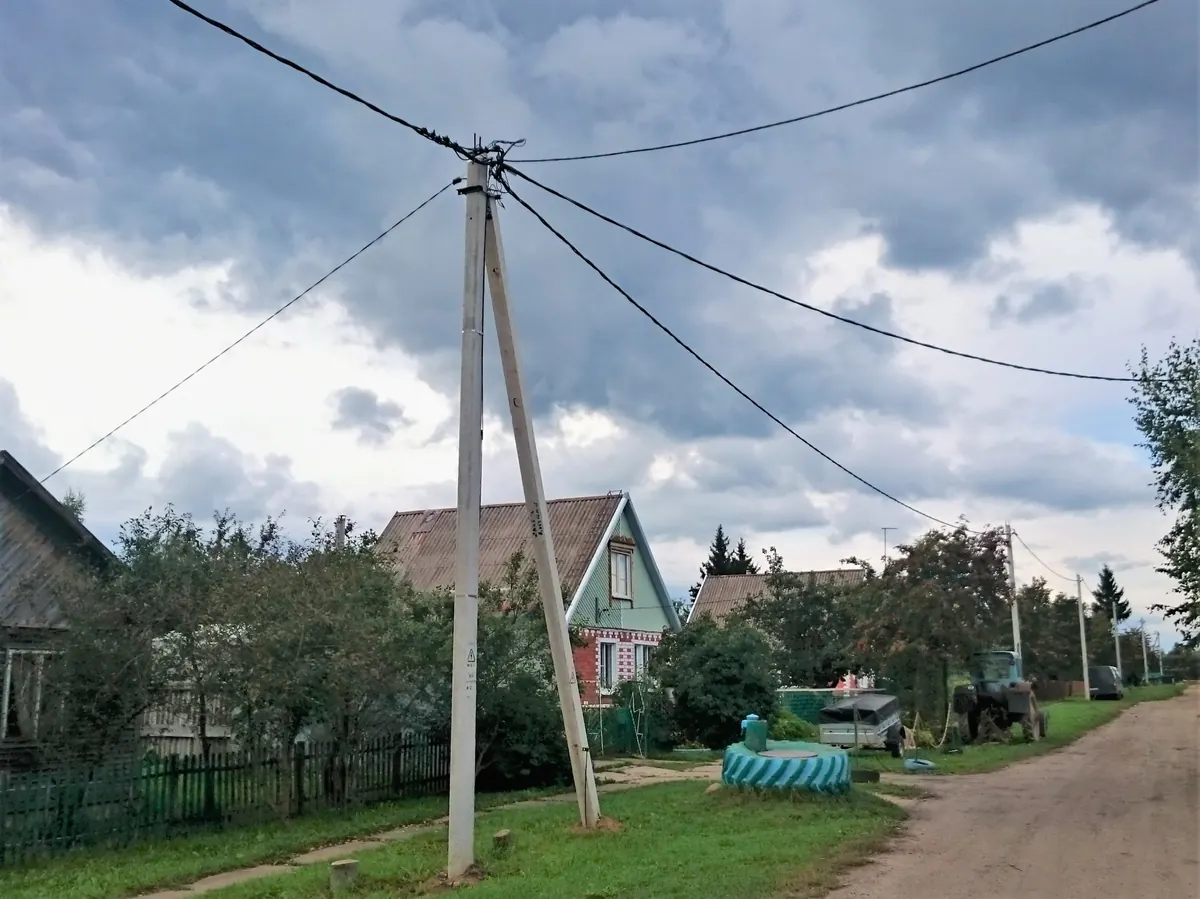
طابق عائلة المشبك مع الهيكل
الخط عبارة عن سلسلة من الهياكل، وكل هيكل يؤدي وظيفة ميكانيكية واحدة. الأعمدة الوتدية تحمل الوزن، أعمدة الزاوية تعيد توجيه المسار، أعمدة الطرف تمتص التوتر الكامل، الواجهات تحمل الخط على طول الجدران، وتوزيعات الخدمة تلتقط الأحمال أو المصابيح. طابق عائلة المشبك مع تلك الوظيفة قبل فتح أي كتالوج.
| عائلة المشبك | الهيكل النموذجي | الحمولة المحمولة | مدخل الحجم الرئيسي |
|---|---|---|---|
| مشبك شد مراسي (إسفيني) | الأعمدة الطرفية والزاوية والركنية | توتر الخط الكامل عبر الرسول | المقطع العرضي للرسول زائدRated daN |
| مشبك التعليق | الأعمدة الوتدية، القطع المستقيمة | الوزن الرأسي للامتداد المدعوم | قطر الحزمة زائد الامتداد مضروباً في الكتلة لكل متر |
| حامل أو خطاف | قمم الأعمدة، الجدران، الواجهات | أحمال التصاق والانحراف | مادة العمود، تثبيت بولت أو حزام، فئة داين |
| مشبك الخدمة والإضاءة | هبوط الخدمة، وصلات إضاءة الشارع | توتر كابل الخدمة، أحمال النقاط | عدد النوى وقطر كابل الخدمة |
الجدول يُقرأ بناءً على نمو الأحمال. مواقف المراسي تشهد أعلى القوى، ومواقف التعليق تشهد أكثر الوحدات، والحوامل ومشابك الخدمة تقرر كيف يلتقي الخط بالمباني والمصابيح بشكل مرتب. عادة ما تجمع فرق المشتريات هذه العائلات معاً، و نطاق تركيبات الشد والتعليق groups them in one place for exactly that reason.
Counting positions from the pole schedule turns this table into quantities. A typical route needs anchor clamps at every terminal and angle, suspension clamps at every intermediate support, brackets wherever clamps meet poles or walls, and service clamps at each tap. That count becomes the bill of materials, and it tells the supplier which load classes and cavity sizes to prepare.
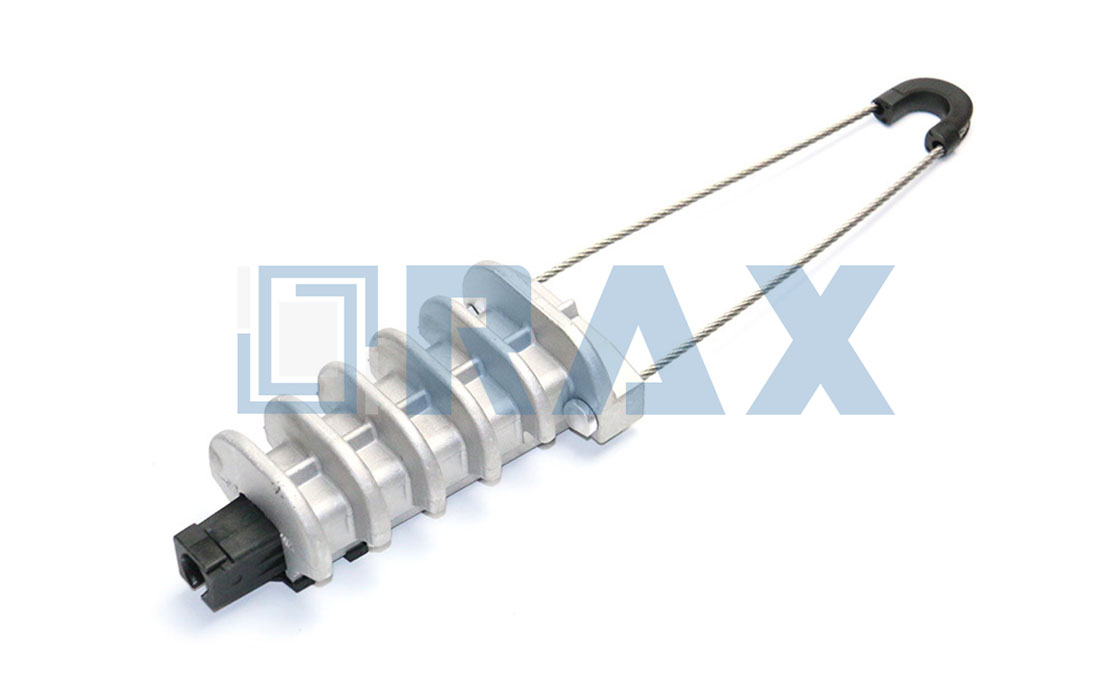
مشابك التثبيت والشد: تمسك الرسول
Wedge-type anchor clamps hold the messenger between a shaped body and a wedge that tightens as tension rises: the harder the cable pulls, the deeper the wedge bites. Many designs include springs that hold the clamp open while the conductor seats, which is why a two-person crew can tension and terminate a span in minutes.
Ratings are written in daN, and they scale with the messenger rather than the bundle. One European manufacturer rates its PA1500 clamp at 1500 daN (about 15 kN) for 50-54.6-70 mm2 messengers. The PA2000 carries 2000 daN in the same range, and the PA2200 reaches 2200 daN for 95-120 mm2 cores. Select the messenger class first, then confirm the rated load clears your calculated tension with margin for wind and ice.
Fit the wedge cavity the way you fit a work boot: a loose fit slips under load, and a forced fit damages the insulation. If your project needs to compare specific deadend designs model by model, the companion piece on ABC deadend clamp comparison covers that ground. Current wedge-type products are listed on the anchoring clamp page.
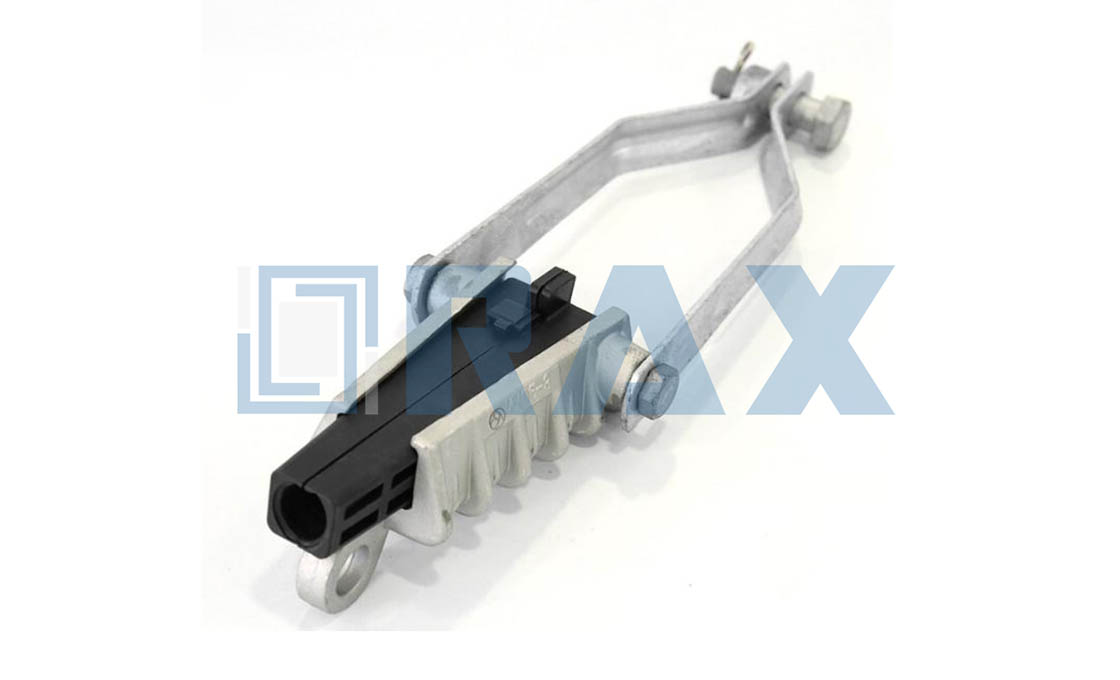
مشابك التعليق للقطع المستقيمة والزوايا
Suspension clamps carry weight, not tension. The load on each support comes from the span itself. Multiply the supported span length by the cable’s mass per meter from the data sheet, then add allowances for wind, ice, and safety factors. Longer spans and heavier bundles therefore push you up the suspension range even when the conductor size stays the same.
The cavity must match the measured bundle OD, not the nominal cross-section. Because the phases stay insulated all the way to the support, ABC clamps grip the outside of the bundle instead of the conductor metal. Two 4×95 mm2 cables from different factories can differ by several millimeters, and a cavity sized for one can float loosely on the other. A hanging bundle that moves inside its clamp will fret the insulation at the contact points within a few seasons.
Angles decide the variant. Line deviations beyond roughly 30 degrees call for bracketed or angle-capable designs, and some models are rated up to 90 degrees. Insert quality matters too: buying guides rank EPDM ahead of silicone and PVC because the insert absorbs vibration and stops abrasion where the bundle rests.
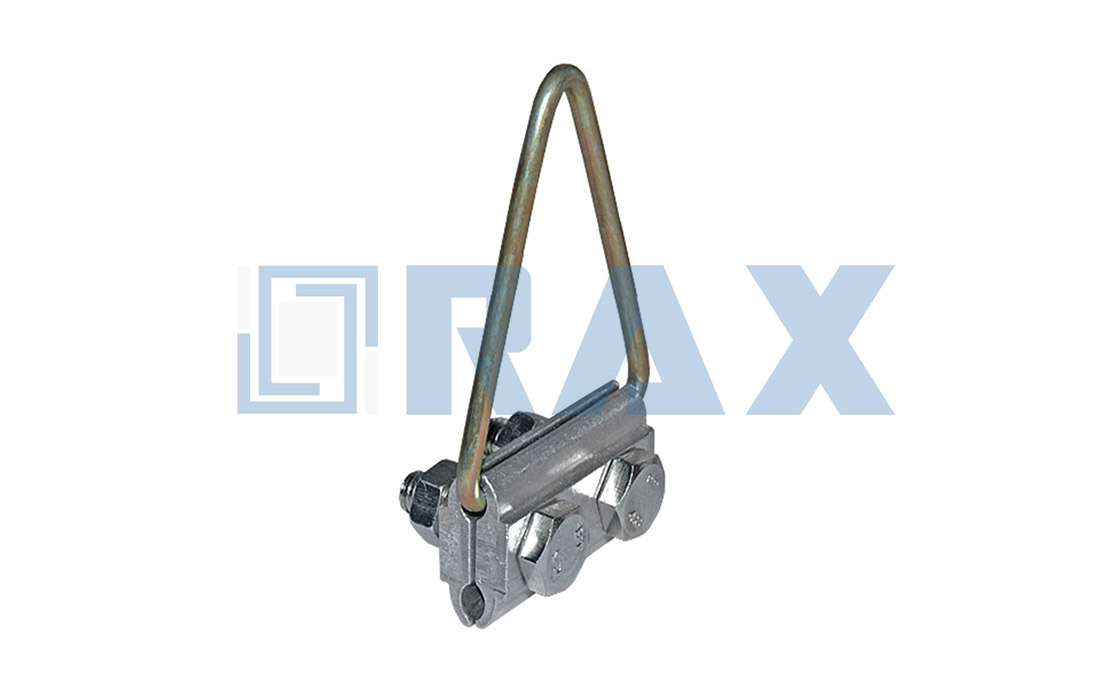
خيارات التركيب بالحوامل والخطافات والواجهات
Clamps bolt to something, and that something is usually a bracket. Pole-mounted support brackets in classes such as CA1500 and CA2000 carry 1500 and 2000 daN respectively and fix to timber, concrete, or steel poles with bolts or steel strapping. The bracket class must match the anchor clamp it carries, otherwise the weakest link moves from the clamp to its mounting.
The fixing method is a field decision as much as an engineering one. Bolts suit new poles where holes can be drilled before the crew arrives, while strapping wins on energized reconstructions because it needs no drilling. Facade runs use wall brackets to route the bundle along buildings at a tidy standoff. Check the substrate before specifying: brick and concrete accept expansion anchors, while lightweight panels may need spreader plates behind the fixing.
Facade mounting earns its keep in dense cities. Urban networks in Europe and the Middle East lean on wall brackets because poles are scarce on narrow streets. A well-routed facade run can replace three structures with thirty fixings.
مشابك إضاءة الشوارع وتوصيلات الخدمة
Street lighting is where ABC part lists quietly multiply. Many bundles carry a dedicated insulated lighting conductor, and every lamp needs a tap that grips insulated cores without stripping them. Bolted service clamps exist for exactly this duty: designs such as the PA-215 anchor or suspend two-conductor service lines, while heavier bolted clamps secure larger service drops.
Size these clamps by core count and service cable diameter, and prefer insulated bodies where taps sit close to energized hardware. A clean lighting schedule, with one clamp type per tap class, keeps night crews moving instead of hunting hardware at the pole.
مواد مصمّمة لأشعة UV والأمطار ودورات الحمل
ABC clamps live in a three-material system, and each material does one job. Bodies in the major European ranges are weather-resistant aluminum alloy, chosen for weight and corrosion behavior. Wedges, bolts, and moving links are fiberglass-reinforced or UV-stabilized plastics, and suspension designs add hot-dip galvanized steel for load-bearing pins and hooks. Aluminum carries load without staining the conductor, plastics insulate and damp vibration, and galvanized steel takes bolt forces.
Networks are engineered around 40-50 year component life cycles, so material substitutions are false economies. A cheaper polymer that embrittles after a few summers of UV exposure turns a maintenance-free fitting into a repeat fault call. When a supplier quotes an unfamiliar material, ask for the weathering data behind it.
المعايير وتقارير الاختبار الجديرة بالطلب
Two references dominate ABC clamp procurement across Europe and much of its export belt. The EN 50483 series covers fittings for tensioning, supporting, and connecting aerial bundled cables rated 0.6/1 (1.2) kV. Separate parts cover general requirements, tension and suspension clamps, connectors, and electrical ageing. NF C 33-041, the French standard for anchoring devices on bundle-assembled-core lines, is frequently cited alongside it.
Together these standards define the test program a qualified clamp survives: tensile and slip tests, endurance or fatigue cycling, and dielectric tests performed with the fitting immersed in water. When comparing suppliers, ask for type-test reports against the exact standard your utility cites, and match the report’s cable size to your own.
ما تكلفة سوء الاختيار في الموقع
By the time a mis-sized wedge announces itself, the installation crew is long gone. The documented failure modes stay consistent across manufacturers. A cavity too large lets the cable slip under tension, while a cavity too small gouges the jacket. A side-loaded clamp wears unevenly until the bundle sags or drops, and until the slip is caught, the pole keeps transferring load into hardware that was never rated for it.
None of these failures look dramatic on commissioning day. Mis-selected ABC clamps fail quietly, surfacing years later as sag drift, chafed insulation, and repeat fault calls. That slow burn is why the checklist below is the cheapest insurance in the whole project file.
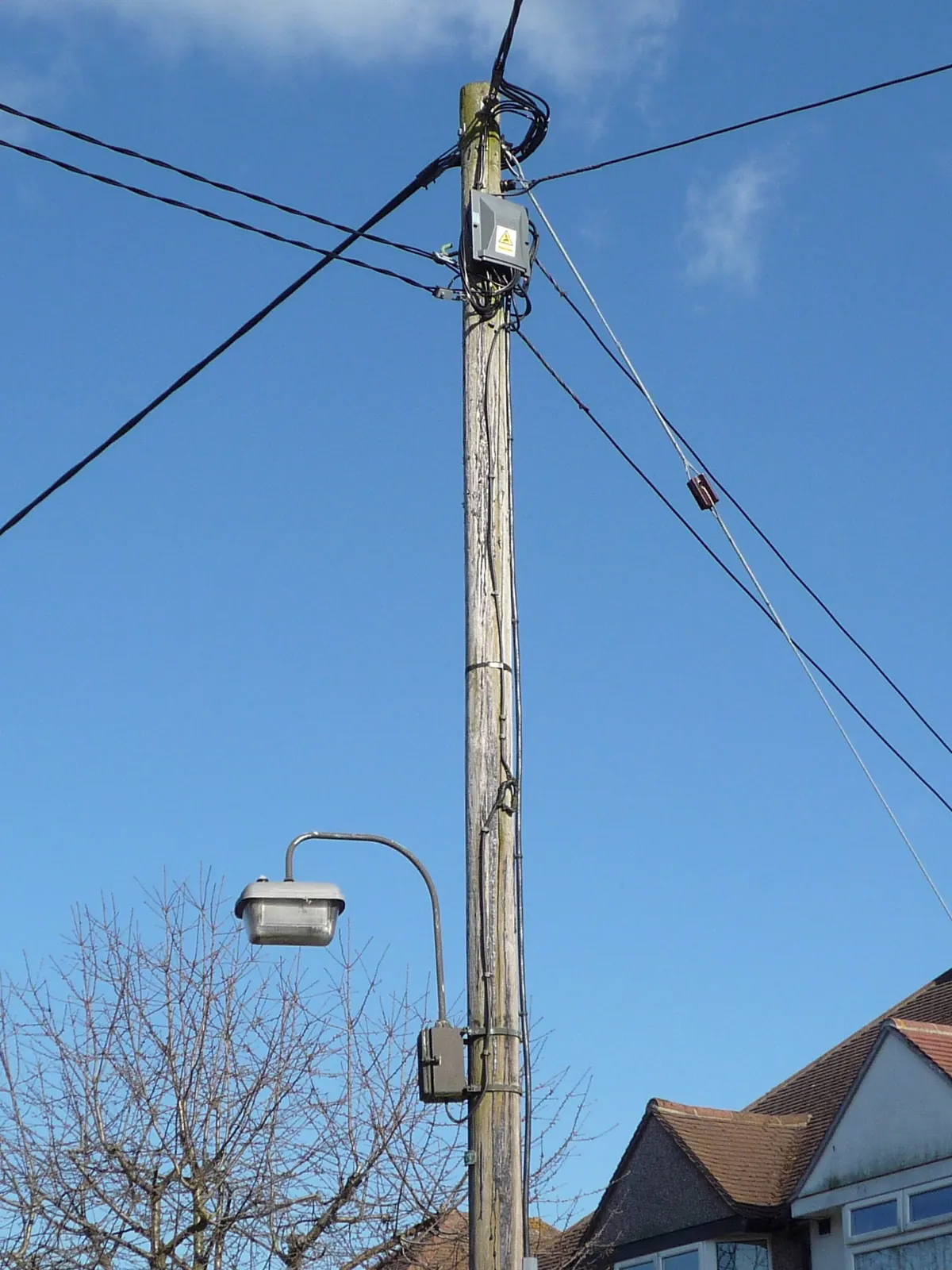
قائمة مراجعة اختيار عملية لمشروع حقيقي
Run this sequence once per project and repeat it whenever the cable design or pole schedule changes. Each step feeds the next, and the output is a purchase-ready bill of materials rather than a folder of catalog pages.
- Record the cable design: core count, phase and messenger cross-sections, and the measured bundle outside diameter.
- Map every structure on the route: tangent poles, angles with their deviation degrees, terminals, facade brackets, and service or lighting taps.
- Compute the loads: supported span times cable mass per meter for suspension points, and the tension class for each anchor position.
- Assign a clamp family to each structure using the decision table above.
- Size cavities to the measured messenger or bundle diameter, never to a nominal cross-section alone.
- Confirm materials for the environment: aluminum alloy bodies, reinforced plastic wedges, and galvanized steel fixings.
- Request EN 50483 or NF C 33-041 type-test reports for the exact part numbers quoted.
- Log part number, structure ID, and fixing method for every position so future crews can audit the line.
القول الأخير: اختر مرة واحدة، افحص نادراً
Choosing ABC clamps is not about memorizing catalogs; it is about reading the line first. Cable, structure, load, material, standard — in that order — and the clamp list resolves itself. RaxPower manufactures these components with ISO 9001-certified quality systems and hot-forged discipline, because a clamp that holds quietly for decades is the cheapest hardware on the pole.
عازل مثبت على العمود يمسك بالمواسير الرأسية على مسافة ثابتة من سطح العمود، مما يحمي الكابلات ويحافظ على الفصل عن الموصلات والمعدات الأخرى.
كيف أحجم مشابك ABC لكابلي؟
Measure the bundle’s outside diameter and the messenger’s cross-section, then match them to the clamp’s cavity range and rated load in daN. Anchor clamps follow the messenger; suspension clamps follow the bundle diameter.
هل يمكن لنوع مشبك واحد خدمة خط ABC بأكمله؟
No. Terminal and angle positions need wedge-type anchor clamps for tension, tangent poles need suspension clamps for weight, and facades need brackets. Most projects order at least three families.
ما المعايير المطبقة على مشابك ABC؟
The EN 50483 series covers low-voltage ABC fittings rated 0.6/1 (1.2) kV, and NF C 33-041 defines tests for anchoring devices. Ask suppliers for type-test reports against either standard.
ماذا يحدث إذا كان حجم الإسفين خاطئاً؟
A cavity that is too large lets the messenger slip under tension, and one that is too small damages the insulation. Side loading wears the clamp unevenly. All three are documented field failure modes.
هل تحتاج أنظمة ABC إلى مشابك إضاءة شوارع خاصة؟
Yes. Lighting taps use bolted service clamps sized by core count and service cable diameter, gripping insulated conductors without stripping them. Many bundles carry a dedicated lighting conductor.