
The transmission lines now carrying the highest voltages on earth hang their insulation on a material that looks nothing like the porcelain bells of the last century. Composite designs — a fiberglass core inside a silicone rubber housing — have become the default on new transmission builds, and the reasons run deeper than weight.
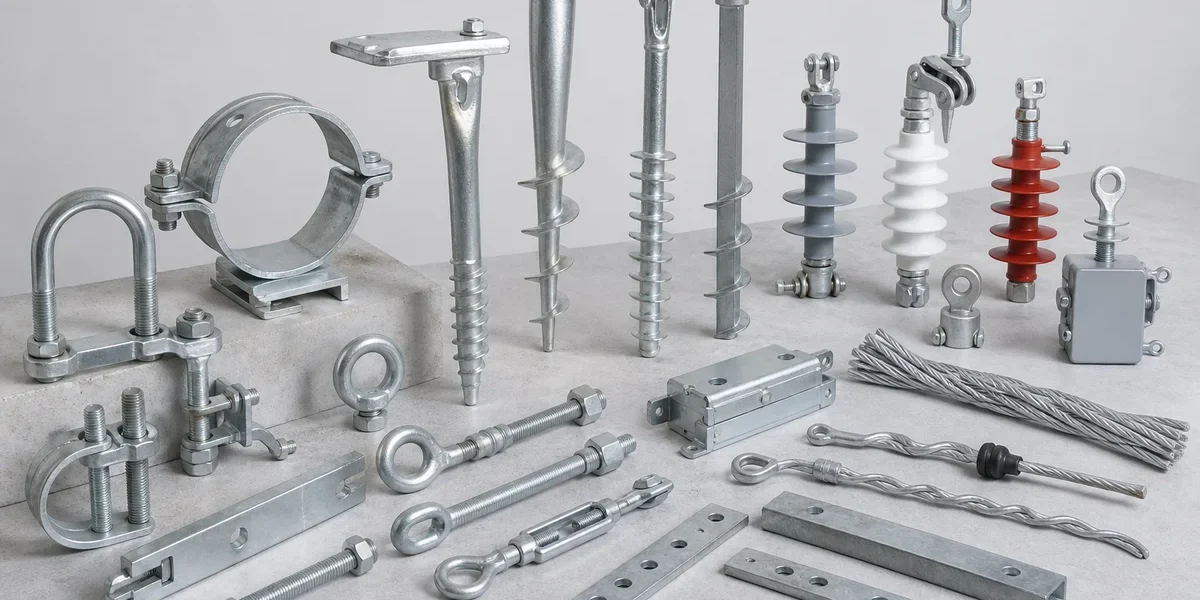
RaxPower has manufactured pole line and overhead line hardware since 2003, with 170+ employees working under ISO 9001, and insulators sit alongside the fittings we forge for the same lines. This guide walks through the technology inside next-generation composite units. It covers the housing chemistry, the core rod engineering, the hydrophobicity mechanism, and the operating record at the highest voltage classes. It closes with the honest boundary every buyer should weigh.
What Makes an Insulator Composite
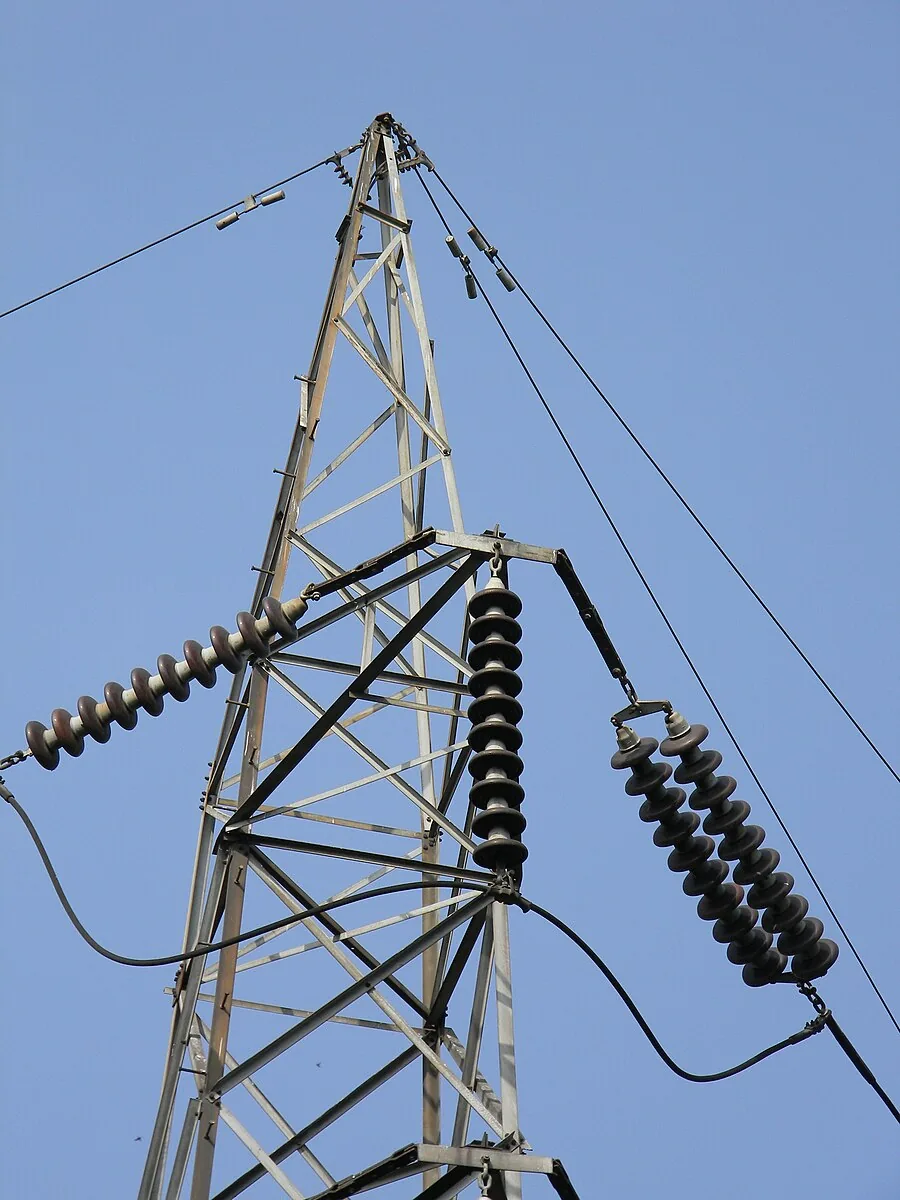
IEC 61109:2025 defines a composite overhead-line insulator as a load-bearing solid insulating core, surrounded by an outer weather-shed housing of elastomeric material and closed by metal end fittings. The third edition was published in February 2025. The 2025 edition extends the document to both AC and DC systems — the 2008 edition covered AC only — which matters for buyers specifying HVDC projects.
In practice the core is a fiber-reinforced plastic rod and the housing is silicone rubber or an EPDM-based elastomer. Silicone has won the housing market for transmission duty, and the reasons live in the chemistry sections below. The three-part construction is the model: core for strength, housing for the environment, fittings for the connection.
The housing material is part of the specification. Composite weathersheds are made in silicone rubber as well as EPDM, and both appear in working lines. Silicone is the common choice for transmission duty because of the transfer mechanism described below. Buyers comparing housings should look at that recovery behavior rather than at color or texture.
One detail from the standard surprises buyers: suspension and tension strings can occasionally see compression, and the design is expected to tolerate those transient reversals without damage. That tolerance is a direct benefit of the core-and-housing architecture, which handles short reversed loads better than a brittle string of assembled bells.
HTV Silicone Housings: A Materials Evolution Still Underway
Transmission housings use high-temperature-vulcanizing (HTV) silicone rubber, with aluminum trihydroxide (ATH) filler doing double duty as a flame retardant and tracking suppressant. The siloxane backbone holds the material together, and it shares character with inorganic materials such as glass and quartz. That structure is why the housing tolerates ultraviolet and electrical stress that breaks down ordinary polymers.
Formulations keep evolving. One major hardware maker documented a nitric-acid-resistant HTV formulation for lines where discharge-generated nitric acid attacks ordinary shed materials. Every new formulation must still pass the full IEC material and design test regime before it earns a specification. The evolution is real, but it is gated by testing — a useful filter when a datasheet promises the moon.
ECR Core Rods: The Boron-Free Answer to Brittle Fracture
The core rod is manufactured by pultrusion from axially aligned, electrically corrosion resistant (ECR), boron-free glass fibers. That word chain is not marketing. Early composite designs using standard E-glass suffered brittle fracture through acid attack on boron-containing fibers, and the industry’s move to ECR glass was the direct engineering answer.
The core performs a dual function — mechanical load-bearing member and internal insulation — which is why fiber alignment and fiber volume fraction are controlled specifications, not shop-floor details. When an operator asks what is inside the rod, the answer is glass fibers aligned exactly along the load path, protected by the housing outside.
The materials story has one more layer worth knowing before the core rod itself. Housing compounds differ between manufacturers in filler ratios and curing systems, and those differences show up in tracking resistance tests long before they show up in service. Two sheds that look identical in a product photo can age very differently along a coast.
Housing and core fail differently, which is why the industry tests them separately. The housing answers for pollution behavior and weathering; the core answers for tensile strength and long-term creep. A specification that covers one without the other describes half an insulator.
Hydrophobicity Transfer: The Self-Restoring Surface
Silicone elastomers exhibit low surface energy, so water does not spread into films but beads on the surface — the first half of the pollution defense. The second half is hydrophobicity transfer. Silicone formulations carry short-chain, low-molecular-weight siloxanes that migrate out of the bulk and encapsulate surface deposits, extending the water-repelling behavior into the contamination layer itself.
That mechanism is why composite insulators tolerate pollution routes that demanded constant washing in the porcelain era. The behavior also persists after years of weathering rather than decaying with the first coat of dirt.
The Weight and Mechanics Dividend
A composite string is lighter than its porcelain and glass equivalents and less costly at the string level. The weight then compounds through a project: smaller transport loads, easier tower-top handling, and structure arms that keep their rating for structure duty. The evidence file for those advantages is substantial — see the evidence-based advantages breakdown for the sourced list.
Mechanically, the numbers are calmer than buyers expect. In normal service the sustained load on a composite insulator sits around 10% of the rated core capacity. Conductor weight and hardware account for that figure, and the margin absorbs ice events and gust loads without approaching design limits.
UHV Track Record: Composites at the Highest Voltage Classes
The strongest argument for the technology is statistical. Composite insulators account for more than 75% of insulators used on China’s UHV transmission lines. By May 2021, China had 940,000 km of AC and DC lines at 66 kV and above carrying over 10.05 million installed composite insulators. The fleet keeps growing with each new corridor.
For DC corridors the housing compound carries even more of the load. DC fields charge pollution particles continuously instead of reversing with the cycle, so deposits bond harder and the washing window shrinks. That asymmetry is a large part of why the third edition of the standard mattered to buyers. A document that once covered AC lines now speaks directly to the HVDC fleet.
The build-out behind those numbers is specific. China’s UHV program had commissioned 41 UHV lines by the survey date, and the composite share above 75% covers the insulators on those corridors. Each new line added to the program re-tests the material at the highest duty the industry operates, which is a rolling qualification no laboratory fully reproduces.
The flagship data point is the Zhundong–South Anhui (皖南) UHVDC line: ±1100 kV, 3,293 km, 12 GW, completed in December 2018 as the world’s first at that class. A technology that survives those duty cycles — and is specified across the corridors that followed — has passed the field test that matters most to transmission planners.
What the Failure Record Teaches About Aging
China recorded 58 failures among 2.2 million composite insulators in service through 2006 — a fraction of a percent, and the basis of the fleet’s confidence. International surveys add context. EPRI documented 430 cases through December 2021, and CIGRE working-group data place overall composite insulator failure rates between one per hundred thousand and one per ten thousand insulator-years. A cited pattern worth knowing: decay-like fracture has appeared on some 500 kV lines after seven to twelve years of service. That experience is why aging monitoring is now part of the technology’s own literature.
Moisture is the critical degradation driver, entering through three pathways: poor end-fitting sealing, sheath damage, and water diffusion through the housing itself. Sealing quality at the fittings is where a buyer’s inspection should start.
End-fitting sealing deserves its own line in the file. The junction where the metal fitting meets the housing is the classic moisture entry point, and manufacturers answer it with premolded or primed sealing geometries. When a seal fails, moisture reaches the core through the pathway the pultrusion process tried to close, and the housing can look perfect while the core degrades inside.
Sheath damage is the second pathway: cuts, tracking burns, or handling scuffs that open a route to the rod. The third is diffusion itself — water passing through an intact sheath slowly, which is why the standardized 300-hour boil sets a measurable acceptance line. Each pathway has a different field signature, and an inspection crew that knows them can triage what it is seeing.
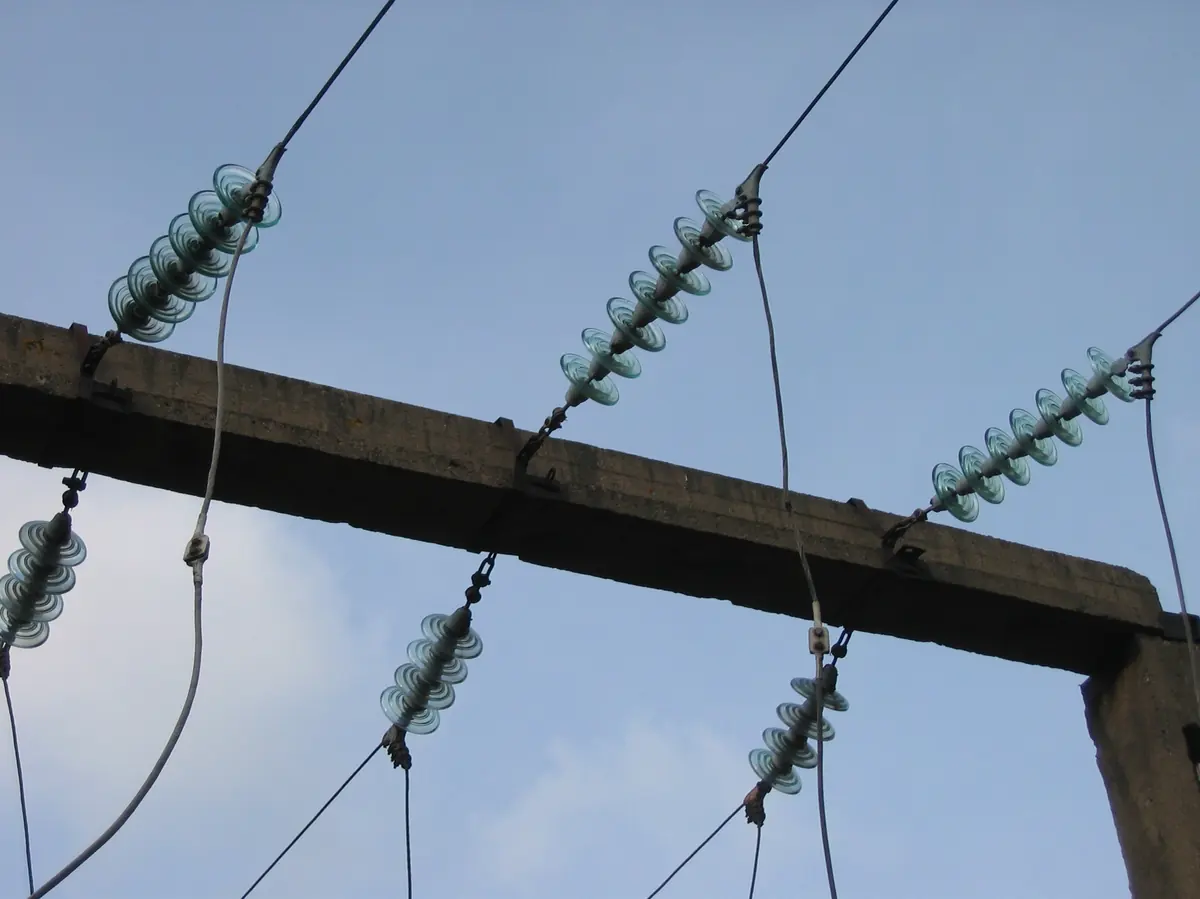
The monitoring toolkit earned its place through incidents, not fashion. A string that heats abnormally under load is announcing internal discharge; a housing that chalks or crazes is announcing ultraviolet dose. Both signs read from the ground with standard line inspection equipment, which keeps the surveillance affordable across long rural routes.
The Research Frontier: Self-Diagnostic, Self-Healing, Superhydrophobic
Next-generation work is active on three fronts, all still research-stage rather than shipping technology. Self-diagnostic materials embed fluorescent or chromatic indicators that reveal core stress before failure. Self-healing approaches use microcapsule or magnetically guided epoxy systems to repair microdamage at under 5% additive weight. Superhydrophobic SiO2/PDMS coatings push water contact angles beyond 160 degrees, and alternative housings in cycloaliphatic epoxy (HCEP) are in evaluation. Treat every one of these as promising in laboratory work — not as a datasheet line.
Specifying composites for a transmission project?
Send the voltage class, route environment, and mechanical ratings, and the insulator selection comes back matched to the line.

Seeing Inside: Aging Monitoring and the New IEC Baseline
The inspection toolkit has grown alongside the material. Infrared thermography flags abnormal heating at fittings. Terahertz imaging and X-ray computed tomography can see inside a housing without dissection. The IEC water-diffusion test applies a 300-hour boil with a 50-microampere acceptance threshold. Fiber volume fraction above 70% remains a core specification.
IEC 61109:2025 itself is part of the next-generation story. The third edition extends scope to DC systems, updates the hydrophobicity-transfer, stress-corrosion, and water-diffusion test methods, and adds Annex F covering core-housing adhesion. The design and performance guide on this site walks the test detail further.
For the materials comparison that frames this choice, see the ceramic, glass and composite comparison, and for the strength argument in full, the advantages evidence file collects the sourced list.
Three questions sort a supplier list quickly. Ask which edition of the governing standard the test reports reference, because test methods changed in 2025. Ask what the core rod specification says about fiber volume and ECR glass, because the rod is the component that cannot be inspected after assembly. Ask how the end-fitting seal is made and what proof of sealing integrity accompanies each batch. A factory that answers all three with documents is a factory that has been audited before.
عازل مثبت على العمود يمسك بالمواسير الرأسية على مسافة ثابتة من سطح العمود، مما يحمي الكابلات ويحافظ على الفصل عن الموصلات والمعدات الأخرى.
What is hydrophobicity transfer and why does it matter?
Low-molecular-weight siloxanes migrate from the silicone housing into surface pollution and make it water-repelling. It matters because contamination stops becoming a leakage path between washings.
Why ECR glass fibers instead of standard fiberglass?
Standard boron-containing E-glass is vulnerable to acid attack that causes brittle fracture. ECR glass resists that corrosion, which is why the industry moved core rods to it.
Are composite insulators used on UHV lines?
Yes — more than 75% of the insulators on China’s UHV transmission lines are composite, including the ±1100 kV Zhundong–South Anhui DC corridor completed in 2018.
How long do composite insulators last?
Honest answer: they do not yet have the decades-long proven service record of glass and porcelain. Failure statistics are low, and moisture ingress through end-fitting seals is the degradation path to manage.
Which standard governs insulator testing?
IEC 61109:2025, the third edition, governs composite suspension and tension insulators and now applies to both AC and DC systems. Ask suppliers for the test reports against that edition.
The Maturity Sentence Every Buyer Should Write
Composite insulators are UHV-proven, standards-backed, and actively evolving — with a service-life record that is honestly shorter than the materials they displace. Specify them where their strengths pay: pollution, weight, compact design, and DC corridors. Verify them with the IEC test regime and a supplier whose sealing and core documentation survive an audit. That combination is what next-generation actually means.