
Grid operators specify hardware for decades, not seasons. Few components have shifted their specifications as fast as the composite insulator. Defined in IEC 61109:2025 as a load-bearing cylindrical insulating core with an outer weather-shed housing, the composite design has moved from alternative to default on many new lines.
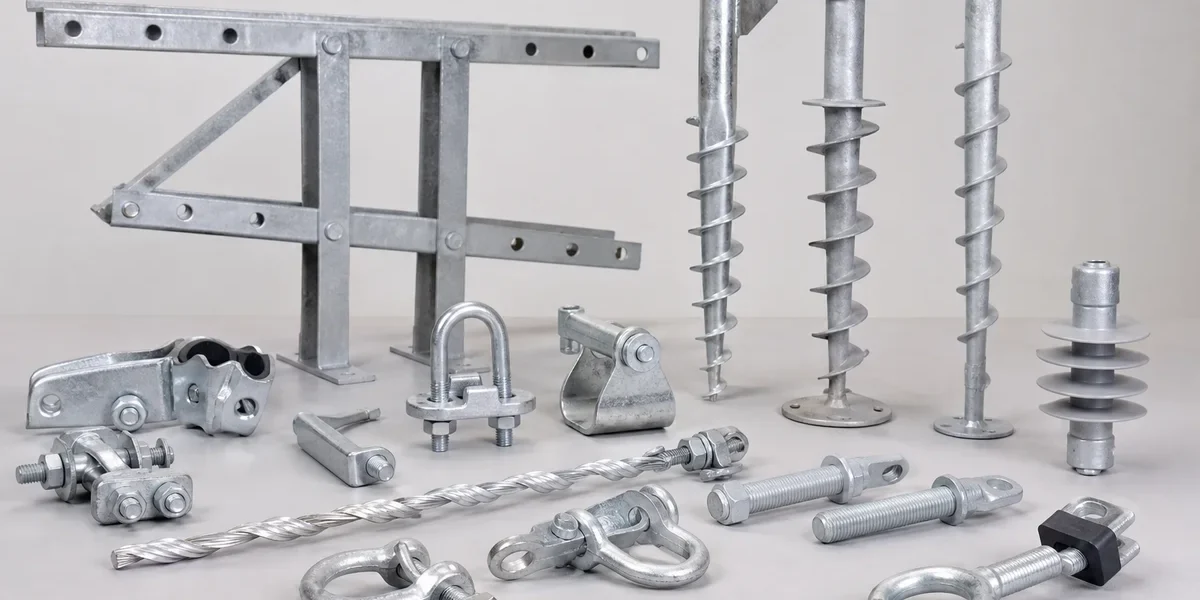
RaxPower has manufactured overhead line hardware since 2003, with 170+ employees working under ISO 9001, and insulating hardware is among the families we produce for export markets. This guide maps where they earn their place across a grid operator’s network — and where the verification points sit before an order is signed.
The Anatomy in Three Parts
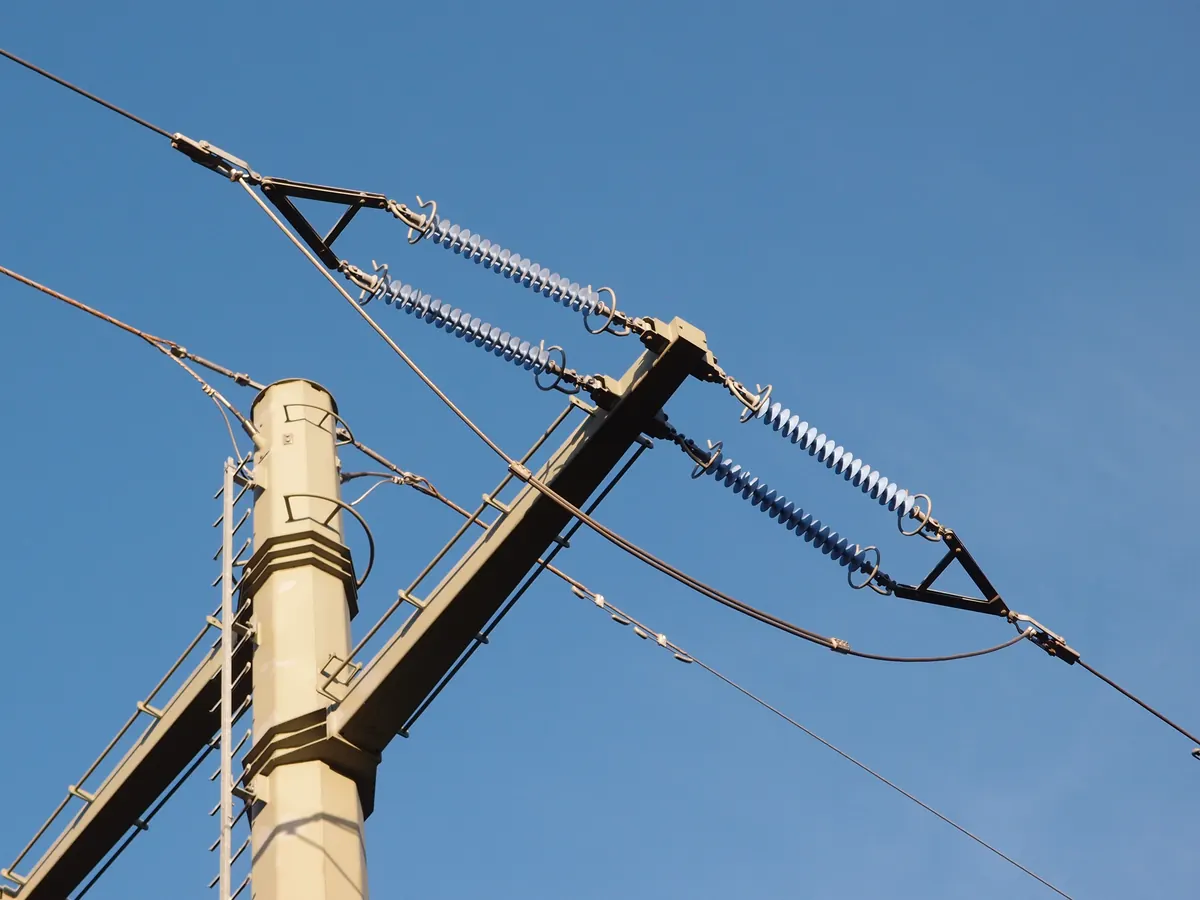
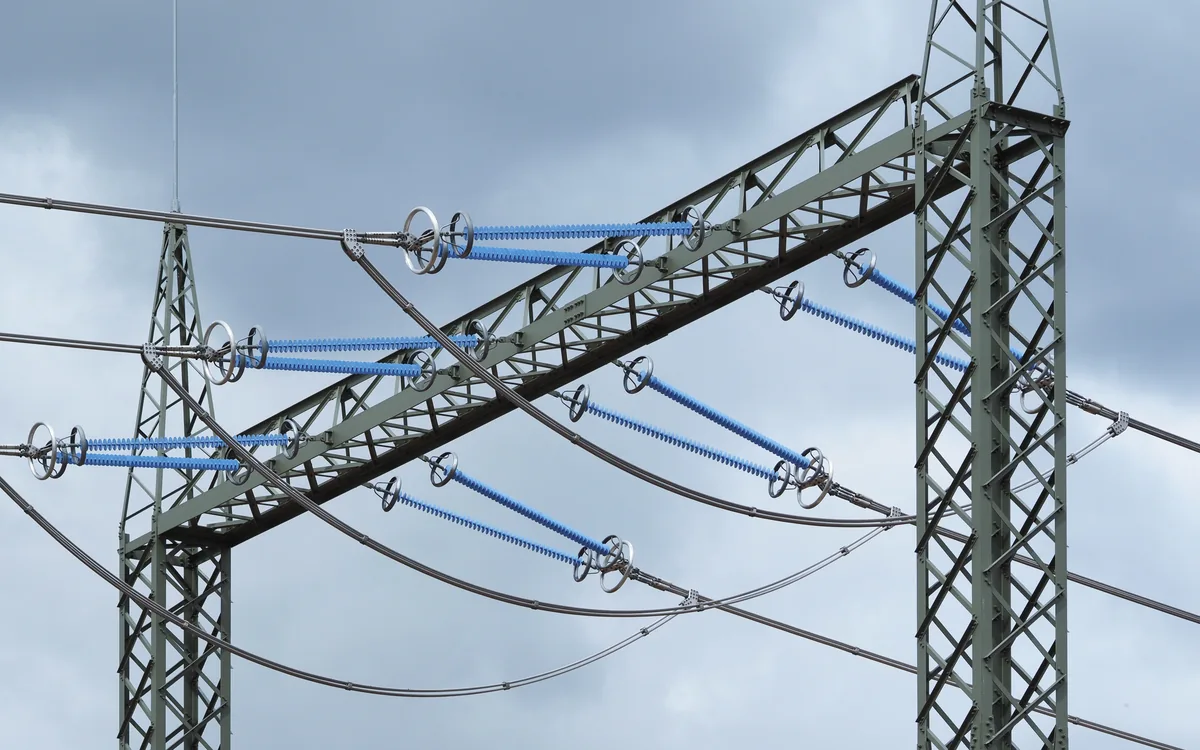
Every composite unit shares the same three-part anatomy. The core rod, pultruded from axially aligned ECR glass fibers, carries the mechanical load and provides the internal insulation in one member. The housing, molded from high-temperature vulcanizing (HTV) silicone rubber filled with alumina trihydrate, forms the weather sheds that interrupt water films. The metal end fittings close the assembly and connect to the line hardware.
Two material facts explain most of the performance story. The siloxane backbone of silicone carries stronger bonds than organic polymer chains, so it resists ultraviolet and electrical aging. And the ATH filler is what gives the housing its resistance to tracking and erosion under discharge activity.
The Application Map for Grid Operators
Across a network, composite insulators now serve in five recurring settings. Suspension and tension strings on transmission lines, post positions on distribution, station posts inside substations, polluted or coastal corridors, and compact or retrofitted structures where weight dominates. Each setting stresses a different property of the same three-part anatomy, and the sections below take them in turn.
The scale of that shift is documented. By May 2021, China alone had 940,000 km of AC and DC lines at 66 kV and above fitted with more than 10.05 million units. Composite designs account for over 75% of insulators on the country’s UHV transmission lines. Operators did not convert at that scale for fashion; they converted because the applications below reward the material.
Transmission Lines: The Flagship Application
Suspension and tension strings are where composites built their record. The weight advantage against porcelain and glass simplifies transport to remote towers. It also reduces the loads on structure arms, while the hydrophobic surface keeps contamination from developing into leakage currents along the shed profile.
The numbers behind the conversion are public. In normal service, the sustained load on a composite insulator sits around 10% of its rated strength. Conductor weight and hardware account for that figure, leaving a margin for ice and wind events. For operators planning line upgrades, that margin plus the weight saving is what moves composite strings to the top of the bill of materials.
The Logistics Dividend of Lightweight Hardware
Weight compounds across a project in ways a datasheet line item hides. Lighter strings mean smaller cranes or none at all. They also mean fewer transport loads from the port to the right-of-way, and tower arms that carry insulator weight instead of spending their rating on it. For a rural retrofit, that difference can remove an entire construction step.
These units are also documented as less costly than porcelain and glass equivalents at the string level. The cost advantage follows the weight: less packing material, lower freight classes, and smaller breakage allowances than porcelain fleets carry as standard. The saving appears before the first string is hung.
Distribution: Lighter Hardware on Shorter Cycles
Distribution lines punish hardware differently: more poles per kilometer, more third-party contact, and crews that install with lighter equipment. Composite line posts suit that environment because a single worker can handle the weight. The silicone surface also shrinks the washing schedule that porcelain pin insulators traditionally demanded.
The economics follow the handling. Fewer damaged units in transit, smaller vehicles on the right-of-way, and faster replacement during storm restoration all compound across a distribution fleet. Operators running mixed fleets see the difference most clearly at the warehouse, where breakage allowances shrink once porcelain stock is drawn down.
That margin also shapes how failures present. A string working near its rating shows its problems early — corona marks, heating, audible noise. A string working at a tenth of its rating hides its history, which is why the verification checklist asks about core-rod screening rather than waiting for visible distress. IEC 61109’s test regime exists precisely because the margin must be proven at the factory, not discovered on the line.
Substations: Station Posts in Confined Clearances
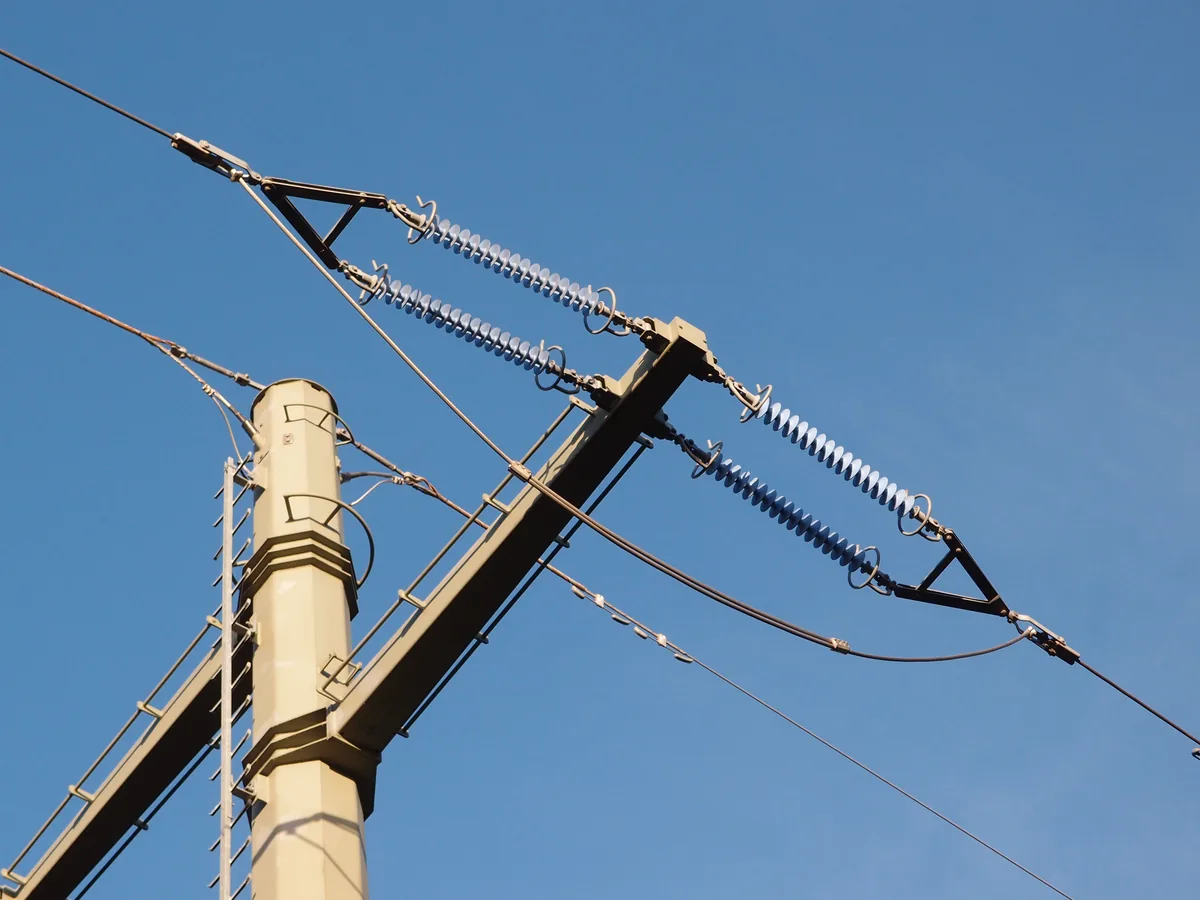
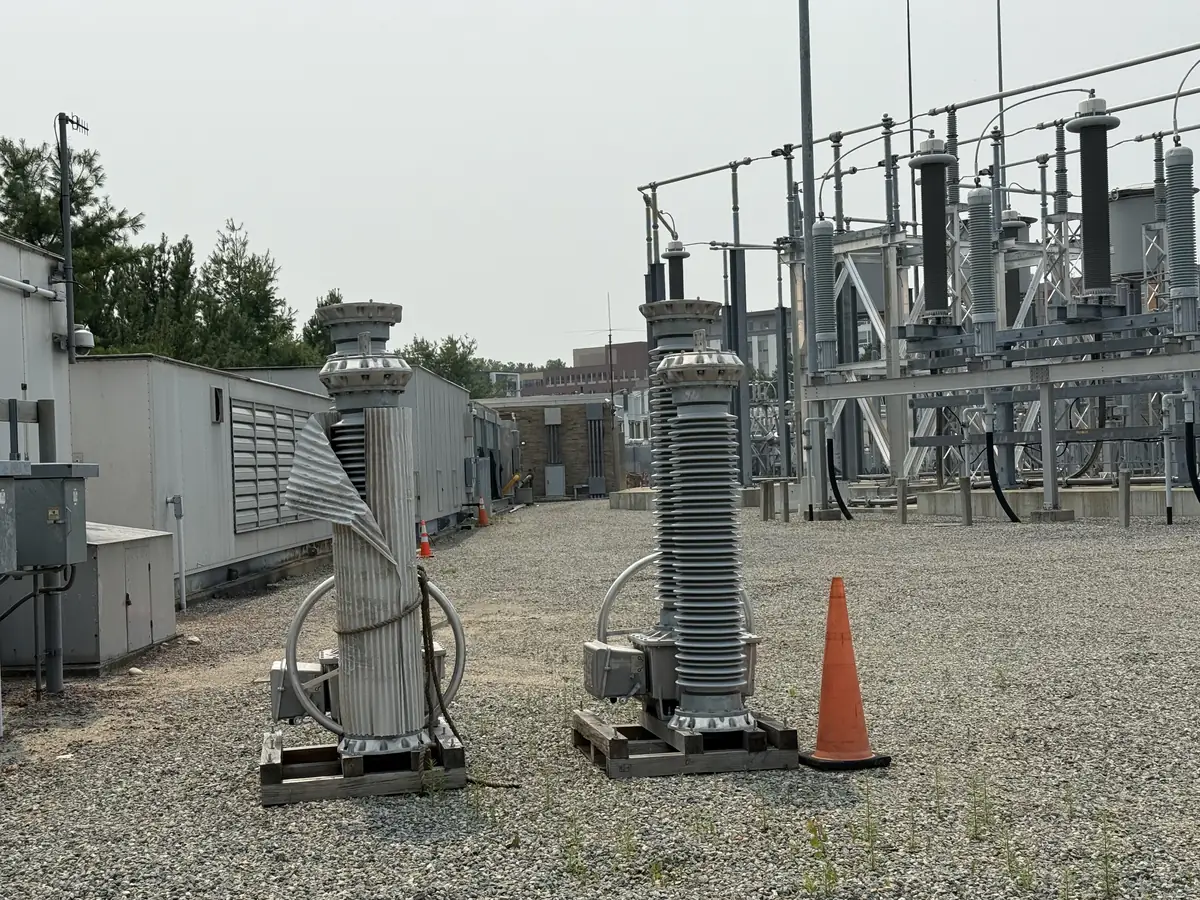
Inside substations, composite station posts serve where bay layouts are tight and seismic or structural margins matter. The lighter core reduces the foundation and bus support demands, and the hydrophobic housing holds creepage margins in outdoor bays that see industrial pollution.
The application comes with one discipline: station posts see different bending and torsional patterns than line strings, so the verification checklist below matters here as much as on the line.
Polluted and Coastal Routes: Where Hydrophobicity Pays
Contamination is the classic case. Silicone’s low surface energy makes water bead instead of spreading into films. The salt and industrial deposits that turn a wet porcelain surface into a leakage path stay relatively inert on a silicone shed. Better still, the material transfers that behavior: low-molecular-weight siloxane chains migrate from the housing bulk into the pollution layer, maintaining hydrophobicity across deposits that would defeat an inert surface.
For operators, the effect shows up in the maintenance calendar. A cited utility study reports units in polluted areas needing pollution checking only once every four to five years. That interval restructures the washing program and the budget behind it.
The transfer mechanism deserves a plain-language explanation, because it is the reason washing schedules relax. The siloxane chains that migrate outward carry the water-repelling chemistry into the contamination itself, so the recovery works on deposited salt and dust, not just on clean sheds. Operators see the effect as a contact-angle reading that rebounds after each pollution event rather than decaying between washings.
Icing Zones and Altitude Applications
Ice and high altitude both change the electrical environment, and both favor hardware whose performance does not depend on a dry, clean surface geometry. Composite sheds shed water before it freezes into bridging formats on many route profiles, and the lighter core reduces the vertical load that ice adds to structure calculations. Altitude derating still applies — standards govern the correction — but the hydrophobic surface does not compound the problem the way a wetted porcelain profile can.
Honest framing matters here: ice bridging can defeat any insulator geometry under the wrong weather sequence, and composite housings do not grant immunity. They widen the window between maintenance interventions, which is what an operator in an icing corridor actually buys.
Reading the Failure-Mode List Like an Operator
Research literature sorts composite insulator failures into a short list. The entries cover normal tensile and creep fracture, brittle fracture of the core rod, degradation at the core-housing interfaces, and housing-level aging. Each entry maps to a different inspection behavior, and that mapping is what turns a standards document into a maintenance routine.
Tensile and creep concerns are engineering matters, settled at ordering time by ratings and margins. Brittle fracture is the surveillance item — it progresses without warning, which is why route inspections look for corona marks and housing damage near the fittings. Interface and housing aging are the conditions that pollution checks catch early, before moisture reaches the core.
An operator who knows which failure mode each inspection step targets can prioritize the rounds that matter. The alternative — treating every insulator as an undifferentiated ceramic — is how the washing schedule drifted out of date on the routes composites replaced.
Compact Designs and Retrofit Projects
Compact lines and retrofits are the application where composites change the design envelope. Weight and dimension advantages let existing structures accept higher voltage classes or revised clearances without new steel. V-string and jumper-string assemblies, which impose bending loads on insulators, are well-documented composite applications. Designers should note that those bending assemblies also show a higher prevalence of certain core-rod degradation modes, which is why the verification checklist exists.
Compact assemblies deserve one more paragraph, because the mechanical story differs from a straight vertical hang. V-strings and jumper loops load the insulator in combined tension and bending, and published field data associate those assemblies with a higher prevalence of core-rod degradation modes. The design answer is a stiffer core specification and explicit bending checks — both available from any supplier whose test reports follow the standard.
Mapping insulation across your network?
Send the route profiles, voltage classes, and pollution data, and the insulator selection comes back matched to each application.

The Verification Checklist Before You Order
- Standard coverage. Cite IEC 61109 for composite suspension and tension insulators, and confirm the datasheet’s test references resolve to real clause numbers.
- Core rod specification. ECR, boron-free glass, pultruded and axially aligned — ask which grade and which resin system.
- Housing compound. HTV silicone with ATH filler; confirm the housing is monolithic or separately sheathed and how sheds are bonded to the core.
- Failure-mode screening. Ask the supplier how they screen for brittle fracture and core degradation, especially for V-string and jumper applications.
- Service references. Request installed-base references in environments matching your route — coastal, industrial, or icing.
Service Realities an Operator Should Weigh
Balance requires stating the limitation. Composite insulators do not yet carry the century-long proven service life of glass and porcelain. Their failure modes also differ in kind: brittle fracture of a core rod is a sudden event, not a slow visible decay. Operators manage this with the screening checklist above and by reserving glass or porcelain for positions where their record justifies the weight. Core-rod technology has answered too: ECR boron-free fibers are themselves a response to historical brittle fracture.
The industry has answered from the other direction as well. Factory-applied RTV silicone coatings on glass and porcelain transmission insulators have moved from a maintenance fix toward a standard specification. The hydrophobic principle now competes inside the porcelain fleet itself. The choice between a coated classic and an inherently composite design is then a project decision — life-cycle data, retrofit constraints, and fleet standardization all vote.
For a deeper comparison across the three insulator families, see the ceramic, glass and composite comparison guide. Its companion selection framework walks the decision step by step.
Часто задаваемые вопросы
Which standard governs these insulators?
IEC 61109 covers composite suspension and tension insulators for AC and DC systems, defining the construction — core rod, housing, and end fittings — and its test requirements. The current edition is IEC 61109:2025.
Why do they perform well in pollution?
Silicone’s low surface energy beads water instead of filming it, and low-molecular-weight siloxane chains migrate into the pollution layer to keep it hydrophobic. The result is longer washing intervals, reported at four to five years in polluted areas.
How much lighter is one than porcelain?
Composite insulators are substantially lighter than equivalent porcelain or glass strings, which cuts transport cost, eases installation on structures, and reduces the loads on tower arms and foundations.
What failure modes should operators screen for?
The core rod’s documented failure modes include normal tensile and creep fracture, brittle fracture, and degradation associated with bending loads in V-string and jumper assemblies. Routine visual and hardware checks target these.
Are they suitable for substations?
Yes, as composite station posts where bay clearances, seismic margins, or pollution favor them. Station posts see bending and torsional patterns different from line strings, so ratings and verification should match the application.
Where the Composite Belongs in Your Fleet
Composite designs have earned five permanent lines on the grid operator’s application map: transmission strings, distribution hardware, substation posts, polluted corridors, and compact retrofits. The material earns those positions through hydrophobicity transfer, load margin, and weight. It holds them through a verification discipline that checks the core, the housing, and the paperwork with equal seriousness. Fleet the applications that reward those properties, and keep the checklist with every order.