
Picture the route before any catalogue page: a 132 kV spine that starts in coastal haze, climbs across open moorland, and dead-ends at a new substation. Every tower along it asks the purchasing question in a slightly different accent. Which composite insulator, in which length, at which rating, proven by which paperwork? No single product answers all of that terrain by simply being a part number.
RaxPower’s 170+ people have manufactured pole line hardware and composite insulators in Hebei, China since 2003, and the buying questions that reach our engineering desk start the same way. Buyers arrive holding a voltage figure and a price list, then discover that creepage, couplings, and test records decide the outcome. This guide turns the line itself into the decision path, parameter by parameter, and closes with a specification sheet plus the evidence to request with every quotation.
Start with the Line, Not the Catalogue
Catalogue-first buying reads the process backwards. It starts from a part number and then hunts for a line that fits it. Line-first buying does the opposite: the route is surveyed, the numbers are fixed, and any supplier who wants the order has to meet them.
The ordering matters because composite insulators are dimensioned, not chosen. Voltage, pollution, spans, couplings, and climate all push on the same short list of dimensions. A rating that works on one route can be wrong on the next, even at identical voltage.
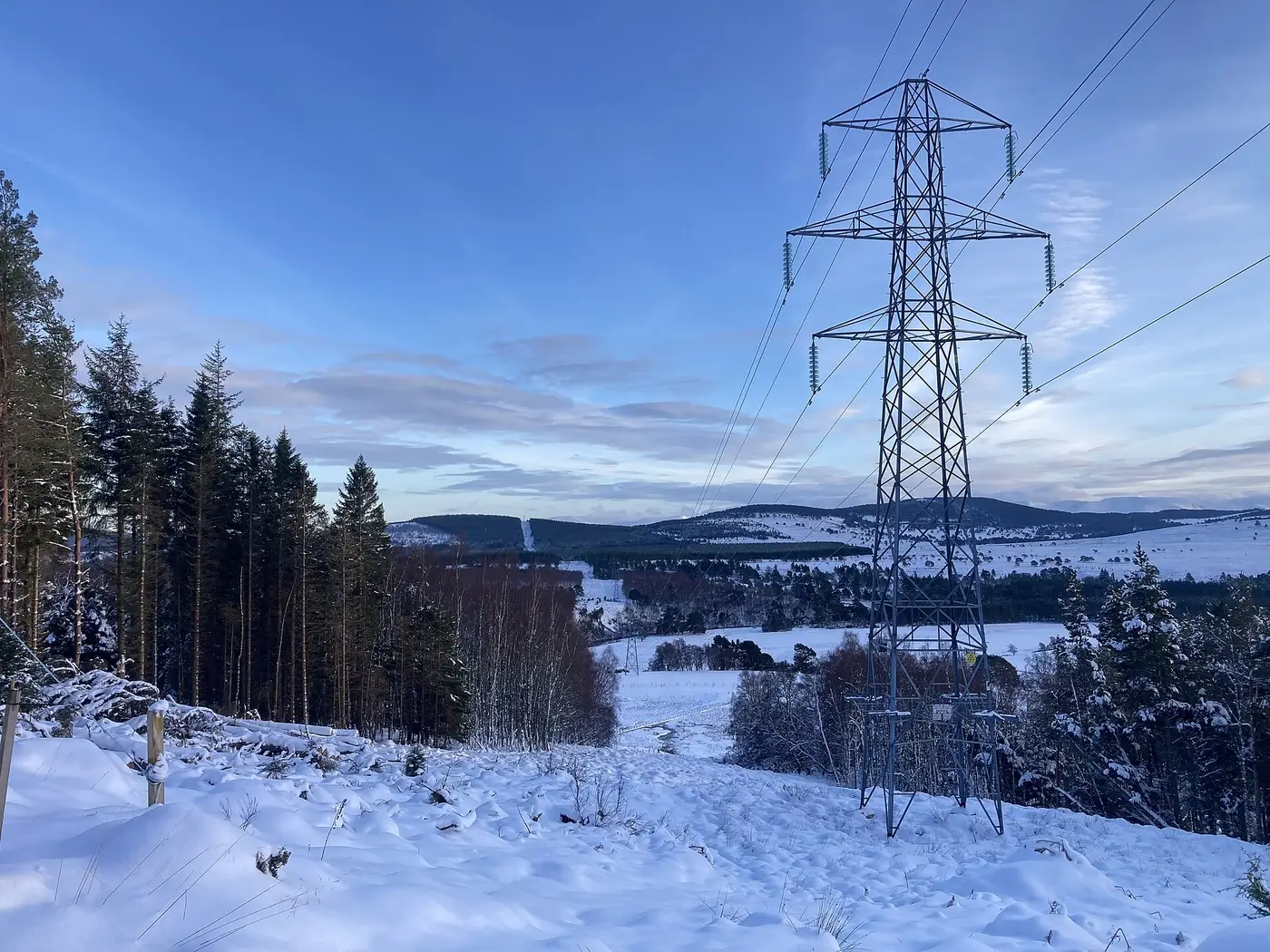
By the time the first quotation lands, the five numbers that drive composite insulator selection should already sit on paper. Suppliers then compete on how well they meet your numbers, not on how well they describe their own. The photograph below is where the process starts: a real route, with real loads, in real weather.
The Five Line Parameters to Fix First
Five inputs decide the composite insulator you order, and every one of them lives on the line rather than in a brochure. Fix them before quotations open and the rest of the process becomes comparison instead of persuasion. Skip one, and the gap resurfaces later as a site problem or a delivery hold.
- System voltage and the insulation envelope it imposes.
- Site pollution severity, the class that sets creepage.
- Span geometry, which turns conductor data into load ratings.
- Coupling dimensions, so the unit drops onto existing hardware.
- Climate extras such as altitude and ice that adjust the final numbers.
Treat the list as a gate, not a memo. When an offer answers each line with a specific value and a test reference, the offer is real. When it answers with adjectives, you have learned something useful about the supplier instead.
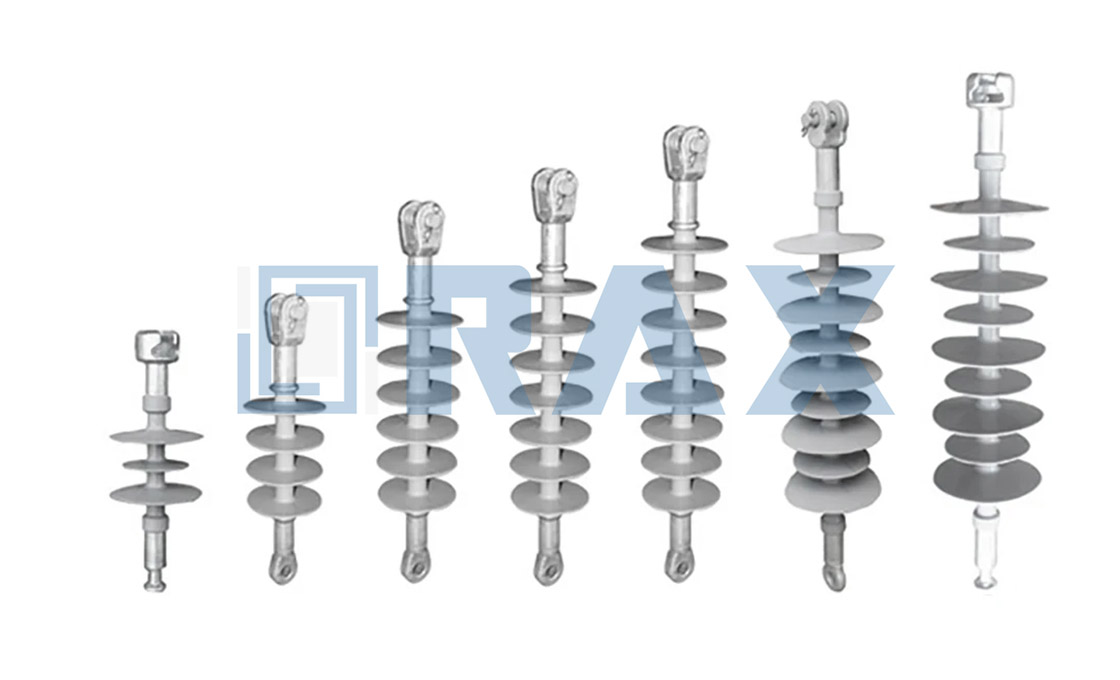
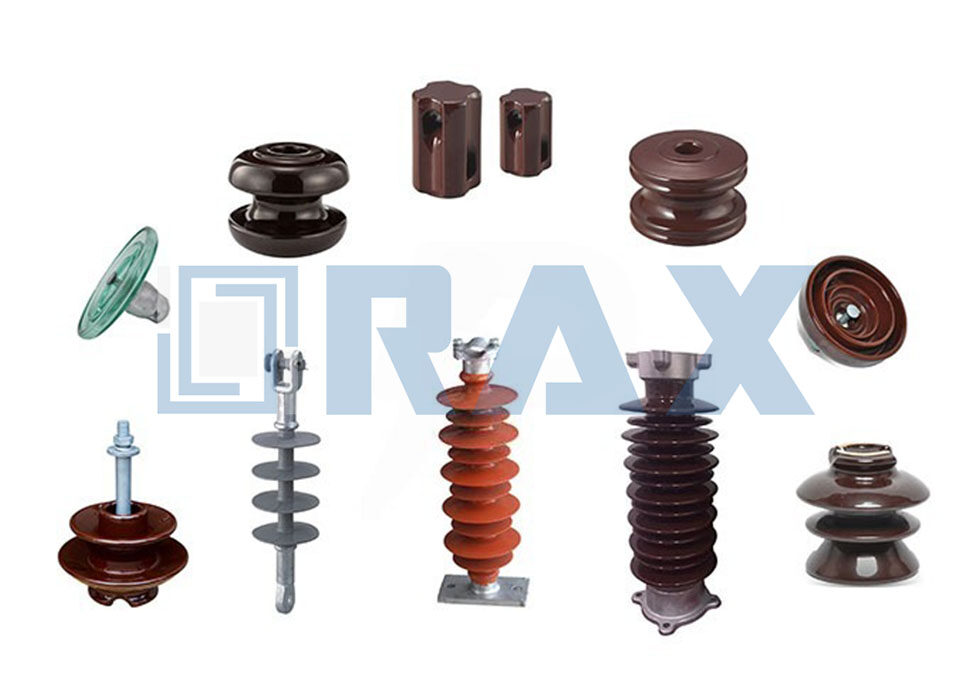
The family below shows why the sheet matters. One product line spans distribution to transmission ratings, so the rating and the fittings change while the catalogue page looks identical. Your five parameters are what separate the unit you need from the unit that merely looks right.
System Voltage and the Insulation Envelope
Start with the voltage the insulation actually sees, not the figure on the network map. Dimensioning works from the highest system voltage, with switching and lightning surges stacked on top of it. Your insulation coordination study, not a catalogue column, defines the withstand levels the string must deliver.
Voltage also picks the product family. Suspension and tension long rods for AC systems above 1,000 V sit under IEC 61109, the document that also carries the mechanical and interface tests you will ask about later. Distribution pin and post forms cover lower voltages with different mechanics. Name the form beside the voltage so quotations cannot drift between families.
Two lengths matter at this stage. The first is arcing distance, which has to deliver the withstand levels from the coordination study. The second is coupling-to-coupling length, which has to fit the tower window you are installing into. Both belong on the specification sheet as numbers, never as the words “suitable for 132 kV”.
How to Classify Site Pollution Step by Step
Pollution decides creepage, and creepage decides insulator length more than any other input. The IEC TS 60815 series turns the environment into a class, then turns the class into a required unified specific creepage distance, abbreviated USCD and quoted in millimetres per kilovolt. For composite housings the relevant document is IEC TS 60815-3, which applies the general method to polymer insulators on AC systems.
Read the Pollution Type First
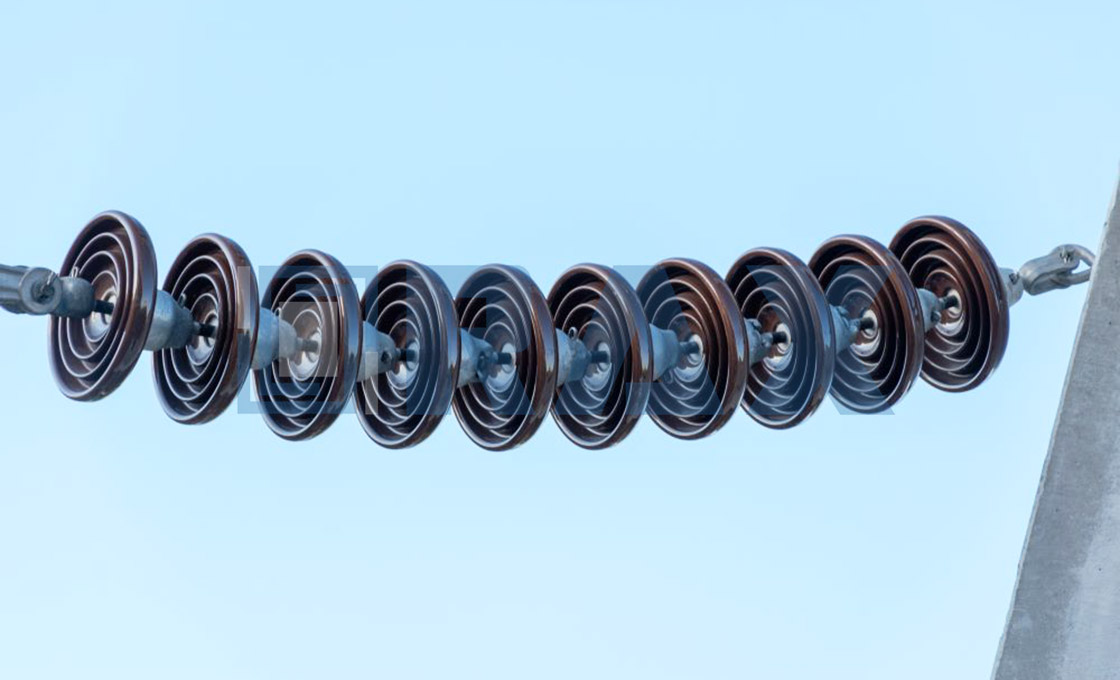
Type A pollution is deposited dust and salt, measured as ESDD and NSDD on reference insulators. Type B is conductive salt carried directly by coastal fog and spray. Coastal routes, desert edges, and industrial corridors lean toward different types, and the type shapes the shed profile you order as much as the number itself. Deposits are read on reference units exposed at the site, in the manner of the cap-and-pin string below, not guessed from a map.
Assign a Site Severity Class
Severity runs from class a, very light, to class e, very heavy. The class comes from deposits measured on reference insulators, ideally across a full year of exposure, or from the descriptor method when measurement is impractical. Where a nearby line already operates on known terrain, its service record outranks theory, because operating experience carries the highest priority in the method. Table 1 shows the classes with indicative deposit bands and the reference creepage each class carries.
| Classe de severidade de poluição do local | Typical environment | Indicative ESDD (mg/cm²) | Reference USCD (mm/kV) |
|---|---|---|---|
| a, very light | Inland forest and farmland without industry | up to 0.014 | 22.0 |
| b, light | Rural land with only light industry nearby | 0.014 to 0.04 | 27.8 |
| c, medium | Suburban and industrial edges, moderate coastal reach | 0.04 to 0.11 | 34.7 |
| d, heavy | Industrial zones and land close to the coast | 0.11 to 0.30 | 43.3 |
| e, very heavy | Direct shoreline, severe fallout, salt-fog desert | above 0.30 | 53.7 |
Correct Creepage for Your Design
The class yields a reference value, and the candidate insulator then takes corrections for shed profile, core diameter, altitude, and the number of strings in parallel. The parallel-string factor rises, for example, when a line section runs more than a hundred similar strings that share the same wetting event. Part 3 also recognizes hydrophobicity transfer, the mechanism that lets polymer housings carry less creepage than ceramic in the same area. The method refuses to treat that allowance as a fixed percentage.
One worked example fixes the arithmetic. A 132 kV line has a phase-to-earth voltage of about 76.2 kV. Class c carries a reference USCD of 34.7 mm/kV, so the sheet should demand roughly 2,644 mm of creepage. The same line one class lighter, class b at 27.8, falls to about 2,119 mm. That single class step is why the classification deserves a site survey instead of a guess.
Practical tip: assign the class from the worst deposits you measure, not the average, and record the basis beside the class in the sheet. A class submitted without its evidence invites every bidder to assume a kinder one.
What Your Spans Say About Mechanical Rating
Mechanical ratings are the second place catalogues mislead, because a kilonewton figure means nothing until a span produces a load. Suspension strings carry the vertical weight of conductor and ice inside the weight span, with wind loads arriving transversely. Tension and dead-end strings collect the full conductor tension across the tension section.
Those loads are line arithmetic, not vendor data. Conductor mass, span lengths, and the ice and wind cases in your design basis turn into design loads before any insulator is named. Table 2 maps the usual inputs to the entries your specification sheet needs.
| Line input | Load it produces | Specification sheet entry |
|---|---|---|
| Weight span | Conductor weight plus ice hanging on suspension strings | Vertical design load and a matching SML |
| Wind span | Transverse wind load on conductor and fittings | Wind case the supplier must confirm |
| Tension section | Full conductor tension collected at dead-ends | Tension rating with a tension-form fitting |
| Everyday load | Steady long-term load that drives fatigue behaviour | Service load capped at half of SML |
Convert the results into a rating with margin. Industry guidance and manufacturers consistently advise loading a composite insulator to no more than half of its specified mechanical load, the SML that type tests must confirm. Loads that never relax, such as the everyday tension at a dead-end, deserve the stricter end of that habit.
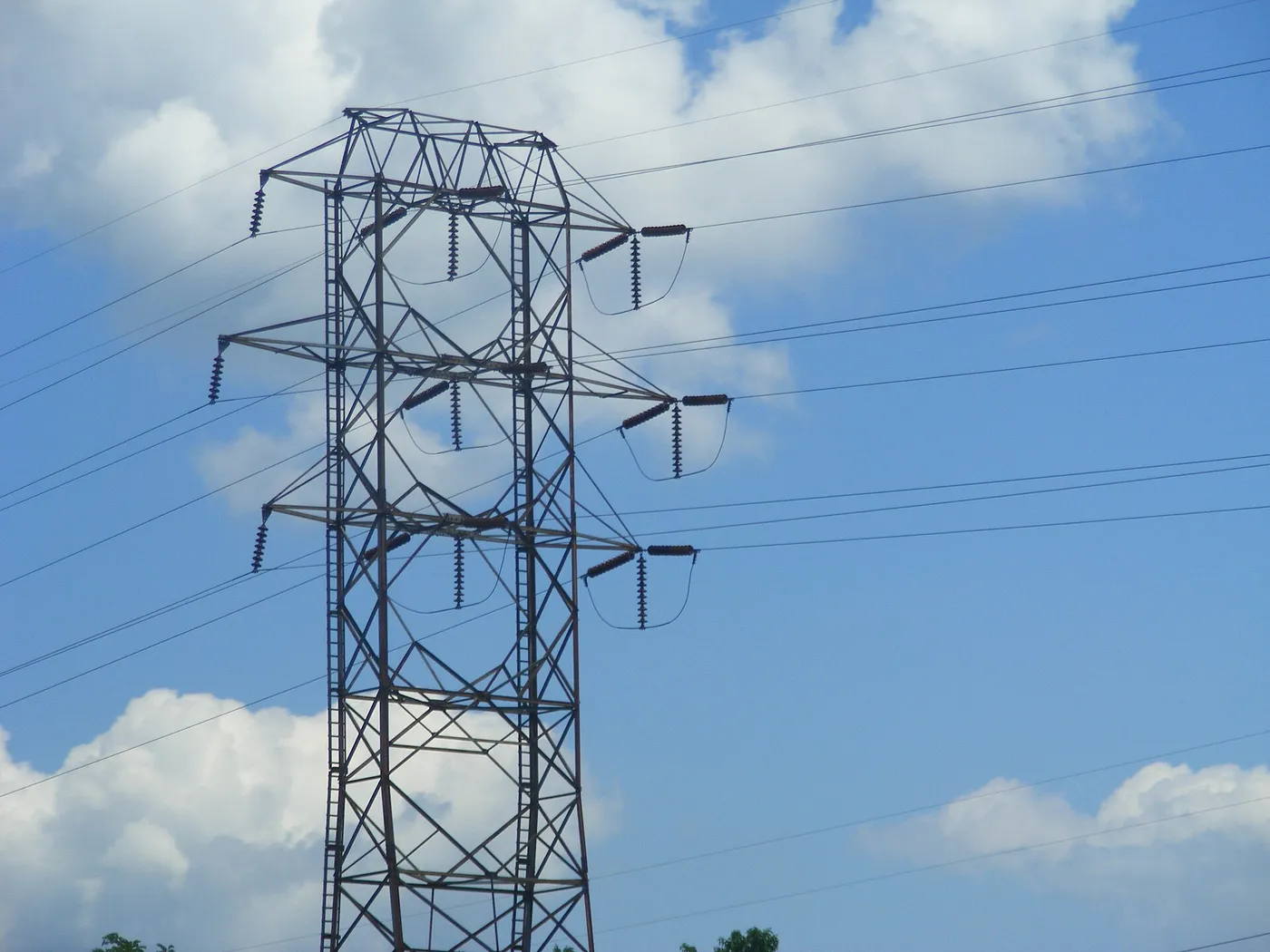
When the route includes long crossings, remember that the straight pull is rarely the enemy. Vibration, galloping, and swing arrive with the terrain, and none of them show up on a calm-day number. The strings in the photograph hang between spans that decide their rating long before a catalogue does.
Which Coupling Dimensions Must Match
An insulator that meets every electrical number can still stop an erection crew at the first tower. Couplings are standardized hardware, not catalogue options. Ball and socket dimensions live in IEC 60120, and clevis and tongue dimensions in IEC 60471. Standardized strength classes and coupling sizes for composite string units sit in IEC 61466-1. The yokes, links, and clamps already on your structures were bought to one of these systems.
Treat the coupling callout the way you treat a thread specification on a bolt: nominal size, governing standard, and orientation, all written down. “Ball coupling, size per IEC 60120, opening toward the tower arm” is a complete line. A vague reference to a standard ball is not, because sizes within the standard differ.
Ask each bidder for the coupling drawing together with the quotation, not after the order. A dimensional check against your hardware takes minutes on paper and hours on a tower. The ferragens de isolador page shows the link hardware these couplings mate with, and it is worth a scroll before the sheet is frozen.
Warning: a coupling mismatch discovered after delivery rarely stays a paperwork issue. Improvised connections introduce side loads that the core rod was never asked to carry.
When Altitude and Ice Change the Numbers
Two site conditions adjust the sheet after the main parameters are set. The first is altitude, because thinner air withstands less electrical stress, and the IEC TS 60815 method carries an altitude correction factor for exactly that reason. Lines in elevated terrain should state the site altitude so the creepage correction becomes the supplier’s obligation rather than yours.
The second is ice. Ice adds vertical load, changes wind exposure, and can bridge the sheds into a continuous surface that shortens the effective leakage path. Name the ice case in the sheet, and ask how the housing profile performs when the sheds are no longer dry and separate.
Neither item reverses the framework; both only tighten it. Altitude moves the creepage correction, ice moves the load case, and each belongs on the same one-page sheet as every other number. Sea-level routes can ignore the first correction, but almost no route escapes the second.
The Specification Sheet to Send Suppliers
Everything above compresses into one page, and the page turns composite insulator selection into a line-by-line comparison. Table 3 is the template: nine lines, each carrying an example entry and the basis that makes the entry auditable. Fill it from your line data, then send it unchanged to every bidder, because the overhead line insulator range on this site is organized along exactly these lines.
| Sheet line | Example entry | Basis |
|---|---|---|
| System voltage | Highest voltage the network can reach | Insulation coordination study |
| Pollution class | Class c, medium, assigned by site survey | IEC TS 60815 method plus site data |
| Required creepage | 2,644 mm minimum for the worked case | Class USCD times phase-to-earth kV |
| Insulator form | Suspension or tension long rod | IEC 61109 product scope |
| SML rating | Sized so working loads stay below half | IEC 61109 SML type test |
| Coupling | Ball and socket, size per IEC 60120 | Hardware already on the structures |
| Housing | HTV silicone rubber, tracking tested | IEC 62217 design tests |
| Core rod | ECR-grade fiberglass for acid resistance | Stress corrosion defence |
| End fittings | Aluminum alloy, dimensions per coupling standard | Buyer material requirement |
The sheet turns sales conversations into engineering answers, because every deviation has to be declared against a numbered line. In our experience, it also shortens technical clarification cycles, since the questions buyers usually ask piecemeal are already sitting on the page. Bidders who answer the sheet properly are the ones whose type test reports deserve reading next.
Test Evidence to Demand With the Quotation
IEC 61109 sorts its tests into four groups, and the groups tell you what to request. Design tests run once per design and borrow the common clauses of IEC 62217, covering material behaviour such as water diffusion and tracking resistance. Type tests verify the characteristics of the offered design, including verification of the SML and the tightness of the interface between end fittings and housing.
Below those sit sample tests on units drawn from lots, and routine tests applied to every single insulator manufactured. The routine mechanical proof in common practice is a ten-second hold at half of SML, which is why datasheets list a routine test load beside the rating itself. A supplier who cannot state the routine test for the units you are buying is describing a test your lot may never receive.
- The type test report for the offered design, showing the SML verification and the interface tightness result.
- Design test data per IEC 62217 for the housing compound and the core material.
- The routine test procedure and the routine test load for the offered rating.
- The ISO 9001 certificate covering the factory that will cast, crimp, and pack the order.
- For North American tenders, confirmation that methods follow ANSI/NEMA C29.11 where the buyer requires them.
Check the delivered goods against the same ladder. Each unit should carry a legible rating marking, and the routine certificates should name the shipment they cover. Core rod grade belongs in the same conversation, because acid-resistant ECR glass is the documented defence behind brittle fracture prevention, a story our field performance guide tells with utility data.
Buyers who want the deeper layer, witnessing production and auditing the line itself, can take the next step with our factory audit guide. The evidence pack above secures the quotation; the audit secures the factory behind it. Both steps cost far less than one bad lot discovered after energization.
From Line Data to a Purchase You Can Defend
The framework fits in one sentence: fix five line parameters, let them write the sheet, and make the paperwork prove it. Voltage sets the envelope, pollution sets the creepage, spans set the rating, couplings set the interface, and climate adjusts the result. The evidence pack then turns claims into records.
RaxPower has worked this path from the factory floor since 2003, answering exactly these sheets for utility, contractor, and distributor buyers. Bring the five numbers, and the answers arrive as dimensions and test references rather than adjectives. That is what a defensible purchase looks like on a line you will live with for decades.
Perguntas Frequentes
Qual é a diferença entre SML e a carga de falha?
SML é a carga mecânica especificada que o ensaio de tipo deve confirmar. A carga de falha é o valor atingido por um corpo de prova real, igual ou superior ao SML. A prática comum limita as cargas de serviço à metade do SML.
Posso atribuir uma classe de poluição sem medições?
Comece com os descritores ambientais no método IEC TS 60815 e quaisquer registros das linhas próximas. Considere a classe como provisória e confirme-a por meio de medições de deposição após a energização.
Posso encomendar mais creepage do que o valor padrão do catálogo?
Sim. Discos adicionais aumentam a distância de fuga à custa do comprimento e do peso unitários. Confirme que a distância de arco e o comprimento entre acoplamentos ainda caibam na janela da torre antes de se comprometer.
Quais documentos devem acompanhar uma cotação de isolador composto?
Ask for the type test report for the offered design, plus design test data per IEC 62217. Add the routine test procedure and load, and the ISO 9001 certificate of the producing factory.
What routine test does every delivered insulator pass?
Under IEC 61109 practice, every unit takes a tension proof of at least ten seconds at half of SML, plus visual and marking checks. Certificates should name the shipment they cover.