
Most corona ring transmission line guides stop at the design desk, yet the hardest questions start after energization. A transmission line runs for decades, and every ring on every string spends those decades absorbing vibration, weather, and wildlife pressure. Corona rings are clamped and bolted components, not fixtures that ignore service conditions. What happens to them in service is a maintenance subject, and it deserves the same rigor as sizing and placement.
RaxPower forges corona rings, clevises, and clamps for utilities and line contractors on several continents. Field reports from those customers repeat one theme: rings rarely fail alone. Trouble arrives as loosened hardware, corrosion at contact faces, bird activity, or surface damage, and each finding calls for a different response. This guide walks through what to look for and when to act.
What Service Conditions Do to Corona Rings
Selection standards treat the ring as a dimensional decision. IEC TS 60815-3:2025 governs how composite insulators for AC systems are dimensioned against pollution, and IEC 61284:1997 covers fittings for overhead lines above 45 kV. Neither document follows the assembly into its second decade of wind, spray, and nesting birds. The utility’s inspection crew inherits that part of the corona ring transmission line story.
Four service stresses dominate the defect record. Each leaves a signature that a trained eye can catch early, which is exactly what the rest of this guide trains that eye to do.
| Service stress | Effect on the assembly | First field sign |
|---|---|---|
| Conductor vibration | Backs out clamp bolts and fatigues the bracket | Fretting marks and ring movement at the live end |
| Coastal or industrial air | Works on coating defects and bare contact faces | Staining and deposits near the clamp interface |
| Bird activity | Adds nests, droppings, and debris near the live fitting | Material on the tube and staining below the string |
| Handling and impact | Dents the tube and introduces sharp edges | Fresh discharge points at the damaged spot |
When Corona Rings Loosen or Detach in Service
Detachment is not a hypothetical failure mode. INMR’s case files from the Venezuelan 400 kV network were compiled by engineer Cristian Gutierrez. They describe rings that were never installed, and rings that fell off in service under conductor vibration and improper installation. On the Palital-Furrial line, jumper-support insulators on dead-end towers 2, 4, and 384 carried no rings at all, and intense corona activity with housing discoloration followed. The failed unit on tower 384 had been supporting a jumper loop estimated at 600 pounds for all components.
Picture the dead-end tower where that ring let go. The grading function disappears, and the field concentrates at the housing end. Erosion then works through the weather shed until the glass-fiber rod stands exposed. INMR’s authors concluded that corona of this kind can cut the effective service life of polymeric insulators to less than 14 years. When the ring detaches, the strongest field tip simply relocates to a part that was never engineered to hold it.
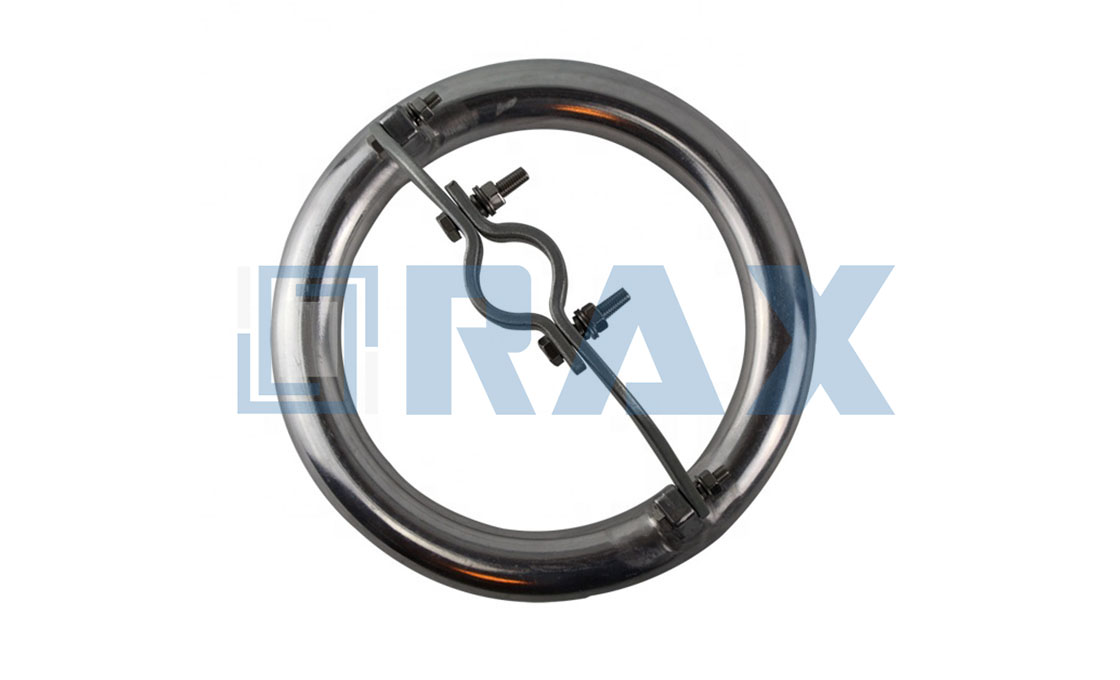
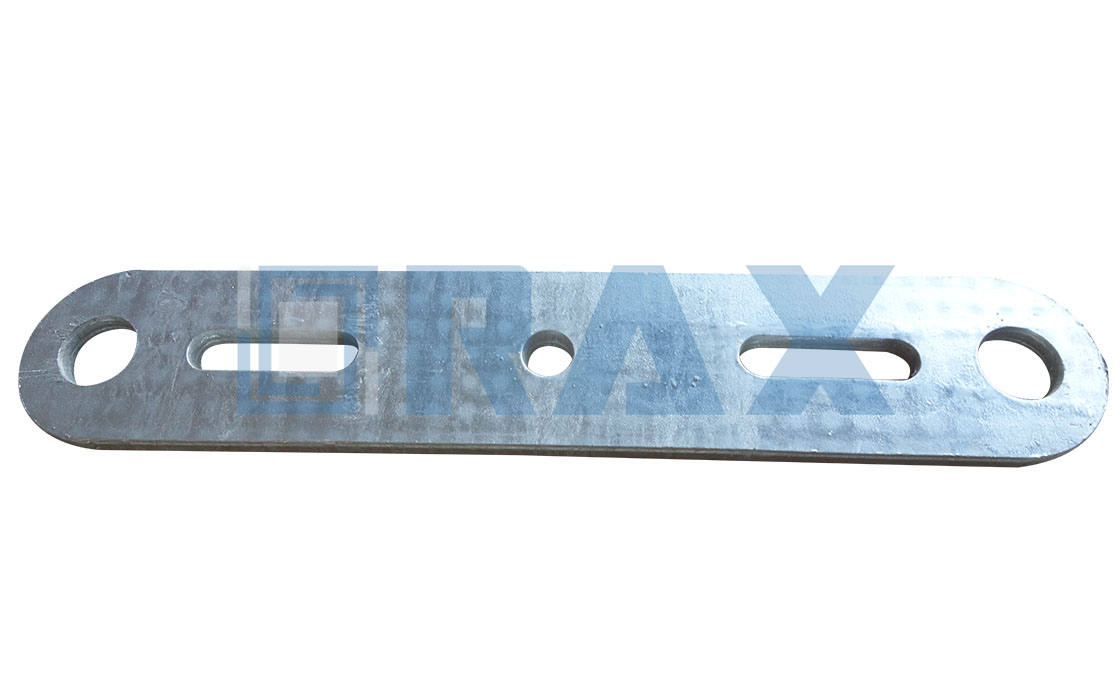
In our experience, most ring problems trace back to the fitting hardware rather than the tube itself, which is why installation quality decides so much. The bolts, the clamp seat, and the torque applied at installation determine whether the ring survives its first decade of aeolian vibration. Crews who want the installation-side detail can review this corona ring installation guide before their next string assembly.
Galvanic Corrosion at the Ring-to-Fitting Interface
The ring tube is aluminum alloy, and it usually meets a carbon steel fitting protected by hot-dip galvanizing to ISO 1461. That pairing is deliberate, but it puts two dissimilar metals in contact, so the American Galvanizers Association (AGA) guidance on mixed metals is worth reading closely. Galvanic action needs both a potential difference and a conductive medium such as seawater. In seawater, zinc sits at about −1.10 volts and aluminum at about −0.86 volts. That gap is small, and aluminum’s natural oxide film insulates the surface and slows any reaction further.
The AGA adds two nuances that matter in the field. Condensed water often lacks enough conductance to start corrosion on its own, so a humid inland site is a milder environment than a salt-spray coast. Severity also follows area ratios: a small anode feeding a large cathode corrodes dramatically, while the reverse geometry is far gentler. Where the zinc layer has failed and bare steel touches aluminum in a conductive film, the interface deserves a closer look.
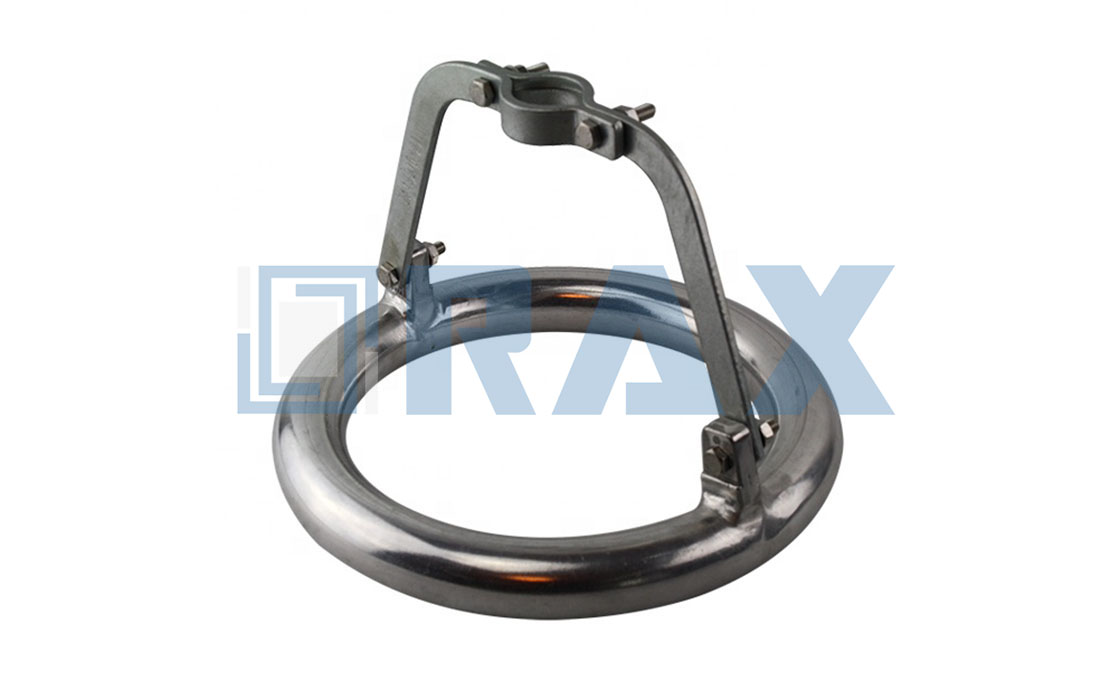
The practical takeaway is modest but useful. Aluminum-steel contact is not an automatic defect, and AGA calls an insulation barrier between dissimilar metals the best solution where conditions demand one. During inspections, log the coating condition and the contact faces. Treat aggressive local attack as a clue to moisture or contamination rather than a material fault.
Bird Nests and Guano Around Line-End Hardware
Transmission towers attract large birds because they double as hunting, roosting, and nesting platforms, and the birds return to a proven site year after year. INMR’s wildlife reporting cites service experience from Germany and Russia in which up to 70-80% of overhead-line outages were attributed to birds. Streamer-type flashovers from excretion strike suspension strings on lines up to 500 kV AC and about ±400 kV DC. A single release can reach 60 cubic centimeters of conductive material.
The record gets worse for the hardware zone that rings occupy. INMR notes that guano-induced failures most often hit high-voltage suspension towers. Nest debris can bridge clearances when it lands wet. Stork nests have been measured at up to 400 kilograms and 2 meters in diameter. A nest on the cross-arm above a string keeps conductive material permanently adjacent to the highest-field part of the circuit. Removing a nest is not a permanent fix either, because birds typically rebuild on the same structure the following year.
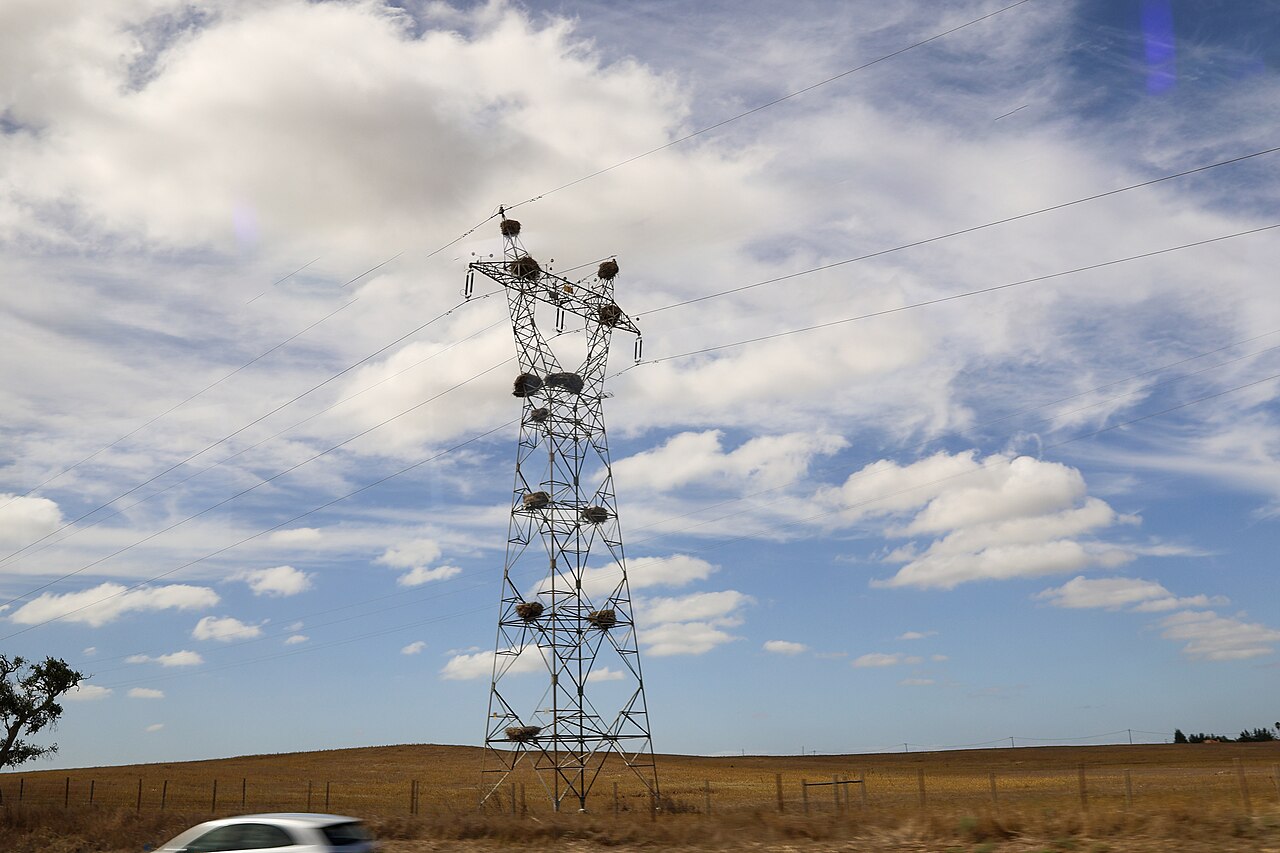
Bird activity changes two things for corona ring transmission line hardware: the inspection schedule and the cleaning priority. Structures with active nests need their line-end fittings checked more often. Accumulations on tubes or strings should be logged as findings, because droppings and wet debris change the electrical surface the ring protects.
Surface Damage That Creates New Discharge Points
A smooth tube is an electrical component, not just a finished product. INMR’s inspection literature notes that sharp edges, corners, points, and tight radii inside a strong field all can initiate corona. A dented tube grows a discharge spot the way you would expect from any sharp edge left in a concentrated field. Handling during mid-life work, dropped tools, and impact from flying debris each create that kind of stress raiser after the ring has passed factory inspection.
Contamination belongs in the same category. INMR’s Venezuelan survey found a dark industrial contamination layer on insulators near one substation. Its Florida study describes how condensation droplets distort the surface field enough to raise corona activity. Discharge also feeds back on hardware. The mild acids that corona produces gradually accelerate oxidation, and INMR photographed a live-end cotter pin that had seriously deteriorated after years of exposure.
Geometry, finish, and the trade-offs behind them sit with the design side, which this corona ring design guide covers in depth. Maintenance teams do not re-engineer the ring, but they decide whether a surface finding is cosmetic or the start of a new discharge point.
Visual Inspection From Ground Level and Aloft
Binoculars remain the first instrument of ring maintenance. INMR’s Venezuelan report recommends routine binocular inspections paired with corona testing using high-sensitivity UV cameras. The working methods it describes cover climbing each tower while avoiding contact with the insulators. Aerial platforms and insulated ladders work too, with the circuit either energized or de-energized. A ground survey cannot read a cotter pin, but it catches missing rings, gross displacement, and heavy staining at surprisingly low cost.
Documentation turns those observations into maintenance. The Florida survey team recorded GPS coordinates for every structure with a finding. Results went out as a KMZ overlay, so the replacement crew could go straight to the right structure. Sections were re-scanned at different times of day because corona activity shifts with temperature and humidity, and a finding skipped in one pass may appear in the next.
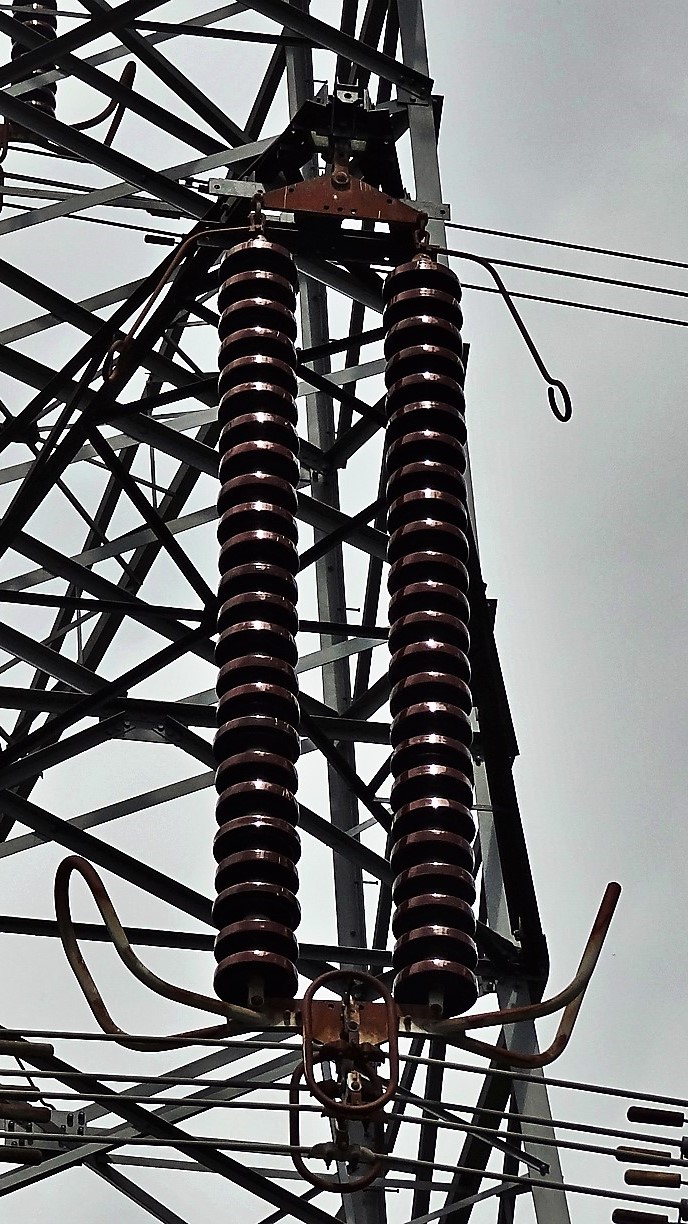
A simple per-structure record keeps the findings comparable across years: date, weather, structure number, hardware checked, and photographs. That record is what converts a one-off patrol into an inspection program with history behind it.
UV Corona Cameras in Line Patrols
Solar-blind ultraviolet cameras locate corona in full daylight by overlaying a starburst signal on the visual image, and telephoto units scan out to several hundred yards. The Florida team ran its survey from vehicles and boats. A drone documented damage at a water-crossing structure in under ten minutes, a task that would have tied up a boat crew for hours. Ultrasound instruments work too, but the signal fades quickly with distance.
Infrared cameras are the common alternative, and they disappoint on corona. Only advanced corona stages produce heat that an infrared camera can see. Surveys must also wait until roughly four hours after sunset, so solar loading does not mask the small temperature differences. The same Florida project found 15 to 20 live-end seal problems with the UV camera, replaced three insulators immediately, and scheduled five or six more within the month. On the Venezuelan 400 kV lines, the utility scheduled replacement for any insulator measuring above 2,000 photons per second.
A UV patrol answers the question every corona ring transmission line crew eventually asks: whether the ring is still doing its electrical job. Discharge at the live-end fitting, on the tube surface, or on adjacent hardware is the finding that moves a structure up the work queue.
Choosing Between Monitoring and Replacement
Findings on a corona ring in transmission line service need a decision rule, or every crew invents its own. The 400 kV case files support a simple ladder from watch to act. The middle rung matters most: a detached ring with a clean housing is a planned replacement, not an emergency. The condition is that monitoring is real and scheduled.
| Field finding | Response supported by the record |
|---|---|
| Ring missing at handover | Install before energization; treat absence as a commissioning blocker |
| Ring detached, housing still clean | Monitor on a schedule and plan replacement, as one utility did between 2011 and 2014 |
| Erosion, discoloration, exposed rod | Replace the affected insulator and ring immediately |
| Discharge above 2,000 photons/sec | Add the unit to the replacement list using the threshold that utility adopted |
“It should be mandatory that corona rings be installed during construction of any line and, if such accessories are missing, the line should not be energized.” — INMR, Corona Rings & Composite Insulators
Reinstallation deserves the same discipline as the first fit. A fallen ring must be inspected for bent brackets and damaged clamp threads before it goes back. The insulator it abandoned should be examined for discharge marks first. Selection rules and voltage-class guidance belong to the specification stage covered by this corona ring application guide, while the replacement decision itself belongs to the field record.
Setting an Inspection Rhythm That Works
INMR’s recommendation for polymeric insulator lines is a routine annual or bi-annual inspection cycle combining binocular checks with corona testing. Around that baseline, two calendars matter. Nesting season dictates one: by the time the nesting season ends, debris has usually accumulated, so structures with bird occupancy deserve a pass in the weeks after fledging. Weather dictates the other, because corona activity shifts with humidity and temperature, and a patrol on a dry day can miss what a humid evening shows.
The rhythm holds only if the findings persist somewhere. GPS-tagged photographs, structure numbers, and photon counts give the next patrol a baseline. They turn a detached ring found today into a monitored, scheduled, and budgeted job rather than a surprise outage. Utilities that adopt that habit spend their hardware budget on planned replacements instead of emergency repairs.
Small Rings Carry Long-Term Consequences
A corona ring is a few kilograms of aluminum alloy and a bolted clamp. The Venezuelan 400 kV cases show what its absence costs: eroded housings, exposed rods, and dropped jumpers. The maintenance discipline that prevents those outcomes is neither exotic nor expensive. Vibration checks, interface condition records, bird-aware scheduling, daylight UV patrols, and a clear monitor-versus-replace ladder cover the defect record from start to finish.
RaxPower has shipped pole line and insulator hardware since 2003, and the questions utility crews ask about rings in service shaped this guide. When those crews need replacement rings or the fittings that hold them, the same hardware that carries this article’s advice is one catalog away. Handled that way, corona ring transmission line hardware delivers decades of quiet service. Inspect on a rhythm, record what you see, and act on the ladder before the field acts for you.
Perguntas Frequentes
Um anel de corona destacado pode ser reinstalado na mesma corda?
Treat a detached ring as a defect, not a quick re-hang. Verify the ring tube, bracket, and insulator surface first, then refit to the manufacturer’s procedure. INMR’s 400 kV case files show detached rings left in service ended in housing damage.
Como as equipes inspecionam hardware de linhas de transmissão com anel corona sem interrupção do fornecimento?
Levantamentos binoculares ao nível do solo captam defeitos grosseiros, e câmeras UV solar-blind localizam descargas em dia claro em linhas energizadas. A INMR documentou patrulhas com veículo, barco e drone que rastrearam problemas de corona em acessórios de extremidade sem a necessidade de colocar o circuito fora de serviço.
A descoloração em um anel de alumínio sempre significa falha?
Nem sempre. O alumínio possui uma película de óxido estável, e a American Galvanizers Association observa que essa película isola o metal e retarda a reação. Em vez disso, fique atento à progressão: picaduras, depósitos na interface do grampeador ou trilhas de descarga justificam um exame mais cuidadoso, enquanto até mesmo o escurecimento pode ser registrado e monitorado.
Por que os pássaros continuam fazendo ninhos nas torres de transmissão?
Towers offer raptors ideal platforms for hunting, roosting, and nesting, and birds return to a proven site year after year. INMR reports that nests removed after the season are frequently rebuilt the following year on the same structure.
Which ring defect justifies immediate replacement?
Missing rings on energized composite strings, housing erosion with exposed core rod, or intense discharge at the live end. INMR’s Venezuelan 400 kV cases tied those findings to failed insulators, and crews there replaced affected units immediately.