
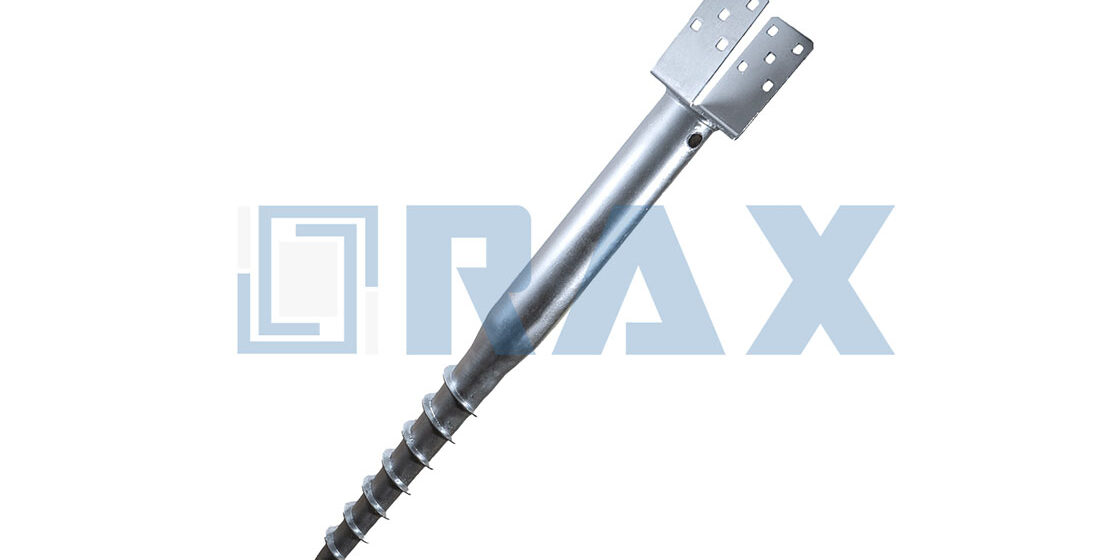
When a storm front crosses a distribution line, the poles bend, the conductors pull, and every force the wind creates finally lands on one buried component: the ground anchor. Choose an anchor that matches the wind and the soil, and the line stands until the next inspection cycle. Choose one from a catalog page alone, and the first serious storm turns it into the weakest link.
RaxPower has manufactured pole line and overhead line hardware since 2003, with 170+ employees working under an ISO 9001 quality system. Anchoring hardware is one of the product families we forge and galvanize daily, and this guide distills the selection logic we apply on high-wind export projects. It covers how wind becomes an uplift load, how soil class sets the real holding capacity, and which certificates deserve your attention. An anchor purchase is a soil purchase as much as a steel purchase. The steps below walk through that logic in the order a specifier needs it.
When Wind Becomes an Anchor Problem
Wind load does not push an anchor sideways; it converts into uplift through the pole and its guys. Wind pressure on any surface scales with the square of wind speed, following the velocity-pressure relationship in ASCE 7. Double the design wind speed and the force on the structure roughly quadruples. That is why a coastal line specified for 145 km/h gusts cannot simply reuse a hardware list drawn up for an inland 90 km/h zone.
For utility structures, the National Electrical Safety Code handles this through Rule 250C, the extreme-wind loading case, with ASCE 7 supplying the pressure mechanics behind it. Those documents tell you the load the structure must survive. Your anchor selection starts from that number, not from an anchor catalog.
A practical reading habit helps here. Check which wind case your line design cites: NESC 250C, a local storm requirement, or a utility adder on top of the code. Write it on the first line of the anchor specification. Every later decision refers back to it.
The Two Load Paths an Anchor Must Carry
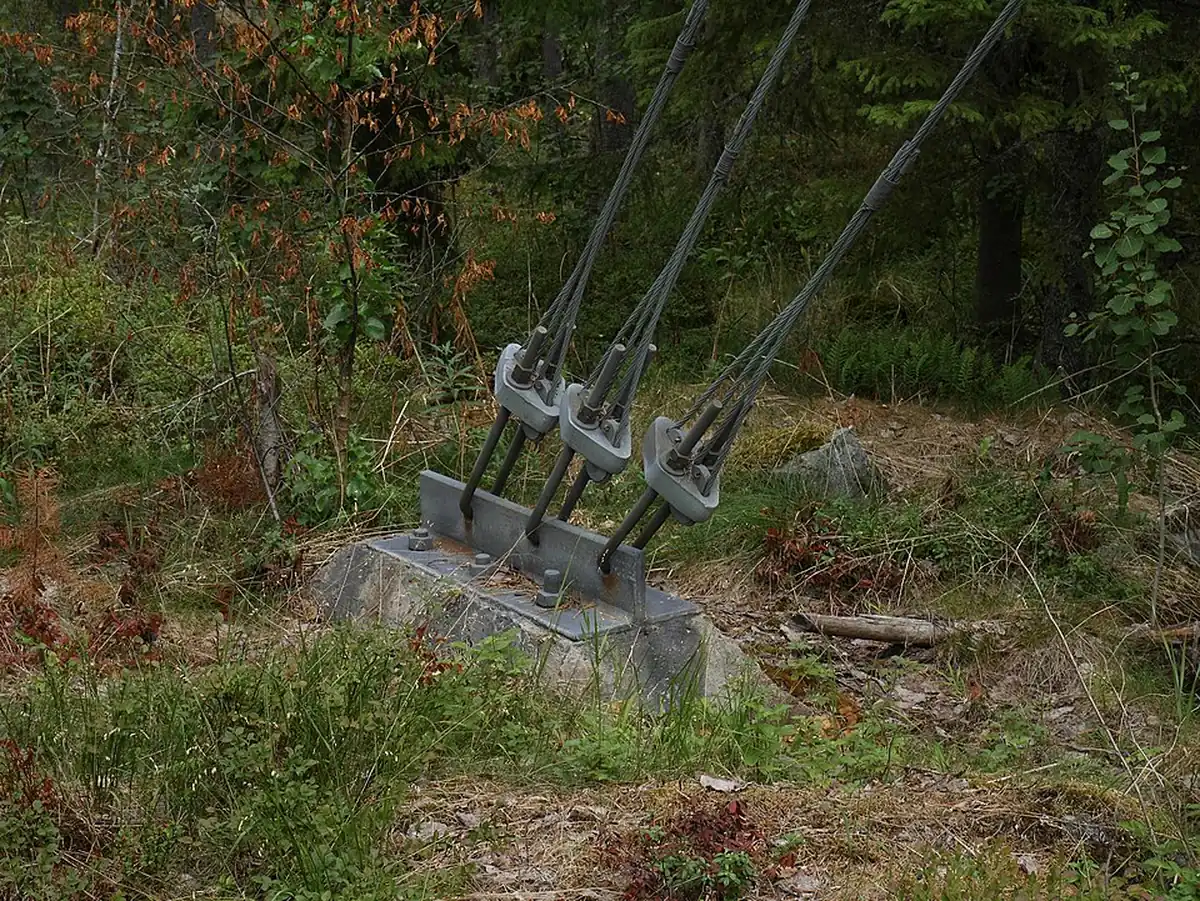
On a straight run, wind pushes the pole and its conductors, and the pole responds by bending at the ground line. Guyed structures resolve that bending differently: the guy wire converts the lateral push into a diagonal pull. The ground anchors offset along the guy lead then receive it as a steady upward-and-outward load. Until you have walked a storm-damaged line, the size of that pull is easy to underestimate.
At corners, dead-ends, and crossings, the conductors themselves add permanent tension to the same load path, wind or no wind. That is why anchor selection always begins with the structure type. A tangent pole with one guy needs modest uplift capacity. A double dead-end on an angle structure asks the anchor to hold rated wire tension for decades, through saturated soil and freeze-thaw cycles alike.
Both load paths share one rule: the weakest element in the chain sets the capacity. The guy wire, its connecting hardware, the anchor rod, and the soil around the helix must each carry the design load with margin.
Match the Anchor Style to the Soil
Utility practice sorts earth anchors into two broad systems, as a published JEA standard puts it. Screw-type anchors advance into the soil like an oversized auger, while plate-type anchors reach holding depth through a smaller pilot hole and then expand. Each family answers a different ground condition, and mistaking one for the other is the most common specification error we see in export orders.
Screw anchors — helical, no-wrench, and power-installed variants — suit soils where the helix can bite: clays, sands, and mixed fills with few obstructions. They install quickly with torque equipment, and the installation torque itself becomes evidence of capacity, which the next section covers. Plate anchors, including expanding and cross-plate styles, earn their keep in tighter access or softer soils where a slim pilot rod reaches depth before the plate opens.
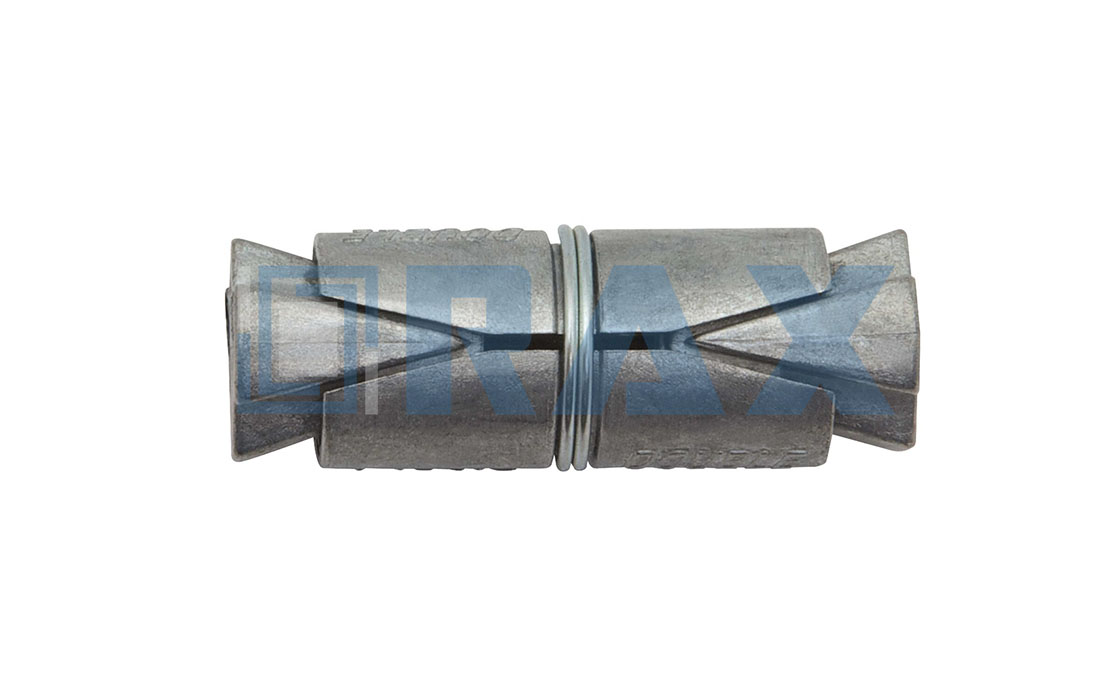
Rock changes the conversation entirely. Where sound rock sits near the surface, screw anchors cannot advance, and rock anchors or embedded bolts take the load instead. The USDA soil surveys and a simple resistance test during the survey walk usually reveal which family fits before a single anchor is ordered.
Holding Capacity: Soil Strength Times Hardware Strength
A rated capacity on a datasheet is only half of a holding-capacity statement. The published rating describes the anchor hardware; the installed capacity is whatever the soil will actually resist, and the lower of the two governs. Foundation engineers put it plainly: capacity rests on soil calculations, torque correlation, or a direct load test. The three methods disagree often enough that relying on one alone is a gamble.
Soil classification gives the first estimate. Foundation suppliers grade soils from strong rock down through clays and sands on a published class scale, and each anchor model lists its expected range per class. Those tables are a starting point, not a verdict. A Class 5 clay that reads consistently on one route can soften into a Class 7 condition after three weeks of rain.
For high-wind projects, the safe pattern is to treat the datasheet as a claim and the field as the referee. Pre-construction field testing of anchor holding capacity is standard guidance in soil-anchor technical supplements. It converts a catalog promise into a measured number for the exact right-of-way you are building on.
Installation Torque Is a Measurement, Not a Promise
Screw anchors carry a useful field property: the torque needed to advance them correlates with the load they will hold. Foundation suppliers publish the relationship as an ultimate-capacity multiplier applied to installation torque, with the factor tied to shaft diameter and helix geometry. The idea is elegant — the soil itself signs off on the anchor during installation.
The correlation is empirical, though, and it only means something when someone records the torque. A torque log for every anchor on a high-wind route turns installation from an act of faith into a documented capacity check, row by row. When a crew skips the log and the anchor later questions itself in a storm, nobody can reconstruct what the soil said on installation day.
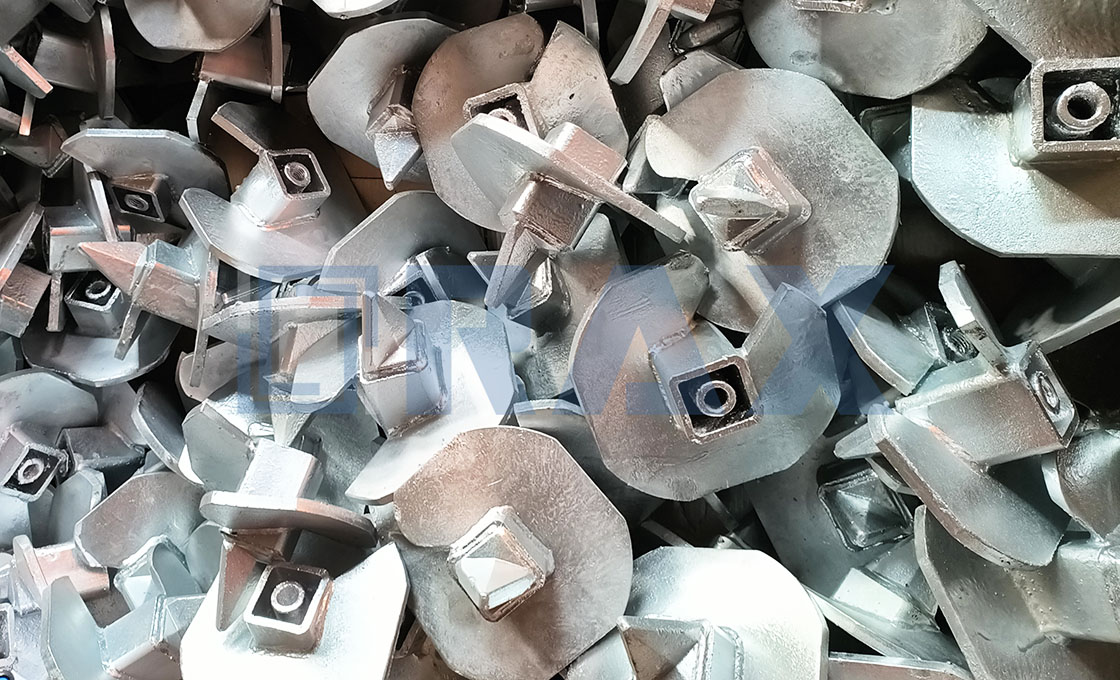
The helix does the work in this system, and its forging quality matters as much as the arithmetic. A well-forged helix advances predictably and reads true, the way you trust a sharp drill bit over a dull one.
Installation Methods Shape the Anchor You Order
The installation fleet on your route should influence the purchase order as much as the soil does. Power-installed screw anchors need torque equipment and a crew that keeps logs, and they reward you with a measured capacity reading for every hole. Hand-installed plate anchors trade that feedback for simplicity: a pilot rod, a cross-arm bar, and patience.
In our experience, routes far from supply yards favor the style that a two-person crew can set and verify alone. Picture the rebuild crew at mile forty of a rural spur, one truck, and a slipping schedule; the anchor that installs and documents itself wins that day. The no-wrench screw anchor exists precisely for that job, while deep rock or heavy dead-end loads push you toward the anchor types covered in the earth anchor types guide.
Match installation capability to anchor style early, and the last-minute substitutions that cause tolerance failures mostly disappear. The guy anchor depth guide by soil type pairs with this article for the depth side of that decision.
Galvanizing That Outlasts the Right-of-Way
Anchor hardware lives in damp soil for decades, so the coating is not cosmetics — it is the service life. Hot-dip galvanizing to ISO 1461 is the general specification for fabricated steel articles, and ASTM A123 covers the same process for iron and steel products in US practice. The zinc layer sacrifices itself slowly so the carbon steel underneath keeps its strength — one reason ground anchors lean on hot-dip coatings rather than paint.
What should a buyer actually check? Mean coating thickness on the certificate, measured on the batch, not a marketing sentence. The zinc should blanket the helix edges and the welds — the places coatings run thinnest and corrosion starts first. A batch certificate that names the standard, the measured values, and the inspected quantity is worth more than any brochure claim.
This is also where the industry’s documentation traps appear. Certificate review deserves the same seriousness as the load review, because paperwork failures surface at the worst possible time — during a storm-damage investigation.
A Standards Check Every Buyer Should Run
Anchor hardware specifications cite real documents: NESC Rule 250C for the load case, ISO 1461 or ASTM A123 for the coating, and utility construction standards for the installation details. When a supplier’s datasheet cites a standard you cannot find, or cites one for a purpose it does not cover, pause before signing.
A concrete example travels well. IEC 60120 is a real international standard — it defines the dimensions of ball and socket couplings for string insulator units. It says nothing about ground anchors, yet anchor quotations citing “IEC 120 certification” have circulated in export markets. One search through the standard’s actual title would have caught it.
The check takes minutes: read the cited standard’s official title, confirm it covers the property being claimed, and ask the supplier which clause applies. A factory that knows its documents answers with clause numbers; one that copied a template goes quiet.
Planning anchors for a high-wind route?
Send the soil report, span sheet, and design wind case — the anchor types and ratings come back as a matched set, with the certificates that back them.

Your High-Wind Anchor Selection Checklist
- Record the wind case. Name the governing load document — NESC 250C, a regional storm requirement, or a utility adder — on the specification’s first line.
- Classify the soil twice. Once from the survey, once from installation torque; reconcile the two before accepting the capacity.
- Rate the whole chain. Guy wire, hardware, anchor rod, and installed soil capacity must each carry the design load with margin.
- Match style to ground. Screw anchors for boreable soils, plate anchors for deep-set holding, rock anchors where the helix cannot advance.
- Demand batch certificates. Coating thickness to ISO 1461 or ASTM A123, with measured values and quantities — not a compliance sentence.
- Keep the torque log. Every anchor, every installation, signed by the crew; it is the only capacity evidence the soil writes itself.
Preguntas frecuentes
¿Para qué velocidad del viento deben seleccionarse los anclajes al terreno?
Start from the line’s governing load case, typically NESC Rule 250C extreme wind for US-style construction, plus any local adders. The anchor follows the structure design, never the other way around.
Why did my anchor hold the rated load but still move?
The datasheet rates the hardware; the installed capacity is set by the soil. Wet-season softening or an unlogged installation can leave the soil, not the steel, as the weak link.
Is installation torque a reliable capacity indicator?
For screw anchors it correlates with ultimate capacity through a published multiplier tied to shaft size, but it is empirical. Treat torque logs as evidence that needs a soil classification alongside.
Which galvanizing standard applies to ground anchors?
Hot-dip galvanizing to ISO 1461 is the general international specification, with ASTM A123 the US-practice equivalent for iron and steel products. Ask for batch-measured coating thickness, not just a standard reference.
Can one anchor model cover every soil on a route?
Rarely. Soil class shifts along a route, and a model sized for dense clay may never develop capacity in loose sand. Field tests or torque readings should confirm the match section by section.
The Anchor Decision, Compressed
Wind writes the load, the soil writes the capacity, and the certificate writes the service life. High-wind anchor selection is the discipline of keeping those three documents honest — the design load case, the measured soil behavior, and the batch galvanizing record. A route specified this way hands the storm a structure that was never guessing.