
Two insulator technologies dominate today's tender shortlists, and they could hardly be more different in character. A glass string is an assembly of many small, heavy discs that announces its own failures. A polymer long rod is a single lightweight unit that hides its condition until you test for it. Choosing between them is a materials decision with consequences for patrolling, transport, tower loading, and replacement policy.
The polymer vs glass insulator question arrives at the RaxPower order desk weekly, usually as a side-by-side quotation request for the same rebuild project. Both families sit in the same catalogue here, so the honest comparison matters more than either technology's marketing. The sections below compare structure, failure behavior, weight, pollution response, and selection logic, with the numbers sourced rather than repeated from brochure claims.
How Each Insulator Technology Is Built
Glass insulators are cap-and-pin discs. Molten glass drops into a mould, is pressed into the shed profile, and is then toughened by rapid controlled cooling. That toughening locks balanced stresses into the shell and raises its mechanical strength enough for high-strength strings. The discs are stacked on a steel pin, cemented, and connected by ball-and-socket hardware until the string reaches the required leakage distance.
A полимерном изоляторе — usually called a composite long rod — takes the opposite approach. One pultruded fiberglass core carries the full mechanical load, a silicone rubber housing moulded over the core provides the external insulation, and crimped aluminium end fittings close the unit. There are no discs to stack and no cement joints. Everything the string does electrically happens on one continuous body.
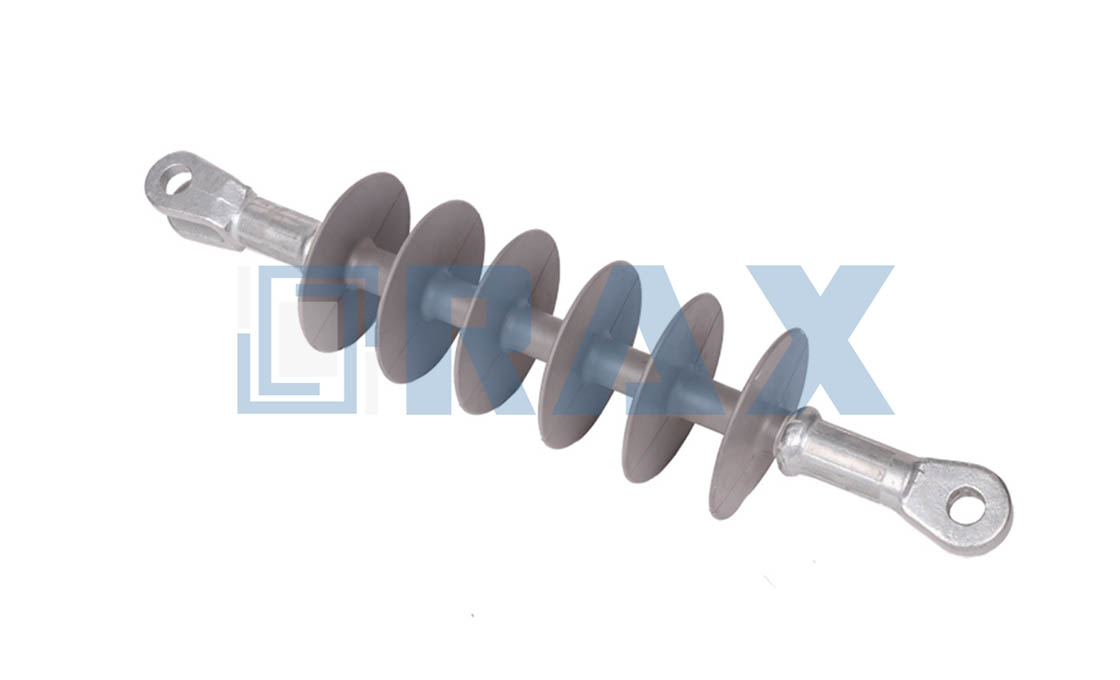
The construction difference, more than any catalogue claim, drives most of what follows. Glass gets its failure transparency and its weight from the same material logic: each disc is an independent, self-contained unit. Polymer gets its lightness and its hidden aging modes from being one piece. Neither construction is simply better; each trades one risk for another.
Failure Visibility: Glass Shatters, Polymer Ages
Toughened glass remains the only insulator technology that announces its own defects. The toughening process means a defective shell either stays intact or shatters completely, so there is no middle state to misread. When a disc fails, the line crew sees the loss from the ground, and the scheduled replacement can be planned without instruments.
Shattered does not mean failed, and this is the part buyers often miss. Even with the shell gone, the remaining stub keeps working. Industry testing shows the glass stub remains electrically not punctured and the mechanical integrity of the unit is retained, because the arc stays external to the fittings. The string loses leakage distance, not the conductor.
Polymer insulators age in the opposite direction, quietly and without announcement. Housing tracking, seal degradation, and core damage give little external sign until diagnostics are run. That is why composite-heavy lines justify periodic inspection passes with infrared or ultraviolet instruments, while glass lines patrol with binoculars. Visibility is a maintenance cost you either pay at the eye or pay for in equipment.
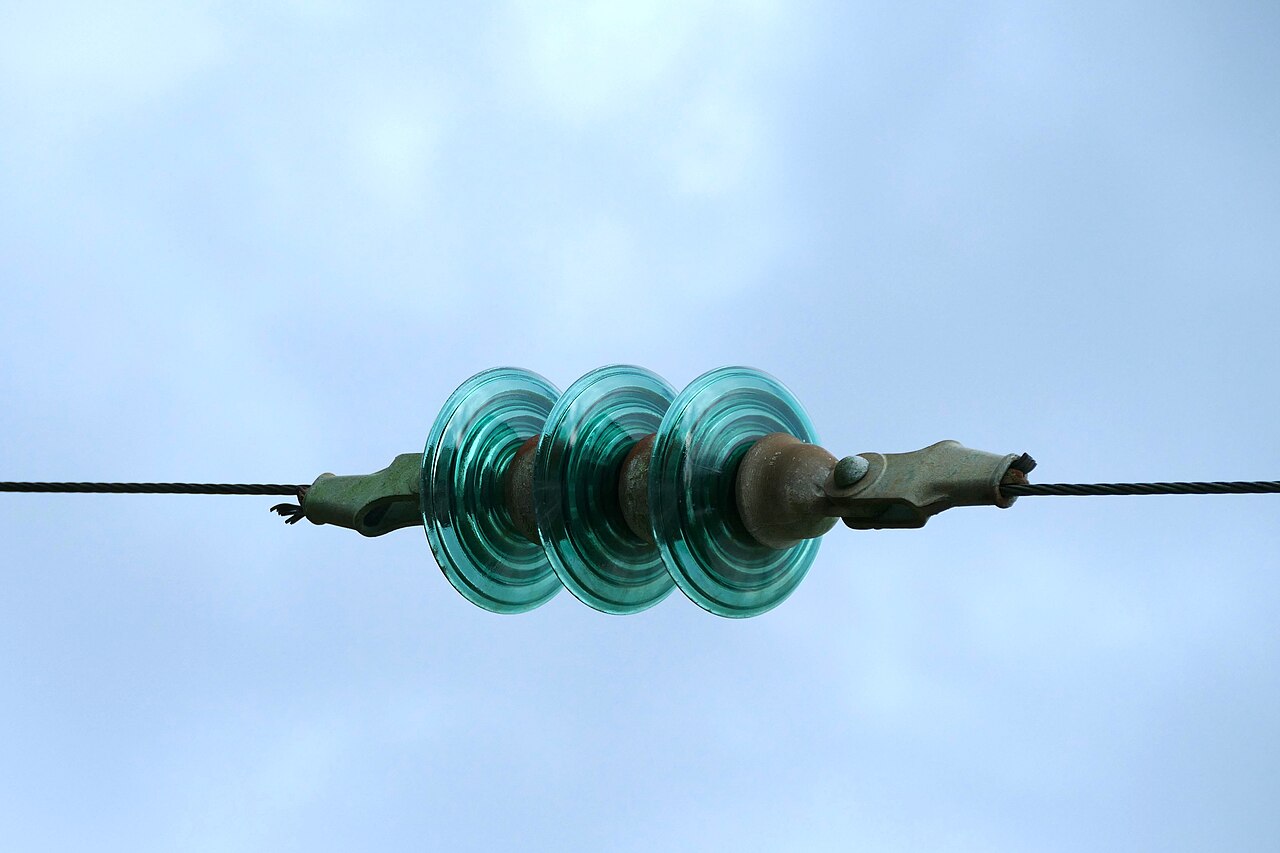
There is, however, one caveat on the glass side. Self-shattering happens without any external cause, driven by tiny furnace inclusions that survive the factory thermal-shock screening. Reported rates run on the order of 1 per 10,000 units per year or less, which utilities accept as the price of the self-disclosing mechanism. In high-vandalism corridors the count rises sharply, because bullets and stones trigger the same release. Some utilities in those regions have switched to composite housings for exactly that reason.
Weight, Transport and Installation Labor
Picture the delivery scene that opens any polymer vs glass insulator order. A flatbed arrives with crates of glass discs, each string assembled disc by disc on the ground before the crane lifts it. A polymer order for the same tower arrives as finished rods that two crew members carry. That image is the whole weight argument in one frame.
The documented ratio is large. Engineering references put композитные изоляторы at only 10 to 20 percent of the weight of porcelain strings of the same voltage class. That greatly reduces the labor of workers in transportation and field operation. Against glass disc strings the proportions are similar, because the cap-and-pin hardware and cement joints carry much of the mass.
Transport damage follows the same pattern. Glass discs can crack in transit and need careful crating, and damaged units surface at the truck bed rather than at the factory. Reference texts describe the breakage probability of composite insulators during transportation and installation as negligible, since the flexible housing shrugs off handling that would chip a brittle shell.
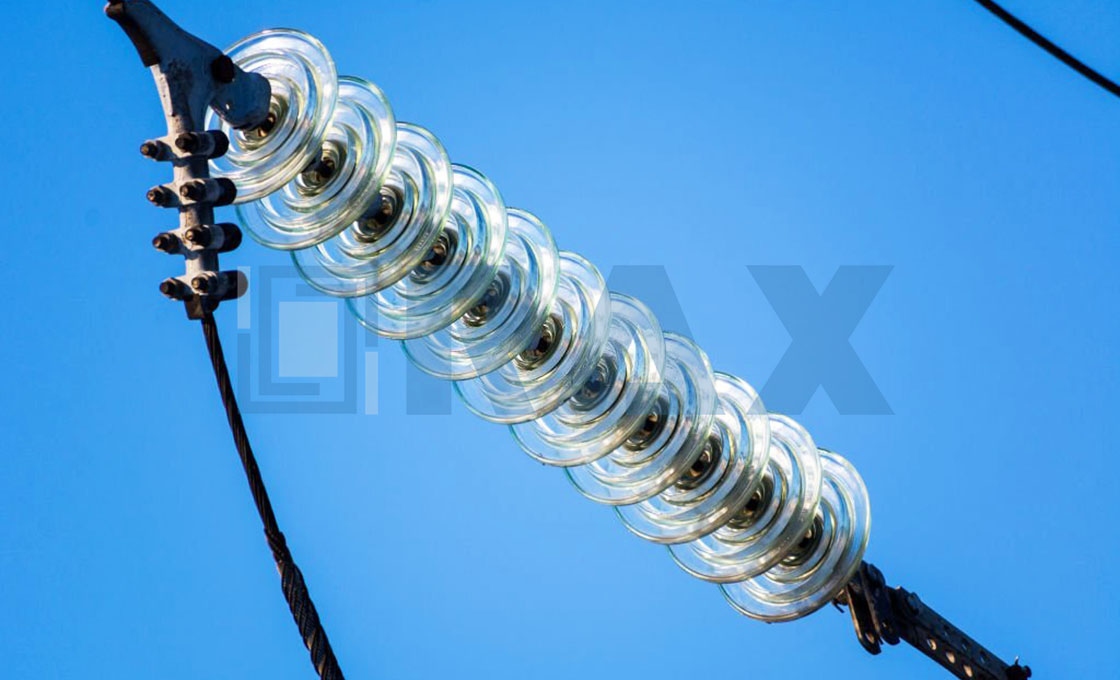
One handling rule flips, though. Glass strings tolerate hooks and slings on their metal caps, while polymer housings require soft slings so cuts never shorten the creepage path. Crews moving from ceramic habits to composite units need that briefing, because the lightweight unit is forgiving in weight but strict about surface damage.
Pollution Performance and Hydrophobicity Recovery
Under contamination, the two technologies behave in fundamentally different ways. Glass and porcelain surfaces wet easily, so a pollution film plus fog or drizzle forms a continuous conductive layer. For any given leakage distance, external flashover is documented as a more common problem for ceramic insulators than for composite housings, which resist water filming with their low surface energy.
Silicone rubber adds a recovery trick that glass cannot copy. Low-molecular-weight silicone chains migrate from the housing bulk onto the pollution layer itself, so the deposit becomes water-repellent too. The surface rebuilds its hydrophobicity between wetting events, which is why polluted coastal and industrial lines increasingly specify polymer long rods and why washing intervals stretch out.
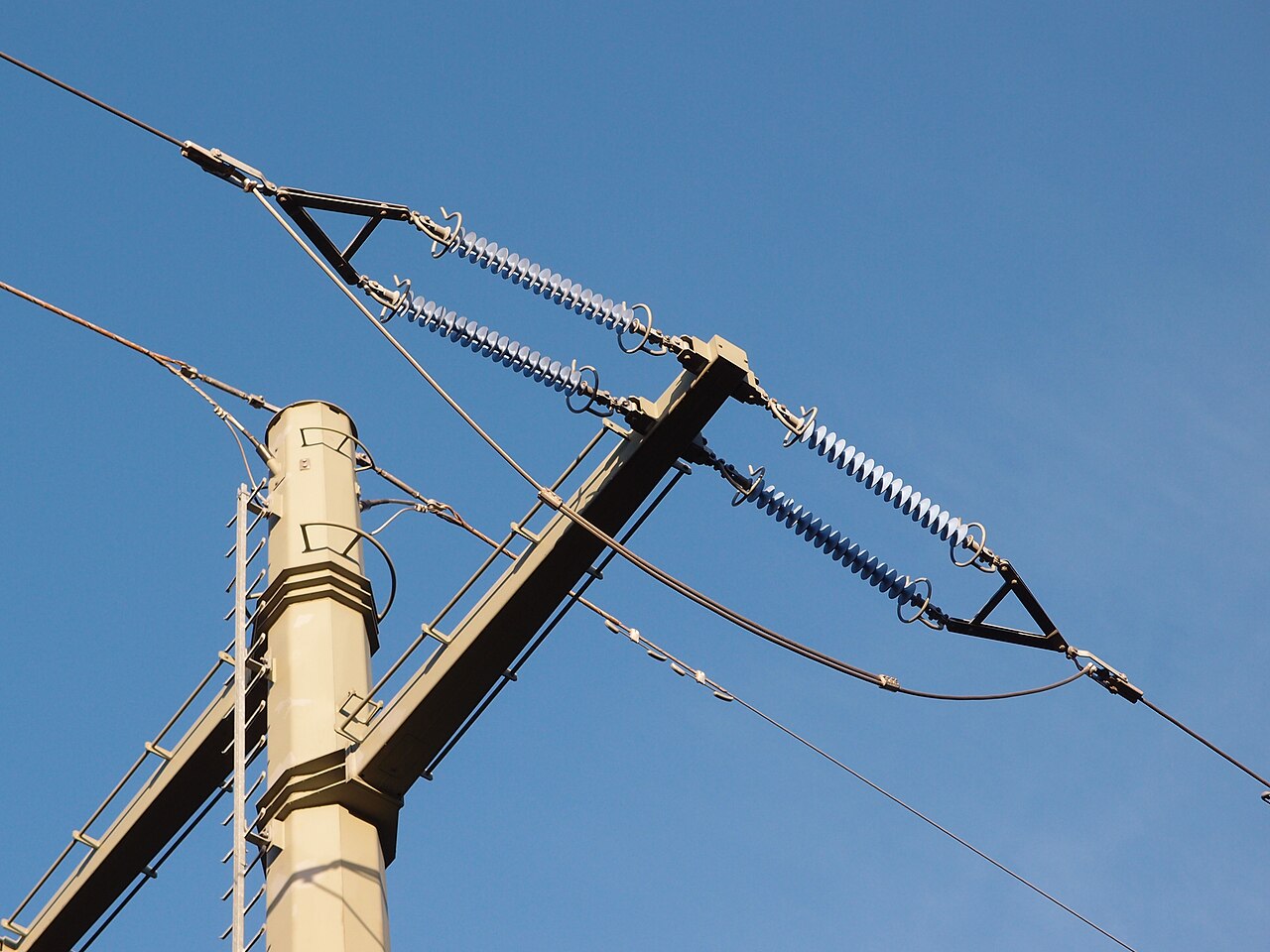
The maintenance economics follow from that surface chemistry. A glass or porcelain string collects a conductive film, so polluted routes earn their place on a washing calendar, and the wash crew becomes a permanent line item. A silicone housing mostly polices itself between wetting events, so the budget shifts from cleaning crews toward the periodic diagnostic visits that verify the housing still recovers. Neither model is free; they simply spend the money in different departments.
Glass answers with a different strength: predictability under arcs. A flashover burns the air outside the string and leaves the discs largely unaffected. Service data show toughened glass strings are significantly less prone to mechanical separation than porcelain or composite strings. On lines where lightning-driven power arcs are frequent, that record is worth real money.
Brittle Fracture: The Polymer Risk to Manage
The one polymer failure mode with no glass equivalent deserves its own paragraph. Brittle fracture of the fiberglass core, driven by stress corrosion cracking, can progress with little external sign, and it ends with mechanical separation of the rod and a dropped conductor. It is rare, but it is the reason core quality, end-fitting seals, and interface tests dominate composite factory audits.
Glass never hides a load-path problem this way. Its failure signature is a visible shatter with the stub retaining full mechanical capacity, so the worst credible outcome is a scheduled climb, not a dropped line. Buyers weigh that certainty against the polymer's advantages and decide how much diagnostic program they are prepared to run.
In our experience the deciding factor is not the material at all but the supplier's process discipline. A well-made composite with verified crimping and sealing has decades of service evidence behind it. A poorly made one can fail early, regardless of how good silicone rubber is in the laboratory.

Polymer vs Glass Insulator: Side-by-Side
The table below compresses the polymer vs glass insulator decision into the rows that actually move specifications. Read it with your line profile in hand: pollution map, patrol budget, structure margins, and vandalism history decide which column wins before price is ever discussed.
| Аспект | Стекло | Полимер (композитный) |
|---|---|---|
| Конструкция | Stacked toughened discs on cemented pins | One-piece FRP core, silicone housing, crimped fittings |
| Признак отказа | Visible shatter; stub retains mechanical strength | Hidden housing or core aging; needs diagnostics |
| Weight and transport | Heavy strings; disc-by-disc assembly; careful crating | 10–20% of string weight; negligible transit breakage |
| Загрязняющее поведение | Wets and films; regular washing on dirty routes | Hydrophobicity transfers to the pollution layer |
| Worst-case failure | Rare pin separation (about 1 in 10 million) | Rare brittle fracture with conductor drop |
| Лучшее применение | Lightning-prone corridors, visual patrol regimes | Polluted air, weight-limited or compact structures |
All three material families, glass included, answer to common IEC and ANSI standards, so the choice never forces a redesign of the string hardware. The decision variables are operational, and the two candidates differ most exactly where daily operating cost is decided.
Какой изолятор выбрать для вашей линии
On transmission rebuilds through polluted or mountain terrain, the polymer case usually closes itself. The weight ratio shrinks helicopter and crane work, and hydrophobicity recovery buys washing intervals that glass cannot match. Distribution crews with existing porcelain habits and short spans often stay with toughened glass, where the visual patrol regime is already paid for.
Adoption data back the split. On Guangdong transmission lines, 85 percent of suspension strings were composite versus 14 percent glass. Tension positions stayed majority glass at 61 percent: utilities trust the long rod where pollution and weight bind, and keep discs where the visible failure record matters most. That division of labor is the practical answer to the polymer vs glass insulator question.
A glass string behaves like a truck with a visible load: heavy, but every unit in plain sight. A polymer rod is the lightweight courier whose condition you check by appointment. Match the technology to the inspection system you will actually run, not the one you hope to run, and the choice defends itself at the next audit. RaxPower manufactures both construction families, so the recommendation below the quotation line follows the line profile, not the catalogue.
For readers who need the third family in the same frame, Ceramic, Glass & Composite Insulators: Key Differences compares all three materials side by side. The distribution-scale case is treated in Сравнение шпильчатых изоляторов и полимерных изоляторов, and the economics of the glass side in Сравнение стоимости фарфоровых и стеклянных подвесных изоляторов. When the polymer vs glass insulator decision reaches the purchase order, demand factory test evidence for whichever material wins. The standards are shared, but the manufacturing discipline is not.
Часто задаваемые вопросы
Что дольше служит: полимерный изолятор или стеклянный изолятор?
Ни один из вариантов не обладает универсальным преимуществом. Качественно изготовленные композитные панели имеют опубликованные расчётные сроки службы от 30 лет и более, тогда как продукция из закалённого стекла имеет десятилетия подтверждённого опыта эксплуатации. Дисциплина процессов у поставщика позволяет точнее прогнозировать срок службы, чем принадлежность к той или иной группе материалов.
Почему стеклянные изоляторы разбиваются сами по себе?
При закалке напряжения запечатываются в оболочке, а мельчайшие включения из печи, выжившие при заводском тестировании на термический удар, могут вызывать спонтанное разрушение. Типичные заявленные показатели составляют порядка 1 случая на 10 000 изделий в год или менее.
Может ли разбитый стеклянный диск оставаться в эксплуатации?
Да, временно. Струбцина остаётся электрически не пробитой и сохраняет механическую целостность блока, так как дуга остаётся вне креплений. Нить теряет расстояние утечки, поэтому блок отмечается для плановой замены.
What is the main failure risk of polymer insulators?
Hidden aging of the housing and, rarely, brittle fracture of the fiberglass core, which can end in conductor drop. Both risks are managed through factory audits of crimping and sealing plus periodic field diagnostics.
Which insulator is easier to transport and install?
The polymer long rod, decisively. Composite units weigh only 10 to 20 percent of an equivalent string, arrive as finished assemblies, and have negligible breakage in transit. Handling requires soft slings to protect the housing.