
Every bolt on a structure ends in a head, and the head is the only part a wrench ever touches. The shank carries the load, and the threads make the clamp. The head decides which tool the crew reaches for, and how far the wrench swings before it re-bites. It also decides whether a joint tightened ten years ago can still be serviced today. That is why bolt head types deserve their own conversation, separate from diameters, grades, and coating weights.
Inquiry sheets arriving at a pole line fastener factory show the mismatch first-hand. Buyers specify hex heads for crossarm bracing that was framed around square head machine bolts. The confusion surfaces at the truck bed, not at the desk. The parts look interchangeable in a catalog thumbnail. In the field they behave differently, and the sections below walk through each head family, the tools it demands, and the jobs it wins on wood pole structures.
What a Bolt Head Actually Does
A head does three jobs at once. It converts wrench torque into thread tension. It presses a hardened bearing face against the part being clamped. On some hardware it even becomes the connection itself. An eye bolt is the plain example: the head is forged into a ring for a guy strand or insulator link.
The head also answers a question crews rarely say out loud: how will this joint be built and rebuilt in awkward places? A head works the way you grip a rope for a tug of war. The pull lives in the line, but nothing transfers unless the grip holds. Square faces, hex flats, round domes, and forged eyes are simply four different grips on the same problem.
Standards treat the head as more than styling. IEEE C135.1 covers the requirements for inch-based carriage bolts, machine bolts, double-arming bolts, and double-end bolts and nuts. All of them are common in overhead line construction, where the applied load is primarily a tensile load. Head shape, head height, and width across flats all sit inside that scope, which is why substitutions between heads are engineering decisions rather than warehouse decisions.
Square Heads: The Pole Line Traditionalist
Picture the second lineman at the back of a crossarm, holding a spud wrench on a bolt head while his partner runs the square nut up from the other side. The square head has four flats, so the wrench re-bites every quarter turn, and even corners rounded by decades of hammer work still find a flat to hold. That tolerance for abuse is a large part of why the shape has never left the trade.
Machine bolts for line work still ship as square head and square nut by default. Manufacturers describe the program in plain terms. MacLean Power Systems lists its machine bolts as square head and square nut, roll threaded. The same maker notes that bolts 1/2-inch and larger in diameter and 7-inch and longer carry cone points. Those cone points permit driving without damage to the threads. A cone point is a head-adjacent feature, but it exists because line bolts are expected to be started under a hammer.
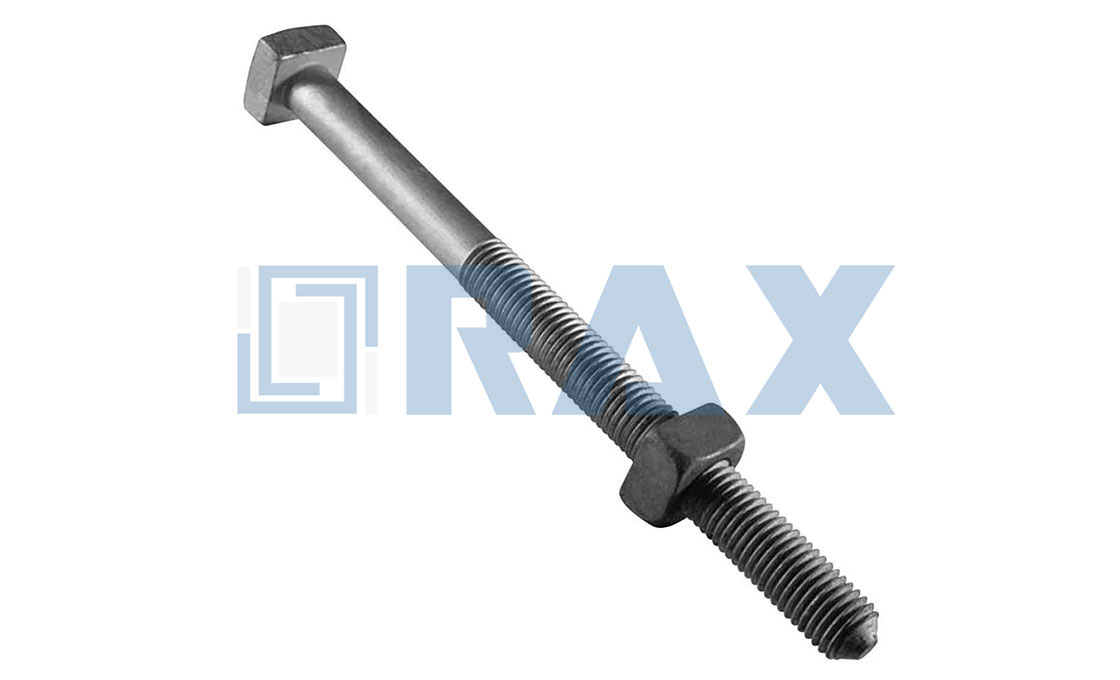
The болт с квадратной головкой remains the default through bolt for crossarms, braces, and equipment mounting on wood. Its four flats also give an open-end wrench four extra engagement angles inside the tight pocket between a crossarm and a brace, where a socket will not always seat.
Field identification of a square head starts at the corners. A healthy head shows sharp edges and flat faces that sit parallel to the timber. A tired one shows rounded corners, a hammered dish in the top face, or rust bleeding from the chamfer. Any of those signs moves the joint up the inspection list, because the next wrench may be the one it refuses to turn. When crews catalog hardware on an old structure, noting which heads are still square and which have gone round grades the whole pole faster than any single torque reading.
Hex Heads: The Modern Default
The hexagon is the most common head in general hardware, and line hardware keeps moving toward it as equipment mounts converge with ordinary steelwork. Six flats give a 30-degree swing between re-engagements, which matters in a corner where the wrench cannot sweep far. Hex heads also accept socket, ring, and impact tools that square heads grip less safely.
On pole structures, hex heads appear wherever hardware meets machine-grade steel: bracket plates, transformer mounting iron, arrester brackets, and secondary racks. A hex head machine bolt with a hex nut closes those joints, and the bearing face spreads the clamp across a washer when the load deserves one.
A hex head also tolerates the modern tool cart. Sockets, ring wrenches, and torque controlled drivers all seat cleanly on six flats, and the short swing between bites keeps the wrench engaged where brackets crowd the bolt. That compatibility, more than any strength argument, is what keeps pulling line hardware toward the hexagon.
Identification follows the pattern the shop floor already uses. Head markings stamp the maker and sometimes the grade into the top face, and reading them tells the crew what the fastener was made for before any test is made. Unmarked hex heads on imported brackets deserve a second look, because the same hexagon covers hardware from light duty to high strength. Of all the bolt head types in a catalog, the hex head is the one where the shape says the least. Its marking says the most, so a pocket mirror and a wire brush earn their place in the bucket.
Washer-Head and T-Head Variants Worth Knowing
Between square and hex sit the specialist heads. A washer-head bolt carries an integrated flange that behaves like a built-in flat washer, spreading clamp load without loose parts to drop from a bucket. IEEE C135.80-2023, the current fastener standard for overhead line construction, includes washer-head bolts alongside machine and carriage bolts, which tells you how familiar the form has become on lines.
A T-head slides into channel iron and slot hardware, where the head hooks into the slot and locks with a quarter turn. Countersunk heads, rare on wood but common on fabricated brackets, sit flush so nothing snags a climbing gaff or a gloved hand. None of these replaces the workhorse heads, but a buyer who can name them reads drawings faster and rejects mismatched hardware before it ships.
Washer-head and T-head variants also answer storage problems. A flanged head removes one loose part from a kit that gets shaken around in a bucket. A T-head removes the need to reach behind channel iron to start a nut. Neither is dramatic in a photograph, and both save minutes on every joint, which is the currency crews actually count.
Carriage Bolts: Round Heads With Locking Necks
The carriage bolt carries a domed round head with a square neck beneath it. The neck presses into a drilled hole and locks against rotation, so the head side needs no wrench at all. When the bolt spins in the hole during installation, the fix is a hammer tap to reseat the neck, not a second pair of hands on the head. The round dome leaves nothing proud to snag a sleeve or a gaff. That is why carriage bolts survive on step bolts, face-mounted hardware, and any surface the public can touch.
The trade-off is honest: a round head cannot be driven by torque from above, so the joint must be assembled with the nut side accessible. Carriage bolts belong where one face is finished and the other is reachable, and nowhere else.
Installation practice differs too. A carriage bolt wants the hole drilled square to the surface so the neck seats on both faces. The draw-in happens from the nut side, with a steady pull rather than a heavy start. A carriage bolt hammered in at an angle locks the neck crooked, and the head never again sits flush against the timber.
Eye Heads: When the Head Is the Connection
Eye bolts abandon the flat face entirely. The head is forged into a ring, and the ring itself takes the guy strand, the insulator link, or the block hook. Oval eye, shoulder eye, and thimble eye variants change how the ring loads, but the principle holds. The head is no longer a torque interface. It is the working point of the whole assembly. IEEE C135.80 covers eye bolts and eye nuts alongside the flat-headed family for exactly this reason.
Because the eye sees the full applied load through a forged bend, its inspection habits differ from a machine bolt. Crews check for ring distortion and neck wear rather than corner rounding. For an overview of how these parts sit on the structure, the pole line fastener range groups the eye family beside the through bolts it complements.
How Head Shape Decides the Wrench Work
Geometry sets the rhythm of the job. A square head re-engages every 90 degrees of swing, a hex head every 30 degrees. In the open, nobody notices. On a crowded crossarm, wedged between a brace and a pole ground moulding, those numbers decide whether a wrench can be racked at all. In our experience, the fastest question to ask a customer is not the bolt diameter. It is what is bolted on either side of it, because clearance complaints explain more returns than strength complaints.
Tool inventory follows the same logic. Square heads want spud wrenches and open-end tools, and they tolerate being struck. Hex heads want sockets, ring wrenches, and calibrated torque, and they should never be driven by hammer. A crew that carries both sets, and knows which head each standard calls for, finishes the same job with fewer rounded corners and fewer retrucks.
Stuck heads deserve their own routine. A paint-locked nut on a square head often breaks loose after a sharp hammer blow on the flat, which is a treatment a hex head should never receive. Penetrating oil, a wire-brushed flat, and a full-size wrench rather than an adjustable copy save more corners than strength ever will. On heads already rounded, a large slip-joint grip on the remaining flats sometimes works once. The bolt should be scheduled for replacement either way, because a second rescue is rarely possible.
Why Square Survived on Wood Crossarms
The persistence of square heads is not nostalgia. On a wood structure, the square head earns its keep three ways. A spud wrench hooked on one flat holds the head while the nut runs up from the far side, a one-person job. The corners take hammer blows that would mushroom a hex. And the wide flats resist rounding when an old, paint-locked nut finally breaks loose after a decade of weather.
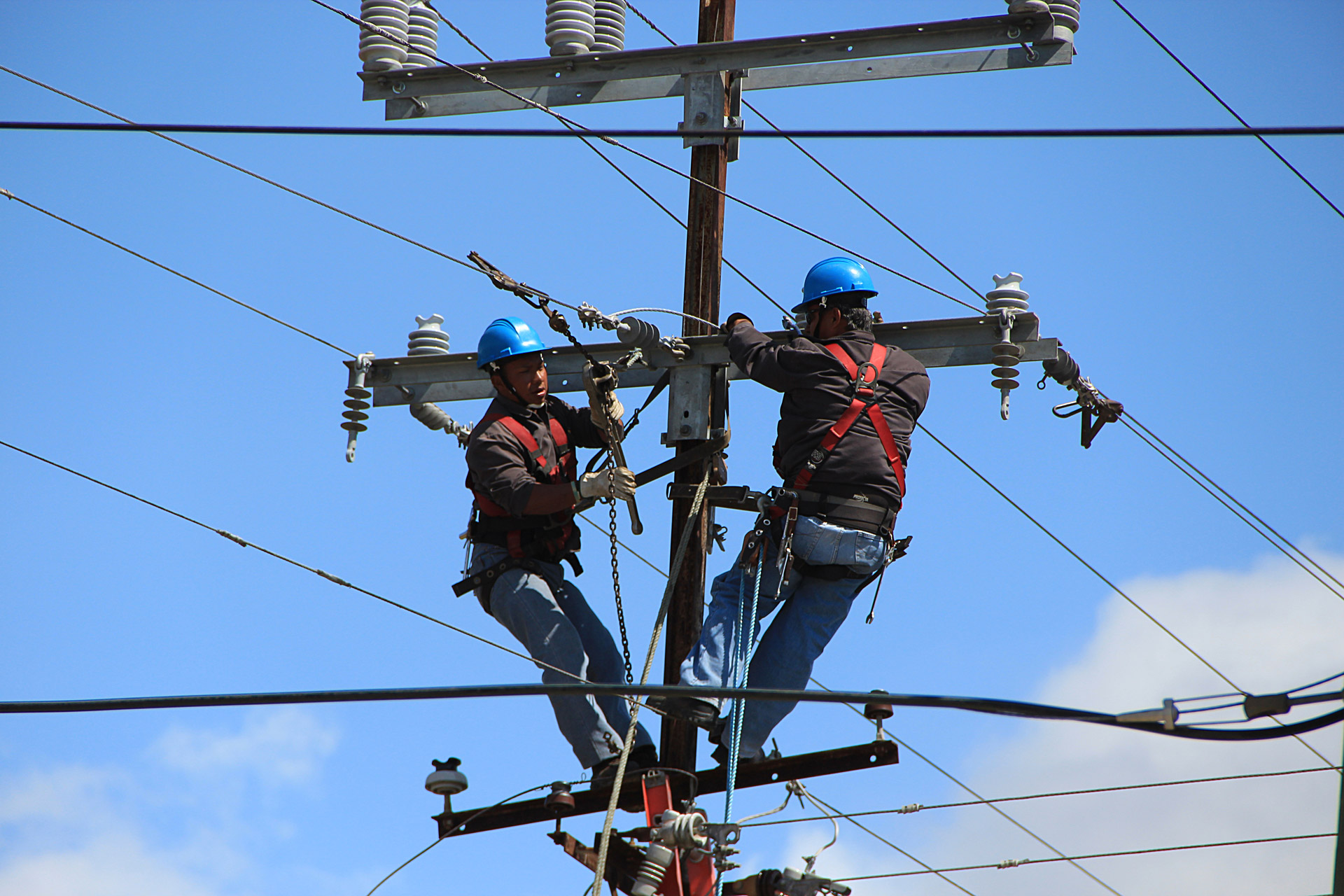
History closed the loop. IEEE C135.1, the long-standing baseline for line bolts, grew up around square head machine bolts and their square nuts. A utility replacing hardware on a 1970s crossarm is matching an inherited standard, not choosing a fashion. The pole line fastener configuration guide shows how the square head bolt fits the wider family on one structure.
Field Checks on Heads You Inherit
Most crews meet bolt head types on structures somebody else built. The inherited hardware tells its own story to anyone who looks. Square heads in straight, unmarked rows say the line was framed to the old baseline standards. A single hex head among them usually marks a past repair, and a carriage bolt where a machine bolt belongs says someone reached for what was on the truck. None of these is automatically wrong, but each one is a question the inspection record should answer.
The checks are quick. Confirm the head sits flat against the wood without rocking, which exposes buried threads that never clamp. Confirm the wrench dimensions match the nut, because a loose fit rounds corners fast. Confirm the coating at the head is intact where the flat meets the corner, since that chamfer is where corrosion starts its work. A structure that passes those three checks at every joint is usually sound at the head, whatever hardware its builders chose along the way.
Hex on Wood: Lag Screws and Machine Bolts
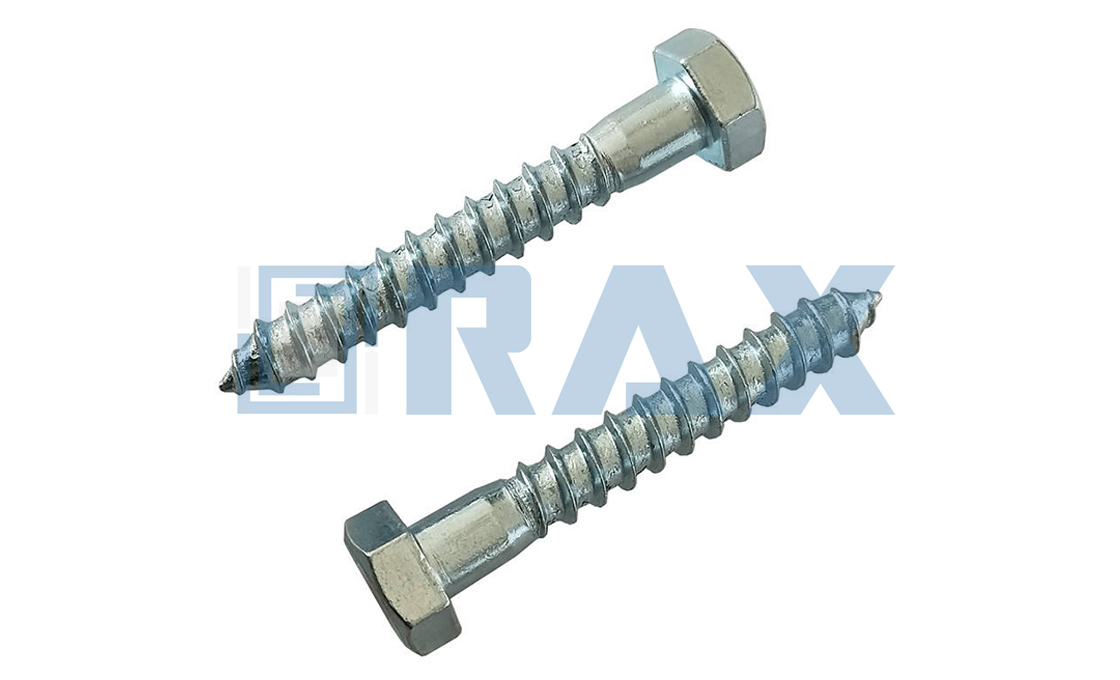
The hex head owns wood connections that thread instead of bolt. A hex head lag screw cuts its own threads into the pole, so the head turns against wood, not steel, and the bearing face needs help. Manufacturers pair the screw with a washer for good reason. MacLean Power Systems lists its lag screw program as hex head with a neoprene backed steel washer. The washer spreads the clamp and seals the entry against moisture.
Hex head machine bolts close the remaining joints, wherever a bracket plate meets a flat surface and a socket wrench can reach. The глухарь с шестигранной головкой and its washer make a small system, and treating them as a pair is what keeps the head from crushing into the wood over time.
Driving Practice: Tools for Each Head
Each head punishes the wrong tool. Square heads survive a spud wrench and a fair amount of hammering. An impact socket on worn corners will still cam out, and it leaves a rounded stub nobody can back off. Hex heads take sockets and torque wrenches cleanly. They gall under impacts that exceed the galvanizing, which is why torque values belong on the work order rather than in the crew chief's memory.
Preparation matters as much as the tool. Chamfered cone points let line bolts start without thread damage, washers should turn freely under the head, and old hardware should be wire-brushed before any wrench claims a bite. A head driven once with the wrong tool is a head that will demand cutting later. Every cut bolt on a live structure is a story told twice.
Lag screws deserve one more caution that machine bolts never need. Their holding power lives in the wood threads they cut. Backing a lag screw out and re-driving it in the same hole strips those cut fibers. The second installation holds a fraction of the first. Crews who treat a lag screw as position-once hardware avoid the complaints that surface when hardware works loose a season later.
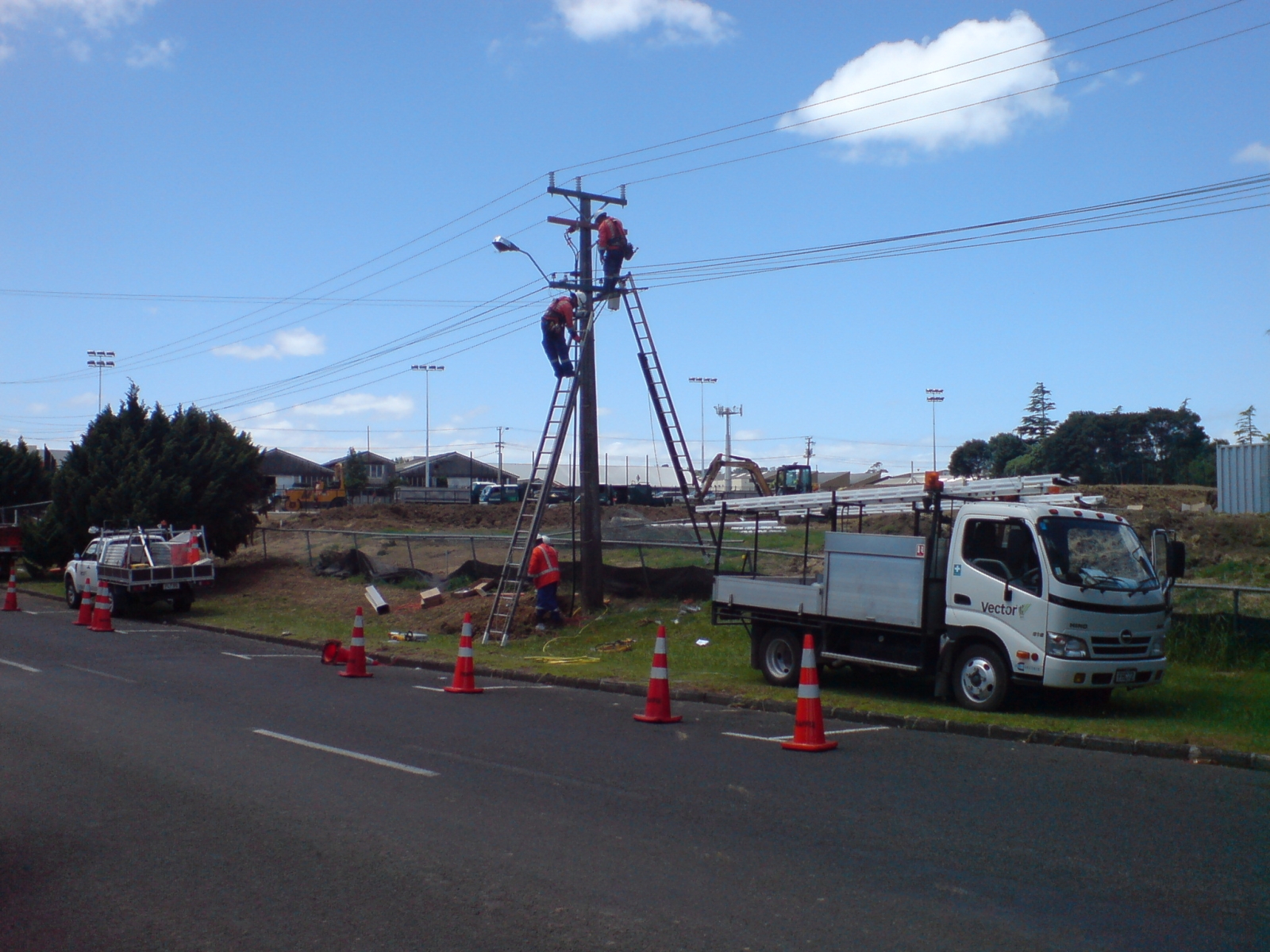
Reassembly after maintenance has its own rules. A square head machine bolt that has been cut free is replaced, never re-threaded in the field, because rolled threads do not survive a die. A hex nut that ran on easily at installation but now binds has usually flattened its washers or crushed the timber beneath, and adding torque only buries the problem. The honest fix is a slightly longer bolt with fresh washers, and the parts bin should carry them for every diameter the structure uses.
Head Choice Under Shear and Tension
Load direction narrows the choice. Line standards have long treated through bolts as primarily tensile members, and the head's job under tension is to hold clamp so friction and bearing do the work. Under shear, the shank bears in the hole and the head contributes little, which is why head substitution rarely changes the strength calculation but often changes the service outcome.
Bearing area is where square and hex genuinely differ on wood. A square head of the same across-flats dimension presses a larger flat face against the surface, and wood, unlike steel, does not bounce back from a point load. Washers close the gap, which is why the washer question belongs in the specification, not in the bottom of the truck box.
Galling deserves a mention where galvanized heads meet galvanized nuts. Hot-dip galvanized threads run rough by nature, and the zinc that protects the steel also drags under high torque. Coated hardware expects lubrication and torque practices to match, and crews who dry-fire an impact wrench on a galvanized joint strip zinc and threads together. Slow final tightening by hand, with the wrench squared to the head, protects both the coating and the torque reading.
Corrosion and the Head's Weakest Zones
Heads corrode from the edges inward. The chamfer where the flat meets the corner, the washer interface, and the first exposed thread under the nut hold zinc thinner than the shank after hot-dip galvanizing. By the time a head shows rust streaking at its corners, the coating has usually sacrificed itself across the whole fitting, and the joint is older than it looks.
Coating choice is a fastener-wide decision, but heads see the most mechanical damage during installation, so they are usually the first place the coating gets compromised. The comparison of carbon steel and galvanized pole line fasteners explains how the galvanized coating behaves over time. It also shows why field touch-up practices at the head matter as much as the bath specification.
Wood deserves a word about depth as well. A lag screw needs the full threaded length engaged in sound timber. A through bolt needs its threads inside the clamp rather than partway through the hole, because the unthreaded shank is what carries shear. Heads cannot fix a depth mistake, and no washer compensates for a bolt that bears on its threads.
Inspection cadence should follow the corrosion map of the route. Coastal and industrial lines deserve a head-level look every climbing cycle, while dry inland structures can wait for scheduled pole inspections. Whatever the interval, the record should name the head condition explicitly rather than folding it into a general hardware note. Bolt head types age at different rates, and a replaced head of the wrong family can hide inside a clean inspection sheet for years.

Matching Head Types to Their Jobs
The table below compresses the guide into the view a storeroom keeper actually needs: which head, on which hardware, driven with which tool, and why the shape wins that job. Kept beside the bins, it turns every requisition into a quick cross-check of the bolt head types the structure already carries.
| Head type | Typical hardware | Wrench work | Why this head |
|---|---|---|---|
| Square | Machine bolts through crossarms and braces | Spud or open-end, re-bites every 90 degrees | Holds from the back side, tolerates hammer driving |
| Hex | Machine bolts on brackets, lag screws in wood | Socket or ring, 30-degree swing | Fast torque control with standard tools |
| Round (carriage) | Step bolts, face-mounted hardware | None on the head side; nut side only | Square neck locks in the hole, dome leaves nothing to snag |
| Washer-head | Bolts against wood or soft brackets | Hex flats under the flange | Built-in bearing face, no loose washer to drop |
| Eye | Guy attachments, insulator links | Not torque driven; installed by nut on the shank | Head becomes the connection point itself |
| T-head | Channel iron and slot hardware | Wrench after a quarter-turn hook | Slides into the channel and locks without access behind |
A bolt head types list is ultimately a tool list and a job list. Read the structure first, then let the head follow. The fastener grade and coating guide covering common fastener types and grades handles the material side of the same decision.
Specifying Heads Without Ambiguity on Drawings
Drawings fail on heads when they say only hex or square. A complete head callout names the shape, the width across flats, the head height, and the governing standard. Two hex heads of the same thread can still differ in flange and height. The dimension set a buyer should expect reads: diameter, head height, width across flats, and thread length.
Purchasing closes the loop by quoting the drawing rather than the catalog photo. When a requisition names the head shape, the wrench dimensions, and the standard together, quotes arrive comparable. The crew then receives hardware that matches the framing standard the line was built under. That discipline costs one extra line on the drawing and saves the retruck.
Bolt Head Types Questions Answered
What are the main bolt head types in line hardware?
Square, hex, round carriage, washer-head, T-head, and countersunk, plus eye heads where the head itself forms the connection. On wood pole structures, square head machine bolts and hex head lag screws carry most of the work.
Why do pole line bolts still use square heads?
Square heads come from the baseline line-construction standards. A square head grips even when worn, holds a spud wrench while the nut runs up from the far side, and takes hammer driving without rounding off.
Can a hex bolt replace a square head bolt?
Only if the connection was designed for it. Hex and square heads differ in bearing area, wrench access, and driving practice, so substitutions should follow the framing standard or an engineer's approval, not truck stock.
What wrench does each bolt head type need?
Square heads need a spud or open-end wrench re-engaged every quarter turn. Hex heads accept sockets and ring wrenches with a short swing between flats. Washer and T-heads follow the hardware they were designed for.
Why do lag screws ship with special washers?
A lag screw head clamps directly against wood, so suppliers pair hex head lag screws with neoprene backed steel washers that spread the load and seal the entry against moisture.