
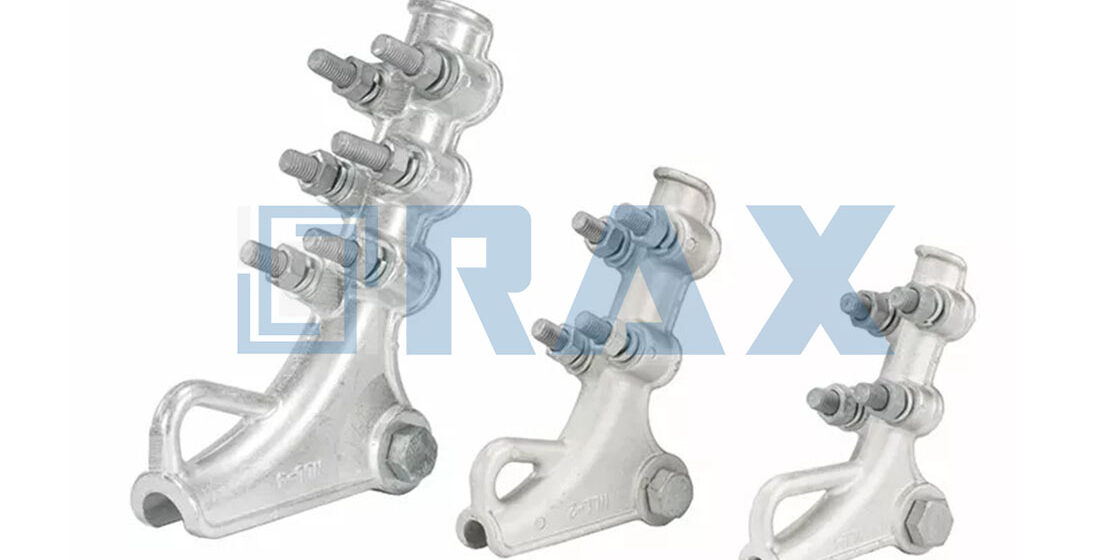
A expansão térmica compromete uma linha aérea mais rapidamente do que a carga de vento se o hardware não for dimensionado corretamente. Os grampos de ancoragem funcionam como pontos fixos que gerenciam essa tensão, mas depender de uma especificação genérica para tipos de grampos de ancoragem envolve riscos de conformidade quando as condições ambientais mudam. Você precisa de materiais específicos para resistir às condições de campo. Carcaças de plástico de alta qualidade resistente a UV e de liga de alumínio são essenciais, pois polímeros padrão perdem resistência à tração e ficam frágeis sob radiação solar prolongada.
Vamos examinar como os designs de cunha diferem para cabos ADSS versus cabos aéreos agrupados e como essas escolhas mecânicas se integram aos sistemas de cabos ZMS kV para manter a tensão da linha. Selecionar o material da carcaça e a geometria do aperto corretos agora é a única maneira de evitar o envelhecimento prematuro e fugir do pesadelo logístico de substituições emergenciais.
O que é um grampos de ancoragem?
Um grampos de ancoragem é um dispositivo mecânico de terminação projetado para fixar as extremidades dos cabos em pontos fixos de um poste elétrico, suportando cargas de tensão causadas por vento ou gelo, evitando deslizamento.
Definição e finalidade do grampos de ancoragem
Na infraestrutura de linhas aéreas de energia, um grampos de ancoragem funciona como um componente crítico de extremidade fixa que termina mecanicamente os cabos e mantém a tensão da linha. Sua função principal é fixar as extremidades dos condutores — como ADSS, fibra óptica ou amarras — nos postes ou travessas, garantindo a integridade estrutural do sistema inteiro sob condições de estresse, como acumulação pesada de gelo ou altas velocidades de vento. Diferentemente dos acessórios de suspensão, que permitem movimento, os grampos de ancoragem criam um ponto de terminação rígido onde todas as forças de tensão são transferidas com segurança para a estrutura de apoio, sem deslocamento.
Componentes básicos dos grampos de ancoragem
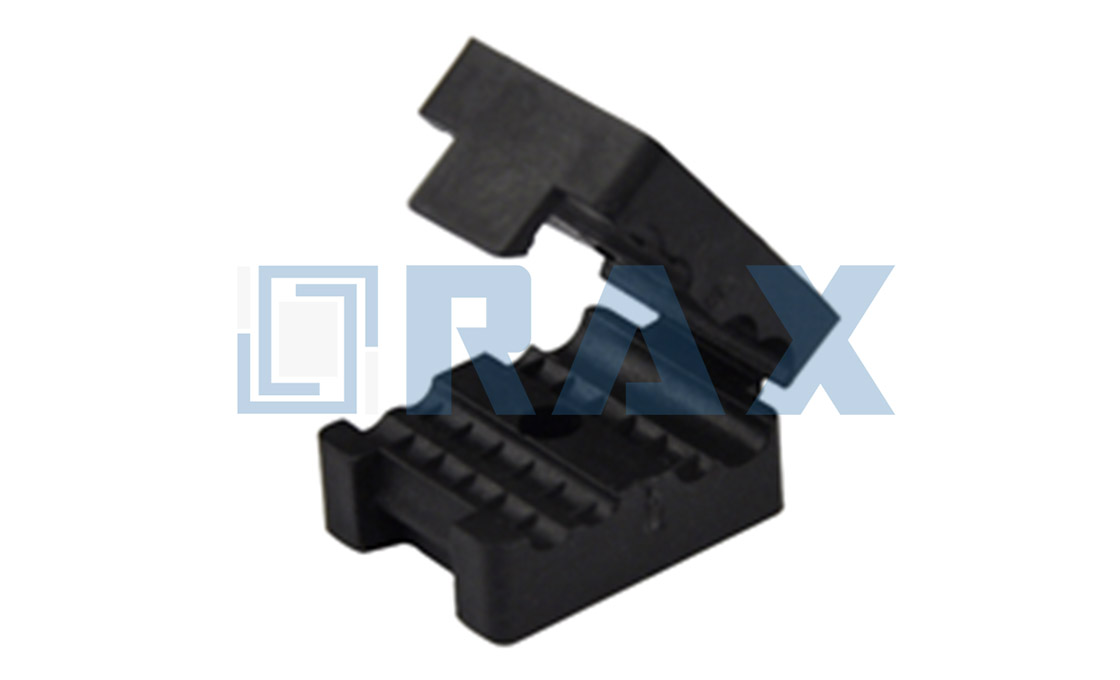
Embora os designs variem conforme as necessidades de aplicação, a maioria dos grampos de ancoragem modernos consiste em três elementos principais: uma carcaça do corpo que fornece suporte estrutural, um mecanismo de cunha cônica que se encaixa nos fios do cabo e hardware de fixação, como parafusos ou pinos, para montagem. O corpo é tipicamente forjado em aço de alta resistência ao invés de metal fundido, para eliminar vazios internos que poderiam comprometer a resistência sob carga extrema. A cunha possui dentes ou ranhuras usinados com precisão, projetados para cravar na camada externa do cabo quando a tensão aumenta, criando um aperto autofortalecedor que se aperta progressivamente à medida que a força de tração cresce, ao invés de afrouxar.
Como os grampos de ancoragem fixam linhas em postes
Nossa produção automatizada garante tolerância dimensional rigorosa de 1mm nesses componentes, garantindo que cada grampos desempenhe consistentemente sob condições ambientais diversas — dos invernos rigorosos da Sibéria aos monções tropicais úmidas — sem desgaste prematuro ou riscos de deslizamento. Na Rax Power, aproveitamos expertise em forjamento a quente para nossos grampos tipo cunha porque esse processo de fabricação alinha melhor a estrutura dos grãos do metal em comparação à fundição, resultando em resistência superior à fadiga durante ciclos repetidos de tensão. O mecanismo de fixação opera por um princípio físico simples, porém eficaz: quando a tensão puxa o cabo acoplado ao grampos, a cunha é forçada para dentro de seu assento cônico no corpo da carcaça. Essa ação comprime o cabo contra a superfície de aperto da cunha, gerando atrito proporcional à carga aplicada. Esse comportamento previsível permite que engenheiros calculem margens de segurança exatas durante as fases de projeto EPC com confiança, sabendo que o hardware performará conforme modelado sob cargas máximas previstas.
| Característica | Descrição técnica | Especificações padrão | Mecanismo operacional | Vantagem Rax |
|---|---|---|---|---|
| Função principal | Terminação mecânica de cabo projetada para fixar extremidades de condutores e suportar tensão. | Classificado para capacidade máxima de carga contra esforços mecânicos causados por vento, gelo e contração térmica. | Fixa cabos em pontos fixos para evitar deslizamento e manter a tensão da linha. | Grampos de cunha forjados a quente aproveitam expertise avançada para maior capacidade de carga em comparação com peças fundidas. |
| Mecanismo de travamento | Sistema autotravante que melhora o aperto à medida que a carga mecânica aumenta. | Garante força de fixação automática e dependente da carga, com zero deslizamento sob alta tensão. | A cunha cônica desliza para dentro do corpo para comprimir e travar o cabo. | Máquinas de precisão automatizadas garantem tolerância dimensional rigorosa de 1mm nos componentes de aço. |
| Acabamento de durabilidade | Protective coating essential for outdoor utility infrastructure longevity. | Compliant with ISO 1461; mean coating thickness exceeding 85 microns. | Hot-dip galvanizing provides a smooth, bright finish against environmental stress. | Offers superior defense against UV exposure and harsh environmental stress conditions. |
| Garantia de Qualidade | Verification processes ensuring structural integrity and safety standards. | Rigorous load testing and gauge testing conducted per IEC 120 standards. | Double-review protocol monitoring every stage of production. | 100% product verification executed by a dedicated QC team with full SGS certification. |
| Application Range | Versatile anchoring solutions for power distribution and telecom networks. | Compatible with LV-ABC, ADSS, Guy Wires, and fiber optic cables. | Incorporates specialized preformed grips and high-tensile fasteners. | Backed by 21 years of global export experience supplying critical utility infrastructure. |
Tipos de grampos de ancoragem e como funcionam
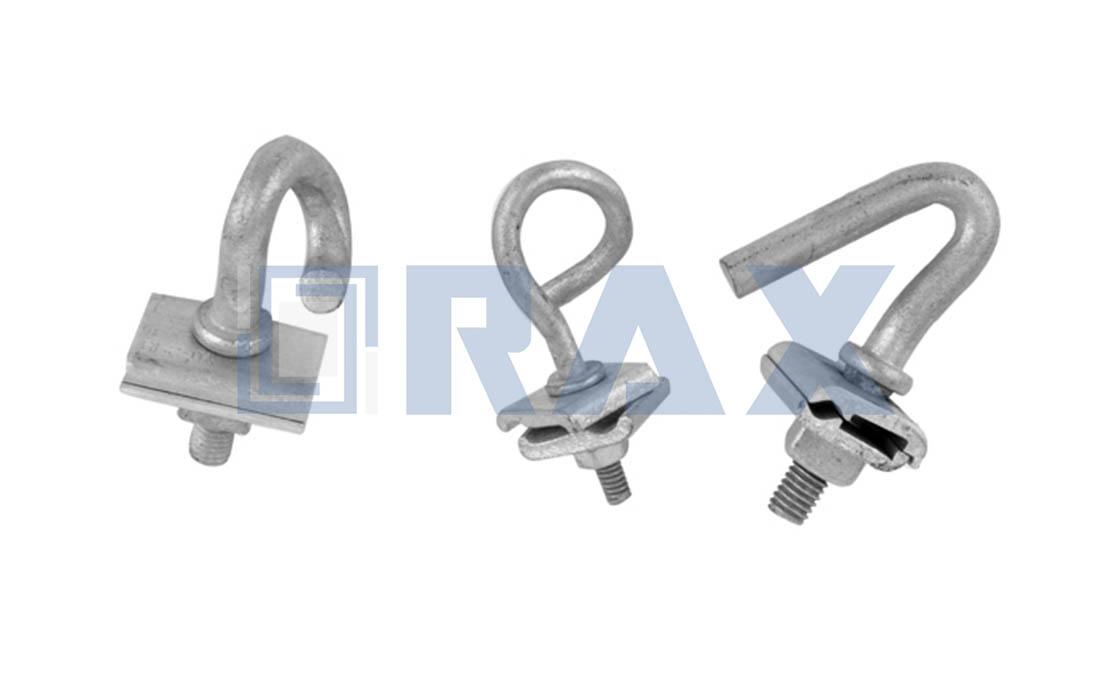
Wedge-type and compression anchor clamps are the two dominant mechanical classes in pole line hardware, distinguished by their locking mechanisms and primary function in securing conductors or guy wires.
Anchor clamps function as critical termination points in overhead power transmission and distribution systems, transferring tensile loads from cables to supporting structures. The selection between clamp types depends primarily on whether the installation requires permanent fixation with minimal maintenance (wedge-type) or a design accommodating controlled tension adjustments (compression-type).
Grampos de ancoragem tipo cunha (autotravantes)
Wedge-type anchor clamps utilize a mechanical self-locking principle where increasing tension on the cable automatically tightens the grip. These devices consist of a housing containing two or more movable wedges and a steel ring or fitting. When a conductor is inserted and tension applied, the wedges are forced deeper into the tapered housing, creating a friction lock that prevents slippage. This mechanism makes them ideal for permanent installations such as dead-end anchors on utility poles or ADSS fiber optic cable terminations where release is not required during normal operation.
A standard example is the cone-shaped wedge assembly used in guy wire terminations, where movable wedges inside the clamp body automatically tighten the cable as external forces increase.
Grampos de ancoragem tipo compressão (comprimidos)
Compression-type anchor clamps form a permanent bond by deforming the clamp barrel around the conductor using hydraulic or mechanical crimping tools. Unlike wedge designs, these do not rely on wedges moving within a housing; instead, the entire barrel is squeezed to create a metallurgical bond between the clamp and the cable strands. This method provides high strength and excellent conductivity, making it suitable for critical applications like ACSR (Aluminum Conductor Steel Reinforced) dead-ends or splice sleeves where maximum load transfer and minimal electrical resistance are required.
The process involves inserting the prepared conductor end into the clamp barrel, then applying uniform pressure via a die set to compress the metal onto the strands. Proper crimping requires strict adherence to specified die sizes and compression ratios to avoid damaging the conductor or creating stress concentrations that could lead to failure under cyclic loading.
Comparação funcional e critérios de seleção
- Installation Speed: Wedge-type clamps allow rapid field installation without tools beyond a basic hammer or puller, whereas compression-type requires dedicated crimping equipment and trained personnel.
- Maintenance Access: Wedge grips cannot be easily re-tensioned once set; if adjustment is needed, the entire assembly must be replaced. Compression joints offer no adjustment capability but provide superior long-term stability when correctly installed.
- Load Capacity: Both types can achieve breaking strengths exceeding 90% of the conductor’s rated tensile strength, though compression joints typically exhibit better fatigue performance under dynamic vibration loads due to absence of internal moving parts.
- Environmental Suitability: In coastal or corrosive environments, both types benefit from hot-dip galvanizing per ISO 1461 standards, with mean coating thicknesses exceeding 85 microns to ensure longevity against salt spray and moisture ingress.
Como os grampos de ancoragem diferem em design e função
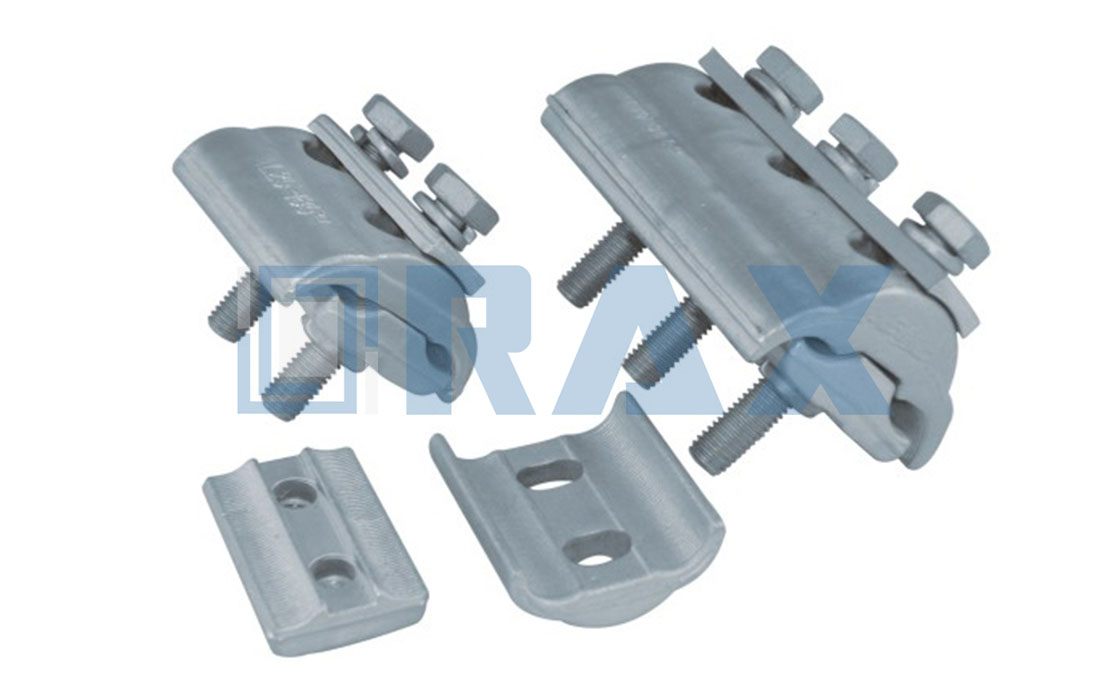
Selecting the correct anchor clamp is a critical engineering decision that directly impacts system stability and longevity. The primary distinction between types lies in their functional role within the overhead line architecture: tension clamps are designed to hold live cables under constant stress, allowing for future maintenance adjustments, whereas fixed dead-end configurations serve as permanent termination points that anchor the cable firmly against all directional forces.
This functional divergence in purpose directly informs the mechanical design choices that follow. Understanding whether a clamp is meant to secure or tension immediately dictates which gripping mechanism—wedge or fixed—becomes appropriate for the application.
Mecanismo e ação: configurações de cunha versus fixas
The most significant technical differentiator is the gripping mechanism itself. Tension clamps typically utilize a wedge-type design where the central body features a tapered barrel. As load increases on the cable, the internal wedges move further into this taper, creating a self-tightening action that reinforces the grip rather than loosening it. Conversely, fixed dead-end clamps rely on a rigid structure with no moving parts once installed; they transfer the full tensile load directly to the mounting hardware through a solid connection point without relying on friction-based tightening mechanisms.
Padrões de materiais e construção
High-performance anchor clamps generally utilize hot-forged steel alloy components rather than cast alternatives. Forging aligns the grain structure of the metal, significantly enhancing toughness and load-bearing capacity while minimizing internal voids that could lead to failure under extreme stress. To ensure durability in outdoor exposure, these steel components undergo hot-dip galvanizing processes compliant with ISO 1461 standards. This treatment provides a protective zinc coating with a mean thickness exceeding 85 microns, offering robust corrosion resistance suitable for diverse climatic conditions from coastal humidity to industrial pollution.
Aplicações de classificação funcional
- Tension Anchor Clamps: Ideal for scenarios requiring repositioning capability or where the cable must absorb longitudinal movement, such as at mid-span locations or transition towers where flexibility is required to manage thermal expansion.
- Fixed Dead-End Clamps: Essential at terminal structures like poles or corners where the line must be securely terminated to withstand unidirectional pulling force permanently, preventing any potential slippage into the support structure.
Considerações de instalação para iniciantes
When installing these devices, particularly in challenging environments like dusty or humid regions, selecting clamps with appropriate insulating properties is crucial to prevent electrical tracking. Ensure dimensional tolerances remain within strict limits (typically ±1mm) to guarantee proper fitment with standard pole accessories. For specialized applications involving fiber optic lines, verify compatibility with ADSS/OPGW cable diameters to avoid crushing damage during the gripping process, maintaining signal integrity alongside mechanical security.
| Característica | Specification | Vantagem |
|---|---|---|
| Design Principle | Wedge-type gripping mechanism with tapered barrel | Self-tightening action increases grip strength as tension rises |
| Composição do Material | Hot-forged steel alloy with ISO 1461 compliant hot-dip galvanizing | Superior load capacity compared to cast alternatives; mean coating thickness exceeds 85 microns |
| Dimensional Tolerance | Strict 1mm precision on steel components | ensures perfect EPC design integration and component interchangeability. |
| Testing Protocol | In-house IEC 120 load testing with double-review QC protocol | 100% verification by 10-person team before packaging; SGS certified |
| Functional Classification | Categorization into anchor tension clamps vs fixed dead-end configurations | Tension types allow repositioning; fixed types provide permanent termination points |

Onde os grampos de ancoragem são usados em linhas de transmissão
Anchor clamps are critical mechanical components deployed primarily at termination points and directional shifts in overhead power networks to prevent conductor slippage, manage tension loads, and maintain structural alignment under extreme environmental stress.
Terminações de extremidade fixa e postes de tensão
The primary function of anchor clamps is securing the end of a power line segment where the conductor terminates. In low-to-medium voltage networks, this occurs at “strain poles” or dead-end structures. Unlike suspension clamps which allow the cable to swing freely, an anchor clamp grips the strand tightly—often through a wedge-action mechanism—to transfer the full tensile load directly into the pole structure. This prevents the line from pulling loose during high-wind events or ice loading.
Mudanças de direção e conjuntos de ângulo
When a power line must turn around a corner or navigate a terrain feature like a river crossing or hillside, significant lateral forces are generated on the conductors. Anchor clamps are installed at these angle assemblies to hold the cable against the pull vector. They ensure that the turning point does not result in the wire slipping off the insulator string or damaging the supporting hardware due to unmanaged shear stress.
Aplicações em cabos aéreos agrupados (ABC)
In modern distribution networks utilizing Aerial Bundled Cables (ABC), specific anchor clamps designed for insulated phases are used. These clamps accommodate multiple bundled conductors within a single unit, ensuring that the neutral phase and live phases remain securely anchored together at the end of a service drop, preventing twisting or separation of the insulation layers.
Integração de fundação solar e aterramento
Beyond overhead transmission, anchor clamps serve as the interface between grounding systems and earth anchors. Helical screw anchors driven deep into the soil provide a stable base for solar panel mounts or lightning protection systems. Anchor clamps connect the copper grounding wire or steel strap to the top of these helical piles, creating a low-resistance path to earth that dissipates static charge and fault currents safely.
Conclusão
Selecting the right hardware isn’t just about fitting a cable onto a pole. You need to match the grip material to the jacket material, whether that’s UV-resistant plastic for ADSS or galvanized steel for dead-end strain. Wedge grips offer excellent load capacity, but only if the tension ratings align with your specific conductor weight. Get the specs wrong, and the line sags or the hardware fails mid-winter.
“Our engineers design high-voltage cable systems daily, ensuring clamps hold up against various insulation types without crushing the core. Before you place a bulk order, let us review your tension rating calculations against the IEC standards. We catch integration errors early so your installation stays solid for decades.”
Perguntas Frequentes
Como selecionar tipos de grampos de ancoragem?
Selection depends on the conductor type, diameter, and the expected mechanical load conditions of the installation. Engineers must also consider environmental factors that may influence corrosion resistance requirements. Compatibility with the supporting structure and ease of installation are also critical decision factors. Consulting technical data sheets ensures the chosen clamp meets all safety and performance standards for the application.
Quais materiais garantem a durabilidade do grampos de ancoragem?
High-quality anchor clamps are typically manufactured from corrosion-resistant materials like hot-dip galvanized steel or aluminum alloys. These materials provide essential protection against environmental factors such as moisture, UV radiation, and temperature fluctuations. The galvanization process adds a sacrificial layer that significantly extends the service life of the hardware. Utilizing robust materials ensures the structural reliability of overhead networks over decades.
Como os grampos de ancoragem são testados quanto à carga?
Manufacturers perform rigorous load testing to verify that the clamp can hold the rated breaking load of the conductor without slipping. This involves subjecting the assembly to increasing tension forces until failure or the specified limit is reached. These tests ensure compliance with international standards like those set by the IEC for mechanical safety. Consistent testing validates the engineering design and performance consistency of the hardware.