
Every utility fleet carries two insulator technologies at once: the ceramic strings it inherited and the composite units it keeps specifying for new work. The interesting question is not which type wins on paper. It is when a working line justifies pulling down glass and porcelain that still passes its annual inspection.
This guide covers that decision from the desk of a pole line hardware manufacturer. RaxPower has built overhead line hardware in China since 2003, and its 170+ employees produce insulators alongside the pole line hardware that carries them. The sections below walk through the replacement case, the retrofit constraints, and the honest limits that decide each swap.
What Utilities Are Retiring on Working Lines
Above 33 kV, the traditional design is a string of glass or porcelain discs joined in series by ball-and-socket or clevis-pin links. Each disc carries roughly 10 to 12 kV of operating voltage, so string length scales with line voltage. The conductor hangs from the bottom of the string while the top end anchors to the tower cross-arm.
| Line voltage (kV) | Typical discs per string |
|---|---|
| 34.5 | 3 |
| 115 | 6 |
| 230 | 14 |
| 345 | 18 |
| 500 | 34 |
| 765 | 60 |
Picture the inspector working along a 500 kV circuit at first light. Every phase carries thirty-four caps, thirty-four pins, and thirty-four skirts to read, and one cracked skirt becomes a work order. The design is modular, so a single damaged disc can be swapped without scrapping the whole string.

That modularity kept ceramic strings in service for decades, and porcelain remains a strong material under heavy tensile and compressive loads. But modularity is also the cost driver. Every disc adds a cemented joint, a pin, and a skirt that must be inspected, washed, and eventually replaced one piece at a time.
Why Weight Drives the Replacement Case
A composite insulator replaces that stack with one load-bearing unit. Per IEC 61109, it consists of a solid core of glass fibres in a resin matrix, an outer polymeric housing, and metal end fittings permanently attached to the core. The fibreglass rod carries the mechanical load while the housing does the insulating.
Composite units are lighter in weight than the ceramic strings they replace, and the difference is easy to feel on site. One moulded unit replaces dozens of discs, their coupling links, and their accumulated cement joints. Crews lift a single element into position instead of stacking hardware disc by disc, and a two-person job stays a two-person job without a crane assist.
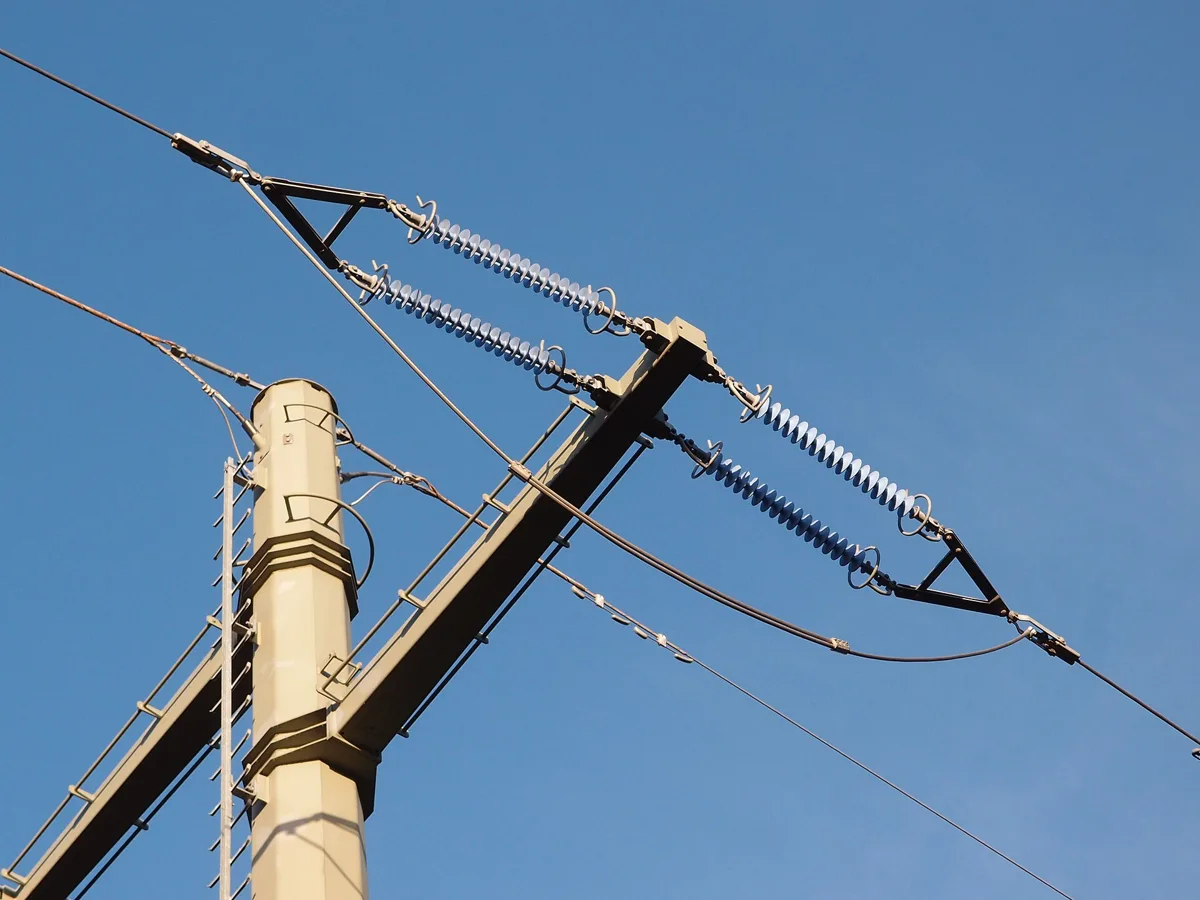
Weight matters most where access is hard. A string change on a river crossing or a mountain span means helicopter time, winch work, or manual carries, and every kilogram is felt there. Lighter units also cut the dead load hanging from older cross-arms that were never designed for spare capacity. Handling gets easier everywhere in between: yard marshalling, line trucks, and the final carry up the structure all simplify when the payload shrinks.
Pollution Performance and Washing Intervals
The strongest replacement argument is what happens between washings. Silicone rubber is hydrophobic, so water beads instead of forming conductive films. Low-molecular-weight siloxane chains also migrate from the housing into the pollution layer itself, encapsulating the deposit so even the dirt repels water.
A utility study cited by Wikipedia puts the maintenance effect in plain numbers. Composite insulators have good self-cleaning performance under wind and rain, and they need pollution checking only once every 4 to 5 years. Ceramic strings in the same corridor sit on a tighter schedule of washing and inspection, because leakage current tracks across wet, contaminated skirts.
Creepage is the design currency here. Minimum creepage distances run 20 to 25 mm per kV, and high pollution or airborne sea-salt areas push the requirement higher. Any replacement decision starts by mapping the corridor against that figure.
Every deferred wash is a line item back in the budget. Ceramic washing programs tie up crews, washing equipment, outage coordination, and access permissions season after season, and the cost lands hardest on lines that cross desert, coastal, or industrial corridors. A surface that keeps shedding its own contamination converts that recurring bill into an occasional inspection visit.
Breakage in Transit and Outages
Ceramic fleets carry a breakage ledger that composite units simply do not create. Glass discs are heat-treated so an overvoltage puncture shatters the shell, which makes damage visible from the ground. The shattered unit keeps its mechanical strength, so the string holds, but every broken disc is a replacement piece to stock and ship.

Glass is also prone to spontaneous shattering from surface imperfections or thermal shock, so handling rules for spare discs stay strict from factory to tower. A composite string has fewer exposed ceramic parts to crack in transit and fewer cemented joints to arrive stressed. On outage-day logistics, one unit to unpack and hang is simply a shorter task list than thirty-four.
Honesty cuts both ways. Composite units are not immune to damage, and housing cuts or core problems are the failure modes to watch. The point is not that one technology is fragile and the other is not. It is that each breakage event on a ceramic string consumes a spare disc, a climb, and an outage window. A one-piece replacement unit also reduces the number of separate parts that transport, handling, and tower work can put at risk.
Retrofit Constraints Before Swapping Any String
In our experience, the paperwork decides a retrofit as often as the hardware does. Three checks come before any purchase order for replacement units, and all three trace back to how the retired string actually worked.
- End fitting compatibility. Composite units ship with their metal end fittings permanently attached. The order must therefore specify couplings that match the string hardware already in service, whether ball-and-socket or clevis pattern. Mismatched fittings are discovered at the worst possible time, on the tower.
- Creepage matching. The replacement unit must deliver at least the same leakage path as the string it retires. Work against the 20 to 25 mm per kV baseline, plus any pollution uplift for the route.
- Tower arm loads. Weight drops with the swap, but conductor tension, wind, and ice loads do not change. Grading or corona rings may still be required at the high-voltage end of the string.
Fitting hardware is its own procurement line, and most utilities source ball clevises, sockets, and y-clevises alongside the units through their Isolatorengelenk supplier. Getting the coupling drawing right at quotation stage is what keeps the change-out a one-outage job.

What Each Replaced String Gives Back
Per replaced string, the utility trades a multi-part ceramic assembly for a single lighter unit with a hydrophobic surface. The maintenance ledger changes first. Pollution checks stretch to once every 4 to 5 years, and the cited study notes that composite units require less time for repair and power interruption.
The economics improve at fleet scale. China carried more than 10.05 million installed composite insulators on lines of 66 kV and above by May 2021, about 38.7 percent of the national population. Composites now account for over 75 percent of insulators on Chinese UHV lines. Fleet adoption at that scale is procurement doing the arithmetic.
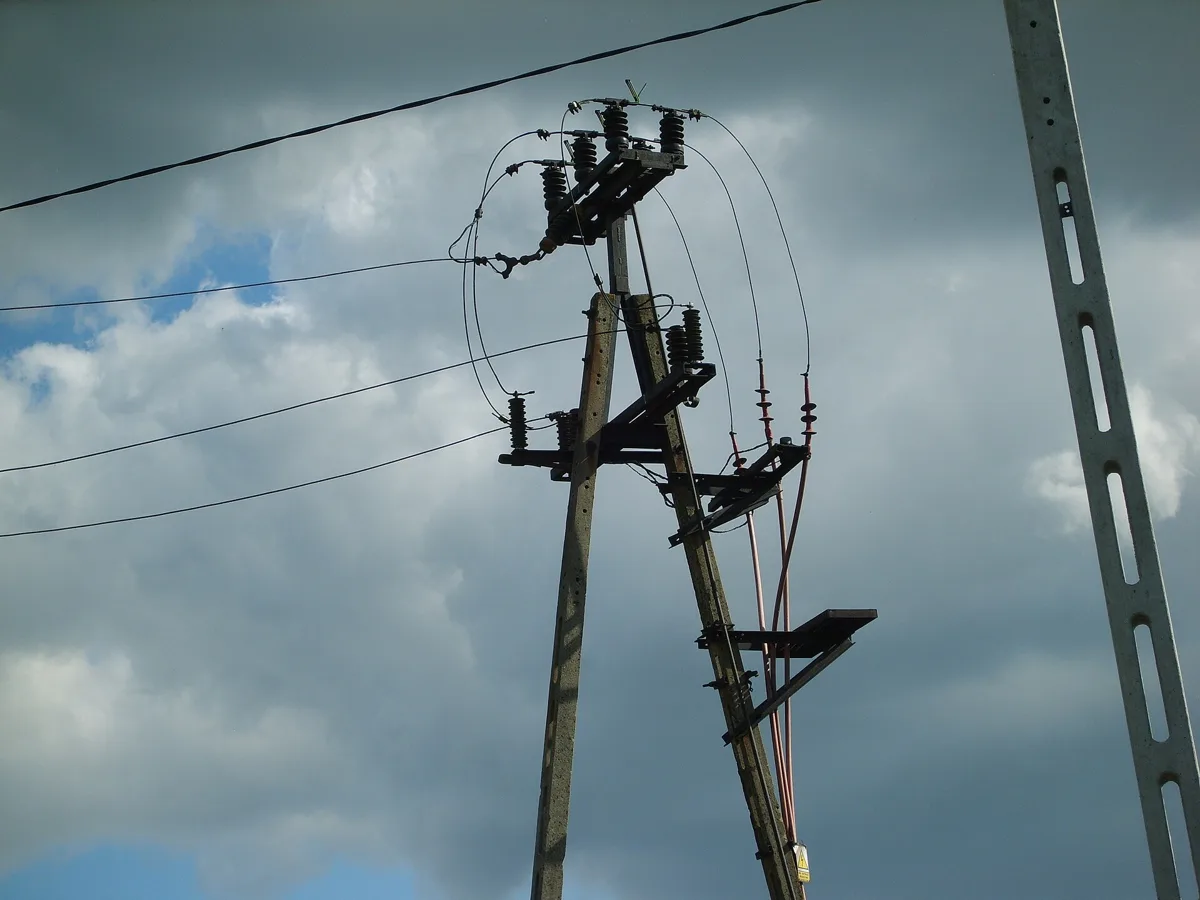
Composite units are also less costly per piece than the ceramic strings they replace, before washing savings are even counted. For tension positions, dead ends, and special spans, matching link fittings und Zugbefestigungen are ordered with the string. The full Freileitungsisolator range ships as one bundled consignment.
The Honest Answer on Service Life
Here is the boundary every replacement plan should state out loud: composite insulators do not yet have the long-term proven service life of glass and porcelain. Porcelain strings routinely exceed 30 years without losing electrical resistance. Composite technology simply has a shorter service record, because it entered wide use later.
Like a car still rolling on its original tires with a thin logbook, a composite insulator can look flawless while its fleet data stays limited. The recorded numbers are nonetheless reassuring. China logged 58 failures across 2.2 million composite insulators through 2006, and CIGRE placed the annual failure rate between 0.001 and 0.01 percent. Decay-like fractures in the Chinese data appeared at 7 to 12 service years, and only on 500 kV lines.
Prudent programs therefore treat the first composite generation as a monitored asset. Condition checks at major maintenance outages, attention to housing damage, and awareness of core-related failure modes keep the technology’s benefits from outrunning its record. None of this argues against replacement; it argues for pairing the swap with a record-keeping habit, so each utility builds the long-term data the industry is still collecting.
A Replacement Decision Checklist for Utilities
A replace-or-retain call resolves into a handful of route-specific questions. By the time the third washing season is priced for the same corridor, the spreadsheet usually answers itself. Run the line through this list:
- Pollution severity. Coastal salt, industrial dust, or desert contamination push creepage requirements up and favor hydrophobic housings.
- Washing economics. Frequent hot-line washing on short intervals is a recurring cost that a swap can retire.
- Breakage history. Strings with recurring shattered discs generate steady spares traffic and unplanned climbs.
- Access difficulty. Remote spans reward lightweight units at installation and at every later intervention.
- Structure condition. Older cross-arms gain relief from reduced dead load, within the original tension envelope.
- Monitoring capability. A fleet willing to condition-check composite units gets the most from the swap.
Lines that score low on pollution and washing cost can keep ceramic strings in service without apology. Replacement is a corridor decision, not an ideology.
Sourcing Composite Insulators to Verified Standards
The reference specification for the complete unit is IEC 61109. Its third edition, published in February 2025, covers composite suspension and tension insulators for AC systems above 1,000 V and DC systems above 1,500 V. It carries the definitions, test methods, and acceptance criteria for the whole assembly. Housings themselves are HTV silicone rubber filled with aluminum trihydroxide for tracking and erosion resistance, and formulations must still pass all applicable IEC material and design tests.
Buyers should treat the standard as the floor, not the ceiling. Coupling drawings, creepage tables for the specific route, and grading ring requirements all travel with the enquiry. A manufacturer that engineers end fittings in-house can match legacy string hardware without improvisation on the tower.
The Bottom Line for Aging Ceramic Lines
Composite insulators replace porcelain and glass where weight, pollution, washing cost, and breakage logistics line up, and they stay out of the budget where ceramic still performs. The swap rewards engineering discipline: match the fittings, match the creepage, respect the tower, and monitor the record. RaxPower has manufactured overhead line hardware since 2003, supplying composite, glass, and porcelain insulators together with the link fittings around them. The whole change-out ships from one floor.
Häufig gestellte Fragen
Can composite insulators replace porcelain strings on an existing tower?
Yes, on most overhead lines the string is an engineered swap. The composite unit is ordered with end fittings matching the string couplings, creepage is matched to the route, and the tower review confirms the dead load reduction.
How often do composite insulators need pollution checks or washing?
A study cited by Wikipedia reports composite insulators need pollution checking only once every 4 to 5 years, because wind and rain self-clean the hydrophobic silicone surface. Ceramic strings in the same corridor sit on more frequent washing and inspection cycles.
What must be checked before swapping a ceramic string for a composite unit?
Check three things. First, end fitting compatibility with the existing ball-and-socket or clevis couplings. Second, creepage of at least 20 to 25 mm per kV, more near the coast. Third, the tower arm loads after the weight reduction.
Do composite insulators last as long as porcelain or glass?
Not yet proven over the same horizon. Porcelain strings routinely exceed 30 years of service. Composites do not yet have the long-term proven service life of glass and porcelain, so condition monitoring belongs in every replacement program.
Which standard defines composite insulator testing?
IEC 61109 is the reference. Its 2025 third edition covers composite suspension and tension insulators for AC above 1,000 V and DC above 1,500 V. It defines the test methods and acceptance criteria for the complete unit.
Key takeaways: Composite units replace porcelain and glass strings where weight, pollution performance, washing intervals of 4 to 5 years, and breakage logistics justify the swap. Retrofit requires matched end fittings, creepage of 20 to 25 mm per kV or more, and a tower load review, while the honest service-life record stays shorter than ceramic.